• Skip to primary navigation
  • Skip to main content

REVARTE

  • Home
  • About
    • REVARTE Collective
  • Issues
  • Content
    • LITERATURA
    • JUVENTUD
    • ENSAYO
    • COMUNIDAD
    • MEDIA
  • Subscribe
  • Contribute
  • Show Search
Hide Search

Literatura

LA MONEDA (VII)

RevarteColectiva · April 14, 2024 · Leave a Comment

Por Obed Arango

Click here for English version
Capítulo 7

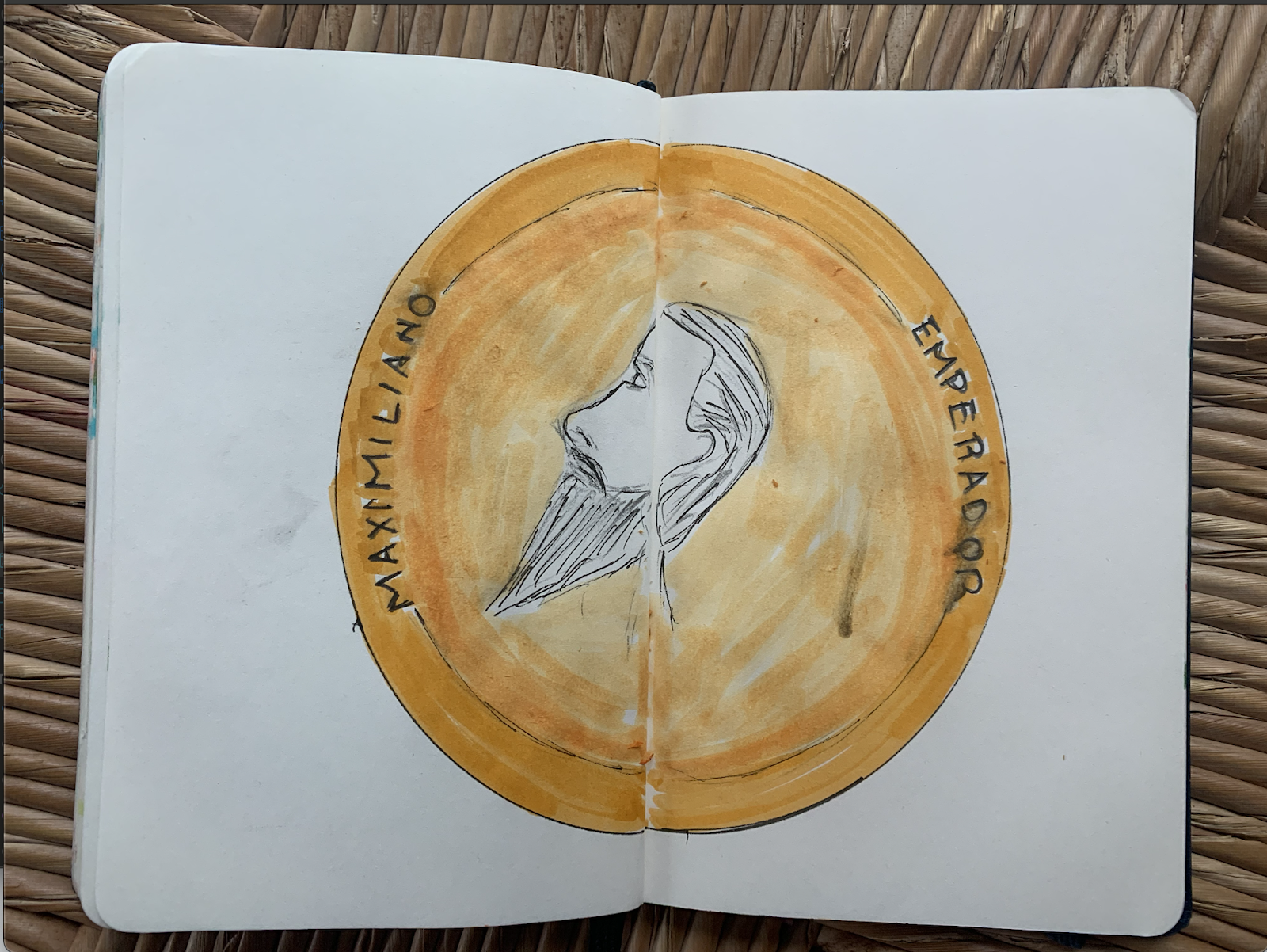
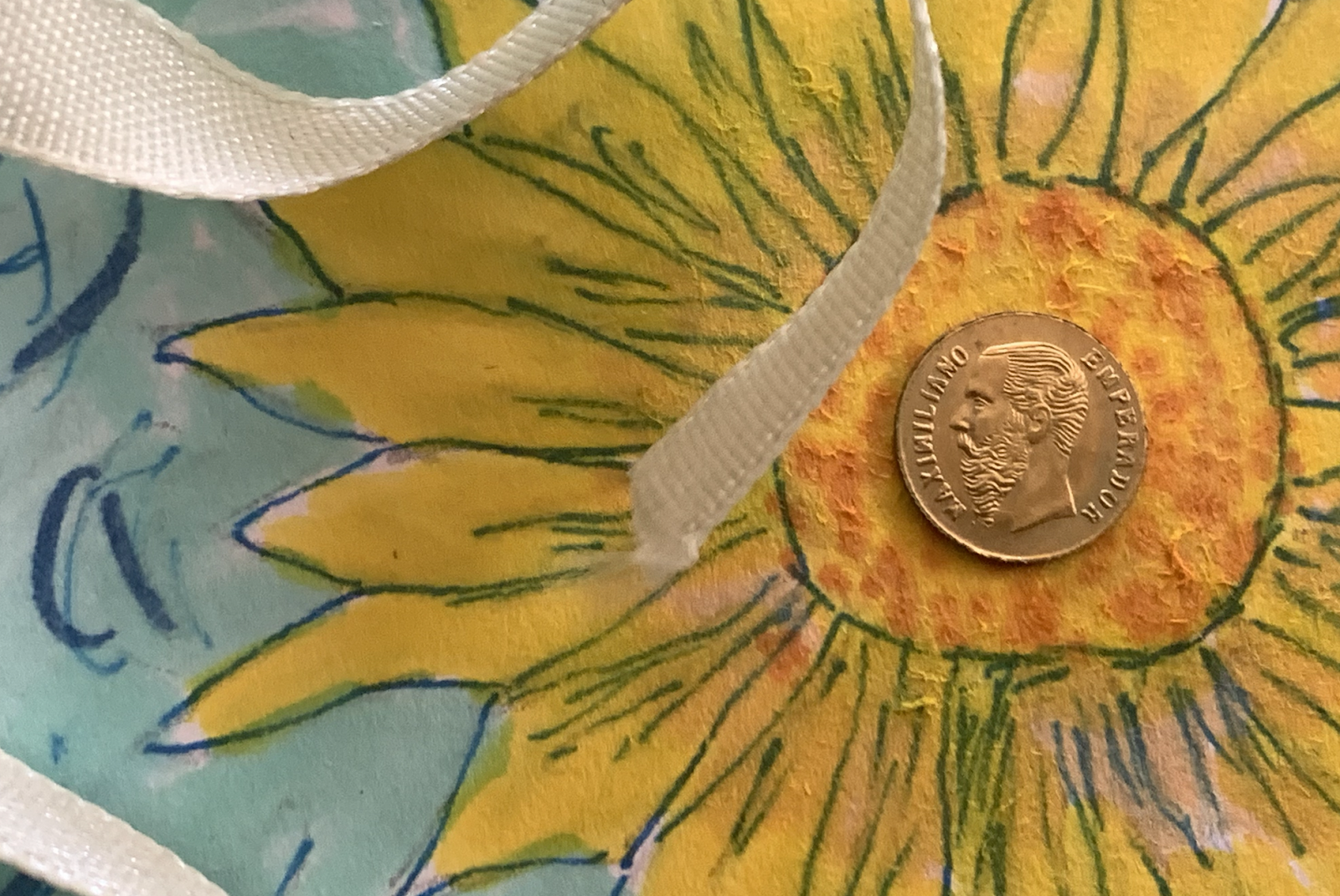
La vitrina bajo los arcos de la casona de Buenos Aires siempre atrajo a Ana. Por primera vez no resistió abrirla y tocar esos objetos; a esa edad no sabía lo que era la medalla conmemorativa de Mussolini con la leyenda 1883, el peso de Maximiliano, una esvástica nazi de 1944, una estrella amarilla del Holocausto de Auschwitz de 1945, una bandera confederada de 1863, un periódico que exaltaba a Anastacio Somoza García de 1932, una colección de mancuernillas de cruces alemanas; no entendía a esa edad el significado de esas piezas, no sabía a quién se referían o habían pertenecido. El brillo del pequeño peso de oro de Maximiliano le atrajo, hacía dos años que había llegado a casa; Ana lo sacó de su caja de rapé, y con mucho cuidado lo puso en la punta de su dedo índice, esta fue la primera vez que Ana Luisa colocaba la moneda en su dedo; era raro que una moneda tan frágil, delgada y ligera como ella —pensaba—, sintiera un peso significativo.

Su madre la vio y se acercó a ella y le pidió con voz suave que devolviera la moneda a su caja. Ana María —la madre— puso una rodilla en el piso y le pidió con voz suave que no volviera a hacerlo, que no tocara las cosas de su padre. Ana Luisa, asintió, se disculpó y prometió no repetir tal atrevimiento. Le preguntó a su madre si ella también podría tener su vitrina para coleccionar sus propios objetos. Ana María notaba con atención cómo su hija admiraba a su padre, y eso le preocupó. —Mamá, ¿qué son todas esas cosas?, siempre han estado ahí pero nunca he sabido quiénes son esas personas—. Ana María le contestó, —personas sin importancia, lo más importante es que vamos a hacer tu vitrina—, a esa edad la pequeña Ana Luisa preguntaba todo, pero Ana María no tenía las respuestas que saciaran su inquietud.

—Y qué vas a poner en tu vitrina—, preguntó Ana María. —No sé, cosas que me hagan feliz, que me recuerden a ti, a mis hermanos, a mi papá, al agua, a Mar del Plata, los pájaros y ese arcoíris que aparece en la fuente cuando sale el sol—. Ana María escuchó con alegría la respuesta.

Al día siguiente el carpintero llegaría a la casa de Carlos; Ana María deseaba darle a Ana Luisa su propia vitrina como regalo de cumpleaños. La vitrina sería casi gemela a la de Carlos y se pondría en el lado opuesto del patio, así de manera decorativa sería una imagen axial, opuesta e igual. La vitrina sería de caoba para que durara décadas y años, quizá siglos, así como los objetos que albergaría. Habían pasado dos años desde el golpe de estado y Argentina estaba en vísperas del mundial de fútbol de 1978, en las calles todo era algarabía, en la televisión pasaban todo el tiempo a la selección nacional que se preparaba. Carlos era aficionado al fútbol, y si bien en su casa la televisión se veía muy poco, él estaba al tanto de la propaganda, no había mejor manera de validar a la junta militar que con la camiseta albiceleste. Ana Luisa como sus hermanos habían crecido alejados de la pantalla y pegados a los libros, pero en ese invierno astral de 1978, la televisión se prendía con mayor frecuencia.

Don Ramiro, el carpintero, llegó a casa; él era muy conocido en la ciudad por la fineza de los muebles que construía, con las recomendaciones de todos, él fue el elegido por Ana María. En silencio observó con cuidado la vitrina de Carlos, tomó las medidas, tomó su tiempo para observar con todo detalle y dibujaba bocetos. Mientras leía los textos que acompañaban los objetos en ese despliegue de historia de dictaduras, fascismo, masacres y movimientos militares que se conjuntaban en ese mueble histórico, le dio náusea, quiso vomitar ahí mismo, dudó en seguir con el encargo. En ese momento notó que dos luciérnagas verdes le miraban; era Ana Luisa quien se acercó, —me dijo mi mamá que usted haría mi vitrina—. Él quedó en silencio y le preguntó, —y ¿qué pondrás en ella?— una sonrisa invadió el rostro de la pequeña, —los objetos más felices del mundo, lo que me recuerden a mi madre, Mar del Plata, y muchas cosas que hagan feliz—. Don Ramiro con beneplácito escuchó la respuesta, tanto que se le olvidó la náusea que hace un par de minutos había sentido. Convencido por la alegría de esa niña, haría una vitrina hermosa que se opusiera a la monstruosidad que estaría al otro lado del patio. Padre e hija, serían dos mundos opuestos.

Al cerrar el portón de la casona Don Ramiro, no deseaba volver a ese lugar, a pesar de la ternura de la niña, era como haber visto una casa de terror. Al día siguiente comenzó a atar cabos: ¿quién era Carlos?, ¿Qué hacía un hombre cuya riqueza se distinguía en plena crisis argentina cuyo único goce era el mundial que se avecinaba? Don Ramiro no podía dejar de pensar en su hermana que todos los días caminaba en la Plaza de Mayo desde hace un año cuando su sobrino desapareció. Don Ramiro cuántas veces le dijo a su sobrino Ernesto que dejara de lado sus discursos comunistas, que se cortara el cabello; su parecido con Guevara era asombroso, tanto que le llamaban “Che” —como a todos—, pero en el caso de él por su parecido con el revolucionario argentino-cubano. Ernesto con orgullo cargaba no solo su nombre sino su imagen, además de que era todo un provocador. No faltaba quien le preguntara si su corte de cabello era en honor a Mario Alberto Kempes, el delantero de la selección Argentina. “No”, él siempre respondía que era por Ernesto “El Che” Guevara. Así, Ernesto fue recogido una tarde de 1977 de la casa de la señora Susana Ardiles y fue llevado al ESMA. Los militares llegaron a la puerta, para entonces ya había miles de desaparecidos, Ernesto no quiso dejar una mala memoria en su familia, en cuanto vio a los milicos, —como les llamaban en la casa—, abrazó a su madre, le dijo que se cuidara, que cuidara a su hermana, y le dio un beso en la frente; a doña Susana el corazón se le apretó, le reventó por dentro, deseaba tener una fuerza brutal para enfrentar a esa cuadrilla, no pudo, solo no permitió que vieran una lágrima de ella. Desde entonces el corazón de Doña Susana se transforma en pasos, palabras, poesía, y una rabia profunda contra el abusador.

Había pasado ya un año de la desaparición de Ernesto, y Don Ramiro, no sabía cómo comunicarle a su hermana todo lo que había visto, quedarse en el silencio cómplice era como una patada en los testículos, le dolía con ese dolor que no sale, que solo sofoca. Decirle era comprometerse, comprometer a su familia. Podía simplemente declinar el trabajo y no sabría más de esa familia del horror.

Por una semana no dio señales de vida, no se comunicó con Ana María, ni con su hermana, metido en su taller se ocupó con otros proyectos. Pero a la semana y media tocaron la puerta de su taller con cierta fuerza, enmudeció y se paralizó al momento, cuando vio en el entreabierto de la puerta a Carlos y de la mano a Ana. ¿Habrían visto la sombra de sus pies moverse debajo de la puerta? ¿Podía pretender que no estaba? Demasiado tarde para pensar, el teléfono sonaba y alguien desde adentro de la casa lo contestaba. Abrió el portón. Compuso su semblante, el alto y encorvado extendió la mano a Carlos y saludó a la pequeña Ana con un gesto. Carlos pidió pasar. Adentro del taller, Carlos miraba detenidamente cada detalle, hablaron de la selección, del mundial, de Menotti, y conforme pasaban los minutos Don Ramiro se inquietaba. Él intentó mostrarle la madera que usaría para la vitrina, pero Carlos evitaba hablar de la vitrina, su interés estaba en el fútbol. Ana curioseaba y observaba con detenimiento cada herramienta. —No toques nada porque todo es filoso— le advirtió Carlos. Entre las mesas de trabajo, Ana se tropezó y con el aserrín en el piso se clavó algunas astillas; pronto su rodilla comenzó a sangrar, no de manera grave, pero sí parecía un chorrito escandaloso. Ramiro dio tres pasos al lavabo y sacó un pequeño botiquín, le limpió la herida, soltó un lloro la pequeña Ana, quien tomaba la mano de su padre. Don Ramiro, con mucha experiencia por los múltiples cortes que había sufrido a lo largo de su carrera, logró detener la sangre, le colocó una gasa y sacó un pañuelo nuevo blanco que recién su hermana le había regalado con las iniciales bordadas de Ernesto Ardiles “E.A.” en una esquina; él no prestó mayor atención, lo colocó alrededor de la gasa y lo sujetó con cinta médica. Don Ramiro, sin pensar, hizo toda esta operación; el pañuelo blanco rodeaba la rodilla de Ana, y ella feliz miraba su rodilla ser sanada por este hombre amable.

—No cabe duda, Don Ramiro, que sos muy hábil no solo con las herramientas, en dos segundos paraste el hilo de sangre—. Ramiro esbozó una leve sonrisa. —Ana, estarás bien, no debes lavarte la herida en unos tres o cuatro días para que logre cicatrizar, ya la limpié bien y está bien protegida—.

—¿Para cuándo tendrá la vitrina, Don Ramiro?—. Pensativo, él contestó, —En tres o cuatro semanas estará lista—.

—Muy bien, llévala tú mismo. Que sean cuatro semanas. Estás invitado a la fiesta de Ana, ese será tu regalo, quiero que seas tú quien se la dé—. Ramiro solo asintió. Ana pidió que se agachara y ese hombre de manos callosas, y como garrocha, se inclinó. —¿Y el pañuelo?— preguntó ella, a lo que él respondió, —ahora es tuyo—. Ana, con una sonrisa en sus labios rosas, le dio el abrazo de una pequeña flor que abrazaba con sus hojas a ese hombre encorvado. Ana era de pocas palabras, pero su delicadeza y ternura inundaban el cuarto, que hasta el peor de los monstruos podría desaparecer a kilómetros.

Don Ramiro se dio a la tarea de hacer la vitrina, cortó cada pieza con sumo cuidado; la carpintería era una extensión de sus sentidos, podía sentir, olfatear, hablar con la madera, las curvas y los pliegues guiaban sus manos, era atento a los detalles, hábil como el más fino de los ebanistas de su época. Don Ramiro deseaba entrar a la casa del monstruo. No había hablado aún con su hermana, no lo haría por un tiempo hasta que supiera más de quién era Carlos. Las semanas pasaron y conforme se acercaba la fecha, veía como la vitrina tomaba ya forma, sus cristales antirreflejantes permitirían ver los objetos con una claridad espectacular, el terciopelo de fondo realzaría cada objeto. Su obra, si bien era gemela de la otra vitrina, tenía algunos detalles que la distinguían, entre ellos un doble fondo que él solo sabía que existía. Durante la última semana recorrió las calles y tomó los nombres que aparecían en las mañanas de jóvenes desaparecidos. Esos carteles y hojas pronto eran recogidas por las autoridades, así que se disciplinó a caminar temprano, hizo una lista y en el doble fondo marcó los nombres; no se podrían ver, pero cualquier persona con sentido táctil podría saber que ahí había letras talladas, era una forma de protesta, era una manera de estar presente en la casa de un fascista, era la forma de rescatar su obra y de guiar las manos de Ana a un mayor entendimiento, quizá algún día descubriría esa tapa que se podía desprender entre dos personas.

Llegó el día de la fiesta, el día de la entrega, el día de la protesta silenciosa. Ayudado por dos jóvenes, bajaron la vitrina que estaba cubierta entre cobijas para evitar golpes en sus costados. Ana María, con gran emoción, estaba en el portón; adentro, en el patio, ya se escuchaba el bullicio de personas. Don Ramiro, vestido con su traje oscuro, está listo para presentar la vitrina. Los jóvenes entraron al portón y ahí había guardias que les revisaron. Pidieron que descubrieran el mueble, Ana María intervino y pidió que no lo hicieran. Don Ramiro, desconcertado, no entendía por qué había guardias. Ana María guió a los jóvenes y Don Ramiro la siguió. Descubrieron la obra de arte; la vitrina no solo era bella, sino que su detallado y terminaciones la hacían resplandecer como esos dos ojos verdes que la miraban. Ana, vestida de blanco, le tomó la mano a Don Ramiro, él le sonrió, se agachó y le dijo:

—Espero que se llene de felicidad, de memorias que alimenten tu alma como Alfonsina diría:

“¿Qué diría la gente, recortada y vacía, si en un día fortuito, por ultra fantasía, me tiñera el cabello de plateado y violeta, usara peplo griego, cambiara la peineta por cintillo de flores: miosotis o jazmines, cantara por las calles al compás de violines, o dijera mis versos recorriendo las plazas, libertado mi gusto de vulgares mordazas? ¿Irían a mirarme cubriendo las aceras?”

—¿Irían a mirarme cubriendo las aceras?— Ana, ¿conoces los poemas de Alfonsina Storni?— Asintió con la cabeza. No cabía duda de que la niña era extraordinaria. ¿Quién, a los diez años, conocería los poemas de esa gran poeta?

Ana no solo deseaba coleccionar objetos, sino que además amaba escribir y leer; la poesía era su alma, su alma entera era poesía, y el entero de su alma se componía de ilusiones y palabras. Don Ramiro era igual, no solo era carpintero, sino que también era poeta; escribía todos los días, coleccionaba en pequeños cuadernos sus estrofas nunca leídas.

—Don Ramiro, ¿le gusta la poesía?— él sonrió y asintió. —Me gusta leerla e intento escribirla—. Ana sonrió y le dijo: —Yo también. Quiero ser escritora cuando sea grande.

Ana le pidió levantara la tapa de cristal, y con su mano blanca sacó de su bolsa el pañuelo blanco con las iniciales bellamente bordadas de E.A.

Antes de colocar el pañuelo, que a Don Ramiro sorprendió ver, una mano se interpuso entre la vitrina y Ana; era la mano del General Jorge Rafael Videla. Don Ramiro alzó la mirada y se quedó quieto como si hubiera visto al mismo demonio. Frente a él estaba el jefe de la junta militar, el mismo dictador.

—¿Qué es esto?—

—Mi regalo de cumpleaños— contestó Ana.

—¿Un pañuelo blanco?—

—No, la vitrina—

—Y el pañuelo, ¿quién te lo dio? ¿Qué significan las letras E.A.?

Ana María veía cómo el mismo Videla interrogaba a su pequeña hija, mientras Don Ramiro estaba serio, inexistente, en silencio total.

Ana María intervino, para decirle al general que la cena estaba lista. Videla terminó el interrogatorio.

—Don Ramiro, la cena está lista también para usted, usted es uno de nuestros invitados—

—No debería, soy solo un carpintero y usted tiene invitados muy distinguidos—

—Para nosotras sería un honor tenerle, ¿verdad Ana?—

La pequeña tomó de la mano a Don Ramiro y caminaron al interior de la casa, pero antes Ana puso el pañuelo blanco en la vitrina, ese era su primer objeto. Un objeto que le recordaría toda la vida el día que conoció a Don Ramiro y el día en que esas dos manos callosas de artista le sanaron la rodilla.

Videla en la mesa miraba de manera inquisitiva a Ramiro, quien reía con la niña.

—Carlos, ¿de dónde conociste al carpintero?—

—General, recomendado como el mejor ebanista de la ciudad, su trabajo es magnífico—.

—Quiero que le pidas venga a la Casa Rosada el día de mañana, necesitamos reparar varios muebles, el tiempo de Perón hizo estragos también por dentro—.

Ramiro, quien buscaba salir de ahí lo antes posible, se despedía en silencio de la niña y de Ana María. Carlos le puso la mano en el hombro y le dijo, —no tan rápido, el general quiere conocerle—. Ramiro, quien sintió frío, un calambre recorrió su cuerpo, pausó y le respondió afirmativamente con un gesto.

Videla fijó su vista en Ramiro, estaba en el patio, a un lado de la vitrina.

—Magnífico mueble el que usted ha hecho—.

—Gracias, mi general— replicó Ramiro.

Videla tomó en sus manos el pañuelo blanco. Ramiro evitó ver el pañuelo.

—Don Ramiro, Don Ramiro, me parece que usted es más querido que yo en esta casa. ¿Será así?— En silencio, Ramiro pensó su respuesta. —Claro que no, usted es el benefactor de toda la república, usted nos ha rescatado de la amenaza roja, del desorden juvenil, y nos ha puesto frente al mundo para mostrar la grandeza de nuestra patria—.

Videla escuchó al inicio con seriedad y después con beneplácito las palabras de Ramiro, tanto que se olvidó del pañuelo por unos segundos.

—Carlos me comentó que usted sanó la rodilla de Ana con este pañuelo, ¿de dónde lo obtuvo?—. Ramiro, que había tenido tiempo para pensar en la respuesta, no se apresuró para no delatarse. Y sin importancia respondió —una clienta que se le hizo muy caro mi trabajo lo dejó por olvido hace un par de meses, ella no hizo su encargo y ya nunca regresó, ahí el pañuelo se quedó inmaculado, esperando tener un uso digno. Y ya ve, sirvió para sanar la rodilla de la niña—. Y de manera desafiante remató —¿Por qué la pregunta? Don Carlos me dijo que deseaba hablar acerca de unos muebles de la Casa Rosada, nada me daría más gusto que servir a la junta militar sin costo alguno—. Videla se quedó en silencio sorprendido por el patriotismo de este hombre. —¿Por qué lo haría gratis? ¿Nadie trabaja gratis?—

—Servir a mi patria no es un “trabajo gratis”, es un deber, es un honor—.

—Mañana lo espero, yo mismo le mostraré los muebles y le daré una breve visita, será mi huésped de honor, necesitamos más hombres con el temple y la dedicación de usted por nuestra patria—.

Videla dejó el pañuelo en la vitrina y le dijo a Carlos, —solo es un pañuelo blanco, nada más—. Ramiro no hizo caso al comentario y se despidió.

Mientras Ramiro caminaba las calles sintió el terror dentro de sí, qué bueno pensaba que en el momento de la verdad no sintió el vértigo de sus palabras ¿Por qué habría hecho tal oferta? ¿Por qué en vez de alejarse de Videla se acercaba a él? En sus cavilaciones se dio cuenta que la rabia que le invadía por la desaparición de su sobrino le empujaba a ser oídos y vista en la misma cueva del lobo, debía hacerlo por su hermana cuyas caminatas en la Plaza de Mayo eran largas y de muchas horas, y por la juventud que corría despavorida. Al mismo tiempo pensaba que debía ser más cuidadoso, quizá rentar un local para poner el taller lejos de casa dónde no hubiera accidentes de ningún tipo.

Al siguiente día, Ramiro, vestido con su traje café, llegó a su cita. Carlos y Videla lo recibieron, le mostraron la oficina presidencial, la capilla de Cristo y el salón blanco.

Ramiro miró con asombro, pero mantuvo la ecuanimidad en todo momento. Se dio cuenta que corría en él, el deseo de encontrar a los miles de desaparecidos, de conocer su suerte, temía que muchos habían muerto. Deseaba escuchar lo que en los pasillos se hablaba y dar así razón a su hermana. Deberían llamar la atención de la prensa internacional y de las organizaciones de derechos humanos. Él sería un punto muerto, en silencio trabajaría concentrándose en su trabajo mientras las personas hablaban a su alrededor.

Videla lo miraba con asombro mientras observaba el fino trabajo que el ebanista hacía; todas las mañanas de lunes, miércoles y viernes lo veía desde temprano.

—Todos los materiales le fueron dados—.

—Sí señor presidente, y de la mejor calidad, tal y como lo pedí—.

—Muy bien, usted es todo un patriota. Cuando usted y yo ya no estemos aquí, su trabajo prevalecerá. ¿Había usted, Ramiro, pensado en ello?

—No señor, pienso en el aquí, en el ahora, después dejo volar mis obras. Pero tiene usted razón, estas obras andan por siglos, lo que hago hoy, quizá termine en otras tierras, y ni usted ni yo sabremos, solo la historia. La historia es sabia—.

Videla lo mira con seriedad después del último comentario, y después de ponerle la mano en el hombro, dijo:

—Usted es sabio, Ramiro, me ha dado en qué pensar.


English Version:

THE COIN

Chapter 7

The display case under the arches of the mansion in Buenos Aires always attracted Ana. For the first time, she could not resist opening it and touching those objects. At that age, she did not know what the Mussolini commemorative medal was with the legend 1883, the weight of Maximilian, a Nazi swastika from 1944, a yellow star from the Auschwitz Holocaust from 1945, a Confederate flag from 1863, a newspaper that exalted Anastacio Somoza García from 1932, and a collection of German cross cufflinks. At that age, she did not understand the meaning of those pieces; she did not know who they referred to or who they had belonged to. The shine of Maximilian’s small gold weight attracted her. It had been two years since she had arrived home. Ana took it out of her snuff box and carefully placed it on the tip of her index finger. This was the first time she had seen it. Ana Luisa placed the coin on her finger; it was strange that a coin as fragile, thin, and light as hers, she thought, felt a significant weight.

Her mother saw her and approached her, asking her in a soft voice to return the coin to her box. Ana María—the mother—put one knee on the floor and asked her in a soft voice not to do it again, that she should not touch her father’s things. Ana Luisa nodded, apologized, and promised not to repeat such audacity. She asked her mother if she could also have her display case to collect her own objects. Ana María noticed carefully how her daughter admired her father, and that worried her. “Mom, what are all those things? They have always been there, but I have never known who those people are,” Ana Luisa asked. Ana María answered, “Unimportant people; the most important thing is that we are going to make your showcase.” At that age, little Ana Luisa asked everything, but Ana María did not have the answers that would satisfy her restlessness.

“And what are you going to put in your display case?” Ana María asked. “I don’t know, things that make me happy, that remind me of you, my brothers, my dad, the water, Mar de Plata, the birds, and that rainbow that appears in the fountain when the sun rises,” Ana María listened to the response with joy.

The next day the carpenter would arrive at Carlos’s house. Ana María wanted to give Ana Luisa her own display case as her birthday gift. The display case would be almost twin to Carlos’s and would be placed on the opposite side of the patio, thus decoratively it would be an axial, opposite, and equal image. The display case would be made of mahogany so that it would last for decades and years, perhaps centuries, as well as the objects it would house. Two years had passed since the coup d’état, and Argentina was on the eve of the 1978 World Cup; in the streets, everything was hubbub, on television, they showed all the time the national team that was preparing. Carlos was a soccer fan, and although very little television was watched in his house, he was aware of the propaganda; there was no better way to validate the military junta than with the albiceleste shirt. Ana Luisa, like her brothers, had grown up away from the screen and glued to books, but in that astral winter of 1978, the television was turned on more frequently.

Don Ramiro, the carpenter, came home; he was well known in the city for the fineness of the furniture he built. With everyone’s recommendations, he was the one chosen by Ana María. In silence, he carefully observed Carlos’s display case, took measurements, took his time to observe in detail, and drew sketches. While he read the texts that accompanied the objects in that display of the history of dictatorships, fascism, massacres, and military movements that came together in that historical piece of furniture, he felt nauseous; he wanted to vomit right there, he hesitated to continue with the order. At that moment he noticed that two green fireflies were looking at him; it was Ana Luisa who approached, “My mother told me that you would make my showcase.” He remained silent and asked her, “And what will you put in it?” A smile invaded the little girl’s face, “The happiest objects in the world, whatever reminds me of my mother, Mar de Plata, and many things that make you happy.” Don Ramiro listened to the response with pleasure, so much so that he forgot the nausea that he had felt a couple of minutes ago. Convinced by the joy of that girl, he would make a beautiful display case that would oppose the monstrosity that would be on the other side of the patio. Father and daughter, they would be two opposite worlds.

When he closed the gate of the Don Ramiro mansion, he did not want to return to that place, despite the girl’s tenderness, it was like having seen a house of terror. The next day he began to connect the dots: who was Carlos? What was a man whose wealth was distinguished in the midst of the Argentine crisis whose only enjoyment was the upcoming World Cup? Don Ramiro couldn’t stop thinking about his sister who walked in the Plaza de Mayo every day for a year when her nephew disappeared. Don Ramiro, how many times had he told his nephew Ernesto that he would leave aside his communist speeches, that he would cut his hair, his resemblance to Guevara was amazing, so much so that they called him “Che”—like everyone else—, but in his case for his resemblance to the Argentine-Cuban revolutionary. Ernesto proudly carried not only his name but also his image, and he was also a provocateur. There was no shortage of people who would ask him if his haircut was in honor of Mario Alberto Kempes, the forward of the Argentine national team. “No,” he always responded that it was because of Ernesto “El Che” Guevara. Thus, Ernesto was picked up one afternoon in 1977 from Mrs. Susana Ardiles’ house and taken to ESMA. The soldiers arrived at the door; by then there were already thousands of missing people. Ernesto did not want to leave a bad memory in his family; as soon as he saw the soldiers—as they were called at home—he hugged his mother, told her he would take care of himself, that he would take care of his sister, and he gave her a kiss on the forehead. Doña Susana’s heart tightened, her heart burst inside; she wished she had brutal strength to face that gang, she couldn’t, she just couldn’t. She allowed them to see a tear from her.

A year had already passed since Ernesto’s disappearance, and Don Ramiro did not know how to communicate to his sister everything he had seen, remaining in complicit silence was like a kick in the testicles; it hurt him with that pain that does not come out, that only suffocates. Telling her was compromising, compromising her family. He could simply decline the job, and he would know no more about that family of horror.

For a week he showed no signs of life; he did not communicate with Ana María or his sister, stuck in his workshop he occupied himself with other projects. But after a week and a half, they knocked on the door of his workshop with some force; he fell silent and paralyzed immediately when he saw Carlos in the open space of the door and Ana holding hands. Did they see the shadow of his feet moving underneath the door? Could he pretend he wasn’t there? Too late to think, the phone rang, and someone from inside the house answered it. He opened the gate. He composed his face, the tall and bent man extended his hand to Carlos and greeted little Ana with a gesture. Carlos asked to come in. Inside the workshop, Carlos looked carefully at every detail; they talked about the national team, the World Cup, Menotti, and as the minutes passed, Don Ramiro became restless. He tried to show him the wood he would use for the display case, but Carlos avoided talking about the display case; his interest was in football. Ana browsed and carefully observed each tool. “Don’t touch anything because everything is sharp,” Carlos warned her. Among the work tables, Ana tripped and got some splinters from the sawdust on the floor. Soon her knee began to bleed, not seriously, but it seemed like a scandalous trickle. Ramiro took three steps to the sink and took out a small first aid kit; he cleaned the wound, little Ana cried as she held her father’s hand. Ramiro, with a lot of experience due to the multiple cuts he had suffered throughout his career, managed to stop the blood, put gauze on it, and took out a new white handkerchief that his sister had just given him with the bordered initials of Ernesto Ardiles “E.A.” in a corner; he didn’t pay much attention, he placed it around the gauze, and secured it with medical tape. Don Ramiro, without thinking, did this entire operation; the white handkerchief surrounded Ana’s knee, and she happily watched her knee being healed by this kind man.

“There is no doubt, Don Ramiro, that you are very skilled not only with tools; in two seconds you stopped the trickle of blood,” Ramiro smiled slightly. “Ana, you will be fine, you should not wash the wound for about three or four days so that it can heal, and I cleaned it well and she is well protected,” “When will Don Ramiro have the showcase?” Thoughtful, she replied, “In three or four weeks it will be ready.” “Very well, take it yourself. Let it be four weeks. You are invited to Ana’s party, that will be her gift, I want you to be the one to give it to her,” Ramiro just nodded. Ana asked to bend down and that man with calloused hands, and he leaned like a pole, “and the handkerchief?” she asked, to which he responded, “now it’s yours.” Ana, with a smile on her pink lips, gave the hug of a small flower that embraced that bent man with its leaves. Ana was of few words, but her delicacy and tenderness filled the room that even the worst of monsters could disappear for miles.

Don Ramiro took on the task of making the display case, he cut each piece with great care, carpentry was an extension of his senses, he could feel, smell, speak with the wood, the curves and folds guided his hands, he was attentive to the details, skilled as the finest cabinetmaker of his time. Don Ramiro, wanting to enter the monster’s house. He hadn’t spoken to his sister yet, he wouldn’t for a while until he knew more about who Carlos was. The weeks passed and as the date approached he saw how the display case had already taken shape, its anti-reflective glass would allow the objects to be seen with spectacular clarity, the velvet in the background would enhance each object. His work, although it was the twin of the other showcase, had some details that distinguished it, among them a double bottom that he only knew existed. During the last week, he walked the streets and took the names that appeared in the mornings of missing young people. Those posters and sheets were soon collected by the authorities, so he disciplined himself to walk early, he made a list and on the double bottom he marked the names, they could not be seen, but anyone with a tactile sense could know that there were carved letters there, it was a form of protest, it was a way to be present in the house of a fascist, it was the way to rescue his work and guide Ana’s hands to a greater understanding, perhaps one day she would discover that lid that could be detached between two people.

The day of the party arrived, the day of delivery, the day of silent protest. Helped by two young men, they lowered the display case that was covered with blankets to avoid blows to its sides. Ana María, with great emotion, was at the gate; inside the patio, the bustle of people could already be heard. Don Ramiro, dressed in his dark suit, was ready to present the showcase. The young people entered the gate, and there were guards who checked them. They asked that they reveal the furniture; Ana María intervened and asked that they not do so. Don Ramiro, bewildered, did not understand why there were guards. Ana María led the young people, and Don Ramiro followed her. They discovered the work of art; the display case was not only beautiful, but its detailing and finishes made it shine like those two green eyes that looked at it. Ana, dressed in white, took Don Ramiro’s hand. He smiled at her, crouched down, and said, “I hope it is filled with happiness, with memories that feed your soul as Alfonsina would say:

‘What would the people say, cut and empty,
If on a chance day, out of ultra fantasy,
I dyed my hair silver and violet,
I will wear a Greek peplum, I will change the comb
By a flower band: myosotis or jasmines,
I will sing through the streets to the beat of violins,
Or I said my verses walking through the squares,
Freed my taste from vulgar gags?
Would they go look at me covering the sidewalks?
— ‘Would you go look at me covering the sidewalks?’

Ana, do you know Alfonsina Storni’s poems?” She nodded her head. There was no doubt that the girl was extraordinary. Who at the age of ten would know the poems of that great poet?

Ana, not only did she want to collect objects, but she also loved to write and read; poetry was her soul, her entire soul was poetry, and her entire soul was made up of illusions and words. Don Ramiro was the same, not only was he a carpenter, but he was also a poet; he wrote every day, he collected in small notebooks his verses that had never been read by him.

“Don Ramiro, do you like poetry?” He smiled and nodded. “I like to read it, and I try to write it.” Ana smiled and said, “Me too. I want to be a writer when I grow up.”

Ana asked him to lift the glass lid, and with her white hand, she took out of her bag the white handkerchief with the beautifully embroidered initials of E.A.

Before placing the handkerchief, which Don Ramiro was surprised to see, a hand came between the display case and Ana; it was the hand of General Jorge Rafael Videla. Don Ramiro looked up and stood still as if he had seen the devil himself. In front of him was the head of the military junta, the dictator himself.

“What is this?”
“My birthday gift,” Ana answered.
“A white handkerchief?”
“No, the display case.”
“And the handkerchief, who gave it to you? What do the letters E.A. mean?”

Ana María watched as Videla himself interrogated his little daughter, while Don Ramiro was serious, non-existent, in total silence.

Ana María intervened to tell the general that dinner was ready. Videla finished the interrogation.

“Don Ramiro, dinner is ready for you too, you are one of our guests.”
“You shouldn’t, I’m just a carpenter, and you have very distinguished guests.”
“For us, it would be an honor to have you, right Mistress?”

The little girl took Don Ramiro by the hand, and they walked inside the house, but first, Ana put the white handkerchief in the display case, that was her first object. An object that would remind her all her life of the day she met Don Ramiro and the day those two calloused artist’s hands healed her knee.

Videla at the table looked inquisitively at Ramiro, who was laughing with the girl.
“Carlos, where did you meet the carpenter?”
“General, recommended as the best cabinetmaker in the city, his work is magnificent.”
“I want you to ask him to come to the Casa Rosada tomorrow; we need to repair several pieces of furniture, Perón’s time also took its toll on the inside.”

Ramiro, who was looking to get out of there as soon as possible, silently said goodbye to the girl and Ana María. Carlos put his hand on his man and said, “Not so quickly, the general wants to meet you.” Ramiro, who felt cold, a cramp ran through his body, he paused and responded affirmatively with a gesture.

Videla fixed her gaze on Ramiro, who was in the patio, on one side of the display case.

“Magnificent piece of furniture that you have made,” Videla commented.

“Thank you, my general,” Ramiro replied.

Videla took the white handkerchief in his hands. Ramiro avoided looking at the handkerchief.

“Don Ramiro, Don Ramiro, it seems to me that you are more loved than I in this house. Is it like that?” Ramiro silently thought about his response. “Of course not, you are the benefactor of the entire republic, you have rescued us from the red menace, from youth disorder, and you have not put yourself before the world to show the greatness of our country.”

Videla listened at first seriously and then with approval to Ramiro’s words, so much so that he forgot about the handkerchief for a few seconds.

“Carlos told me that you healed Ana’s knee with this handkerchief, where did she get it from?” Ramiro, who had had time to think about the answer, did not rush so as not to give himself away. And without importance, he responded, “A client who found my work very expensive left it out of forgetfulness a couple of months ago; she did not order it and never returned, there the handkerchief remained immaculate, hoping to have a decent use. And you see, it served to heal the girl’s knee.” And defiantly he finished, “Why the question? Don Carlos told me that he wanted to talk about some furniture from the Casa Rosada, nothing would give me more pleasure than serving the military junta at no cost.” Videla remained silent, surprised by the patriotism of this man. “Why would I do it for free? Nobody works for free?”

“Serving my country is not a ‘free job’; it is a duty, it is an honor.”

“Tomorrow I’ll wait for you, I myself will show you the furniture and give you a brief visit, you will be my guest of honor, we need more men with your temper and dedication for our country.”

Videla left the handkerchief in the display case and told Carlos, “It’s just a white handkerchief, nothing more.” Ramiro ignored the comment and said goodbye.

As Ramiro walked the streets, he felt the terror inside him, how good he thought that at the moment of truth he didn’t feel the vertigo of his words. Why would he have made such an offer? Why, instead of walking away from Videla, did he approach him? In his musings, he realized that the rage that invaded him for the disappearance of his nephew pushed him to be heard and seen in the same wolf’s cave; he had to do it for his sister, whose walks in the Plaza de Mayo were long and lasted many hours, and for the youth that ran in terror. At the same time, he thought that he should be more careful, perhaps renting a place to set up the workshop far from home where there would be no accidents of any kind.

The next day, Ramiro dressed in his brown suit arrived at his appointment. Carlos and Videla received him, they showed him the presidential office, the Christ Chapel, and the white room.

Ramiro looked in amazement but maintained equanimity at all times; he realized that the desire to find the thousands of missing people ran through him, to know their fate, he feared that many had died. He wanted to listen to what was being said in the hallways and thus prove his sister right; they had to draw the attention of the international press and human rights organizations. He would be a dead center, he would work in silence, concentrating on his work and the people talking around him.

Videla watched with amazement the fine work that the cabinetmaker did, every Monday, Wednesday, and Friday morning he saw him early. “All materials were given to him.”

“Yes, Mr. President, and of the best quality, just as I requested.”

“Very good, you are a true patriot. When you and I are no longer here, your work will prevail, have you thought about that?”

“No sir, I think about here, now, then I let my works fly. But you are right, these works go back centuries, what I do today may end up in other lands, and neither you nor I will know, only history. History is wise.”

Videla looked at him seriously after the last comment, and after putting his hand on his shoulder, he said, “You are wise, Ramiro, you have given me something to think about.”
Obed Arango Hisijara

Obed es mexicano, ciudadano de la América Latina, artista visual y antropólogo. Director de CCATE y profesor de University of Pennsylvania.


Selected Works by Obed Arango:
La Moneda (I-III)
La Moneda (IV)
La Moneda (V)
La Moneda (VI)
    La máquina de coser de mamá (III)

    RevarteColectiva · April 14, 2024 · Leave a Comment

    Por Rosalba Esquivel Cote

    Click here for English version

    III. CAPÍTULO TRES. Tic, Trabajando, Toc, Recordando

    El reloj seguía su marcha, tic, toc, tic, toc.

    Tic

    Tic, Kate ensartaba con destreza las agujas de la máquina de coser, organizando las piezas de tela que comenzaba a zurcir. Las primeras faldas de organza blanca con ondulados holanes de encaje comenzaban a salir de aquel artefacto como si fueran cadenas. Rose, apuradamente separaba las faldas con unas tijeras pequeñas. Una a una como si fueran tortillas recién salidas de la tortilladora las colocaba sobre una mesita cerca de la máquina de coser. Pronto, una montaña de faldas se levantaba desde el suelo para ser desprendidas por la niña.

    Toc, el ruido de la máquina se escuchaba desde la calle, que parecía aún desierta. Era una noche serena, el ruido de uno que otro auto que circulaba por ahí competía con el de la máquina de coser. “¡Ahora las blusas!”, exclamó Kate, con evidente excitación y cansancio. Rodri tosía nuevamente, la madre que recogía los cortes de las blusas y las mangas lo alcanzó a escuchar. Kate se dirigió apurada para atenderlo, las flemas en el pecho del niño le provocaban tal agitación. Ella se dirigió a la cocina para preparar un poco de té con hojas de eucalipto, remedio que en ocasiones ayudaba al niño a expulsar sus males. Listo, Rodri quedó dormido nuevamente.

    Tic, “¿cómo estará Jorch?, ¿qué problema habrá pasado en la fábrica que lo habrá obligado a trabajar hasta tarde? ¿cómo la estará pasando?”, la mujer quedó pensativa un rato, y al ver al niño dormir tranquilamente, regresó a su lugar de trabajo. La pequeña Rose terminaba de acomodar las faldas, pero ya más lento; el cansancio y el sueño la estaba venciendo. No obstante, hacía esfuerzos por mantenerse despierta; “mamá, cuéntame cómo te enamoraste de mi papá”, dijo animada. Una leve sonrisa esbozó el rostro de Kate. Mientras unía los cortes de tela para formar las blusas de esos benditos vestiditos, la madre comenzó a recordar. Y para ayudar a mantener despierta a su hija, comenzó a platicar su historia con el ruido del motor como fondo musical.

    Toc

    Toc, “Verás, cuando yo tenía 16 años”, recordó Kate, “trabajaba en una fábrica donde se confeccionaban pantalones de mezclilla. Mi amiga Silvia, quien era novia de mi primo Toño, me llevó ahí. En ese lugar conocí a tu papá”. “¿Silvia?, ¿Mi tía Silvia?”, interrumpió la niña. “No sabía que fueron amigas desde hace mucho tiempo”. “Sí”, contestó su madre. “Ella y yo siempre hemos sido grandes amigas”.

    Tic, y la madre comenzó a hablar mientras sus pies se movían al son que las manos colocaban las telas sobre la máquina de coser, y al ritmo de los engranajes. “Nosotras nos conocimos desde que éramos niñas. Ella vivía en una casa cerca de la mía; su mamá Doña Lupita, era una señora robusta pero ágil, siempre andaba vestida de falda y blusa, ambas cubiertas con un delantal de tela de cuadritos y flores bordadas de diferentes colores. La señora era muy amable pero enérgica a la vez. Lo que más me gustaba de ella era que todos los días había comida abundante y caliente en su casa, a diferencia de la mía, donde pocas veces había comida preparada para comer”.

    Toc, “Mi familia era muy humilde. Mi mamá trabajaba mucho durante el día, y por las mañanas me daba pena despertarla. Así que casi nunca se encontraba despierta antes de que yo me fuera a la escuela. En la cocina pocas veces encontraba algo para desayunar o para hacerme una torta. Y la verdad, como casi siempre, se me hacía tarde para ir a la escuela, no me daba tiempo de buscar algo. A mis nueve años yo tenía que ver que mi hermanita, de meses de nacida, tuviera un biberón listo y el pañal cambiado antes de salir de casa. Muchas veces me arrepentía de no llevar algo que comer porque a la hora del recreo mi estómago sonaba mucho por el hambre que tenía. En ocasiones, Silvia me convidaba de su almuerzo, ella siempre traía una manzana partida en cuatro, un bolillo relleno de frijoles chinitos y queso, y traía una cantimplora con agua de limón”.

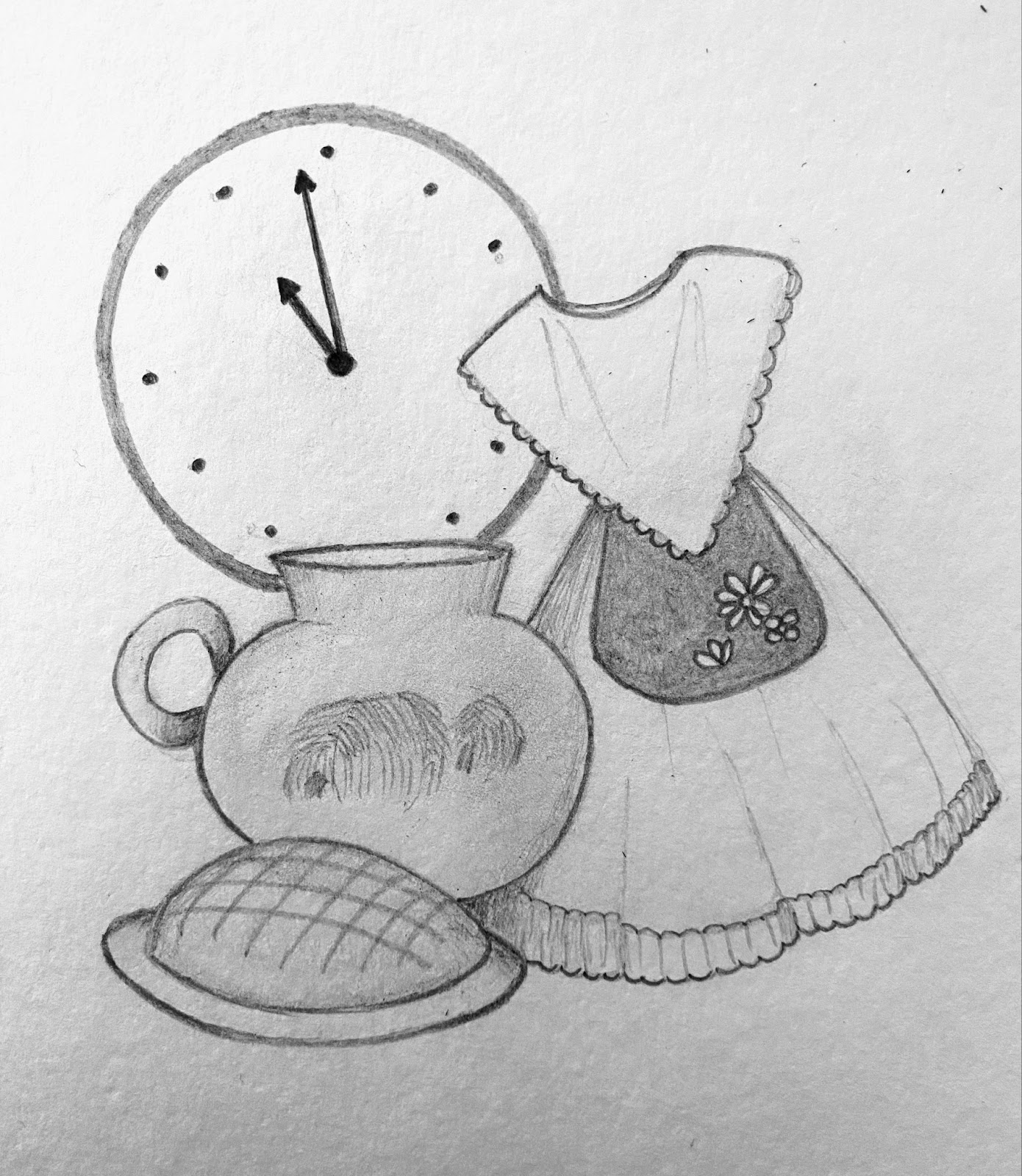
    Tic, “Un día, Silvia me pidió pasar por ella a su casa porque llevaría mucho material a la escuela. Yo acepté y al otro día tempranito pasé por ella. Muy amable Doña Lupita me hizo pasar y en lo que esperaba a Silvia, me ofreció un tecito de canela y un pan de dulce, ¡oh, qué delicia!, el aroma de ese té era fenomenal. Yo escogí una concha de vainilla para remojar en el tan preciado líquido calientito, y cuando lo llevé a mi boca para morderlo, la sensación fue de total placer. Nunca había sentido esa sensación de placer, satisfaciendo mi hambre con ese singular manjar. Cerré los ojos y me dejé llevar por el aroma y el sabor. En ese momento descubrí lo que era ser feliz: así, un jarro de panza gorda y cuello corto y ancho, hecho de barro rojo, decorado con el dibujo de unas casitas de paja. El calorcito que sentí al tocarlo con mis dos manos recorrió todo mi cuerpo, haciéndome olvidar el frío que sentía a esas horas por la mañana, y todo ello acompañado de lo mejor: un grande, atractivo y esponjadito pan, una concha decorada con azúcar amarilla, con un aroma a vainilla que se confundía con la de la canela, puesto en un plato también de barro. En ese momento sentí estar en la gloria, sentí amor por la bondad de aquella dulce mujer. Y sintiéndome culpable, desee que fuera mi mamá”.

    Toc, “imaginé, si Doña Lupita fuera mi mamá, yo vestiría un uniforme perfecto, con una chazarilla blanca impecablemente planchada, con el jumper de cuadritos verdes y azules, limpio oliendo a jabón de lavandería igual que el suéter de acrilán, y mis zapatos, unos zapatos negros brillantes sin raspones. Yo me esmeraría siempre en mantenerlos así, tal vez yo le pondría unos plásticos en las suelas para que no se ensuciaran con el lodo de la calle, y para no gastarlos. Mis pies siempre irían calientitos con calcetas de algodón, cubriendo mis pies y mis pantorrillas, mis piernas se verían como dos columnas, altas, imponentes, como si fueran la base de un monumento, de una obra de arte: yo. Mi mamá Lupita me peinaría suavemente con un cepillo de cerdas rosas, y me haría unas trenzas perfectas, adornadas con unos adorables moños de satín rojo. Mi cara no sólo la lavaría con jabón, sino que le pondría esa crema perfumada de rosas que tanto me gusta oler cuando saludo a mi amiga. Yo desayunaría tecito de canela y pan de dulce todos los días, yo… yo sería feliz todos los días. Yo sería feliz. Yo sería feliz”.

    Tic, de pronto, una mano me sacudió diciéndome, “Kate, despierta, termina tu canela, Silvia ya está aquí, se les va a hacer tarde”. Yo abrí los ojos, y me miré ahí, sentada frente a mi desayuno a punto de terminar. Había imaginado un sueño, un dulce sueño. Yo creo que Doña Lupita me vio tan emocionada que me dijo “hija, si quieres, puedes pasar por Silvia todos los días y si gustas. Te serviré una canela con pan”. Yo la miré llena de agradecimiento, y acepté su invitación. A partir de ese día, al menos mientras desayunaba en casa de Silvia, Doña Lupita era mi mamá”. Los ojos de Kate se llenaron de emoción, parecían el fondo de un pozo donde se distinguía el reflejo de la luna llena sobre el agua cristalina. Se pasó la manga de su suéter de acrilán sobre su cara para secar sus ojos, quedó callada y siguió cosiendo. En tanto, Rose, no supo que decir, sintió un nudo en la garganta, era obvio que la infancia de su madre no había sido buena. Cómo deseó la niña, en ese momento, tener el poder de regresar el tiempo y cambiar la vida de Kate.

    Toc, Rose entendió que la vida no es justa para todos, y que es una cuestión de “suerte” el nacer con ciertos padres, en un lugar y en un tiempo determinados. Y ella agradecía que Kate fuera su mamá. Una mujer valiente y amorosa. Y para romper ese conmovedor momento, la niña preguntó en un dejo de burla quejosa. “Pero mamá, se te olvidó decirme cómo te enamoraste de mi papá”. Kate levantó la cara, miró a su hija, y ambas comenzaron a reír. Y se dieron cuenta que las carcajadas se escucharon más alto, el ruido de la calle había casi desaparecido. Kate y Rose, siguieron trabajando en medio de risa y recuerdos con el “traca-traca” de la máquina de coser.

    Tic, toc, tic, toc.


    English Version:

    Mom’s Sewing Machine

    III. CHAPTER THREE. Tick, Working, Tock, Remembering

    The clock kept ticking, tick, tock, tick, tock.

    Tick

    Tick. Kate deftly threaded the needles of the sewing machine, organizing the pieces of fabric she began to darn. The first white organza skirts with wavy lace ruffles began to emerge from that device as if they were chains. Rose hurriedly separated the skirts with small scissors. One by one, as if they were tortillas fresh from the tortilla maker, he placed them on a small table near the sewing machine. Soon, a mountain of skirts rose from the ground to be removed by the girl.

    Tock. The noise of the machine could be heard from the street, which still seemed deserted. It was a quiet night, the noise of the occasional car driving by competed with that of the sewing machine. “Now the blouses!” Kate exclaimed, with obvious excitement and fatigue. Rodri coughed again, the mother who was collecting the cuts of the blouses and sleeves could hear him. Kate hurried to attend to him, the phlegm in the boy’s chest causing him such agitation. She went to the kitchen to prepare some tea with eucalyptus leaves, a remedy that sometimes helped the child expel his illnesses. Ready, Rodri fell asleep again.

    Tick. “How is Jorch? What problem has happened at the factory that has forced him to work late? How is he doing?” The woman was thoughtful for a while, and when she saw the child sleeping peacefully, she returned to her workplace. Little Rose finished arranging her skirts, but slower; tiredness and sleep were overcoming her. However, she tried to stay awake; “Mom, tell me how you fell in love with my dad”, she said excitedly. A slight smile appeared on Kate’s face. While she was joining the cuts of fabric to form the blouses of those blessed little dresses, the mother began to remember. And to help keep her daughter awake, she began to talk about her story with the sound of the engine as a musical background.

    Tock

    Tock. “You see, when I was 16”, Kate recalled, “I worked in a factory where jeans were made. My friend Silvia, who was my cousin Toño’s girlfriend, took me there. In that place I met your dad”. “Silvia? My aunt Silvia?” the girl interrupted. “I didn’t know they were friends for a long time”. “Yes”, his mother answered. “She and I have always been great friends”.

    Tick, and the mother began to speak while her feet moved to the sound of the hands placing the fabrics on the sewing machine, and to the rhythm of the gears. “We have known each other since we were children. She lived in a house near mine; his mother, Doña Lupita, was a robust but agile lady, she was always dressed in a skirt and blouse, both covered with an apron made of checkered fabric and embroidered flowers of different colors. The lady was very kind but energetic at the same time. What I liked most about her was that every day there was abundant, hot food in her house, unlike mine, where there was rarely food prepared to eat”.

    Tock. “My family was very humble. My mother worked a lot during the day, and in the mornings, I was sad to wake her up. So, she was almost never awake before I left for school. In the kitchen I rarely found something for breakfast or to make a cake. And the truth is, as almost always, I was late to school, I didn’t have time to look for something. At nine years old, I had to make sure my little sister, who was only a few months old, had a bottle ready and her diaper changed before leaving the house. Many times, I regretted not bringing something to eat because at recess time my stomach was very hungry because of how hungry I was. Sometimes, Silvia would treat me to her lunch, she always brought an apple cut into four, a bolillo filled with ‘chinitos’ beans and cheese, and she brought a canteen with lemon water”.

    Tick. “One day, Silvia asked me to pick her up at her house because she would be bringing a lot of material to school. I accepted and picked her up early the next day. Very kind Doña Lupita let me in and while I was waiting for Silvia, she offered me a little cinnamon tea and a sweet bread, oh, what a delight! The aroma of that tea was phenomenal. I chose a vanilla shell to soak in the precious warm liquid, and when I put it in my mouth to bite it, the sensation was one of total pleasure. I had never felt that sensation of pleasure, satisfying my hunger with that unique delicacy. I closed my eyes and let myself be carried away by the aroma and flavor. At that moment I discovered what it meant to be happy: like this, a jug with a fat belly and a short, wide neck, made of red clay, decorated with the drawing of some straw houses. The warmth I felt when I touched it with my two hands ran through my entire body, making me forget the cold I felt at that time of the morning, and all of this accompanied by the best: a large, attractive and fluffy bread, a shell decorated with yellow sugar. , with a vanilla aroma that was confused with that of cinnamon, placed in a clay dish. In that moment I felt like I was in glory, I felt love for the kindness of that sweet woman. And feeling guilty, I wished she were my mother”.

    Tock. “I imagined, if Doña Lupita were my mother, I would wear a perfect uniform, with an impeccably ironed white jacket, with the jumper with green and blue squares, clean and smelling of laundry soap like the acrylic sweater, and my shoes, shiny black shoes without scratches. I would always try to keep them like this, maybe I would put some plastic on the soles so that they wouldn’t get dirty with the mud from the street, and so as not to wear them out. My feet would always be warm with cotton socks, covering my feet and my calves, my legs would look like two columns, tall, imposing, as if they were the base of a monument, of a work of art: me. My mom Lupita would comb my hair gently with a pink bristle brush, and she would make me perfect braids, adorned with adorable red satin bows. I would not only wash my face with soap, but I would put that rose-scented cream on it that I like to smell so much when I greet my friend. I would have cinnamon tea and sweet bread for breakfast every day, I… I would be happy every day. I would be happy. I would be happy”.

    Tick. Suddenly, a hand shook me telling me, “Kate, wake up, finish your cinnamon tea, Silvia is already here, they’re going to be late”. I opened my eyes, and looked at myself there, sitting in front of my breakfast about to finish. I had imagined a dream, a sweet dream. I think that Doña Lupita saw me so excited that she told me “Kate, if you want, you can stop by Silvia every day if you like. I will serve you a tea cinnamon with bread”. I looked at her full of gratitude and accepted her invitation. From that day on, at least while I was having breakfast at Silvia’s house, Doña Lupita was my mother”. Kate’s eyes were filled with emotion, they looked like the bottom of a well where the reflection of the full moon could be seen on the crystal-clear water. She passed the sleeve of her acrylic sweater over her face to dry her eyes, remained silent and continued sewing. Meanwhile, Rose didn’t know what to say, she felt a lump in her throat, it was obvious that her mother’s childhood had not been good. How the girl wished, at that moment, that she had the power to turn back time and change Kate’s life.

    Tock. Rose understood that life is not fair for everyone, and that it is a matter of “luck” to be born with certain parents, in a certain place and at a certain time. And she was grateful that Kate was her mother. A brave and loving woman. And to break that moving moment, the girl asked in a hint of plaintive mockery. “But mom, you forgot to tell me how you fell in love with my dad”. Kate looked up, looked at her daughter, and they both started laughing. And they realized that the laughter was heard louder, the noise from the street had almost disappeared. Kate and Rose continued working amidst laughter and memories with the “traca-traca” of the sewing machine.

    Tick, tock, tick, tock.

    Rosalba Esquivel Cote

    Rosalba es mujer, mexicana, microbióloga, maestra, aprendiz, y artivista. “¡Deja que tus gritos se lean!”

    She is a woman, Mexican, microbiologist, teacher, apprentice, and artist. “Let your cries be read!”

    Selected Works by Aura R. Cruz Aburto:
    La máquina de coser de mamá (II)
    La Máquina De Coser De Mamá (I)
    Mi Amiga y La Medusa
    Otoño

      LA MONEDA (VI)

      RevarteColectiva · December 21, 2023 · Leave a Comment

      Por Obed Arango

      Click here for English version

      CAPÍTULO VI

      Carlos vio la moneda, Videla -el gran Videla- como él decía, se la dio de regalo. Carlos la puso en la punta de su dedo, cómo era posible que una moneda tan pequeña se sintiera con cierto peso. –¿Qué es?– preguntó. Videla le respondió, — esta moneda es un tesoro, perteneció al padre de los dictadores de América Latina, un hombre patriota que amó su tierra y que lo salvó de la ignorancia de la religión, y de los sueños de los idealistas, como verás corresponde a hombres como nosotros construir las patrias, protegerlas, darles orden. Si dejas al pueblo a su voluntad, todo desemboca en desastre. Por eso a los insurrectos hay que bancarlos, yo sé que vos entendés. Este pequeño tesoro, el peso de Maximiliano, perteneció a Porfirio Diaz quien hizo de México una nación moderna, es una pena que en su vejez no tuvo ya los bríos para defenderla de esos ignorantes, un tal Doroteo Arango, y un tal Emiliano Zapata. México por lo menos perdió 25 años de su historia por una estúpida revolución y por hombres analfabetos. Pero yo te digo Carlos que eso no pasará aquí, así tengamos que reprimir a todos en Tucumán, y acabar con los socialistas, peronistas, con los cordobeses y con los mapuches.– Carlos puso la moneda con cuidado en la caja de rape. — Gracias, me honra grandemente que me la de, la guardaré con mi vida, y la dejaré como testimonio de su grandiosidad, se la daré a mi hija, ella crecerá con amor por la patria del sol. 

      Carlos era fiel a Videla, y como él, también era aficionado al fútbol, ambos recordaban la tarde anterior que en dos años se celebraría el mundial y se debía aprovechar tal vitrina para mostrar que Argentina avanzaba con un rumbo firme, que los años del peronismo son cosa del pasado, y que se vivía con orden y estabilidad social. Qué mejor manera de ganarse la confianza de los inversionistas que mostrar a un pueblo rebosante de alegría que es capaz de mostrar la patria a todos los países del orbe. Así, la junta militar de Argentina se abría al orden global, y buscaba el aval de las democracias de occidente, la apuesta de Videla era atraer inversiones urgentemente y buscar ser líder del cono sur. De vez en cuando Videla le preguntaba a Carlos cómo iban las cosas con el General Augusto Pinochet en Chile quien contaba con el apoyo de los Estados Unidos. El espejismo de Chile mostraba una recuperación económica que buscaba enterrar a Salvador Allende en la historia. Videla se preguntaba si Argentina debía actuar de la misma manera que Pinochet, con la fuerza militar abierta, calle por calle y casa por casa. El interrogante daba también vueltas en la cabeza de Carlos que desde según su parecer la junta militar de Argentina estaba lejos de haber dado un golpe certero de tajo como fue en Chile, pues dejaron muchos cabos sueltos. Vaya que marzo de 1976, fueron días de desvelo para él. Vio poco a su familia, descuidó sus negocios y fue uno de los pocos civiles que aconsejaba directamente a la junta militar, y de los pocos que tenía acceso directo a Videla. ¿Algún día los periodistas notarían su constante presencia en la Casa Rosada?, se preguntaba con cierta ansiedad. Él y Videla evitaban mostrarse en público, no había fotos de ellos juntos. Era mejor así. 

      Finalmente, Carlos tenía una mañana tranquila, observaba a unos pocos metros de distancia a la pequeña Ana jugar en el jardín central de la casona, que estaba rodeada de arcos, la veía pasar su mano sobre el agua de la fuente sobre la que caía un rayo de sol formando un arco iris sobre el cabello rubio de la niña Tal era la delicadeza de Ana, que cuando tocaba el agua esta no se movía,era como si las puntas de sus dedos acariciaran terciopelo, apenas se humedecían. Ana no tenía amigas, eran pocas las compañeritas de escuela que iban a su casa y desde que se había dado el golpe, Carlos restringía quién podía visitarles, una especie de paranoia le había invadido. Ser empresario y servir a la junta militar como civil, era el mejor camuflaje que podía tener, además de que le daba buenos dividendos ser consejero de Videla. Ana María, la madre de Ana, era mejor no preguntarle acerca de las actividades de su marido. Ambos vinieron de Italia, juntos se habían establecido y juntos habían crecido venciendo la pobreza. Carlos admiraba a Mussolini, Ana María prefería no comentar de política con él, ya que el abuelo de ella, republicano de origen español, había padecido el régimen de Franco. Si su abuelo supiera que ahora el esposo de ella era un facista argentino, le reclamaría con argumentos contundentes de por qué Carlos sería una lacra. Ella optaba por no pensar en ello, y valoraba la ternura que él tenía con Ana. Así, Ana María prefería dedicarse a las cosas del hogar, a revisar las finanzas de las empresas, y procurar que Ana estuviera bien. Apolítica como ella se definía, pensaba que si ellos creaban empleos era su mejor contribución a la nueva patria, prefería no saber, no escuchar, no indagar acerca de las relaciones de Videla con su esposo. 

      Esa mañana mientras Ana jugaba en la fuente, tocaron con fuerza al frente de la casona. La mujer que desempolvaba los muebles apuro a abrir la puerta. Para sorpresa de ella vio a ocho soldados, y en medio de ellos, el general Videla. Ana los miró y corrió a donde estaba su padre. Carlos se levantó de un salto, descalzo como estaba le pidió a Videla que tomara asiento y le sirvieran algo. Tan inesperada era la visita del general, que seguramente se trataba de algo urgente. ¿Por qué había ido? ¿No era acaso un acto imprudente haberlo hecho? ¿Cómo se atrevía a poner en riesgo a su familia? Todo esto pensaba Carlos mientras Videla le hablaba. 

      Videla se acercó a Ana, se inclinó y le tomó una de sus manos, le abrió la palma y le dio un caramelo de dulce de leche. Ella, entre el asombro, el horror y la alegría, se preguntaba cómo este hombre de aspecto desconfiado sabía cuál era su golosina favorita. Ella se alejó con el caramelo, lo colocó sobre una mesa y corrió a un lado de su padre. 

      — Tu niña es muy hermosa Carlos, debes cuidarla. De eso venía a hablar contigo. Los niños que fueron hermosos ayer son unos desadaptados sociales hoy. ¿Cuántos jóvenes y señoritas hace diez años eran como ella y hoy son una amenaza para el país? ¿Fue el error de sus padres? ¿Fueron los cantos de sirena del peronismo? O ¿fue la imagen ilusoria y desparpajada de Ernesto Guevara? Debes protegería de las malas influencias. Hoy ella es hermosa, es dulce, es tierna, es alegre, es inocente. ¿Cuánto dura la inocencia? ¿Quién le quitara la inocencia? Debes alejarla de los “Ernestos” que andan por ahí–. 

      Carlos no sabía que responder, ahora Videla le daba consejos de cómo educar a su familia. 

      En el patio central de la casona bajo los arcos, Carlos tenía su colección de hombres del poder en vitrinas de mesa con cubiertas de vidrio. Lentamente la mirada de Videla recorría la colección de Carlos, ahí vio con beneplácito la caja de rape con el peso de Maximiliano, dio a Carlos una mirada de afirmación, y continuó su recorrido lento, se detuvo en una placa de media carta que contenía la bandera de la República Dominicana, el rostro del dictador Rafael Trujillo, y la leyenda “En este hogar Trujillo es:”, debajo de la bandera se leía: “Símbolo nacional: Rectitud, libertad, trabajo y moralidad”. Videla observó la placa con cuidado, y le dijo a Carlos, — ¿Me la puedo llevar? –, Carlos contestó, — por supuesto, es suya.– Videla abrió la vitrina con cuidado, tomó la bandera con sus manos y añadió, — Esa es la solución Carlos, y Trujillo lo sabía, tenemos que meternos a las casas, ser jefes en cada casa, hasta que los principios que nos rigen manden en cada hogar. Qué saben los jóvenes de construir un país, para esto se requiere rectitud, moralidad, trabajo,  libertad, y yo añadiría orden, mucho orden–.  Para Carlos no había duda ya, Videla era el jefe en su propio hogar y podía disponer de todo. Esa fue la primera vez que Carlos sintió repulsión por Videla.  Esa fue la primera vez que Videla sintió envidia de Carlos.

      Después de la visita, Videla no pudo olvidar los ojos verdes de Ana y de Ana María su madre. Ana a tenía nueve años en 1976, madre e hija eran igualmente bellas. Carlos lo tenía todo, menos la responsabilidad de un país, podía andar descalzo en la casa y relajarse. En cambio a Videla le invadía un espíritu de omnipotencia, en el que relajarse era imposible, él sentía la gran responsabilidad de salvar a la Argentina del demonio del marxismo. Fue cuando Videla pensó que era importante darle una lección al empresario cuyo poder se resumía a una colección de objetos de dictadores y de reyes. 

      Las siguientes noches Videla tuvo insomnio, se le veía pausado en las entrevistas, Videla sospechaba de todos, comenzó a ver un ejército de demonios por todas partes, la sociedad civil era el enemigo de la historia, él debía dudar del tendero, de la señora del puesto de verduras, del estudiante, de quienes habitan los departamentos multifamiliares, las dudas que asaltaron a Videla le dibujó la complejidad del terreno de la guerra a la que se enfrentaba. — Es mucho más fácil atacar a un ejército con uniforme, que a un grupo de terroristas que se mezclan con la sociedad civil– le dijo a Carlos en una de esas primeras tardes en la Casa Rosada. Desde el balcón podía ver la Plaza de Mayo con su centro ovalado rodeado de palmeras fénix, jacarandás, ceibos y olivos. Esa tarde todo se veía tranquilo, pero Videla no lo estaba, él sabía que bajo sus narices los marxistas se organizaban. Después de pensar un rato, volteó y le dijo a Carlos: — te voy a dar una tarea muy importante, esta es la lucha real, esto es de lo que estamos hechos los salvadores de las patrias, y pienso Carlos que vos querés ser uno de nosotros, ser parte de la historia, hacer todo para salvaguardar el presente y el futuro de Argentina. Mañana te voy a presentar al general Jacques Massu, general del escuadrón de la muerte francés, es un amigo, un hombre disciplinado y de gran inteligencia, a él debo buenos consejos militares y la moneda de Maximiliano de Habsburgo, él me la dio. El rostro de Carlos mostró una gran sorpresa. Carlos detestaba a los franceses, fueron los enemigos de la segunda Guerra Mundial. 

      Cuando Porfirio Díiaz partió al destierro dejó México sobre el Ypiranga, el 26 de mayo de 1911.  Salió del puerto de Veracruz rumbo a La Habana y posteriormente a Le Havre, Francia. El Ypiranga fue una embarcación de origen alemán que le hizo la mudanza gratis al dictador Díaz, los años en el poder le permitieron a Diaz hacerse de amigos alrededor del mundo, el mismo director de la empresa naviera le ofreció los servicios. Díaz cargó con un gran volumen de pertenencias, pero la minúscula moneda en su caja de rape se encontraba entre sus objetos más cercanos. Cuando Díaz miró por última vez México, la moneda estaba en uno de sus bolsillos la cual tocó levemente con la punta de unos de sus dedos y pensaba a sus adentros que Maximiliano nunca dejó México, él lo dejaba después de haberle servido por toda una vida. Lo que más le dolía a Díaz era la ingratitud del pueblo, era que no lograban ver el bien que había hecho. La moneda del emperador ahora era la moneda del dictador. Así la moneda llego a Francia.  El 2 de julio de 1915 cuando el general Díaz murió a la edad de 84 años en París, Carmelita le dio la moneda al gobierno francés como un detalle de agradecimiento por las atenciones recibidas y simbólicamente era deshacerse, devolverle a Francia el emperador que había enviado, para Carmelita era descargarse de un peso que no quería con ella. Maximiliano estaba finalmente de regreso. Cuando Carmelita vio los restos de su general Díaz descansar en el cementerio de Montparnasse en París, la inundó un deseo profundo de regresar a México, y así lo hizo en 1930, una vez que la revolución había terminado. Para Carmelita de Romero Rubio, el Ypiranga le traía memorias de destierro y de salvación, pensaba ella con ironía, ese barco alemán no solo había rescatado a su esposo de la revolución, sino que rescató a los sobrevivientes del Titanic el 15 de abril de 1912. El Ypiranga siempre cerca de la tragedia estaba listo para rescatar, aunque fueran muertos en vida, pensaba ella. Así la moneda había llegado con todo su peso a Francia, y le fue dada a Bousquet para darla este a Videla, y de Jorge Rafael Videla a Carlos. Ana María escribía esta historia genealógica de la moneda para ponerla en la vitrina a un lado de la caja de rapé, pues había suficiente espacio ya que la placa de Trujillo se había ido. Ana María prefería no analizar lo que escribía, no pensar en la historia, pero veía el hueco que la placa había dejado ¿Quién era el jefe en su casa?, — se preguntaba ella.

      Massu quien había combatido en Argelia y junto con  el escuadrón de la muerte desmanteló los focos de rebelión, explicó a Videla que había dos cosas igual de importantes, primero definir quién es el enemigo, y segundo el método para aniquilarlo. Ante la complejidad del enemigo en este caso, Massu le sugirió que fuera la desaparición de los insurrectos. En el norte el General Ramon Genaro Díaz Bessone estaría a cargo de los campos de concentración, y del destino final de los detenidos. Durante las primeras detenciones el ejercito usó la fuerza, pero conforme entendieron las lecciones de Massu, la fuerza se vistió de civil en muchos de los casos, y también uso a la policía, era importante que el mensaje de ser salvadores de la democracia se diera al mundo, la junta militar procuraría la democracia y no la imposición. La realidad era otra, Jorge Rafael Videla y Carlos lo sabían. 

      Videla admiraba la capacidad organizativa de Carlos, a él le pidió que encabezara la operación y desarrollara la inteligencia quien pronto se puso en contacto con Bessone. A Carlos le correspondía rastrear, ubicar, detener y hacer las primeras interrogaciones. A Bessone, llevarlos al norte, torturar y hacerlos desaparecer. Los espías del ejército se infiltrarían en los salones de clase, los mercados, las fábricas y en los vecindarios. Ahí buscarían los focos de rebelión y una vez identificados, irían a sus casas. Procurarían hacerlo sin violencia, sin embargo, no siempre fue así, pedirían que los acompañaran y desaparecerían. 

      Carlos en la coordinación de esas operaciones detuvo a miles de jóvenes, algunos de ellos sus vecinos en el centro de Buenos Aires. La imagen de Ernesto “el Che” Guevara  que Alberto Korda le tomó en los funerales de La Coubre, estaba presente en cada hogar. No era la imagen de Videla como el jefe, si no la de “:El Che”. Carlos entendía la importancia de evitar que Argentina se convirtiera en Cuba o en el Chile de Salvador Allende. Era suficiente que Cuba existiera y que el nombre del tal Ernesto Guevara ataba a los dos países para siempre. Cuántas veces Carlos pasó frente a la casa de los Guevara en el Barrio de Palermo, pensaba él que de ahí en esa cuadra, en uno de esos balcones se había desatado el torbellino que cruzaba América Latina, si lo hubieran sabido entonces lo hubieran hecho desaparecer. Carlos pensaba que la muerte del “Che” en Bolivia le había otorgado poderes sobrenaturales, lo hizo el santo de los revolucionarios y de los socialistas, la juventud argentina se rendía a sus pies y trataban de emularlo, y él necesitaba erradicarlo, hacer un corte generacional. Carlos odiaba la idea de tener que imponer la imagen de Videla como jefe en cada hogar, como un Trujillo argentino, pero no había de otra, era la de Videla o la de Guevara. Lo de Carlos era una cruzada para la limpieza moral del país del demonio del comunismo. 

      Así, casa por casa, joven tras joven, estos fueron detenidos y desaparecieron a la vista de sus madres. Carlos tuvo que mancharse las manos, el poder ya no era asunto de objetos en unas vitrinas; de la voz de Carlos se despedían órdenes para la confesión y la tortura. Para Carlos, la moneda de Maximiliano adquirio mayor peso, una vez que conoció a Massu y que vio en él la frialdad, la decisión, y el orden, lo respetó y lo admiró. Massu era de aspecto frio, alto, de tez blanca, ininteligible en sus gestos, de muy pocas palabras. Los franceses al final no eran tan finos, frágiles, y románticos, eran colonialistas que sabían esconder la impiedad, el elitismo, el poder detrás del conocimiento, el arte y la democracia. Massu vio con beneplácito cómo Carlos daba órdenes, quien no dudaba en sacarle la verdad a los presos, y finalmente los llevaría al norte donde no había rastro que les siguiera.    

      Esos meses Carlos había logrado hacer buenos negocios al amparo del poder, su fortuna había crecido y depositaba en bancos extranjeros, su sangre italiana la llevaba con orgullo y le transmitía a su familia, la tradición del orden, la religión, y el respeto a la madre. No había familia italiana en Argentina que no se guiará bajo un matriarcado supuesto. Carlos aunque duro de carácter, quien ponía gracia a la casa y la educación a la hija era la madre, Ana María. Y si bien la comunidad Italiana era más bien una comunidad de barrio, y eran pocos que estaban en los círculos de poder, Carlos era una excepción. Para Carlos la familia era lo más importante. Fiel a Jorge Rafael Videla le hacía partícipe de los negocios, le informaba constantemente del avance del plan y la eliminación de los grupos de insurrección, le sugería cómo calmar las aguas con las madres que protestaban, la inteligencia que había organizado resultó muy efectiva, tanto que Massu lo felicitó frente al mismo Videla en más de una ocasión. 

      Jacques Massu sugirió a Videla que Carlos también podía ser un  tipo de canciller, su presencia empresarial y elegancia le hacía un negociador extraordinario y podía suavizar el rostro militar de Argentina. Carlos tenía una gran capacidad para dialogar con las personas de poder. Videla siempre vio con resentimiento a Augusto Pinochet quien parecía con más poder y autoridad y era cercano a los ingleses y a los estadounidenses. Carlos siempre supo cómo mediar entre los dos. Intercambiar información de aquellos insurrectos chilenos que cruzaban la frontera, y de la misma manera de los jóvenes argentinos que cruzaban la zona mapuche. A Carlos no se le escapaba una, y mientras más resultados daba a Videla, Carlos se apropiaba de un mayor número de tierras, tenía el permiso del dictador militar. Carlos se había convertido en una persona clave en el entramado de poder de la junta militar y de Videla. 

      Con la intensidad que los tiempos demandaban, los momentos familiares de Carlos eran esporádicos, hacía mucho tiempo que no caminaba descalzo en su casa, que no miraba a su pequeña hija a la que amaba iluminarse bajo el arco iris de la fuente, extrañaba las horas de lectura, él amaba los libros, gozaba las novelas, la poesía clásica y el siglo de oro español.  Así Carlos era un gran ejemplo para su hija Ana, él como un lector asiduo, su familia también lo era, no cabe duda que el ejemplo es el mejor método de enseñanza. Ese fin de semana se olvidaría de toda la muerte que le rodeaba dejaría la casona del centro de Buenos Aires, saldría con su bella esposa, y pasaría unos días en Mar de Plata, en la casa favorita de la niña Ana. 

      En la ribera de Mar de Plata, Ana se repetía que si ella tuviera una hija se llamaría Alfonsina, ella como su padre no paraba de leer poesía todo el día, la re-escribía a mano, su caligrafía era perfecta, artística, pensaba que las letras volaban, liberaba su mano y de ella salía poesía, las palabras eran sus amigas, los libros sus acompañantes. 

      Ana era bella por la poesía que recorría su alma y eso le gustaba a Ernesto.


      English Version:

      The Coin

      By Obed Arango

      Chapter 6

      Carlos saw the coin, Videla – the great Videla – as he said, gave it to him as a gift. Carlos put it on the tip of his finger, how was it possible for such a small coin to feel a certain weight. –What is it?– he asked. Videla responded, — this coin is a treasure, it belonged to the father of the dictators of Latin America, a patriotic man who loved his land and who saved it from the ignorance of religion, and from the dreams of idealists, as you will see. It is up to men like us to build homelands, protect them, give them order. If you leave the people to their will, everything ends in disaster. That’s why the insurrectionists have to be stopped, I know you understand. This small treasure, Maximiliano’s peso, belonged to Porfirio Diaz who made Mexico a modern nation. It is a shame that in his old age he no longer had the courage to defend it from those ignorant people, a certain Doroteo Arango, and a certain Emiliano Zapata. Mexico lost at least 25 years of its history due to a stupid revolution and illiterate men. But I tell you Carlos that that will not happen here, even if we have to repress everyone in Tucumán, and put an end to the socialists, Peronists, the Cordobans and the Mapuches.– Carlos carefully put the coin in the snuff box. — Thank you, I am greatly honored that you give it to me, I will keep it with my life, and I will leave it as a testimony of your greatness, I will give it to my daughter, she will grow up with love for the homeland of the sun.

      Carlos was loyal to Videla, and like him, he was also a soccer fan. They both remembered the previous afternoon that the World Cup would be held in two years and that they should take advantage of such a showcase to show that Argentina was moving forward on a firm course, that the years of Peronism They are a thing of the past, and that people lived with order and social stability. What better way to gain the trust of investors than to show a people overflowing with joy that they are capable of showing the homeland to all the countries of the world. Thus, the Argentine military junta opened itself to the global order, and sought the endorsement of Western democracies. Videla’s bet was to urgently attract investments and seek to be the leader of the southern cone. From time to time Videla asked Carlos how things were going with General Augusto Pinochet in Chile who had the support of the United States. The mirage of Chile showed an economic recovery that sought to bury Salvador Allende in history. Videla wondered if Argentina should act in the same way as Pinochet, with open military force, street by street and house by house. The question was also spinning in Carlos’s head that in his opinion the Argentine military junta was far from having struck a decisive blow as it was in Chile, since they left many loose ends. Wow, March 1976 were sleepless days for him. He saw little of his family, neglected his businesses and was one of the few civilians who directly advised the military junta, and one of the few who had direct access to Videla. Would journalists one day notice his constant presence in the Casa Rosada? he wondered with some anxiety. He and Videla avoided appearing in public, there were no photos of them together. It was better this way.

      Finally, Carlos had a quiet morning, he watched little Ana from a few meters away playing in the central garden of the house, which was surrounded by arches, he saw her pass her hand over the water of the fountain on which a sunbeam forming a rainbow on the girl’s blonde hair Such was Ana’s delicacy, that when she touched the water it did not move, it was as if the tips of her fingers were caressing velvet, they barely got wet. Ana didn’t have any friends, there were few schoolmates who went to her house and since the blow had taken place, Carlos restricted who could visit them, a kind of paranoia had invaded him. Being a businessman and serving the military junta as a civilian was the best camouflage he could have, plus being Videla’s advisor paid good dividends. Ana María, Ana’s mother, was better off not asking her about her husband’s activities. They both came from Italy, together they had settled and together they had grown up overcoming poverty. Carlos admired Mussolini, Ana María preferred not to discuss politics with him, since her grandfather, a Republican of Spanish origin, had suffered under Franco’s regime. If her grandfather knew that her husband was now an Argentine fascist, he would complain with forceful arguments as to why Carlos would be a scourge. She chose not to think about it, and valued the tenderness he had with Ana. Thus, Ana María preferred to dedicate herself to household things, reviewing the companies’ finances, and ensuring that Ana was well. Apolitical as she defined herself, she thought that if they created jobs it was their best contribution to the new country, she preferred not to know, not to listen, not to inquire about Videla’s relationships with her husband.

      That morning while Ana was playing in the fountain, they knocked loudly in front of the house. The woman who was dusting the furniture hurried to open the door. To her surprise she saw eight soldiers, and in the middle of them, General Videla. Ana looked at them and ran to where her father was. Carlos jumped up, barefoot as he was, he asked Videla to take a seat and they would serve him something. The general’s visit was so unexpected that it was surely something urgent. Why had he gone? Was it not a reckless act to have done? How dare he put his family at risk? Carlos was thinking all this while Videla was talking to him.

      Videla approached Ana, leaned down and took one of her hands, opened her palm and gave her a dulce de leche candy. She, between amazement, horror and joy, wondered how this suspicious-looking man knew what her favorite candy was. She walked away with the candy, placed it on a table and ran to her father’s side.

      — Your girl is very beautiful Carlos, you must take care of her. That’s what I came to talk to you about. Children who were beautiful yesterday are social misfits today. How many young men and women ten years ago were like her and today are a threat to the country? Was it his parents’ mistake? Were they the siren song of Peronism? Or was it the illusory and self-confident image of Ernesto Guevara? You must protect it from bad influences. Today she is beautiful, she is sweet, she is tender, she is happy, she is innocent. How long does innocence last? Who will take away his innocence? You must keep her away from the “Ernestos” that are out there–.

      Carlos didn’t know what to respond, now Videla was giving him advice on how to educate his family.

      In the central patio of the mansion under the arches, Carlos had his collection of men of power in table display cases with glass covers. Videla’s gaze slowly scanned Carlos’s collection, there she saw with pleasure the snuff box with Maximiliano’s weight, she gave Carlos a look of affirmation, and continued her slow tour, stopping at a half-letter plate that contained the flag of the Dominican Republic, the face of the dictator Rafael Trujillo, and the legend “In this home Trujillo is:”, below the flag it read: “National symbol: Righteousness, freedom, work and morality.” Videla looked at the plate carefully, and said to Carlos, — Can I take it? –, Carlos answered, — of course, it is his.– Videla opened the display case carefully, took the flag in her hands and added, — That is the solution Carlos, and Trujillo knew it, we have to get into the houses, to be bosses in each house, until the principles that govern us rule in each home. What do young people know about building a country? This requires righteousness, morality, work, freedom, and I would add order, a lot of order. For Carlos there was no longer any doubt, Videla was the boss in his own home and could have everything. That was the first time Carlos felt repulsed by Videla. That was the first time that Videla felt envious of Carlos.

      After the visit, Videla could not forget the green eyes of Ana and Ana María her mother. Ana was nine years old in 1976, mother and daughter were equally beautiful. Carlos had everything, except the responsibility of a country, he could walk barefoot around the house and relax. On the other hand, Videla was invaded by a spirit of omnipotence, in which relaxing was impossible; he felt the great responsibility of saving Argentina from the demon of Marxism. It was when Videla thought it was important to teach a lesson to the businessman whose power was summarized in a collection of objects from dictators and kings.

      The following nights Videla had insomnia, he seemed slow in the interviews, Videla suspected everyone, he began to see an army of demons everywhere, civil society was the enemy of history, he must have doubted the shopkeeper, the lady from the vegetable stand, from the student, from those who live in multi-family apartments, the doubts that assailed Videla drew him to the complexity of the terrain of the war he was facing. — It is much easier to attack an army in uniform than a group of terrorists that mix with civil society — he told Carlos on one of those first afternoons at the Casa Rosada. From the balcony I could see the Plaza de Mayo with its oval center surrounded by phoenix palms, jacarandas, ceibos and olive trees. That afternoon everything seemed calm, but Videla was not, he knew that under his nose the Marxists were organizing. After thinking for a while, he turned and said to Carlos: — I’m going to give you a very important task, this is the real fight, this is what the saviors of the homelands are made of, and I think Carlos that you want to be one of us, be part of history, do everything to safeguard the present and future of Argentina. Tomorrow I am going to introduce you to General Jacques Massu, general of the French death squad, he is a friend, a disciplined and highly intelligent man, I owe him good military advice and the coin of Maximilian of Habsburg, he gave it to me. Carlos’s face showed great surprise. Carlos hated the French, they were the enemies of the Second World War.

      When Porfirio Díiaz went into exile, he left Mexico on the Ypiranga, on May 26, 1911. He left the port of Veracruz heading to Havana and later to Le Havre, France. The Ypiranga was a ship of German origin that made the move free for dictator Díaz. The years in power allowed Diaz to make friends around the world; the director of the shipping company himself offered him the services. Díaz carried a large volume of belongings, but the tiny coin in his snuff box was among his closest objects. When Díaz looked at Mexico for the last time, the coin was in one of his pockets which he lightly touched with the tips of one of his fingers and he thought to himself that Maximiliano never left Mexico, he left it after having served him for a lifetime. . What hurt Díaz the most was the ingratitude of the people, it was that they could not see the good he had done. The emperor’s currency was now the dictator’s currency. Thus the coin arrived in France. On July 2, 1915, when General Díaz died at the age of 84 in Paris, Carmelita gave the coin to the French government as a token of gratitude for the attention received and was symbolically giving back to France the emperor she had sent. , for Carmelita it was getting rid of a weight that she did not want with her. Maximilian was finally back. When Carmelita saw the remains of her General Díaz rest in the Montparnasse cemetery in Paris, she was filled with a deep desire to return to Mexico, and she did so in 1930, once the revolution had ended. For Carmelita de Romero Rubio, the Ypiranga brought back memories of exile and salvation, she thought ironically, that German ship had not only rescued her husband from the revolution, but also rescued the survivors of the Titanic on April 15, 1912. The Ypiranga, always close to tragedy, was ready to rescue, even if they were dead in life, she thought. Thus the coin had arrived with all its weight to France, and was given to Bousquet to give to Videla, and from Jorge Rafael Videla to Carlos. Ana María wrote this genealogical history of the coin to put it in the display case next to the snuff box, since there was enough space since the Trujillo plaque was gone. Ana María preferred not to analyze what she wrote, not to think about the story, but she saw the hole that the plaque had left. Who was the boss in her house? — she asked herself.

      Massu, who had fought in Algeria and together with the death squad dismantled the pockets of rebellion, explained to Videla that there were two things equally important, first, defining who the enemy is, and second, the method to annihilate him. Given the complexity of the enemy in this case, Massu suggested that it be the disappearance of the insurgents. In the north, General Ramon Genaro Díaz Bessone would be in charge of the concentration camps, and the final destination of the detainees. During the first arrests the army used force, but as they understood Massu’s lessons, the force dressed in civilian clothes in many cases, and also used the police, it was important that the message of being saviors of democracy be given. to the world, the military junta would seek democracy and not imposition. The reality was different, Jorge Rafael Videla and Carlos knew it.

      Videla admired Carlos’s organizational ability, he asked him to lead the operation and develop intelligence who soon contacted Bessone. It was up to Carlos to track, locate, detain and do the first interrogations. To Bessone, take them to the north, torture them and make them disappear. Army spies would infiltrate classrooms, markets, factories, and neighborhoods. There they would look for the sources of rebellion and once identified, they would go to their homes. They would try to do it without violence, however, it was not always like that, they would ask to be accompanied and disappear.

      Carlos, in coordinating these operations, detained thousands of young people, some of them his neighbors in the center of Buenos Aires. The image of Ernesto “Che” Guevara that Alberto Korda took at the La Coubre funeral was present in every home. It was not the image of Videla as the boss, but that of “El Che”. Carlos understood the importance of preventing Argentina from becoming Cuba or Salvador Allende’s Chile. It was enough that Cuba existed and that the name of this Ernesto Guevara tied the two countries together forever. How many times did Carlos pass in front of the Guevara house in the Palermo neighborhood, did he think that from there on that block, on one of those balconies, the whirlwind that crossed Latin America had been unleashed, if they had known then they would have made it disappear . Carlos thought that the death of “Che” in Bolivia had given him supernatural powers, it made him the saint of the revolutionaries and socialists, the Argentine youth surrendered at his feet and tried to emulate him, and he needed to eradicate it, make a cut generational. Carlos hated the idea of ​​having to impose the image of Videla as the head of each home, like an Argentine Trujillo, but there was no other choice, it was Videla’s or Guevara’s. Carlos’ thing was a crusade for the moral cleansing of the country from the demon of communism.

      Thus, house by house, young after young, they were detained and disappeared in the sight of their mothers. Carlos had to get his hands dirty, power was no longer a matter of objects in display cases; Orders for confession and torture came from Carlos’s voice. For Carlos, Maximilian’s coin acquired greater weight, once he met Massu and saw in him the coldness, the decision, and the order, he respected and admired him. Massu was cold in appearance, tall, with a white complexion, unintelligible in his gestures, with very few words. The French in the end were not so fine, fragile, and romantic, they were colonialists who knew how to hide impiety, elitism, the power behind knowledge, art and democracy. Massu watched with pleasure as Carlos gave orders, who did not hesitate to get the truth out of the prisoners, and would finally take them to the north where there was no trail to follow them.

      Those months Carlos had managed to do good business under the protection of power, his fortune had grown and he deposited it in foreign banks, he carried his Italian blood with pride and transmitted to his family the tradition of order, religion, and respect for mother. There was no Italian family in Argentina that would not be guided under a so-called matriarchy. Although Carlos had a hard character, the one who brought grace to the house and the daughter’s education was the mother, Ana María. And although the Italian community was more of a neighborhood community, and there were few who were in the circles of power, Carlos was an exception. For Carlos, family was the most important thing. Faithful to Jorge Rafael Videla, he made him a participant in the business, constantly informed him of the progress of the plan and the elimination of the insurrection groups, suggested how to calm the waters with the mothers who were protesting, the intelligence that he had organized was very effective, both that Massu congratulated him in front of Videla himself on more than one occasion.

      Jacques Massu suggested to Videla that Carlos could also be a type of chancellor, his business presence and elegance made him an extraordinary negotiator and could soften Argentina’s military face. Carlos had a great ability to dialogue with people in power. Videla always viewed with resentment Augusto Pinochet who seemed to have more power and authority and was close to the English and the Americans. Carlos always knew how to mediate between the two. Exchange information about those Chilean insurgents who crossed the border, and in the same way about the young Argentines who crossed the Mapuche area. Carlos did not miss one, and the more results he gave to Videla, the more Carlos appropriated a greater number of lands, he had the permission of the military dictator. Carlos had become a key person in the power structure of the military junta and Videla.

      With the intensity that the times demanded, Carlos’ family moments were sporadic, it had been a long time since he had walked barefoot in his house, he had not seen his little daughter whom he loved illuminated under the rainbow of the fountain, he missed the hours reading, he loved books, enjoyed novels, classical poetry and the Spanish golden age. Thus Carlos was a great example for his daughter Ana, he was an assiduous reader, his family was also, there is no doubt that example is the best teaching method. That weekend he would forget about all the death that surrounded him, he would leave the big house in the center of Buenos Aires, he would go out with his beautiful wife, and spend a few days in Mar de Plata, in the girl Ana’s favorite house.

      On the shore of Mar de Plata, Ana told herself that if she had a daughter she would be called Alfonsina. Like her father, she did not stop reading poetry all day, she rewrote it by hand, her handwriting was perfect, artistic, she thought that The letters flew, he freed his hand and poetry came out, the words were his friends, the books his companions.

      Ana was beautiful because of the poetry that ran through her soul and Ernesto liked that.

      Obed Arango Hisijara

      Obed es mexicano, ciudadano de la América Latina, artista visual y antropólogo. Director de CCATE y profesor de University of Pennsylvania.


      Selected Works by Obed Arango:
      La Moneda (I-III)
      La Moneda (IV)
      La Moneda (V)

        EVA (III)

        RevarteColectiva · December 20, 2023 · Leave a Comment

        Por Lourdes Flores

        Click here for English version

        En ese lugar llegué a ser ayudante en la cocina, era levantarse a las 4 de la mañana y dormir a las 11 de la noche. Me gustaba, sólo que era mucho trabajo y ganaba poco, no salía, era trabajar los 7 días de la semana. Carolina, una  mujer de cuerpo muy robusto, era muy bajita y con ojos muy grandes, a mi en lo particular me daba miedo, pero ella era administradora, y un día me dijo: “tú deberías de estar estudiando”, claro, mi respuesta era “sí, tal vez lo haga después, ahora sólo necesito ganar dinero para mi familia”, fue un tiempo duro, sabía que ese lugar no era para mi. Contacté a mi amiga Eva, ella era una mujer callada, era alegre, pero sólo cuando estaba conmigo. Eva estaba en Ensenada, y cuando me dijo que regresaría a casa, yo me puse feliz. Me regresé a mi lindo pueblo sólo por unos días, ya que con Eva nos iríamos a trabajar a la ciudad de Toluca. Me despedí otra vez de mami, mis viejitos sabian que eso ya era algo normal, de ir por unos dias e irme otra vez, y sí así era, y era por la necesidad de la pobreza. Se llegó el día, y otra vez me fui a otra megaaaa aventura. 

        Ahora con la edad que tengo les aconsejo a mis hijos que, no todos los que dicen ser amigos lo son, y se los digo por experiencia. Cuando me fui a Toluca, yo iba feliz, el pago era muy bueno, yo sentía que con eso haría muchas cosas, hice castillos, me ilusioné con todo lo que mi amiga me contaba .

         La joven de 18 años es vista por muchas miradas esa joven llevada de la mano de su amigestá con la confianza que todo estará bien claro con las pocas explicaciones sabía que todo sería fácil .

        El irse en autobús era muy fácil ya que el viajar era lo más hermoso, ella siempre sentada en la ventanilla nunca dormía en todo el viaje se divertía con los paisajes le encantaba bajar en cada descanso y disfrutaba conocer era lo que le hacía feliz y así llega al lugar que le cambió su destino o mejor dicho la vida .

        Me dice Eva bajate y baja las maletas voy a buscar un taxi para que nos lleven a la vecindad donde viviremos y yo con muchas preguntas la aturdía se veía en su expresión claro ella era la experta en ese lugar yo solo como un animalito siguiéndola.

        – Evaaaa escuchame dónde vamos dime que es lo que vamos a hacer aquí dime con una chingada sé que me has contado, pero dime más de lo que voy a hacer.

        Eva con ojos fijos a los míos me dice solo obedeces y ahí está el dinero tu tranquila yo te enseño, ahora dejamos todo y nos vamos de compras y a comer porque tengo mucha hambre. Le dije está bien, vámonos pero me voy a comer una hamburguesa y con risas dijo – nada de eso ahora comeremos puras ensaladas nada pesado–. Con caras feas le dije sí. 

        Conocí el lugar y a algunas personas que saludaban a ella y yo le decía – eres conocida manita aquí– y con sonrisas ella dijo – sí me he pasado la vida aquí solo fui a ensenada a descansar– y yo sorprendida seguía a su lado.

        Fuimos al mercado comimos rico nada de ensaladas me la perdono porque todavía no trabajamos  ya que era lunes y empezamos el día miércoles, después fuimos a la iglesia ahí me quede solo sentada por un rato mirando la imagen de la virgen de Guadalupe era hermosa más grande que la de mi pueblo ahí había bancas largas y con colchoncito veía la gran diferencia era totalmente enorme yo emocionada salí con mucha paz claro mis oraciones de joven inocente se veía a kilómetros, caminamos a un lugar favorito de Eva era mejor que no me llevara ya que ahí era carísimo todo las cosas eran elegantes y te atendían de lo lindo obvio ella era una cliente especial con guiños le enseñaba los precios, con risas se burlaba de mí y decía agarra lo que te guste y cuando tengas dinero me lo regresas .

        Pero yo no iba a eso, yo quería dinero, pero para mi familia no para esos lujos.

        La boutique que después me dijo que era empezó a ser también mi preferida, con el tiempo ya tenía dinero.

        AHORA a esta edad lo material no me importa con solo tener paz en mi corazón es suficiente. En el transcurso de las horas y el dia empecé a conocer más chicas, eran muy lindas muy amables divertidas escuchaban música super alto estábamos solas era como si nadie iba a llegar y regañarnos, otras chicas llegaban a dormir era un lugar grande con muchos cuartos y algunas me preguntaban si sabía lavar y yo emocionada les decía que sí ese era mi mole estuve lavando por horas llene tendederos de ropa y me pagaron bien yo emocionada le decía a Eva mira cuánto dinero me gane. 

        Hay tiempos tan emocionantes que la vida la vez hermosa sin embargo depende de cada circunstancia para que la veas de color de rosa o de color negra.

        Hubo momentos de alegría yo sonreía mucho aunque por cosas simples siempre llegaban a mi mente mi amiga la lobita ya que sentía que iba a necesitar su compañía por situaciones que sola ella podía porque era muy aventada sin importar nada, conocí a chicas muy hermosas pero eran calladas de hecho una no hablaba como nosotros hablaba dialecto, yo trataba de hacer plática con ella ya que era solitaria yo sentía que se le dificultaba expresarse con todas un día le enseñé un lápiz y un cuaderno ella apenas podía escribir así empezamos conversaciones cortas a ella le decían la princesa y sí parecía una princesa estaba muy linda peroooooo era la buena de todo por esa la adoraban yo no entendía cómo era la movida por ser novata .

        En todas partes hay una desmadre y a esa la llamaban “la chicle” y no me pregunten porque pero sí así le decían y cuando me enteré de su locuras entendí cuál era el motivo ella era morena grande y china y si era de la costa grande donde todos se dicen de tu claro eran sus palabras cuando se presentó conmigo  

        “La chicle” se vestía muy provocativa no le importaba si se le salían sus nenas así como las llamaba y con el dicho si tengo enseño. Toda persona tiene algo de debilidad lástima porque pocos días no regresó su debilidad se la llevo.

        Una en particular era Eva mi amiga ella fue no quisiera que supiera más de ella pero demasiado tarde ya me había embarrado de su vida ahora sí la conocía más mucho más.

        Eva es una mujer alta delgada de pelo largo de cara ovalada con pestañas largas ojos pequeños de boca grande labios gruesos y siempre vestía de faldas largas o vestidos largos y con sus zapatos de piso o tenis a ella casi no le gustaban los pantalones es más los odiaba se los ponía cuando su trabajo se lo pedía, pero era muy rara vez que pasaba bueno por el tiempo que yo estuve ahí pasó una sola vez. A Eva le gustaba comer puras ensaladas y pechuga asada siempre comía eso estaba tan flaca claro con curvas.

        Su debilidad de eva era comprar mucho y caro con lo que se ganaba pues era nada como si le quitaras un pelo al gato o mejor dicho no le importaba su dinero aun así ella no era tonta mandaba dinero a su mamá porque ella tenía a su hijo y lo tenía de lo mejor en su casa, Eva estaba haciendo su casa de material de dos pisos muy grande la familia de ella tenían un sonido y ella compró todo era de los mejores del pueblo y sin saber yo creía que eran de familia de dinero haaaa pero cuando me di cuenta que hacía, pues sí era justo creo yo que sus ganancias lo invirtió en su hijo él era su vida así lo expresaba todo el tiempo con ojitos llenos de lágrimas me decía por él estoy aquí y si no trabajara aquí fuera tan pobre que ni para zapatos mi tesoro tendría en sus piecitos. Yo empecé a entender muchas cosas entendía o más me confundía sentía que las injusticias de la vida eran duras yo decía porque somos pobres y otros ricos con Eva me ponía triste cuando contaba sus cosas.

        En su vida solo tuvo un esposo y la abandonó por eso se salió del pueblo a trabajar para mantener a su hijo. Su familia dependía de ella solamente, eran muchos de los que comían de su dinero y esa era la rabia de Eva por eso no iba a su casa del pueblo todo el tiempo estaba trabajando solo iba de vez en cuando a ver a su tesoro, regresaba con energía y decía ahora vengo por mucho más. 

        En poco tiempo conocí su vida, pero no me convencía el trabajo.


        English Version:

        EVA

        By Lourdes Flores

        In that place I became a kitchen helper, getting up at 4 in the morning and sleeping at 11 at night. I liked it, except that it was a lot of work and I earned little, I didn’t go out, it was working 7 days a week. Carolina, a woman with a very robust body, was very short and with very big eyes, she scared me in particular, but she was an administrator, and one day she told me: “you should be studying”, of course, my answer It was “yes, maybe I will do it later, now I just need to earn money for my family”, it was a hard time, I knew that place was not for me. I contacted my friend Eva, she was a quiet woman, she was happy, but only when she was with me. Eva was in Ensenada, and when she told me she was coming home, I was happy. I returned to my beautiful town only for a few days, since with Eva we would go to work in the city of Toluca. I said goodbye to mommy again, my elders knew that this was something normal, to go for a few days and leave again, and yes it was, and it was because of the necessity of poverty. The day came, and again I went on another mega adventure.

        Now at my age, I advise my children that not all those who say they are friends are, and I tell them from experience. When I went to Toluca, I was happy, the pay was very good, I felt that with that I would do many things, I made castles, I was excited about everything my friend told me.

        The 18-year-old girl is seen by many eyes, that young woman led by her friend’s hand with the confidence that everything will be very clear with the few explanations she knew that everything would be easy.

        Going by bus was very easy since traveling was the most beautiful thing, she always sat in the window, she never slept the entire trip, she had fun with the landscapes, she loved getting off at every break and she enjoyed knowing, it was what made her happy and so He arrives at the place that changed his destiny or rather his life.

        Eva tells me, get off and put down the suitcases, I’m going to look for a taxi to take us to the neighborhood where we will live and I was confused with many questions, it was clear in her expression, she was clearly the expert in that place, I was just like a little animal following her.

        – Evaaaa listen to me where we are going, tell me what we are going to do here, tell me the hell I know you have told me, but tell me more about what I am going to do.

        Eva, with her eyes fixed on mine, tells me just obey and there’s the money, calm down, I’ll teach you, now we’ll leave everything and go shopping and eat because I’m very hungry. I told him okay, let’s go but I’m going to eat a hamburger and with laughter he said – none of that, now we’ll just eat salads, nothing heavy. With ugly faces I said yes.

        I got to know the place and some people who greeted her and I told her – you are a well-known handyman here – and with smiles she said – yes I have spent my life here, I just went to Ensenada to rest – and I was still by her side, surprised.

        We went to the market, we ate delicious, no salads, I forgive myself because we still don’t work since it was Monday and we started on Wednesday, then we went to the church, there I sat alone for a while looking at the image of the Virgin of Guadalupe, it was beautiful, larger That in my town there were long benches and with mattresses, I saw the big difference, it was totally enormous. I was excited, I left with a lot of peace, of course, my prayers as an innocent young man could be seen for miles, we walked to a favorite place of Eva’s, it was better that she didn’t take me now. Everything was very expensive there, things were elegant and they took great care of you. Obviously, she was a special customer. She winked and showed her the prices, with laughter she made fun of me and said, “Take what you like and when you have money, you can give it back to me.”

        But I wasn’t going for that, I wanted money, but for my family not for those luxuries.

        The boutique that he later told me it was also began to be my favorite, over time I already had money.

        NOW at this age I don’t care about material things, just having peace in my heart is enough. Over the course of the hours and the day I began to meet more girls, they were very pretty, very friendly, fun, they listened to music very loudly, we were alone, it was as if no one was going to come and scold us, other girls came to sleep, it was a big place with many rooms and Some asked me if I knew how to wash and I excitedly told them that yes, that was my thing. I was washing for hours, I filled clothes lines and they paid me well. I was excited and told Eva, look how much money I made.

        There are times so exciting that life is beautiful, however it depends on each circumstance whether you see it in pink or black.

        There were moments of joy, I smiled a lot, although for simple things my friend the wolf always came to my mind since I felt that I was going to need her company for situations that only she could do because she was very brave no matter what, I met very beautiful girls but they were Quiet, in fact, one of them did not speak like we did, she spoke dialect, I tried to talk to her since she was lonely, I felt that it was difficult for her to express herself with everyone. One day I showed her a pencil and a notebook, she could barely write, so we started short conversations with her. They called her the princess and she did look like a princess, she was very pretty but she was the good one of everything that’s why they adored her. I didn’t understand what the move was like for being a newbie.

        Everywhere there is a mess and they called that one “the chicle” and don’t ask me why but that’s what they called her and when I found out about her madness I understood what the reason was, she was big dark-haired and Chinese and she was from the big coast where everyone says your clear were his words when he introduced himself to me

        “La chicle” dressed very provocatively, she didn’t care if her girls came out, that’s what she called them and with the saying if I have a lesson. Every person has some weakness, it’s a pity because a few days he didn’t return, his weakness took him away.

        One in particular was Eva, my friend. She didn’t want me to know more about her, but too late I had learned about her life, now I knew her much more.

        Eva is a tall, thin woman with long hair, an oval face, long eyelashes, small eyes, a big mouth, thick lips, and she always wore long skirts or long dresses, and with her flat shoes or tennis shoes, she almost didn’t like pants, it’s more like them. He hated wearing them when his job asked him to, but it was very rare that it happened, well during the time I was there it happened only once. Eva liked to eat only salads and she always ate roasted breast that was so skinny of course with curves.

        Eva’s weakness was to buy a lot and expensively with what she earned because it was nothing like taking a hair off the cat or rather she didn’t care about her money even so she wasn’t stupid she sent money to her mother because she had her son and she had the best in her house, Eva was making her very large two-story house out of material, her family had a sound and she bought everything, it was one of the best in town and without knowing it, I believed that they were from a family with money. haaaa but when I realized what he was doing, well, yes it was fair, I think that he invested his earnings in his son, he was his life, that’s how he expressed it all the time with eyes full of tears, he told me I’m here for him and if I didn’t work, I’d be out here. so poor that my treasure wouldn’t even have shoes on her little feet. I began to understand many things I understood or more confused I felt that the injustices of life were hard I said because we are poor and other rich people with Eva made me sad when she told her things.

        In her life she only had one husband and he abandoned her so she left the town to work to support her son. Her family depended on her alone, there were many of them who ate from her money and that was Eva’s rage that’s why she didn’t go to her house in town all the time, she was working, she only went from time to time to see her treasure, she came back with energy and said now I’m coming for much more.

        In a short time I learned about his life, but the job did not convince me.

        Lourdes Flores

        Mi nombre es María de Lourdes López Flores.
        Soy  mexicana del estado de Guerrero 
        Soy madre de tres hermosos tesoros pero sobre todo soy mujer, artivista, participo en el círculo de investigaciones particpativas y me apasiona escribir.
        Soy inmigrantre desde hace veine años en los Estados Unidos. 
        Mis intereses son la educación por un mundo mejor. 
        Luchamos por la igualdad y pertenezco al Centro de Cultura, Arte, Trabajo y Educación (CCATE)


        Selected Work by Lourdes Flores:
        EVA (II)
        EVA (I): La Muñequita Y Sus Vivencias

          La máquina de coser de mamá (II)

          RevarteColectiva · December 19, 2023 · Leave a Comment

          Por Rosalba Esquivel Cote

          Click here for English version

          II. CAPÍTULO DOS. Operación, manos a la obra

          Era ya de noche cuando Kate se propuso reparar su máquina para terminar de coser los vestiditos de muñeca que debía entregar a la mañana siguiente, y así contar con dinero y festejar el cumpleaños de su hijo pequeño, Rodri.

          Lo primero fue averiguar cómo se movían las piezas que conformaban la máquina de coser. Así que comenzó a dar marcha manualmente al artefacto observando con mucho cuidado cómo se movía cada uno de los elementos que la componían. Su mirada se notaba concentrada, casi hipnotizada por el mecanismo. Por arriba todo parecía bien, y decidió revisar la parte inferior de la máquina, la cual se encontraba oculta por debajo del mueble en lo que parecía un gran cajón de madera. Para poder checarla, Kate tenía que quitar cuatro tornillos que sujetaban a la máquina por encima del mueble.

          “¿Y ahora, qué herramienta necesitaré?”, se dijo así misma. “Hija, pásame ese desarmador, creo que la punta tiene el mismo dibujo que estos tornillos”, señaló la madre sin quitar la vista de la máquina. Rose, rápidamente le entregó la herramienta en mano como si fuese el asistente del cirujano entregando el escalpelo. La niña miró cómo su mamá iniciaba el procedimiento de sacar los tornillos. Ella nunca la había visto hacer eso, así que abrió grandes los ojos casi sin parpadear, fijamente como si se tratara de quien descubriera el cofre con el tesoro perdido o como quien abriera la panza del enfermo y se mostraran todos sus intestinos. ¡Ja, ja, ja!, vaya comparación.

          Riiir, riiir, riiir, se dejaba escuchar el sonido de cada uno de los tornillos dando vueltas por el desarmador. Kate comenzaba a sudar ansiosa con temor, pero con mucho valor y determinación de lograr su cometido. ¡Y vualá!, con esfuerzo logró quitar los tornillos. La máquina quedó libre, con una mano la sujetó y con mucho cuidado la apoyó sobre el mismo mueble para visualizar lo que había debajo.

          Los ojos de Kate se llenaron de incertidumbre. ¿Qué era todo eso que estaba ahí?, se preguntaba. Había muchas piezas cubiertas de un polvo fino negro envueltas en pelusa. Se quedó ahí mirando, por arriba, por abajo, por un lado, por el otro, mientras más veía, más miraba. ¡Valga la expresión! “¿Mamá, que es eso de aquí? ¿Y, eso otro? ¿Para qué sirve esa cosa?”, cuestionaba la niña.

          Kate no respondió, y después de observar muy de cerca cada uno de los componentes se echó para atrás en el respaldo de la silla, sorprendida. Sin dejar de mirar, se hizo casi las mismas preguntas que su hija. “¿A quién y cómo se le habrá ocurrido inventar semejante cosa?”, se preguntó Kate en voz alta. No tenía idea de que era todo eso que veía. Por un momento la mujer dudó si sería capaz de encontrar el desperfecto y más aún, si sería capaz de repararlo. Así que se le ocurrió ir anotando en el cuaderno de español de Rose todo lo que veía y hacía. Empezó limpiando todo.

          En tanto Rose miraba con mucha atención, la niña recordó aquel día cuando ella y su familia viajaban en el vochito de su papá rumbo a su balneario favorito, el Thepé, cerca de la ciudad de Actopan en el estado de Hidalgo. Esa mañana sin motivo aparente, el auto se apagó, Jorch, su papá, con destreza se orilló y salió del auto. Tras él, toda la familia bajó también aprovechando el incidente para respirar aire fresco y estirar las piernas. El padre de familia abrió el cofre para revisar el motor, y después de unos minutos le pidió a Kate que entrara al auto, diera marcha y acelerara un poco. “¡Guau! ¿Mi mamá sabe manejar también?”, se preguntó Rose.

          La niña desde muy pequeña había aprendido a admirar a su mamá. Kate, como muchas otras madres, se levantaba muy temprano todos los días, incluso a veces estando enferma para atender a su familia. “Mi mamá es única, y hace muchas cosas, nos despierta para levantarnos de la cama, nos alista, nos prepara el desayuno, nos tiene los uniformes limpios y planchados, hace la limpieza de la casa y todavía le da tiempo de trabajar en esa máquina de coser, aunque no me gusta que se acueste tarde. Y es que mi papá está fuera de casa todo el día, sale a trabajar en la madrugada y regresa en la noche”.

          “Tampoco me gusta aquellos días que se nos hace tarde para ir a la escuela. Mi mamá nos apura diciendo su clásica frase: ‘ya vámonos, ya son cinco para las ocho’, y salimos apresurados para la escuela. Ella nos ayuda a cargar las mochilas. Recorremos la calle sin pavimentar, evadimos los charcos de agua tratando de no ensuciarnos con el lodo saltando entre las piedras. Es un camino complicado que empeora en temporada de lluvias. A veces es inevitable llegar con las calcetas blancas moteadas por las salpicadas y con los zapatos bien lustrados pero llenos de lodo”.

          “En esos días de premura, cuando casi están a punto de cerrar la puerta echamos la carrera, hacemos un ‘sprint’ ya no importando cruzar el campo minado de lodo, agua, y piedras. La gente nos abre paso, como si fuéramos celebridades. Doña Beatriz, la mamá de mi amiga Zulma hace movimientos con los brazos como si se tratara del entrenador de beisbol animando a correr a su jugador quien viene a toda velocidad para llegar a ‘Home’. Yo avanzo con Rodri de la mano, miro atrás, Mary nos viene pisando los talones y mi mamá a la cola, aceleramos y como en las películas de acción a cámara lenta cruzamos el zaguán, mi mamá literalmente nos avienta las mochilas, las atrapamos haciendo gestos de e inmediatamente cruzamos la meta, las puertas se cierran. ¡Uf, qué carrera!, el resto de las madres y padres afuera ovacionan a mi mamá ¡lo lograron señora, lo lograron! A veces pienso que ¿para qué quiero tener práctica de deportes, si cada día rompo mi marca en esta carrera de obstáculos?”.

          Ese día del percance en el paseo al balneario, Rose miraba a su mamá ayudar a su papá desde el interior del auto siguiendo con atención las instrucciones que él le indicaba. Finalmente, Jorch pudo echar a andar el auto, y continuaron su camino. A la niña, le quedó muy claro que haber sido el asistente del “mecánico” fue muy importante para resolver el averío. Y esa noche tratando de reparar la máquina de coser, ahora Rose sería la asistente el “mecánico”, así que de ella dependía también echarla a funcionar. Estaba consciente de que no podía fallarle a su mamá, ni tampoco a su hermanito, quien seguramente ya soñaba con su festejo de cumpleaños.

          El reloj seguía su marcha, las manecillas parecían comerse al tiempo. Kate, llevaba en los hombros la responsabilidad de entregar ese pedido de vestiditos. El contrato que había conseguido Doña Jovita y su esposo con esa importante juguetería les daría la oportunidad de crecer su negocio, y tal vez con ello, Kate pudieran ganarse la confianza definitiva de sus patrones y considerarla como parte de sus empleados definitivos. No podía fracasar ante la oportunidad que le habían ofrecido. En su cabeza, se repetían las palabras de Doña Jovita, “Te vamos a encargar que hagas los vestiditos de las cien muñecas que irán vestidas de veracruzana para Mr. Gary. Él espera llevarse las muñecas listas el sábado a las diez de la mañana, o perderá su vuelo. No podemos fallarle. Así que queremos seas puntual con tu entrega”. Una y otra vez, a cada momento, esas palabras replicaban en su mente, como si fueran las alarmas que le avisaran que otra hora se había consumido, “queremos que seas puntual con tu entrega”, “queremos que seas puntual con tu entrega”.

          Kate seguía luchando con aquella máquina, que se había vuelto su salvación y su verdugo. Mientras ella luchaba por reparar el averío mecánico, veía como a su hija la vencía el sueño. Sin embargo, sabía que la necesitaba y con todo el dolor de su corazón, no dejó que se durmiera. En esa travesía sólo eran Kate y Rose.

          La estación de radio terminó su programación habitual para dar paso a la famosa “Hora Nacional”, un programa de noticias culturales que marcaba las diez de la noche. Los ojos de Kate mostraban ansiedad preocupada por no poder resolver el problema, pero trató de no desesperase.

          Rose seguía en su posición de “ayudante de mecánico”, sosteniendo el foco y pasando las herramientas a su madre. Kate, se acercó tanto a la máquina que casi la podía besar, cerró los ojos y como un acto de devoción susurró: “¿máquina dime qué necesitas?, ¿qué necesitas? Ayúdame a terminar mi trabajo, mis hijos merecen que les cumpla su ilusión. Mis niñas se han portado bien, y mi niño ha tenido unos días difíciles por su enfermedad. Por favor, ayúdame a repararte” 

          Y como si la máquina la hubiera escuchado, de pronto, una pieza de aquel engranaje cayó al piso. Kate miró y pudo ver que era una tapita que ocultaba un ganchito que se notaba desalineado al resto del engranaje. Con mucho cuidado nuevamente dio marcha manualmente a la máquina y observó como el hilo que venía con la aguja de arriba no se ensartaba en ese ganchito y el hilo regresaba sin formar la puntada. Como si se tratara de quien debe cortar el cable azul o el cable rojo para evitar detonar una bomba, Kate pidió a Rose unas pinzas de punta y meticulosamente regresó ese ganchito a su lugar, con toda la esperanza puesta en ese acto, Kate puso en marcha a la máquina y … Ocurrió el milagro: el hilo se ensartó y se formó la puntada.

          “¡Eureka, ya sé que tiene!”, expresó la angustiada y recién alegre madre. El grito hizo que Rose terminara de despertar de su somnolencia. La niña se levantó de la silla y tallándose los ojos llenos de sueño, preguntó, ¿qué pasa mami, ya sabes lo que le pasa a la máquina? Su mamá emocionada le dijo “creo que sí, déjame sujetar bien este ganchito”. No había duda, lo había logrado. Ambas se quedaron mirando fijamente lo ocurrido. No lo podían creer, habían reparado el problema. Rápidamente, la niña le pasó un pequeño desarmador a su mamá, quien ya con el ganchito bien ajustado puso la tapita de metal que había caído al piso, accionó la máquina una vez más, y ¡listo!, la máquina de coser volvió a funcionar. Madre e hija rieron de alegría, se abrazaron y se felicitaron una a la otra.

          Una vez que Kate armó nuevamente la máquina, giró su cabeza para mirar aquel reloj de la habitación, de sonido interminable, ¡tic, toc, tic, toc! La manecilla larga estaba a punto de alcanzar a la corta en lo más alto del reloj. Ya era muy tarde. Ya habiendo resuelto el problema, Kate no sabía si le daría tiempo de terminar el trabajo. Además, su hija se caía literalmente de sueño.

          La madre empezaba una angustiosa carrera contra el tiempo. ¡Tic, toc, tic, toc!


          English Version:

          Mom’s Sewing Machine

          by Rosalba Esquivel Cote

          II. CHAPTER TWO. Operation, get to work.

          It was already night when Kate decided to repair her machine to finish sewing the doll dresses that she had to deliver the next morning, and thus have money and celebrate the birthday of her little son, Rodri.

          The first thing was to find out how the parts that made up the sewing machine moved. So, he began to manually start the device, observing very carefully how each of the elements that made it up moved. His gaze seemed concentrated, almost hypnotized by the mechanism. From above everything seemed fine, and he decided to check the lower part of the machine, which was hidden under the furniture in what looked like a large wooden drawer. To check it, Kate had to remove four screws that held the machine above the furniture.

          “And now, what tool will I need?” she said to herself. “Honey, pass me that screwdriver, I think the tip has the same pattern as these screws”, the mother pointed out without taking her eyes off the machine. Rose quickly handed him the tool in her hand as if she were the surgeon’s assistant handing over the scalpel. The girl watched as her mother began the procedure of removing the screws. She had never seen her do that, so she opened her eyes wide almost without blinking, staring as if she were someone discovering the chest with the lost treasure or someone opening the sick man’s belly and showing all his intestines. Ha ha ha, what a comparison.

          Riiir, riiir, riiir, the sound of each of the screws turning through the screwdriver could be heard. Kate began to sweat anxiously with fear, but with great courage and determination to achieve her goal. And wow! With effort she managed to remove the screws. The machine was free, with one hand she held it and very carefully placed it on the same piece of furniture to see what was underneath.

          Kate’s eyes filled with uncertainty. What was all that that was there? she wondered. There were many pieces covered in fine black dust wrapped in lint. She stood there looking, above, below, on one side, on the other, the more she saw, the more she looked. Worth the expression! “Mom, what is that here? And that other thing? “What is that thing for?” the girl questioned.

          Kate did not respond, and after observing each of the components very closely, she leaned back in the chair, surprised. Without taking her eyes off, she asked herself almost the same questions as her daughter. “Who and how could it have occurred to invent such a thing?” Kate wondered aloud. I had no idea what all that was I was seeing. For a moment the woman doubted if she would be able to find the damage and even more so, if she would be able to repair it. So, it occurred to her to write down everything she saw and did in Rose’s Spanish notebook. She started by cleaning everything.

          While Rose watched very carefully, the girl remembered that day when she and her family were traveling in her father’s little car (vochito) heading to their favorite resort, Thepé, near the city of Actopan in the state of Hidalgo. That morning for no apparent reason, the car turned off, Jorch, his father, skillfully pulled over and got out of the car. After him, the whole family also came down, taking advantage of the incident to breathe fresh air and stretch their legs. The father of the family opened the hood to check the engine, and after a few minutes he asked Kate to get into the car, put it in gear, and accelerate a little. “Wow! does my mom know how to drive too?”, Rose wondered.

          The girl had learned to admire her mother from a very young age. Kate, like many other mothers, got up very early every day, sometimes even when sick, to care for her family. “My mother is unique, and she does many things, she wakes us up to get out of bed, she gets us ready, she prepares breakfast for us, she keeps our uniforms clean and ironed, she cleans the house and still has time to work on that sewing machine, although I don’t like him staying up late. And my dad is away from home all day, he goes to work in the early morning and returns at night”.

          “I also don’t like those days when we are late to school. My mother rushes us by saying her classic phrase: ‘let’s go, it’s five to eight’, and we rush off to school. She helps us carry the backpacks. We walk the unpaved street; we avoid the puddles of water, trying not to get dirty with the mud by jumping between the stones. It is a complicated path that worsens in the rainy season. Sometimes it is inevitable to arrive with white socks mottled by splashes and with shoes well-polished but full of mud”.

          “On those days of rush, when they are almost about to close the door, we start the race, we do a ‘sprint’ no longer caring about crossing the minefield of mud, water, and stones. People make way for us, as if we were celebrities. Doña Beatriz, my friend Zulma’s mother, makes movements with her arms as if she were a baseball coach encouraging her player to run, who is coming at full speed to get to ‘Home’. I advance with Rodri hand in hand, I look back, Mary is hot on our heels and my mother is behind us, we accelerate and like in slow motion action movies we cross the hallway, my mother literally throws our backpacks at us, we catch them doing gestures and immediately we cross the finish line, the doors close. Wow, what a race! The rest of the mothers and fathers outside cheer for my mom. They did it, lady, they did it! Sometimes I think that why do I want to practice sports if every day I break my record in this obstacle course?”.

          That day of the mishap on the trip to the Thepé, Rose watched her mother help her father from inside the car, carefully following the instructions he gave her. Finally, Jorch was able to start the car, and they continued their way. It was very clear to the girl that being the “mechanic’s” assistant was very important in solving the problem. And that night trying to repair the sewing machine, now Rose would be the “mechanic” assistant, so it was up to her to get it working as well. He was aware that he could not fail his mother, nor his little brother, who was surely already dreaming of his birthday celebration.

          The clock kept ticking; the hands seemed to eat up time. Kate carried the responsibility of delivering that order for little dresses on her shoulders. The contract that Doña Jovita and her husband had obtained with that important toy store would give them the opportunity to grow their business, and perhaps with this, Kate could gain the definitive trust of her employers and consider her as part of their permanent employees. He could not fail at the opportunity he had been offered. In her head, Doña Jovita’s words were repeated, “We are going to ask you to make the little dresses for the hundred dolls that will be Veracruzana dressed for Mr. Gary. He hopes to have the dolls ready by ten in the morning on Saturday, or he will miss his flight. We cannot fail him. So, we want you to be punctual with your delivery”. Repeatedly, at every moment, those words echoed in his mind, as if they were alarms warning him that another hour had passed, “we want you to be punctual with your delivery, we want you to be punctual with your delivery”.

          Kate continued fighting with that machine, which had become her salvation and her executioner. While she struggled to repair the mechanical breakdown, she watched as her daughter fell asleep. However, she knew she needed her and with all the pain in his heart, she did not let her fall asleep. On that journey it was just Kate and Rose.

          The radio station ended its usual programming to make way for the famous “Hora Nacional”, a cultural news program that clocked ten o’clock at night. Kate’s eyes showed worried anxiety that she couldn’t solve the problem, but she tried not to despair.

          Rose was still in her “mechanic’s helper” position, holding the light bulb and passing the tools to her mother. Kate got so close to the machine that she could almost kiss it, she closed her eyes and as an act of devotion she whispered: “machine, tell me what you need? What do you need? Help me finish my work, my children deserve their dreams to come true. My girls have been well behaved, and my boy has had a difficult few days due to his illness. Please help me fix you”.

          And as if the machine had heard her, suddenly, a piece of that gear fell to the floor. Kate looked and could see that it was a small cover that hid a small hook that seemed misaligned with the rest of the gear. Very carefully, she manually started the machine again and observed how the thread that came with the upper needle did not thread into that hook and the thread returned without forming the stitch. As if it were someone who should cut the blue wire or the red wire to avoid detonating a bomb, Kate asked Rose for some needle-nose pliers and meticulously returned that little hook to its place, with all hope placed in that act, Kate put it into action. She went to the machine and… The miracle happened: the thread was threaded, and the stitch was formed.

          “Eureka, I know he has it!” expressed the distressed and newly happy mother. The scream made Rose wake up from her drowsiness. The girl got up from the chair and rubbing her sleep-filled eyes, she asked, “What’s wrong, mom, do you know what’s wrong with the machine?” She is excited and mother told her “I think so, let me hold this hook well”. There was no doubt, she had achieved it. They both stared at what had happened. They couldn’t believe it; they had fixed the problem. Quickly, the girl handed a small screwdriver to her mother, who, with the hook well adjusted, replaced the little metal cover that had fallen to the floor, turned on the machine once more, and presto! the sewing machine worked again. Mother and daughter laughed with joy, hugged, and congratulated each other.

          Once Kate put the machine back together, she turned her head to look at that clock in the room, with its endless sound, tick, toc, tick, toc! The long hand was about to catch up with the shorthand at the top of the clock. It was too late. Having already solved the problem, Kate didn’t know if she would have time to finish the job. Furthermore, her daughter was literally falling asleep.

          The mother began an agonizing race against time. Tick, tock, tick, tock!

          Rosalba Esquivel Cote

          Rosalba es mujer, mexicana, microbióloga, maestra, aprendiz, y artivista. “¡Deja que tus gritos se lean!”


          Selected Works by Aura R. Cruz Aburto:
          La Máquina De Coser De Mamá (I)
          Mi Amiga y La Medusa
          Otoño
            • « Go to Previous Page
            • Page 1
            • Interim pages omitted …
            • Page 3
            • Page 4
            • Page 5
            • Page 6
            • Page 7
            • Interim pages omitted …
            • Page 10
            • Go to Next Page »

            Hit the ground running with a minimalist look. Learn More

            Copyright © 2026 · Monochrome Pro on Genesis Framework · WordPress · Log in

            • Instagram
            • Facebook