• Skip to primary navigation
  • Skip to main content

REVARTE

  • Home
  • About
    • REVARTE Collective
  • Issues
    • Número 8
    • Número 7 · 2025
    • Número 6 · 2024
    • Número 5 · 2024
    • Número 4 · 2023
    • Número 3 · 2023
    • Número 2 · 2023
    • Número 1 · 2022
  • Secciones / Sections
    • LITERATURA
    • JUVENTUD
    • ENSAYO
    • COMUNIDAD
    • MEDIA
  • Subscribe
  • Contribute
  • Show Search
Hide Search

RevarteColectiva

Letter from the Editor — Número 8: La historia es nuestra y la hacen los Pueblos

RevarteColectiva · September 14, 2026 · Leave a Comment

Ver todo el Número 8 / See the full issue →

Click here for English version
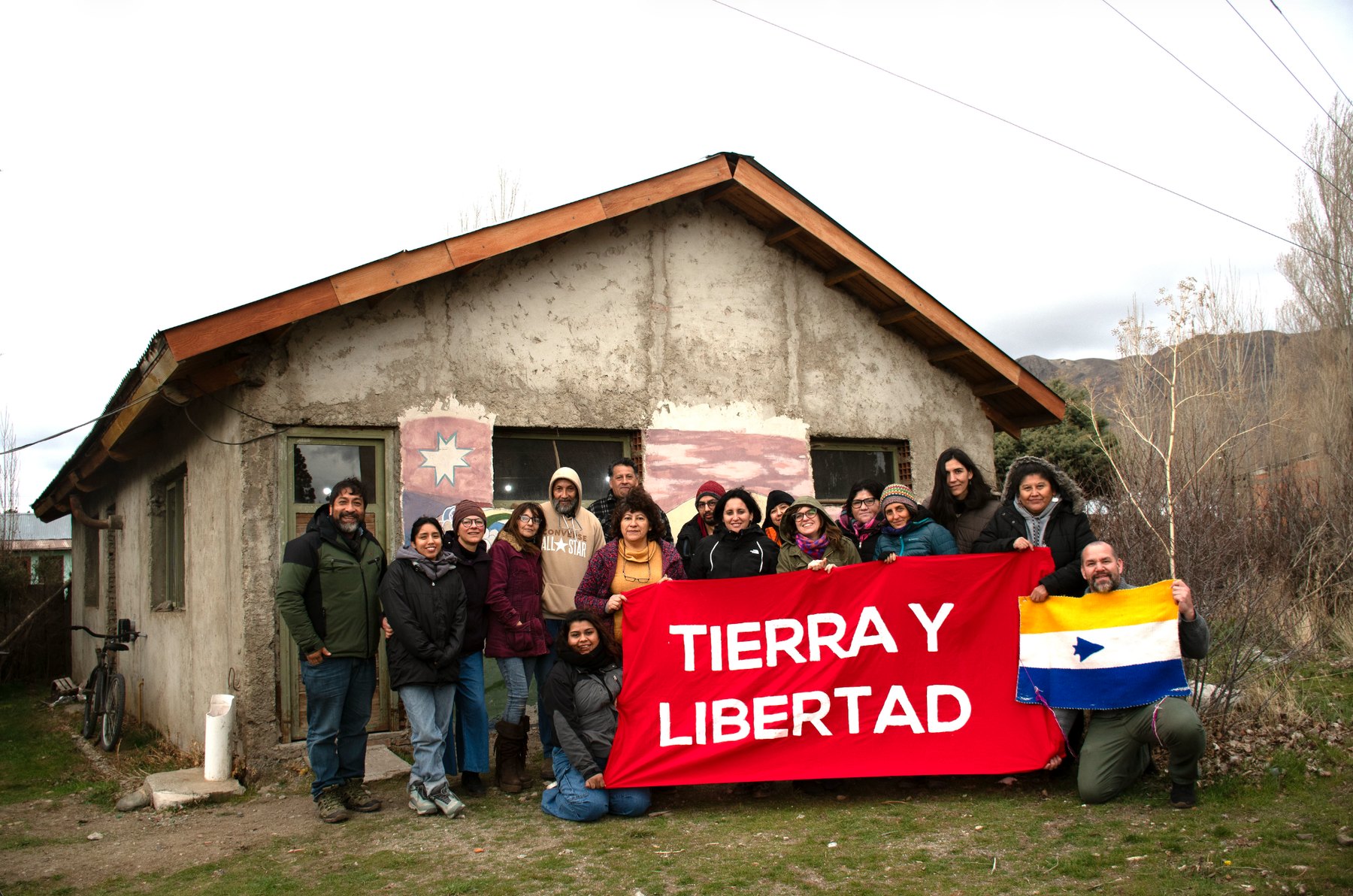
Radio Petü Mogeleiñ, El Maitén, Chubut, Argentina 2025. Foto por Obed Arango

NÚMERO 8 · 2026

La historia es nuestra
y la hacen los Pueblos

CARTA DEL EDITOR

Carta editorial: “La historia es nuestra y la hacen los Pueblos”

Foto por Obed Arango, Radio Petü Mogeleiñ, El Maitén, Chubut, Argentina 2025

“Colocado en un tránsito histórico, pagaré con mi vida la lealtad del pueblo. Y les digo que tengo la certeza de que la semilla que hemos entregado a la conciencia digna de miles y miles de chilenos, no podrá ser segada definitivamente. Tienen la fuerza, podrán avasallarnos, pero no se detienen los procesos sociales ni con el crimen ni con la fuerza. La historia es nuestra y la hacen los pueblos”

— Salvador Allende, 1973

Motivados por los hechos de los años 2025 y 2026, el actual número de REVARTE reflexiona sobre los pueblos y voces que resisten ante crímenes que han sorprendido a millones de habitantes del mundo por su crueldad, por el ejercicio autoritario del poder y por el descaro de sostener narrativas que deshumanizan a poblaciones completas del mundo.

REVARTE en este periodo conjunta un número de colaboradores que con valentía y con integridad denuncian los atropellos que han ocurrido en los Estados Unidos a través de la policía militarizada de I.C.E. que ha aterrorizado comunidades completas separando familias, hasta el pueblo Mapuche en la patagonia Argentina que defiende su historia y territorialidad que bajo el mandato de un desenfrenado presidente Milei, ven en riesgo la pérdida acelerada de sus ríos, lagos, montañas, estepas, bosques y tierras; al mismo tiempo no podemos ignorar el genocidio que se ha dado contra el pueblo palestino que ha dejado de ser parte de las noticias (https://news.un.org/es/story/2025/09/1540443), el asalto unilateral en Venezuela y el ataque injustificado contra Irán que entre otras atrocidades incluye la muerte de 168 niñas iraníes que se encontraban en su escuela, y una crisis mundial energética por el cierre del estrecho de Hormuz. Nuestra postura es la de defender los derechos humanos, de las comunidades, de las tierras y los seres que les habitan, y rechazar acciones fascistas contra inmigrantes, expresiones y acciones homofóbicas, islamófobas y antisemitas entre otras.
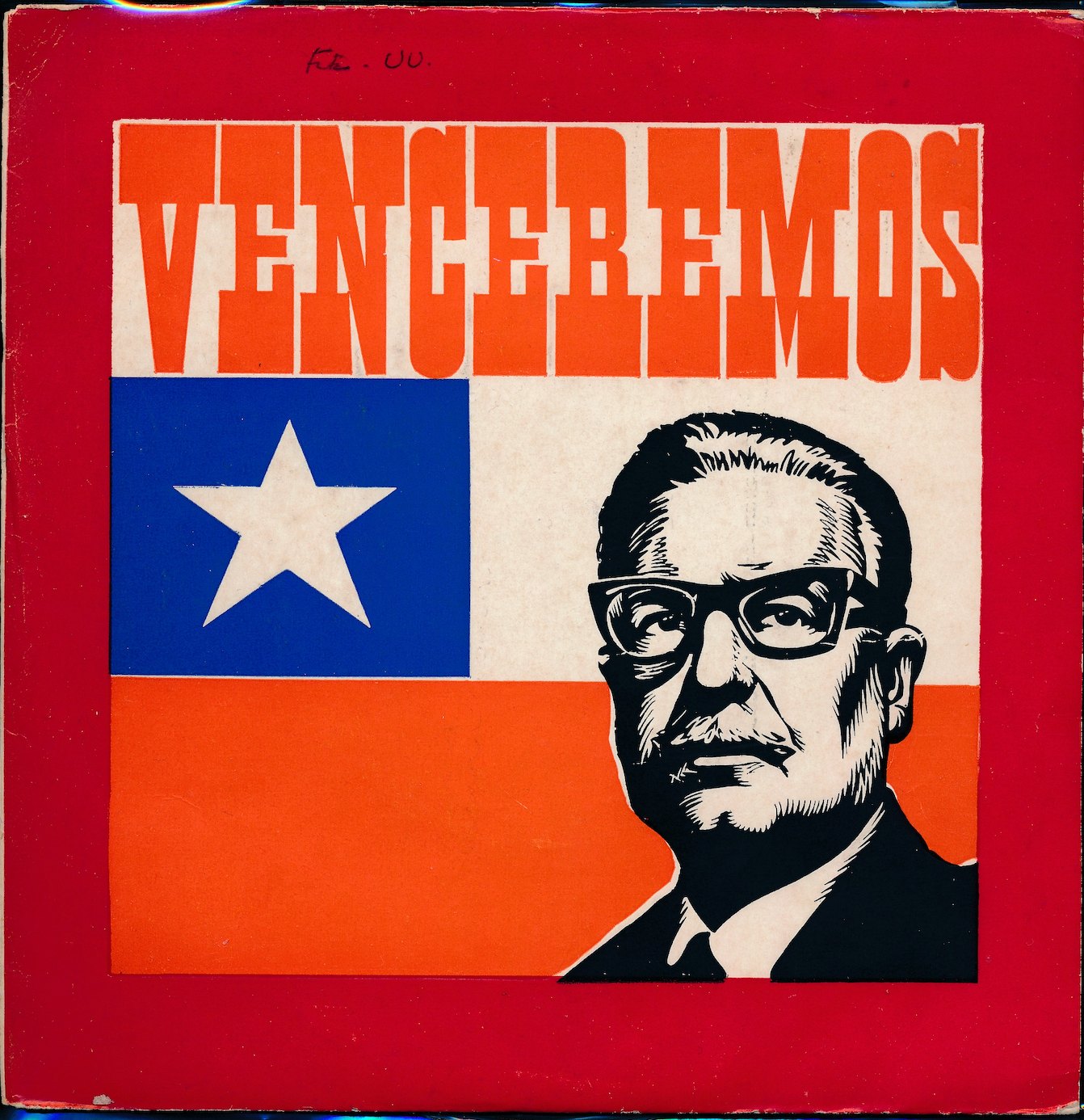
Portada del disco Venceremos con el último mensaje del presidente Salvador Allende

Portada del disco que contiene el último mensaje del presidente Salvador Allende, colección del colectivo REVARTE.

Fue el día 16 de junio del 2025 cuando 14 trabajadores inmigrantes fueron detenidos en el Mercado Super Gigante de West Norriton, una acción que iba dirigida a los dueños del negocio terminó en la mayor redada del este pueblo en las afueras de la ciudad de Filadelfia; detenidos sin orden hacia los trabajadores, un grupo de nacionales de México y Guatemala de tajo vio la separación de sus familias, el abandono a una madre de ochenta años que quedó sola sin sus hijos, un par de niñas menores de 9 años que preguntan por su padre, y jóvenes que vieron sus esfuerzos truncados. Desde febrero del 2025 hasta agosto del 2026 las acciones de I.C.E. han sido despiadadas, han abusado del poder y de la autoridad que se les ha dado, hemos presenciado asesinatos como son las muertes de Rubén Ray Martínez, Renee Nicole Good, Alex Petri, Lorenzo Salgado Araujo, entre muchos otros que han muerto también en los campos de concentración de ICE también llamados centros de detención que son cárceles que lucran con el dolor.

Las acciones de la administración actual han criminalizado al migrante y esa narrativa ha servido para que los sectores conservadores de los Estados Unidos sean indiferentes al abuso y persecución que las comunidades están padeciendo. Pero esa misma criminalización opera contra el pueblo palestino, charrúa y mapuche. Es decir, el abuso a uno de estos pueblos es el abuso de todos.
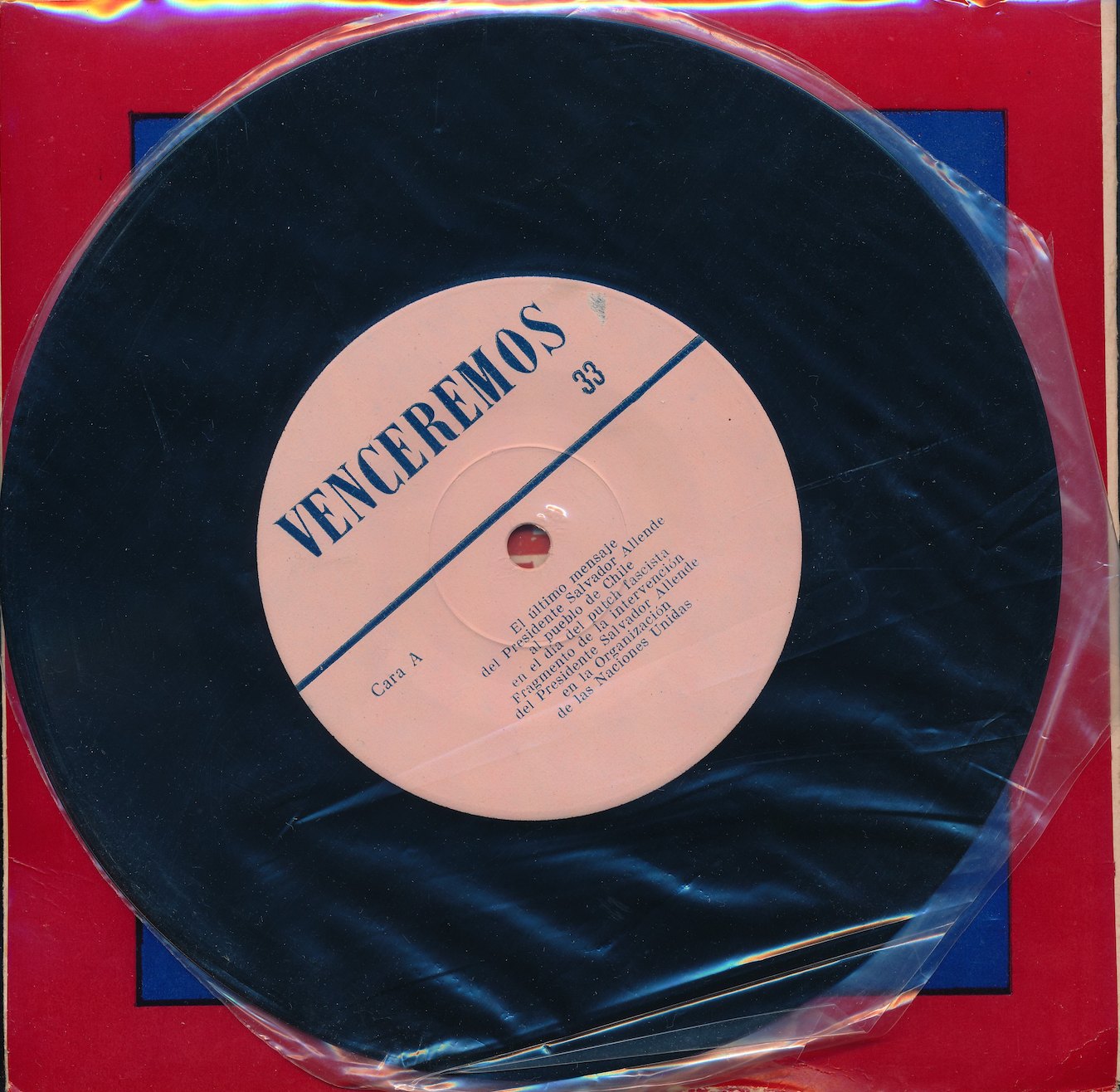
Disco Venceremos, cara A: el último mensaje del presidente Salvador Allende

Disco que contiene el último mensaje del presidente Salvador Allende, Colección del Colectivo REVARTE

En Uruguay, el pueblo Charrúa, y las diversas comunidades que se han organizado a través de las décadas demandan un reconocimiento de su existencia actual e histórica, hasta el día de hoy el gobierno de la República del Uruguay, considera que el genocidio de Salsipuedes marca el exterminio del pueblo Charrúa, narrativa oficial que le sirvió al sistema colonizador para justificar un despojo territorial que se extendió con latifundios y que vio en los pueblos originarios un estorbo a su avaricia. La historia escrita de Salsipuedes, no solo es trágica, sino que ha penetrado la identidad Uruguaya para separarse y negar sus raíces, y erigirse bajo una discursividad eurocéntrica. El pueblo Charrúa a través de militantes valientes encuentra en varias de sus comunidades, como la de Basquadé Inchalá entre otras, un caminar persistente para lograr un reconocimiento histórico, para esto han investigado a profundidad las raíces y han conjuntado a aquellos que reconocen sus raíces, sus ancestros y su descendencia, retan a la academia, a los discurso antropológicos que han pronunciado su funeral más de una vez, y confrontan con sabiduría la reivindicación histórica y actual. En este número compartimos parte de ese recorrido en la exhibición del Museo de las Migraciones y breves videos con protagonistas de esta lucha.

La patagonia Argentina a través de los siglos ha tenido que luchar con la narrativa de despojo de la territorialidad del pueblo Mapuche, y que de manera valiente se enfrenta a mineras, corporaciones, y conglomerados económicos. El despojo actual que hoy vemos, no es nuevo sino que se remonta a la campaña del desierto (1878 – 1885) que desembocó en la entrega de un millón de hectáreas que va del norte de la patagonia al sur, y que recorre la cordillera y la estepa siguiendo la ruta 40 que atraviesa el país. Al cumplimiento de los 100 años de ese despojo, el neoliberalismo que marcó al gobierno del expresidente Carlos Menem y quien facilitó la venta –a precio de nada– de esos mismo territorios a la empresa italiana Benetton que ha creado desastres ambientales como son los monocultivos de pino y la inserción de especies exóticas en la región. En contraste para el mapuche su territorio está atado a su cosmovisión, la tierra, las montañas, los ríos, los lagos, la estepa son seres, son casa, son hogar, el contraste de visión es diametralmente opuesta, mientras el neoliberalismo ve la territorialidad como espacios de explotación, el mapuche los ve como existencia.
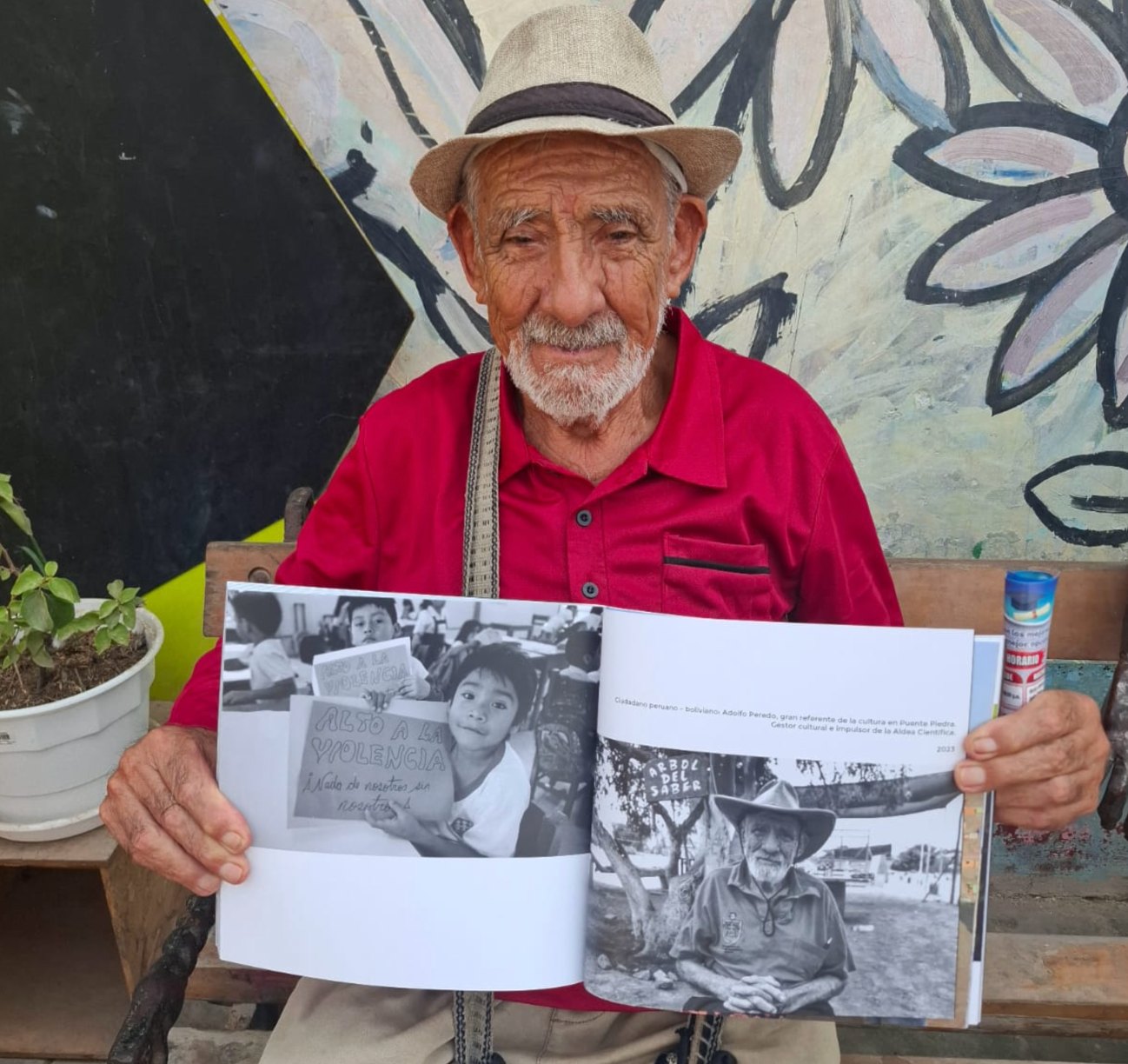
Maestro Adolfo Peredo muestra el libro Santa Rosa, Viva la comunidad

Maestro Adolfo Peredo muestra el libro: “Santa Rosa, Viva la comunidad”. Foto por Eddy Ramos

Celebramos la realización del libro: “Santa Rosa, Viva la comunidad” editado por “El Quijote para la vida” y por iniciativa del fotógrafo peruano Eddy Ramos, quien compiló imágenes que cuentan la historia de una comunidad que ha luchado contra la adversidad, y en la que se han establecido cientos de miles de personas, muchas de ellas inmigrantes del interior y de origen Quechua.

Ante un ambiente desolador, este número sobre todo honra las voces, esfuerzos y miradas que se levantan día a día y que resisten de forma valiente: las radios locales Che FM Comunitaria de Junín de los Andes, Radio Petü Mogeleiñ en el Maitén, Radio el Quijote en Puente Piedra, Perú, o el podcast “Diálogos de la Villa Inmigrante” de Filadelfia, representan algunas de las voces que no callan, ni ante la presión o los poderes que en algunos casos les han intentado callar, y que sostienen el dicho profundo del presidente Salvador Allende “no se detienen los procesos sociales ni con el crimen ni con la fuerza. La historia es nuestra y la hacen los pueblos”.
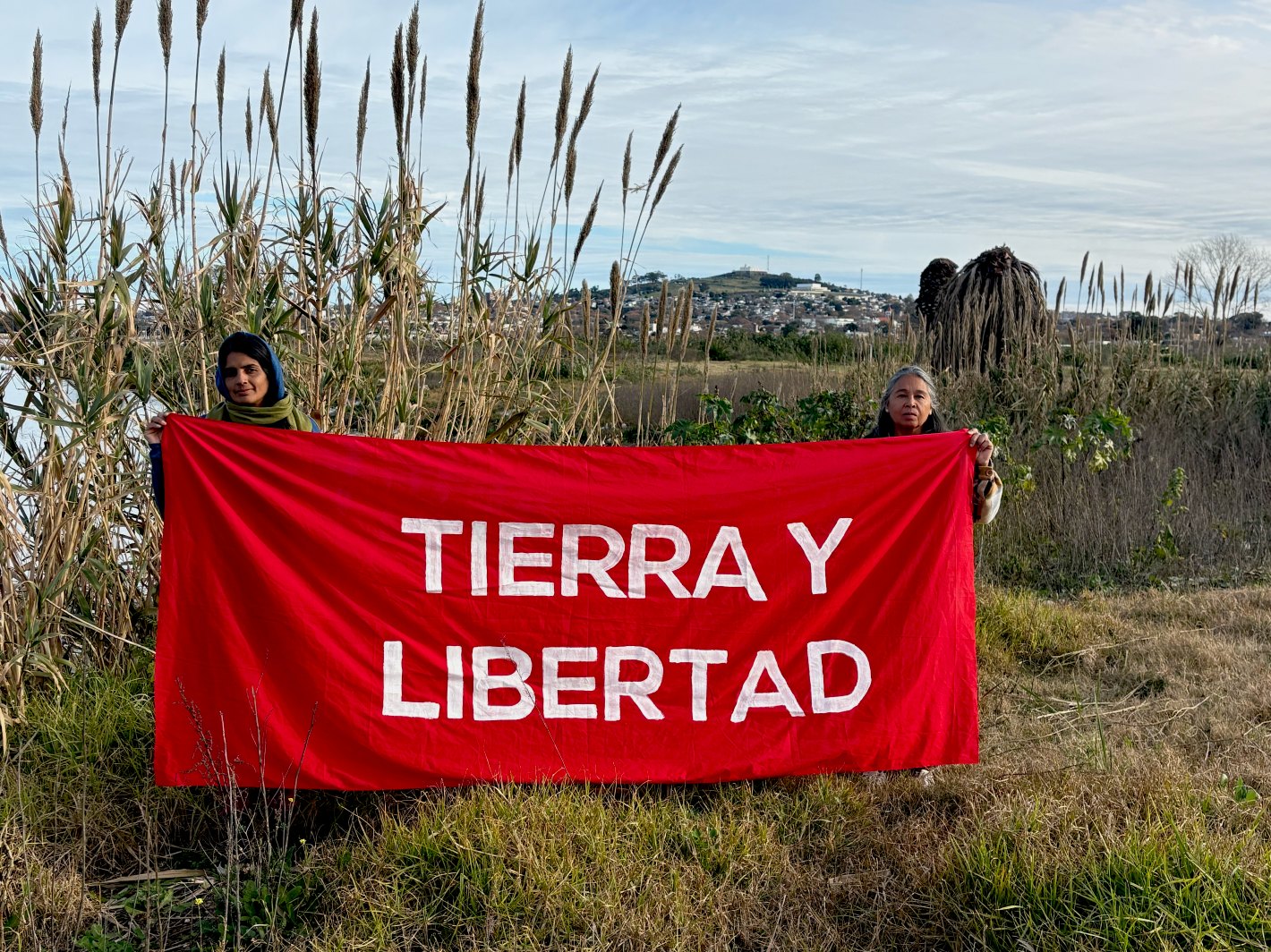
Tierra y libertad. La Teja, Montevideo, Uruguay, 6 de agosto del 2025

“¡Tierra y libertad!” Foto por Obed Arango, La Teja, Montevideo, Uruguay, 6 de agosto del 2025


Letter from the editor

Editorial Letter: “History Belongs to Us, and It Is Made by the People”

Photo by Obed Arango, Radio Petü Mogeleiñ, El Maitén, Chubut, Argentina, 2025

“Placed in a moment of historic transition, I will pay with my life for my loyalty to the people. And I say to you that I am certain that the seed we have planted in the dignified conscience of thousands and thousands of Chileans cannot be permanently cut down. They have the power; they may crush us. But social processes cannot be stopped by crime or by force. History belongs to us, and it is made by the people.”

— Salvador Allende, 1973

The events of 2025 and 2026 have compelled this issue of REVARTE to reflect on the communities and voices that continue to resist in the face of abuses that have shocked millions around the world. What has emerged in this period is not only the persistence of cruelty, but also the normalization of authoritarian exercises of power and the spread of narratives that seek to dehumanize entire populations.

This edition brings together contributors who write with courage and integrity about injustices unfolding across the Americas and beyond. Their accounts range from immigrant communities in the United States living under the fear generated by highly militarized Immigration and Customs Enforcement operations, to the Mapuche people in Patagonia, who continue to defend their history, culture, and territorial rights amid growing pressures on their lands and natural resources. They also examine the ongoing suffering of the Palestinian people, a humanitarian catastrophe that has too often faded from international headlines, as well as military interventions and conflicts that have brought devastating human consequences in countries such as Venezuela and Iran.

Our position is straightforward. We stand in defense of human rights, of communities, of the lands that sustain them, and of the living beings that inhabit those territories. We reject policies and practices that target immigrants, and we oppose all forms of hatred and discrimination, whether directed against people because of their ethnicity, religion, nationality, sexual orientation, or identity.

On June 16, 2025, fourteen immigrant workers were detained at the Super Gigante Market in West Norriton, Pennsylvania. What began as an operation reportedly aimed at the owners of the business quickly became one of the largest immigration raids in this community outside Philadelphia. Workers were taken into custody, families were separated, and entire households were thrown into crisis.

The consequences extended far beyond those detained. Elderly parents were left without caregivers. Young daughters found themselves asking when their fathers would return home. Students and young adults watched plans and aspirations unravel in an instant. Since early 2025, many immigrant communities across the United States have experienced heightened fear and uncertainty as immigration enforcement actions have intensified. For many observers, these measures have contributed to a broader climate in which migrants are portrayed not as neighbors and workers, but as threats.

Such narratives have consequences. When a population is criminalized, public indifference to its suffering often follows. Yet the experience of stigmatization is not unique to migrants. Similar dynamics have affected communities as diverse as the Palestinian people, the Charrúa of Uruguay, and the Mapuche of Argentina. An injustice directed at one people ultimately becomes an injustice that concerns us all.
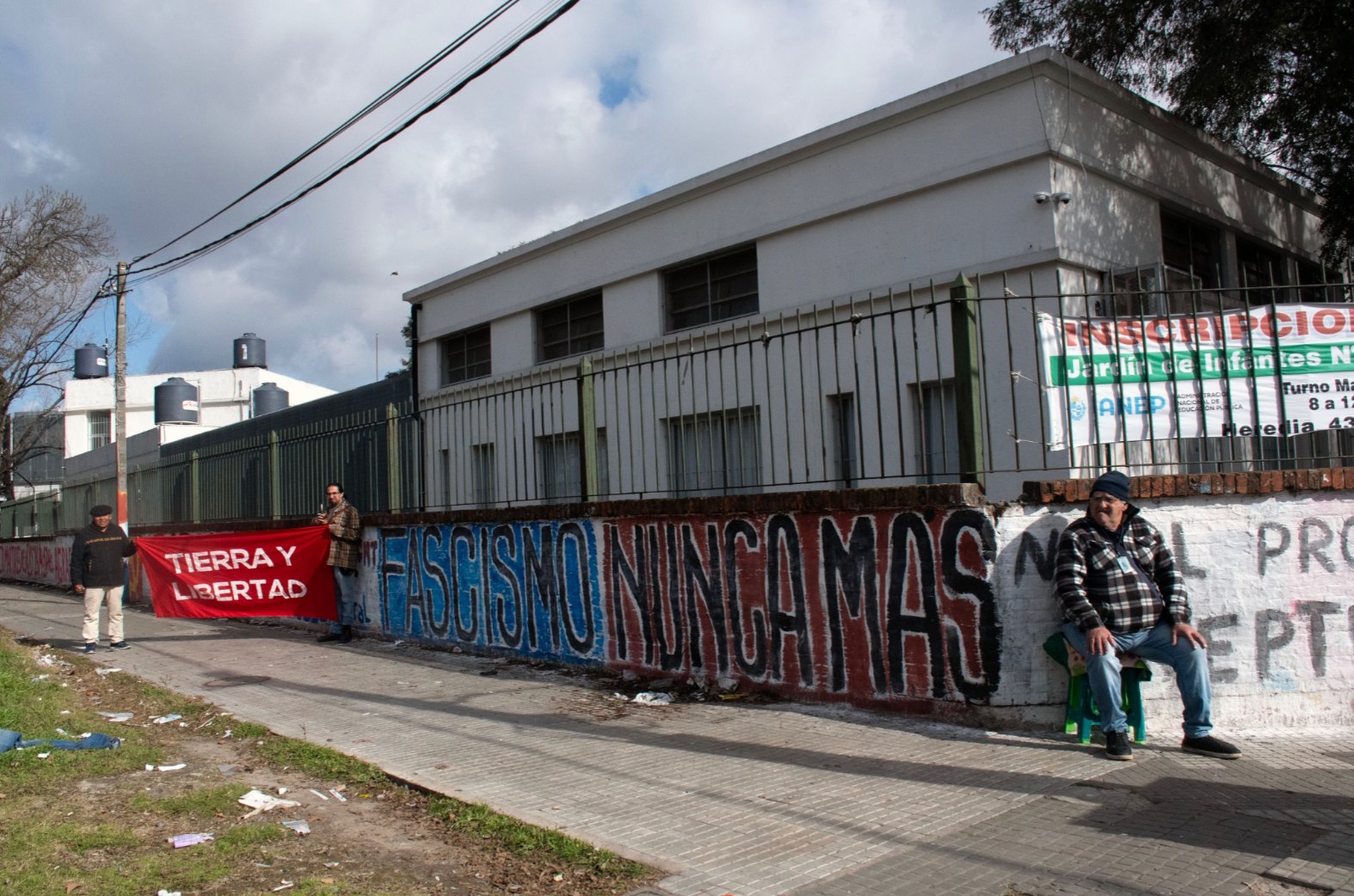
Tierra y libertad. La Teja, Montevideo, Uruguay, August 9, 2025

“¡Tierra y libertad!” Photo by Obed Arango, La Teja, Montevideo, Uruguay, August 9, 2025

In Uruguay, Charrúa communities and their allies have spent decades seeking recognition of both their historical presence and their continued existence today. The official narrative surrounding the 1831 massacre known as Salsipuedes has long reinforced the notion that the Charrúa people were effectively extinguished. For many activists and scholars, however, that story has served to obscure the continuity of Indigenous communities and to legitimize a history of territorial dispossession.

Across the country, organizations such as the Basquadé Inchalá community and others have undertaken the painstaking work of recovering genealogies, histories, and cultural memory. They challenge long-standing assumptions within public discourse and academia, confronting declarations of Indigenous disappearance with evidence of survival, resilience, and continuity. In this issue, REVARTE shares part of that journey through materials from the Museum of Migration and through testimonies from individuals engaged in this struggle for recognition.
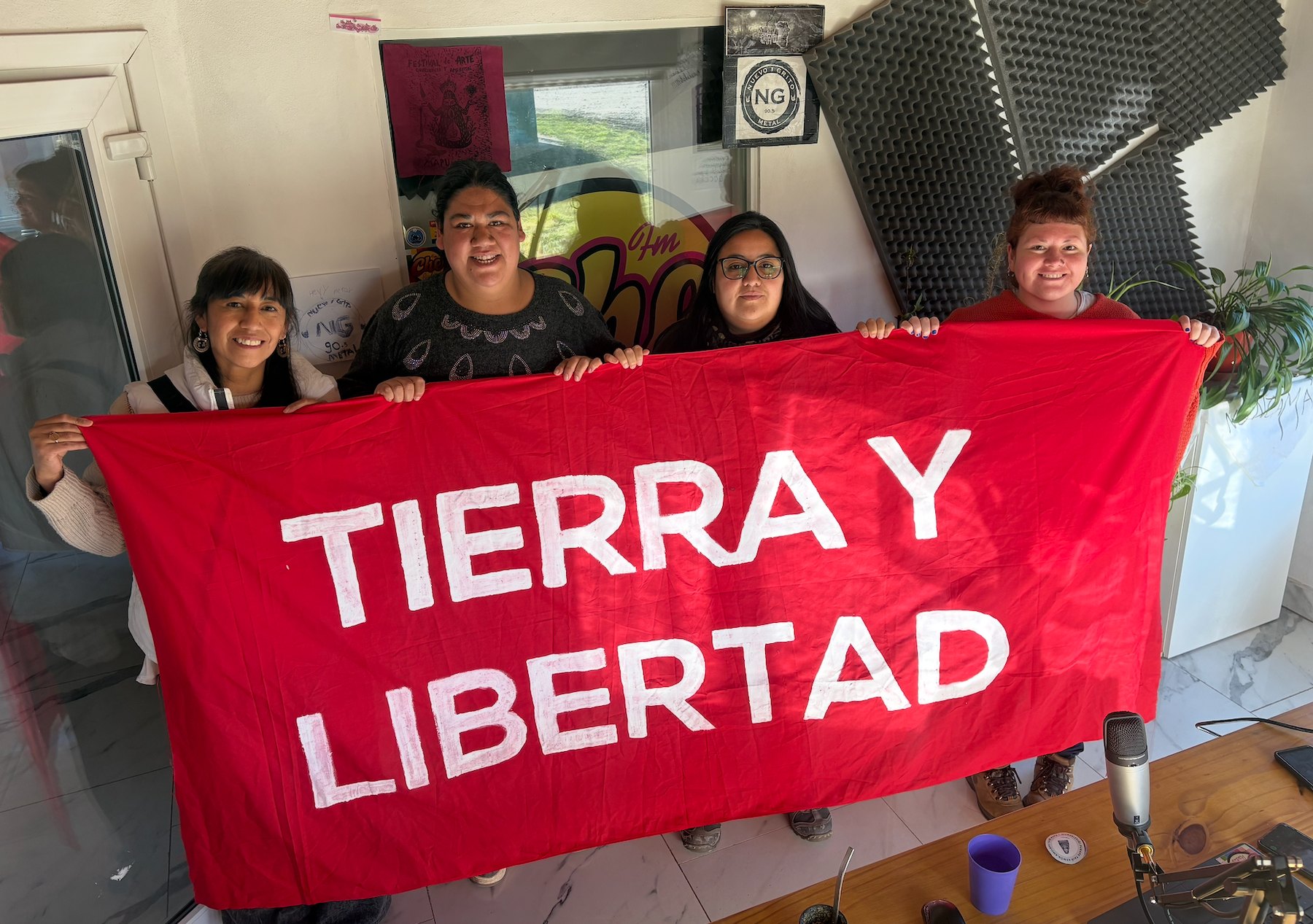
Tierra y Libertad, Che FM Community Radio in Junín de los Andes

“Tierra y Libertad”, Che FM Community Radio in Junín de los Andes. Photo by Obed Arango, 2025.

Farther south, in Argentine Patagonia, the Mapuche people continue a centuries-long defense of their territories against successive waves of displacement and resource extraction. The roots of the current conflict reach back to the nineteenth-century “Conquest of the Desert,” a military campaign that opened vast areas of Indigenous land to settlement and private ownership. Later economic policies accelerated that process, facilitating large-scale transfers of land and the expansion of corporate interests throughout the region.

At the heart of this conflict lies a fundamental difference in worldview. For many proponents of market-driven development, land is primarily a resource to be used, managed, and exploited. For the Mapuche, territory is inseparable from identity, spirituality, and existence itself. Mountains, rivers, lakes, forests, and plains are not commodities; they are relationships, responsibilities, and home.

We celebrate the publication of Santa Rosa: Long Live the Community, produced by El Quijote para la Vida through the initiative of Peruvian photographer Eddy Ramos, who compiled a powerful collection of images that tell the story of a community that has persevered in the face of adversity. Today, Santa Rosa is home to hundreds of thousands of people, many of them migrants from Peru’s interior regions and of Quechua heritage.

In the midst of a troubling and often discouraging landscape, this issue is above all a tribute to the voices, efforts, perspectives, and acts of courage that rise every day in resistance. Community radio stations such as Che FM Comunitaria in Junín de los Andes, Radio Petü Mogeleiñ in El Maitén, Radio El Quijote in Puente Piedra, Peru, and the Philadelphia-based podcast Diálogos de la Villa Inmigrante represent just a few of the voices that refuse to be silenced. Despite pressures and attempts by powerful interests to suppress them, they continue to speak, report, and organize, embodying the profound words of President Salvador Allende: “Social processes cannot be stopped by crime or by force. History belongs to us, and it is made by the people.”

Ver todo el Número 8 / See the full issue →

¿El preámbulo de la dictadura Trump?

RevarteColectiva · July 15, 2025 ·

La Villa Inmigrante 

Fotos y texto por Obed Arango

Click here for English

4805667436_bfc2fa2df9_b.jpg

Foto por Obed Arango, Washington D.C.   

La constitución de lo Estados Unidos es muy clara en la enmienda décima cuarta promulgada el 13 de junio de 1866, Sección 1 que dice: “Todas las personas nacidas o naturalizadas en los Estados Unidos, y sujetas a su jurisdicción, son ciudadanos de los Estados Unidos y del Estado en el que residen”. La ley es clara, incluso cuando esta enmienda ha querido ser retada como fue en el caso  de La Ley de Exclusión China promulgada en 1882, y que desemboco años después en el caso Estados Unidos vs. Wong Kim Ark, la Corte Suprema falló a favor de Wong, afirmando que cualquier niño nacido En EE. UU., es ciudadano independientemente del estatus migratorio de sus padres. Este caso es clave para la situación actual, pues es el precedente más claro ante el deseo de Trump de eliminar la ciudadanía por nacimiento en territorio nacional.

La orden ejecutiva promulgada por Trump el 20 de enero del 2025 y clasificada como Executive Order (EO) 14160 y llamada “Protegiendo el significado y el valor de la ciudadanía estadounidense” en términos generales establece que los hijos de personas que ingresan a los Estados Unidos de manera indocumentada o con una visa temporal no tienen derecho a la ciudadanía automática. Esto considera visa de turista o de estudiante, y la excepción es si el padre es ciudadano estadounidense, entonces esto no aplica. 

Para el 23 de enero de 2025: El juez del Tribunal Federal de Distrito, John C. Coughenour, bloqueó la orden por catorce días, calificándola de “manifiestamente inconstitucional”, en los siguientes días se sumaron acciones similares en 22 estados. Trump reto a las cortes federales y el caso así llegó a la Corte Suprema.

El caos llegó el pasado 27 de junio cuando la Corte Suprema limitó los mandatos judiciales a nivel nacional, es decir le quito poder a las cortes federales para limitar las ordenes ejecutivas. La corte no quiso entrar en el contenido del decreto porque evidentemente es anticonstitucional, pero deja un limbo jurídico ¿Los hospitales deben obedecer a la constitución o a la orden ejecutiva? En todo país parlamentario y democrático la constitución es el documento supremo, y es solo en las dictaduras en el que el decreto de quien manda esta sobre la constitución. 

Si la corte suprema no da claridad estamos en el preámbulo de una dictadura. 


The Prelude to a Trump Dictatorship?

The Immigrant Village

Photos and Text by Obed Arango

4455342089_80ed297b2a_b.jpg

The Constitution of the United States is very clear in the Fourteenth Amendment, enacted on June 13, 1866. Section 1 states: “All persons born or naturalized in the United States, and subject to the jurisdiction thereof, are citizens of the United States and of the State wherein they reside.” The law is clear, even when this amendment has been challenged—as it was with the Chinese Exclusion Act of 1882. That law eventually led to the case United States v. Wong Kim Ark, in which the Supreme Court ruled in favor of Wong, affirming that any child born in the U.S. is a citizen, regardless of their parents’ immigration status. This case is crucial to the current situation, as it sets the clearest precedent in light of Trump’s desire to eliminate birthright citizenship on U.S. soil.

The executive order issued by Trump on January 20, 2025—classified as Executive Order (EO) 14160 and titled “Protecting the Meaning and Value of American Citizenship”—generally states that children of people who enter the United States undocumented or with a temporary visa do not have the right to automatic citizenship. This includes tourist and student visas. The only exception is if one of the parents is a U.S. citizen—then the order does not apply.

By January 23, 2025, Judge John C. Coughenour of the Federal District Court blocked the order for fourteen days, calling it “manifestly unconstitutional.” In the following days, similar actions were taken in 22 states. Trump challenged the federal courts, and the case ultimately reached the Supreme Court.

Chaos erupted on June 27 when the Supreme Court limited nationwide judicial mandates—essentially stripping federal courts of the power to block executive orders nationwide. The Court refused to address the content of the executive order, as it is clearly unconstitutional, but this decision has left a legal vacuum: Should hospitals obey the Constitution or the executive order?

In any democratic and parliamentary country, the Constitution is the supreme law of the land. Only in dictatorships does the decree of the ruler override the Constitution.

If the Supreme Court does not provide clarity, we are witnessing the prelude to a dictatorship.

La destrucción de sueños

RevarteColectiva · March 19, 2025 ·

La mentira, la violencia mediática y la deshumanización de la población migrante

Por Obed Arango

Click here for English version

Dibujo de una adolescente de 13 años.

El pasado 7 de noviembre de 2024, ni siquiera habían transcurrido 24 horas desde el anuncio de la victoria electoral del Sr. Trump cuando jóvenes y niños comenzaron a reportar casos de bullying y violencia. ¿Cómo pudo la violencia verbal post-electoral manifestarse de inmediato entre niños y adolescentes en las escuelas? ¿Cómo es que los espacios públicos, los salones de clase y los autobuses escolares se llenaron tan rápidamente de agresiones anti-inmigrantes?

Atrapados en sus emociones y pensamientos, muchas de las víctimas no encontraban las palabras para expresar lo que sentían. En su lugar, recurrieron al lápiz, los colores y el papel para plasmar su experiencia. Durante aquella noche y las frías tardes de un largo invierno, han surgido dibujos que reflejan los peligros de la violencia mediática que absorbieron y que deshumaniza a sus familias y a la población inmigrante en general, especialmente a quienes no cuentan con documentos.

Este ensayo debe leerse desde dos perspectivas: la fuerza expresiva de los dibujos creados por niños, niñas, adolescentes y adultos, complementada con las fotografías históricas que incluyo, y el análisis político que presento. Sin duda, las imágenes hablan con una contundencia que las palabras muchas veces no logran alcanzar. Espero que nos inviten a reflexionar sobre los tiempos que vivimos y, más aún, nos impulsen a la unidad. Frente a la fragmentación que nos rodea, la humanización y la unidad siguen siendo el antídoto más poderoso.

La mentira

El psicólogo Tom Stafford en su artículo para la BBC “How liars create the ‘illusion of truth'” comentó: “La repetición hace que un hecho parezca más cierto, independientemente de si lo es o no. Comprender este efecto puede ayudarte a evitar caer en la propaganda. ‘Repite una mentira con suficiente frecuencia y se convierte en verdad’, es una ley de la propaganda a menudo atribuida al nazi Joseph Goebbels” (Stafford, 2016).

Siguiendo el manual nazi de Goebbels, la campaña de Trump estuvo plagada de declaraciones sin sustento que constantemente debían ser desmentidas. Sin embargo, con el megáfono en mano y consciente de que millones lo escucharían o leerían, la propagación de sus mentiras y falacias era mucho más rápida que el tiempo necesario para refutarlas. Así, cuando los datos finalmente se aclaraban, ya había nuevas afirmaciones por desmentir. Y esa continúa siendo su estrategia. No hay día en que no haga declaraciones carentes de veracidad (Uribe, 2024).

Sin embargo, Trump encuentra en sus allegados a quienes le han dado forma a su propaganda mediática, entre ellos Stephen Miller, a quien desde el 2016, como profesor de comunicación y ciencias políticas, he seguido de cerca su papel tanto en las campañas presidenciales como en su manejo de los medios. Miller, graduado en ciencias políticas por la Universidad de Duke, ha construido una trayectoria marcada por ataques y señalamientos hacia grupos minoritarios. Ha promovido la islamofobia, arremetido contra los movimientos chicanos y los inmigrantes, y acusado a pensadores y artistas de color de ser “racistas” contra los blancos, invirtiendo así la narrativa de la opresión, como se dice popularmente, “volteando la mesa”

Dibujo de niño de 11 años

Desde hace años, he señalado que Miller es uno de los principales ideólogos del movimiento MAGA y uno de sus comunicadores más efectivos. Se ha convertido en el Goebbels de Trump, utiliza con gran habilidad las falacias para dar apariencia de lógica al discurso de odio. Se victimiza y victimiza a la supremacía blanca, así como a los grupos de poder, mientras acusa a las minorías de los mismos actos de los que históricamente han sido víctimas.

El racismo de Miller no se esconde. En varias ocasiones, ha declarado abiertamente la supuesta superioridad de la cultura occidental. Recomiendo leer el artículo de opinión de Jean Guerrero en el New York Times, titulado “El Estados Unidos Distópico de Stephen Miller” (2020), donde se expone su influencia y visión política, y para tener una visión más precisa de este personaje.

“El lenguaje en la convención proviene de la teoría de la conspiración del ‘genocidio blanco’, que advierte, entre otras cosas, que las personas negras y morenas destruirán la civilización blanca con ayuda de sus aliados antirracistas. Hace eco de la novela racista-distópica El campamento de los santos, que Stephen Miller, asesor principal de políticas y redactor de discursos de Trump, promovió en 2015 a través Breitbart, un sitio web de derecha” (Guerrero, 2020).

Dibujo de niño de 9 años

¿Cómo funcionan las falacias?

Una falacia es, en esencia, una mentira disfrazada de razonamiento lógico. Se basa en una declaración falsa cuya estructura engañosa la hace parecer verdadera. Las falacias suelen utilizarse para justificar posturas racistas, clasistas, xenófobas, religiosas o nacionalistas, y en el ámbito político, su uso es casi siempre intencional.

El mayor peligro surge cuando las falacias no solo dominan el discurso público, sino que también se convierten en políticas públicas y prácticas sociales. A diario nos enfrentamos a falacias que, aunque repugnantes, se han normalizado en la cultura, la sociedad y el gobierno.

A continuación, presento algunos ejemplos —aunque preferiría no hacerlo, es necesario para evidenciar cómo se insertan en nuestro entorno—. La última de ellas la expongo específicamente para analizar y desenmascarar las falacias en los discursos de Donald Trump.

Estas son ejemplos claros de falacias que se utilizan para justificar el clasismo y perpetuar prejuicios:

“El que trabaja es rico e inteligente, por tanto, el pobre es tonto y flojo.”

Esta es una falacia de causa falsa: Se establece una relación errónea entre riqueza e inteligencia, cuando en realidad hay múltiples factores estructurales que influyen en la situación económica de una persona, como el acceso a oportunidades, la desigualdad social o la explotación laboral.

Esta falacia refuerza estereotipos dañinos y normaliza la discriminación, justificando el clasismo bajo una apariencia de razonamiento lógico de la meritocracia, además que culpa al pobre de su situación para no reconocer factores de explotación y opresión.

La falacia inaugural de Trump:

“Cuando México envía a su gente, no envía a los mejores. No te envía a ti. No te envía a ti. Envía a gente con muchos problemas, y nos los trae. Traen drogas. Traen delincuencia. Son violadores. Y algunos, supongo, son buenas personas”. (Trump, 2015).

Esta declaración de Donald Trump es un claro ejemplo de falacia de universalización o en palabras de John Thompson es una estrategia de la ideología como lo comenta en su libro “Ideología y cultura moderna” publicado por la UAM en México (1991), combinada con una falacia de apelación al miedo.

Universalización: Se toma un grupo reducido de personas con antecedentes delictivos y se extiende esa característica a toda una comunidad, en este caso, a los inmigrantes mexicanos.

Apelación al miedo: Se usa un discurso alarmista para asociar la inmigración con el crimen y generar temor en la población.

Falsa concesión: Al final, dice “y algunos, supongo, son buenas personas”, lo que intenta suavizar el discurso, pero no cambia la premisa principal de criminalización.

Este tipo de retórica ha sido una herramienta clave en la estrategia política de Trump para justificar políticas migratorias y fomentar el rechazo hacia los inmigrantes.

Dibujo de niño de 11 años

Las falacias suelen acusar al otro de lo que el victimizador hace. Una de las falacias más peligrosas de las últimas semanas es señalar a los programas de “Diversidad, equidad, e inclusión” (DEI) de ser programas racistas, cuando de hecho estos programas surgen como parte de la lucha anti-racista y por los derechos civiles que se aprobaron en 1964 para prevenir justo prácticas racistas de los sistemas sociales. Las iniciativas DEI emergieron a partir del reconocimiento de que las condiciones sociales marcadas por 400 años de colonialismo, 246 años de esclavitud y 100 de las leyes Jim Crow y Juan Crow, la suma de estos periodos históricos crearon las instituciones modernas diseñadas desde la supremacía blanca, la discriminación y la segregación social.

Trump al atacar y eliminar los programas DEI presenta una falacia de inversión de víctima y agresor, donde los grupos históricamente privilegiados se presentan como víctimas de los cambios sociales que buscan equidad. Es una estrategia utilizada para desacreditar movimientos de justicia social y evitar cambios estructurales en favor de la igualdad.

Se puede ver cómo esta narrativa distorsiona la realidad:

Deslegitimación histórica: Ignora que los programas de DEI existen para corregir siglos de desigualdad estructural.

Falacia del falso dilema: Presenta la inclusión de grupos marginados como una amenaza en lugar de un avance hacia la equidad.

Uso de la retórica de la “discriminación inversa”: Afirma que los programas DEI discriminan a los grupos dominantes, cuando en realidad buscan nivelar el acceso a oportunidades.

El peligro de la falacia es cuando pasa de discurso a ser un acto y una política pública, de esta manera Trump por medio de una acción ejecutiva ha forzado la eliminación de programas de diversidad, equidad e inclusión en universidades, negocios, corporaciones, y organizaciones sin fines de lucro.

La narrativa de Trump y otros opositores del DEI se basa en una falacia que omite deliberadamente la historia de segregación y exclusión sistemática en Estados Unidos. Al acusar a las iniciativas DEI de ser “racistas” contra los blancos, en realidad están aplicando una “falacia de falsa equivalencia” que explico más adelante, pues intenta detener el avance de las minorías que retan el status quo histórico.

Reflexión de adulto

Falacia de falsa equivalencia

  • Equiparar la lucha por la equidad con una forma de “discriminación inversa” es engañoso porque ignora la diferencia de poder y contexto histórico.
  • No es lo mismo implementar políticas que den acceso a oportunidades a comunidades marginadas que imponer barreras estructurales que han existido por siglos para beneficiar a un solo grupo.

Falacia del statu quo

  • Se asume que el sistema actual es neutral y justo, cuando en realidad fue diseñado bajo un “ethos segregacionista” que favoreció sistemáticamente a la comunidad blanca.
  • La “meritocracia” solo funciona si todas las personas comienzan desde el mismo punto de partida, lo cual no ha sido el caso en Estados Unidos.

El legado de la exclusión

Los grupos históricamente marginados han sido víctimas de políticas estatales que reforzaron la supremacía blanca. Algunos ejemplos incluyen:

  • Genocidio de los pueblos indígenas y su desplazamiento forzado.
  • El sistema de esclavitud, seguido por segregación racial de la comunidad afroamericana, con leyes como Jim Crow, y Juan Crow contra los hispanos.
  • Internamiento de japoneses-americanos durante la Segunda Guerra Mundial, cuando se proclamó la Ley 1798, como ahora intenta hacerlo, al declarar al extranjero como enemigo de guerra.
  • Las políticas públicas sujetas de “redlining” – línea roja– que marcaba los lugares donde no se recomendaba inversión, renovación y desarrollo, para segregar a poblaciones completas y crear barrios de pobreza creciente.
  • Discriminación estructural contra latinos y asiáticos en vivienda, educación y empleo.

Cuando Trump y sus aliados atacan el DEI, lo hacen con la intención de preservar los privilegios históricos de la supremacía blanca, usando falacias para justificar la eliminación de políticas diseñadas para corregir siglos de opresión.

El Tea Party

Pero en la falacia Trump ha logrado en sus discursos que los victimarios se presenten como víctimas, y fue justo desde este paradigma de victimización “blanca” que se consolidó el movimiento MAGA y que encuentra sus antecedentes en el Tea Party de la década de los 10’s de este milenio.

Explico, en el año 2008 los grupos de supremacía blanca vieron con preocupación la llegada de Obama al poder –el primer presidente de origen africano y de color–, él marcó un parteaguas del “nuevo Estados Unidos” donde se cultivaba una mayor consciencia de la diversidad, la equidad, el lenguaje, el reto al patriarcado, y a las políticas que sirvieron para oprimir a las minorías de color. Obama y su familia tuvieron que resistir ataques que ponían en duda incluso el lugar de nacimiento de Obama, los presentaban como extremistas islámicos.

Dibujo por adolescente de 13 años

Donald Trump fue el precursor de muchas de estas mentiras, y con una cobardía total nunca presentó las pruebas, ya desde entonces daba indicios públicos de su manejo de las declaraciones falsas, del desprestigio, del bullying social y del miedo al “otro” –no blanco–, como catalizadores para congregar masas. La llegada de Obama también simbolizó el avance de un grupo que históricamente había sido esclavizado, limitado, confinado y oprimido. La llegada de Obama a la Casa Blanca era una pérdida de control y poder. Los grupos conservadores señalaron que las iniciativas DEI, de acción afirmativa y las teorías críticas de raza y de género eran las causantes de la revolución de pensamiento social que se vivió a inicios de siglo. La teoría crítica de raza desenmascara el cómo funciona el racismo sistémico en las instituciones, tanto privadas como públicas.

La llegada de Obama al poder motivó que los grupos que se habían desarticulado encontraran un nuevo motivo, y así surgió el Tea Party – el ala más conservadora del partido republicano en aquel entonces- que emergió con fuerza con un discurso nacionalista, religioso, católico y evangélico conservador donde la identidad WASP (White Anglo-Saxon Protestant) buscó erigirse nuevamente como la identidad nacional para tratar a los demás como extranjeros. John McCain, un republicano conservador que no coqueteaba con esa nueva ala creciente de la extrema derecha, tuvo que incluir a una de sus representantes como lo fue Sarah Palin, quien encarna los temores, la ignorancia y el discurso que tomaría una gran fuerza con el movimiento MAGA.

Dibujo niña de 10 años

La realización de políticas públicas a partir de la falacia

Trump, bajo la falacia de que los blancos son víctimas tanto de los inmigrantes como de los programas de diversidad, equidad e inclusión, desde el primer día gobierna a punta de pluma con decretos presidenciales, varios de estos se saltan la división de poderes, la constitución y el sistema judicial. Y en este remolino, Trump acude a otra falacia, se llama a sí mismo persona de “La ley y el orden”, porque sabe que esta es una postura que es aceptada en el centro del “ethos estadounidense” aunque él ha sido convicto y declarado culpable de malversación de fondos, con 34 cargos y haber pagado a una estrella de porno por su silencio. Sin embargo, él se coloca bajo el manto de la imagen de “la ley y el orden” y bajo ese manto se presenta ante el ciudadano americano como alguien que captura inmigrantes indocumentados que, ante su retórica, son “criminales” aunque frente a la ley el cruce de la frontera o alargar la visa es una falta civil. A Trump no le importa conocer ni respetar la ley y no desea distinguir, no desea respetar la constitución. La parte trágica de esto es que ha logrado incluso engañar a un grupo de blancos moderados que han llegado a creer que las redadas de Trump están justificadas y que están motivadas por seguridad. Trump nunca podrá ver que el 97 por ciento de los inmigrantes son trabajadores, contribuyentes, creadores de empleos, y que han logrado revitalizar pueblos completos.

Pero no nos engañemos, Trump no está recogiendo personas con récord criminal solamente, Trump explícitamente habla de deportar a todos los inmigrantes indocumentados sin importar la vida que han establecido aquí y la gran contribución que han hecho. La meta de Trump y del uso de la retórica y narrativa incriminatoria contra el migrante es despojarlos de cualquier humanidad, y con ello poderles despojar de sus derechos civiles y humanos. La solución inteligente sería hacer la reforma migratoria para legalizar a todos aquellos que sin récord criminal han construido una vida de trabajo y han enriquecido la vida de la nación. Pero abiertamente él declara que deportará a todos, incluso a hijos ciudadanos para que en su “benevolencia” no separe a la familia. En todo el segmento de la entrevista retrata a los inmigrantes como criminales y nunca reconoce los aportes, excepto con el grupo DACA con quienes fue muy duro en el primer periodo y suspendió el programa durante su primera presidencia. Su falta de perspectiva, poner a todos en una imagen criminal y no considerar una reforma migratoria es parte de la falacia que maneja. Y desde hace unas semanas convocó a un registro de inmigrantes indocumentados, iniciativa que carece de infraestructura (NBC News, 2024, 19:30-23:15).

Foto por Obed Arango, Washington D.C. 2010 ©

La pérdida de la normalidad y el surgimiento de un estado fascista

Lo que hemos presenciado estos meses, y que los dibujos de los niños advierten, es el surgimiento de un estado totalitario y fascista. En el que la expurgación del otro se centra en el discurso, se les califica de detractores de la cultura nacional, de la historia y de las instituciones, con ello, el inmigrante, el islámico, el palestino, el chino, quien se identifica como miembro de la comunidad LGBTQ+. Sus primeras acciones fueron desconocer los derechos de los migrantes y de las comunidades diversas. Borró institucionalmente las identidades de género, y ha justificado vigilar a estos grupos para pasar por encima de las libertades individuales. Ese abuso y ese control se ha dado al imponer incluso a estados alinearse con sus decretos o sancionarles con presupuesto federal.

En ese mismo tono se inmiscuye en las universidades, sus contenidos y programas, desarrolla listas negras institucionales, y se impone sobre sus presupuestos de investigación. Busca asimismo desmantelar el sistema educativo para crear una oligarquía que lo administre, de esta manera convierte los derechos cívicos en mercancías.

Una vez posicionado, la hipocresía es abierta y la falacia se manifiesta con mayor fuerza cuando por un lado pide respeto a las fronteras, por otro, sin respeto diplomático declara a Canadá como estado 51 y al primer ministro como gobernador. O cuando expresa que se apropiará de Groenlandia, y en uno de los decretos aparentemente más ridículos declara a “El golfo de México” como “el golfo de América” sin reconocer 400 años de historia. El fascismo parte de negar la historia, no respeta la constitución, el sistema federal jurídico —busca imponerse sobre él— y la división de poderes. El sistema totalitario no reconoce límites y el mayor ejemplo de ello fue la invención de DOGE, esa secretaría inventada, no reconocida por el congreso pero a la que se le ha dado todo el poder para cortar de tajo empleos federales, desaparecer agencias, e imponer un sistema de vigilancia en el que coloca personas leales a él y no a servidores públicos para que desempeñen con independencia sus tareas.

Otra característica que distingue al estado fascista es el control de la libertad de expresión, y presiona para la desaparición de los medios públicos como el National Public Radio (NPR) o la televisión pública PBS, incluso a la agencia de noticias más importante de los Estados Unidos y de mayor presencia mundial como lo es Associated Press, se opone a la libertad de expresión.

Foto por Obed Arango, encuentro entre manifestantes del Tea Party con manifestantes pro reforma migratoria, 2010 ©

Los antecedentes en la zona de Filadelfia

Foto por Obed Arango, South Philly, 2010 ©

En Filadelfia quizá uno de los ejemplos más claros de los antecedentes MAGA fue el Tea Party, y se manifestó en los Philly Steaks Geno’s cuyo dueño Joe Vento impuso que solo se podía pedir en inglés pues veía como una amenaza el crecimiento de la comunidad mexicana y centroamericana que revitalizaba un sur de Filadelfia que en los noventa se encontraba en ruinas. Los nuevos migrantes componían casas, abrían nuevos negocios y el mercado italiano de inicios del siglo 20 encontraba nueva vida y nuevas identidades a inicios del nuevo milenio. Vento olvidó sus raíces migrantes, asimilado, no recordó que en otros tiempos la lengua que se escuchaba en aquellas calles era italiano que se fue sustituyendo por un proceso opresor y de asimilación, pero no así el mexicano ni el latinoamericano, que ha resistido el proceso de asimilación para enriquecer el barrio con negocios, empleos, arte, murales, e iniciativas culturales.

Joe Vento falleció en el año 2011 pero a su paso dejó organizado el partido del Tea Party de Filadelfia que sería el preámbulo MAGA. Trump en el país capitalizó sobre todos los “Joe Vento” del país y se adaptó a su discurso xenofóbico, nacionalista, religioso y conservador.

Foto por Obed Arango, encuentro entre manifestantes del Tea Party con manifestantes pro reforma migratoria, 2010 ©

Hoy vemos la realización del odio racial que se cultivó a mediados de la primera década del nuevo milenio y en el que la villa inmigrante ha navegado. Y seguiremos navegando en unidad.


The destruction of dreams:

Lies, media violence and the dehumanization of the migrant population

10 years old kid

On November 7, 2024, not even 24 hours had passed since the announcement of Mr. Trump’s electoral victory when young people and children began to report cases of bullying and violence. How could post-election verbal violence manifest itself immediately among children and adolescents in schools? How did public spaces, classrooms, and school buses fill so quickly with anti-immigrant attacks?

Trapped in their emotions and thoughts, many of the victims could not find the words to express what they felt. Instead, they turned to pencil, colors and paper to capture their experience. During that night and the cold afternoons of a long winter, drawings have emerged that reflect the dangers of the media violence that they absorbed and that dehumanizes their families and the immigrant population in general, especially those who do not have documents.

This essay should be read from two perspectives: the expressive force of the drawings created by children and adolescents, complemented by the historical photographs that I include, and the political analysis that I present. Without a doubt, the images speak with a forcefulness that words often fail to achieve. I hope they invite us to reflect on the times we live in and, even more so, encourage us to unity. Faced with the fragmentation that surrounds us, humanization and unity remains the most powerful antidote.

Drawing of an adolescent of 15 years old

The lie

Psychologist Tom Stafford in his BBC article “How liars create the ‘illusion of truth'” commented: “Repetition makes a fact seem more true, regardless of whether it is true or not. Understanding this effect can help you avoid falling for propaganda. ‘Repeat a lie often enough and it becomes the truth,’ is a law of propaganda often attributed to Nazi Joseph Goebbels.'” (Stafford, 2016)

Following Goebbels’ Nazi manual, Trump’s campaign was plagued by unsubstantiated statements that constantly had to be debunked. However, with the megaphone in hand and aware that millions would hear or read him, the spread of his lies and fallacies was much faster than the time needed to refute them. Thus, when the data finally became clear, there were already new claims to deny. And that continues to be their strategy. There is not a day in which he does not make statements that lack truth. (Uribe, 2024)

However, Trump finds in those close to him those who have shaped his media propaganda, among them Stephen Miller, whom since 2016, as a professor of communication and political science, I have closely followed his role in both the presidential campaigns and his handling of the media. Miller, a graduate in political science from Duke University, has built a career marked by attacks and accusations against minority groups. He has promoted Islamophobia, attacked Chicano and immigrant movements, and accused thinkers and artists of color of being “racist” against whites, thus reversing the narrative of oppression, as it is popularly said, “turning the table.”

For years, I have noted that Miller is one of the MAGA movement’s leading ideologues and one of its most effective communicators. He has become Trump’s Goebbels, using fallacies with great skill to give the appearance of logic to hate speech. White supremacy, as well as groups in power, are victimized and victimized, while accusing minorities of the same acts of which they have historically been victims.

Miller’s racism is not hidden. On several occasions, he has openly declared the supposed superiority of Western culture. I recommend reading Jean Guerrero’s opinion article in the New York Times, titled “The Dystopian United States of Stephen Miller” (2020), where his influence and political vision are exposed, and to have a more precise vision of this character.

“The language at the convention comes from the ‘white genocide’ conspiracy theory, which warns, among other things, that black and brown people will destroy white civilization with the help of their anti-racist allies. It echoes the racist-dystopian novel Camp of the Saints, which Stephen Miller, Trump’s senior policy advisor and speechwriter, promoted in 2015 through Breitbart, a right-wing website” (Guerrero, 2020).

9 years old kid

How do fallacies work?

A fallacy is, in essence, a lie disguised as logical reasoning. It is based on a false statement whose misleading structure makes it appear true. Fallacies are often used to justify racist, classist, xenophobic, religious or nationalist positions, and in the political sphere, their use is almost always intentional.

The greatest danger arises when fallacies not only dominate public discourse, but also become public policies and social practices. Every day we are confronted with fallacies that, although repugnant, have become normalized in culture, society, and government.

Below, I present some examples—although I would prefer not to, it is necessary to show how they fit into our environment. I present the last of them specifically to analyze and unmask the fallacies in Donald Trump’s speeches.

These are clear examples of fallacies that are used to justify classism and perpetuate prejudices:

“He who works is rich and intelligent, therefore, the poor person is stupid and lazy.”

This is a false cause fallacy: An erroneous relationship is established between wealth and intelligence, when in reality there are multiple structural factors that influence a person’s economic situation, such as access to opportunities, social inequality or labor exploitation.

This fallacy reinforces harmful stereotypes and normalizes discrimination, justifying classism under an appearance of logical reasoning of meritocracy, and also blames the poor for their situation for not recognizing factors of exploitation and oppression.

Photo Obed Arango, Old City Philadelphia, 2024 ©

Trump’s inaugural fallacy:

“When Mexico sends its people, they’re not sending their best. They’re not sending you. They’re not sending you. They’re sending people that have lots of problems, and they’re bringing those problems with us. They’re bringing drugs. They’re bringing crime. They’re rapists. And some, I assume, are good people.” (Trump, 2015)

This statement by Donald Trump is a clear example of the fallacy of universalization or in the words of John Thompson, it is a strategy of ideology as discussed in his book “Ideology and Modern Culture” (1991), combined with a fallacy of appealing to fear.

Universalization: A small group of people with a criminal history is taken and that characteristic is extended to an entire community, in this case, to Mexican immigrants.

Appeal to fear: An alarmist discourse is used to associate immigration with crime and generate fear in the population.

False Concession: At the end, he says “and some, I suppose, are good people”, which tries to soften the speech, but does not change the main premise of criminalization.

This type of rhetoric has been a key tool in Trump’s political strategy to justify immigration policies and promote rejection of immigrants.

Fallacies usually accuse the other of what the victimizer does.

One of the most dangerous fallacies in recent weeks is to point out that “Diversity, Equity, and Inclusion” (DEI) programs are racist programs, when in fact these programs emerge as part of the anti-racist and civil rights struggle that was approved in 1964 to prevent racist practices in social systems. DEI initiatives emerged from the recognition that the social conditions marked by 400 years of colonialism, 246 years of slavery and 100 years of Jim Crow and Juan Crow laws, the sum of these historical periods created modern institutions designed from white supremacy, discrimination and social segregation.

Trump attacking and eliminating DEI programs presents a victim-aggressor reversal fallacy, where historically privileged groups are presented as victims of social changes seeking equity. It is a strategy used to discredit social justice movements and prevent structural changes in favor of equality.

You can see how this narrative distorts reality:

Historical delegitimization: Ignores that DEI programs exist to correct centuries of structural inequality.

False Dilemma Fallacy: Presents the inclusion of marginalized groups as a threat rather than progress toward equity.

Drawing of a kid of 11 years old

Use of “reverse discrimination” rhetoric: Claims that DEI programs discriminate against dominant groups, when in reality they seek to level access to opportunities.

The danger of fallacy is when it goes from speech to being an act and public policy. In this way, Trump through executive action has forced the elimination of diversity, equity and inclusion programs in universities, businesses, corporations, and non-profit organizations.

The narrative of Trump and other DEI opponents is based on a fallacy that deliberately omits the history of systematic segregation and exclusion in the United States. By accusing DEI initiatives of being “racist” against whites, they are actually applying a “false equivalence fallacy” that I explain below, as it attempts to stop the advancement of minorities who challenge the historical status quo.

Fallacy of false equivalence

  • Equating the fight for equity with a form of “reverse discrimination” is misleading because it ignores the difference in power and historical context.
  • Implementing policies that give access to opportunities to marginalized communities is not the same as imposing structural barriers that have existed for centuries to benefit a single group.

Fallacy of the status quo

  • It is assumed that the current system is neutral and fair, when in reality it was designed under a “segregationist ethos” that systematically favored the white community.
  • “Meritocracy” only works if everyone starts from the same starting point, which has not been the case in the United States.

The legacy of exclusion

Historically marginalized groups have been victims of state policies that reinforced white supremacy. Some examples include:

  • Genocide of indigenous peoples and their forced displacement.
  • The slavery system, followed by racial segregation of the African American community, with laws such as Jim Crow, and Juan Crow against Hispanics.
  • Internment of Japanese-Americans during World War II, when Law 1798 was proclaimed, as Trump now attempts to do by declaring the foreigner as an enemy of war.
  • Public policies subject to “redlining” – red line – that marked places where investment, renewal and development were not recommended, to segregate entire populations and create neighborhoods of increasing poverty.
  • Structural discrimination against Latinos and Asians in housing, education and employment.

When Trump and his allies attack the DEI, they do so with the intention of preserving the historical privileges of white supremacy, using fallacies to justify the elimination of policies designed to correct centuries of oppression.

9 years old kid

The Tea Party

But in the fallacy Trump has achieved in his speeches that the perpetrators present themselves as victims, and it was precisely from this paradigm of “white” victimization that the MAGA movement was consolidated and that finds its antecedents in the Tea Party of the 2010s of this millennium.

I explain, in 2008 white supremacy groups viewed with concern the arrival of Obama to power, the first president of African origin and color. He marked a watershed in the “new United States” where greater awareness of diversity, equity, language, the challenge to patriarchy, and the policies that served to oppress minorities of color were cultivated. Obama and his family had to withstand attacks that called into question even Obama’s birthplace and portrayed them as Islamic extremists.

Donald Trump was the precursor of many of these lies, and with total cowardice he never presented the evidence. Since then he gave public indications of his handling of false statements, discredit, social bullying and fear of the “other” – non-white – as catalysts to gather masses. Obama’s arrival also symbolized the advancement of a group that had historically been enslaved, limited, confined and oppressed. Obama’s arrival at the White House was a loss of control and power. Conservative groups pointed out that DEI initiatives, affirmative action and critical theories of race and gender were the causes of the social thought revolution that occurred at the beginning of the century. Critical race theory unmasks how systemic racism works in institutions, both private and public.

Adult reflection

The arrival of Obama to power caused the groups that had been dismantled to find a new reason, and thus the Tea Party emerged – the most conservative wing of the Republican Party at that time – which emerged strongly with a conservative nationalist, religious, Catholic and evangelical discourse where the WASP (White Anglo-Saxon Protestant) identity sought to establish itself again as the national identity to treat others as foreigners. John McCain, a conservative Republican who did not flirt with that new growing wing of the extreme right, had to include one of his representatives, such as Sarah Palin, who embodies the fears, ignorance and discourse that would gain great strength with the MAGA movement.

Dibujo de niño de 10 años

The realization of public policies based on fallacy

Trump, under the fallacy that white people are victims of both immigrants and diversity, equity and inclusion programs, has governed from the first day at the tip of a pen with presidential decrees, several of which bypass the division of powers, the constitution and the judicial system. And in this whirlwind, Trump resorts to another fallacy, calling himself a “Law and Order” person, because he knows that this is a position that is accepted at the center of the “American ethos” even though he has been convicted and found guilty of embezzlement, with 34 counts and having paid a porn star for his silence. However, he places himself under the mantle of the image of “law and order” and under that mantle he presents himself to the American citizen as someone who captures undocumented immigrants who, according to his rhetoric, are “criminals” although under the law, crossing the border or extending the visa is a civil offense. Trump doesn’t care about knowing or respecting the law and he doesn’t want to distinguish, he doesn’t want to respect the constitution. The tragic part of this is that he has even managed to deceive a group of moderate whites who have come to believe Trump’s raids are justified and motivated by security. Trump will never be able to see that 97 percent of immigrants are workers, taxpayers, job creators, and that they have managed to revitalize entire towns.

But make no mistake, Trump is not just picking up people with criminal records, Trump explicitly talks about deporting all undocumented immigrants regardless of the life they have established here and the great contribution they have made. The goal of Trump and the use of incriminating rhetoric and narrative against immigrants is to strip them of any humanity, and thereby be able to strip them of their civil and human rights. The intelligent solution would be to implement immigration reform to legalize all those who, without a criminal record, have built a life of work and have enriched the life of the nation. But he openly declares that he will deport everyone, even citizen children so that in his “benevolence” he does not separate the family. Throughout the interview segment he portrays immigrants as criminals and never recognizes their contributions, except with the DACA group with whom he was very harsh in the first period and suspended the program during his first presidency. His lack of perspective, putting everyone in a criminal image and not considering immigration reform is part of the fallacy he manages. And for a few weeks now he has been calling for a registry of undocumented immigrants, an initiative that lacks infrastructure (NBC News, 2024, 19:30-23:15).

The loss of normality and the rise of a fascist state

What we have witnessed these months, and what the children’s drawings warn of, is the emergence of a totalitarian and fascist state. In which the expurgation of the other is focused on the discourse, they are described as detractors of national culture, history and institutions, thus, the immigrant, the Islamic, the Palestinian, the Chinese, who identifies as a member of the LGBTQ+ community. Their first actions were to ignore the rights of migrants and diverse communities. It institutionally erases gender identities, and has justified policing these groups to override individual freedoms. This abuse and control has occurred by even imposing states to align with their decrees or sanctioning them with the federal budget.

In that same tone, it interferes in universities, their contents and programs, develops institutional blacklists, and imposes itself on their research budgets. It also seeks to dismantle the educational system to create an oligarchy that administers it in this way, turning civic rights into merchandise.

Once positioned, the hypocrisy is open and the fallacy manifests itself more strongly when on the one hand it asks for respect for the borders, on the other, without diplomatic respect it declares Canada as the 51st state and the prime minister as governor. Or when he expresses that he will appropriate Greenland, and in one of the apparently most ridiculous decrees he declares “The Gulf of Mexico” as “the Gulf of America” without recognizing 400 years of history. Fascism starts from denying history, does not respect the constitution, the federal legal system – it seeks to impose itself on it – and the division of powers. The totalitarian system does not recognize limits and the greatest example of this was the invention of DOGE, that invented secretary, not recognized by Congress but who has been given all the power to cut federal jobs, disappear agencies, and impose surveillance in which he places people loyal to him and not public servants to independently carry out their tasks.

Another characteristic that distinguishes the fascist state is the control of freedom of expression, and it pressures for the disappearance of public media such as National Public Radio (NPR) or PBS public television, even the most important news agency in the United States and with the greatest global presence, such as the Associated Press, opposes freedom of expression.

Photo by Obed Arango, Washington D.C. 2010 ©

Background in the Philadelphia area

In Philadelphia, perhaps one of the clearest examples of the MAGA antecedents was the Tea Party, and it manifested itself in the Philly Steaks Geno’s whose owner Joe Vento imposed that you could only order in English because he saw as a threat the growth of the Mexican and Central American community that revitalized a South Philadelphia that in the nineties was in ruins. The new migrants, composed houses, opened new businesses and the Italian market at the beginning of the 20th century, found new life and new identities at the beginning of the new millennium. Vento forgot his migrant roots, assimilated, he did not remember that in other times the language heard in those streets was Italian, which was replaced by an oppressive and assimilation process, but not Mexican or Latin American, which has resisted the assimilation process to enrich the neighborhood with businesses, jobs, art, murals, and cultural initiatives.

Joe Vento passed away in 2011 but in his wake he left the Philadelphia Tea Party organized, which would be the MAGA preamble. Trump in the country capitalized on all the “Joe Vento” in the country and adapted to his xenophobic, nationalist, religious and conservative speeches.

Photo by Obed Arango, meeting between Tea Party protesters with pro-immigration reform protesters, 2010 ©

Today we see the realization of the racial hatred that was cultivated in the middle of the first decade of the new millennium and in which the immigrant village has navigated. And we will continue to navigate in unity.

Obed Arango Hisijara

Obed es mexicano, ciudadano de la América Latina, periodista, artista visual y antropólogo social. Director de CCATE y profesor de la Universidad de Pennsylvania.

Obed is Mexican, citizen of Latin America, journalist, visual artist and social anthropologist. Director of CCATE and professor at the University of Pennsylvania.

    Las diversas formas de soñar y de pensar en las utopías

    RevarteColectiva · March 18, 2025 ·

    Un diálogo con el Dr. Abel Hernández Ulloa

    por Obed Arango & Dr. Abel Hernández Ulloa

    Click here for English transcript

    Foto por Obed Arango, México D.F. 2024 ©

    Café La Habana, centro de la ciudad de México, lugar histórico de diálogos revolucionarios donde Ernesto “El Che” Guevara y Fidel Castro planearon la revolución cubana y lugar de encuentro de novelistas, poetas, periodistas y pensadores latinoamericanos como Octavio Paz, Carlos Fuentes, Carlos Monsiváis, Gabriel García Márquez, y Abel Hernández Ulloa.

    Profesor de educación de la Universidad de Guanajuato, Filósofo por la UNAM, economista graduado por el Tecnológico de Monterrey y doctor en educación por la Universidad de Lancaster en Inglaterra.

    El Dr. Hernández además es coordinador del Foro Internacional de Desarrollo Humano y presidente de la Academia de la Lógica Mexicana.

    Obed: Desde el café la Habana en la ciudad de México le saludo en el lugar donde los comandantes Fidel Castro Ruz y Ernesto Che Guevara planearon la revolución cubana. Me encuentro con el profesor y el doctor Abel Hernández. Y quiero hablar un tema interesante con él, que es acerca de las utopías y las diversas formas de soñar. ¿Qué es un sueño? A ver cómo podríamos entender las diversas formas de soñar.

    Abel: Es una muy buena pregunta, creo que me hiciste pensar directamente en un colega que hace poco tiempo lo invité a participar en un programa también en un evento académico. Pero bueno, resulta que este colega que invité es antropólogo también y cantante. Fundador de “Botellita de Jerez”. Banco Barrios, el masterazo. Y justo lo invité a participar en él. Hace un par de años en un homenaje a Freire. Pedí que escribiera algunas cosas y discutiera también. Desde la canción de protesta que en buena medida como tú sabes, también “Botellita” es una canción, un tradicional de rock, pero que ha sido en buena medida tratando de hacer ahí el guaca rock, no, o sea, toda la parte de la tradición mexicana y de México y las transformaciones sociales no necesarias. Y él buscó, así como pensando en Freire. Pensar en la utopía. Lo puso como un sueño. Con una categoría ontológica. Una categoría del ser, sí. Y en realidad, como sabemos, las utopías han sido en gran medida. Una visión de las posibilidades de un mundo posible que sea más justo en muchas ocasiones.

    Dr. Abel Hernández Ulloa y Obed Arango, Café La Habana, México D.F., 2024 ©

    Pensar en esos sueños de una sociedad más equitativa dónde haya mayor libertad, y recordar justo al Che aquí en este lugar, algunos de sus reflexiones cuando el Che decía que los revolucionarios lograban ser más plenos por ser más libres y ser más libres por ser más plenos. Creo que por ahí podríamos pensar en la noción de utopía como una emoción que nos libera. Para actuar. Y para proponer transformaciones sociales que nos lleven a mejoras y substancialmente poder justo darles más oportunidades a todos. Para que desarrollen sus capacidades y puedan ser más libres. Retomando esto, pues junto a una de las canciones que el Mastuerzo ha hecho. Y justamente a mí me gustó mucho, es la de “prohíbido”. Que se le dedica al subcomandante Marcos. Y en la que justo trata de el tema de cuánto aquellos que parecen ser despreciados por la sociedad, por sus sueños y por aspiraciones y por ser revolucionarios que están en los márgenes, pero que finalmente pues son los que proponen y hacen cambios que son importantes para hacer las transformaciones sociales, y yo creo que ahí lo podemos conectar directamente con el tema de la educación.

    Creo que hoy un lugar donde hay que llevar las transformaciones sociales más profundas es a nivel educativo, dar más oportunidades a los niños para que puedan acceder a los siguientes niveles, y llegar a una utopía.

    Una utopía que hoy tiene México es de que todo ciudadano tenga derecho a la educación superior. Esa es una de las más grandes utopías que hoy pueden existir en una Constitución. Y qué bueno que esté en la nuestra. Nos faltan muchas generaciones para que llegue, probablemente, pero por lo menos es una propuesta utópica, ciertamente en contra de un mundo en el cual el capitalismo crudo y duro propone que la educación sea para generar más capital humano. El ser humano como capital es la visión de la educación que sea rentable.

    Entonces, el hecho de decir no la educación no es para generar dinero, sino la educación es un fin en sí mismo. ¿Pues eso es una utopía también, no? Creo que me parece que es muy importante tratar de llevar a ese a ese nivel el discurso y la discusión filosófica y política. No que la educación no sea un simplemente para sacar más, sino para el desarrollo humano. Creo que por ahí diría, creo que ya es. ¿Hacia dónde yo llevaría la noción de utopía hoy? A pensar en primer lugar en el desarrollo humano. Como un desarrollo posible para todos y todas los ciudadanos del mundo. La materialización de la utopía.

    Obed: Yo la miro en la creación de espacios, de espacios que podrían considerarse utópicos o espacios de sueño en el que la creatividad y el arte juegan un papel importante. Porque para tener esa reflexión, esa imaginación, esa óptica, ese elemento, ese entendimiento, ya sea de la justicia social, de la justicia ambiental, de la igualdad, de la equidad. ¿Qué del futuro que estamos buscando o queremos, no? Se requieren espacios de imaginación. Se requiere espacios de diálogo, se requieren espacios de arte. Creo que ahí es donde las utopías pueden pasar de pensamientos a realidades, a talleres y a búsquedas de realización.

    Foto por Obed Arango, Placa de El Café La Habana, México D.F. 2024 ©

    Abel: Totalmente de acuerdo contigo, creo que no hay más. Utopía no hay mayor utopía que aquella en la cual tú te puedes soñar como poeta. Como un creador justamente de belleza. Y creador de juegos lúdicos y de la creación artística. Yo creo que eso es algo inherente y como pintor y como fotógrafo y cineasta, tú conoces bien. Conocer y construir nuevos discursos posibles. Permitirles a los otros que se miren y que crean nuevos discursos y que puedan crear nuevas visiones con su propia mirada. Muchos de la comunidad de CCATE han podido reproducir desde la pintura, desde los murales, desde el arte que han hecho. ¿Dejar que se expresen, dejar que ellos se sientan capaces de crear, no? Yo recuerdo. Si tú me dices. Qué es la utopía, hoy también ahorita figurando o pensándola, materializada como señalas.

    Yo diría que la utopía hoy es ver a un trabajador jornalero en Estados Unidos migrante. Que después de sus 8 horas de trabajo. Llega a CCATE y se sienta extasiado haciendo una pintura. El pincel en la mano, lo recuerdo muy bien y la cara de felicidad y de gozo y de éxtasis, generando algo nuevo que era su cuadro, ahí enfrente, frente al lienzo y con la paleta de colores y el pincel. Recuerdo perfectamente esa imagen y dije cuando lo vi, yo realmente me maravillé y dije, “qué maravilloso puede ser que la vida realmente valga la pena. En este espacio que genera todas estas oportunidades, de creación y de reencuentro y de reconstrucción personal”, puedo pensar que es justo quizá dar estas oportunidades. Que quizá en otro lugar no habría tenido jamás. Sí, son materialización, ahí está, y es real, haciendo y creando arte, y haciéndose manifiesto justamente de esa forma. Creo que eso es lo que a mí me parecería. Hay que darles más oportunidades a más hombres, a más mujeres, a más niños, a más adolescentes. En cualquier lugar deberían de tener esa posibilidad y creo que eso es esencial.

    Obed: Creo que has tocado un par de puntos esenciales aquí. El primero que yo quisiera hacer es una puntualización. Creo que lo mágico del espacio de CCATE. No es que yo lo haya creado, sino que lo ha creado la comunidad. Es un espacio que se crea y se recrea de manera comunitaria. ¿Y la segunda puntualización? Y tú dijiste y abriste diciendo, pensar en utopías es pensar de manera ontológica, y precisamente, es en los sistemas de opresión, el ser se disminuye, cae en sistemas que oprimen. Y así puede pasar toda la vida sin haber tenido la oportunidad. De la introspección y de la expresión. Entonces cuando mis compañeros y compañeras que trabajan 8, 12, 16 horas al día. Porque hay que sostener los países, porque hay que sostener una familia allá y hay que inyectar también acá. Implican largas horas de trabajo y también de explotación. Ahí hay un sistema en el que el ser ha sido oprimido y que, efectivamente, cuando se llega a ese momento de tener el pincel en la mano. Y gozar 1 o 2 horas a la semana de realización. Pero entonces nosotros también vemos y pensamos que los sueños. También rompe cierto romanticismo. Para ser un acto revolucionario. Donde hay que quebrar los sistemas de opresión.

    El sueño de CCATE es muy romántico en muchas cosas que se desean hacer. Y también es muy idealista. ¿Y en este espacio del café La Habana, pues qué más inspiración puedo tener yo no que sea en el espacio del Che? Pero al final recuerdo que tomaron el gran mar y se fueron a la Sierra Maestra. Y confrontar un sistema de opresión. Yo así veo muchas veces los sueños. En los sueños tienen que guardar su romanticismo, pero también tienen que trascender. Así esa lucha. Qué es una lucha de carne y hueso. Una lucha tenaz entonces. Hacia yo también hacia allá, yo también veo el asunto del sueño y la utopía.

    Abel: Sí, yo creo que lo que tú señalas. Y es que hay que retomarlo. La categoría ontológica del sueño, el sueño como categoría Ontológica también es. Como Una categoría De realización, o sea, es una ontología de procesos, digamos no, como también. La realidad de estar en una opresión en cierto sentido bajo.

    Foto por Obed Arango, Café La Habana, México D.F. 2024 ©

    Obed: Una situación de injusticia sistémica, pues sabemos que existen. Por ejemplo, el racismo sistémico de Estados Unidos es brutal, así es y ahorita nos estamos viviendo una manera brutal, claro, bien dicho más. Violento no, ahora todavía sí en estos procesos.

    Abel: Se pueden dar aperturas para nuevos procesos como dices que son en cierto sentido revolucionarios, y de transformaciones sociales que lleven a otros mundos posibles a otras narrativas justamente. O sea, esta narrativa del trabajador que es artista también.

    En las pocas horas que pueda ser durante la semana, pero ya te estoy hablando de un ser diferente. Ya te está hablando de una realización de la utopía. Y de una nueva posibilidad de pensarse a sí mismo, osea este trabajador seguro en sus mayores partes de las horas, de la semana, del mes y del año, ese es un trabajador jornalero. Pero las pocas horas que él pueda dar para tomar el pincel y hacer su cuadro y al final lo logre tener. Aunque haya sido penosamente pintado durante 1 año, o quizá más. Le permitirá el reivindicarse como un artista. Y seguramente eso será una nueva narrativa para él y para su familia. Así es, y eso es algo muy importante Que al final, vivimos para ser libres y para hacer las cosas que en libertad nos permiten ser mejores. Yo creo que esta oportunidad que justamente es eso, darles la oportunidad. Porque de todas maneras se requería de un espacio, se requería de lienzo y se requería de las pinturas, y eso dar esas oportunidades reales. Les permiten acciones reales. Son utópicas.

    Obed: Exacto, lo cual nos hace pensar a lo que tú ibas de inicio. La educación, el arte, el conocimiento. Como generadores de esas oportunidades, es decir, por un lado. Acceder a esa educación, pero, por otro lado, eso mismo como generador de oportunidades. Porque en CCATE ha sido ese círculo. Paulo Freire le llamaría un proceso de concientización. Nos hemos ido concientizando. De nuestra realidad, de nuestro ser. Pero también de las circunstancias. Hemos crecido juntos en el análisis crítico de los discursos sociales. De lo que escuchamos. De cómo se refieren a nosotros. De cómo nos violentan, pero también nos sabemos poderosos en nuestra palabra, en nuestro pensamiento, en nuestro arte, en nuestra pluma. Esta disciplina que tuviste aquí escribí de anotar. Esto es algo que hacemos muchos allá que estamos registrando la vida, porque no queremos que se vaya sin que la hayamos registrado. En parte de eso es REVARTE. Entonces vuelvo a ese asunto que la educación, visto desde ese punto de vista, es una herramienta concientizadora poderosísima.

    Abel: Claro, sí, sí, sí me educación. Puedes permitir la generación de nuevas utopías, no, desde luego que ese es el punto central y. Quizá la educación también es el lugar privilegiado para encontrarse como dices contigo mismo, ¿no? Con esta capacidad de auto-reflexión de escribir, de dárselas a su. Generar esos espacios de diálogo. Creo que en la parte. También muy. Aleccionadora del espacio de CCATE como un espacio de educación privilegiado. Eso que cuando fui la primera vez también me fuiste haciendo entender de cómo los que llegaban. Eran vistos no solamente como personas que podían tomar cursos y aprender, sino desde un inicio ellos eran invitados a dar cursos. Así es así es. Y entonces aún aquellas personas que no sabían leer y escribir podían dar cursos de algo que supieran así es. Tejer, agronomía lo que fuera, pero la gente tenía capacidades y el hecho de que la gente pueda ser vista como un maestro desde un inicio. Pues también es algo muy revolucionario, es darle el privilegio de reencontrarse y de verse como alguien que tiene esas capacidades que no había percibido probablemente antes. Pero el hecho de que pueda verse a sí misma como esa persona que es capaz. Es revolucionario también para ella misma, para encontrarse con partes de ella y sanar cosas, yo creo también ¿no?

    Obed: Sí, y también. Y también el valor que añade a su comunidad, claro. Y de ese valor que añade su unidad, que nos lleva a reflexionar en lo que nosotros le llamamos “todo el conocimiento del mundo desde todos y para todo”. Eso es un planteamiento revolucionario y que surge de las reflexiones de diálogo. En CCATE: “Todo el conocimiento del mundo desde todos y para todos”. En este dicho hay mucha influencia zapatista en nosotros. Hemos leído bastante sobre zapatismo, hemos leído sobre Paulo Freire. Y otros más, y esa influencia de los zapatistas viene de lo que para ellos es “Para todos todo, para nosotros, nada”. Lo fuimos reflexionando y dijimos, en nuestro caso, es “todo el conocimiento del mundo desde todos y para todos”. Y en ese sentido todos tenemos conocimiento para ser maestros.

    El maestro más joven de CCATE tiene 11 años. Y enseña Ukulele. Desde los 7 años él ha tocado y es buenísimo. Y hoy enseña a los demás. Y ahora él es mi maestro. Yo soy estudiante de Ukulele. Entonces Benjamín, llevan 2 años enseñando. A la comida de maestros, él fue invitado con su madre. Desde esa edad los niños que generalmente se ven como educando y no como educadores, en CCATE ya son educadores. En CCATE hemos volteado ese modelo. El niño o la niña también es una educadora.

    Abel: Sí creo que ahí justamente donde se da la situación de cómo se puede reconfigurar la utopía en dentro de una realidad concreta y específica. Porque justo hay que materializar la utopía para que efectivamente funcione también hoy, creo que ya es fundamental trascender las nociones de las utopías, como solamente los sueños que están más allá, hay que hacer los sueños más acá. Y creo que esto que indudablemente ha logrado en CCATE, es una materialización de la utopía.

    Obed: Exacto, y nuestro sueño es que esa esa utopía a través de REVARTE trascienda y conecte con nosotros utopías, por ejemplo, el espacio del Quijote en Perú, que es un esfuerzo quizá gemelo de CCATE en el mismo espíritu, la misma metodología, la misma visión. Yo pensé en que no iba a encontrar un espacio similar, pero cuando conozco El Quijote me doy cuenta que hay muchos espacios en que la vida nos ha llevado a conclusiones similares. Eddie Ramos y Lis, curiosamente, Eddie también es fotoperiodista. Y Lis es educadora. No, entonces era muy simpático ver cómo la dinámica de ellos formaba El Quijote. No, en mi caso, bueno, soy fotoperiodista y claro, la inyección tan poderosa de una educadora como Holly. Y de muchas otras educadoras, pero que de alguna manera permitieron cuajar varias ideas. Esa combinación de las artes visuales o la del fotoperiodismo y la educación (Holly y Obed). Era interesante ver cómo cuajaba en la idea del Quijote, es un espacio similar en circunstancias distintas, pero con un espíritu similar. Con REVARTE queremos la conexión de esas utopías, esas no solamente es una revista. Es una publicación de reflexión de ensayos, también es una revista de enlace. Enlace de esos mundos. En los cuales los revolucionarios del arte REVARTE/revolucionarte. Algo que quieras añadir a ver antes de añadir.

    Abel: Creo que me parece que es fundamental retomar la visión que te ha permitido ir abriendo espacios, justamente creo que voy a terminar con esta, que fue la idea central de que la utopía es un espacio que hay que abrir y hay que poner al servicio. Yo creo que estos espacios de los que estás hablando REVARTE indudablemente es un espacio fundamental en donde se encuentra la posibilidad de crear también. Y esta posibilidad de encuentro de la palabra y su realidad y de la imagen, y no solamente sino ser multimedia. Abrirse a la diversidad. Y atreverse a construir puentes que son tan necesarios hoy en día. Yendo más allá de las limitaciones lingüísticas, porque también creo que es una de las virtudes que tiene REVARTE expresarse en inglés y en español. En el translenguaje también que se permite. Para justo, expresar la riqueza de la diversidad. Como una oportunidad de encuentro y de crecimiento. Y en estos momentos creo que es todavía más revolucionario. Por el hecho de que aparece nuevamente en el horizonte, las amenazas de los totalitarismos, que pretenden ser unificadores y cerrarse a una sola manera de ver y entender el mundo, yo creo que, vuelve a ser muy revolucionario, vuelve a ser muy utópico y central abrirse a la diversidad y felicidades por eso, porque es la característica central, también de CCATE y de tu trabajo de trotamundos a lo largo de los años, y del ancho de distintas culturas. Pues felicidades también por eso, gracias por esta oportunidad y de compartir aquí.

    Obed: No Abel, gracias a ti por habernos dado este ese tiempo. Para lo que es la sección de Podcast de REVARTE. Que estamos iniciando, y qué es nuestra esperanza este año también iniciar ya con radio Reverte Radio a partir de septiembre. Comenzar a transmitir 4 horas diarias. En la banda de FM. Para el área de Montgomery County. Cercano de Philadelphia.

    Y bueno, pues nos despedimos aquí desde este espacio histórico mítico, revolucionario del café La Habana. Imaginar que acá estuvieron sentados los revolucionarios Ernesto Che Guevara, Fidel Castro Ruz y muchos más que se reunían en estas mesas. Así mismo, acá. Gabriel García Márquez, Carlos Fuentes, Octavio Paz, Don Carlos Monsiváis, ya es una lista, es una lista larga de quienes han pasado aquí por el café La Habana. Es un lugar de inspiración y que esperamos compartir a través de este podcast. Con usted nos despedimos, con el fondo. De los sonidos de aquí. Muchas gracias, gracias.

    Nota sobre los autores de este diálogo: Obed Arango y Abel Hernández se conocieron desde la adolescencia y ambos descubrieron su vocación por la literatura, la filosofía, la comunicación, y la fotografía. Con los años han seguido a a distancia sus carreras, y desde el año 2016 CCATE y la Universidad de Guanajuato han establecido una relación de proyectos educativos.


    The various ways of dreaming and thinking about utopias

    A dialogue with Dr. Abel Hernández Ulloa

    Photo by Abel Hernández, Delegación Cuauhtémoc, Banca del Che y Fidel, México D.F. 2024 ©

    Professor of education at the University of Guanajuato, philosopher from UNAM, economist graduated from the Tecnológico de Monterrey and doctor in education from the University of Lancaster in England.

    Dr. Hernández is also coordinator of the International Forum of Human Development, president of the Academy of Mexican Logic.

    Obed: From the Havana café in Mexico City I greet you at the place where commanders Fidel Castro Ruz and Ernesto Che Guevara planned the Cuban revolution. I find myself with the professor and Dr. Abel Hernández. And I want to talk about an interesting topic with him, which is about utopias and the various ways of dreaming. What is a dream? Let’s see how we could understand the various ways of dreaming.

    Abel: It’s a very good question, I think. You made me think directly of a colleague who I recently invited to participate in a program also at an academic event. But well, it turns out that this colleague I invited is also an anthropologist and a singer. Founder of “Botellita de Jerez”. Banco Barrios, the masterstroke. And I just invited him to participate in it. A couple of years ago in a tribute to Freire. I asked him to write some things and discuss as well. From the protest song, which to a large extent, as you know, “Botellita” is also a song, a traditional rock song, but which has largely been trying to make guaca rock there, no, that is, the whole part of the Mexican and Mexican tradition and the unnecessary social transformations. And he searched, as well as thinking about Freire. Think about utopia. I put it like a dream. With an ontological category. A category of being, yes. And in reality, as we know, there have largely been utopias. A vision of the possibilities of a possible world that is more just on many occasions.

    Dr. Abel Hernández Ulloa y Obed Arango, Café La Habana, México D.F., 2024 ©

    Think about those dreams of a more equitable society where there is greater freedom, and remember Che here in this place, some of his reflections when Che said that revolutionaries managed to be fuller by being freer and to be freer by being more full. I think we could think of the notion of utopia as an emotion that liberates us. To act. And to propose social transformations that lead to improvements and substantially just give more opportunities to everyone. So that they develop their abilities and can be more free. Returning to this, well together with one of the songs that Mastuerzo has done. And I really liked it, it’s the “forbidden” one. Which is dedicated to Subcommander Marcos. And in which it is just about. The issue of how much Those who seem to be despised by society, for their dreams and aspirations and for being revolutionaries who are on the margins, but who ultimately are the ones who propose and make changes that are important to make social transformations, and I believe that there we can connect it directly with the issue of education.

    I believe that today a place where we must carry out the most profound social transformations is at the educational level, giving more opportunities to children so that they can access the next levels, and reach a utopia.

    A utopia that Mexico has today is that every citizen has the right to higher education. That is one of the greatest utopias that can exist in a Constitution today. And how good it is in ours. We are probably many generations away from arriving, but at least it is a utopian proposal, certainly against a world in which crude and harsh capitalism proposes that education be to generate more human capital. The human being as capital is the vision of education that is profitable.

    So, saying no to education is not to generate money, but education is an end in itself. Well, that’s a utopia too, right? I think it seems to me that it is very important to try to bring philosophical and political discourse and discussion to that level. Not that education is not simply about getting more, but about human development. I think that’s where I would say, I think that’s it. Where would I take the notion of utopia today? To think first of all about human development. As a possible development for all citizens of the world. The materialization of utopia.

    Obed: Me. I look at it in the creation of spaces, spaces that could be considered utopian or dream spaces in which creativity and art play a role. Important. Because to have that reflection, that imagination, that perspective, that element, that understanding, whether it be social justice, environmental justice, equality, equity. What about the future are we looking for or want? No? Imagination spaces are required. Spaces for dialogue are required, spaces for art are required. I think that is where utopias can go from thoughts to realities, to Workshops and searches for fulfillment.

    Abel: I totally agree with you, I think there is nothing more. Utopia There is no greater utopia than the one in which you can dream of yourself as a poet. As a creator precisely of beauty. And creator of recreational games and artistic creation. I think that is something inherent and as a painter and as a photographer and filmmaker, you know well. Know and build new possible discourses. Allow others to look at themselves and create new discourses and to create new visions with their own perspective. Many of the CCATE community have been able to reproduce from painting, from murals, from the art they have made. Let them express themselves, let them feel able to create, right? I remember. If you tell me. What is utopia, today also now appearing or thinking about it, materialized as you point out.

    I would say that the utopia today is to see a day laborer in the United States as a migrant. That after his 8 hours of work. He arrives at CCATE and sits ecstatically making a painting. The brush in his hand, I remember it very well and the face of happiness and joy and ecstasy, generating something new that was his painting, there in front of him, in front of the canvas and with the color palette and the brush. I remember that image perfectly and I said when I saw it,

    Photo by Obed Arango, Testigo del tiempo y de mil encuentros revolucionarios, México D.F. 2024 ©

    I really marveled and said, “How wonderful it can be that life is really worth living. In this space that generates all these opportunities, of creation and reunion and personal reconstruction”, I can think that it is perhaps fair to give these opportunities. That perhaps I would never have had anywhere else. Yes, they are materialization, there it is, and it is real, making and creating art, and becoming manifest in precisely that way. I think that’s what it would look like to me. We must give more opportunities to more men, more women, more children, more adolescents. Anywhere they should have that possibility and I think that is essential.

    Obed: I think you’ve touched on a couple of essential points here. The first thing I would like to make is a clarification. I think that’s the magic of the CCATE space. It’s not that I created it, but that the community created it. It is a space that is created and recreated in a community way. And the second point? And you said and you opened by saying, thinking in utopias is thinking in an ontological way, and precisely, it is in systems of oppression, the being is diminished, falls into systems that oppress. And so a whole life can go by without having had the opportunity. Of introspection and expression. So when my colleagues who work 8, 12, 16 hours a day. Because we have to support the countries, because we have to support a family there and we also have to inject here. They involve long hours of work and also exploitation. There is a system in which the being has been oppressed and that, indeed, when you reach that moment of having the brush in your hand. And enjoy 1 or 2 hours a week of doing it. But then we also see and think about dreams. It also breaks a certain romanticism. To be a revolutionary act. Where systems of oppression must be broken.

    The dream of CCATE is very romantic in many things you want to do. And he is also very idealistic. And in this space of the Havana café, well, what more inspiration can I have other than in Che’s space? But in the end I remember that they took the great sea and went to the Sierra Maestra. And confront a system of oppression. That’s how I often see dreams. In dreams they have to keep their romanticism, but they also have to transcend. So that fight. What is a fight of flesh and blood. A tenacious fight then. Towards me also towards there, I also see the issue of dream and utopia.

    Abel: Yes, I believe what you point out. And we have to take it back. The ontological category of the dream, the dream as an Ontological category is also as a category of realization, that is, it is an ontology of processes, let’s say, as well. The reality of being oppressed in a certain low sense.

    Foto por Abel Hernández, Obed dibuja su diario etnográfico, México D.F. 2024 ©

    Obed: A situation of systemic injustice, since we know they exist. For example, systemic racism in the United States is brutal, that’s how it is and right now we are experiencing a brutal way, of course, well said more. Not violent, now it is still in these processes.

    Abel: There can be openings for new processes, as you say, that are in a certain sense revolutionary, and for social transformations that lead to other possible worlds and other narratives. In other words, this narrative of the worker who is also an artist.

    In the few hours it may be during the week, but I am already talking to you about a different being. He is already talking to you about a realization of utopia. And a new possibility of thinking about oneself, that is, this worker who is secure in most of the hours, the week, the month and the year, that is a day laborer. But the few hours he can give to take the brush and make his painting and in the end he can have it. Even if it has been painfully painted for 1 year, or maybe more. It will allow you to claim yourself as an artist. And surely that will be a new narrative for him and his family. That’s right, and that is something very important That in the end, we live to be free and to do the things that in freedom allow us to be better. I believe that this opportunity is precisely that, giving them the opportunity. Because in any case a space was required, a canvas was required and paints were required, and that gave those real opportunities. They allow them real actions. They are utopian.

    Obed: Exactly, which makes us think about what you were going for at the beginning. Education, art, knowledge. As generators of those opportunities, that is, on the one hand. Access to that education, but, on the other hand, that same thing as a generator of opportunities. Because at CCATE it has been that circle. Paulo Freire would call it a process of awareness. We have become aware. Of our reality, of our being. But also the circumstances. We have grown together in the critical analysis of social discourses. From what we hear. How they refer to us. About how they violate us, but we also know that we are powerful in our words, in our thoughts, in our art, in our pen. This discipline that you had here I wrote about writing down. This is something that many of us do there who are recording life, because we do not want it to leave without having recorded it. Part of that is REVARTE. So I return to that issue that education, seen from that point of view, is a very powerful awareness-raising tool.

    Abel: Sure, yes, yes, yes I was educated. You can allow the generation of new utopias, no,  of course that is the central point and. Maybe education is also the privileged place to find  yourself, as you say, with yourself, right? With this self-reflective ability to write, to give it to  your. Generate those spaces for dialogue. I think in part. Also very. Instructive about the  CCATE space as a privileged educational space. That when I went the first time you also  made me understand how those who arrived. They were seen not only as people who could  take courses and learn, but from the beginning they were invited to give courses. That’s  how it is. And then even those people who did not know how to read and write could give  courses on something that they knew, like that. Weaving, agronomy whatever, but people  had capabilities and the fact that people can be seen as a teacher from the beginning.  Well, it is also something very revolutionary, it is giving you the privilege of rediscovering  yourself and seeing yourself as someone who has those capabilities that you probably had  not perceived before. But the fact that she can see herself as that person who is capable. It  is also revolutionary for herself, to find parts of herself and heal things, I think too, right? 

    Obed: Yes, and also. And also the value it adds to its community, of course. And of that  value that its unity adds, which leads us to reflect on what we call “all the knowledge of the  world from everyone and for everything.” That is a revolutionary approach that arises from  the reflections of dialogue. In CCATE: “All the knowledge in the world from everyone and  for everyone.” In this saying there is a lot of Zapatista influence on us. We have read a lot  about Zapatismo, we have read about Paulo Freire. And others, and that influence of the  Zapatistas comes from what for them is “For everyone everything, for us, nothing.” We 

    reflected on it and said, in our case, it is “all the knowledge in the world from everyone and  for everyone.” And in that sense we all have knowledge to be teachers. 

    The youngest CCATE teacher is 11 years old. And teaches Ukulele. Since he was 7 years  old he has played and he is very good. And today he teaches others. And now he is my  teacher. I am a Ukulele student. So Benjamín, they have been teaching for 2 years. He was  invited with his mother to the teachers’ dinner. From that age, children who generally see  themselves as educating and not as educators, in CCATE are already educators. At CCATE  we have turned that model upside down. The boy or girl is also an educator.  

    Abel: Yes, I think that is precisely where the situation arises of how utopia can be  reconfigured within a concrete and specific reality. Because utopia must be materialized  so that it effectively works today as well, I believe that it is essential to transcend the 

    notions of utopias, as only dreams that are beyond, dreams must be made here. And I  believe that what he has undoubtedly achieved in CCATE is a materialization of utopia. 

    Obed: Exactly, and our dream is that this utopia through REVARTE transcends and  connects with us utopias, for example, the Don Quixote space in Peru, which is perhaps a  twin effort of CCATE in the same spirit, the same methodology, the same vision. I thought  that I was not going to find a similar space, but when I get to know Don Quixote I realize  that there are many spaces in which life has led us to similar conclusions. Eddie Ramos  and Lis, interestingly, Eddie is also a photojournalist. And Lis is an educator. No, then it  was very nice to see how their dynamic formed Don Quixote. No, in my case, well, I am a  photojournalist and of course, the powerful injection of an educator like Holly. And from  many other educators, but in some way they allowed several ideas to take shape. That  combination of the visual arts or photojournalism and education (Holly and Obed). It was  interesting to see how the idea of Don Quixote came together, it is a similar space in  different circumstances, but with a similar spirit. With REVARTE we want the connection of  those utopias, these are not only a magazine. It is a reflection essay publication, it is also a  link magazine. Link of those worlds. In which the revolutionaries of art  REVART/revolutionize you. Something you want to add to see before adding. 

    Abel: I think it seems to me that it is essential to return to the vision that has allowed you to  open spaces, precisely I think I am going to end with this, which was the central idea that  utopia is a space that must be opened and must be put at the service. I believe that these  spaces that you are talking about REVARTE are undoubtedly a fundamental space where  the possibility of creating is also found. And this possibility of encountering the word and  its reality and the image, and not only but being multimedia. Open to diversity. And dare to  build bridges that are so necessary today. Going beyond linguistic limitations, because I  also believe that it is one of the virtues that REVARTE has to express itself in English and  Spanish. In translanguaging that is also allowed. To fair, express the richness of diversity.  As an opportunity to meet and grow. And right now I think it’s even more revolutionary. Due  to the fact that it appears again on the horizon, the threats are not from totalitarianisms, so  they intend to be unifying and close. With only one way of seeing and understanding the  world, I believe that it is once again very revolutionary, it is once again very utopian and  central to open up to diversity and congratulations for that, because it is the central  characteristic, also of CCATE and of your globe-trotting work over the years, and of the  width of different cultures. Well, congratulations for that too, thank you for this opportunity  and for sharing here.

    Obed: No Abel, thanks to you for giving us this time. For what the REVARTE Podcast section  is. What we are starting, and what is our hope this year is also to start with Reverte Radio  starting in September. Start transmitting 4 hours a day. On the FM band. For the  Montgomery County area. Near Philadelphia.  

    And well, we say goodbye here from this mythical, revolutionary historical space of Havana  coffee. Imagine that the revolutionaries Ernesto Che Guevara, Fidel Castro Ruz and many  more who gathered at these tables were sitting here. Likewise, here. Gabriel García  Márquez, Carlos Fuentes, Octavio Paz, Don Carlos Monsiváis, it’s already a list, it’s a long  list of those who have passed through the Havana café here. It is a place of inspiration and  one that we hope to share through this podcast. Shall we say goodbye with you With the  background. From the sounds here. Thank you very much, thank you.

    Note on the authors of this dialogue: Obed Arango and Abel Hernández knew each other since they were teenagers and both discovered their vocation for literature, philosophy, communication, and photography. Over the years they have followed their careers remotely, and since 2016 CCATE and the University of Guanajuato have established a relationship of educational projects.

    Carpe Diem

    RevarteColectiva · March 18, 2025 ·

    By Abel Hernández Ulloa

    Click here for Spanish version

    Fruit Bowl, acrylic on wood, by Haruko Hisijara, 1999

    I think that we have the responsibility of choosing where we want to go… and in doing so we can take into account the “inner voice” that is always telling us that we can go further to enjoy the privilege of assuming a new step towards our own path to really love in deeper ways… to really be ourselves to engage with life in a new meaningful way… accepting our past without guilts and trusting that the future will be fine… but particularly living totally open to the wonder and beauty of this present moment which could be the main source of happiness….


    Carpe Diem

    Creo que tenemos la responsabilidad de escoger a dónde queremos ir… Y al hacerlo podemos considerar a la “voz interior” que siempre nos dice que podemos ir más lejos, para gozar del privilegio de asumir un nuevo paso hacia nuestro propio camino para verdaderamente amar de manera más profunda… Para realmente ser nosotros y comprometernos con la vida de una manera nueva y significativa… Aceptando nuestro pasado sin culpas y confiando que el futuro estará bien… Pero particularmente viviendo de manera totalmente abierta a la maravilla y belleza de este preciso momento, que puede ser la mayor fuente de felicidad…

    • Page 1
    • Page 2
    • Page 3
    • Interim pages omitted …
    • Page 36
    • Go to Next Page »

    Hit the ground running with a minimalist look. Learn More

    Copyright © 2026 · Monochrome Pro on Genesis Framework · WordPress · Log in

    • Instagram
    • Facebook