• Skip to primary navigation
  • Skip to main content

REVARTE

  • Home
  • About
    • REVARTE Collective
  • Issues
  • Content
    • LITERATURA
    • JUVENTUD
    • ENSAYO
    • COMUNIDAD
    • MEDIA
  • Subscribe
  • Contribute
  • Show Search
Hide Search

Ensayo

Hablando de diversidad con los jóvenes 

RevarteColectiva · April 15, 2024 · Leave a Comment

por Jancarlos Montoya-Mejía 

Click here for English version

La palabra “diversidad” tiene muchos matices, y no todos son positivos. En el presente, hay personas que han respondido a la expansión de este concepto con narrativas que incluyen términos como “diversidad forzada” (forced diversity) para dejar en claro que se sienten incómodos al discutir la forma en que aspectos de raza, religión, sexualidad, o lenguaje afectan la movilidad social de las personas. Hay quienes afirman que estos temas no deberían ser mencionado en espacios educativos y los tachan de “políticos” o como “propaganda” nociva para la mente de los más jóvenes.  Es importante considerar con ojo crítico quienes movilizan este tipo de discurso y el tipo de privilegio que rodea sus existencias. No es coincidencia que este tipo de argumentos se origine entre grupos con inclinaciones políticas conservadoras de extrema y valores fundados en la iglesia católica o evangélica. 

Volviendo a los argumentos que se usan para disuadir a los educadores de no incluir estos temas en su enseñanza, ¿de qué manera son estos temas inapropiados para los jóvenes? Mientras enseñaba en un instituto de educación secundaria privado y religioso, una amiga en Honduras pasó por una situación complicada, su formación como docente la había preparado para este momento. Uno de sus estudiantes de educación secundaria le expresó que se identificaba como gay, que sus padres en extremo religiosos no lo aceptaban, y que se quería suicidar. Estos temas que algunos tildan de “políticos” no necesariamente reflejan las inclinaciones ideológicas de los educadores: reflejan la realidad de la vida diaria de los estudiantes. Este año, Nex, unx adolescente de 16 años en Oklahoma que identificaba su género como no binario, fue asaltadx por sus propios compañeros en un baño de su escuela. Recientemente, una autopsia ha revelado que su muerte no fue causada directamente por el trauma de las heridas en el asalto, fue un suicidio ejecutado con una combinación de medicamentos. Los compañeros de Nex han organizado una marcha para protestar la violencia en la institución y han expresado que suicidio o no, el factor primordial en la muerte de estx joven fue el bullying experimentado en su escuela. Este tipo de crímenes suceden tanto en países “del primer mundo” como en nuestros países “en vías de desarrollo”. 

Es difícil de admitir, pero el odio, el abuso, y la discriminación hacia las minorías son cosas que los seres humanos comenzamos a internalizar desde muy pequeños. Este odio no se materializa de la nada, está presente en la forma en que las personas en nuestra familia hablan de los miembros minorizados que describen como personas “raras” o no deseables, de los estereotipos que consumimos en los medios de comunicación y entretenimiento, y en los espacios donde pasamos la mayor parte de nuestro tiempo de niños, formando nuestra manera de pensar y de comunicarnos: las escuelas. Es perturbador pensar que los estudiantes de una escuela media pueden ser capaces de un nivel de abuso físico y psicológico capaz de conducir al suicidio, pero es nuestra realidad.

Aunque esperamos que los políticos cambien leyes y regulaciones en los centros educativos, el cambio lo podemos generar de abajo hacia arriba, del individuo hacia la institución. Le hacemos un gran servicio a nuestros niñxs si como padres, madres, y educadores les ayudamos a entender las diversas formas de ser de los demás. No hace falta ser expertos en diversidad, con responder las preguntas de nuestrxs niñxs a un nivel que consideremos apropiado y enfatizar el respeto y la tolerancia para todos, formamos parte de la diferencia, de un contra discurso opuesto al de un grupo mayoritario que insiste en ignorar preguntas de raza, género, sexualidad, o religión en sus hogares, y se hacen los desentendidos cuando sus hijxs hacen preguntas “dif’iciles”. Si no tenemos confianza para discutir estos temas, los podemos explorar a la par de los más jóvenes. Modelar el “no lo sé, pero lo podemos preguntar”. Es nuestra responsabilidad el estar al corriente de quienes conforman nuestra comunidad y de saber por lo menos lo básico del tipo de problemas que enfrentan. En la unión está la fuerza, el problema que enfrenta nuestro vecino hoy podría ser nuestro problema mañana. Todos deberíamos de tener acceso al derecho humano de una vida y una educación libre de violencia. No de ser tolerados como elementos inferiores a los ojos de los demás, sino de ser respetados e incluidos sin importar nuestras diferencias. Diversidad se convierte entonces en sinónimo de seguridad. Seguridad física, emocional, y psicológica para todos. 


English Version:

Talking about diversity with young people

The word “diversity” has many nuances, and not all of them are positive. Currently, some people have responded to the expansion of this concept with narratives that include terms like “forced diversity” to make it clear that they feel uncomfortable discussing how aspects of race, religion, sexuality, or language affect the social mobility of people. Some claim that these topics should not be mentioned in educational spaces and call them “political” or “propaganda” that is harmful to the minds of young people. It is important to critically consider those who mobilize this type of discourse and the type of privilege that surrounds their existence. It is no coincidence that these types of arguments originate among groups with extremely conservative political leanings and values founded on the Catholic or evangelical church.

Returning to the arguments used to discourage educators from including these topics in their teaching, in what ways are these topics inappropriate for young people? While teaching at a private, religious secondary school, a friend in Honduras went through a difficult situation; her training as a teacher had prepared her for this moment. One of her high school students told her that she identified as gay, that her extremely religious parents did not accept it, and that she wanted to commit suicide. These issues that some call “political” do not necessarily reflect the ideological inclinations of educators: they reflect the reality of students’ daily lives. This year, Nex, a 16-year-old teenager in Oklahoma who identified as non-binary, was assaulted by her classmates in a bathroom at her school. Recently, an autopsy revealed that his death was not directly caused by the trauma of his injuries in the assault, it was a suicide executed with a combination of medications. Nex’s classmates have organized a march to protest the violence in the institution and have expressed that suicide or not, the primary factor in the death of this young woman was the bullying experienced at her school. These types of crimes happen both in “first world” countries and in our “developing” countries.

It’s hard to admit, but hate, abuse, and discrimination towards minorities are things that human beings begin to internalize from a very young age. This hatred does not materialize out of nowhere, it is present in the way people in our family talk about the minority members they describe as “weird” or undesirable people, the stereotypes we consume in the media and entertainment, and in the spaces where we spend most of our time as children, forming our way of thinking and communicating: schools. It is disturbing to think that middle school students may be capable of a level of physical and psychological abuse capable of leading to suicide, but it is our reality.

Although we hope that politicians change laws and regulations in educational centers, we can generate change from the bottom up, from the individual to the institution. We do our children a great service if as fathers, mothers, and educators we help them understand the diverse ways of being of others. It is not necessary to be experts in diversity, by answering our children’s questions at a level that we consider appropriate and emphasizing respect and tolerance for all, we are part of the difference, of a counter-discourse opposed to that of a majority group that insists on ignore questions of race, gender, sexuality, or religion in their homes, and act oblivious when their children ask “difficult” questions. If we do not have the confidence to discuss these topics, we can explore them alongside the younger ones. Model “I don’t know, but we can ask.” It is our responsibility to be aware of those who make up our community and to know at least the basics of the type of problems they face. There is strength in unity, the problem our neighbor faces today could be our problem tomorrow. We should all have access to the human right to a life and education free of violence, not about being tolerated as inferior elements in the eyes of others, but about being respected and included regardless of our differences. Diversity then becomes synonymous with security. Physical, emotional, and psychological safety for all.

Jancarlos Montoya

Jancarlos Montoya es estudiante de doctorado en educación de la Universidad de Pennsylvania, además es maestro de inglés de CCATE.

He is a doctoral student in education at the Graduate School of Education of the University of Pennsylvania, and he is also a CCATE English instructor.
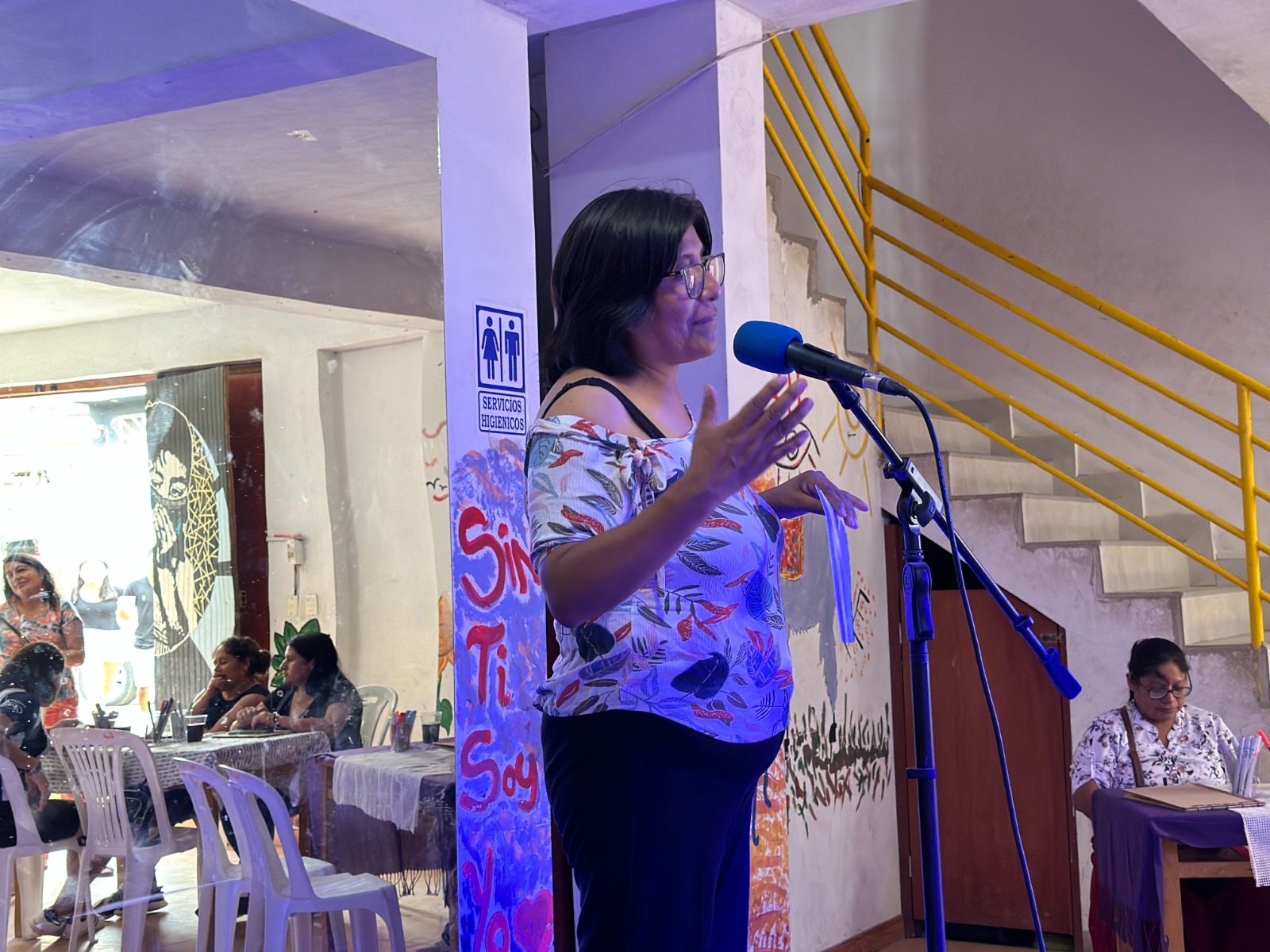
    MUJERES TRANSFORMADORAS

    RevarteColectiva · April 15, 2024 · 2 Comments

    Por Lis Pérez Quispe

    Click here for English version

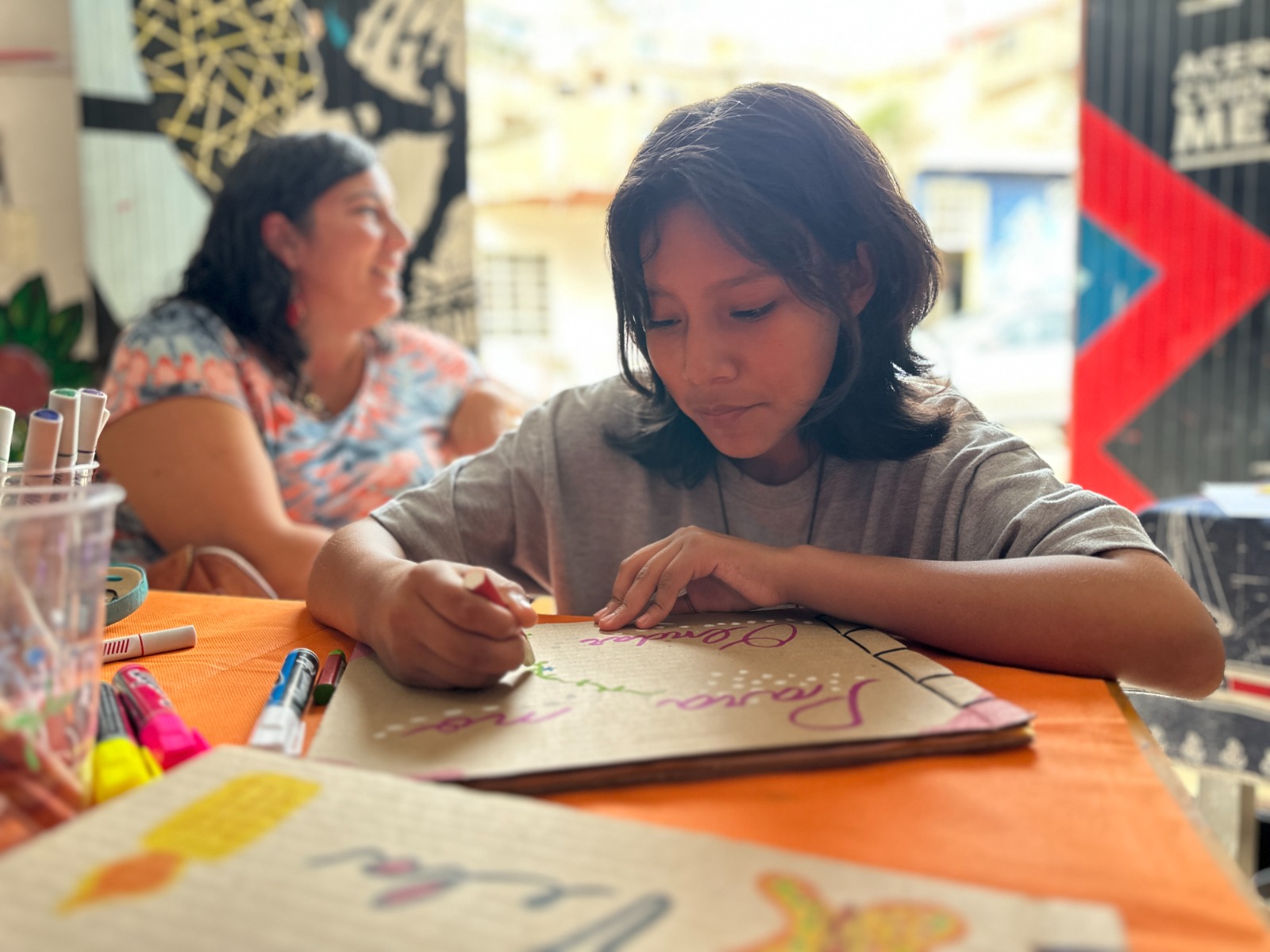
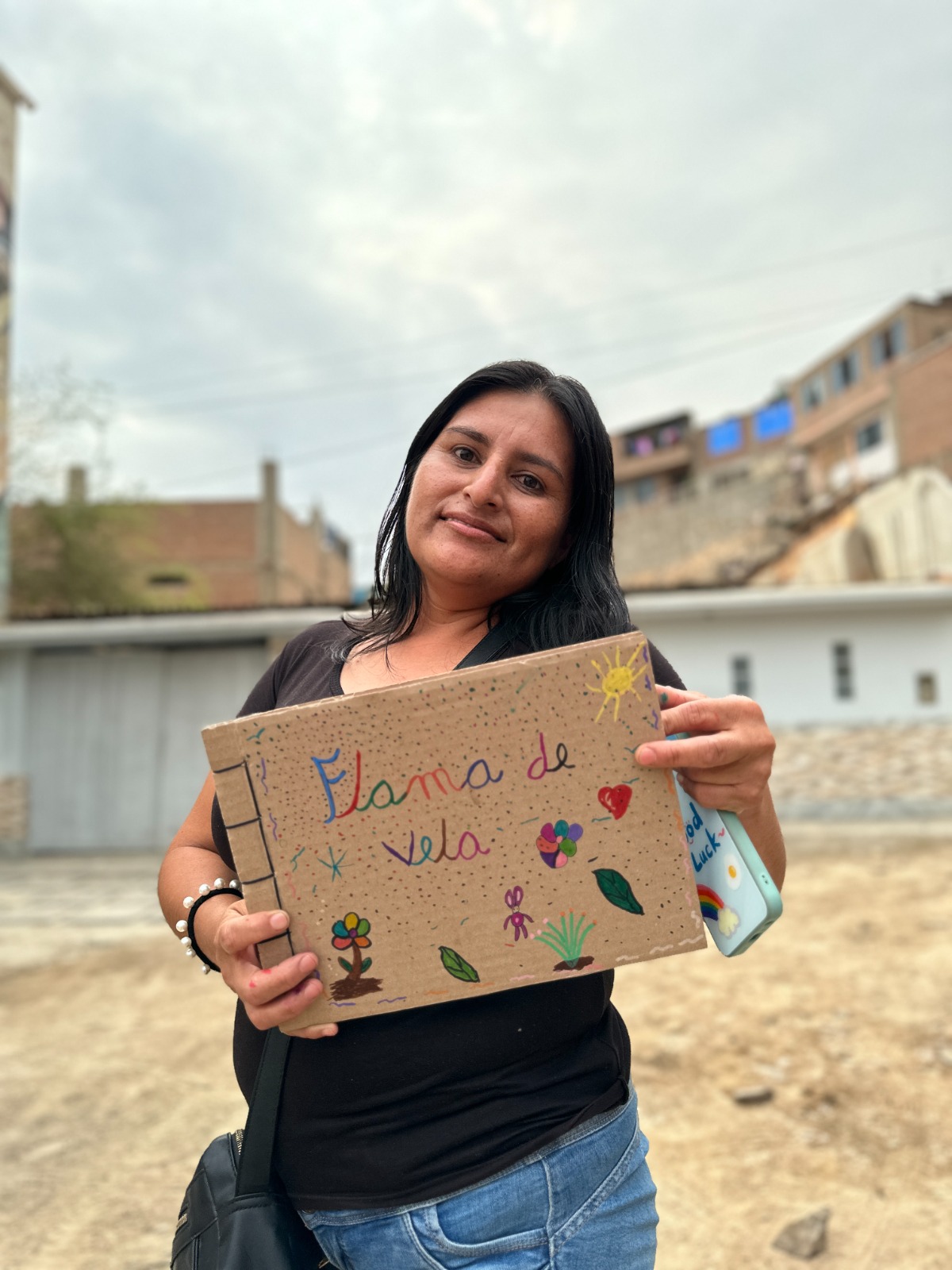
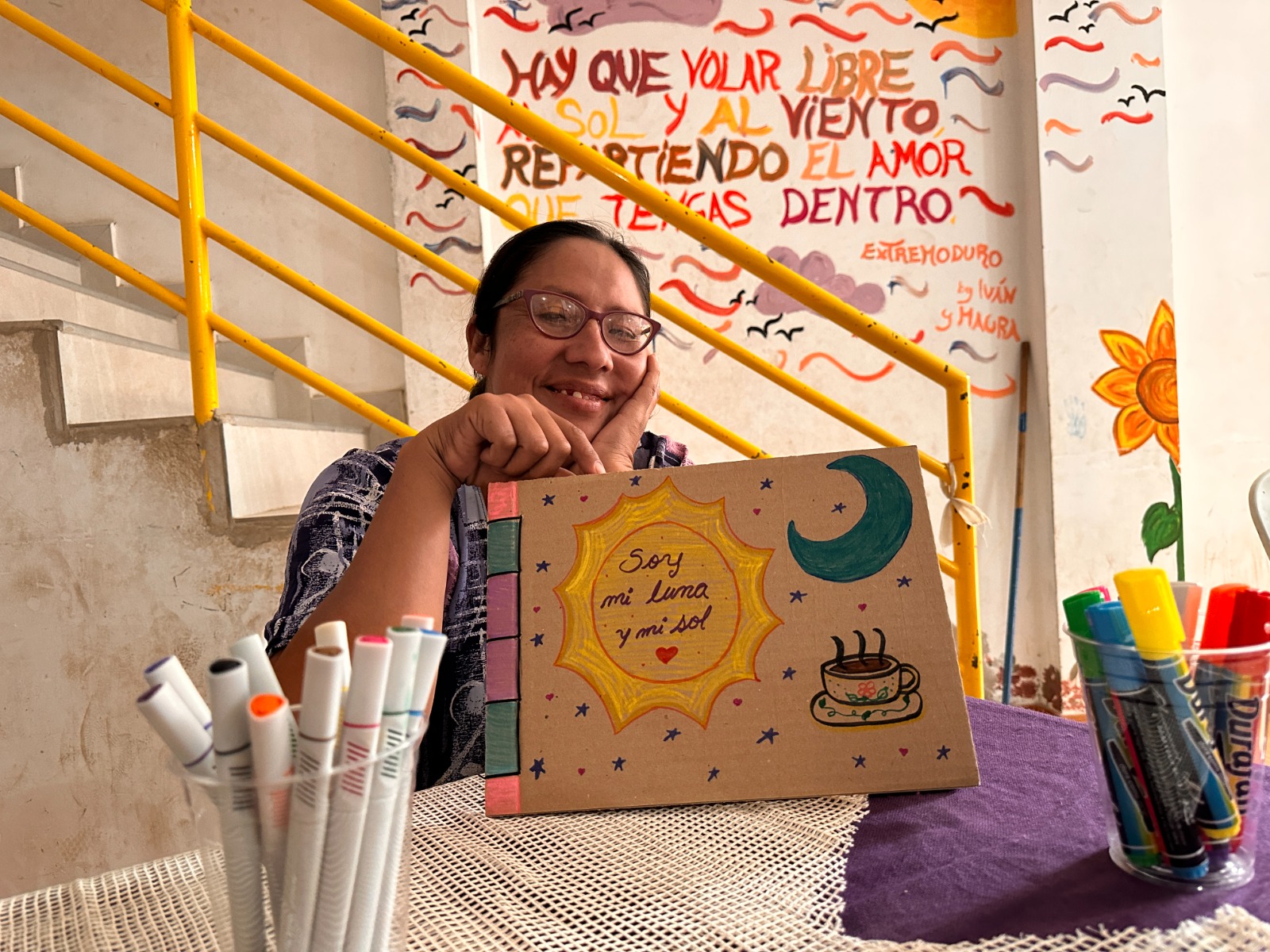
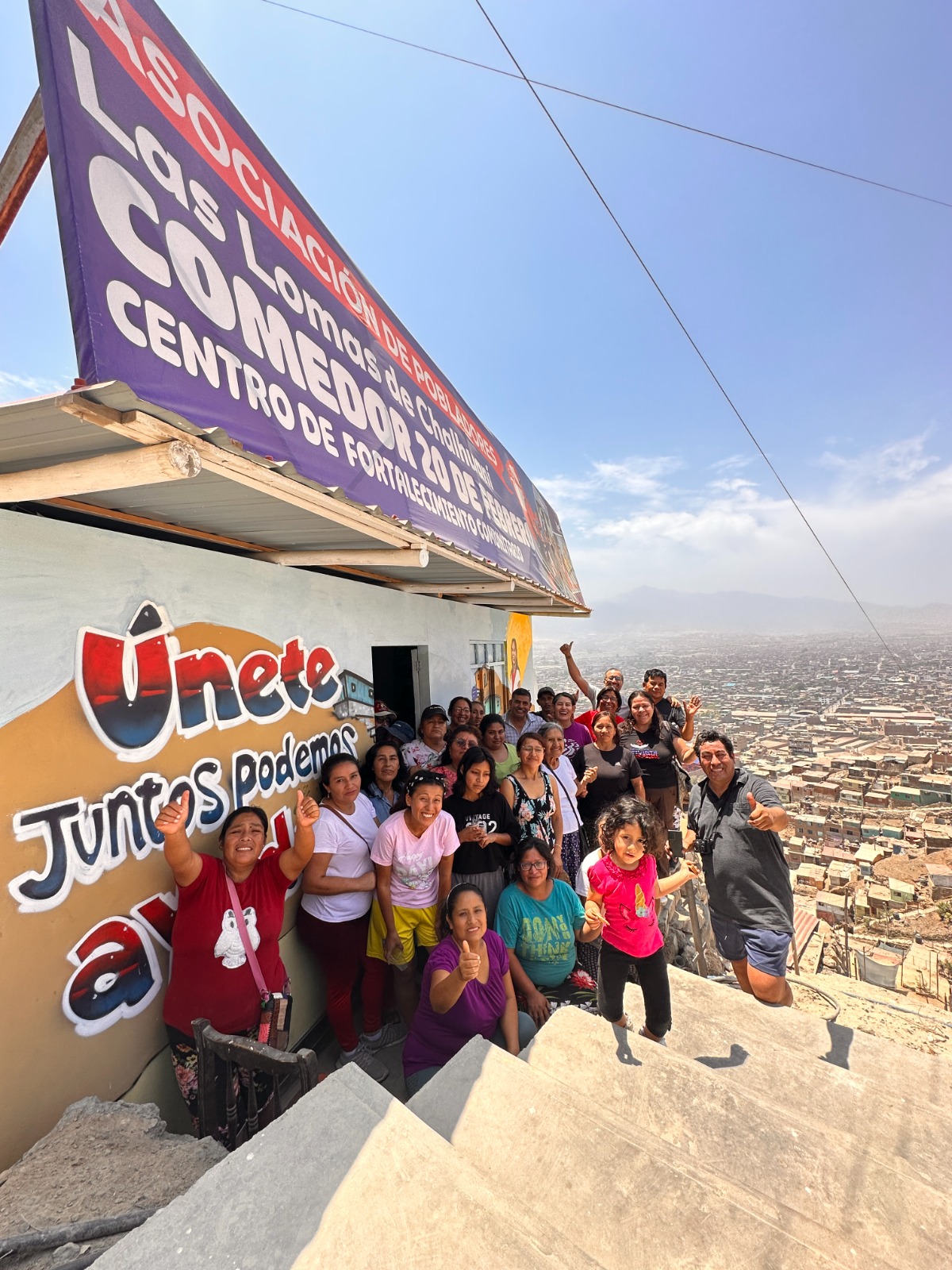
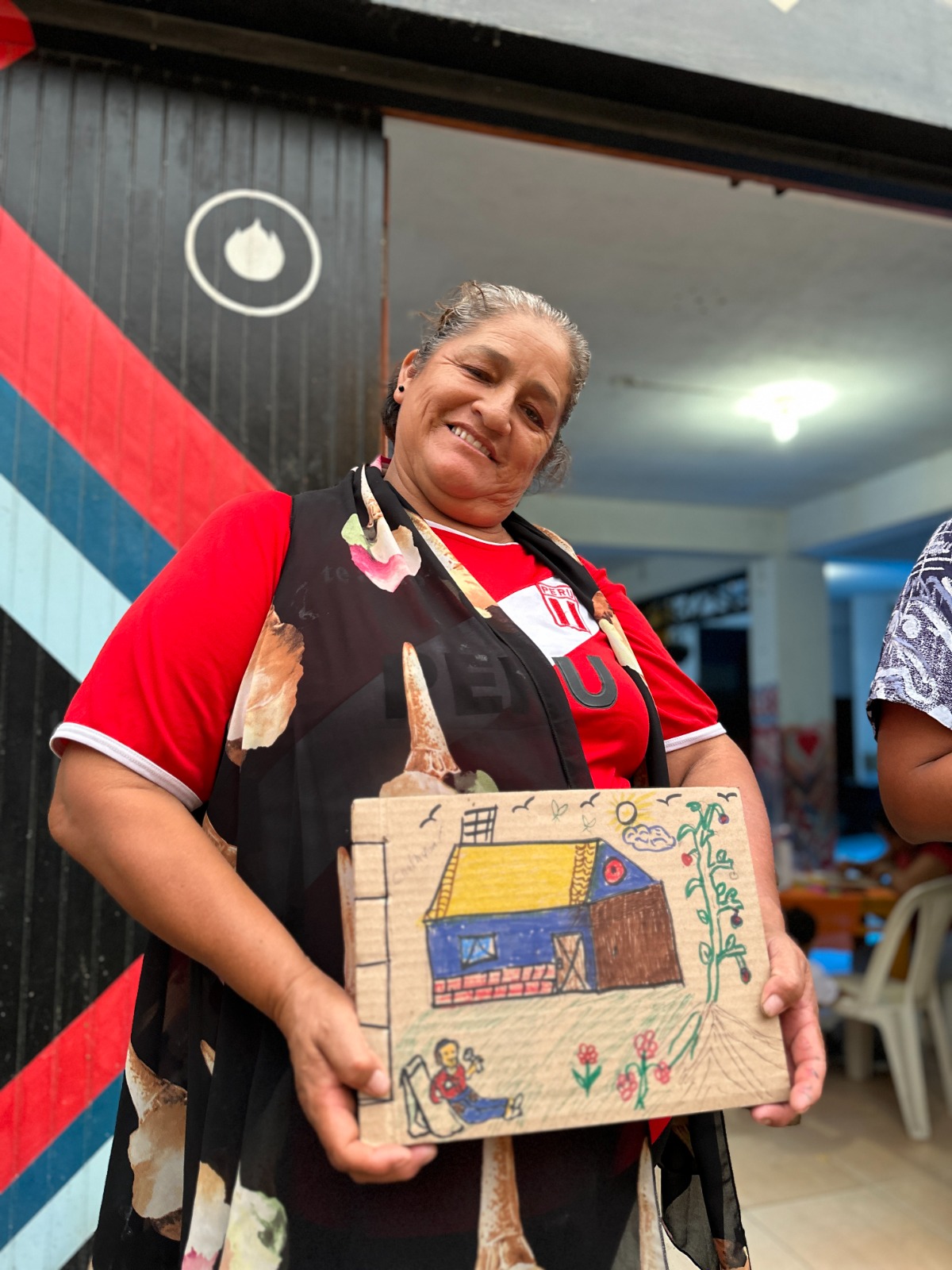
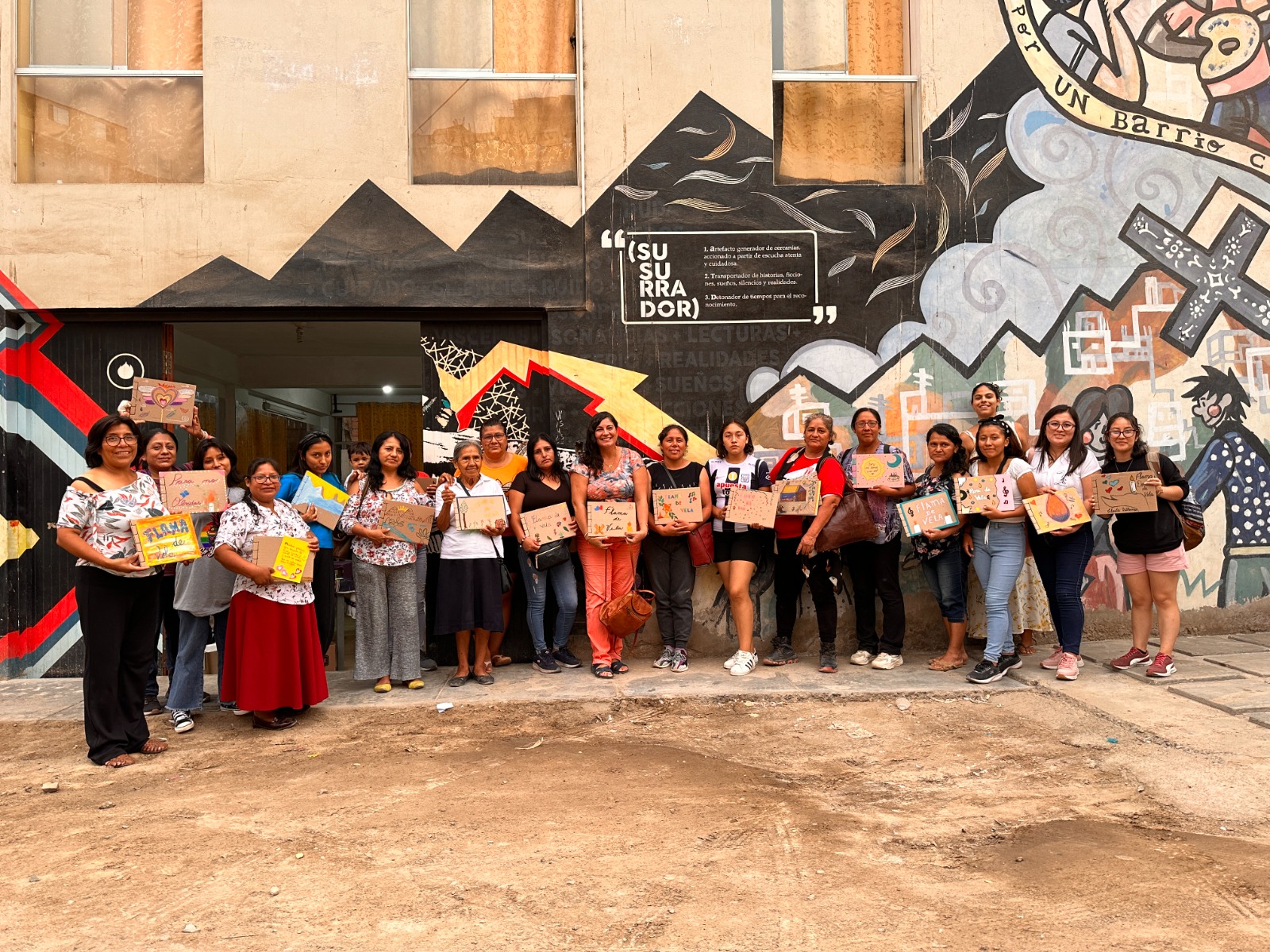
    En el largo camino  que  está trazado en nuestras vidas, he conocido a muchas mujeres  que luchan cada dia, que sueñan y caminan paso a paso mientras construyen sus familias y paralelamente se van transformando.

    Los sueños que cada una tiene, en medio de un país en crisis, parece tan lejos,

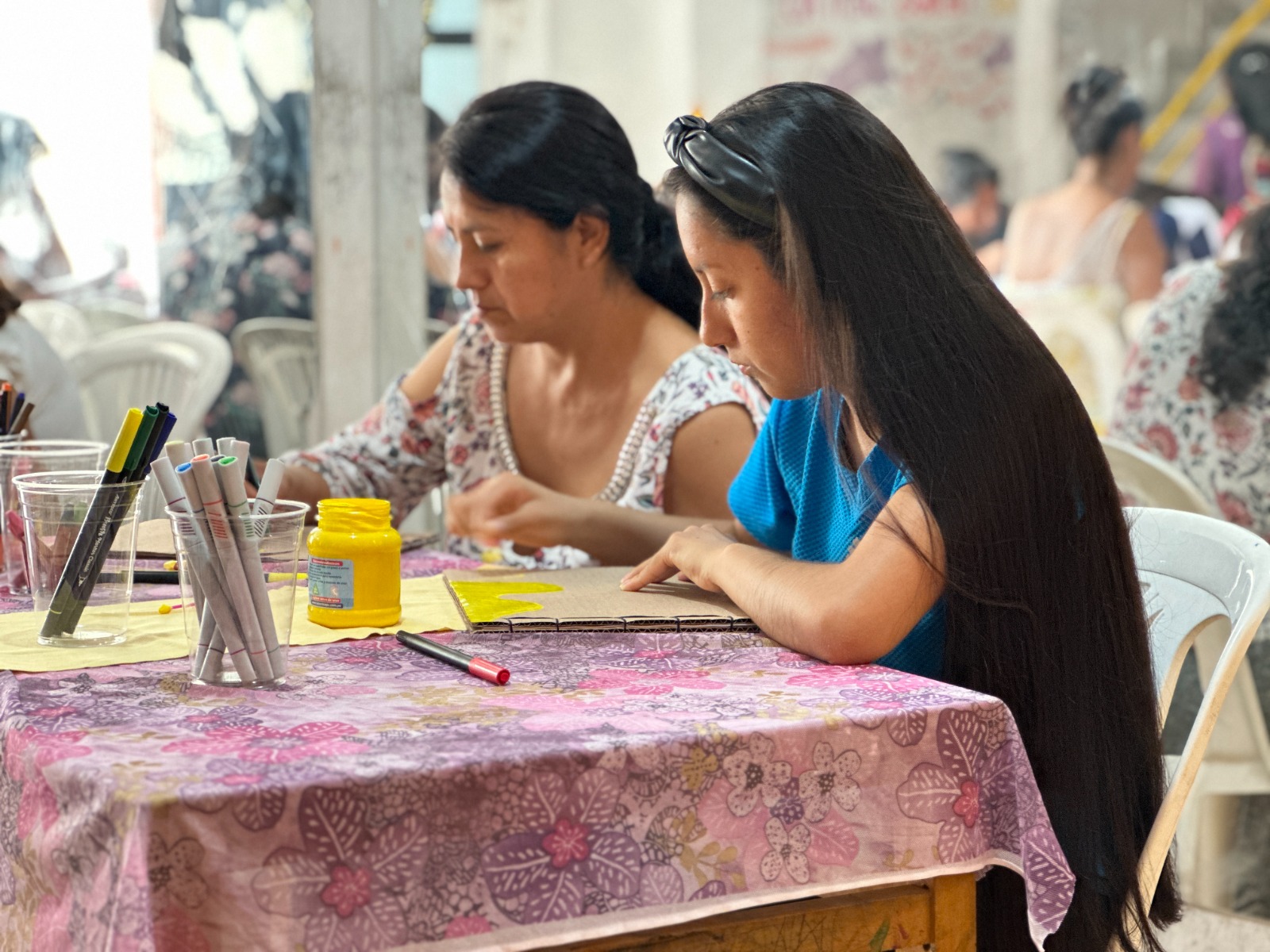
    tan inalcanzable, pero a la vez, tan en nuestras manos cuando cogemos lápices de colores y le ponemos color a nuestros sueños.

    Somos mujeres que sonreímos  aquí y ahora, dibujamos nuestras metas, delineamos nuestros caminos que nos llevan juntas a escribir quienes somos, de donde venimos y a dónde vamos.

    Queremos seguir  soñando hasta lograr llegar a ese inmenso azul sin final.

    Queremos soñar  que todo es posible hasta  conocer lo mas increíble algo mágico como  delfines  que nos rodean en el mar, llevándonos a lo más profundo que nadie se imaginó.

    Queremos soñar despiertas, muy despiertas, para sentir el fuego de la esperanza a flor de piel porque a cada una de nosotras nada nos detendrá.

     Ya empezamos, ya estamos en el camino,  ya estamos dejando huellas imborrables en el alma de nuestros hijos e hijas que continuarán el camino de transformación.


    English Version:

    TRANSFORMATIVE WOMEN

    In the long path that is outlined in our lives, I have met many women who fight every day, who dream and walk step by step while they build their families and at the same time they are transforming.

    The dreams that each one has, in the middle of a country in crisis, seem so far away, so unattainable, but at the same time, so in our hands when we take colored pencils and add color to our dreams.

    We are women who smile here and now, we draw our goals, we outline our paths that lead us together to write who we are, where we come from and where we are going.

    We want to continue dreaming until we reach that immense blue without end.

    We want to dream that everything is possible until we know the most incredible thing, something magical like dolphins that surround us in the sea, taking us to the depths that no one imagined.

    We want to dream awake, very awake, to feel the fire of hope on the surface because nothing will stop each of us.

     We have already started, we are already on the path, we are already leaving indelible marks in the souls of our sons and daughters who will continue the path of transformation.

    Lis Vania Pérez

    Lis Vania Pérez, maestra de la escuela Pública peruana, especialista en Programas de Lectoescritura para niños en edad escoolar. Fundadora y Responsable  del Proyecto Quijote en el AAHH Santa Rosa distrito de Puente Piedra,  Lima Peru.

    Peruvian public school teacher, specialist in Reading and Writing Programs for school-age children. Founder and Manager of the Quijote Project in the AAHH Santa Rosa district of Puente Piedra, Lima Peru.

      El Círculo de escritoras de CCATE

      RevarteColectiva · April 15, 2024 · Leave a Comment

      Convergencia en la diversidad: el poder del arte

      por Aura Rosalía Cruz Aburto

      Click here for English version

      Queridxs compañerxs. Permítanme por esta vez, escribir como filósofa. Quizá no relate cosas tan concretas, quizá parezca que divago sobre ideas abstractas, pero, créanme, mi inspiración no está flotando en el vacío, sino que es producto tanto de ser testigo del brotar creativo de mis amigxs del Círculo de Escritoras de CCATE, del ver surgir y florecer las letras singulares de cada unx de ellxs, tanto como por ser, no sólo testigo, sino afortunada integrante, quizá desde la lejanía geográfica eso sí, de una bella comunidad en que las diversidades nos unen, nos nutren y se celebran recreando y creando relatos y versos.

      Arte como convergencia y divergencia

      No es infrecuente que se convoque al arte como vía para la integración de las comunidades, porque tampoco es raro que, en su despliegue, en efecto se constituyan resonancias vinculantes entre quienes crean. Sin embargo, aunque sin duda alguna la creación reúne, también abre la posibilidad de la divergencia, de la pluralidad y de la multiplicación. 

      A través del arte se configura la singularidad individual y colectiva, no como algo preexistente, sino como un mundo nuevo que hace manifiesto lo que antes sólo era una virtualidad. En este sentido, el arte hace brotar lo diverso paradójicamente a partir de la convergencia: el arte es reunión y multiplicación de diferencias. El arte es, ante todo y a diferencia del mundo sujeto a la utilidad, un fin en sí mismo: es creación, nacimiento de mundos insospechados y revelaciones de lo irrevelable.

      La paradoja de lo imposible: la convergencia sagrada

      Hace algunos años, leí por primera vez acerca de la noción de lo sagrado propuesta por un pensador llamado George Bataille. Difícil de explicar, lo sagrado se opone al mundo discontinuo de la producción. ¿Pero qué es eso de mundo discontinuo, por qué discontinuo? Porque en esa esfera nos sabemos separados: nos convertimos en sujetos que objetivan y que, a su vez, están sujetos en un mundo de instrumentalidades. Pero ¿qué es lo que se instrumenta? Todo lo que existe en función de un relato dominante, ora la necesidad por sobrevivir, ora también la acumulación misma de capital, todo depende de qué época y geografía estemos hablando. En esa esfera de la productividad, todos tenemos un papel que nos ata a la instrumentalización del mundo y que no nos deja libres de devenir. En esa esfera también somos sujetos que a la distancia manipulan objetos, de los que estamos, en apariencia, constitutivamente separados. 

      Lo sagrado es lo opuesto a este mundo dividido. Lo sagrado se funda como ámbito de escape a la separación, se trata de la emergencia de lo continuo, de la comunión donde se habita “como agua dentro del agua”. En el tiempo sagrado no hay sujetos ni objetos, hay fuerzas que se entretejen y destejen, hay fuerzas de dignidades equivalentes, pero de singularidad absoluta. 

      De acuerdo con aquel escritor que mencionaba líneas antes, el ser humano abre la posibilidad de lo sagrado en el sacrificio, la fiesta y el arte. En estas tres instancias lo que aparece es la transgresión a lo ordinario, a lo aceptado e incuestionado porque sólo ahí, en medio del juego y no de la producción, es cuando se pueden crear nuevas posibilidades. Es en estos instantes de lo sagrado cuando podemos re-unirnos y ser comunidad, no por origen, sino como destino.

      El Círculo de Escritoras: comunidad inconfesable

      En plena pandemia tuve la fortuna de presentarme ante una fuerza creadora colectiva a la que tenía años de admirar: CCATE. Gracias a la invitación de mi admirado amigo Obed, comencé a conocer y reconocer a amigxs fuerzas vivas con quienes he compartido tardes escribiendo, leyéndonos y sintiendo juntxs. 

      Puedo decirlo, quizá de una manera distinta por la lejanía territorial, pero hoy soy parte esta bella y potente comunidad. Hemos conocido nuestras diferentes y divergentes historias, pero también hemos sentido juntas. También hemos escrito y aprendido de las voces y letras de cada una. Somos una (comunidad) pero también somos muchas (fuerzas): somos una comunidad inconfesable.

      El arte: lo imposible posible

      Quién lo diría, unxs desde Filadelfia, otrxs desde Ciudad de México, hemos formado un coro. Pero, más que un coro, somos algo así como una banda de jazz que cambia el ritmo y se orquesta reconociendo la dignidad de que sea cada una la que legítimamente cuente su propia historia. 

      Una pasa la estafeta a la otra para leer en voz alta y resonar, aunque nuestras experiencias aparentemente no se toquen. Pero ¿saben qué? Se tocan, milagrosamente se tocan, nace una comunidad, un diálogo y decenas de textos, seguramente muchos más, que navegan sus propios cauces, pero que convergen en la alegría de compartirnos. Jugamos, inventamos cada vez que nos reunimos, sabemos que las reglas las fijamos nosotras porque no hay más autoridad que la propia que, por cierto, también puede reinventarse. 

      Lo digo una vez más, aunque de pronto vaya y venga con estos conceptos académicos con los que llevo años hablando, todo se resume a esto: ¡Viva el poder del arte! ¡Viva la Comunidad!

      Notes:

       1. Comunidad inconfesable, un guiño al libro del filósofo Maurice Blanchot.


      English Version:

      The CCATE Writers’ Circle

      Convergence in diversity: the power of art

      by Aura Rosalía Cruz Aburto

      Dear companions. Allow me for this time, to write as a philosopher. Maybe I don’t relate such concrete things, maybe it seems like I’m rambling about abstract ideas, but, believe me, my inspiration is not floating in the void, but rather it is a product of witnessing the creative sprouting of my friends from the CCATE Women Writers’ Circle, from the seeing the unique lyrics of each one of them emerge and flourish, as well as being, not only a witness, but also a lucky member, perhaps from geographical distance of course, of a beautiful community in which diversities unite us, nourish us and are celebrated. recreating and creating stories and verses.

      Art as convergence and divergence

      It is not uncommon for art to be called upon as a way to integrate communities, because it is also not uncommon for, in its deployment, binding resonances to be created between those who create. However, although creation undoubtedly brings together, it also opens the possibility of divergence, plurality, and multiplication.

      Through art, individual and collective singularity is configured, not as something pre-existing, but as a new world that makes manifest what was previously only a virtuality. In this sense, art paradoxically makes diversity emerge from convergence: art is the meeting and multiplication of differences. Art is, above all and unlike the world subject to utility, an end in itself: it is creation, the birth of unsuspected worlds, and revelations of the unrevealable.

      The paradox of the impossible: sacred convergence

      A few years ago, I first read about the notion of the sacred proposed by a thinker named George Bataille. Difficult to explain, the sacred is opposed to the discontinuous world of production. But what is this discontinuous world, why discontinuous? Because in that sphere we know we are separated: we become subjects that objectify and who, in turn, are subjects in a world of instrumentalities. But what is being implemented? Everything that exists is based on a dominant narrative, either the need to survive or also the accumulation of capital itself, everything depends on what time and geography we are talking about. In this sphere of productivity, we all have a role that ties us to the instrumentalization of the world and does not leave us free to evolve. In that sphere, we are also subjects who manipulate objects from a distance, from which we are, apparently, constitutively separated.

      The sacred is the opposite of this divided world. The sacred is founded as an area of escape from separation, it is about the emergence of the continuous, communion where one lives “like water within water.” In sacred time there are no subjects or objects, there are forces that interweave and unweave, there are forces of equivalent dignities, but of absolute singularity.

      According to the writer who mentioned lines before, the human being opens the possibility of the sacred in sacrifice, celebration, and art. In these three instances what appears is the transgression of the ordinary, of what is accepted and unquestioned because only there, in the middle of the game and not production, is when new possibilities can be created. It is in these moments of the sacred when we can come together and be a community, not by origin, but as destiny.

      The Writers’ Circle: unspeakable community

      In the middle of the pandemic, I was fortunate enough to present myself to a collective creative force that I had admired for years: CCATE. Thanks to the invitation of my admired friend Obed, I began to meet and recognize living-force friends with whom I have shared afternoons writing, reading, and feeling together.

      I can say it, perhaps in a different way due to the territorial remoteness, but today I am part of this beautiful and powerful community. We have known our different and divergent stories, but we have also felt together. We have also written and learned from each other’s voices and lyrics. We are one (community) but we are also many (forces): we are an unspeakable community.

      Art: the impossible possible

      Who would have thought, some of us from Philadelphia, others from Mexico City, we have formed a choir. But, more than a choir, we are something like a jazz band that changes the rhythm and orchestrates, recognizing the dignity of each one legitimately telling its own story.

      One passes the baton to the other to read aloud and resonate, even if our experiences do not touch. But you know what? They touch, miraculously they touch, a community is born, a dialogue and dozens of texts, surely many more, that navigate their channels, but that converge in the joy of sharing each other. We play, we invent every time we meet, and we know that we set the rules because there is no authority other than our own which, by the way, can also be reinvented.

      I say it once again, although I suddenly go back and forth with these academic concepts that I have been talking about for years, it all boils down to this: Long live the power of art! Long live the Community!

      Aura R. Cruz Aburto

      Aura es filósofa mexicana, latinoamericana orgullosa, es también artista espacial, textil y visual que busca dar de cuando en cuando con “la frágil unidad poética”. Profesora de la Universidad Nacional Autónoma de México, Tec de Monterrey e investigadora independiente.

      Aura is a proud Mexican and Latin American philosopher. She is also a spatial, textile, and visual artist who occasionally seeks to find “the fragile poetic unity.” She is a professor at the National Autonomous University of Mexico, Tec de Monterrey, and an independent researcher.

      Selected Works by Aura R. Cruz Aburto:
      La Última Cena (I)
      La Última Cena (II)
      La Última Cena (III)

        REV/BELAR

        RevarteColectiva · December 21, 2023 · Leave a Comment

        Por Diseño Detonante

        Click here for English version

        Introducción

        Por Aura R. Cruz Aburto

        Desde que conocí a Diseño Detonante, colectivo de diseño colombiano, me sorprendió su propuesta siempre atravesada por la comprensión relacional que guardamos con el resto de fuerzas que hacen el mundo: los otros, lo otro y la misma alteridad que reside en la multiplicidad que nos conforma a cada unx de nosotrxs. Es decir, su manera de entender esa palabra que en Occidente se ha denominado históricamente diseño y que guarda una íntima relación con otra, el arte, no es aquella que se somete a la lógica instrumental de la mera producción objetual; sino que comprende que los mundos que creamos y recreamos son precisamente la actividad del diseño, un diseño ontológico. En este tenor, la línea de diferenciación entre diseño y arte se esfuma porque en ambos casos se trata de crear el mundo desde su dimensión sensible: se trata de reformar la “esfera táctil total” que habitamos y que, además, nos incluye. Desde esta perspectiva, nuestras sensibilidades también son sujeto de diseños que no siempre nos pertenecen pero que, definitivamente, en el espíritu de revolución que nos anima en ReVarte, nos apropiamos en pleno gesto de rebeldía y resistencia creativa.

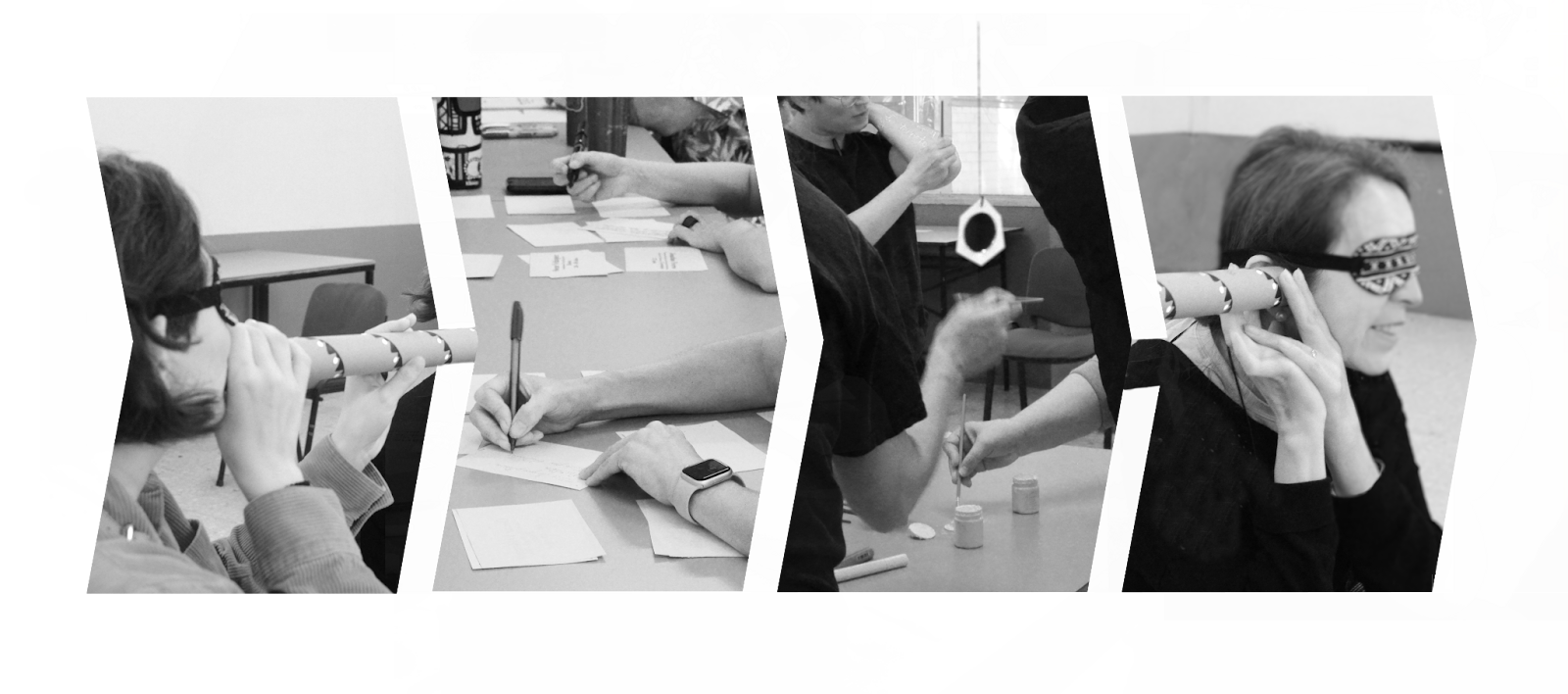
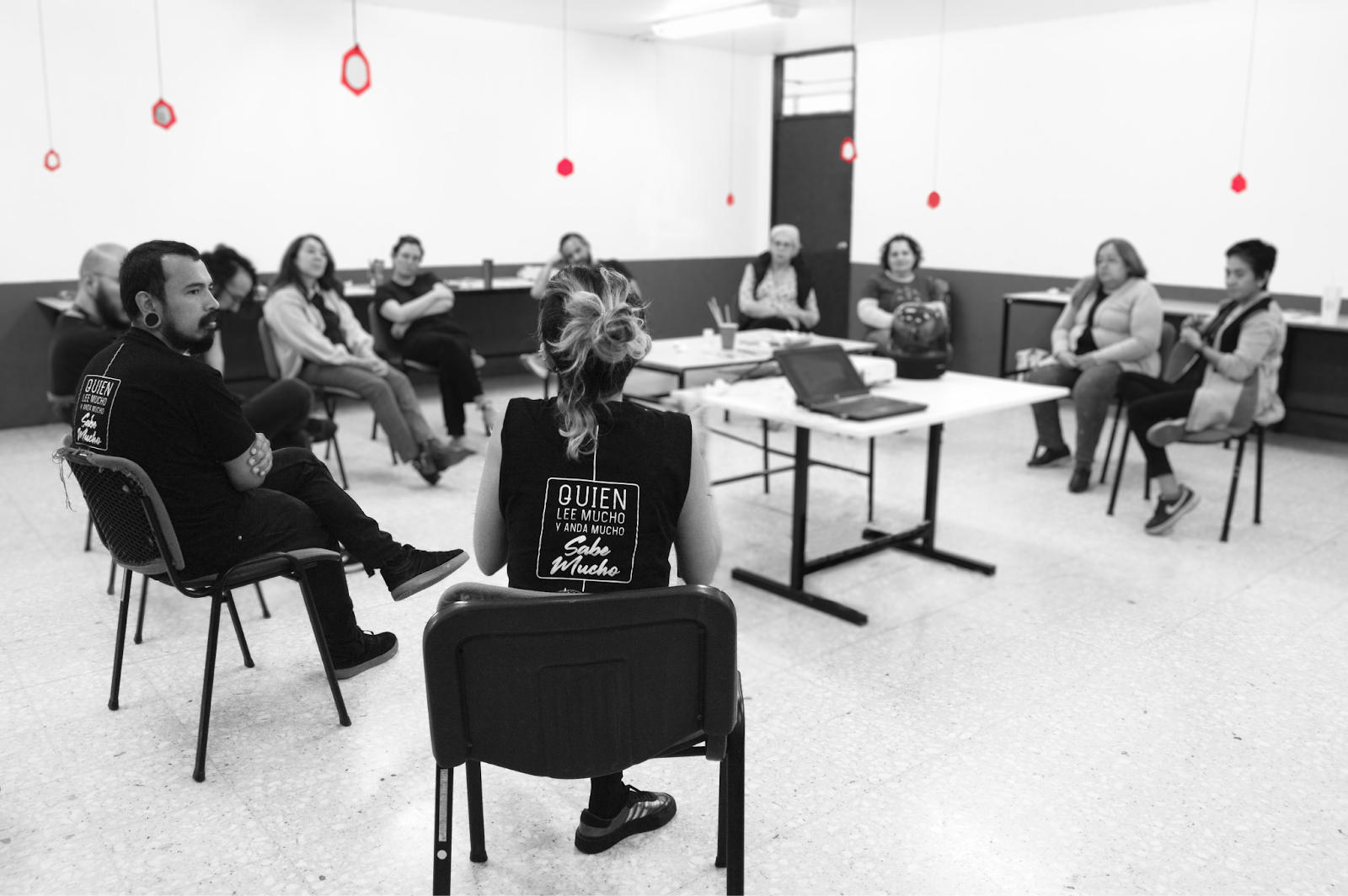
        Para dar cuenta de un esfuerzo que se alinea a este espíritu, a continuación, Diseño Detonante, colectivo colombiano, propone una reflexión de dos momentos: revelar y rebelar que ha nacido de la experiencia de la implementación de una secuencia de talleres llevados a cabo en la Ciudad de México en la Escuela de Diseño del Instituto Nacional de Bellas Artes en los meses de octubre y noviembre.

        El móvil fundamental de los talleres consistió en la detonación de laboratorios de autonomía a través del reconocimiento mutuo que se inicia por la propia confrontación desde el sentir. Contrario a lo que reza la pedagogía habitual, centrada en la objetividad y la distancia conceptual, Diseño Detonante apostó por la indagación afectiva y su detonación transformadora.

          Revelar.
          Hacer/nos visibles, descubrir/nos, re/conocer/nos.

          Compartimos tiempos, espacios, historias y presentes, pero todxs, nacemos en un mundo fragmentado, en donde predomina la enseñanza, independientemente de la institución (familia, escuela, trabajo), que reproduce, inyecta y exige una única noción de mundo no solo fragmentado sino fragmentante, que como ruido “blanco” se superpone, nubla y hace un ruido indistinguible con las historias que nos cuenta la cotidianidad; ¿Cómo aprender a conectar si nos han fragmentado en individuos, raza, género, disciplinas, títulos y jerarquías?, ¿Cómo si siempre ha estado un saber por encima de otro, y cualquier saber sobre todo sentir? ¿Cómo si el mismo cuerpo ha sido dividido, dando privilegio a lo que “piensa” una parte de este y no a lo que siente y aporta al pensar el resto del cuerpo?

          La enseñanza por sí sola, como una práctica desconectada, ha sido un acto colonial y patriarcal, capaz de anular saberes y sentires entrañados, forzando la adaptación de un ser humano o no humano “alumnado”, a una idea de ser-hacer-sentir ya determinada. Enseñar los sentidos no es necesariamente hacerlos sensibles, porque es posible palpar sin el tacto, mirar sin la visión y oír sin la escucha …encapsuladxs en una fracción/ficción “individualizada” y reducida de tiempo, espacio e historia estériles. De esta manera, no nos sentimos parte de lxs otrxs, ni de lo que nos puede rodear más allá de nuestros propios convencimientos. La enseñanza se basa en una pretensión que no tiene sentido mientras no exista la noción del aprendizaje mutuo, como un proceso permanente en todas las especies y formas de vida, un proceso de enmarañamiento sensible con entornos y entrañas. Una entrañanza.

          Aún sin ser enseñada, esta entrañanza existe como un algo cotidiano, algo que nos moviliza o paraliza a iguales medidas y que aunque censurado, reprimido y casi aniquilado por siglos de instituciones de todo tipo, es algo que late haciéndonos ser y existir. 

          Escapando de lo que se enseña, y más que simplemente un producto deliberado con un discurso controlado, el arte (al igual que otras formas de expresión sin nombre, o con otros nombres), es una serie de consecuencias de lo incontrolable, de la entrañanza, del movimiento y el caos que lo conforma; consecuencias corpóreas: historias, actos o expresiones que abren, por lo menos, campo a lo sensible, que a su vez, es lo invisible que produce y modela lo visible, una potencia latente productora de mutuaciones (mutaciones mutuas y de lo mutuo) que perdura y fluye por sí sola sin pedir permiso. 

          Al crear nos recreamos, provocamos fisuras en nuestros propios caparazones, dejando salir los tentáculos viscosos, las raíces desordenadas y espinosas o las partes de un cuerpo deforme y colorido que supera tres veces nuestro tamaño. Nos revelamos. Cuando creamos en comunidad, recreamos el sentido de comunidad.

          Tal vez al pretender controlar nuestra experiencia sensible y afectiva como “individualidades”, creando interruptores que cortan en cualquier momento una condición vital, lo único que hacemos es limitarnos a fuerza y eventualmente, con la presión acumulada, producir desastres en todo lo que nos conforma y por ende conforma lo que nos rodea. Escrito de otro modo, dejarnos afectar o mutuar, no es la decisión más incómoda, en todo caso lo sería resistirnos a sentir, hipertrofiando nuestros convencimientos y, paradójicamente, evadiendo la incomodidad que implica el movimiento.

          Rebelar.

          Desobedecer, sublevar, resistir, accionar.

          Hace ya un mes aproximadamente, Diseño Detonante dio inicio al Laboratorio de diseño y autonomía, en la Escuela de Diseño del Instituto Nacional de Bellas Artes y Literatura (EDINBA), en Ciudad de México, con un primer ciclo de experiencias y diálogos que no solo consisten en una articulación meramente verbal, que si bien, es también importante en este proceso, está en función de articulaciones otras de lo sensible, en donde juega un papel muy importante la incomodidad y la vulnerabilidad.

          La respuesta fue diversa, múltiple y nutritiva, se dio en toda la escala tonal; hubo quienes se dejaron afectar y afectaron el espacio afectuosamente, compartieron cuidadosamente espacios, miradas, experiencias, ideas, propuestas y sentires; se incomodaron, sí, pero mutaron y mutuaron. Por otro lado, la hipertrofia de los convencimientos tuvo su lugar y se quiso imponer amparada en el caparazón de la razón, de los títulos, de la jerarquía etaria. Tan fuerte ha sido el ruido de la fragmentación y los convencimientos occidentales hegemónicos, que pareciera ignorarse y, es más, tratarse como insulto o cosa menor el involucrar los sentidos, sentires y afectos con el hacer, en específico con el hacer en diseño.

          Pareciera que el hacer se ha relegado a la pretensión impoluta de la “objetividad” de un estar “fuera de” una concepción aséptica donde creemos poder distanciarnos de lo que nos recorre y determina para solo “racionalmente” hacer para y no con. Como si pudiéramos determinar lo que la otra persona, contexto o territorio requiere sin dejarnos afectar por este, como si para hacer tuviéramos que primero posicionarnos desde las tarimas gigantes y lejanas que dan las ficciones de los títulos, distanciarnos, cerrar todo nuestro caudal de lo que sentimos y percibimos, lo que somos. 

          Los haceres en diseño, pero también los haceres en el arte y en la vida en las condiciones del mundo actual, sus necesidades, emergencias y urgencias, requieren de aperturas a la conexión, de una revelación conjunta, cuidadosa y respetuosa de nuestras vulnerabilidades, de aquello que nos constituye y nos diseña; además, de todo aquello que nos ha fragmentado, que está tan enquistado que nos silencia, mientras determina lo que hacemos. Revelar lo que no suele ser visible, y lo que afectamos y nos afecta, es agenciar la posibilidad de hacer conjuntamente resistencia y de transformarlo en desobediencias. 

          Revelar para rebelarnos. 


          English Version:

          REV/BELAR
          By Diseño Detonante

          Introduction

          By Aura R. Cruz Aburto

          Since I met Diseño Detonante (Detonating Design), a Colombian design collective, I have been surprised by their proposal, always traversed by the relational understanding that we keep with the rest of the forces that make the world: the others, the other and the same otherness that resides in the multiplicity that shapes each one of us. That is to say, his way of understanding that word that in the West has historically been called design and that is intimately related to another, art, is not one that submits to the instrumental logic of mere objectual production, but one that understands that the worlds we create and recreate are precisely the activity of design, an ontological design. In this sense, the line of differentiation between design and art vanishes because in both cases it is a matter of creating the world from its sensitive dimension: it is a matter of reforming the “total tactile sphere” that we inhabit and that, in addition, includes us. From this perspective, our sensibilities are also the subject of designs that do not always belong to us but that, definitely, in the spirit of revolution that animates us in ReVarte, we appropriate in full gesture of rebellion and creative resistance.

          To give an account of an effort that is aligned with this spirit, Diseño Detonante, a Colombian collective, proposes a reflection of two moments: to reveal and to rebel, born from the experience of implementing a sequence of workshops held in Mexico City at the School of Design of the National Institute of Fine Arts in the months of October and November

          The fundamental motive of the workshops consisted in the detonation of autonomy laboratories through the mutual recognition that begins with the confrontation from the feeling itself. Contrary to the usual pedagogy, focused on objectivity and conceptual distance, Diseño Detonante bet on affective inquiry and its transforming detonation.

            Revealing
            To make/us visible, to discover/us, to re/know/us.

            We share times, spaces, histories and present, but we are all born in a fragmented world, where teaching predominates, independently of the institution (family, school, work), which reproduces, injects and demands a single notion of a world that is not only fragmented but fragmentary, which as “white” noise overlaps, clouds and makes an indistinguishable noise with the stories that everyday life tells us; how can we learn to connect if we have been fragmented into individuals, race, gender, disciplines, titles and hierarchies? How if one knowledge has always been above another, and any knowledge above all feeling? How if the body itself has been divided, giving privilege to what one part of it “thinks” and not to what the rest of the body feels and contributes to thinking?

            Teaching alone, as a disconnected practice, has been a colonial and patriarchal act, capable of annulling knowledge and feelings, forcing the adaptation of a human being or non-human “student body” to an already determined idea of being-doing-feeling. To teach the senses is not necessarily to make them sensitive, because it is possible to feel without touching, to look without seeing and to hear without listening …encapsulated in an “individualized” and reduced fraction/fiction of sterile time, space and history. In this way, we do not feel part of others, nor of what may surround us beyond our own convictions. Teaching is based on a pretension that makes no sense as long as there is no notion of mutual learning, as a permanent process in all species and forms of life, a process of sensitive entanglement with environments and entrails. An entanglement.

            Even if it is not taught, this entanglement exists as an everyday thing, something that mobilizes or paralyzes us in equal measures and that although censored, repressed and almost annihilated by centuries of institutions of all kinds, it is something that beats making us be and exist.

            Escaping from what is taught, and more than simply a deliberate product with a controlled discourse, art (like other forms of expression without a name, or with other names), is a series of consequences of the uncontrollable, of the entanglement, of the movement and chaos that conforms it; corporeal consequences: stories, acts or expressions that open, at least, field to the sensitive, which in turn, is the invisible that produces and models the visible, a latent power producer of mutations (mutual mutations and of the mutual) that endures and flows by itself without asking permission.

            In creating we recreate ourselves, we provoke fissures in our own shells, letting out the slimy tentacles, the messy and thorny roots or the parts of a deformed and colorful body that exceeds three times our size. We reveal ourselves. When we create in community, we recreate a sense of community.

            Perhaps by pretending to control our sensitive and affective experience as “individualities”, creating switches that cut off at any moment a vital condition, the only thing we do is to forcefully limit ourselves and eventually, with the accumulated pressure, produce disasters in everything that shapes us and therefore shapes what surrounds us. Written in another way, to let ourselves be affected or mutate is not the most uncomfortable decision, in any case it would be to resist feeling, hypertrophying our convictions and, paradoxically, avoiding the discomfort that movement implies.

            To Rebel
            To disobey, to revolt, to resist, to act.

            Approximately a month ago, Diseño Detonante began the Design and Autonomy Laboratory at the School of Design of the National Institute of Fine Arts and Literature (EDINBA), in Mexico City, with a first cycle of experiences and dialogues that not only consist of a merely verbal articulation, which although it is also important in this process, is a function of other articulations of the sensitive, where discomfort and vulnerability play a very important role.

            There were those who let themselves be affected and affected the space affectionately, carefully shared spaces, looks, experiences, ideas, proposals and feelings; they were uncomfortable, yes, but they mutated and mutualized. On the other hand, the hypertrophy of convictions had its place and wanted to impose itself under the shell of reason, of titles, of age hierarchy. So strong has been the noise of fragmentation and hegemonic western convictions that it seems to be ignored and, what is more, treated as an insult or a minor thing to involve the senses, feelings and affections with doing, specifically with doing in design.

            It seems that doing has been relegated to the untainted pretension of the “objectivity” of being “outside of” an aseptic conception where we believe we can distance ourselves from what runs through us and determines us in order to only “rationally” do for and not with. As if we could determine what the other person, context or territory requires without being affected by it, as if to do we had to first position ourselves from the giant and distant platforms that give the fictions of the titles, to distance ourselves, to close all our flow of what we feel and perceive, what we are.

            The doings in design, but also the doings in art and in life in the conditions of today’s world, its needs, emergencies and urgencies, require openness to connection, a joint, careful and respectful revelation of our vulnerabilities, of what constitutes us and designs us; also, of all that has fragmented us, that is so encrusted that it silences us, while it determines what we do. To reveal what is not usually visible, and what we affect and what affects us, is to agitate the possibility of jointly resisting and transforming it into disobedience.

            To reveal in order to rebel.

            Ayotzinapa: educación a través de la concientización 

            RevarteColectiva · December 21, 2023 · Leave a Comment

            (“Vivos los llevaron, vivos los queremos”)

            Texto y fotografía por Obed Arango

            1-20-2023 / 12-10-2023

            Click here for English version

            A group of posters on a wall

Description automatically generated
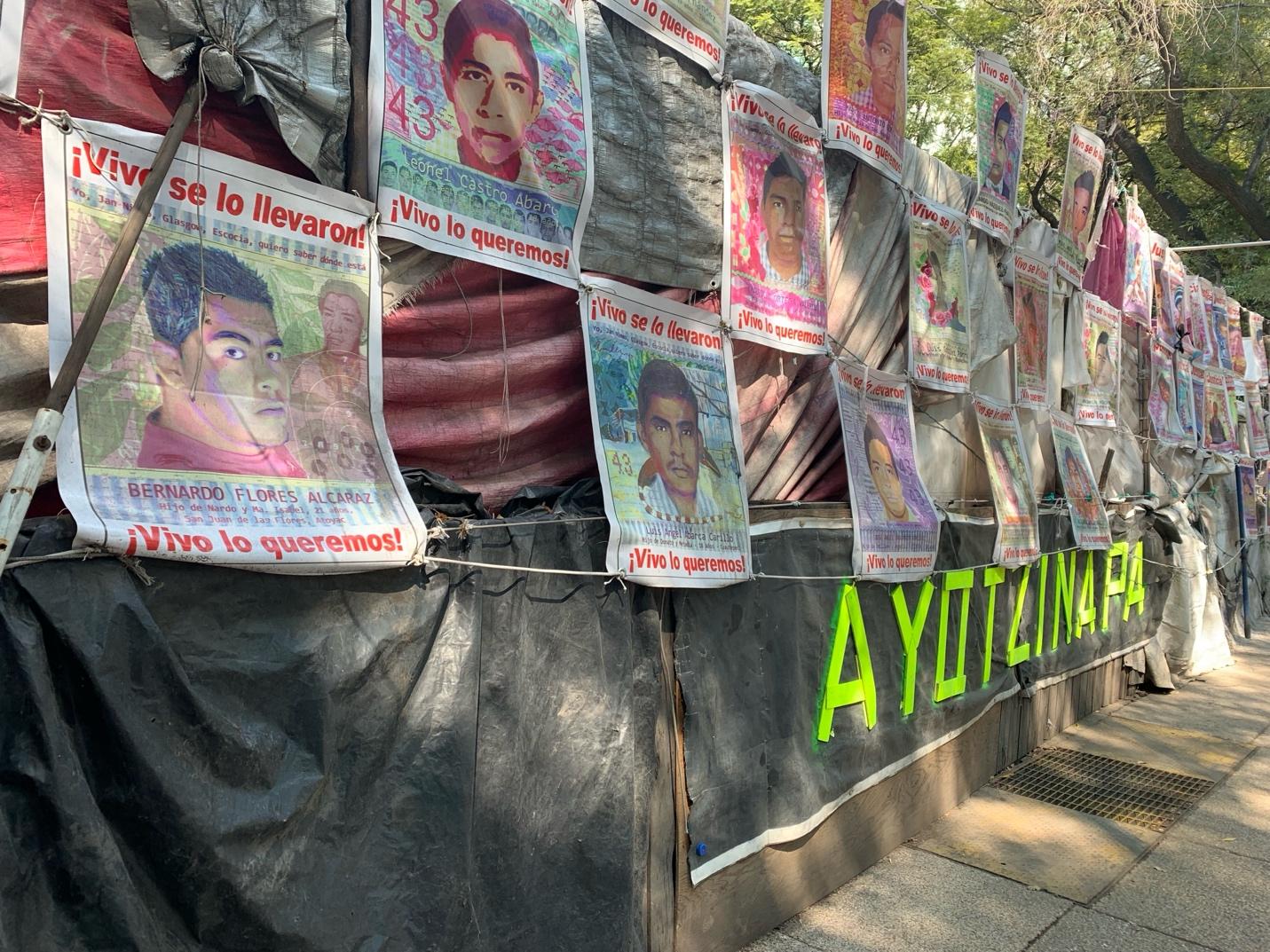
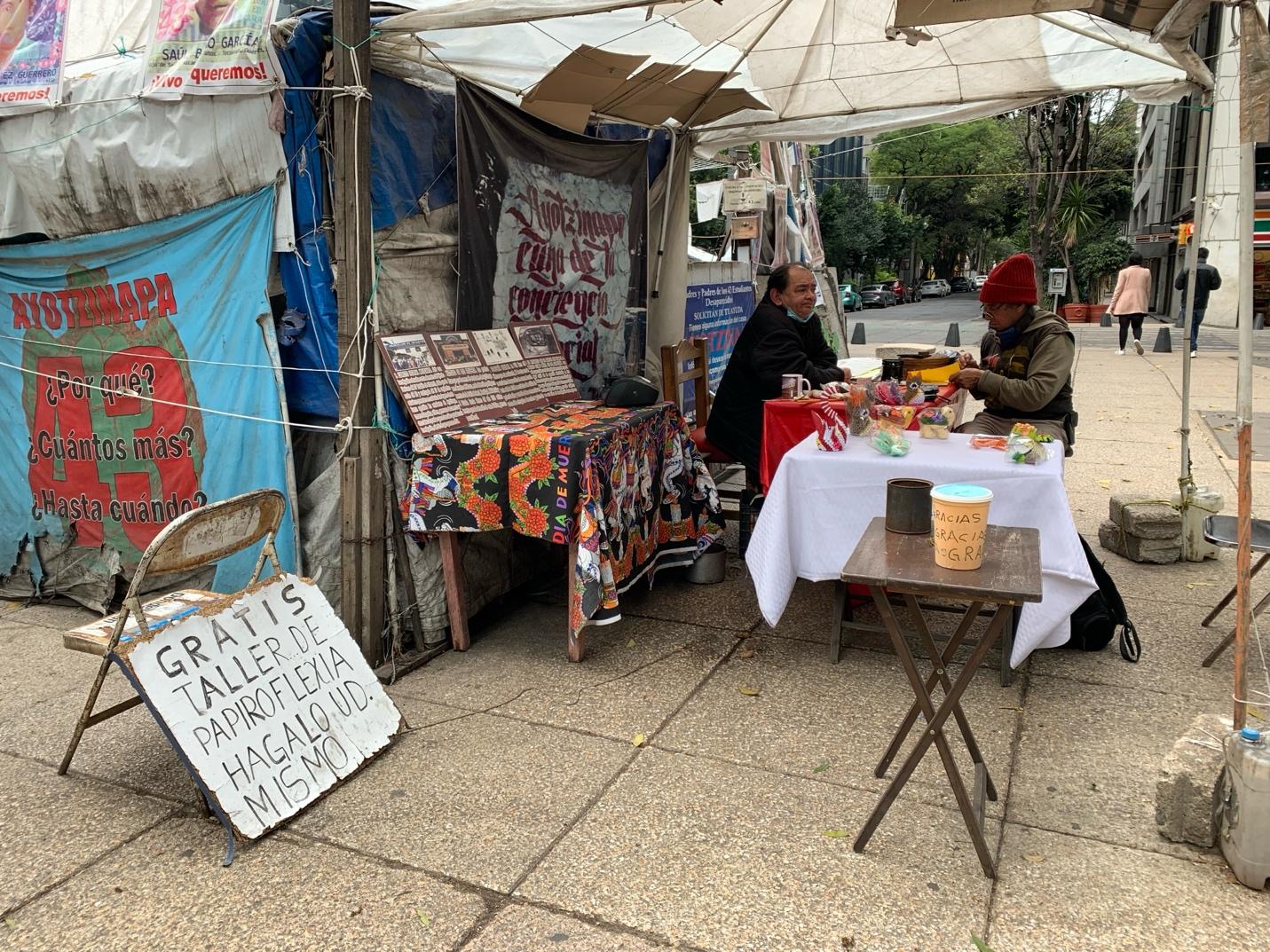
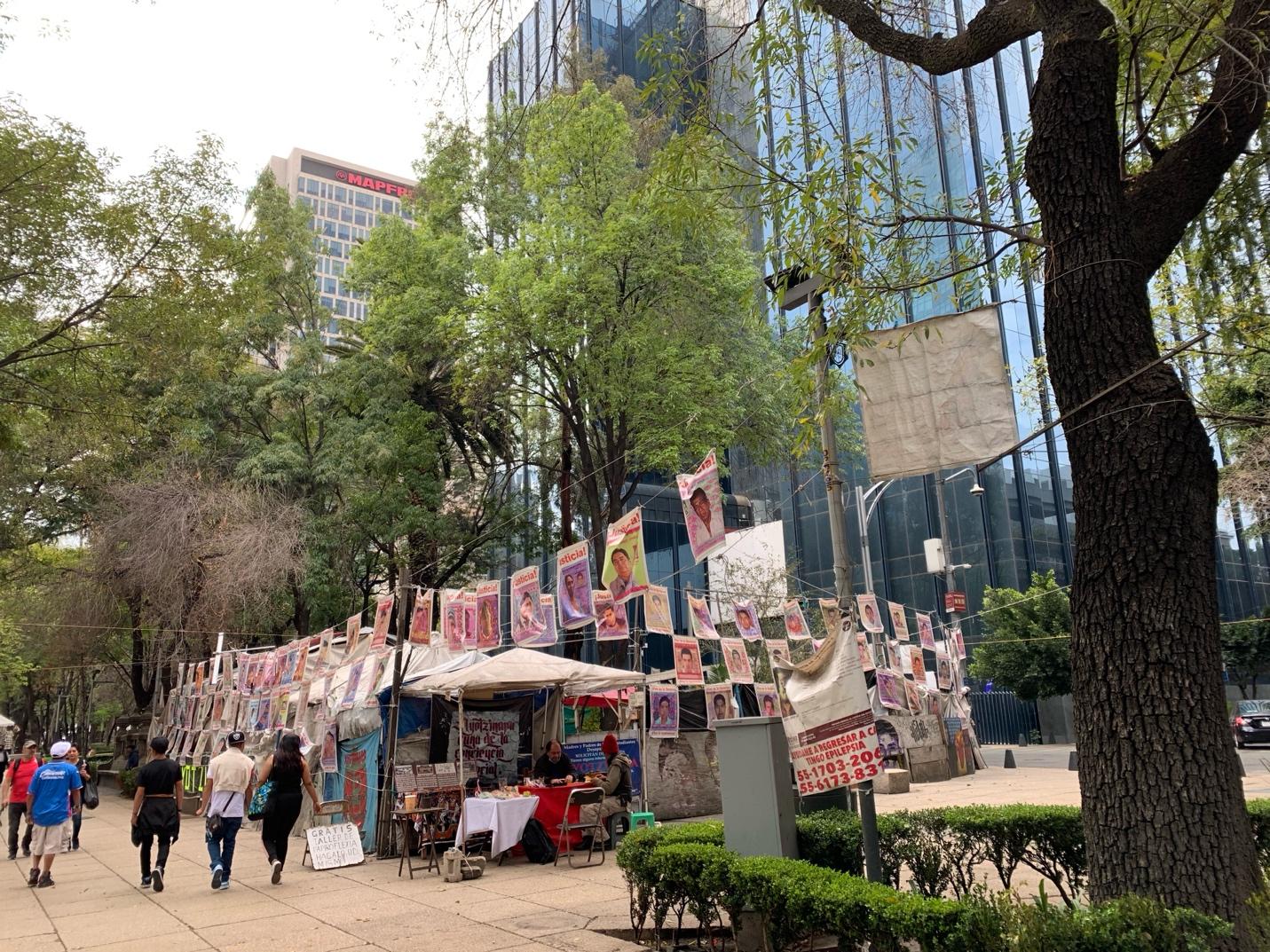
            Campamento de los 43 desaparecidos de Ayotzinapa en el paseo de la reforma de la ciudad de México, primero de enero del 2023. 

            El primero de enero del 2023 lo pasé en la Ciudad de México, algo que no sucedía desde 1999. Y aunque he podido regresar en varias ocasiones, he visto varios acontecimientos suceder a la lejanía desde el extranjero, uno de ellos fue la desaparición de los 43 estudiantes de la escuela normal de Ayotzinapa la noche del 26 de septiembre del 2014. A casi una década de aquel terrible evento que marcó la historia del México contemporáneo, y que destapa la descomposición social del sistema mexicano a varios niveles, los estudiantes y la rebeldía juvenil volvió a cimbrar al país, si bien, distinto a 1968, queda claro que cuando los estudiantes salen a las calles para denunciar, el complejo sistema social mexicano no puede resistir ni su energía, ni su discurso. 

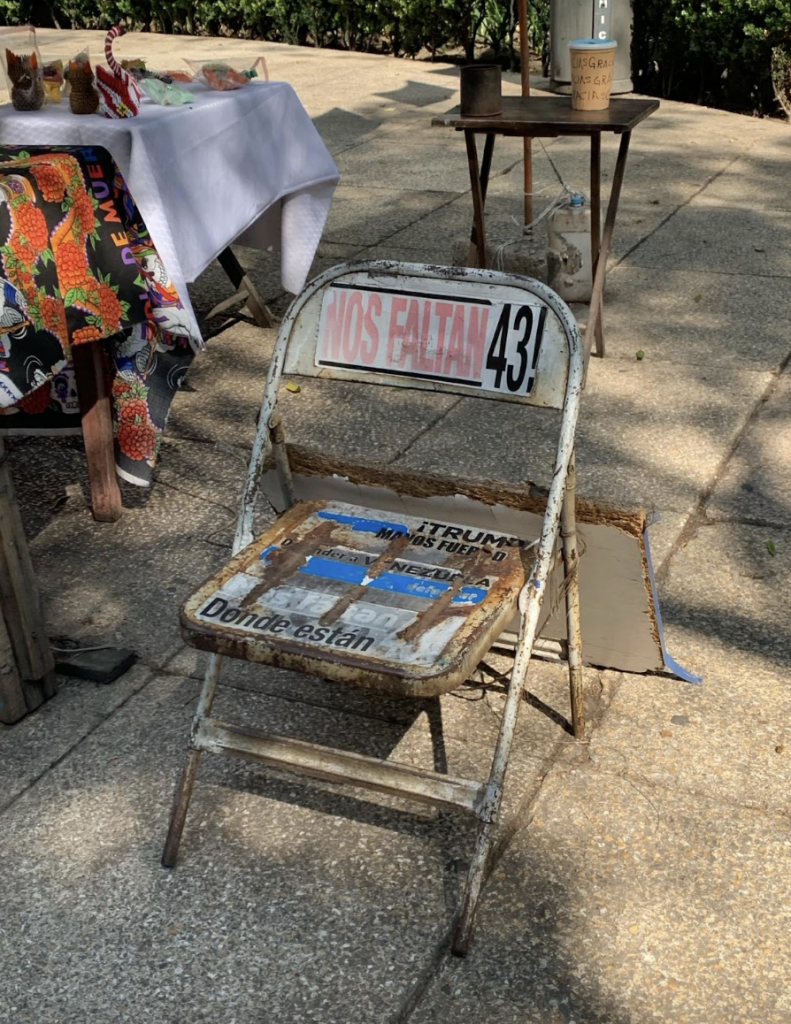
            Silla en el campamento de los 43 desaparecidos de Ayotzinapa en el paseo de la reforma de la ciudad de México, primero de enero del 2023. 

            Aclaraciones y antecedentes

            Pero antes de avanzar en esta reflexión, es importante aclarar algunos puntos y términos para los lectores.

            Primero, una escuela normal en México es una escuela que forma maestros. En el caso del estado de Guerrero estas escuelas forman a los jóvenes que enseñarán en las zonas rurales, en las zonas alejadas de la capital del estado y donde se vive con falta de servicios médicos, educativos y sociales.

            Segundo, el estado de Guerrero se ubica en el pacífico mexicano al suroeste del país, famoso por sus playas turísticas como el famoso Acapulco y Puerto Márquez, la población alrededor de los centros turísticos vive en una gran pobreza, estas poblaciones han visto como sus playas generan riqueza para inversionistas, pero no para ellos, han vivido el despojo de sus recursos naturales y la transformación de su entorno; para muchos de los pobladores de Guerrero, la migración se abre como la única posibilidad de avanzar, en Norristown y en Filadelfia hay una población grande proveniente de Guerrero, en CCATE y en REVARTE varias de las escritoras que incluso dieron inicio a esta plataforma son inmigrantes de Guerrero. Por tanto, la historia de Ayotzinapa, la historia de abuso, despojo y opresión es muy cercana a nosotros. Por eso en estas páginas no podemos ignorar, ni debemos olvidar lo que sucede allá.

            Tercero, la geografía del estado también se comprende por la serranía y las cañadas donde cientos de miles de habitantes viven en pequeñas poblaciones.

            Cuarto, los habitantes de Guerrero han mostrado un activismo, una rebeldía contra el sistema y un liderazgo guerrillero y revolucionario sobre todo en los años setenta cuando surgió el Partido de los Pobres (PDLP) encabezado por los lideres sociales y guerrilleros Lucio Cabañas Barrientos y Genaro Vázquez Rojas. Resulta como un dato importante que Lucio Cabañas fue también un maestro rural egresado de la Escuela Normal de Ayotzinapa y además su abuelo formo parte del ejercito libertador del sur de Emiliano Zapata durante la revolución mexicana.  

            A person sitting at a table outside

Description automatically generated
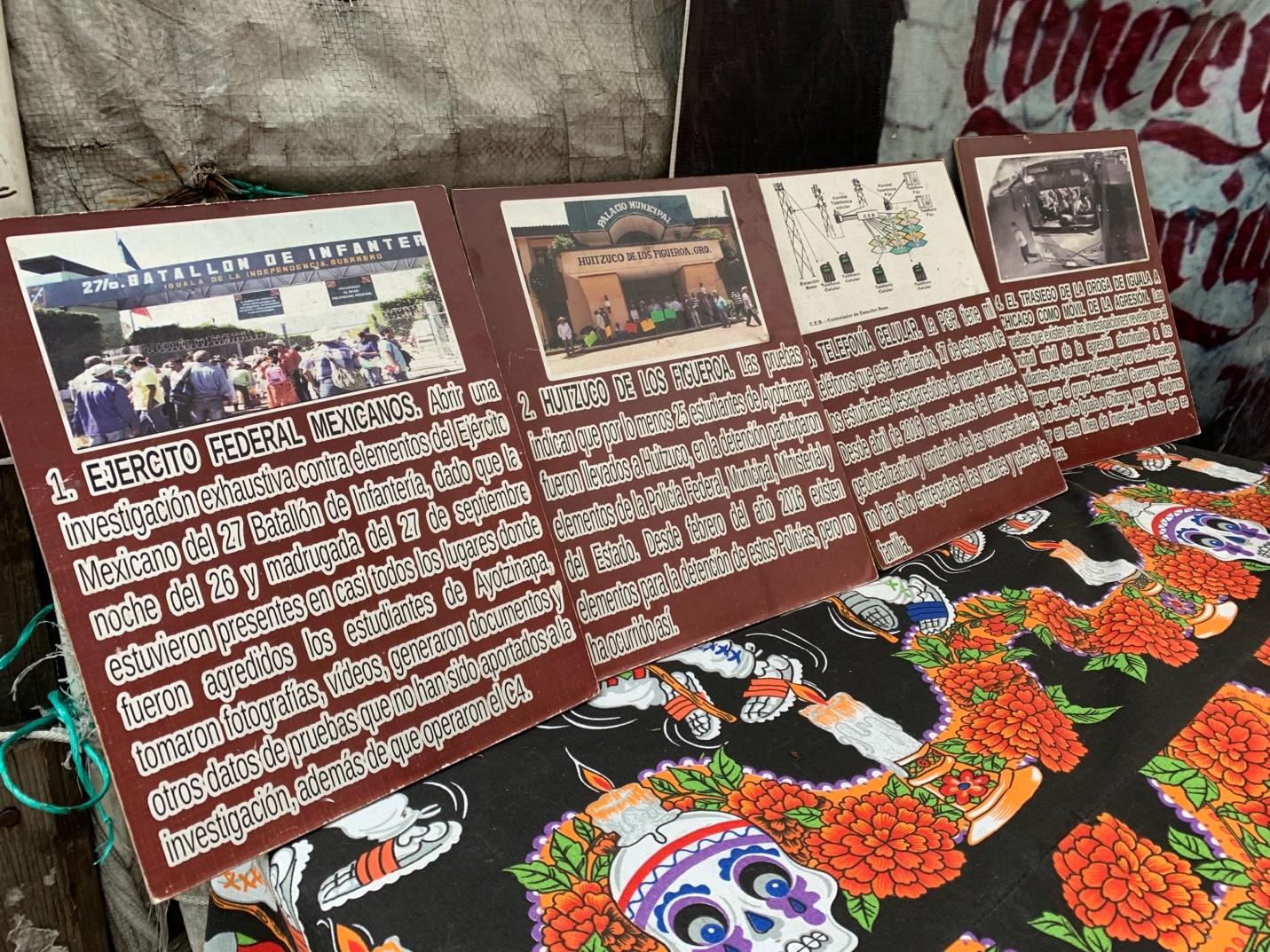
            Campamento de los 43 estudiantes desaparecidos de la norma de Ayotzinapa, en el paseo de la reforma de la ciudad de México, primero de enero del 2023. 

            Lucio Cabañas es un precedente importante para Ayotzinapa, marca una lucha digna, atrevida, retadora contra los sistemas, y que seguro ha sido de inspiración para las nuevas generaciones. Como dato histórico es importante comentar que el secretario de Gobernación de 1968 Luis Echeverría Álvarez quien coordinó la masacre de estudiantes en Tlatelolco en la ciudad de México el 2 de octubre, y a diez días de la inauguración de las olimpiadas, fue el mismo que ya como presidente lanzó la guerra sucia contra cualquier grupo opositor y que mató a Lucio Cabañas. Luis Echeverría, fue incapaz de establecer dialogo con el pueblo y con los sectores marginados, actuó siempre con la fuerza de un estado opresor.

            A sign on a bench

Description automatically generated
            Los hechos desde el campamento de los 43 estudiantes desaparecidos de la norma de Ayotzinapa.

            Estas aclaraciones nos ayudan a poner en contexto la lucha de los jóvenes normalistas de Ayotzinapa, conscientes de la corrupción del estado, de la historia de opresión del pasado y del presente, del despojo de sus territorios y de sus recursos, los jóvenes de Ayotzinapa resistieron tanto el gobierno local como estatal de la segunda década del milenio. Y aunque las diversas versiones tratan de reducir la lucha al hecho del “secuestro” de autobuses, acto común en México incluso por hinchas de equipos de futbol, la lucha de los estudiantes no se puede criminalizar, ni se puede usar como motivo para desaparecerlos. Si así fuera cada semana miles de hinchas de futbol serían desaparecidos. En otras palabras, es ridículo, las causas y motivos que las versiones oficiales han presentado. Lo más seguro es que los estudiantes de Ayotzinapa eran una piedra en el zapato para los grupos de políticos, ejército y de narcotraficantes del estado, y cuya capacidad de resistencia molestaba a estos grupos corruptos y del poder.

            Es importante mencionar que en el estado de Guerrero se cultiva la amapola, y se ha convertido en una zona dominada por el narcotráfico porque de ahí sale la morfina y la heroína, así se ha dado el desplazamiento de miles de habitantes que se niegan a dejar sus tierras, y los que no, tienen que trabajar para estos grupos de narcos. “Plata o plomo” motivó la expansión del dominio de los cárteles de drogas que se dio al amparo de los presidentes Carlos Salinas, Ernesto Zedillo, Vicente Fox Quezada, Felipe Calderón, y Enrique Peña Nieto, su estrategia de “Guerra contra el narco” sirvió de protección de unos grupos para la expansión de otros, y esa expansión se dio en la serranía de Guerrero.

            El gobierno actual de AMLO no ha podido y no tiene las herramientas para desmantelar ese dominio mezclado entre política, ejercito y narcotráfico que existe en Guerrero, así de descompuesto esta el sistema que no es una batalla que el mismo AMLO pueda ganar. AMLO si bien le dio inicio, diálogo y fue sacando las piezas con los años se topo con pared, algo infranqueable que no puede tocar, quizá para no crear otro baño de sangre, quizá para no voltear al ejercito en su contra, como sea, no llegar al fondo del asunto lo hace cómplice como a los presidentes anteriores, aunque sea por omisión. Porque en este punto queda claro que fue el estado.

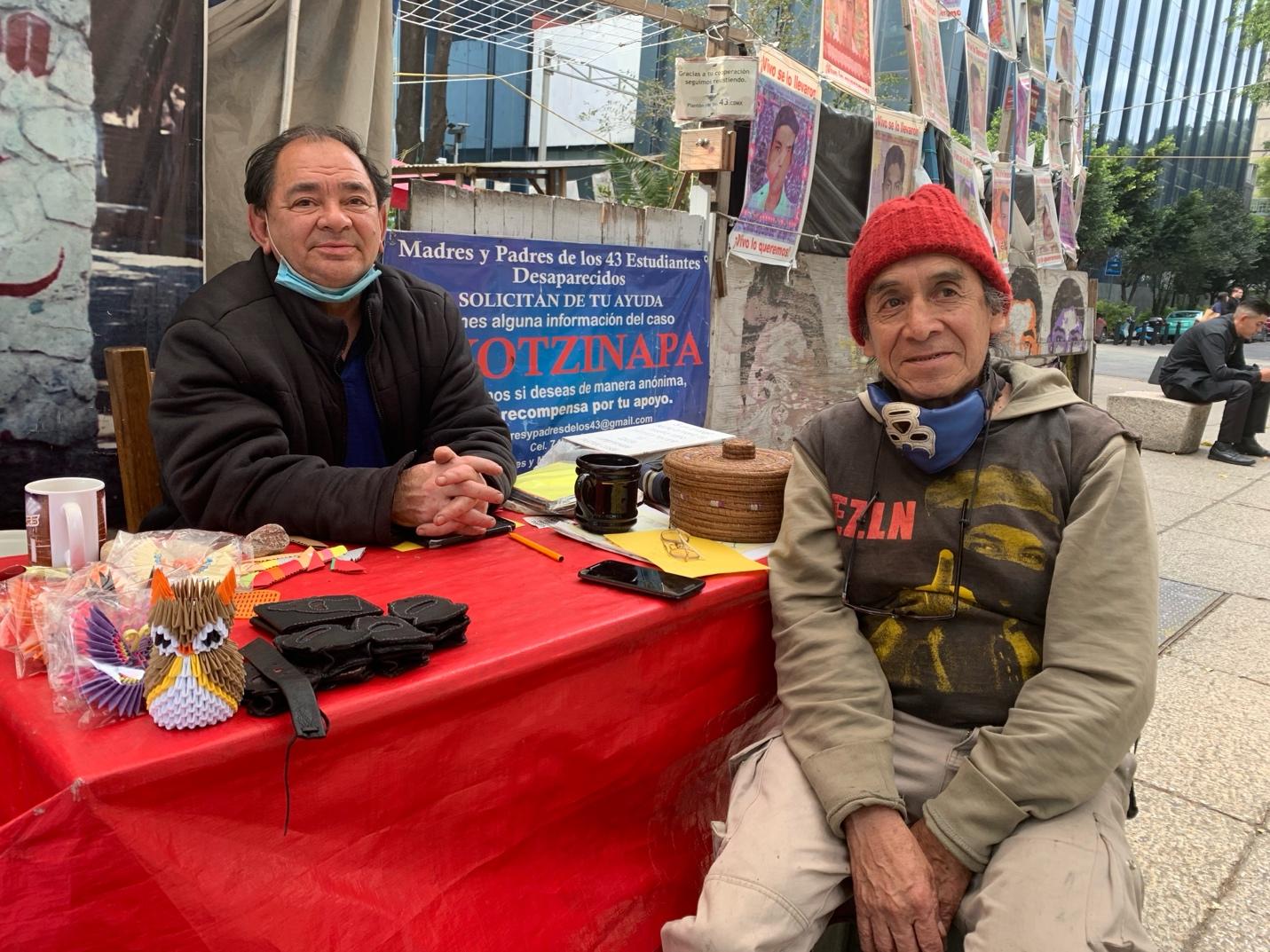
            Martin Ochoa y José Seferino en el campamento de los 43 estudiantes desaparecidos de la norma de Ayotzinapa.

            Primero de enero del 2023

            Así, hace once meses me levanté ese primero de enero en plena ciudad de México con la meta de visitar la avenida más transitada y cosmopolita de la Ciudad, el histórico el paseo de la reforma, y visitar el campamento de Ayotzinapa hecho de maderas, de lonas y resguardado por los rostros de los 43 estudiantes desaparecidos, el campamento ha resistido la presión tanto de la ciudad, de los gobiernos y los discursos falsos de varios procuradores y de versiones oficiales que se han dado, y que se contradicen entre ellas. Aquella mañana me senté a platicar con Martin Ochoa y con José Seferino. Martin quien es un artista de la papiroflexia despide tranquilidad en su platica, y en las reflexiones que comparte: “Comenzamos muchos, ya no somos tantos, este es un espacio en el que hay que entender por qué se lucha, este es un plantón que resiste el olvido a un crimen de estado, tenemos muchas presiones, nos han querido quemar el campamento tres veces, pero aquí estamos”. 

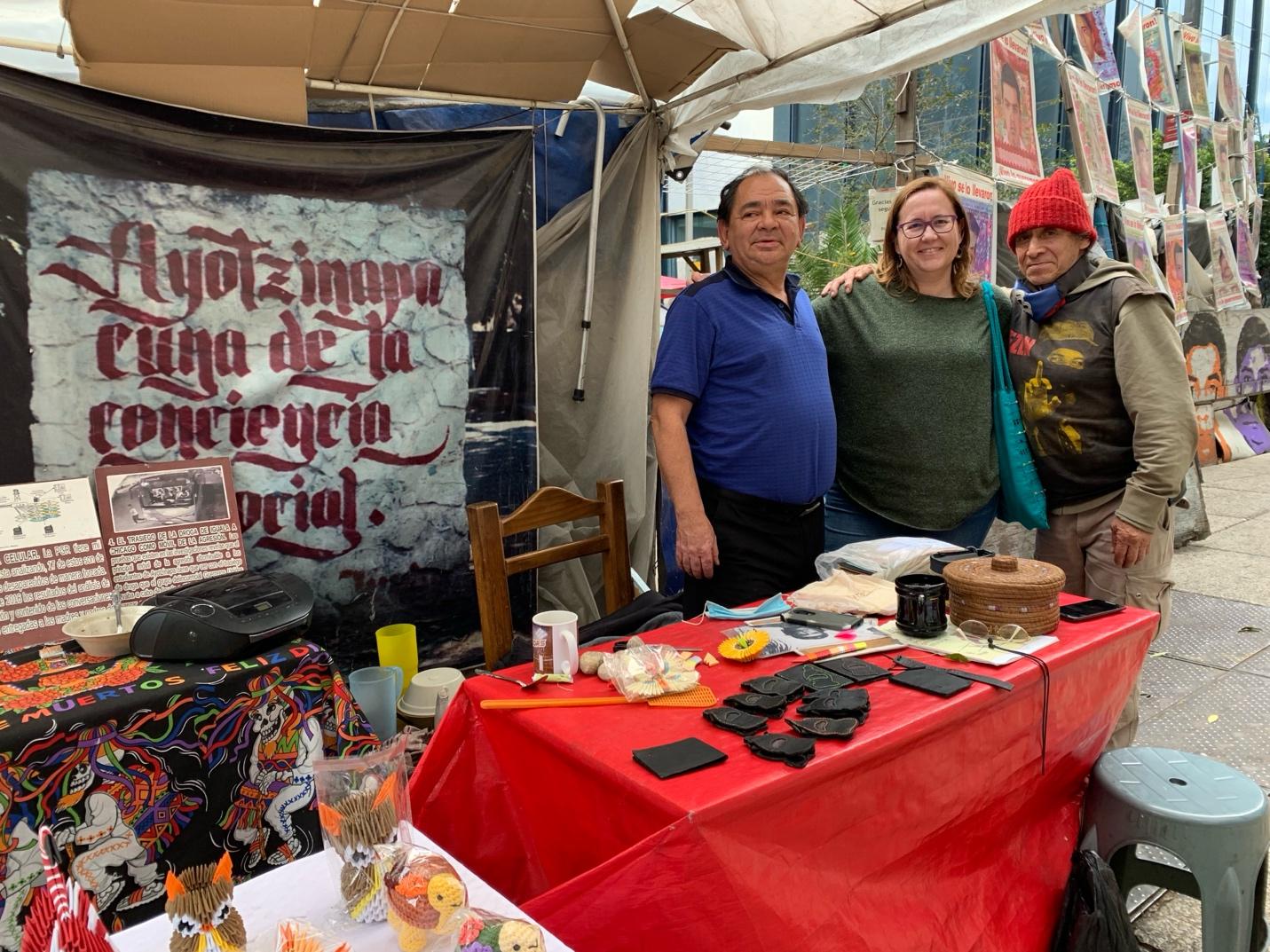
            José Seferino, por otro lado, ha sido un luchador de la izquierda que participó en la huelga de la UNAM del 99 y quien también apoyo al EZLN desde sus inicios, y siendo ya un hombre de la tercera edad camina con prótesis, pero eso no le impide limpiar el campamento, cocinar, y hacer trabajo de peletería, sus palabras despiden conocimiento y sabiduría. Ambos se sostienen así mismos, y en el campamento enseñan gratis talleres. Hay transeúntes que donan para la causa y esos fondos van para el movimiento. Durante las seis horas que compartí con ellos personas de varias partes del mundo se detuvieron para preguntar, o se juntaron a la tertulia como la profesora Sandra García Defez de la Universidad de Valencia cuyas palabras de apoyo nos conmovieron. 

            A group of people standing in front of a table with food items

Description automatically generated
            Martin Ochoa, José Seferino y  la Dra. Sandra García Defez de la Universidad de Valencia en el campamento de los 43 estudiantes desaparecidos de la norma de Ayotzinapa.

            Durante la plática surgieron las similitudes de la lucha de las madres y los padres de Ayotzinapa con la de “Las Madres de Plaza de Mayo” en Argentina, quienes por casi medio siglo continúan la marcha de la resistencia frente a la Casa Rosada, apodadas como “Las locas”, estas madres, no se dejaron vencer por los predicadores de la resignación, su entereza se convirtió en consciencia y fuerza latinoamericana, y hasta hoy continúan como “Las Abuelas de Plaza de Mayo”. Estas marcan un precedente histórico importante para el movimiento de Ayotzinapa y en la que ya ha habido contacto entre los grupos. ¿Qué tan grande es el amor de una madre y de un padre que sostienen la memoria y la vida de sus hijos, que no se resigna con versiones “oficiales”, amañadas para proteger intereses? Tanto las madres y padres de Ayotzinapa, así como Las Madres de Plaza de Mayo, están dispuestos a enfrentar dictadores, narcotráfico, ejército y políticos corruptos, y no los pueden acallar. Las Madres de Plaza de Mayo, enfrentaron al mismo dictador José Rafael Videla, y nos las callaron. 

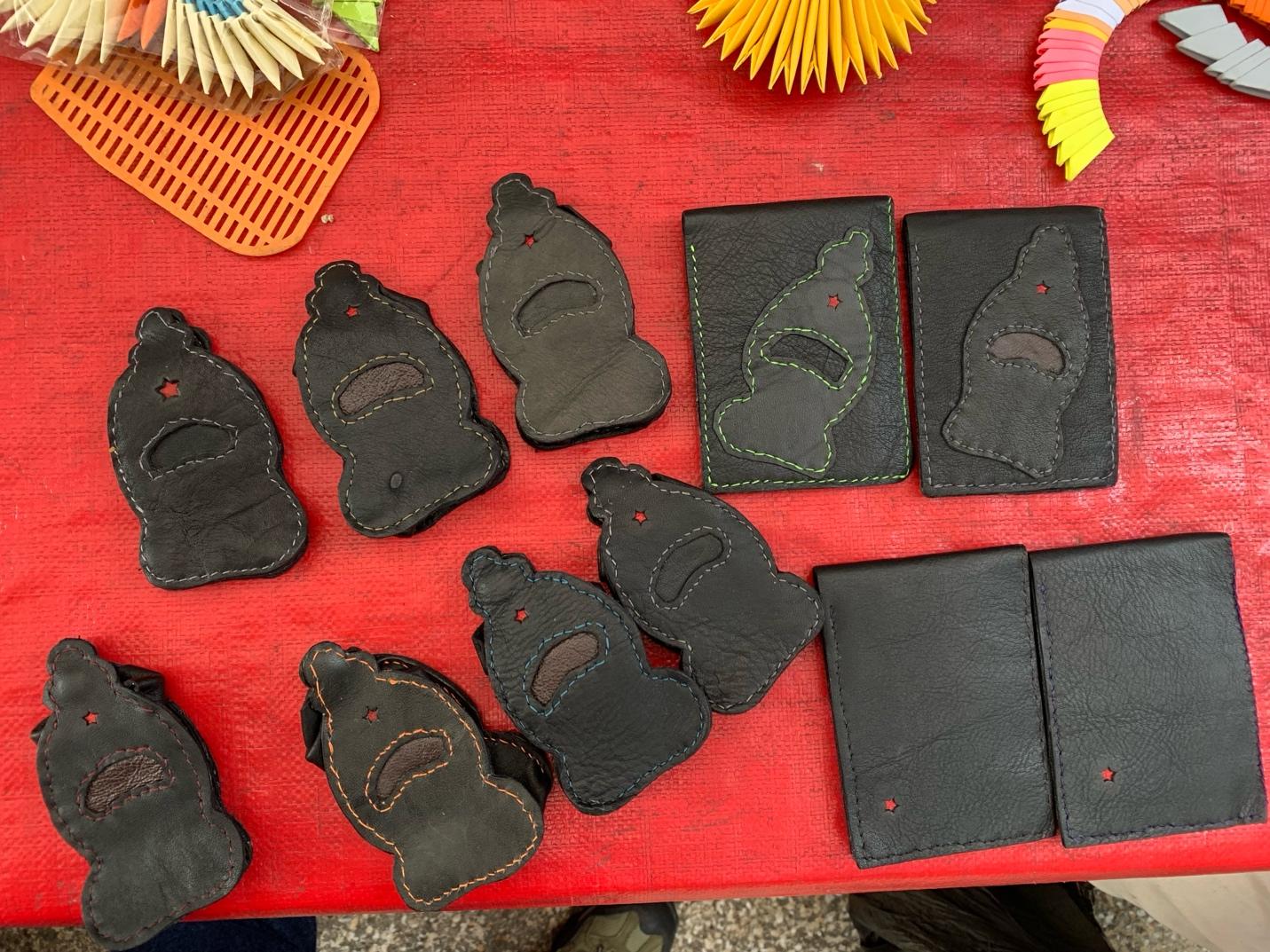
            A group of leather wallets on a red surface

Description automatically generated
            Trabajo peletero de José Seferino con motivos zapatistas en el campamento de los 43 estudiantes desaparecidos de la norma de Ayotzinapa.

            La mañana y la plática se extendió hasta las dos de la tarde, con gran camarería, Martín y José prepararon un almuerzo del recalentado de la celebración del año nuevo, y nos compartieron tacos de cochinita pibil, un manjar cocinado por ellos mismos quienes pasaron la noche en el campamento. — ¿Cuál es el futuro del movimiento y del campamento? — Les pregunte. A lo que ellos respondieron que ellos están a la voluntad de lo que el movimiento de madres y padres decidan, ellos están para apoyar. 

            Les pregunte — ¿Por qué unos apoyan y otros ignoran? —a lo que José contesto, –nosotros respetamos, así como ustedes de manera amable se han detenido para dialogar con nosotros, hay quienes pasan y apoyan, hay otros que nos ignoran, hay otros que nos agreden, creo que todo es asunto de la concientización de cada uno, qué tan conscientes somos de lo que se vive en el país–. Esta palabra de José Seferino me recordó al educador brasileño Paulo Freire quien justo decía que la concientización en la educación es el punto crucial que dispara la liberación, la liberación de los sistemas internalizados en la persona, y la liberación de los sistemas que crean ese contexto de opresión. Ignorar la historia puede tener un alto costo, para otros debe ser ignorar para sobrevivir y mejor quedarse con el drama del futbol, de las telenovelas, de las series y de las redes sociales, para otros es ignorar para seguir acomodándose a las corrientes del neoliberalismo o de la política, o del dinero fácil del narcotráfico.  Ignorar hace crecer el problema del cual después es imposible escapar. Así, puedo decir sin temor a equivocarme que la educación se ha vivido en la normal de Ayotzinapa desde la concientización. 

            A group of people walking on a sidewalk

Description automatically generated
            Campamento de los 43 desaparecidos de Ayotzinapa en el paseo de la reforma de la ciudad de México, primero de enero del 2023. 

            En medio de la avenida más transitada y cosmopolita de la Ciudad de México, hay un campamento que resiste contra la resignación, el olvido y la ignorancia: ¡Vivos  los llevaron, vivos los queremos!


            English Version:

            Ayotzinapa: Education Through Awareness

            (“They took them alive, we want them alive”)

            Text and photography by Obed Arango

            I spent January 1, 2023 in Mexico City, something that had not happened since 1999. And although I have been able to return on several occasions, I have seen several events happen in the distance from abroad, one of them was the disappearance of the 43 students from the Ayotzinapa normal school on the night of September 26, 2014. Almost a decade after that terrible event that marked the history of contemporary Mexico, and that uncovers the social decomposition of the Mexican system at various levels, the students and the Youthful rebellion once again shook the country, although, unlike in 1968, it is clear that when students take to the streets to denounce, the complex Mexican social system cannot resist either their energy or their discourse.

            Clarifications and background

            But before moving forward with this reflection, it is important to clarify some points and terms for readers. First, a normal school in Mexico is a school that trains teachers. In the case of the state of Guerrero, these schools train young people who will teach in rural areas, in areas far from the state capital and where there is a lack of medical, educational and social services. Second, the state of Guerrero is located in the Mexican Pacific in the southwest of the country, famous for its tourist beaches such as the famous Acapulco and Puerto Márquez, the population around the tourist centers lives in great poverty, these populations have seen how their beaches They generate wealth for investors, but not for them, they have experienced the dispossession of their natural resources and the transformation of their environment; For many of the residents of Guerrero, migration is the only possibility of moving forward. In Norristown and Philadelphia there is a large population from Guerrero. In CCATE and REVARTE, several of the writers who even started this platform are immigrants. of warrior. Therefore, the story of Ayotzinapa, the story of abuse, dispossession and oppression is very close to us. That is why in these pages we cannot ignore, nor should we forget, what happens there. Third, the geography of the state is also understood by the mountains and ravines where hundreds of thousands of inhabitants live in small towns. Fourth, the inhabitants of Guerrero have shown activism, rebellion against the system and guerrilla and revolutionary leadership, especially in the seventies when the Party of the Poor (PDLP) emerged, led by social and guerrilla leaders Lucio Cabañas Barrientos and Genaro. Vazquez Rojas. It is an important fact that Lucio Cabañas was also a rural teacher who graduated from the Ayotzinapa Normal School and his grandfather was also part of Emiliano Zapata’s southern liberation army during the Mexican revolution.

            Lucio Cabañas is an important precedent for Ayotzinapa, it marks a dignified, daring, challenging fight against the systems, and that has surely been an inspiration for new generations. As historical data, it is important to comment that the 1968 Secretary of the Interior Luis Echeverría Álvarez who coordinated the massacre of students in Tlatelolco in Mexico City on October 2, and ten days before the opening of the Olympics, was the same as president launched the dirty war against any opposition group and killed Lucio Cabañas. Luis Echeverría, was incapable of establishing dialogue with the people and with the marginalized sectors, he always acted with the force of an oppressive state.

            These clarifications help us put into context the struggle of the young normalistas of Ayotzinapa, aware of the corruption of the state, the history of oppression of the past and present, the dispossession of their territories and their resources, the young people of Ayotzinapa resisted both local and state government in the second decade of the millennium. And although the various versions try to reduce the struggle to the fact of “kidnapping” buses, a common act in Mexico even by fans of soccer teams, the students’ struggle cannot be criminalized, nor can it be used as a reason to disappear them. If this were the case, thousands of soccer fans would be disappeared every week. In other words, the causes and reasons that the official versions have presented are ridiculous. The most likely thing is that the Ayotzinapa students were a thorn in the side of the state’s political, military and drug trafficking groups, and whose ability to resist bothered these corrupt and powerful groups. It is important to mention that poppies are grown in the state of Guerrero, and it has become an area dominated by drug trafficking because morphine and heroin come from there, which has led to the displacement of thousands of inhabitants who refuse to leave. their lands, and those who don’t have to work for these drug trafficking groups. “Silver or lead” motivated the expansion of the domination of the drug cartels that occurred under the protection of presidents Carlos Salinas, Ernesto Zedillo, Vicente Fox Quezada, Felipe Calderón, and Enrique Peña Nieto, their “War on Drugs” strategy. It served as protection for some groups for the expansion of others, and that expansion occurred in the Guerrero mountain range. The current AMLO government has not been able to and does not have the tools to dismantle this domain mixed between politics, the army and drug trafficking that exists in Guerrero, so broken is the system that it is not a battle that AMLO himself can win. Although AMLO initiated dialogue and took out the pieces over the years, he ran into a wall, something insurmountable that he cannot touch, perhaps to avoid creating another bloodbath, perhaps to not turn the army against him, whatever, Not getting to the bottom of the matter makes him complicit like previous presidents, even if it is by omission. Because at this point it is clear that it was the state.

            January 1, 2023

            Thus, eleven months ago I woke up that January 1st in the heart of Mexico City with the goal of visiting the busiest and most cosmopolitan avenue in the City, the historic Paseo de la Reforma, and visiting the Ayotzinapa camp made of wood, tarps and protected by the faces of the 43 missing students, the camp has resisted pressure from the city, the governments and the false speeches of various attorneys and official versions that have been given, and that contradict each other. That morning I sat down to talk with Martin Ochoa and José Seferino. Martin, who is an origami artist, exudes tranquility in his talk, and in the reflections he shares: “Many of us started, there are not so many of us anymore, this is a space in which we have to understand why we are fighting, this is a sit-in that “Resists oblivion to a state crime, we have a lot of pressure, they have tried to burn our camp three times, but here we are.”

            José Seferino, on the other hand, has been a leftist fighter who participated in the UNAM strike of ’99 and who also supported the EZLN since its beginnings, and being an elderly man he walks with prosthetics, but that does not It prevents him from cleaning the camp, cooking, and doing fur work, his words give off knowledge and wisdom. They both support themselves, and at the camp they teach free workshops. There are passersby who donate to the cause and those funds go to the movement. During the six hours that I shared with them, people from various parts of the world stopped to ask questions, or joined the discussion, like Professor Sandra García Defez from the University of Valencia, whose words of support moved us.

            During the talk, similarities arose between the struggle of the mothers and fathers of Ayotzinapa with that of “The Mothers of Plaza de Mayo” in Argentina, who for almost half a century continue the march of resistance in front of the Casa Rosada, nicknamed “The crazy ones”, these mothers, did not allow themselves to be defeated by the preachers of resignation, their fortitude became conscience and Latin American strength, and to this day they continue as “The Grandmothers of Plaza de Mayo”. These mark an important historical precedent for the Ayotzinapa movement and in which there has already been contact between the groups. How great is the love of a mother and father who sustain the memory and life of their children, who does not resign themselves to “official” versions, rigged to protect interests? Both the mothers and fathers of Ayotzinapa, as well as the Mothers of Plaza de Mayo, are willing to confront dictators, drug trafficking, the army and corrupt politicians, and they cannot be silenced. The Mothers of Plaza de Mayo confronted the dictator José Rafael Videla himself, and they kept us quiet.

            The morning and the talk lasted until two in the afternoon, with great waitress, Martín and José prepared a reheated lunch for the New Year celebration, and they shared cochinita pibil tacos with us, a delicacy cooked by themselves who spent the night in camp. — What is the future of the movement and the camp? — I asked them. To which they responded that they are at the will of what the mothers and fathers movement decides, they are there to support.

            I asked them — Why do some support and others ignore? —to which José replied, —we respect, just as you have kindly stopped to talk with us, there are those who pass by and support us, there are others who ignore us, there are others who attack us, I think it’s all a matter of the awareness of each one, how aware we are of what is happening in the country–. This word from José Seferino reminded me of the Brazilian educator Paulo Freire who just said that awareness in education is the crucial point that triggers liberation, the liberation of the systems internalized in the person, and the liberation of the systems that create that context. of oppression. Ignoring history can have a high cost, for others it must be ignoring to survive and it is better to stay with the drama of football, soap operas, series and social networks, for others it is ignoring to continue accommodating to the currents of neoliberalism or politics, or easy money from drug trafficking. Ignoring makes the problem grow from which it is then impossible to escape. Thus, I can say without fear of being wrong that education has been experienced in the Ayotzinapa normal since awareness was raised.

            In the middle of the busiest and most cosmopolitan avenue in Mexico City, there is a camp that resists resignation, oblivion and ignorance: They took them alive, we want them alive!

            Obed Arango Hisijara

            Obed es mexicano, ciudadano de la América Latina, artista visual y antropólogo. Director de CCATE y profesor de University of Pennsylvania.

              • « Go to Previous Page
              • Page 1
              • Page 2
              • Page 3
              • Page 4
              • Page 5
              • Page 6
              • Interim pages omitted …
              • Page 8
              • Go to Next Page »

              Hit the ground running with a minimalist look. Learn More

              Copyright © 2026 · Monochrome Pro on Genesis Framework · WordPress · Log in

              • Instagram
              • Facebook