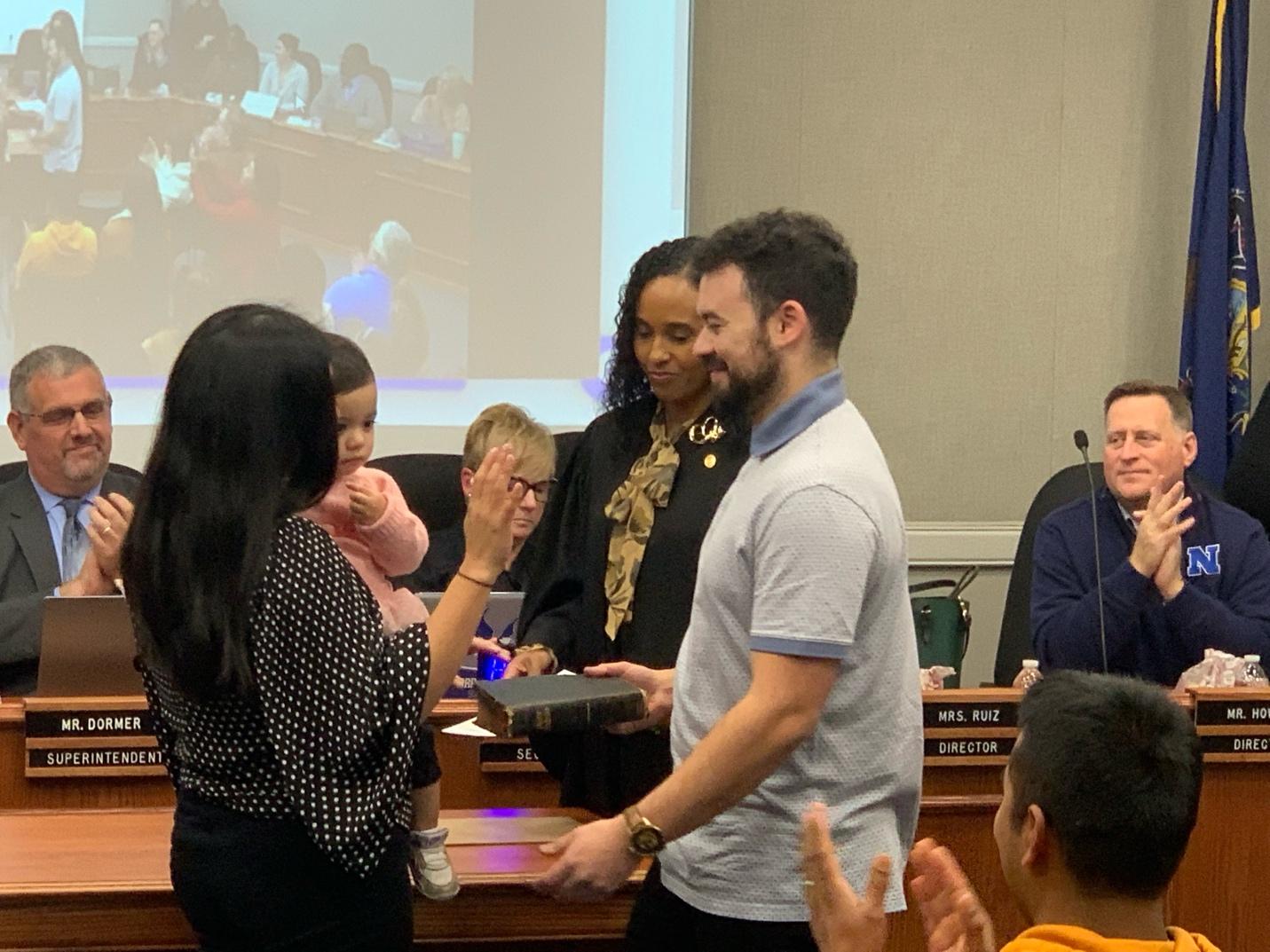
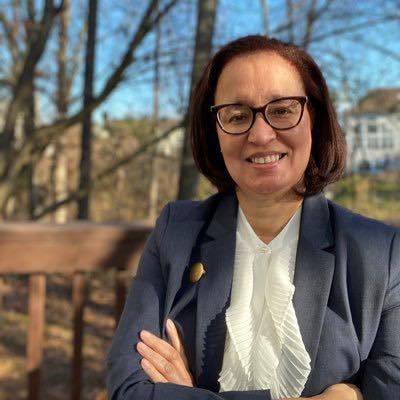
Tessy Ruiz es juramentada como la primera mujer latina del distrito escolar de Norristown, en la foto aparece junto con su esposo el artista y maestro Cristóbal Vega y su pequerña hija Suri. 4 de diciembre del 2023.
El pasado 4 de diciembre se abrió un nuevo capítulo en el Distrito Escolar de Norristown, Pennsylvania, ya que por primera vez en su historia cuenta con dos miembros de la comunidad latina, la primera mujer latina y con el primer presidente latino.
Tessi Ruiz, inmigrante de Perú, y hoy también ciudadana de los Estados Unidos fue juramentada para tomar cargo como miembro de la junta directiva del distrito escolar, a la ceremonia le acompaño su esposo, el artista y maestro Cristóbal Vega de origen mexicano, y su pequeña hija Suri. A Tessi la conocemos desde el año 2012, cuando llego al Centro de Cultura, Arte, Trabajo y Educación (CCATE) para ser voluntaria de este movimiento educativo, de arte y de cultura, donde enseñó por más de una década las clases de empoderamiento de chicas, lectura, primeros auxilios y además, fue entrenadora del equipo de futbol femenil junto con su esposo. Tessi es una profesional de la salud pública con estudios de licenciatura en la Universidad de Temple y de maestría en la Universidad de Drexel. Tessi actualmente trabaja en el Children’s Hospital (CHOP) de la ciudad de Filadelfia. Para nosotros en CCATE ella representa un ejemplo a seguir para las nuevas generaciones, una mujer de grandes talentos, virtudes y una de nuestras líderes que pensamos llegará muy lejos.
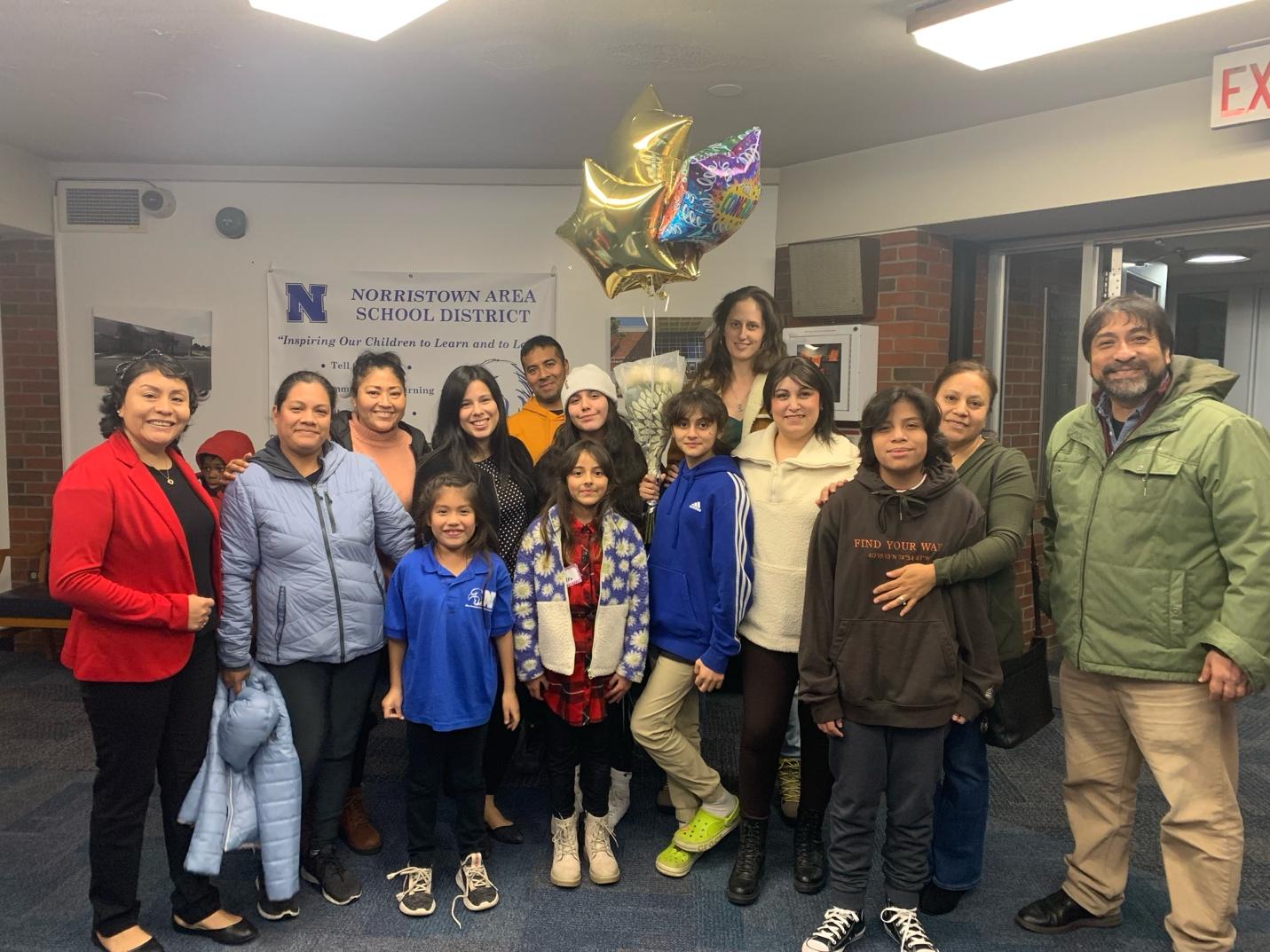
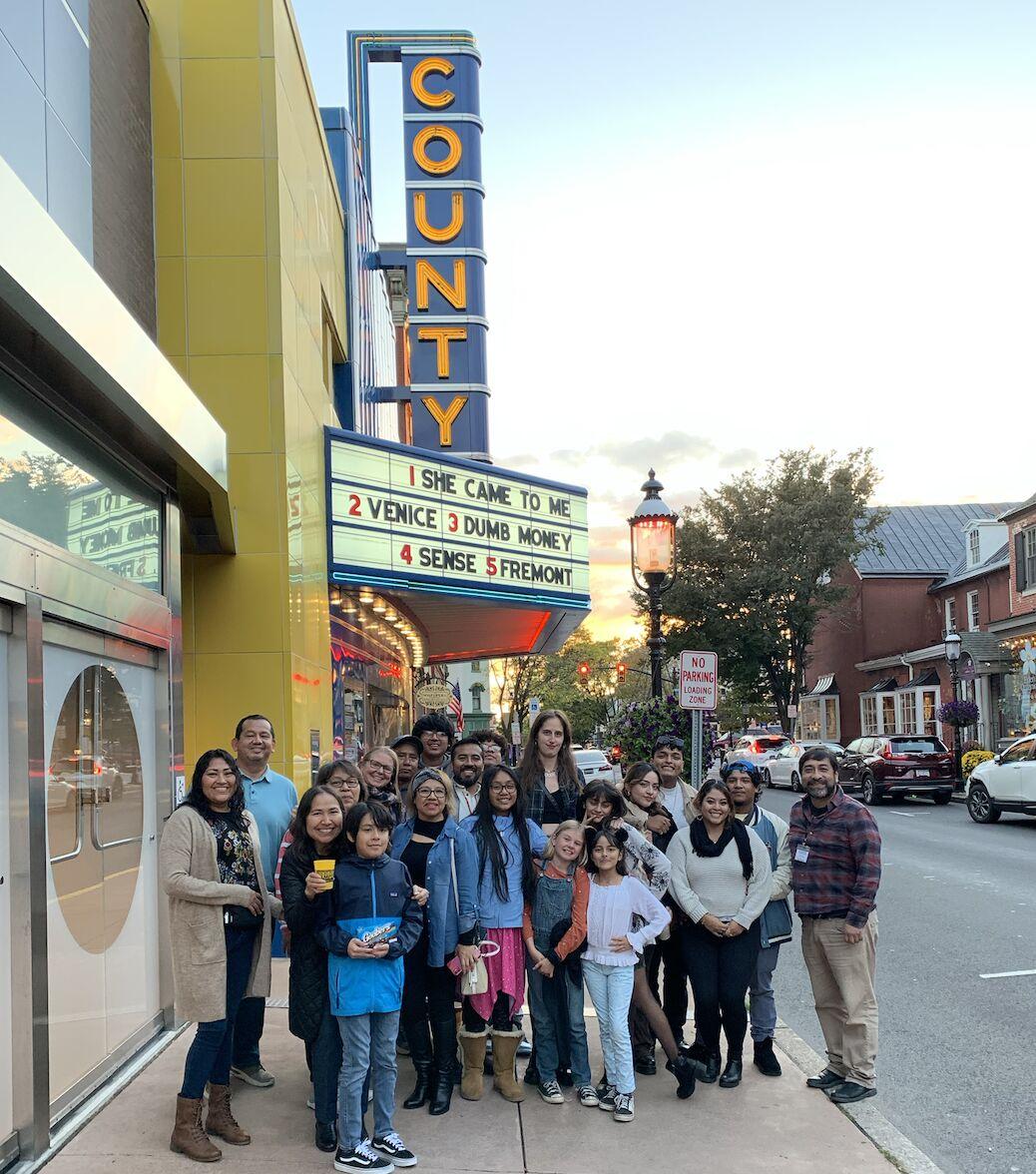
Tessy Ruiz con miembros de CCATE.4 de diciembre del 2023.
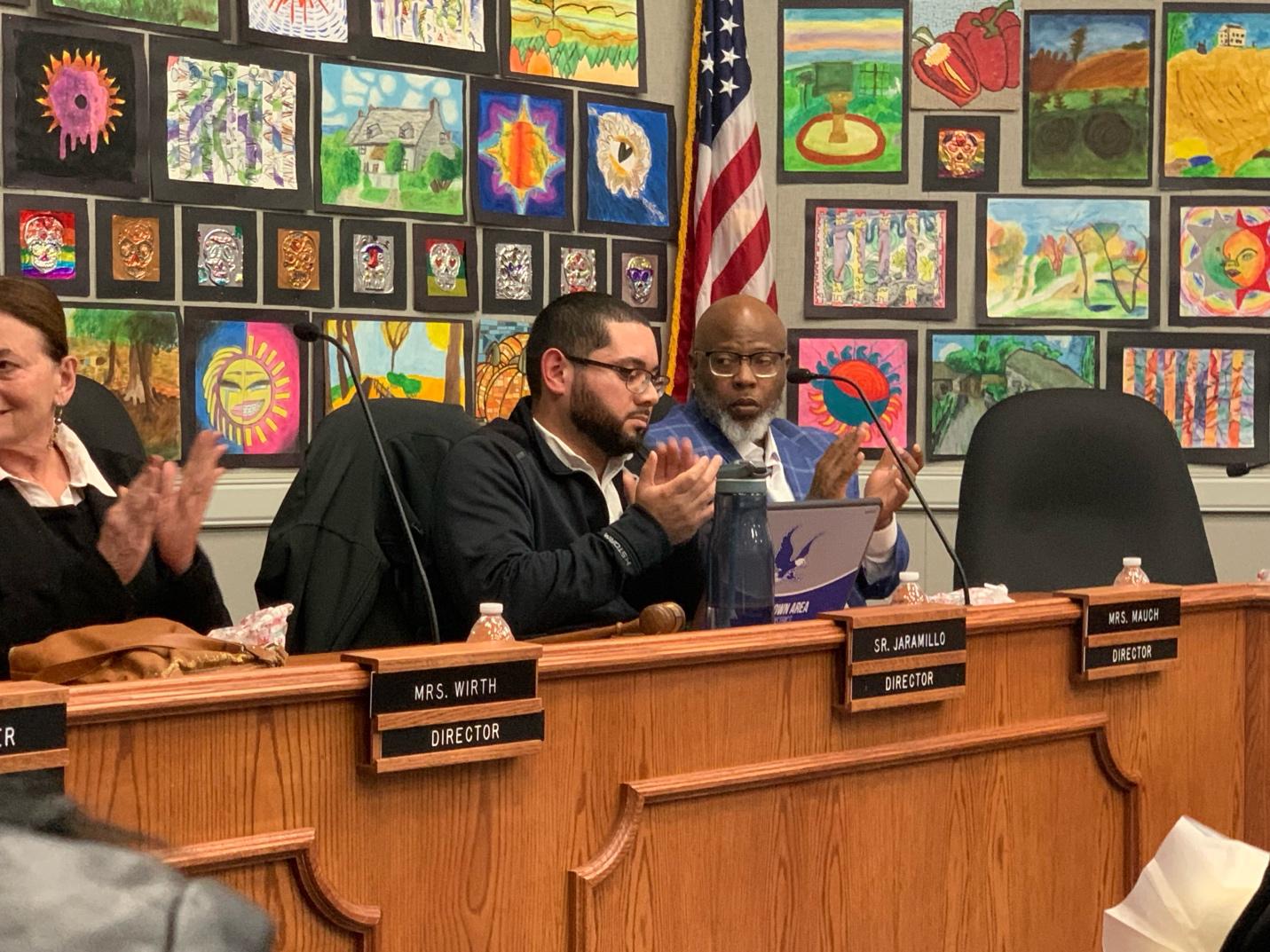
Por otro lado, el maestro en educación Christopher Jaramillo fue elegido el primer presidente de la junta directiva del distrito escolar de origen latino. A Chris, como le conocemos en CCATE, tiene raíces boricuas, originario de New York, y residente de Norristown por más de una década, ha luchado por la mejora de la educación en el pueblo. Nuestro primer contacto con él se remonta al tiempo de la pandemia cuando en el año 2021 remplazó a Jamila Winder quien hoy es vicepresidenta de la comisión del condado de Montgomery. Chris cuenta con estudios de licenciatura del Montgomery County Community College, West Chester University con especialidad en negocios internacionales y en Latinoamérica, y finalmente con una maestría en educación de la Escuela de Graduados en Educación de la Universidad de Pennsylvania. Chris ha trabajado en diversas instituciones que incluye el Montgomery County Community College y actualmente la organización de servicios sociales ACLAMO, ubicada también en Norristown. Chris ha sido presto al diálogo, la planificación y la acción, asimismo muestra un compromiso pleno con la comunidad. Durante estos años él ha sostenido dialogo con el Círculo de Investigaciones Participatorias (CIPC) de CCATE. Este grupo está formado por madres y padres de la comunidad que desde el 2014 realiza investigación cualitativa en el campo de la educación y cuyo trabajo ha sido publicado, y presentado en varias universidades del mundo y de la nación, y a legisladores locales, estatales y federales.
Señor Christopher Jaramillo es elegido como el primer presidente latino de la junta directiva del Distrito Escolar de Norristown, 4 de diciembre del 2023.
El recorrido de Tessi y de Chris, representa la larga jornada de un cuarto de siglo que la comunidad ha tenido que caminar para abrir espacios y hacer valer su voz, si contamos que hoy el 49 por ciento de los estudiantes del Distrito Escolar de Norristown son de origen latino que hasta antes del 2021 no tenía un solo miembro en la junta directiva hasta la llegada de Chris Jaramillo, podemos entender por qué lo que sucedió el lunes pasado es un paso gigante para la comunidad. Vemos en Tessi y en Cris esperanza, sabemos que serán representantes de nuestras voces y que sus carreras crecerán el ámbito de la representación social, pero más importante son los cambios que procurarán y que con el apoyo de todos lograrán. Sabemos que es muy difícil mover un sistema lento, acostumbrado a prácticas monoculturales y monolingües, pero ambos tienen todo el apoyo de la comunidad para que estos cambios lleguen a buen puerto
Desde el este de los Estados Unidos, en las afueras de la ciudad de la Fraternidad: Filadelfia ¡Viva la comunidad!
English Version:
On December 4, a new chapter opened in the Norristown School District, Pennsylvania, since for the first time in its history it has two members of the Latino community, the first Latina woman and the first Latino president.
Tessi Ruiz, an immigrant from Peru, and today also a citizen of the United States, was sworn in as a member of the board of directors of the school district. She was accompanied to the ceremony by her husband, the artist and teacher Cristóbal Vega of Mexican origin, and her little daughter Suri. We have known Tessi since 2012, when she arrived at the Center for Culture, Art, Work and Education (CCATE) to volunteer for this educational, art and culture movement, where she taught empowerment classes for more than a decade. girls, reading, first aid and in addition, she coached the women’s soccer team along with her husband. Tessi is a public health professional with bachelor’s degrees from Temple University and master’s degrees from Drexel University. Tessi currently works at Children’s Hospital (CHOP) in the city of Philadelphia. For us at CCATE, she represents an example to follow for the new generations, a woman of great talents, virtues and one of our leaders who we believe will go very far.
On the other hand, maestro in education Christopher Jaramillo was elected the first president of the board of directors of the school district of Latino origin. Chris, as we know him at CCATE, has Puerto Rican roots, originally from New York, and a resident of Norristown for more than a decade, he has fought for the improvement of education in the town. Our first contact with him dates back to the time of the pandemic when in 2021 he replaced Jamila Winder who is today vice president of the Montgomery County Commission. Chris has a bachelor’s degree from Montgomery County Community College, West Chester University with a concentration in international and Latin American business, and finally a master’s degree in education from the Graduate School of Education at the University of Pennsylvania. Chris has worked at various institutions including Montgomery County Community College and currently the social services organization ACLAMO, also located in Norristown. Chris has been open to dialogue, planning and action, and shows full commitment to the community. During these years he has maintained dialogue with the Participatory Research Circle (CIPC) of CCATE. This group is made up of mothers and fathers from the community who have been conducting qualitative research in the field of education since 2014 and whose work has been published and presented at various universities around the world and the nation, and to local, state and federal legislators.
The journey of Tessi and Chris represents the long journey of a quarter of a century that the community has had to walk to open spaces and assert their voice, if we consider that today 49 percent of the students in the Norristown School District are of Latin origin that until before 2021 did not have a single member on the board of directors until the arrival of Chris Jaramillo, we can understand why what happened last Monday is a giant step for the community. We see hope in Tessi and Cris, we know that they will be representatives of our voices and that their careers will grow in the field of social representation, but more important are the changes that they will seek and that with everyone’s support they will achieve. We know that it is very difficult to move a slow system, accustomed to monocultural and monolingual practices, but both have the full support of the community so that these changes come to fruition.
From the east of the United States, on the outskirts of the city of Brotherhood: Philadelphia Long live the community!
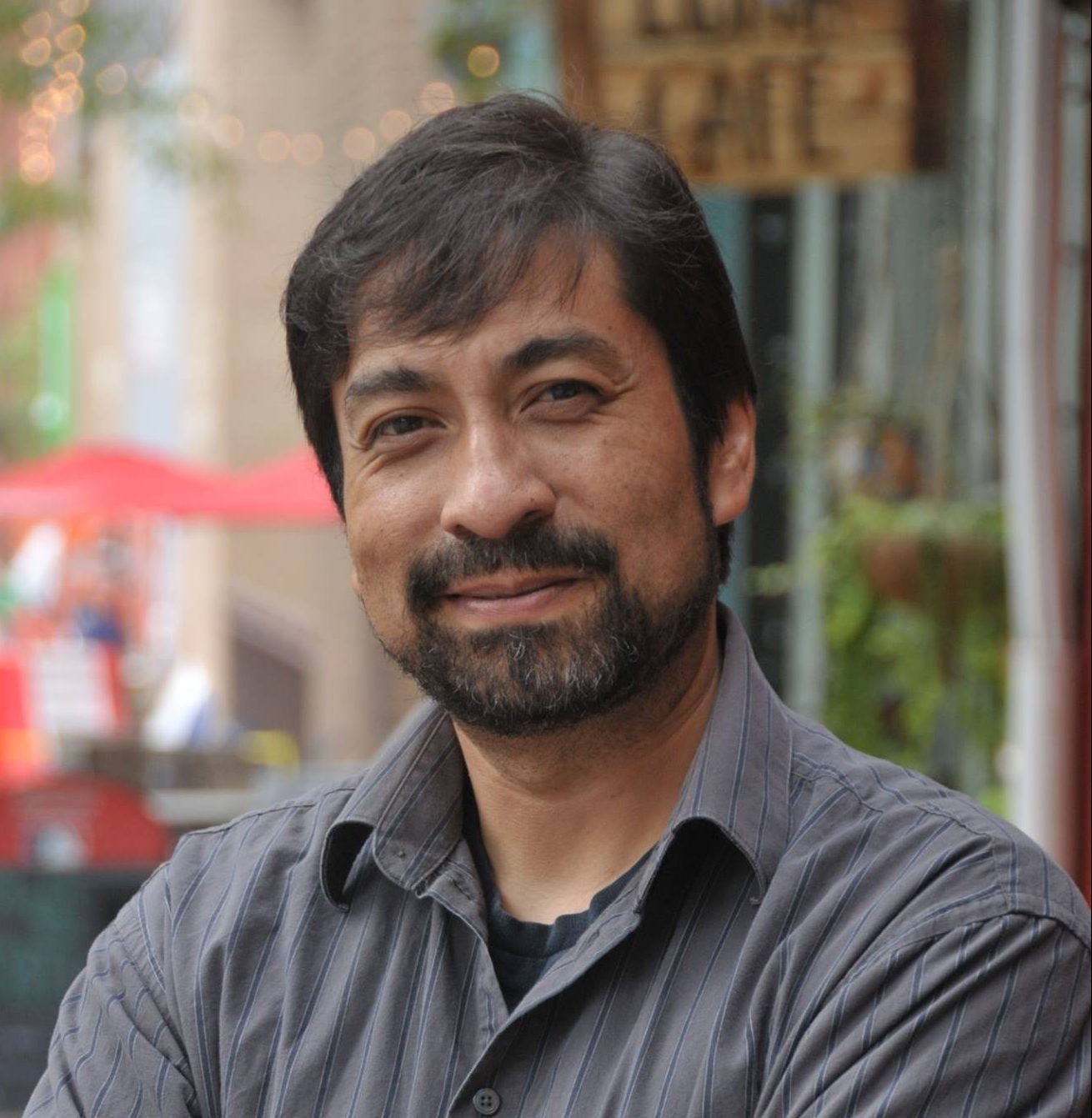
Obed Arango Hisijara
Obed es mexicano, ciudadano de la América Latina, artista visual y antropólogo. Director de CCATE y profesor de University of Pennsylvania.
Nota: el pasado siete de noviembre presente la ponencia “CCATE una propuesta rebelde de la educación en la villa inmigrante” en el marco de la Iniciativa de Migración en la Universidad de Pennsylvania dirigido por la Dra. Estefanía Castañeda. A continuación, comparto el texto de la ponencia junto con algunas imágenes y videos que compartí en aquella ocasión.
Cuando pienso en los orígenes de CCATE varias palabras me vienen a la mente, palabras que pueden estar en el espectro del idealismo, lo abstracto, y lo teórico. Los conceptos de transformación y justicia social, amor, esperanza, sueño, rebeldía, revolución, y existencia.
Todos estos parecen conceptos inalcanzables.
Los estudiantes de CCATE establecieron diálogo con los representantes estatales en Harrisburg, Pennsylvania. 2021
Sin embargo, en CCATE desde el inicio definimos que nuestro caminar debía ser distinto al de la mayoría de las organizaciones sin fines de lucro. Lo nuestro es un movimiento que se recrea cada día por el diálogo permanente de la comunidad. Así las palabras siguieron el método de Paulo Freire que en su libro Pedagogía del Oprimido (1970), define que la verdad se descubre a partir de la acción-reflexión-acción. Es decir, los conceptos no pueden quedarse en lo abstracto, deben de llevarse a una praxis, a la cual le acompañara una reflexión sobre la misma. Así la comunidad ha encontrado actos concretos para cada concepto, a lo que le sigue una nueva reflexión y nuevos actos.
Freire comenta que cuando solo es reflexión se corre el peligro de caer en demagogia, y cuando solo es acción, se convierte en un activismo adormecedor. Por tanto, la acción y la reflexión en conjunto contribuye a avanzar hacia una concientización de quienes somos, cuál es nuestra circunstancia y hacia dónde deseamos ejercer una transformación.
Por lo anterior el día de hoy, lo que deseo compartirles es un taller, que se acompaña de una reflexión colectiva al más estilo de CCATE, y en la que juntos pensaremos y dialogaremos sobre algunos puntos importantes de lo que defino como: rebeldía epistemológica. Es decir, en CCATE declaramos que estamos en desacuerdo con la manera en cómo se construye y se institucionaliza el conocimiento y, por tanto, proponemos una manera distinta. Consideramos que la forma en cómo el conocimiento se da hoy en día es a costo del despojo de recursos, espacios, narrativas, cultura e historia de miles de comunidades a nivel mundial. En CCATE proponemos una forma en el que el conocimiento debe servir, liberar, sanar, restaurar, transformar, generar vida y un presente distinto, y además en el que el conocimiento se puede hacer en conjunto con la academia, pero desde la comunidad.
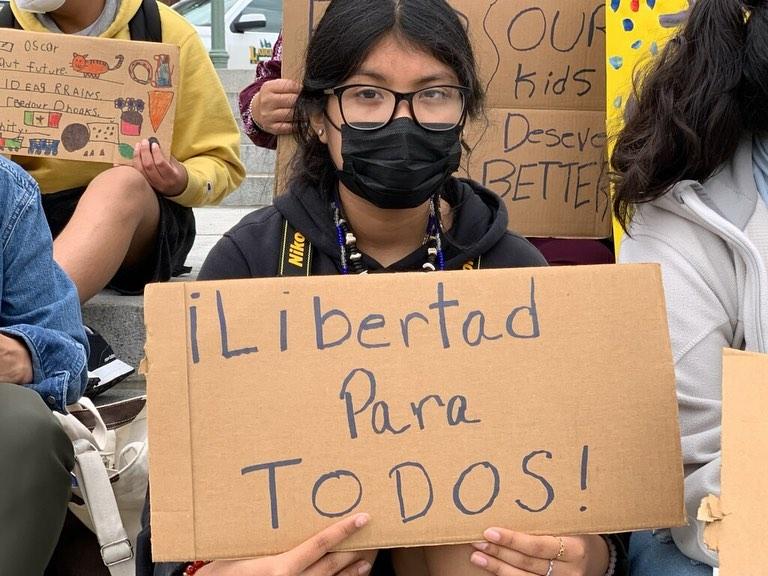
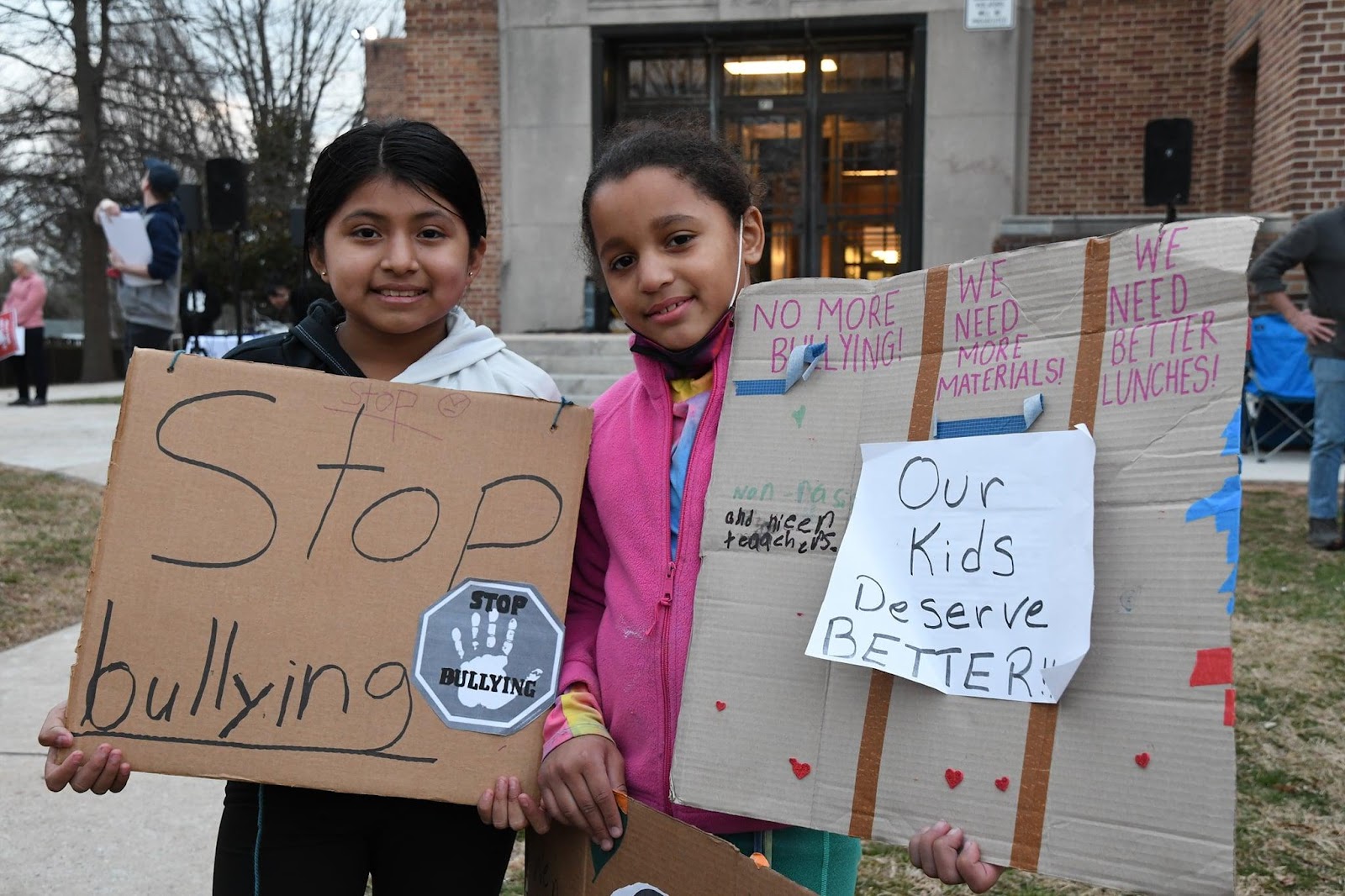
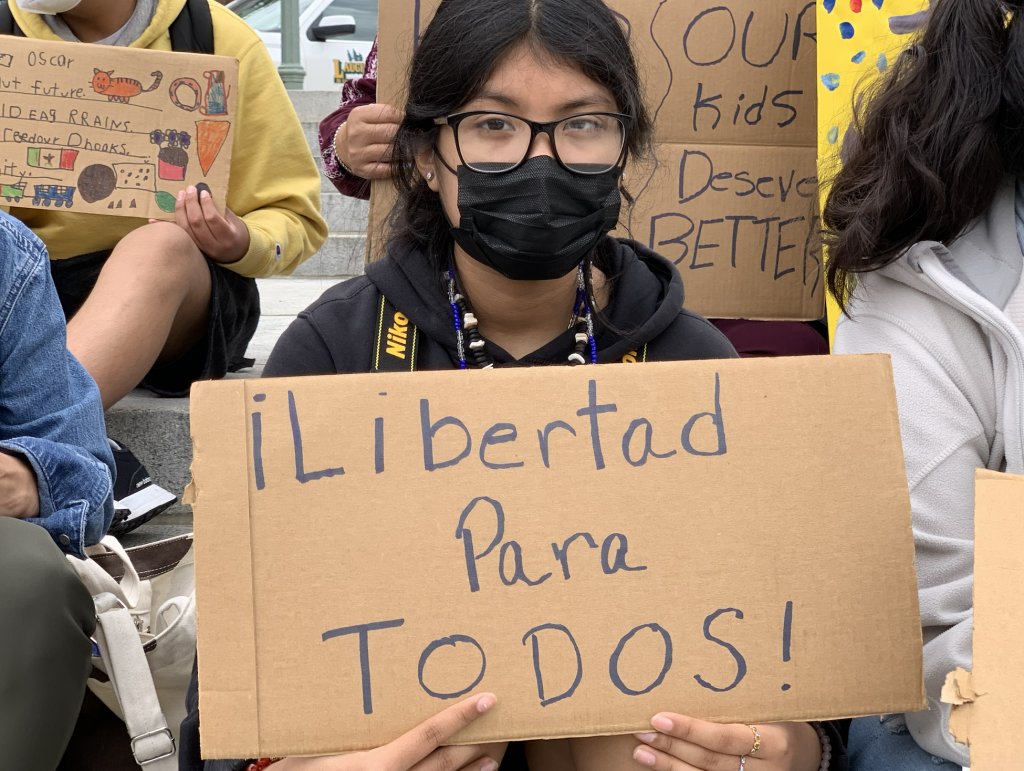
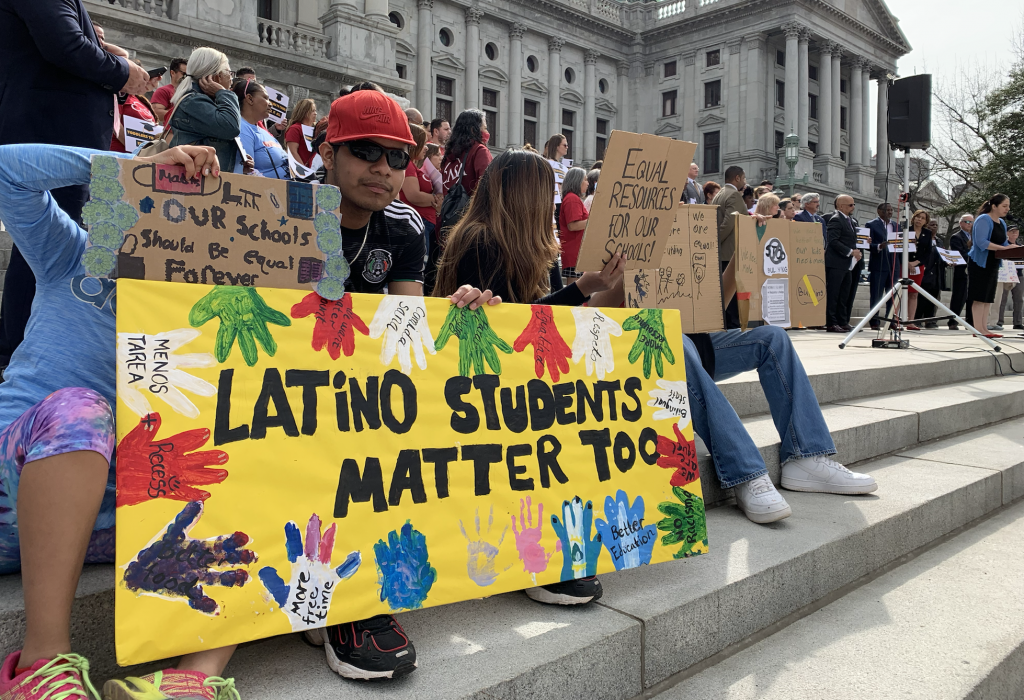
Los estudiantes de CCATE participan en la manifestación para fondos justos escolares en el. 2022
Primera reflexión y primera pregunta
¿Estamos de acuerdo o en desacuerdo con las narrativas que los medios comparten sobre las comunidades inmigrantes, ya sea aquí o en otras partes del mundo o el continente?
¿Qué es lo que ustedes escuchan en los medios? y ¿Cómo contrasta esto con lo que ustedes saben?
Actividad: Creación de libretas de bolsillo
Materiales: cartón, papel bond, tijeras, perforadora, aguja e hilo.
Les pido comiencen a cortar papel y crear una libreta de la manera que ustedes quieran o deseen, con el número de páginas, que ustedes quieran, tenemos papel, tijera, perforadora e hilo. Y mientras lo hacemos dialoguemos, compartan los materiales y los instrumentos.
Reflexión
La palabra “autor” se deriva de la palabra “autoridad”, sin embargo, en estas décadas en que he vivido en los Estados Unidos, no he visto que la comunidad inmigrante sea autora de las narrativas que se difunden en los medios tanto de habla inglesa como hispana. Por otro lado, he visto políticos latinos de gran habilidad, que no caminan con la comunidad pero que se adjudican hablar por ella, y hacen poco por ella. Cuando se secuestra la palabra, se secuestra también la historia. Sin autoría, no se puede establecer un diálogo, no se puede contrarrestar las narrativas que deshumanizan a la comunidad, pues todo se resume a un monólogo protegido por el poder.
Por lo anterior, crear nuestros propios medios de comunicación, de arte, de expresión y reflexión es esencial para dar pie a los cambios que buscamos. Si no somos dueños de los medios de creación y producción difícilmente podremos avanzar nuestras ideas y visión. Por tanto, consideramos que ser creadores de nuestros propios medios de comunicación nos devuelve autoridad sobre nuestras narrativas, es decir regresamos a ser autores. En CCATE no estamos cerrados a participar con otros medios de comunicación, siempre y cuando estos respetan la autoridad de nuestra palabra.
El círculo de cine de CCATE asiste a la premiación de su película “No sé (the seed of Love is peace )”, 2023
Durante estos años en CCATE hemos aprendido a caminar en conjunto como comunidad. Pero para nosotros caminar juntos no significó homogenizar, sino significó abrazar la diversidad de todas nuestras voces, trasfondos, y de formar algo nuevo. CCATE no inicio imponiendo una visión, como si alguien supiera más o mejor. Sino que esa visión se alimenta cada día de los múltiples saberes que permite transformarnos. Tenemos una idea de lo que queremos, tenemos una visión de qué sistemas deseamos transformar. Pero también en estos años, todos los días nos abrimos al dialogo que nos ha permitido direccionarnos y transformarnos.
Preguntas para dialogar:
¿Qué entendemos por colectividad?
¿Acción participativa es lo mismo que colectividad?
Si han terminado su cuaderno, siéntanse libres de dibujar o escribir lo que ustedes quieran, algo significativo del día, un sentimiento, o una idea.
En CCATE pensamos que colectividad es distinto a acción participativa, la colectividad muchas veces sirve para empoderar a una persona de la comunidad, lo cual a veces es necesario, pero consideramos que la acción participativa es para empoderar a toda la comunidad en diversas formas. De esta forma CCATE desde hace ocho años realiza investigación participativa como una forma permanente de explorar el conocimiento y de formación de una voz potente capaz de interactuar con sistemas sociales, es a partir de la investigación participativa que los conocimientos se integran y en la praxis se generan cambios, esto permite que la agenda de la comunidad prevalezca, que los miembros impulsen desde su interés y pasión. Afirmamos en CCATE que la protagonista es la comunidad y no una persona, un pensador o un artista.
La comunidad ha presentado en una gran diversidad de foros académicos y no académicos sus conocimientos e investigaciones. De esta manera concretamos que la autoría desde la comunidad incluye establecer la agenda social, desarrollar investigación participativa, interactuar con otros espacios de conocimiento para establecer un diálogo fecundo y ser dueños de nuestros medios de comunicación.
Click para ver el Video de cómo se hizo el mural participativo de “Movimientos sociales de México”
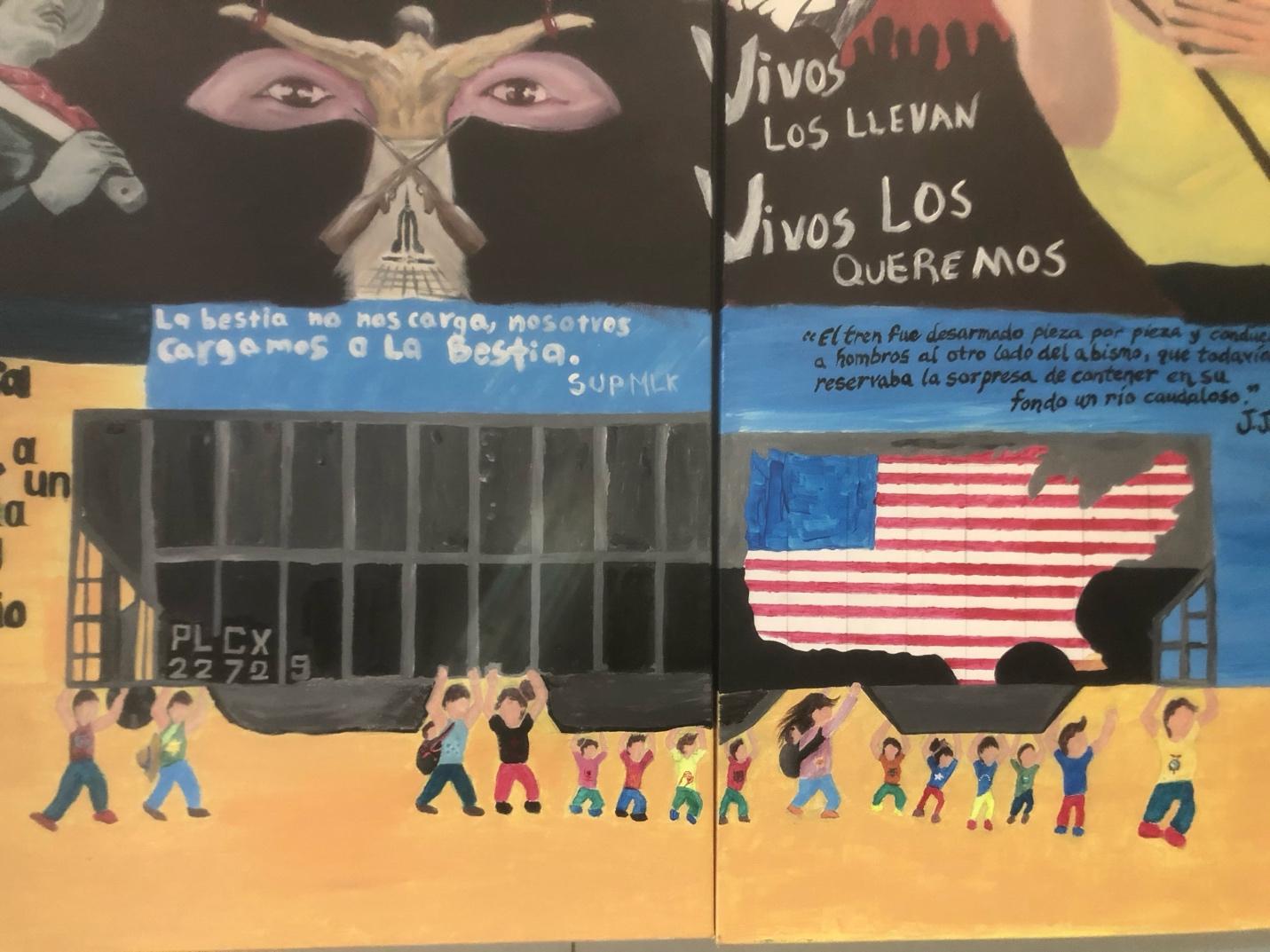
Organización Estados Americanos, Museo de las Américas. Detalle del mural particpatorio que hizo la comunidad de CCATE con el tema de “Movimientos sociales de México” en esta reflexión concluye y reta la narrativa de los medios y clama: “La bestia no nos carga, nosotros cargamos a la bestia” una forma frontal de retar las narrativas hegemónica. 2020
Tercera reflexión
El concepto de la villa inmigrante nació como una reflexión que hice en el 14 de febrero del 2006 cuando 5000 trabajadores inmigrantes de South Philly y de áreas alrededor de Filadelfia decidieron hacer un paro laboral en el segundo día más comercial de los de Estados Unidos. Así el grupo decidió hacer una demostración frente al Independence Hall, justo en el lugar donde se declaró la independencia y se firmó la constitución. Ese hecho desato lo que se conoció como “El paro” y “el día sin inmigrantes”, la pregunta que lo motivó fue ¿Qué haría este país si todos los trabajadores inmigrantes desaparecieran? Ese hecho me hizo pensar en la agencia social que tenemos como comunidad a partir de la colectividad participativa. Ese día y esos meses quizás ha sido la temporada en que más acción participativa haya visto como inmigrantes en los últimos 40 años. Sin tener un líder como César Chavez, Martin Luther King Jr o Dolores Huerta al frente, las comunidades fueron las protagonistas de esa lucha que detuvo la ley anti-inmigrante H4437 conocida como “Border Protection, Anti-terrorism and Illegal Immigration Control Act of 2005”, que colocaba a inmigrantes y a terroristas en la misma canasta, y criminalizaba a todo aquel que ayudará o asistiera a los inmigrantes indocumentados.
Las acciones que siguieron fueron dos manifestaciones nacionales la del 10 de abril y la del primero de mayo en el que millones de inmigrantes marchamos. El movimiento mostró la agencia social de la comunidad inmigrante, sin embargo, también descubrió los vacíos, esto motivó que el concepto de “diáspora” usado en la historia, la sociología y la antropología me pareciera insuficiente para describir a los grupos migrantes. Así comencé a confeccionar el concepto de “villa inmigrante” a partir de la observación etnográfica, los artículos periodísticos que escribí por una década y el registro de historias para la radio, la primera vez que la presente fue en Swarthmore College, y la he publicado en diversas revistas académicas.
A village is bigger than a town, but smaller than a city, yet it lacks a voice andsocial representation. Therefore, it inhabits the space of non-existence. This villageis established in a physical space and reproduces its modus vivendi. It opens markets,restaurants, beauty and dance salons; it expresses its beliefs and opens spacesfor worship; and yet it still does not exist. (Arango, 2022)
Deseo partir del concepto del espacio de la no existencia, pues nos invita a considerar que la comunidad lucha contra los sistemas que no reconocen su presencia. Ya sea salud, educación, transporte, comunicaciones, etc. Asimismo, nos dimos cuenta que cuando el sistema social reconoce la presencia de la comunidad es para denigrarla, desconocerla, humillarla, e ignorarla. Así es como se explica la ausencia de una Dream Act a nivel nacional o estatal, o como se explica la ausencia de licencias para manejar en el Estado de Pennsylvania, o la negación de protección social cuando el aporte en los impuestos es enorme. Es entonces que en CCATE nos dimos cuenta que nuestra naturaleza seria crear un contra espacios, para generar contra narrativas cada día, y así existir. No como concepto sino como algo tangible, de esta manera CCATE es un contra espacio en el que la comunidad puede ejercer su existencia, y en conjunto proponer, abrir posibilidades, juntar y crear nuevos recursos, diseñar avenidas de dialogo con las autoridades.
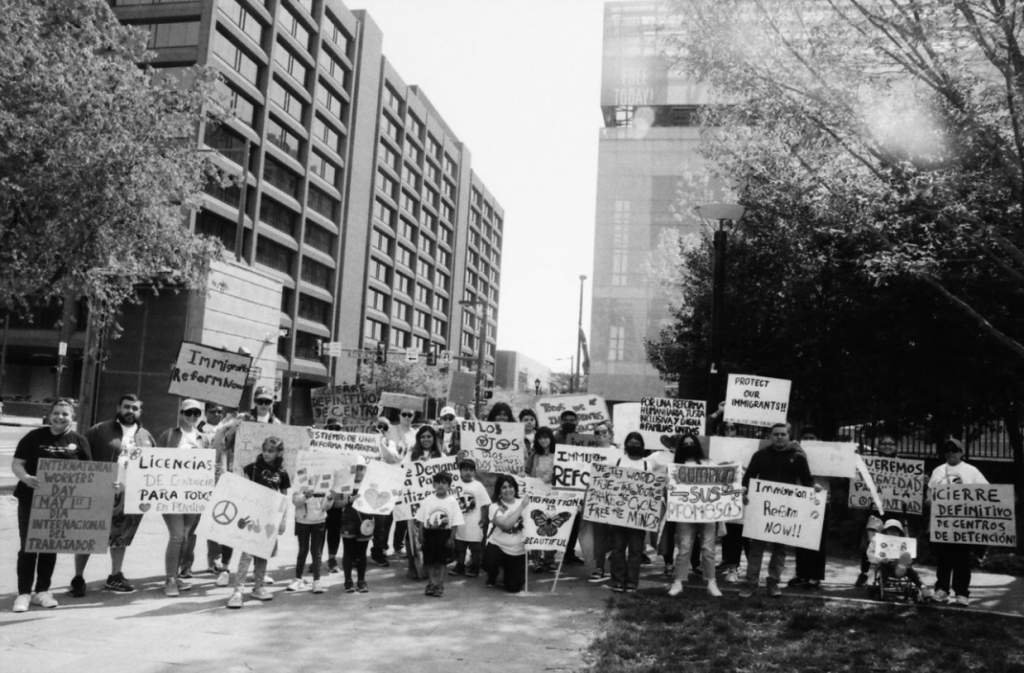
Familia de CCATE asisten y son co-organizadoras de “El Paro Philly” para promover una reforma migratoria. 2022
En estos 12 años CCATE ha ido confeccionando su hogar, definiendo su contra-espacio, y ha sido a partir de la suma de talentos, la conjunción de sueños y un dialogo valiente y cortés con las autoridades.
A doce años de que CCATE abrió sus puertas se dan entre 70 y 80 talleres divididos en áreas de interés que están resultando ser esfuerzos interdisciplinarios y transdisciplinarios.
Algunos ejemplos son los siguientes:
Medios: Fotografía digital, análoga, cianotipo, producción de cine, producción de podcast.
Arte: vários círculos de pintura, journaling/diarios, artesanias, manualidades, Las Artivistas.
Lenguas y Literatura: babel, círculos de escritura, círculos de lectura, círculo de inglês para adultos, círculo de español para adultos.
Salud: Círculo de salud, varios talleres de cocina saludable, nutrición, semana de la salud, fitness, yoga.
Justicia ambiental: Análisis de agua, tierra y aire, taller de cambio climático, jardinería, arquitectura y paisajismo.
Tecnología: 3D printing, Robotics, y Coding
Círculo de High School: Preparación de exeamenes SAT and ACT, High School day, College visits, Círculo de Investigaciones Participativas de CCATE presenta en el Foro de Etnografía Educativa de la Universidad de Pennsylvania, 2019.
FAFSA workshop, Career counseling.
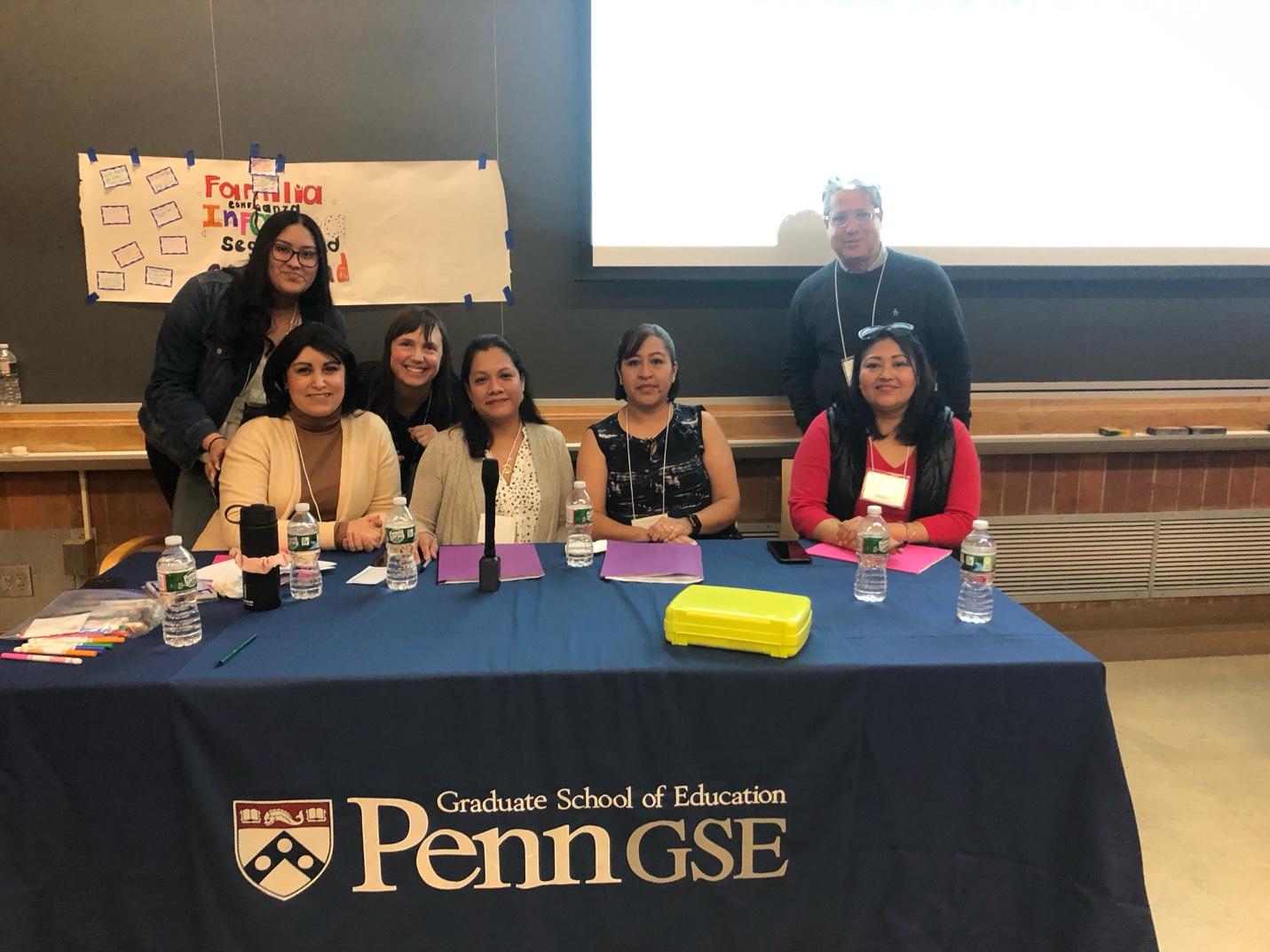
El grupo de Investigaciones Particpativas de CCATE presenta en El Foro de Etnografía en Educación de la Universidad de Pennsylvania, organizado por la Escuela de Graduados de la Educación.
Reflexión final
Pienso que el logro de la comunidad de CCATE es haber podido aterrizar todos estos pensamientos, conceptos inspirados en Paulo Freire en acciones concretas, y en modelos que generan cambios sociales y un dialogo humanizador. El gran mérito que tiene la comunidad de CCATE es haber descubierto que somos libres por nosotros mismo, y no porque alguien que nos conceda una liberación, así reflexionamos y actuamos y reflexionamos.
Para Paulo Freire, en su último libro, Pedagogía de la esperanza, lo menciona así cuando dialoga con Erich From e Ivan Illich en Cuernavaca, México, y reflexionan sobre lo que significa interiorizar al opresor y a los sistemas de opresión. Es ahí donde damos cuenta que hay dos tipos de opresión. La opresión sistémica y la opresión que se ha interiorizado. La primera la estamos tratando de cambiar, la segunda nos corresponde expulsarla cada día de nosotros.
En CCATE el diálogo y la reflexión es constante, y todo esto alimenta nuestras acciones y los siguientes pasos. Todo esto nos ayuda a analizar ¿Cómo nos definen? y ¿cómo nos definimos?
¿Quiénes y cómo somos como cultura y sociedad migrante? Y ¿Quiénes deseamos ser?
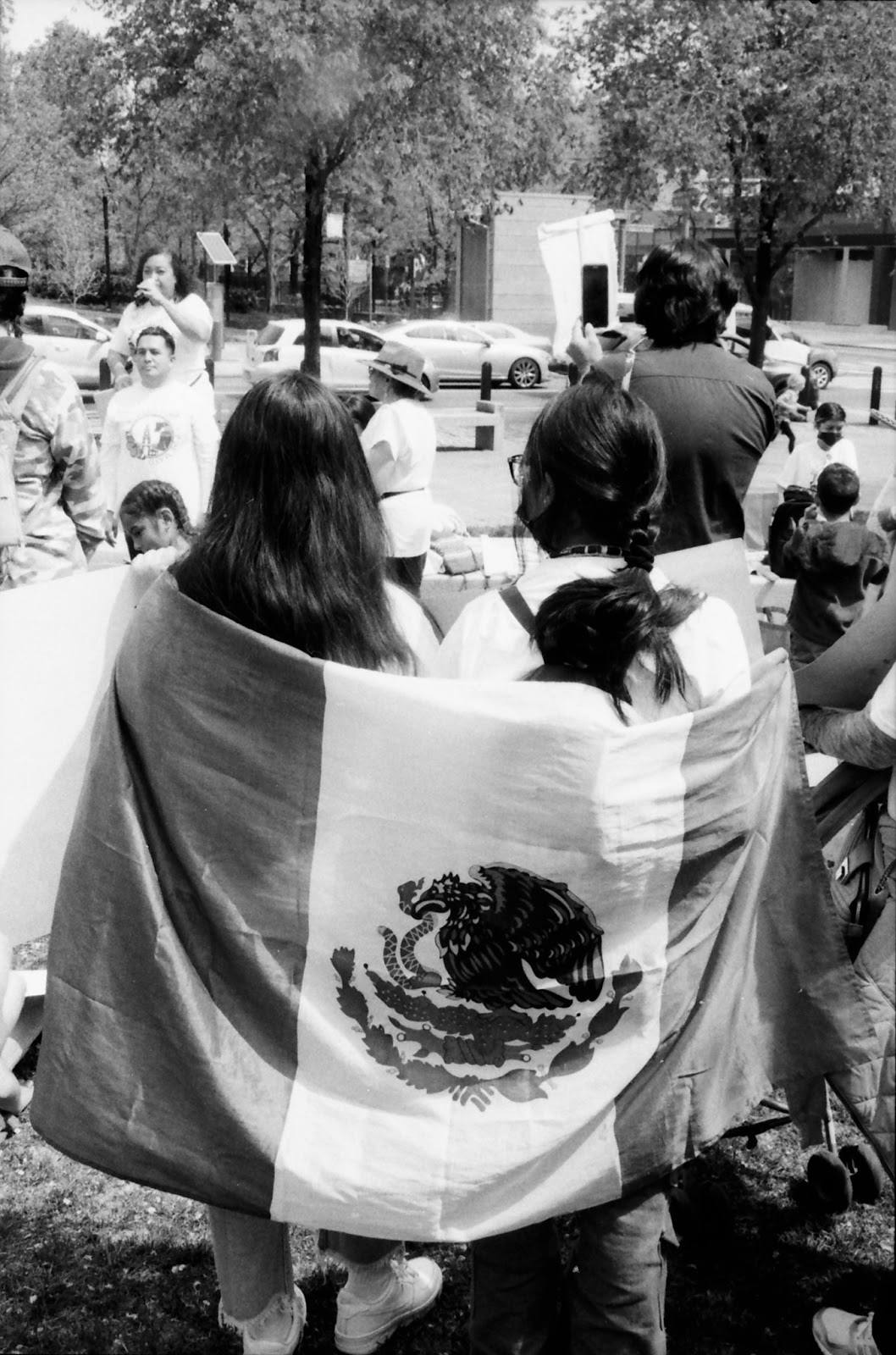
Una nueva generación de hijas de inmigrantes abrazan y buscan sus raices. “El Paro Philly” para promover una reforma migratoria. 2022
En CCATE hemos aprendido a resistir la presión a no conformarnos a los modelos neoliberales de la educación ni de la industria de las organizaciones sin fines de lucro, y avanzamos como un movimiento que cada semana integra a nuevas familias y así nacen siempre nuevas posibilidades de conocimiento que transformará el espacio que habitamos.
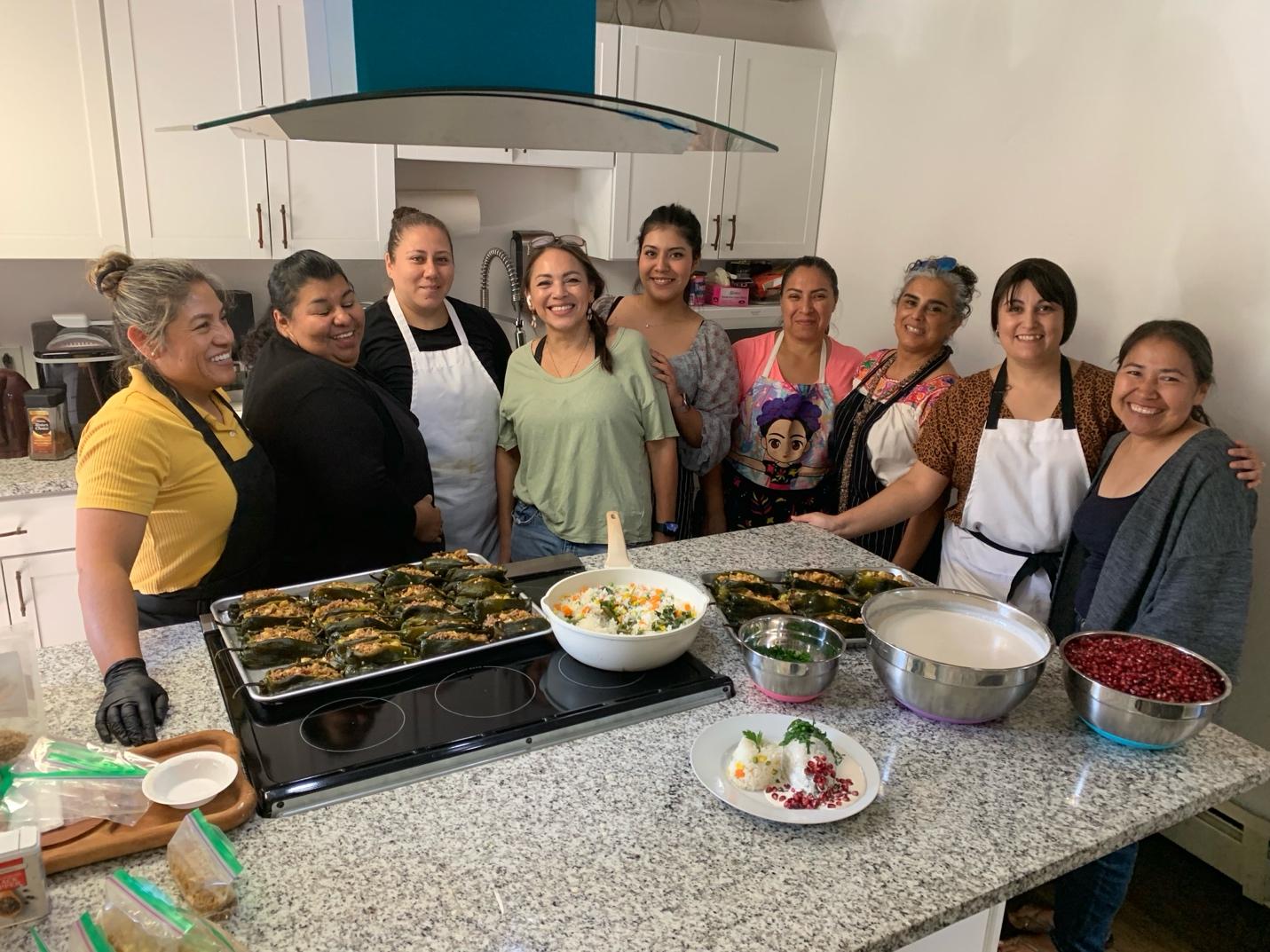
Nuestro movimiento y revolución también tiene sabor. El Círculo de Cocina Libre, se junta para cocinar chile en nogada, platillo tradicional de México en la celebración de la independencia nacional 2023.
English Version:
CCATE: the Model of a Rebellious and Humanizing Education
Photography and text by Obed Arango
Note: on November 7, I presented the presentation “CCATE, a rebellious proposal for education in the immigrant village” within the framework of the Migration Initiative at the University of Pennsylvania directed by Dr. Estefanía Castañeda. Below, I share the text of the presentation along with some images and videos that I shared on that occasion.
When I think about the origins of CCATE several words come to mind, words that can be on the spectrum of idealism, the abstract, and the theoretical. The concepts of transformation and social justice, love, hope, dream, rebellion, revolution, and existence.
These all seem like unattainable concepts.
However, at CCATE from the beginning we defined that our path had to be different from that of most non-profit organizations. Ours is a movement that is recreated every day through the permanent dialogue of the community. Thus the words followed the method of Paulo Freire who, in his book Pedagogy of the Oppressed (1970), defines that the truth is discovered through action-reflection-action. That is, concepts cannot remain abstract, they must be brought to a praxis, which will be accompanied by reflection on it. Thus the community has found concrete acts for each concept, which is followed by new reflection and new acts.
Freire comments that when it is only reflection there is a danger of falling into demagoguery, and when it is only action, it becomes a numbing activism. Therefore, action and reflection together contribute to moving towards an awareness of who we are, what our circumstance is and where we want to make a transformation.
For this reason, today, what I want to share with you is a workshop, which is accompanied by a collective reflection in the style of CCATE, and in which together we will think and discuss some important points of what I define as: epistemological rebellion. That is, at CCATE we declare that we disagree with the way in which knowledge is constructed and institutionalized and, therefore, we propose a different way. We consider that the way in which knowledge is given today is at the cost of the dispossession of resources, spaces, narratives, culture and history of thousands of communities worldwide. At CCATE we propose a way in which knowledge must serve, liberate, heal, restore, transform, generate life and a different present, and also in which knowledge can be done together with the academy, but from the community.
First reflection and first question
Do we agree or disagree with the narratives the media shares about immigrant communities, whether here or in other parts of the world or continent?
What do you hear in the media? And how does this contrast with what you know?
Activity: Creation of pocket notebooks
Materials: cardboard, bond paper, scissors, hole punch, needle and thread.
I ask you to start cutting paper and create a notebook in the way you want or wish, with the number of pages that you want, we have paper, scissors, hole punch and thread. And while we do it, let’s talk, share the materials and instruments.
Reflection
The word “author” is derived from the word “authority”, however, in these decades that I have lived in the United States, I have not seen that the immigrant community is the author of the narratives that are disseminated in the media, both English as Hispanic. On the other hand, I have seen Latino politicians of great ability, who do not walk with the community but who claim to speak for it, and do little for it. When the word is kidnapped, the story is also kidnapped. Without authorship, a dialogue cannot be established, the narratives that dehumanize the community cannot be counteracted, since everything boils down to a monologue protected by power.
Therefore, creating our own means of communication, art, expression and reflection is essential to give rise to the changes we seek. If we do not own the means of creation and production, it will be difficult for us to advance our ideas and vision. Therefore, we consider that being creators of our own media gives us authority over our narratives, that is, we return to being authors. At CCATE we are not closed to participating with other media, as long as they respect the authority of our word.
During these years at CCATE we have learned to walk together as a community. But for us walking together did not mean homogenizing, but rather it meant embracing the diversity of all our voices, backgrounds, and forming something new. CCATE did not start by imposing a vision, as if someone knew more or better. But that vision is nourished every day by the multiple knowledge that allows us to transform. We have an idea of what we want, we have a vision of what systems we want to transform. But also in these years, every day we open ourselves to the dialogue that has allowed us to direct ourselves and transform ourselves.
Questions to discuss:
What do we understand by community?
Is participatory action the same as collectivity?
If you have finished your notebook, feel free to draw or write whatever you want, something significant from the day, a feeling, or an idea.
At CCATE we think that collectivity is different from participatory action, collectivity often serves to empower one person in the community, which is sometimes necessary, but we consider that participatory action is to empower the entire community in various ways. In this way, CCATE has been carrying out participatory research for eight years as a permanent way of exploring knowledge and forming a powerful voice capable of interacting with social systems. It is through participatory research that knowledge is integrated and in practice is They generate changes, this allows the community agenda to prevail, for members to promote from their interest and passion. We affirm in CCATE that the protagonist is the community and not a person, a thinker or an artist.
The community has presented its knowledge and research in a wide variety of academic and non-academic forums. In this way we specify that authorship from the community includes establishing the social agenda, developing participatory research, interacting with other knowledge spaces to establish a fruitful dialogue and being owners of our media.
Below is the video of how the participatory mural of “Social Movements of Mexico” was made.
Third reflection
The concept of the immigrant village was born as a reflection I made on February 14, 2006 when 5,000 immigrant workers from South Philly and areas around Philadelphia decided to go on a work stoppage on the second busiest business day in the United States. So the group decided to hold a demonstration in front of Independence Hall, right in the place where independence was declared and the constitution was signed. That event sparked what became known as “The Strike” and “The Day Without Immigrants.” The question that motivated it was: What would this country do if all immigrant workers disappeared? That fact made me think about the social agency we have as a community based on participatory collectivity. That day and those months may have been the season in which we have seen the most participatory action as immigrants in the last 40 years. Without having a leader like César Chavez, Martin Luther King Jr or Dolores Huerta at the helm, the communities were the protagonists of that fight that stopped the anti-immigrant law H4437 known as the “Border Protection, Anti-terrorism and Illegal Immigration Control Act of 2005 ”, which placed immigrants and terrorists in the same basket, and criminalized anyone who would help or assist undocumented immigrants.
The actions that followed were two national demonstrations, on April 10 and May 1, in which millions of immigrants marched. The movement showed the social agency of the immigrant community, however, it also discovered the gaps, this caused the concept of “diaspora” used in history, sociology and anthropology to seem insufficient to describe migrant groups. Thus I began to create the concept of “immigrant village” from ethnographic observation, the journalistic articles that I wrote for a decade and the recording of stories for the radio, the first time this was at Swarthmore College, and I have published it in various academic journals.
A village is bigger than a town, but smaller than a city, yet it lacks a voice and social representation. Therefore, it inhabits the space of non-existence. This village is established in a physical space and reproduces its modus vivendi. It opens markets, restaurants, beauty and dance salons; it expresses its beliefs and opens spaces for worship; and yet it still does not exist. (Arango, 2022)
I wish to start from the concept of the space of non-existence, as it invites us to consider that the community fights against systems that do not recognize its presence. Whether it is health, education, transportation, communications, etc. Likewise, we realized that when the social system recognizes the presence of the community it is to denigrate it, ignore it, humiliate it, and ignore it. This is how to explain the absence of a Dream Act at the national or state level, or how to explain the absence of driver’s licenses in the State of Pennsylvania, or the denial of social protection when the contribution in taxes is enormous. It is then that at CCATE we realized that our nature would be to create counter spaces, to generate counter narratives every day, and thus exist. Not as a concept but as something tangible, in this way CCATE is a counter space in which the community can exercise its existence, and together propose, open possibilities, gather and create new resources, design avenues of dialogue with the authorities.
In these 12 years CCATE has been making its home, defining its counter-space, and it has been based on the sum of talents, the conjunction of dreams and a brave and courteous dialogue with the authorities.
Twelve years after CCATE opened its doors, there are between 70 and 80 workshops divided into areas of interest that are turning out to be interdisciplinary and transdisciplinary efforts.
Some examples are the following:
Media: Digital photography, analogue, cyanotype, film production, podcast production.
Art: various painting circles, journaling/diaries, crafts, crafts, Las Artivistas.
Languages and Literature: babel, writing circles, reading circles, English circle for adults, Spanish circle for adults.
Health: Health circle, various healthy cooking workshops, nutrition, health week, fitness, yoga.
Environmental justice: Analysis of water, land and air, climate change workshop, gardening, architecture and landscaping.
Technology: 3D printing, Robotics, and Coding
High School Circle: SAT and ACT exam preparation, High School day, College visits, CCATE Participatory Research Circle presents at the Educational Ethnography Forum of the University of Pennsylvania, 2019.
FAFSA workshop, Career counseling.
Final reflection
I think that the achievement of the CCATE community is to have been able to land all these thoughts, concepts inspired by Paulo Freire in concrete actions, and in models that generate social changes and a humanizing dialogue. The great merit that the CCATE community has is to have discovered that we are free for ourselves, and not because someone grants us liberation, so we reflect and act and reflect.
For Paulo Freire, in his latest book, Pedagogy of Hope, he mentions it this way when he talks with Erich From and Ivan Illich in Cuernavaca, Mexico, and they reflect on what it means to internalize the oppressor and the systems of oppression. This is where we realize that there are two types of oppression. Systemic oppression and oppression that has been internalized. We are trying to change the first, the second is up to us to expel it from us every day.
At CCATE, dialogue and reflection are constant, and all of this fuels our actions and next steps. All this helps us analyze: How do they define us? and how do we define ourselves?
Who and how are we as a migrant culture and society? And who do we want to be?
At CCATE we have learned to resist the pressure not to conform to the neoliberal models of education or the non-profit industry, and we move forward as a movement that integrates new families every week and thus new possibilities of knowledge are always born. that will transform the space we inhabit.
Obed Arango Hisijara
Obed es mexicano, ciudadano de la América Latina, artista visual y antropólogo. Director de CCATE y profesor de University of Pennsylvania.
Pablo Picasso said that art is research and experiment: I agree. Too often as children we are told that art is only valuable when it is finished or if it is made by someone important. But I believe the value is in the process. Through making art of any kind, we are experimenting—trying new things, learning about ourselves, learning how art makes us feel, developing techniques, or simply enjoying the act of creation. I feel the same way about writing. Unlike what we are taught in school, I believe there is no right or wrong way to write because writing is personal. Like art, it is also a process of experimenting with technique, developing new skills, or getting an idea out of your head and down on paper. When we are writing we connect with our thoughts; sometimes our thoughts are for ourselves and sometimes they are for others. This semester we’ve changed the name of the writing class at CCATE from Finding Your Voice to Lifting Your Voice. The reason for the change is that our kids already have a voice inside them: they are fully creative, thoughtful, passionate, and intelligent human beings. The problem has been that they haven’t had enough opportunity to express their perspectives in ways that suit them. School tells them how, when, and what to write. Our writing class helps them amplify or lift the voices they already have, through experimenting with different methods that highlight their perspectives, hence the name change.
Watching the kids collaborate with the volunteers and eachother, I see not just the process of writing but also the trial and error of research. I believe this is the process of experimentation that Picasso spoke about. CCATE kids might not know it, but their art is also resistance, pushing back at dominant narratives by creating their own counterstories. ¡Viva la Resistencia!
One method we are exploring is self-expression through body language, movement, and voice. We have had fun learning acting skills which we are using to express ideas, feelings, and emotions which will enhance our storytelling abilities. We are putting these new skills to work designing and writing our own Theater of the Oppressed, a form of theater influenced by Paulo Freire and designed to promote social change. Our Theater of the Oppressed takes the form of Kamishibai, a Japanese word meaning paper play. A Kamishibai is a small theater, like a puppet theater, with doors revealing illustrated cards with pictures on the front and words on the back. The reader stands behind the theater and tells the story one card at a time. It is a form of storytelling that is suited for all children. We learned about Kamishibai and watched a video retelling a Japanese story read by a Scottish man in a kilt and a Japanese woman in a kimono: there was music, singing, and hand movements! For our stories, the children have identified conflicts in their lives that needed resolution, worked in groups to write their stories, and created illustrations. Everyone pitched in to design and build theaters of various sizes that reflect the children’s creative interests.
Photo by Obed Arango
Pam Margolis
Pam Margolis is a doctoral student at West Chester University studying curriculum and instruction. She is passionate about equity in education for children from marginalized groups: African American, Latinx, disabilities and LGBTQ. She is an expert in the curation, development, and expansion of curriculum and library resources representing children from marginalized communities. Pam has an Executive Master of Public Service from the University of Arkansas Clinton School of Public Service, a Master’s in Library and Information Science from Drexel University, a BS in English Writing and post baccalaureate in Teacher education, as well as K-6 Elementary Education certification and K-12 Library Media Specialist. Committed to the marriage of civic engagement and education, Pam serves her community as Perkiomen Township Supervisor.
Hace más de 20 años cuando emigré a los Estados Unidos llegué lleno de ilusiones, un nuevo mundo. Llegue desorientado y pronto me di cuenta que no iba a ser fácil sobresalir en un mundo diferente llegué a trabajar a un restaurant de comida rápida, nos permitían comer lo que había en el menú, pensé en su momento que había logrado lo que estaba buscando, trabajo, sustento y comida gratis, (pollo frito, hamburguesas, papas fritas, donas, pastelitos llenos de mantequilla), pasado el tiempo forme una familia y empecé a tener una vida hasta cierto punto diferente jamás pensé que todas mis acciones iban a afectar a mis seres más queridos. Como inmigrante lo único que me enfoque fue en trabajar, una de las primeras cosas que noté fue que mi ropa que alcance a traer de mi país ya no me quedaba, no creci mas en estatura ya no podía, pero sí subi de peso lo cual me obligó a cambiar de cinturon, talla de pantalón y talla de camisetas. Después de un tiempo llegue a Pennsylvania a trabajar en un restaurante no tan solo nos dejaban comer lo que ahí tenían pero también nos dejaban consumir alcohol que ahí se vendía. Mi vida comenzó a llenarse de problemas que hasta cierto punto los sobrellevaba hasta que un dia todo mi sueños fueron cambiados. Llegue a conocer a la comunidad de CCATE como parte de un servicio comunitario el cual debía de cumplir.
En la pasada crisis de salud llegué a conocer a una persona que me ha hecho entender que como principio la salud es lo más preciado que puedo tener. Pero ¿qué es la salud?¿Por qué es importante lo que comemos ?¿Por qué comer es importante para estar saludables?
La realidad y algunos datos
QUE INCREMENTA EL RIESGO DE CÁNCER = Carnes rojas está relacionada y ligada a cáncer del colon, cáncer de próstata, cáncer de seno, cáncer del estómago.
AUMENTO DE RIESGO DE ENFERMEDADES DEL CORAZÓN, DERRAME
CEREBRAL = Comer carne y productos lácteos endurecen las arterias y las tapa obstruyendo los flujos de la sangre lo cual lleva a incrementar el riesgo de ataques al corazón o derrames cerebrales
DIABETES = Las personas que comen carne aumentan en 74% el riesgo de desarrollar diabetes de tipo 2 (Enfermedad creada por el ser humano)
OBESIDAD = 33% de personas que comen carne son/están obesas de acuerdo a artículos publicados en el diario de la academia de nutrition (Journal of Academy of Nutrition and Dietetics)
HOMBRES CON DIABETES y enfermedades del corazón(condiciones por comer dietas predominantemente de carnes y productos lácteos) tienen mayor inclinación de sufrir de disfunción eréctil, 35% de hombres con alta presión, 42% de hombres con colesterol alto y el 85% de hombres con diabetes sufren de disfunción eréctil.
EL PLANETA
Cada vez que ordenamos una cheese burguer, un bistec, una carne asada en tu restaurant favorito un taco de suadero, una torta de tu carne favorita, una barbacoa, una quesadilla, unas alas, un choriqueso, un sope con tu carne favorita,unas carnitas……..estamos inconscientemente invirtiendo en un sistema corporativo de comida que está destruyendo la biodiversidad, haciendo más severo el cambio climático y contribuyendo a la deforestación y contribuyendo a las zonas muertas en el océano, y contaminación del agua y el aire, SABÍAS QUE El metano es un gas tan poderoso creado por el ser humano pero muy en particular por la agricultura animal(ganado, vacas, borregos, chivos, pollos y cerdos) y se queda en la atmósfera por 8-10 años antes de que reaccione con el oxígeno y se convierte en CO2, existen reportes (Goodland and Anhang) que esta industria animal genera un 51% de emisiones de efecto invernadero greenhouse emissions) por lo consiguiente la agricultura animal es la causante líder del cambio climático.
CO2 es absorbido por árboles y plantas durante la fotosíntesis y se almacena permanentemente en la vegetación y suelo en el Amazonas en Brasil el 80% de bosques se han perdido por deforestar para darle paso a la crianza del ganado.
⅓ de tierra en el planeta es usada para la crianza de el ganado, esto es un alto precio que el planeta tiene que sufrir por que se pierde oxígeno, se pierden plantas e insectos cada día se estima que un total de 50000 especies se pierden cada año
AGUA Y SU USO
El ganado y su operación de la industria del ganado 17% de el agua potable en el mundo es usada para la crianza de ganado,en estos tiempos donde se ven tantas zonas con sequías severas ,uno se preguntaría que esto no tiene sentido como ejemplo
688 vasos de agua son necesarios para producir un vaso de leche
1800 galones de agua son necesarios para producir 1 hamburguesa ¼ pound cheeseburger 75 galones de agua son necesarios para servir 12 onzas de queso
LA COMUNIDAD
La industria de la carne y los lácteos nos afecta directamente visiblemente e invisiblemente en maneras muy dañinas, las comunidades de color (afroamericana y latinex) y sobre todo las comunidades de bajos recursos como a la comunidad a la que pertenezco y me envuelvo en ella la cual es Norristown PA, en estas comunidades sufrimos los mayores estragos,con indices de enfermedades cronicas relacionadas con nuestro estilo de vida y sobre todo por lo que nos alimentamos. Norristown está considerado un lugar desierto de comida (food dessert) pero sobretodo desierto de nutrientes, comida la hay, solo nos toca caminar por las transitadas calles de Norristown para encontrar en su mayoria restaurantes de comida rapida y restaurantes latinos(mexicanos y caribeños) con platillos en su mayoría con productos carcinógenos, platillos con productos con grasas saturadas, procesados… solo por mencionar algunas comidas que son fuente de grasas saturadas y grasas que aumentan el colesterol publicado en el National Cancer Institute
1.-Quesos(quesadillas)
2.-pan dulce .galletas
3.-Pizza
4.-todos los postres a base de lácteos, yogures, batidos y helados
5.- Pollo, fajitas de pollo, pollo frito, alas
6.-Chorizos, longanizas, tocinos, hamburguesas
7.-Platillos Mexicanos (muchos platillos considerados tradicionales han sido comercializados y nos han vendido la idea que son nuestra identidad y tradición} en realidad nuestros antepasados mayas, aztecas, toltecas y muchas culturas indígenas se alimentaban a través de las plantas,maíz frijol calabaza ,etc y uno que otro animal silvestre, estas civilizaciones sobrevivieron por muchos años sin vacas ,puercos, gallinas, borregos o chivos, en realidad estos fueron traídos de Europa en la colonización en los años 1500
8.-Hamburguesas
9.-Carne de res y platos mixtos que incluyen res.
10.-Le siguen la leche pastas, huevos, mantequillas, papas fritas y demás,
Adicionalmente los programas de almuerzos escolares que alimentan 30 millones de niños al año hacen muy poco para solucionar la necesidad nutricional de los niños pues en realidad estos programas de gobierno son influenciados por labias de grandes corporaciones de la industria de la carne y lácteos en Washington (LA CASA BLANCA).
Afortunadamente hay gente que ofrece resistencia ante estas prácticas pero todo está coludido con la desinformación, para contrarrestar se necesita liderazgo de nuestras comunidades para contrarrestar la narrativa. Esta tarea nos concierne y nos tiene que unir a todos como comunidad latina, muchos jardines comunitarios están siendo organizados, se ha visto organizaciones como la de CCATE que tiene varios grupos que lideran programas encaminados a promover la salud, es ahí donde participó hoy en día lo cual quisiera invitar a los que lean este ensayo que hagamos la pregunta, ¿en verdad queremos y luchamos por EQUIDAD y la igualdad? ¿Qué pasa cuando somos activistas pero aun promovemos la crueldad animal y lo que es mas triste formamos parte de este inequidad y decidimos promover la muerte de otro ser vivo en forma de comer a un animal muerto? ¿en verdad queremos un cambio? El cambio liderado por la comunidad es un potente vehiculo para tener un mayor acceso a mejor comida. Comer a base de PLANTAS para tener una mejor SALUD, un mejor PLANETA y una COMUNIDAD robusta y llena de salud es tarea tuya y mia..#vivalacomunidad consciente e informada.
ATENTAMENTE: Un inmigrante que come como sus antepasados lo hacían,a base de plantas.
Ismael Bravo
Ismael es mexicano, vive en el área conurbada de Filadelfia y promueve la salud a través de una alimentación saludable y justa con el medio ambiente y con la existencia.
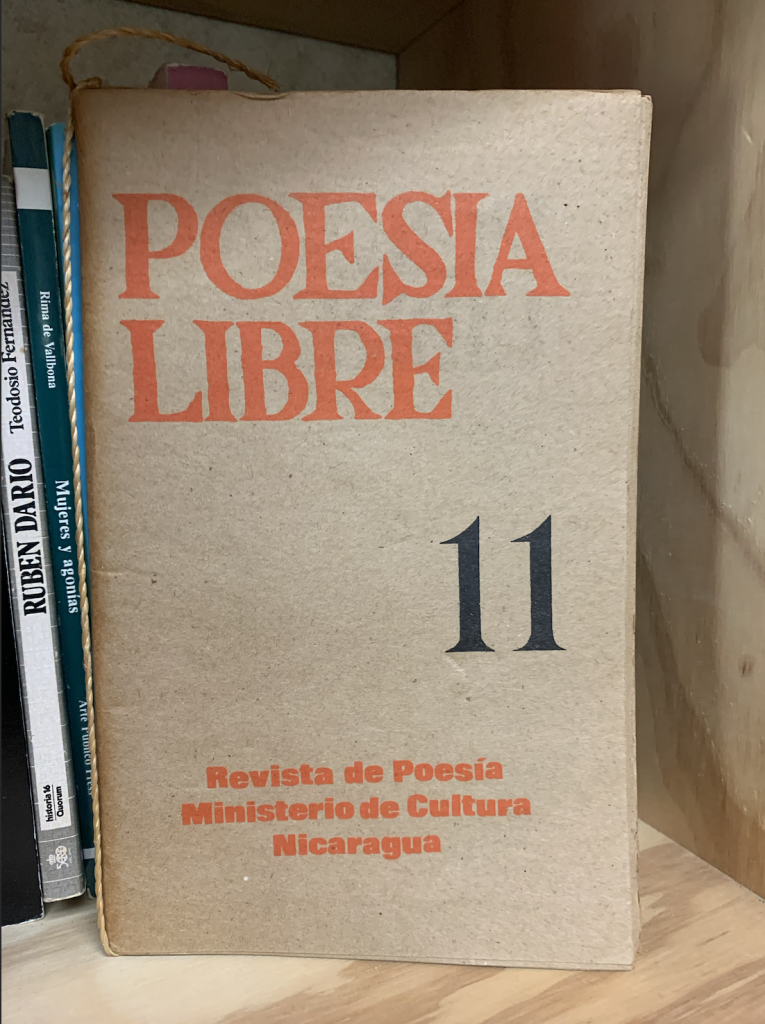
En 1982 fui a Nicaragua a estudiar los talleres de poesía del internacionalmente aclamado poeta-sacerdote Ernesto Cardenal. Habían pasado tres años desde que los sandinistas obtuvieron el control del gobierno después de una guerra sangrienta contra el dictador Anastasio Samoza, apoyado por Estados Unidos, y su ejército. El optimismo era alto y las posibilidades parecían ilimitadas entre los revolucionarios comprometidos y sus aliados. Junto con la determinación de crear estructuras democráticas en los ámbitos político y económico, los nicaragüenses se dedicaron a construir una nueva cultura popular revolucionaria de base amplia. El objetivo era que un gran número de personas se convirtieran en productores de arte, así como quienes lo recibían. En 1979 se estableció un Ministerio de Cultura, dirigido por Cardenal, para organizar y financiar proyectos en todas las artes. Uno de esos proyectos fueron los talleres de poesía, se aprovechó del entusiasmo y el amor por la poesía del pueblo nicaragüense, que es respetado internacionalmente. Cardenal quería extender la capacidad de producción cultural a todos los nicaragüenses, no solo a la élite. Como dijo Cardenal: “La Revolución es cultura, y la cultura es la Revolución”.
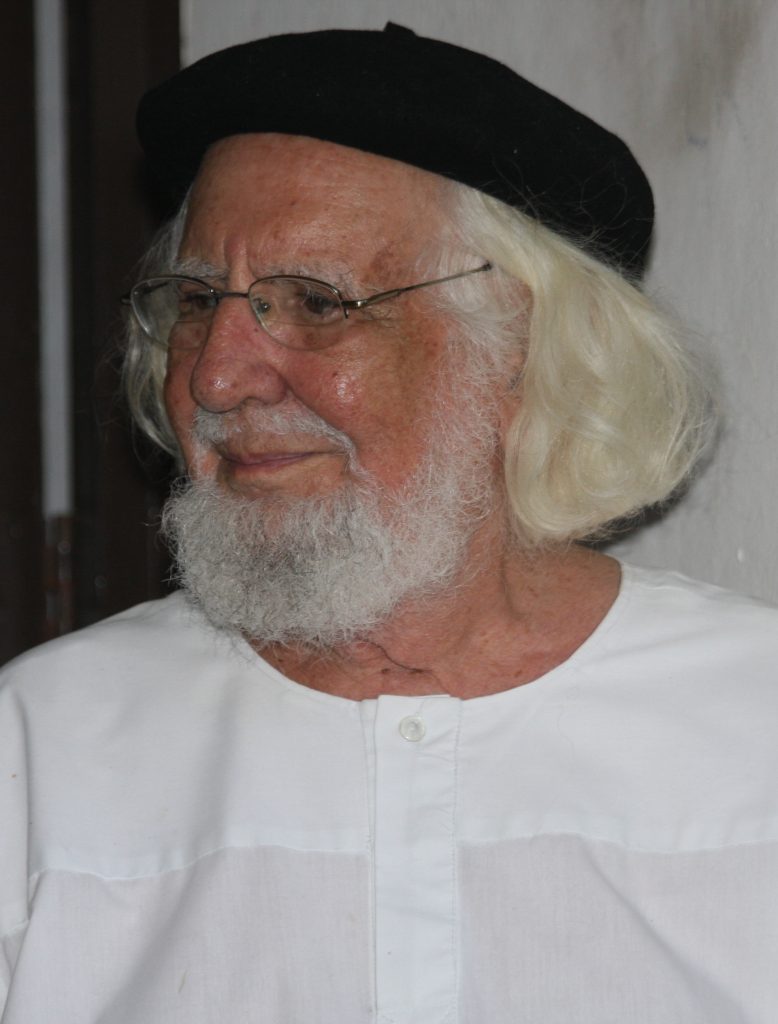
Poeta, sacerdote, teólogo de la liberación y ministro de cultura y educación de Nicaragua Ernesto Cardenal (1925 – 2020),
Basados en un modelo que Cardenal desarrolló en la comunidad cristiana de Solentiname, los talleres se extendieron rápidamente por ciudades, pueblos pequeños y aldeas de toda Nicaragua. En su apogeo en noviembre de 1982, al menos sesenta y seis talleres de poesía se reunían regularmente, involucrando a un total de 627 poetas. Cardenal estimó que más de dos mil nicaragüenses habían asistido a los talleres en algún momento. Pero a medida que la guerra de los contras despojó al país de recursos humanos y económicos, los talleres se redujeron. Un duro golpe se produjo en febrero de 1988 cuando hubo que recortar la financiación del Ministerio de Cultura.
Después de llegar a Managua, estaba ansiosa por aprender más sobre el Exteriorismo, el método de Cardenal para enseñar y escribir poesía. Él lo ha definido como–
“. . . esa poesía creada a partir de imágenes del mundo exterior, el mundo que vemos y en el que vivimos, y que es, en general, el mundo específico de la poesía. El exteriorismo es poesía objetiva: narrativa y anecdótica, elaborada a partir de elementos de la vida real con objetos concretos, con nombres propios y detalles precisos y fechas exactas, cifras, hechos y dichos.”
Talleres de poesía de la revolución sandinista
El personal de Cardenal y los artistas asociados se agruparon en la Asociación de Trabajadores Culturales Sandinistas y establecieron Centros de Cultura Popular en todo el país para ayudar en el trabajo de la Asociación. Siguiendo los principios del Exteriorismo, Mayra Jiménez, una poeta-revolucionaria que trabajó con Cardenal en la comunidad cristiana contemplativa de Solentiname, fue la maestra principal y organizadora de los talleres de poesía. Reclutó a cinco jóvenes poetas-organizadores, todos de poco más de veinte años, por su capacidad como poetas, su servicio y dedicación a la Revolución y sus vínculos con las clases trabajadoras. El esfuerzo fue extenso, con 64 talleres que se llevan a cabo regularmente en todo el país. Se publicaron y distribuyeron gratuitamente folletos de poesía del taller. Los talleres se anunciaron en las estaciones de radio locales ya través de volantes pegados en aldeas rurales donde algunas personas habían aprendido recientemente a leer y escribir a través de la campaña de alfabetización sandinista. Cardenal creía que los talleres ofrecían una forma de democratizar la poesía que permitiría a este pueblo amante de la poesía expandir la producción poética más allá de la élite para incluir a la clase trabajadora y los ciudadanos empobrecidos.
Las primeras sesiones de orientación generalmente atraían a unos doce poetas que provenían de todos los ámbitos de la vida: campesinos, sirvientas, enfermeras, panaderos y trabajadores manuales. Muchos eran miembros del ejército o de la policía. Tanto hombres como mujeres, reflejaban la juventud de la población general, siendo principalmente adolescentes o veinteañeros. Algunos también eran alfabetizados recientemente, habiendo aprendido a leer y escribir en la campaña de alfabetización sandinista de 1979.
Una vez instalados, los talleres se reunían una vez por semana o cada dos semanas, generalmente de tres a cinco horas. Comenzaron estudiando una selección de poesía de Nicaragua y otras naciones, y luego procedieron a leer y criticar su propia poesía. Algunos talleres continuaron reuniéndose regularmente durante años, mientras que otros solo se reunieron durante unas pocas semanas. Las que observé incluían en su mayoría a jóvenes y se llevaron a cabo en casas de pueblo muy modestas, con muebles escasos, pisos de tierra y sin electricidad.
Estas son las reglas de Cardenal para escribir poesía que sentaron las bases para los talleres de poesía:
Reglas para escribir poesía de Ernesto Cardenal–
1- El verso no necesita rimar. Si una línea termina en Sandino, no intente terminar otra con destino. . .
El verso debe ser completamente libre con líneas largas o cortas. . .
2- Uno debería preferir términos más concretos a los más vagos. La palma es preferible al árbol. La buena poesía está hecha de cosas muy concretas.
3- La poesía tiene un atractivo añadido si incluye nombres propios: ríos, pueblos, aldeas, nombres de personas.
4- Más que basarse en ideas, la poesía debe basarse en cosas que nos llegan a través de nuestros sentidos: tacto, gusto, vista, olfato. . .
Las imágenes más importantes son las visuales. La mayoría de las cosas nos llegan a través de nuestros ojos.
5- Se debe escribir como se habla, con la sencillez natural del lenguaje hablado, no del lenguaje escrito.
6- Evita los llamados clichés o lugares comunes. Evite expresiones como “un dolor en el cuello” o “estuve allí, hice eso”.
7- Trate de condensar el lenguaje tanto como sea posible. Todas las palabras que no sean necesarias deben eliminarse.
La verdadera diferencia entre la prosa y el verso es que la prosa usa muchas palabras, mientras que el verso usa pocas.
Desde mi viaje a Nicaragua, me he dado cuenta del logro único y notable que fueron los Talleres de Poesía. Hasta la fecha, no creo que haya habido ningún movimiento de artes creativas comparable en ningún otro lugar del mundo. Invito a otros a adoptar estas técnicas y escribir poesía que sea concreta, cercana al corazón y revolucionaria en espíritu.
Algunos Poemas de los talleres de poesía
“Aqui en la Frontera”
Por Manuel Urtecho
El Rio Negro donde nos bañamos en las madrugadas. los pajajaros los matorrales de zarzas la montana llena de ruidos extranos el suelo mojado a causa de la Lluvia y yo hacienda posta pensando en vos, Malvina
“Guerillero”
Por Grethel Cruz, Cuidad Dario Workshop
Lirios para la iglesia y un lápiz para escribir tu nombre
“Manicomio – Imagino a New York”
Por Javier Cruz, Literacy Brigade
Los locos son como respuestas que nadie ha pedido. Son como los rayos de una carreta sin eje, como una lluvia que azota de abajo hacia arriba, como pilotos de prueba atascados en el barro celeste. La cuidad respira por los pulmones de sus locos, Se viste con traje que cortaron sus locos Va en los automóviles que conducen sus locos; Ordena, obedece, Y hace trampa de sus locos. El abogado diseña las casas y el hechicero canta la misa, El maestro vende pescado y el camillero sirve /las catedras Se necesitaria una locura mayor para acabar con este /manicomi
“En la hacienda de San Jose”
Por Sergio Viscaya
la noche con luna los caballos se asustaron y aullaron los perros la brisa cada vez mas fuerte a las siete y media se escucharon golpes en la Puerta los campesinos que comentaban la clase hicieron silencio apagaron los hachones de ocote encendidos y los golpes no siguieron En la manana En el piso y en el patio Vimos las huellas de unas botas militares La Maritza y las Yinni pensron que venian a /matarnos pero nadie pensó en deserter En la tarde por Radio Sandino escuchamos que habían asesinado a Georgino Andrade Y en los valles los campesinos temían que nos mataron a todos pero crecio el frijol junto al maiz los meses pasaron y cosechamos yuca y sandías Nos caia lluvia y nos enfermamos pero nadie deserto. Terminamos la cartilla de alfabetizacion Y todos regresamos a la plaza 19 de Julio
Gritando la consigna:
HEMOS CUMPLIDO DIRECCION NACIONAL A SUS ORDENES
Bickar Munoz
Por Francisco Orozco, Soldier in the Popular Sandinista Army
Cuando paso a la orilla de la fabrica, /CHAMORRO INDUSTRIAL Y cuando estuvimos dentro en aquella recuperación /de dinero Y los empujones a los celadores El amarre La búsqueda de dinero Las pintas que puse en las paredes La M-3 en tus manos confiadas
La serenidad Tu firmeza al momento de gritar: /–Nadie se mueva somos del FSLN Todo fue silencio Lo haciamos por nuestro pueblo Por esos obreros que manejaban las maquinas
/Bickar, As se hizo el operativo que llamamos Obreros y Campesinos al Poder
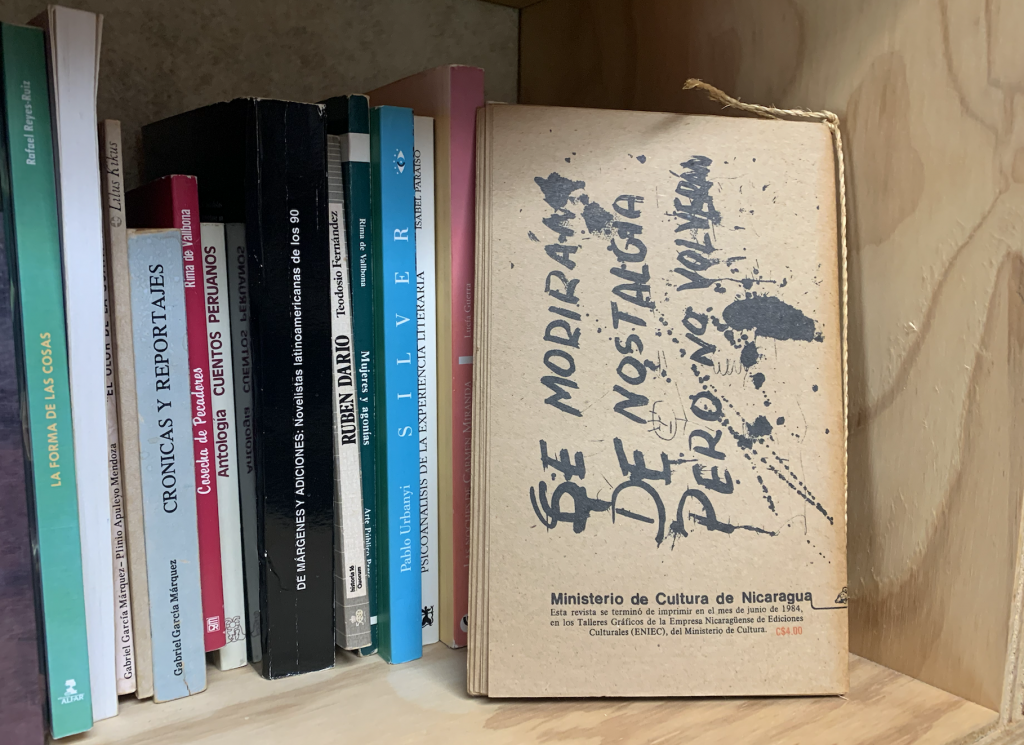
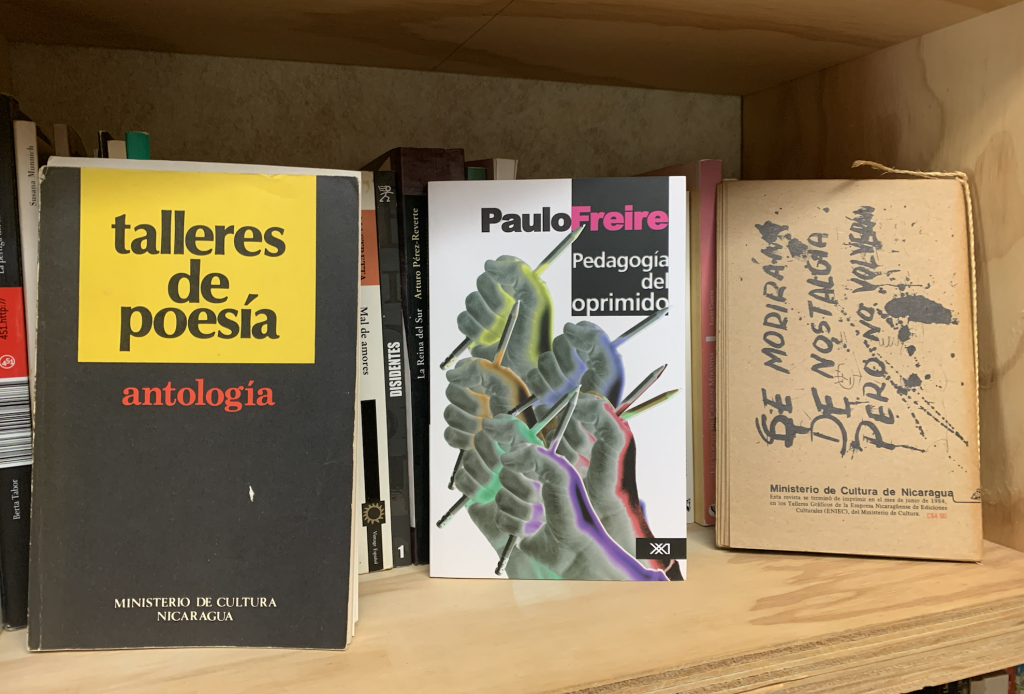
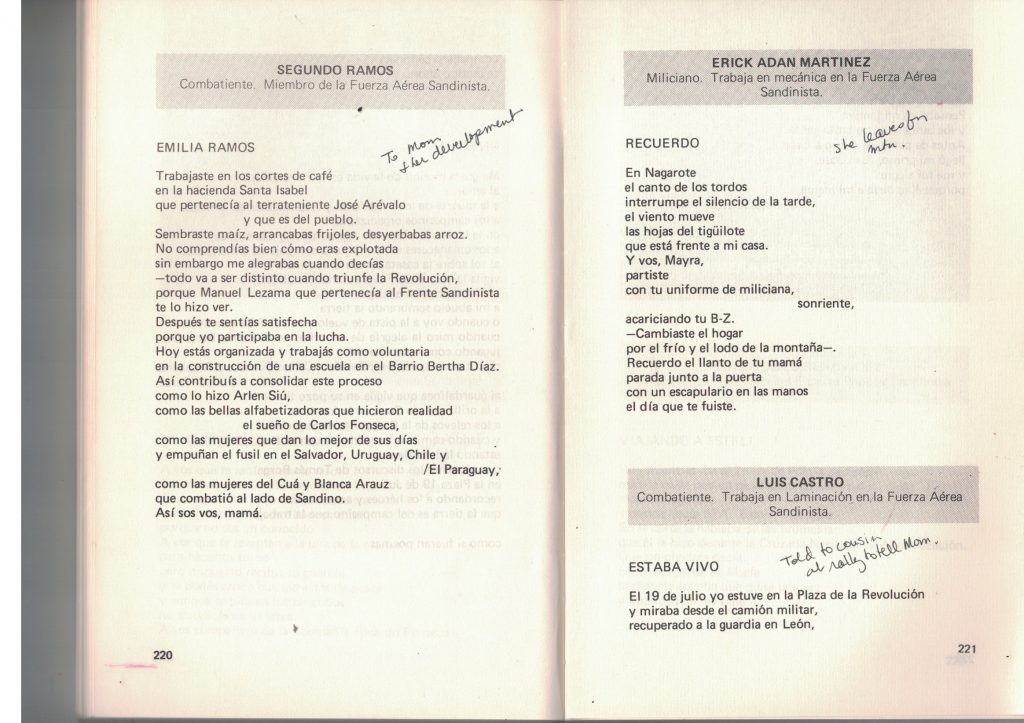
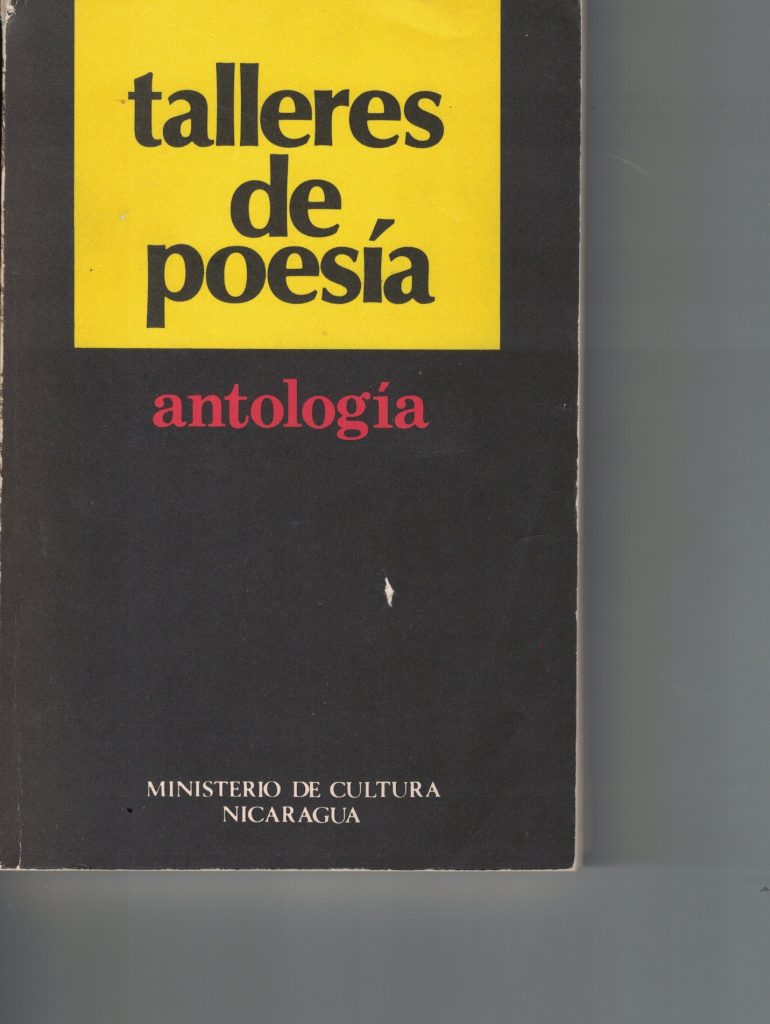
Libro de “Talleres de poesía” with handwritten notes by Dr. Karyn Hollis.
Poetry for the People, By the People: The Nicaraguan Poetry Workshops 1979-88
In 1982 I went to Nicaragua to study the poetry workshops set up by the internationally acclaimed poet-priest, Ernesto Cardenal. It had been three years since the Sandinistas won control of the government after a bloody war against the US-supported dictator, Anastasio Samoza, and his army. Optimism ran high and possibilities seemed limitless among the committed revolutionaries and their allies. Along with the determination to create democratic structures in the political and economic realms, Nicaraguans were devoted to building a new, broadly-based popular revolutionary culture. The aim was for large numbers of people to become discriminating producers of art as well as consumers. A Ministry of Culture, directed by Cardenal, was established in 1979 to organize and fund projects in all the arts. One such project, the poetry workshops, took advantage of the Nicaraguan people’s internationally respected flare and love for poetry. Cardenal wanted to extend the capacity of cultural production to all Nicaraguans, not just the elite. As Cardenal famously said, “The Revolution is culture, and culture is the Revolution.”
Based on a model Cardenal developed in the Christian-base community of Solentiname, the workshops quickly spread through cities, small towns, and hamlets all over Nicaragua. At their height in November of 1982, at least sixty-six poetry workshops met regularly, involving a total of 627 poets. Cardenal estimated that over two thousand Nicaraguans had attended workshops at some point. But as the contra war robbed the country of human and economic resources, the workshops dwindled. A severe blow came in February 1988 when funding for the Ministry of Culture had to be cut.
After arriving in Managua, I was anxious to learn more about Exteriorismo, Cardenal’s method of teaching and writing poetry. He has defined it as–
“. . . that poetry created from images of the external world, the world which we see and in which we live, and which is in general, the specific world of poetry. Exteriorism is objective poetry: narrative and anecdotal, crafted from elements of real life with concrete objects, with proper names and precise details and exact dates, figures, facts and sayings.”
Cardenal’s staff and associated artists were grouped under the Association of Sandinista Cultural Workers and set up Centers for Popular Culture throughout the country to aid in the Association’s work. Following the principles of Exteriorism, Mayra Jimenez, a poet-revolutionary who worked with Cardenal in the contemplative Christian community of Solentiname, was the lead teacher and organizer of the poetry workshops. She recruited five young poet-organizers, all in their early twenties, for their ability as poets, their service and dedication to the Revolution and their ties to the working classes. The effort was extensive, with 64 workshops happening regularly throughout the country. Booklets of workshop poetry were published and distributed free of charge. The workshops were advertised on local radio stations, and through flyers tacked up in rural villages where some people had recently learned to read and write through the Sandinista literacy campaign. Cardenal believed the workshops offered a way to democratize poetry that would enable this poetry-loving people to expand poetic production beyond the elite to include working class and impoverished citizens.
The first orientation sessions typically attracted about twelve poets who came from all walks of life–peasants, maids, nurses, bakers, and manual laborers. Many were members of the army or police force. Both male and female, they mirrored the youth of the general population, being mainly in their teens or early twenties. Some were also recent literates, having learned to read and write in the Sandinista literacy campaign of 1979.
Once set up, the workshops met once a week or every two weeks, usually from three to five hours. They began by studying a selection of poetry from Nicaragua and other nations, and then proceeded to read and critique their own poetry. Some workshops continued meeting regularly for years, while others only met for a few weeks. The ones I observed included mostly young people and took place in very modest village homes, with sparse furnishings, dirt floors, and no electricity.
Here are Cardinal’s rules for writing poetry which laid the groundwork for the poetry workshops:
Rules for Writing Poetry by Ernesto Cardenal–
Verse need not rhyme. If one line ends in Sandino, do not try to end another with destino. . . . Verse should be completely free with lines long or short. . . .
One should prefer more concrete terms to vaguer ones. Palm is preferable to tree. Good poetry is made out of very concrete things.
Poetry has an added appeal if it includes proper names: rivers, towns, villages, people’s names.
Rather than being based on ideas, poetry needs to be based on things which reach us through our senses: touch, taste, sight, smell. . . . The most important images are visual ones. Most things reach us through our eyes.
One should write as one speaks, with the natural plainness of the spoken language, not the written language.
Avoid what are called cliches or commonplaces. Avoid expressions such as “A pain in the neck,” or “been there, done that.”
Try to condense the language as much as possible. All words which are not necessary should be cut out. The real difference between prose and verse is that prose uses many words, while verse uses few.
Since my trip to Nicaragua, I have realized what a unique and remarkable achievement the Poetry Workshops were. To date I don’t believe there has been any comparable creative arts movement anywhere else in the world. I invite others to take up these techniques and write poetry that is concrete, close to the heart, and revolutionary in spirit.
Here are some workshop poems:
“Here at the Front”
By Manuel Urtecho
The Black River where we bathe in the early /mornings the birds the blackberry bushes the mountain full of wondrous/ noises the ground wet from the rain and me on guard duty thinking of you, Malvina
“Guerilla Fighter”
By Grethel Cruz, Cuidad Dario Workshop
Lillies for the church and a pencil to write your name
Insane Asylum – I imagine New York
By Javier Cruz, Literacy Brigade
Crazy people are like answers that /no one has asked They are like the spokes of a wheel /without an axle, like rain that lashes from the ground /to the sky Like test pilots stuck in sky blue mud. The city breathes through the lungs of its madmen, It dresses in a suit cut by lunatics Its cars are driven by crazies Command and obey It cheats even its lunatics. The lawyer designs the houses and /the charletan sings the mass, The teacher sells fish and the orderly /directs the doctors It will take a superior madness to /put an end to this insane asylum.
In the San Jose Hacienda
By Sergio Viscaya a moonlight night
the horses were frightened and the dogs howled each gust of wind was stronger at 7:30 someone beat on the door the peasants who were in class went silent
put out the pine torches and the knocking stopped In the morning on the porch and on the patio we saw the tracks of military boots
Maritza and Yinni thought that they came to kill us but no one thought of deserting.
On Radio Sandino that afternoon We heard that Georgino Andrade had been assassinated and in the valleys the peasants feared that they would kill us all but the beans came up along with the corn months passed and we harvested yucca and watermelon the rains came and we got sick but nobody deserted.
We finished the literacy primer and we all returned to the Plaza of July 19th
Shouting the slogan: WE HAVE FINISHED NATIONAL DIRECTORATE AT YOUR ORDERS
Bickar Munoz
By Francisco Orozco, Soldier in the Popular Sandinista Army
When I pass by the factory CHAMORRO INDUSTRIAL I remember when we were inside taking back our money the guards were pushing us the locked safe the search for the money the banners I painted on the wall the M3 machine gun in your trusting hands the calmness Your resolve when shouting No one move! We are from the FSLN Everything went silent We did it for our people
For those workers who operated the Bickar machines (US company) This is the way we work and why we call for Workers and Peasant Power
Karyn Hollis PH.D.
Es revolucionaria socialista y profesora asociada del departamento de Inglés y departamento de estudios interdisciplinarios globales; además es directora del programa de estudios culturales; fundadora y ex directora del Centro de Escritura y de la subespecialidad de escritura y retórica. Es maestra voluntaria en CCATE donde ha enseñado inglés.