• Skip to primary navigation
  • Skip to main content

REVARTE

  • Home
  • About
    • REVARTE Collective
  • Issues
  • Content
    • LITERATURA
    • JUVENTUD
    • ENSAYO
    • COMUNIDAD
    • MEDIA
  • Subscribe
  • Contribute
  • Show Search
Hide Search

Ensayo

Este es mi México

RevarteColectiva · September 30, 2024 · Leave a Comment

Por Tamara Contreras

Click here for English version
Introduction of “This is My Mexico” Exhibition in CCATE by Obed Arango, 2024

¿Sabías que el gobierno mexicano promueve la creatividad infantil y exhibe dibujos de niños de 6 a 14 años en todo el mundo para destacar la cultura mexicana? ¡Tú puedes ser parte de esta iniciativa!

El Concurso de Dibujo Infantil “Este es mi México” fue creado en 1997 por el Programa para las Comunidades Mexicanas en el Exterior, actualmente el Instituto de Mexicanas y Mexicanos en el Exterior y fue inicialmente dirigido a niños y niñas mexicanos en Estados Unidos. A partir del 2006, se ha extendido a participantes de todo el mundo, incluyendo niñas y niños de cualquier nacionalidad. 

A lo largo de 27 ediciones se ha fomentado que los hijos de padres mexicanos mantengan vivas sus raíces y cultura con nuestro país, pero también abre la puerta para que niños en otras partes del mundo que no sean mexicanos compartan su perspectiva de México. 
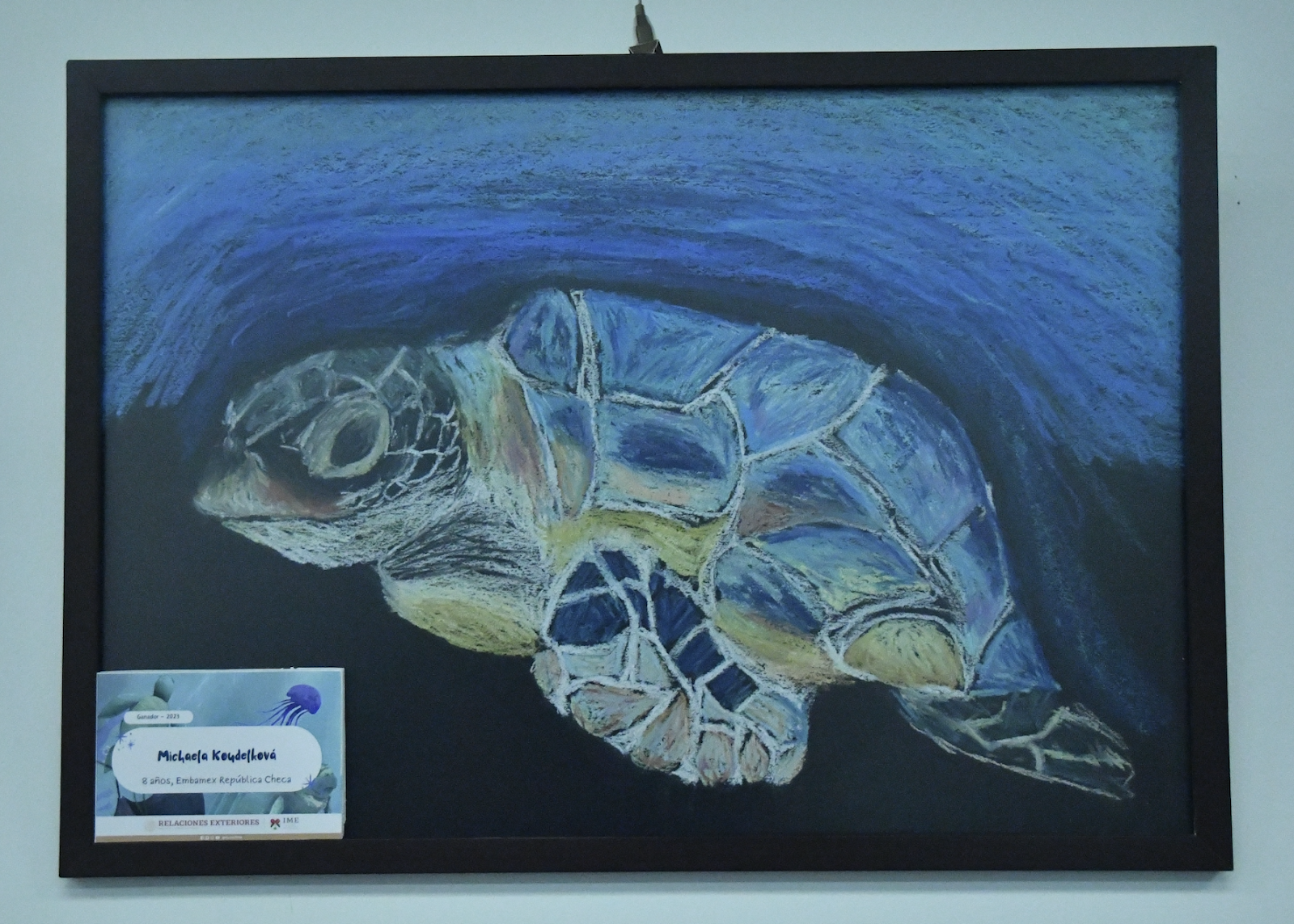
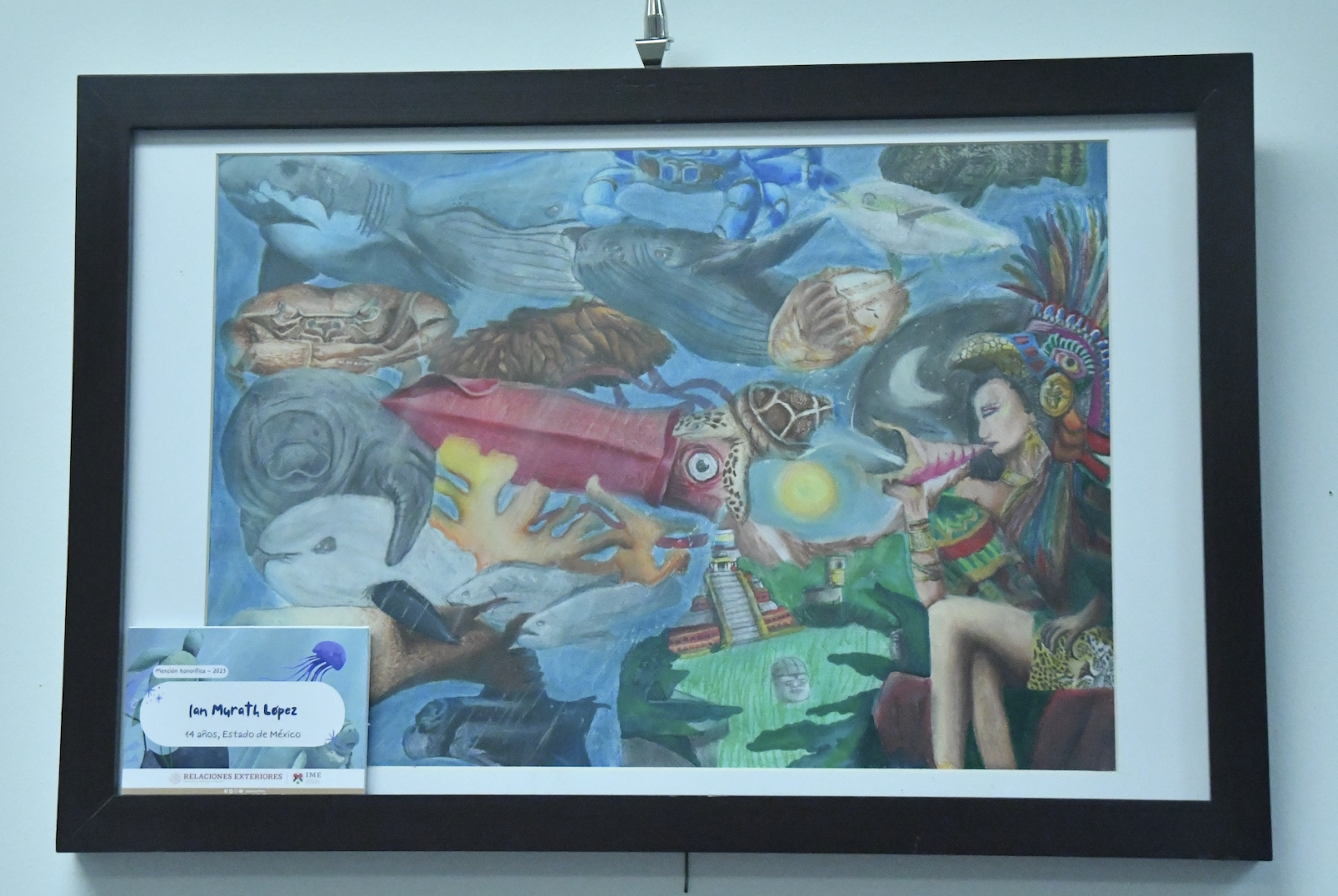
Los dibujos han sido expuestos en lugares icónicos de la Ciudad de México y en el extranjero. Además, el IME selecciona algunas de estas obras para ser parte de su calendario anual, el cual se distribuye en todas las representaciones de México. 

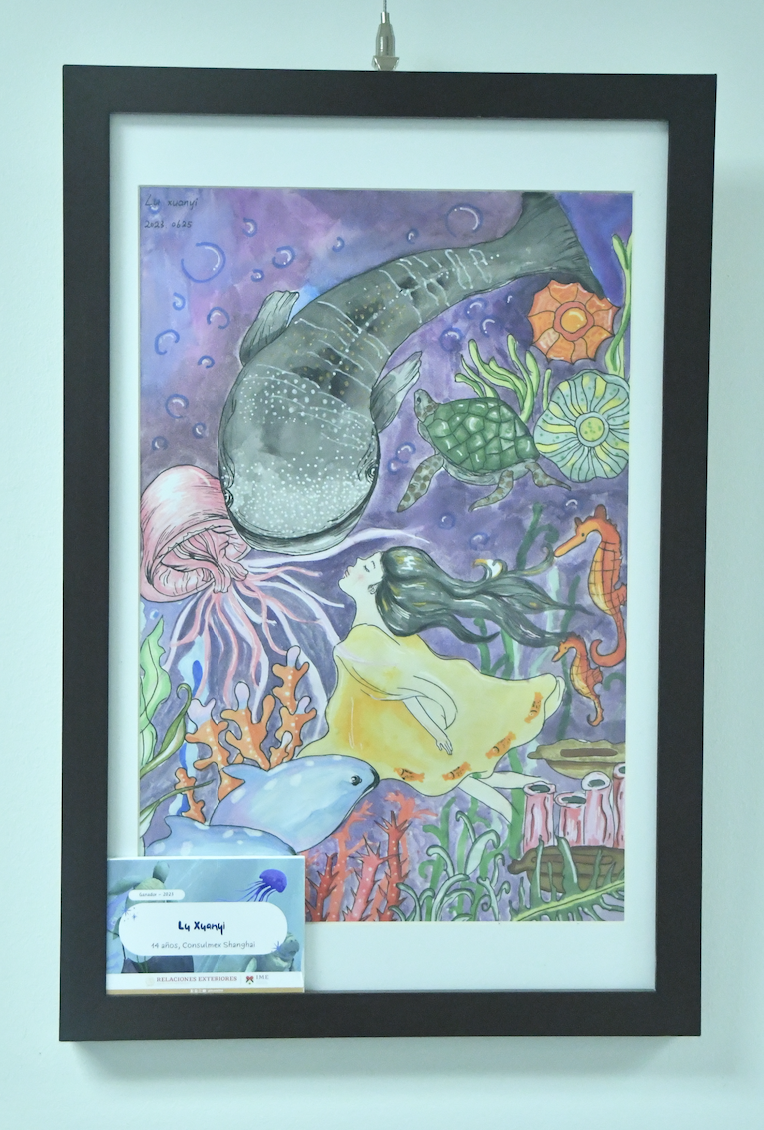
Este año, los dibujos de las ediciones 2022 y 2023 fueron expuestos en una Exposición Itinerante en 14 consulados alrededor de Estados Unidos. En Filadelfia, el Consulado contó con el apoyo de CCATE para exponer estos dibujos del 16 al 24 de mayo del 2024 en la galería de REVARTE. Durante la ceremonia de inauguración destacó la presencia de Carolina Martínez quien recibió mención honorífica por su dibujo “Familia de Osos” en la edición 2022. Este evento no solo permitió que los niños que asisten a CCATE tuvieran la oportunidad de ver la exposición y se involucrarán con el arte, sino también para que se inspirarán, mantuvieran vivas sus raíces y compartieran su cultura con orgullo fuera de México.
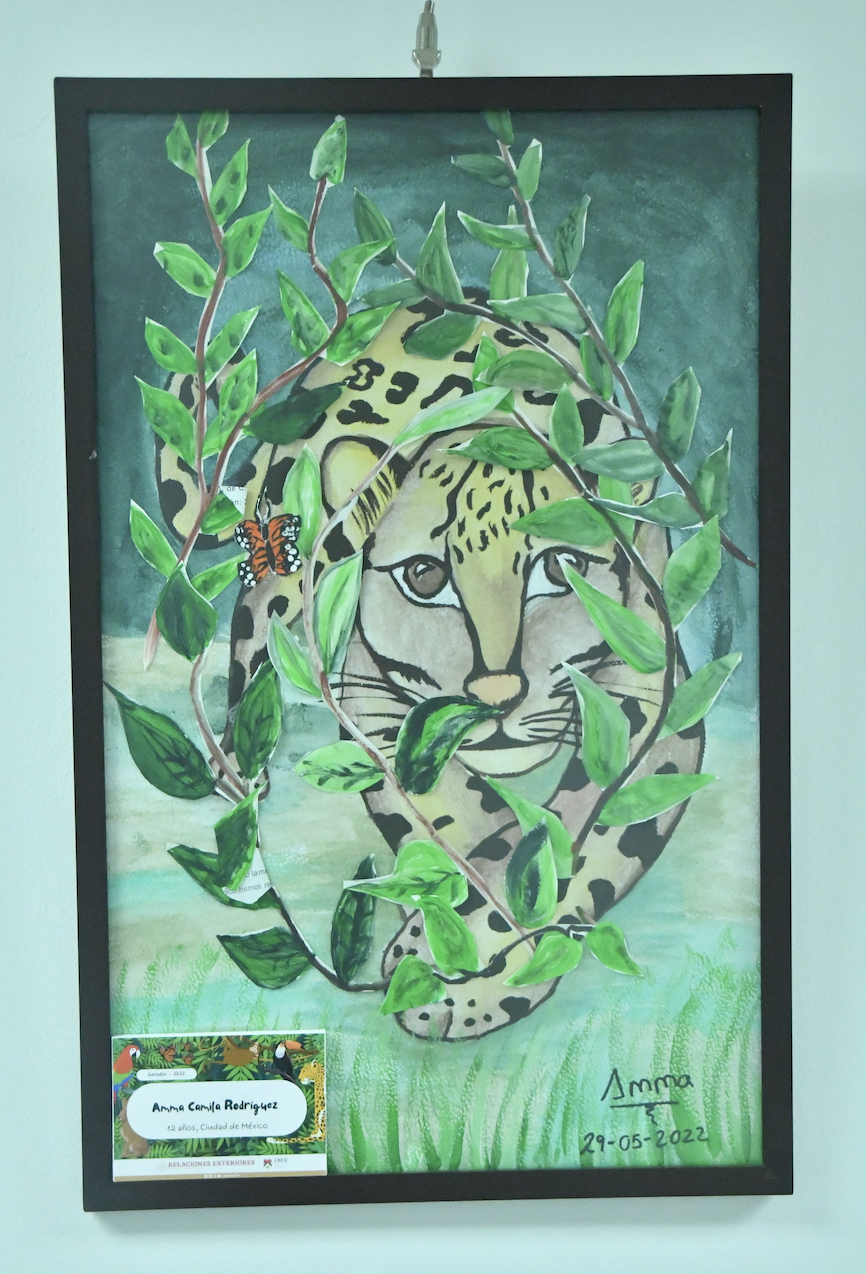
No cabe duda que la creatividad de los niños te lleva a imaginar México desde otra perspectiva, desde lo que les cuentan sus padres de dónde vivieron, las canciones que les enseñaron, los paisajes que recuerdan hasta la comida que les preparan.

La Convocatoria para participar en el Concurso de Dibujo “Este es mi México” 2025 estará abierta hasta el 30 de agosto. Si quieres participar contacta a tu consulado más cercano para tener la oportunidad de reflejar México desde tu imaginación y creatividad.
English Version:

This is My Mexico

Did you know that the Mexican government promotes creativity by exhibiting drawings created by children (ages 6-14) from around the world to celebrate Mexican culture? You could be part of this initiative!

The Children’s Drawing Contest “This is my Mexico” was founded in 1997 by the Program for Communities Abroad, now called the Institute for Mexicans Abroad, and was initially directed toward Mexican children living in the United States. Since 2006, the program has been extended to participants from around the world, including children of any nationality.

Throughout the twenty-seven editions, the program has encouraged children of Mexican descent to connect with their roots and culture, while also opening doors for more children from around the world to share their perspectives on Mexico regardless their nationality.
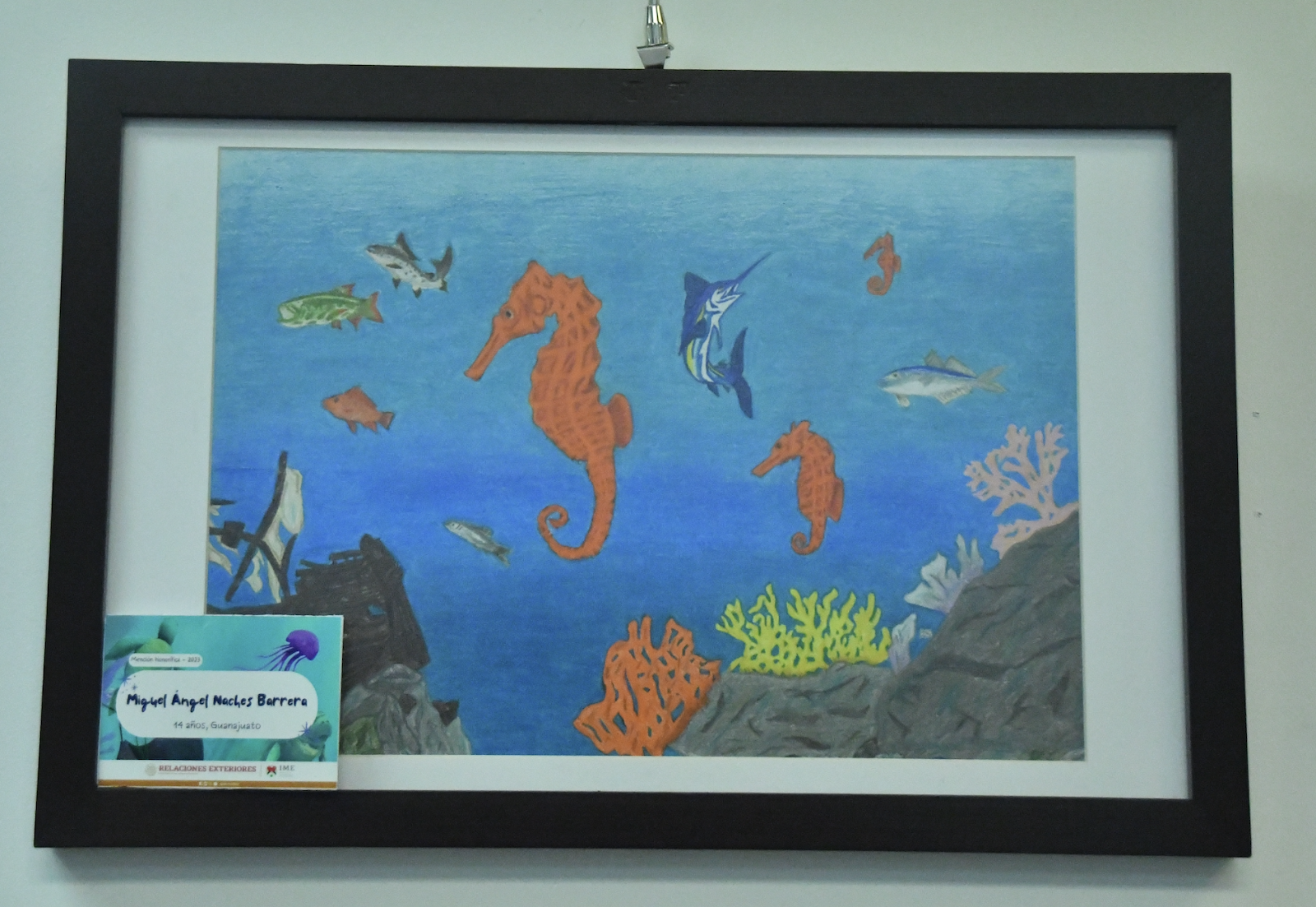
These drawings have been displayed in iconic places in Mexico City and abroad. Furthermore, the Mexican Institute for Mexicans Abroad selects some of these works to be part of their annual calendar, which is distributed among all Mexican Consulates and Embassies abroad.

This year, the drawings from 2022 and 2023 were exhibited in a Traveling Exhibition at fourteen different consulates within the United States. In Philadelphia, the Consulate received support from CCATE to exhibit these drawings from May 16th to 24th, 2024. During the inaugural ceremony, Carolina Martinez was highlighted for her drawing “Family of Bears” in the 2022 edition and received an honorable recognition. This event not only allowed the children attending CCATE to view the exhibition and engage with the art, but it also served as an inspiring source for them to keep their roots alive and share their culture with pride outside of Mexico.
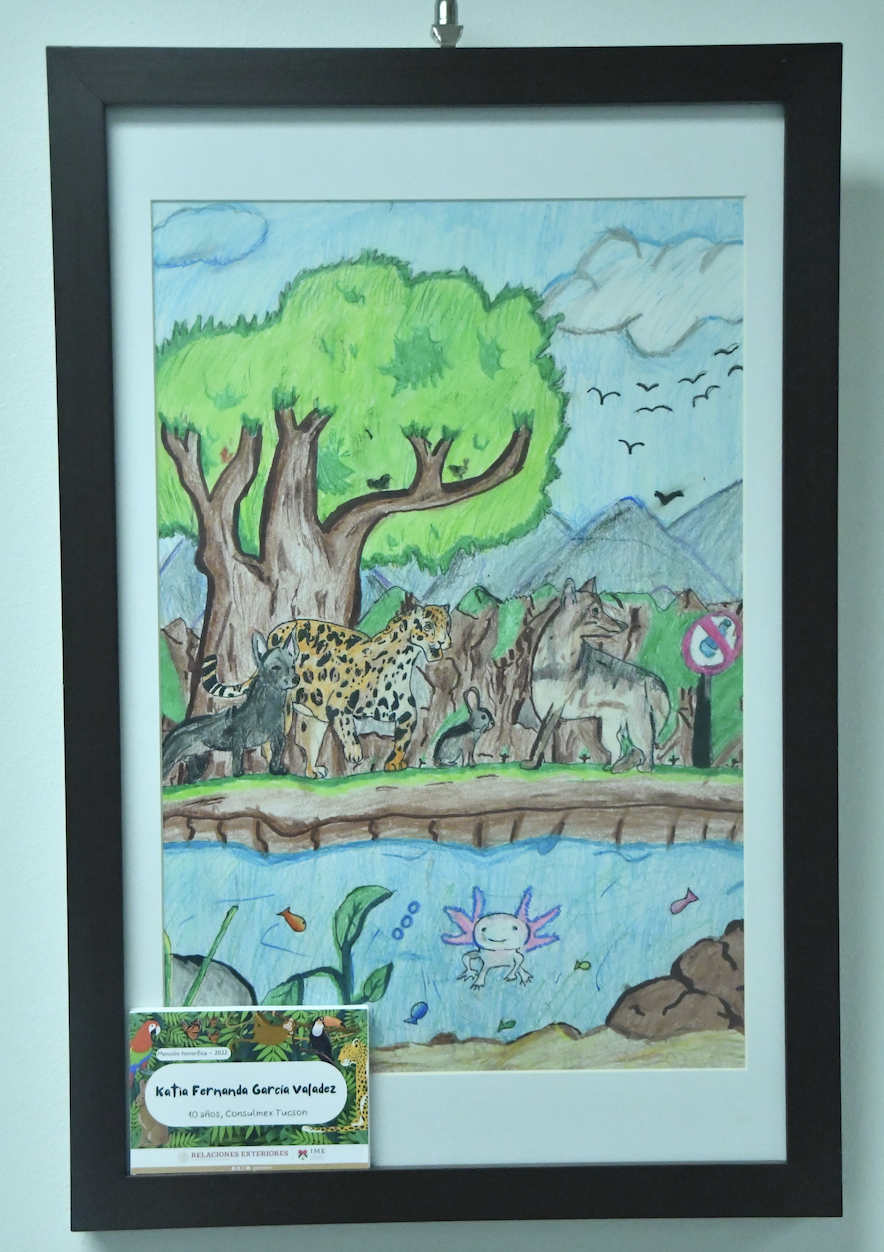
There is no doubt that the creativity of children leads us to imagine Mexico from another perspective—shaped by what their parents tell them about where they used to live, the songs they taught them, the landscapes they remember, and the food they eat daily at home.
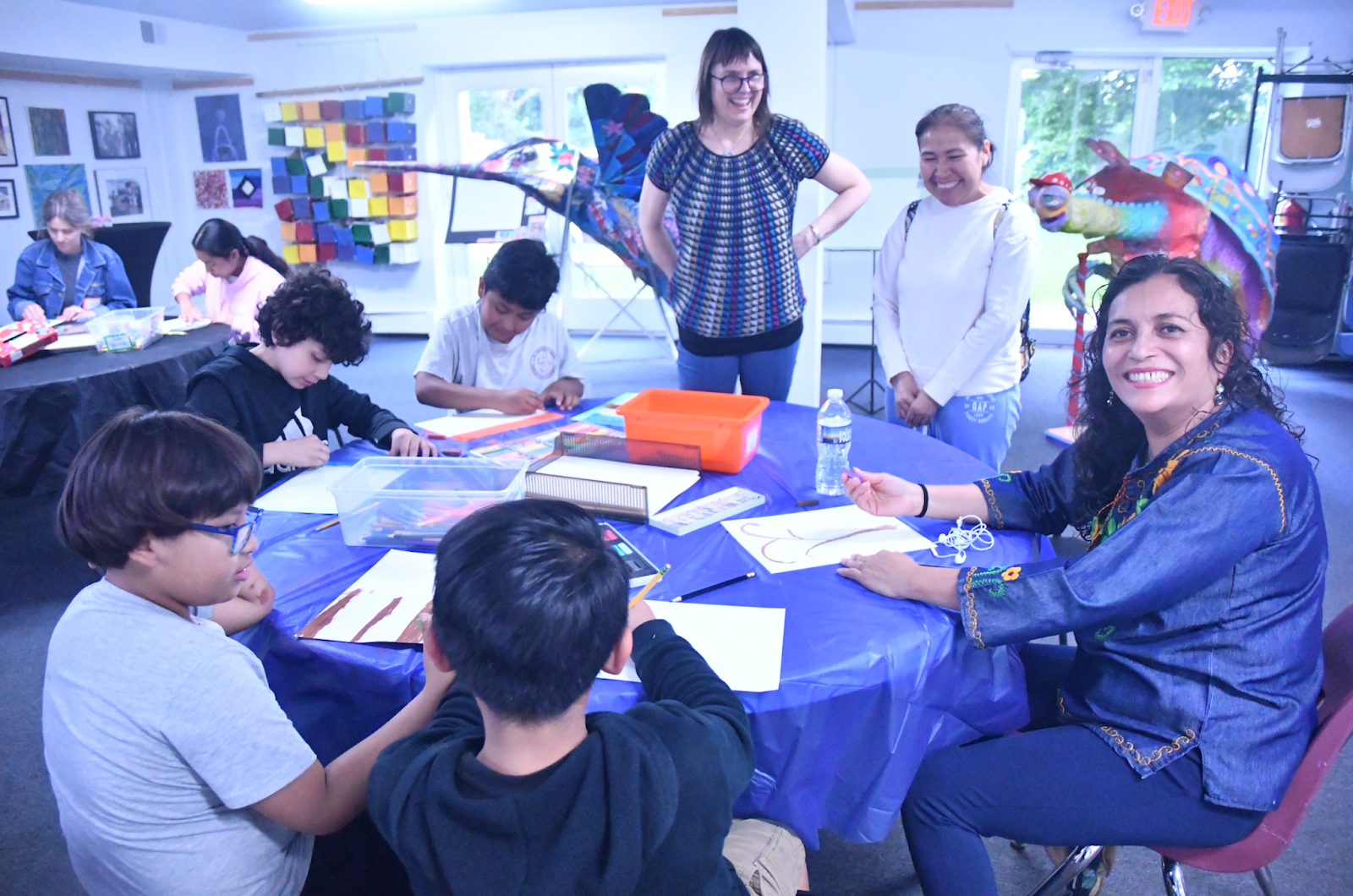
The application process to participate in the Children’s Drawing Contest “This is my Mexico” 2025 will be open until August 30th. If you would like to participate, you can contact your nearest Consulate for the opportunity to depict Mexico through your imagination and creativity.

Tamara Contreras

Tamara Contreras es mexicana originaria del estado de Querétaro, y sirve en el consulado de México en Filadelfia como Coordinadora de Asuntos Comunitarios.

Tamara Diaz is Mexican originally from the state of Querétaro, and serves at the Mexican consulate in Philadelphia as Community Affairs Coordinator.
    Historia de una fotografía: “Los padres fundadores”

    RevarteColectiva · September 30, 2024 · Leave a Comment

    Por Obed Arango

    Click here for English version

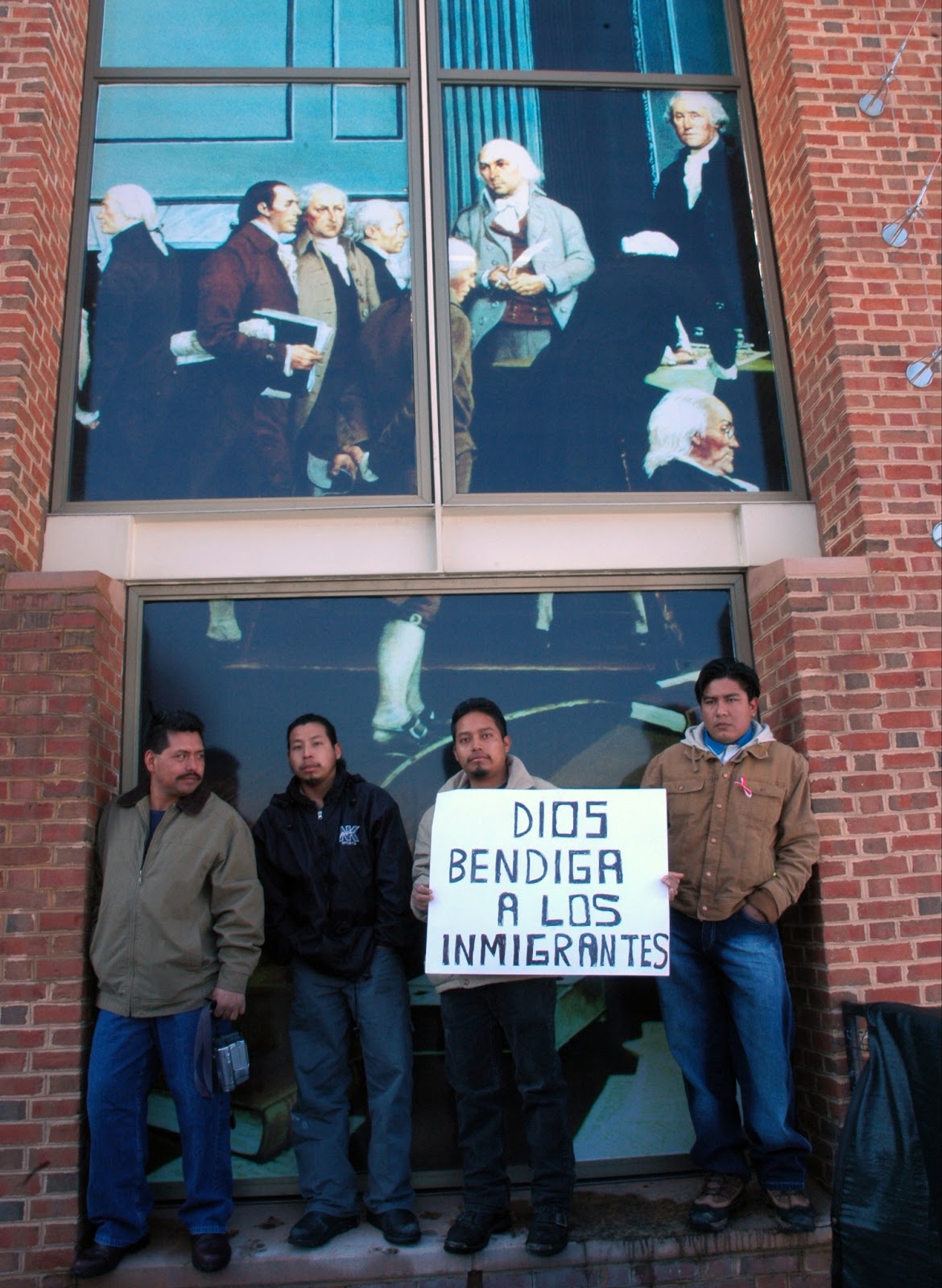
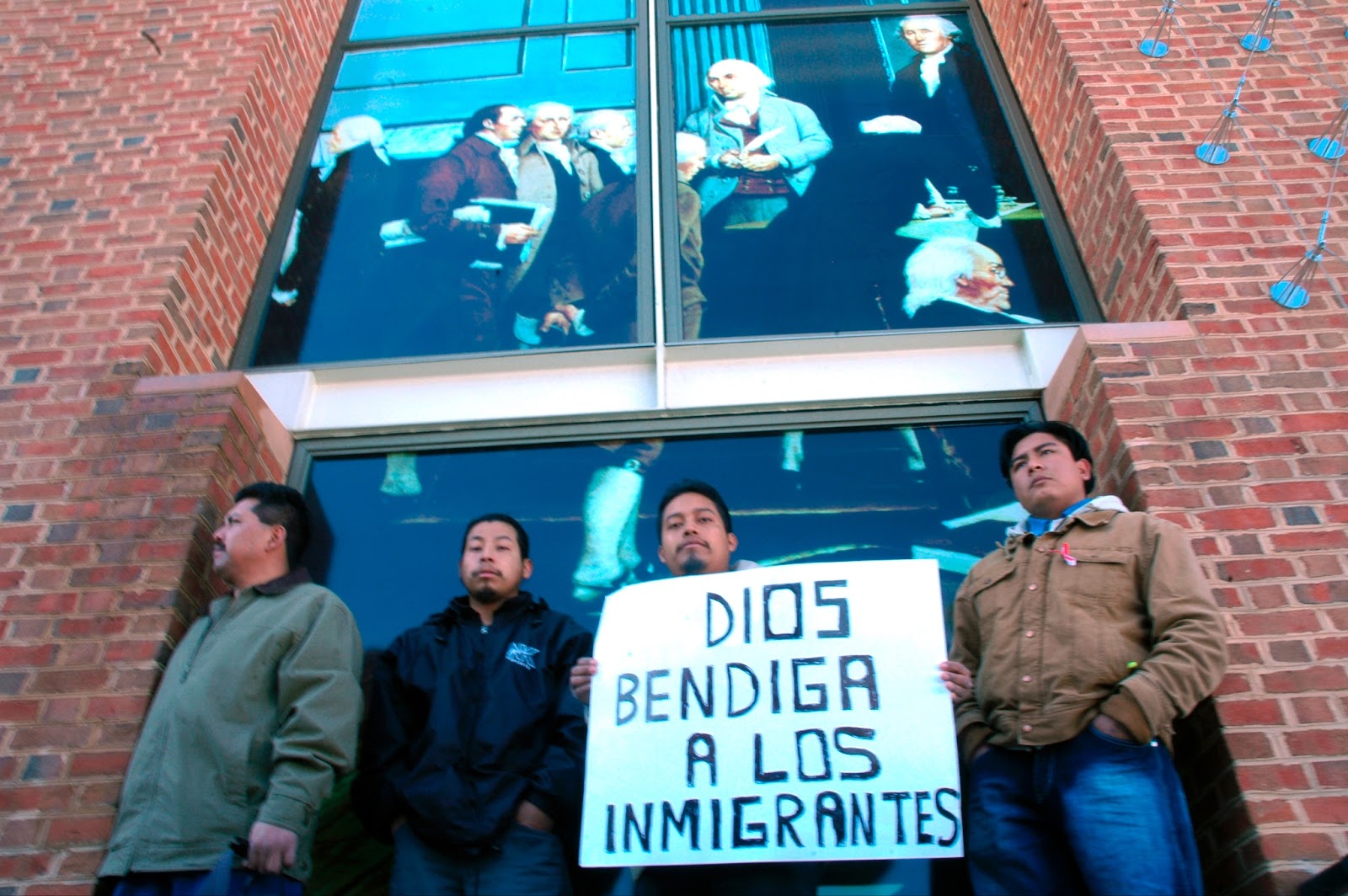
    ”Los padres fundadores”. Foto por Obed Arango en el llamado “Dia sin inmigrantes” 14 de febrero del 2006.

    12-30-2020 / 9-25-2024

    El mito

    Si hay un mito intocable en la cultura, historia y sociedad estadounidense es el de “Los padres fundadores”. Los padres fundadores se refiere a la existencia de un grupo de hombres intelectuales, esclavistas, adinerados, de elite, y descendientes de los colonizadores europeos del siglo 17. Fue una generación de pensadores que proclamaron la independencia de los Estados Unidos, así como la constitución, tan similares como contradictorios. Entre ellos se encuentran los primeros presidentes de los Estados Unidos como George Washington y Thomas Jefferson, entre otros. Asimismo, hubo inventores, politólogos, hombres de letras y fundadores de universidades, como fue el caso de Benjamin Franklin fundador de la Universidad de Pennsylvania. La pesada imagen patriarcal sobre la cual el mito se construye marca el devenir de la historia, ya que por los siguientes 232 años este país elegiría unicamente hombres blancos para la máxima posición, y sería hasta el 2008 cuando se eligió al primer presidente de color: Barack Hussein Obama. Pero no solo es el origen anglosajón el que marcaría la pauta, sino el concepto religioso del corpus ético de este país: ser protestante, que vendría a ser confirmado por el sociólogo Max Weber con el ya famoso libro “La ética protestante y el espíritu del capitalismo”. Y aunque los padres fundadores fueron masones y deístas, al protestantismo de la época le cayó muy bien el: “En Dios confiamos” para proclamarse como una nación que se rige y actúa bajo el Dios cristiano.  De ahí, que en 244 años desde la independencia de los Estados Unidos, solo dos presidentes de los 46 han sido de origen católico, John F. Kennedy y Joseph Biden. (09/16/2024) A casi 250 años de la vida independiente de este país, tan solo 4 excepciones se han dado, dos presidentes católicos, un presidente negro, y una mujer de color como primera vicepresidenta, ya que hasta Kamala Harris, todos los vicepresidentes habían sido hombres blancos y protestantes. Y aunque incierto, es posible que Kamala Harris sea la primera mujer presidente de los Estados Unidos, para dar un giro total a la historia de esta nación.

    La imagen de retablo de los padres fundadores al firmar la constitución se reproduce en libros de texto, litografías, cuadros y museos. Los candidatos a la presidencia legitiman sus discursos y posiciones a partir de los deseos y perspectivas de ellos. Su calidad de fundadores, les da el nivel de “incuestionables”, inmutables y perfectos. Reflejar sus dichos, ampararse en su historia, sirve de roca fuerte para quien logra construir mejor el caso. 

    (09/16/2024) En mis 25 años en este país escuche a Al Gore, George W. Bush, Barack Obama, John McCain, Hillary Clinton, Donald Trump, Joseph Biden entre otros, invocan sus nombres para su bendición, algunos más y otros menos. Pero cuando llega el momento de la fe, o la ausencia de argumento ante el cuestionamiento, este grupo de hombres sirven de piedra angular, “pues de ellos nace todo, y sin ellos nada de lo que ha sido hecho hubiera sido hecho en este país del norte”, para parafrasear a Juan 1. 

    Pero, para ser justos y honestos, cada país y sobre todo cada régimen o cada personaje que busca el poder se ampara en el mito y en el héroe, en México puede ser Benito Juárez, sino pregúntenle a AMLO, en América del sur puede ser Bolivar, sino escuchemos los discursos de Chavez y de Maduro, Cuba con El Che, y Nicaragua con Sandino. La derecha latinoamericana no la menciono, porque sus héroes en verdad son innombrables (la derecha se ampara en Pinochet, Videla, Somoza, Trujillo, Ríos Montt, entre otros que no merecen ni una línea). El antropólogo Victor Turner (1974) en “Dramas, Fields and Metaphors” abordaría el mito de Hidalgo en México, y el ritual del grito de independencia que se lleva cada año y que sirve para avalar al gobierno en turno en México. Podríamos decir que Hidalgo fue pri-ista y panista por largos 80 años, y los últimos seis morenista. Como sea es importante cuestionar. Si bien el que escribe es pensador de izquierda, y actuó desde la izquierda comunitaria, es importante cuestionar la izquierda gobernante que se rige por el poder y no siempre por el pueblo. De la derecha, bueno, ahí no hay rescate alguno. O como diría el teólogo Dietrich Bonhoeffer en su libro “Ethics” (1940)  “Qué es peor que hacer el mal, es ser el mal”. Justo así entre izquierda y derecha gubernamental, la izquierda recurre ha cierto pragmatismo político en sus procesos para derrotar a la dictadura de derecha que es la encarnación del mal y ya sin redención alguna, la izquierda en América Latina al menos puede ampararse en sus santos para sacar algunos de sus personajes del purgatorio. Pero la derecha con Videla, Somoza, Pinochet, Trujillo, Ríos Montt y Díaz, no están en el purgatorio de la historia, sino que habitan el hades, y los santos no desean saber nada de ellos aunque el conservadurismo apele a la castidad histórica. 

    En los Estados Unidos los santos padres fundadores son más bondadosos, ya sea porque les han puesto la camisa de la gracia protestante o por que son reflejo de ellos mismo los presidentes que han pasado, lo cierto es que su manto cubrió, aunque en menos medida a Obama, arropó a todos. En este punto no he escuchado a Kamala invocar sus nombres y bendición. Y es que algo que hoy no se puede rebatir, es que al invocar el nombre de los padres fundadores se sabe que fueron esclavistas, y cuando proclamaron la independencia y escribieron la constitución la población esclava, e indígena no entraba en ella. Tuvieron que pasar 100 años para la guerra de secesión, para abolir la esclavitud, y casi 200 para la proclama de los derechos civiles.

    ¿Cuánto es verdad de lo que conocemos de los padres fundadores de los Estados Unidos, y de los padres fundadores de otra naciones?, no sabemos, la historia va saliendo poco a poco, algunos esfuerzos claros y honestos se han escrito, sobretodo en los últimos veinte años. 

    La rebeldía

    El 14 de febrero del 2006 se llevó a cabo uno de los actos de mayor rebeldía que recuerdo y viví desde que emigre a los Estados Unidos. Organizados por líderes locales del sur de Filadelfia, entre quienes se encontraban Carmen Marcet y Ricardo Díaz, como voceros del movimiento, decidieron llamar a una huelga para no trabajar el día de San Valentín, también conocido como el día del amor y la amistad, y cuyo valor comercial es únicamente menor que el llamado “Black Friday”. 

    Aproximadamente 5 mil inmigrantes de México, El Caribe, Centroamérica y Sudamérica, nos hicimos presentes en la plaza de la independencia, frente a la campana de la libertad y del Recinto de la independencia, en el mismo corazón donde se declara la independencia y se firmo la constitución, es decir donde los padres fundadores habitaron con toda su gloria. ¡Qué atrevimiento el de esta comunidad inmigrante! Cafeterías, restaurantes, centros de compra se vieron sin trabajadores, el propósito de la huelga era hacer una protesta directa contra la propuesta de Ley HR4437 conocida como Sensenbrenner Bill, conocida oficialmente como: Border Protection, Antiterrorism, and Illegal Immigration Control Act of 2005109th Congress (2005-2006). 

    La propuesta que a través de los años ha sido usada como modelo para otras iniciativas y discursos anti-inmigrantes proclama una criminalización a los inmigrantes indocumentados, penaliza además a aquellos que les tienden la mano fueran individuos, negocios, iglesias u organizaciones sin fines de lucro. Esta iniciativa, es el preámbulo de lo que en los siguientes 15 años se desataría primero con la formulación de la ley estatal SB1070 de Arizona, y la llegada de Trump al poder cuyo discurso proclama mucho de la HR4437. Los discursos anti-inmigrantes han marcado la retórica del partido republicano desde la caída de las torres gemelas.

    Pero regresando, la protesta de la comunidad inmigrante de ausentarse del trabajo para protestar en el corazón histórico marcó un parte aguas en la lucha por una reforma migratoria, como dice Carmen Marcet en una entrevista que me dio para el programa Bandera: tus colores, tu comunidad. “Comenzamos a recibir llamadas de todo el país, entre ellos Piolin el locutor de Los Angeles, ‘¿qué es esto que nos dicen que paso en Filadelfia? ¿Cómo está eso de que los inmigrantes desaparecieran?’” (2012) 

    Este evento inspiró a otros movimientos a hacer un dia nacional que emulara el “día sin inmigrantes” del 14 de febrero. Hubo dos fechas más el 10 de abril y el 1o de mayo que fue el paro nacional con millones marchando, también de ambos días tengo registros fotográficos  y entrevistas. 

    Foto por Obed Arango en el llamado “Dia sin inmigrantes” 14 de febrero del 2006.

    La foto

    Ricardo y Carmen con una bocina de piso de corto alcance, sin templete están rodeados con menos de un metro y medio de distancia, ellos invitan a oradores a compartir sus experiencias libremente, yo me encuentro con cámara fotográfica, una llamada “handy cam” que usa video – cassettes, y grabadora de mano. Escucho cada discurso que se presenta, y a ese pequeño grupo le rodea cientos y miles, tomo fotografías en blanco y negro, y también a color. Por primera vez en chaqueta roja, sin saberlo, conocería a una de mis grandes amigas de lucha Carmen Marcet, esa chaparrita que se mueve, organiza, ordena, establece limites, cuida a Ricardo, da instrucciones a los demás y todos la escuchan. Si bien Ricardo es la voz, Carmen es quien comanda, y quien tiene la visión periférica de lo que sucede. Como fotógrafo trato de posicionarme en el centro después de haber tomado los alrededores por unos minutos. No es facil, pero llego al centro de donde surgen las voces y la lucha. 

    Ahí en el centro noto a la distancia a cuatro o cinco hombres que levantan con sus manos un cartel que dice “God bless de immigrants”, debajo del retablo de los padres fundadores. Todo fotógrafo sueña que en cada manifestación, cada ritual,  de los dioses de la imagen photos y graphos  bajen para regalar el momento y la imagen que sintetice lo que sucede y que sea capaz de perdurar en el tiempo por la acción que retrata así como por los significados que despide, la historia que reta, el atrevimiento que desmonta el mito y que se queda como una imagen emblemática de ese día. 

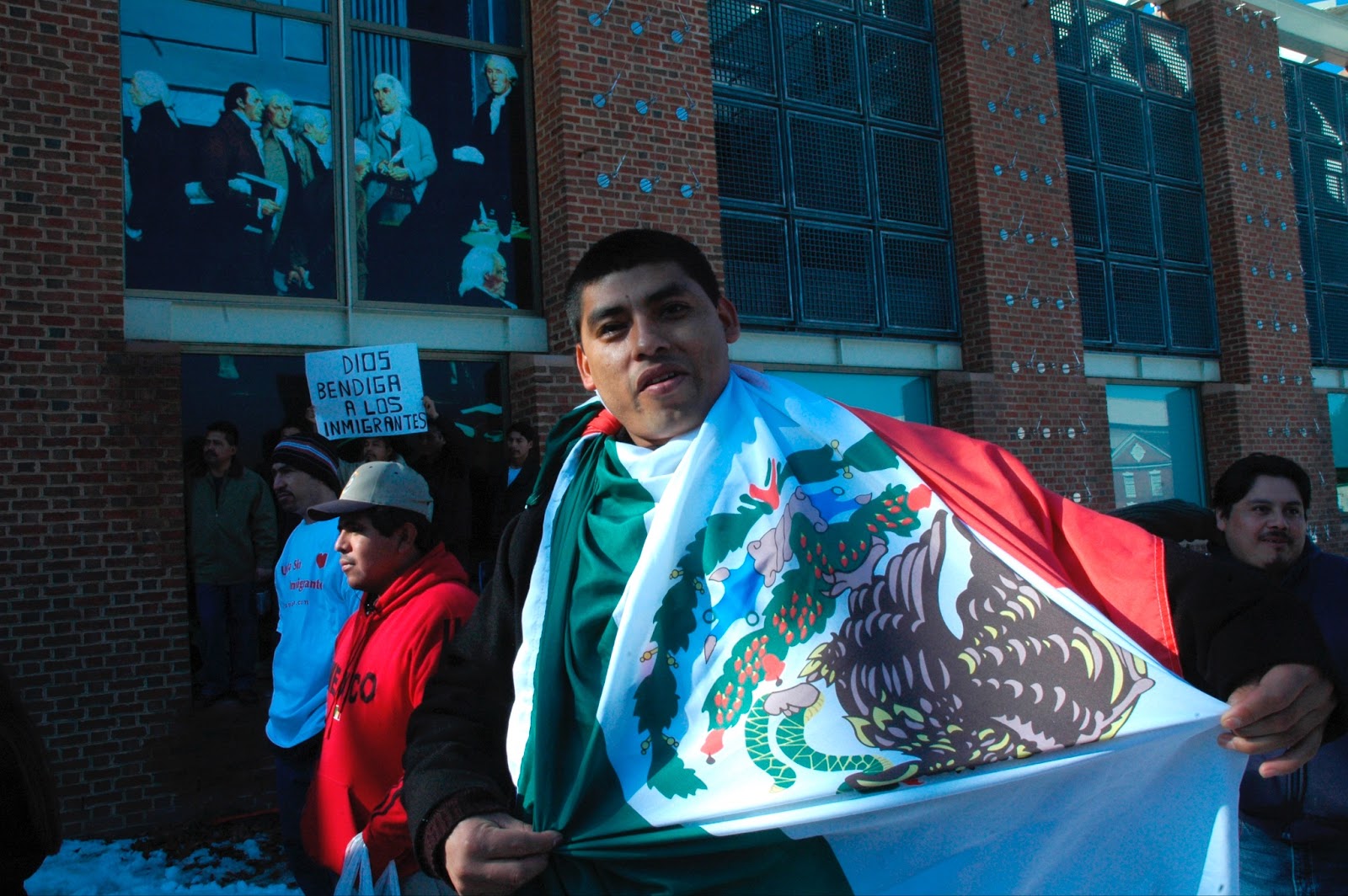
    Al ver esto a la distancia, con mayor dificultad que tuve para llegar al centro, ahora busco regresar a la periferia antes de que el momento mágico desparezca. En el camino me cruzo con un joven que usa la bandera como si fuera el ayate de Juan Diego, y muestra el águila devorando la a serpiente y al fondo los hombres siguen levantando esta vez en español el cartel “Dios Bendiga a los inmigrantes”.

    Tomo imágenes horizontales y verticales, en blanco y negro y en color. Lo hombres me pregunta que porqué les tomo tantas fotos y les señalo el retablo de la imagen de arriba, todos voltean a ver, no habían notado, que bajo la imagen mítica ellos formaban una imagen paralela, que en vez de documento de independencia, declaraban “Dios bendiga a los inmigrantes” como un reto abierto, irónico del “God Bless America”, pero al mismo tiempo que así sea, que “Dios este con el pueblo migrante”. 

    Todo el crédito y toda la rebeldía de esta imagen se debe a ese grupo de trabajadores que decidió retar al sistema social e histórico más poderoso de nuestra generación y por un día re- escribir la historia. Para quienes lo vivimos marcó nuestro andar en esta nación del norte. 

    English Version:

    History of a photograph: “The founding fathers”

    ”The founding fathers”. Photo by Obed Arango on the so-called “Day without Immigrants” February 14, 2006.

    12-30-2020 / 9-25-2024

    The myth

    If there is an untouchable myth in American culture, history and society, it is that of “The Founding Fathers.” The founding fathers refers to the existence of a group of intellectual, slave-owning, wealthy, elite men, and descendants of the European colonizers of the 17th century. It was a generation of thinkers who proclaimed the independence of the United States, as well as the constitution, as similar as they are contradictory. Among them are the first presidents of the United States such as George Washington and Thomas Jefferson, among others. Likewise, there were inventors, political scientists, men of letters and founders of universities, as was the case of Benjamin Franklin, founder of the University of Pennsylvania. The heavy patriarchal image on which the myth is built marks the future of history, since for the next 232 years this country would elect only white men for the highest position, and it would not be until 2008 when the first president of color was elected: Barack Hussein Obama. But it is not only the Anglo-Saxon origin that would set the tone, but the religious concept of the ethical corpus of this country: being Protestant, which would be confirmed by the sociologist Max Weber with the now famous book “The Protestant Ethic and the Spirit of the capitalism”.

    And although the founding fathers were Freemasons and Deists, the Protestantism of the time liked “In God we trust” very well to proclaim to be a nation that is governed and acts under the Christian God.  Hence, in the 244 years since the independence of the United States, only two presidents of the 46 have been of Catholic origin, John F. Kennedy and Joseph Biden. Almost 250 years into the independent life of this country, only 4 exceptions have occurred, two Catholic presidents, a black president, and a woman of color as the first vice president, since until Kamala Harris, all vice presidents had been white men. and Protestants. And although uncertain, it is possible that Kamala Harris will be the first female president of the United States, to completely turn the history of this nation.

    The altarpiece image of the founding fathers signing the constitution is reproduced in textbooks, lithographs, paintings and museums. Presidential candidates legitimize their speeches and positions based on their desires and perspectives. Their quality as founders gives them the level of “unquestionable”, immutable and perfect. Reflecting their sayings, relying on their history, serves as a strong rock for those who manage to build the case better.

    In my 25 years in this country I heard Al Gore, George W. Bush, Barack Obama, John McCain, Hillary Clinton, Donald Trump, Joseph Biden among others, invoke their names for their blessing, some more and some less. But when the moment of faith arrives, or the absence of argument in the face of questioning, this group of men serve as the cornerstone, since everything is born from them, and without them nothing that has been done would have been done in this Paris of the north, to paraphrase John 1. 

    But, to be fair and honest, each country and above all each regime or each character that seeks power relies on myth and the hero, in Mexico it can be Benito Juárez, if not ask AMLO, in South America it can be Bolivar, if not let’s listen to the speeches of Chavez and Maduro, Cuba with Che, and Nicaragua with Sandino. I do not mention the Latin American right, because its heroes are truly unmentionable (the right relies on Pinochet, Videla, Somoza, Trujillo, Rios Montt, among others who do not deserve a single line). The anthropologist Victor Turner (1974) in “Dramas, Fields and Metaphors” would address the myth of Hidalgo in Mexico, and the ritual of the cry of independence that is carried out every year and that serves to endorse the government in power in Mexico. We could say that Hidalgo was a PRI and PAN member for 80 years, and the last six a Morenista. Either way, it is important to question. Although the writer is a left-wing thinker, and acted from the community left, it is important to question the ruling left that is governed by power and not always by the people. On the right, well, there is no rescue there. Or as the theologian Dietrich Bonhoeffer would say in his book “Ethics” (1940) “What is worse than doing evil is being evil.” Just like this between the left and the governmental right, the left resorts to a certain political pragmatism in its processes to defeat the right-wing dictatorship that is the incarnation of evil and without any redemption, the left in Latin America can at least rely on its saints to take some of his characters out of purgatory. But the right with Videla, Somoza, Pinochet, Trujillo, Ríos Montt and Díaz, are not in the purgatory of history, but rather inhabit Hades, and the saints do not want to know anything about them even though conservatism appeals to historical chastity.

    In the United States, the holy founding fathers are kinder, either because they have been given the shirt of Protestant grace or because the presidents who have passed are a reflection of themselves. The truth is that their mantle covers, although to a lesser extent to Obama, it encompassed everyone. At this point I have not heard Kamala invoke their names and blessing. And something that cannot be refuted today when invoking the name of the founding fathers is that they were slaveholders and when they proclaimed independence and wrote the constitution, the slave and indigenous population did not enter into it. It took 100 years for the Civil War and almost 200 for the proclamation of civil rights.

    How much is true of what we know about the founding fathers of the United States, and the founding fathers of other nations? We do not know, history is emerging little by little, some clear and honest efforts have been written, especially in recent years. twenty years. 

    The rebellion

    On February 14, 2006, one of the most rebellious acts that I remember and experienced since I emigrated to the United States took place. Organized by local leaders from South Philadelphia, among whom were Carmen Marcet and Ricardo Díaz, as spokespersons for the movement, they decided to call a strike to not work on Valentine’s Day, also known as the day of love and friendship, and whose commercial value is only lower than the so-called “Black Friday”.

    Approximately 5 thousand immigrants from Mexico, the Caribbean, Central America and South America, were present in the Plaza de la Independencia, in front of the Liberty Bell and the Independence Precinct, in the same heart where independence is declared and signed. the constitution, that is, where the founding fathers lived in all their glory. How daring this immigrant community is! Cafes, restaurants, shopping centers were without workers, the purpose of the strike was to make a direct protest against the proposed law HR4437 known as the Sensenbrenner Bill, officially known as: Border Protection, Antiterrorism, and Illegal Immigration Control Act of 2005109th Congress (2005-2006).

    The proposal, which over the years has been used as a model for other anti-immigrant initiatives and speeches, proclaims the criminalization of undocumented immigrants and also penalizes those who reach out to them, whether individuals, businesses, churches or non-profit organizations. . This initiative is the preamble to what would be unleashed in the next 15 years, first with the formulation of the Arizona state law SB70, and the arrival of Trump to power whose speech proclaims much of HR4437. Anti-immigrant speeches have marked the rhetoric of the Republican Party since the fall of the twin towers.

    But returning, the protest of the immigrant community to be absent from work to protest in the historic heart marked a watershed in the fight for immigration reform, as Carmen Marcet says in an interview she gave me for the program Bandera: your colors, your community. “We began to receive calls from all over the country, among them Piolin the announcer from Los Angeles, ‘what is this they tell us that happened in Philadelphia?’ How is it that immigrants disappeared?’” (2012) 

    This event inspired other movements to make a national day that emulated the “day without immigrants” of February 14. There were two more dates on April 10 and May 1, which was the national strike with millions marching. I also have photographic records and interviews on both days.

    Photo by Obed Arango on the so-called “Day without Immigrants” February 14, 2006.

    The photo

    Ricardo and Carmen with a short-range floor speaker, without a stand, are surrounded with less than a meter and a half of distance, they invite speakers to share their experiences freely, I find myself with a photographic camera, a so-called “handy cam” that uses video – cassettes, and handheld recorder. I listen to every speech that is presented, and that small group is surrounded by hundreds and thousands, I take photographs in black and white, and also in color. For the first time in a red jacket, without knowing it, I would meet one of my great wrestling friends Carmen Marcet, that short girl who moves, organizes, orders, establishes limits, takes care of Ricardo, gives instructions to others and everyone listens to her. Although Ricardo is the voice, Carmen is the one who commands, and who has the peripheral vision of what is happening. As a photographer I try to position myself in the center after having taken the surroundings for a few minutes. It’s not easy, but I get to the center where the voices and the fight come from.

    There in the center I notice four or five men in the distance who raise with their hands a sign that says “God bless immigrants”, under the altarpiece of the founding fathers. Every photographer dreams that in each manifestation, each ritual, the gods of the image, photos and graphos, descend to give the moment and the image that synthesizes what happens and that is capable of lasting over time for the action it portrays as well as for the meanings that it gives off, the history that challenges, the daring that dismantles the myth and that remains as an emblematic image of that day.

    There in the center I notice four or five men in the distance who raise with their hands a sign that says “God bless immigrants”, under the altarpiece of the founding fathers. Every photographer dreams that in each manifestation, each ritual, the gods of the image, photos and graphos, descend to give the moment and the image that synthesizes what happens and that is capable of lasting over time for the action it portrays as well as for the meanings that it gives off, the history that challenges, the daring that dismantles the myth and that remains as an emblematic image of that day. 

    Seeing this from a distance, with greater difficulty than I had getting to the center, I now seek to return to the periphery before the magical moment disappears. On the way I pass a young man who uses the flag as if it were the steward of San Diego, and shows the eagle devouring the snake and in the background the men continue to raise the sign “God Bless the Immigrants” this time in Spanish.

    I take horizontal and vertical images, in black and white and in color. The men ask me why I take so many photos of them and point out the altarpiece in the image above. They all turn to see, they had not noticed that under the mythical image they formed a parallel image, which instead of a document of independence, declared “God bless the immigrants” as an open, ironic challenge of “God Bless America”, but at the same time let it be so, that “God be with the migrant people.”

    All the credit and all the rebellion of this image is due to that group of workers who decided to challenge the most powerful social and historical system of our generation and for one day rewrite history. For those of us who experienced it, it marked our journey in this northern nation.

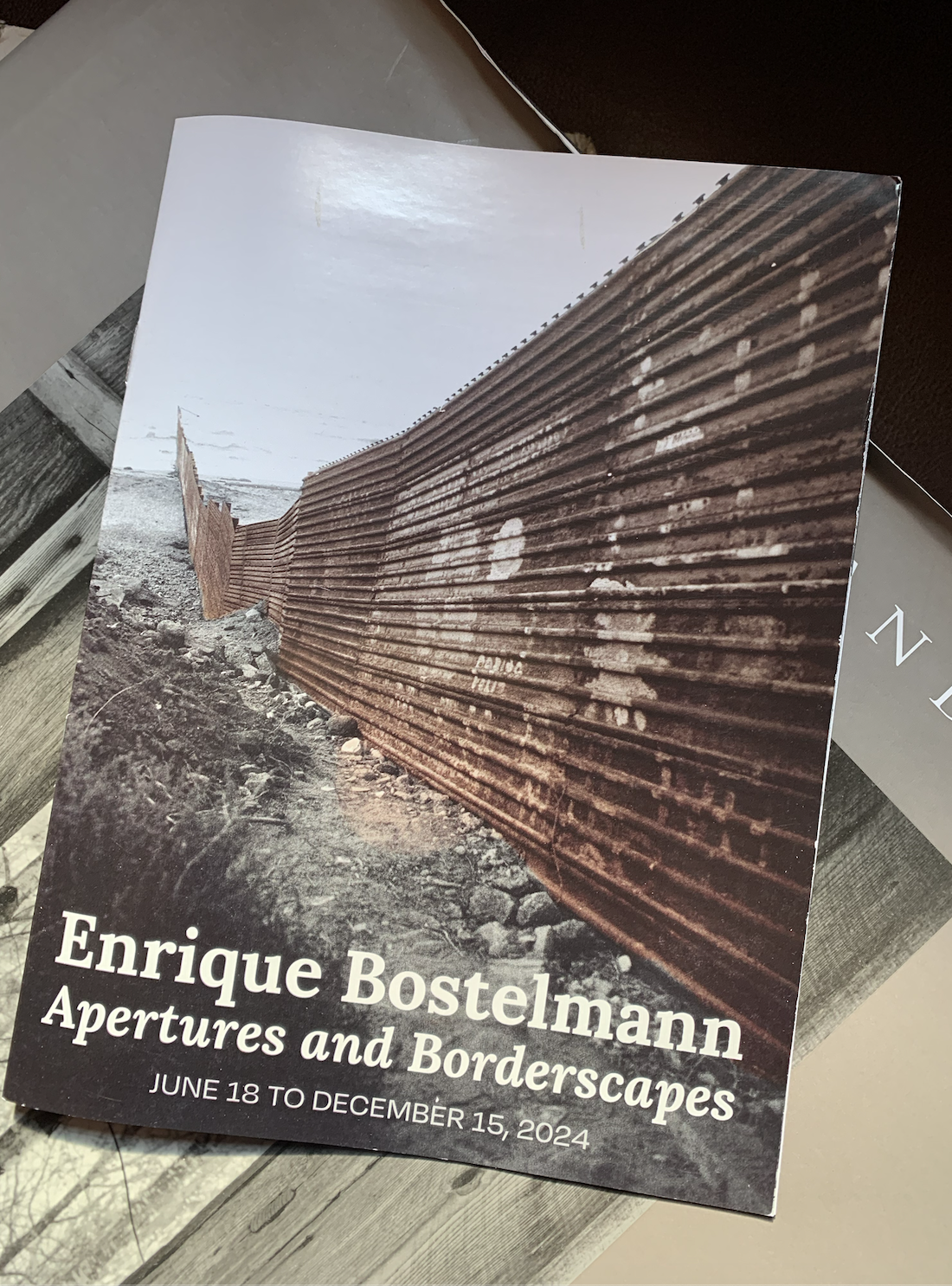
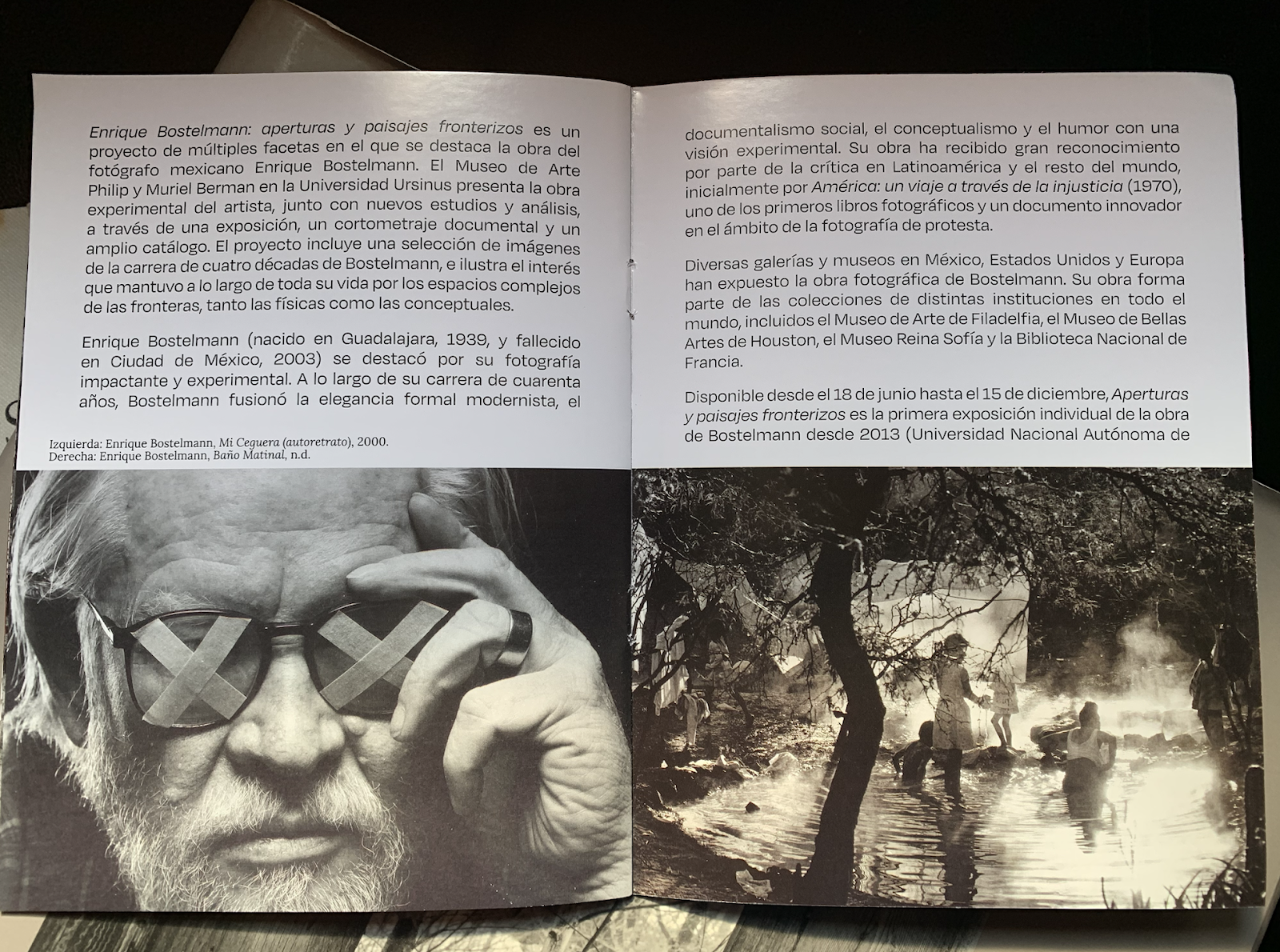
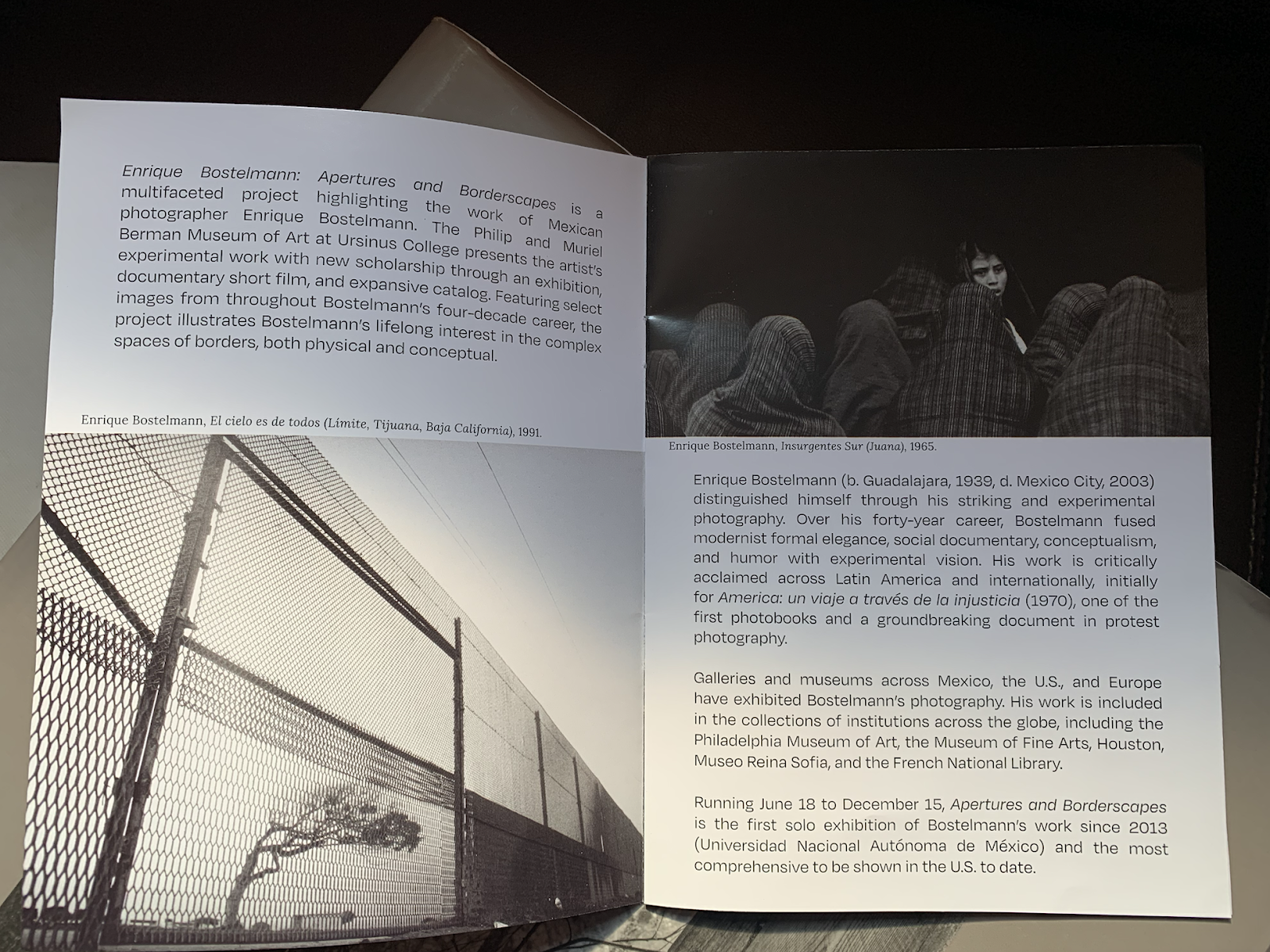
    Enrique Bostlemann: aperturas y paisajes fronterizos en Ursinus College

    RevarteColectiva · September 30, 2024 · Leave a Comment

    Por Un adolescente de CCATE (Editado por Natalia Ramos)

    Click here for English version

    Nota: visita el website para conocer más acerca de la exhibición 

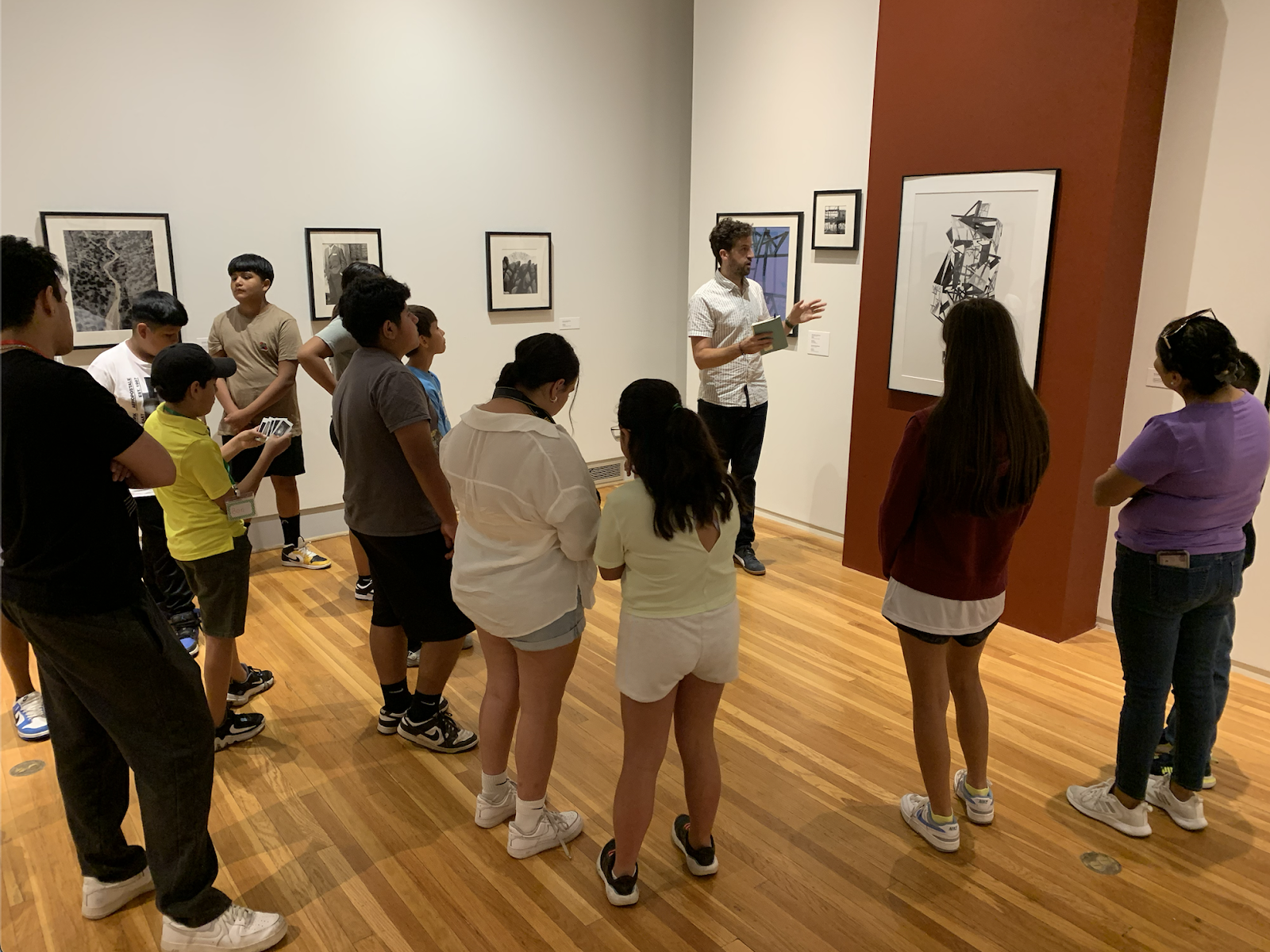
    Durante el campamento de verano, fuimos en un paseo al Museo de Berman en Ursinus College. Este paseo fue muy especial porque vimos la exhibición de Enrique Bostlemann: aperturas y paisajes fronterizos. El proyecto de Enrique es muy poderoso para la comunidad inmigrante, porque incluye fotografía de la frontera entre los Estados Unidos y México. Durante nuestro paseo, la mayoría de los niños miraron las diferentes fotos con curiosidad, pero los individuos que migraron a los Estados Unidos tuvieron una experiencia diferente. Aunque nací en los Estados Unidos, toda mi vida escuché los cuentos de mis familiares que cruzaron la frontera por la posibilidad de una vida mejor. Cuando era niña, no entendí el poder del sueño americano que tuvieron mis padres como muchos otros inmigrantes en el país, y creo que nunca voy a poder comprender totalmente su experiencia migratoria, pero con los años entiendo el impacto de la decisión de cruzar la frontera. 

    El momento más impactante para mi del paseo, fue a observar y escuchar las reflexiones de los padres que asistieron el paseo de una foto en la sala principal. La foto captura la frontera, pero también tiene la imagen de una llave entre medio la frontera. Los niños miraron la foto con curiosidad, pero los inmigrantes del grupo tuvieron una experiencia diferente. Observaron la foto en silencio, como si la llave de la foto les fuera recordado de distantes memorias. Al escuchar sus reflexiones, era obvio que la foto tuvo un gran impacto emocional. Empezaron a compartir como la foto les recordó de su paisaje a los estados unidos, y las emociones que tuvieron al ver esa imagen. Muchos de los niños quedaron viendo a los individuos que compartieron su reflexión, y aunque están muy joven a entender el impacto de los sacrificios de sus padres por el sueño americano, este momento me hizo pensar la importancia de compartir esas experiencias con los niños, porque las raíces y experiencias de sus padres es tan importante en cómo ven el mundo.

    English Version:

    Enrique Bostlemann: openings and border landscapes at Ursinus College

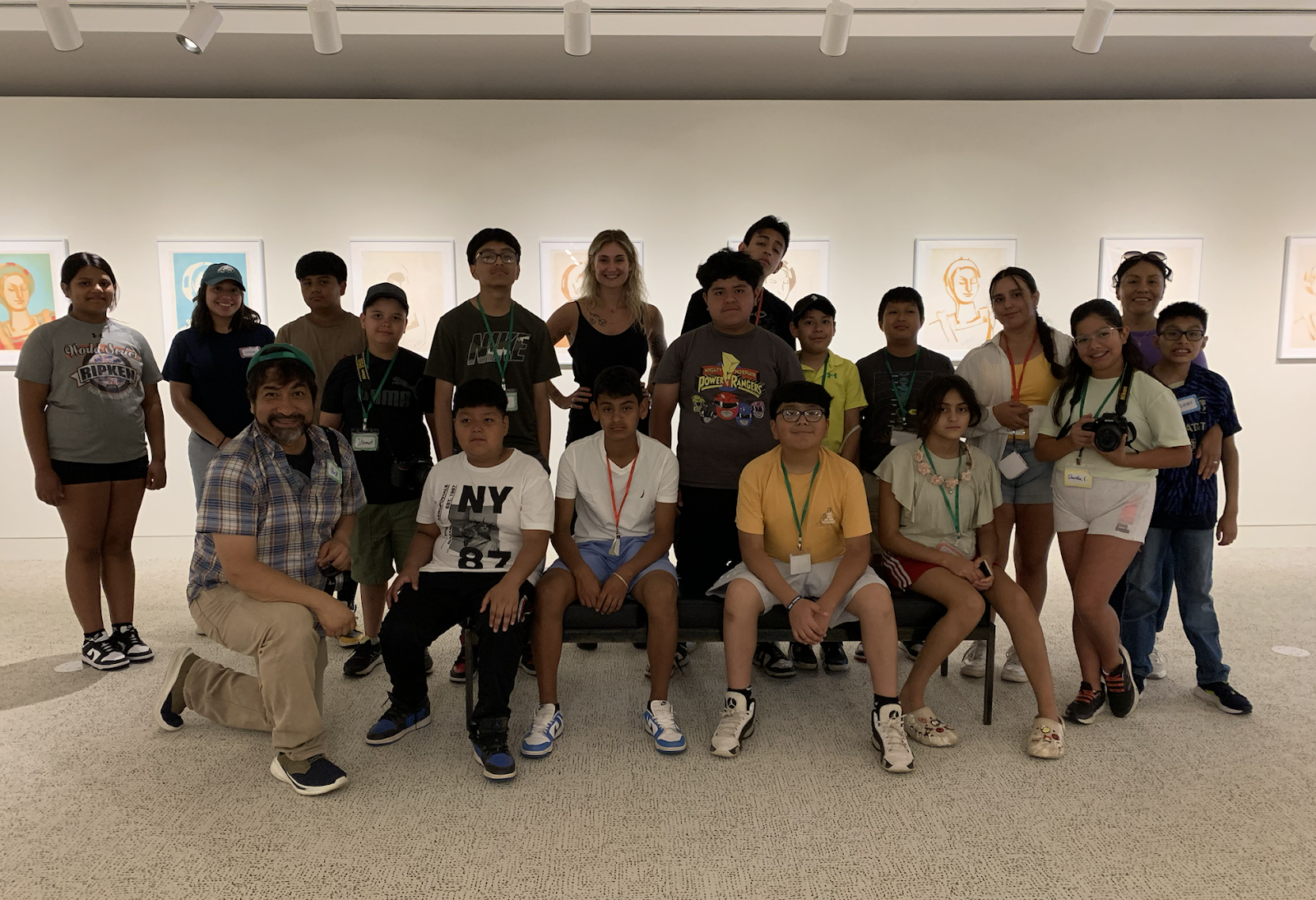
    CCATE students with Berman Museum Staff seeing the exhibition

    During CCATE’s summer camp, we went on a field trip to the Berman Museum at Ursinus College. This field trip was very special because we saw the exhibition of Enrique Bostlemann: Aperturas y Paisajes Fronterizos. Enrique’s exhibition is very powerful for the immigrant community because it includes photography of the border between the United States and Mexico. During our walk, most of the children looked at the different photos with curiosity, but the individuals who migrated to the United States had a different experience. Although I was born in the United States, all my life I heard stories of my relatives who crossed the border for the possibility of a better life. As a child, I didn’t understand the power of the American dream that my parents had like many other immigrants in the country, and I don’t think I will ever be able to fully understand their immigration experience, but over the years, I understand the impact of their decision to cross the border. 

    The most impressive moment for me during the exhibit visit was observing and listening to the reflections of the parents who attended the photo walk in the main room. There is a specific photo that captures the border but also has the image of a key between the border. The children looked at the photo with curiosity, but the immigrants in the group had a different experience. They looked at the photo in silence as if the key to the photo reminded them of distant memories. Listening to their reflections, it was obvious that the photo had a great emotional impact. They began to share how the photo reminded them of their landscape in the United States and the emotions they had when seeing that image. Many of the children were left speechless, simply staring at the individuals who shared their reflections; although the kids are too young to understand the impact of their parents’ sacrifices for the American dream, this moment made me think about the importance of sharing those experiences with children. The roots and experiences of their parents are so important to how they see and move in the world.

    CCATE students  with Berman Museum Director, Lauren McCardel, Summer 2024
    Natalia Ramos Bellido

    Natalia Ramos Bellido is originally from Mexico City. She is studying Art History and Latin American Studies in the College, minoring in Gender Studies and Law and Society. Her concentration in Art History is queer art, which is based on understanding and being able to connect historically to periods of art and expression. As for Latinx Studies, she has always wanted to support and understand her community, focusing on the vibrant immigrant perspective of Latinx existence. She hopes her Law and Society minor will help pave her path toward practicing immigration law.

    Natalia Ramos Bellido es originaria de la Ciudad de México. Estudia Historia del Arte y Estudios Latinoamericanos en la Facultad, con especialización en Estudios de Género y Derecho y Sociedad. Su concentración en Historia del Arte es el arte queer, que se basa en comprender y poder conectarse históricamente con períodos de arte y expresión. En cuanto a Estudios Latinx, ella siempre ha querido apoyar y comprender a su comunidad, enfocándose en la vibrante perspectiva inmigrante de la existencia Latinx. Ella espera que su especialización en Derecho y Sociedad le ayude a allanar su camino hacia la práctica de la ley de inmigración.

      Reflexiones acerca del documental: MACONI

      RevarteColectiva · September 30, 2024 · Leave a Comment

      Por Jessie Ríos Benitez

      Click here for English version

      Click here for the documentary MACONI

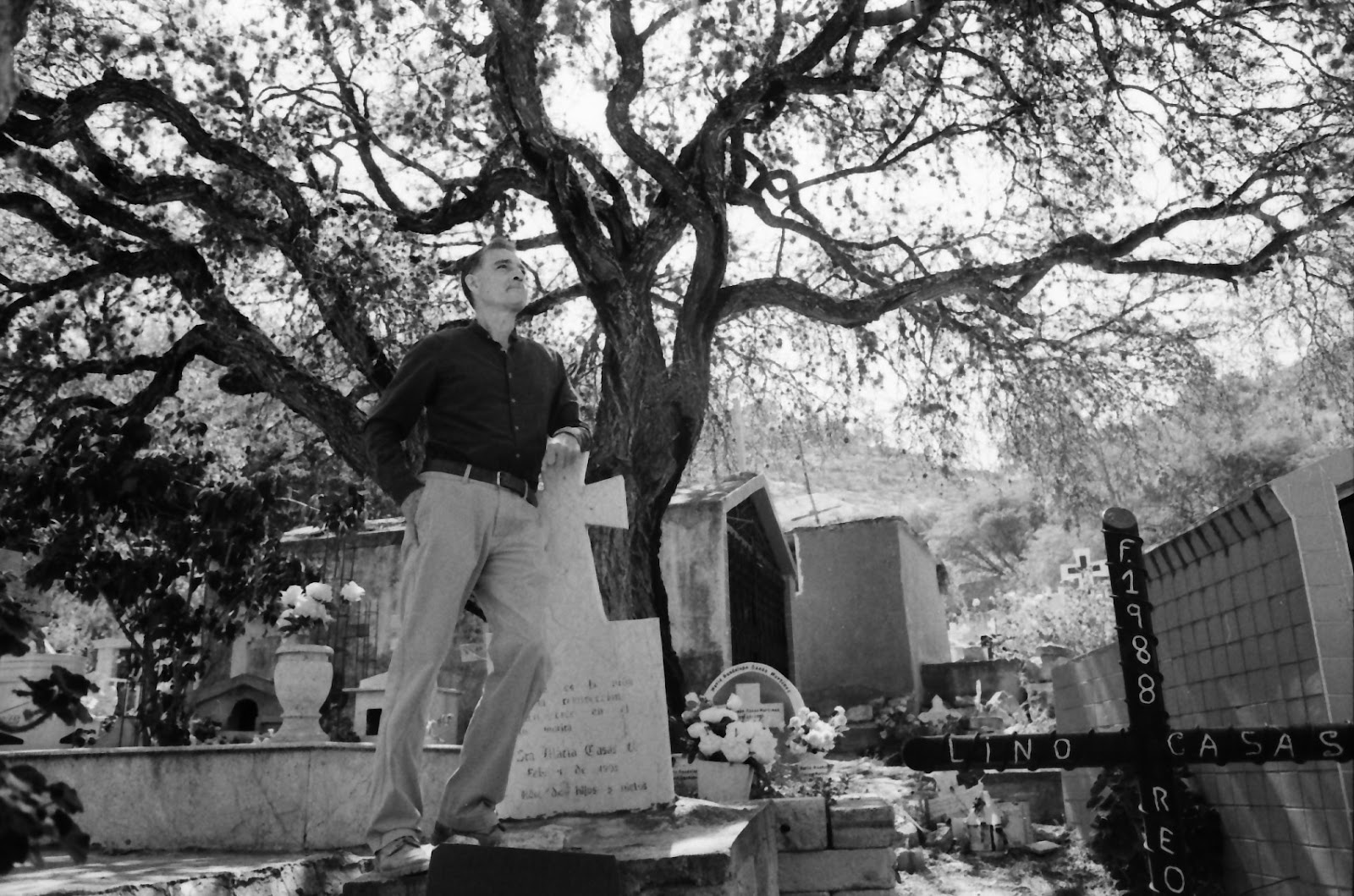
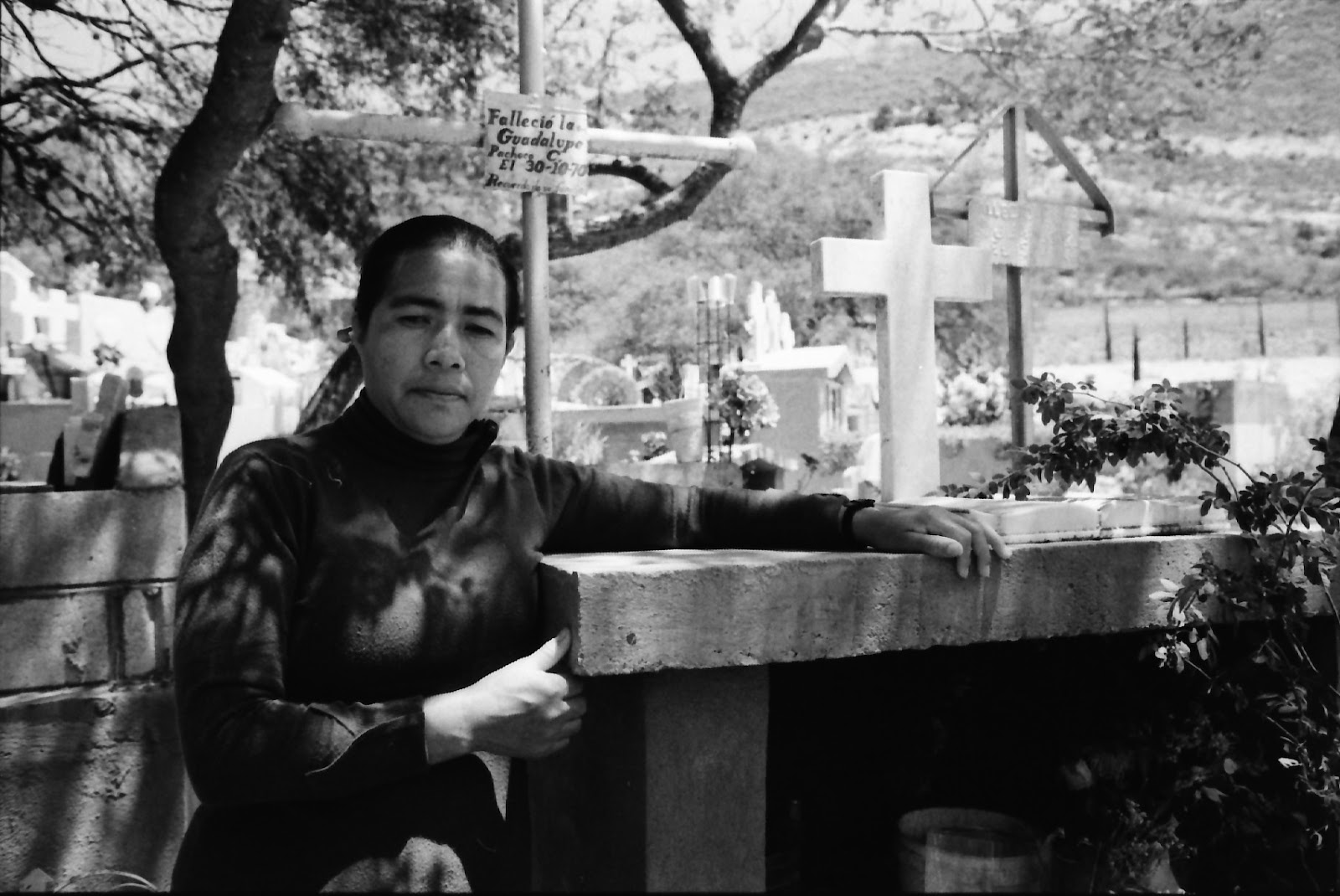
      Gloria Hernández comparte la historia de su hermano Juan Hernández quien fue migrante en Norristown, PA, en el panteón de Maconi, Queretaro. Fotografía por Obed Arango 2023.

      El cortometraje del testimonio de Salvador captura las dificultades que enfrentan muchos inmigrantes en los Estados Unidos. Dejando su vida atrás en México, Salvador se fue con la esperanza de una vida mejor. Pero, desafortunadamente, tuvo que enfrentar muchos obstáculos. Cuando entró al país, tuvo que encontrar la manera de seguir adelante. Sin mucho apoyo, llegó a los suburbios de Filadelfia y encontró la manera de trabajar sin saber el idioma. Las personas que conozcan a Salvador, lo describen como un hombre trabajador y confiable. Aunque Salvador trabajo duro para seguir adelante siendo indocumentado, el y su familia enfrentaron muchas obstaculos. 

      El papá de Salvador fue asaltado antes de entrar al trabajo, y esto dejó un temor para su familia. También el hermano de su cuñada fue asaltado y asesinado. Siendo indocumentado, Salvador recibio su sueldo en efectivo y esto causo un temor de ser asaltado. Desafortunadamente, si fue asaltado y lo robaron. Aunque la experiencia del asalto fue muy traumatizante, Salvador pudo aplicar por la Visa U y recibir una tarjeta de identificación del estado. Al escuchar el testimonio de Salvador, pensé en muchas cosas. Con ser indocumentado, me recordo de la experencia de mis papas y todo lo que tuvieron enfrentar para estar adonde estan hoy. Ser indocumentado en este pais es muy dificil, especialmente si no conoces el idioma y tener una familia que depende de ti. Tienes que dejar a tu familia atrás, y te vas con la posibilidad de no volver a verlos otra vez con la esperanza de encontrar una vida mejor. Pero al ver a Salvador reunirse con su mamá después de tantos años, se llena de muchas emociones, incluyendo alegría y tristeza por el tiempo perdido.

      El cortometraje también me recordó de un estudio que hice durante mi tiempo en Carolina del Norte. Contactamos a todos los departamentos de Sheriff en Carolina del Norte para preguntar sobre el proceso de aplicar para la Visa “U”, y si ofrecen información sobre la visa a inmigrantes que calificaba para la visa. De este estudio, aprendimos que muchos departamentos no estaban familiarizados con el proceso de la Visa “U”. La Visa “U” puede ayudar a muchos inmigrantes, pero muchos tienen miedo de hablar con la policía.

      A pesar de todo lo que tuvo que enfrentar Salvador, le gusta ayudar a la gente de su comunidad. Personas como Salvador son la razón porque un lugar como CCATE puede tener el impacto que tiene en su comunidad. Inmigrantes pasan por muchos obstáculos, pero sí pueden conectar con otros enfrentando los mismos problemas, pueden encontrar una solución juntos y dejar un impacto en su comunidad. 

      English Version:

      Panteón de Maconi fotografía por Obed Arango, 2023

       Reflections about the Documentary: MACONI

      The short film of Salvador’s testimony captures the difficulties faced by many immigrants in the United States. Leaving his life behind in Mexico with the hope of a better life, Salvador settled in the Philadelphia suburbs, unaware of the upcoming obstacles inherent in his new life and undocumented status. Without much support and with no knowledge of the language, Salvador sought to find a way to move forward and eventually found a way to work and live despite said barriers, earning him community reverence and common descriptors of “reliable” and “hard-working.” Alas, as hard as Salvador worked to stay afloat as an undocumented worker, this work did not save him and his family from the many obstacles that plague today’s immigrant and undocumented populations within the United States.

      Previous family experiences had left Salvador and his family traumatized and in terror of simple existence. From his father’s assault before work to his sister-in-law’s brother’s assault and murder, the fear of assault and discrimination ran high. Certain conditions of the undocumented status also contributed to this danger and unease; in Salvador’s case, seeing as he had to receive his salary in cash, his biggest fear was being assaulted and having this salary robbed from him— a fear that later became reality. This traumatic assault experience, fortunately, revealed a silver lining and allowed Salvador to apply for a U-Visa and receive a state identification card.

      As I listened to Salvador’s testimony, I was brought back to my parents’ experience as undocumented individuals and everything they had to face to get to where they are today. Being undocumented in the United States is incredibly difficult, especially if one does not know the spoken language, does not have immediate family and support in the area, and has a family depending on their success in the new country. One must leave their life and family behind and accept the possibility of never seeing them again if it means giving rise to a better life someplace else. Thankfully, in Salvador’s case, he was ultimately reunited with his mother after many years of fighting and working for this “better” life. In a touching moment, Salvador brimmed with feelings of joy, gratitude, and sadness for the years lost, all present at the same time.

      Watching the short story also happened to remind me of a study I conducted during my time in North Carolina where we contacted all Sherriff’s departments in the state to ask about the U-Visa process, and if information regarding this visa was routinely offered to qualifying immigrants. From the study, we learned that many departments across the state of North Carolina were not even familiar with the U-Visa process. Said visa can help countless immigration cases, but often goes unmentioned and avoided due to immigrants’ common fear of deportation and persecution when facing the police or governmental departments.

      Thankfully, Salvador and other immigrants like him that are brave enough and choose to share their stories are the reason why a place like CCATE can have the impact and power it does within the community. As immigrants face countless obstacles across the country, they instinctually connect with other immigrants through their similar approaches and struggles in existence, ultimately opening doors to different collaborative solutions and leaving a monumental impact on their community.

      Jessie Rios Benitez

      Es estudiante de segundo año de  la maestría de política social en la Escuela de Política y Practica Social (SP2) de la Universidad de Pennsylvania. Durante el verano 2024 realizó un estudio independiente para CCATE. Además, ha trabajado como pasante en Comunidad Colectiva, una organización de base de derechos de los inmigrantes con sede en Charlotte, Carolina del Norte.

      She is a second-year master’s student in social policy at the School of Social Policy and Practice (SP2) at the University of Pennsylvania. During the summer of 2024, he carried out an independent study for CCATE. In addition, Jessie has worked as an intern with Comunidad Colectiva, a grassroots immigrant rights organization based in Charlotte, NC.

        ESCAPAR PARA VIVIR  

        RevarteColectiva · September 30, 2024 · Leave a Comment

        Por Lis Pérez Quispe

        Click here for English version

        Yo tenía 5 años de edad, sentía miedo por los comentarios de lo que pasaba en mi país. Hoy tengo 49 años y desde el proyecto Quijote para la Vida hemos recogido  testimonios de mujeres que migraron por ser víctimas del periodo de Violencia interna en  Perú durante 1980 al 2000. 

        Brígida Cárdenas escribe cómo su vida se transforma a raíz de este hecho político  social. 

        – La guerra interna, el terrorismo, desde el año 1980 a los 90, para mi familia fue muy  difícil. 

        Los enfrentamientos entre militares y terroristas que murieron fueron  muchísimos, sin embargo los que estuvimos en el centro fuimos nosotros, los  comuneros. 

        Vimos cómo se escribía con sangre, frases como “Así mueren los soplones”.  escuchábamos a los terroristas que nos decían: – “Nosotros andamos a favor de los  pobres” y nos obligaban ir a sus reuniones cuando ellos las convocaban. Si no ibas a  sus reuniones, nos mataban. 

        Llegamos a tener miedo hasta de dormir en nuestra propia casa, porque ellos entraban  a buscarnos, teníamos que ir a dormir al monte sin usar ni linternas, ni mecheros para que no nos vean y así podíamos sobrevivir con nuestra familia.  

        También los padres teníamos que cuidar a los hijos varones porque los terroristas se los llevaban para su fila. Si los padres no querían que lleven a sus hijos, los terroristas los mataban. 

        También venían a tu casa para hablarte de la igualdad. 

        Por otro lado, los policías, con la cara tapada para no reconocerlos, abusaban de  mujeres, las violaban, de los campesinos pidiéndoles sus mejores carneros para que se  los coman. 

        Pero los comuneros no nos quedamos atrás, empezamos a formar rondas  campesinas para luchar contra los terroristas que andaban con escopetas, machetes y  retrocargas. 

        Vivimos con mucho miedo. La única salida fue salir del pueblo, así llegamos a la ciudad para ser una familia más, romper el cerro para hacer la casita que nos abrigue y nos  saque del terror. 

        Texto tomado del Libro Cartonero Escapando del Terrorismo – 2023

        Así como ella muchas familias dejaron sus tierras, dejaron parte de su vida para llegar a Lima, la  ciudad de todas las sangres. 

        English Version:

        ESCAPE TO LIVE

        I was 5 years old, afraid of the comments surrounding what was happening in my country. Today, I am 49 years old, and from the “Quijote para la Vida” project, we have collected testimonies from women who migrated due to them being victims of Peru’s internal violence from 1980 to 2000. 

        Brígida Cárdenas writes how her life is transformed as a result of this political and social event. 

        – The internal war and terrorism from 1980 to the 90s was very difficult for my family. 

        The confrontations between soldiers and terrorists who died were many; however, the ones who were in the center were us, the community members. 

        We saw phrases like “This is how snitches die” written in blood. We listened to the terrorists tell us “We are in favor of the poor” and force us to go to their meetings when they called them. If you didn’t go to their meetings, you were killed 

        We were even afraid to sleep in our own house because they would come looking for us; we had to go sleep in the mountains without using flashlights or lighters so that they wouldn’t see us and our family could survive.  

        Parents also had to take care of their sons because the terrorists would take them into their ranks. If the parents did not want their children to be taken, the terrorists killed them. 

        They also came to your house to talk to you about equality. 

        On the other hand, the police, with their faces covered so as to not be recognized, abused women, raped them, and asked peasants to give up their best sheep for them to eat. 

        But we community members did not stay behind. We began to form peasant patrols to fight against the terrorists who were carrying shotguns, machetes, and breech loaders. 

        We lived in great fear. The only way out was to leave town, so we moved to the city to be yet another family, breaking the hill to build the little house that would shelter us and take us out of terror. 

        Text taken from the Libro Cartonero Escapando del Terrorismo – 2023

        Just like her, many families left their lands, also leaving part of their lives to reach Lima, the city of all blood. 

        Lis Vania Pérez

        Lis Vania Pérez, maestra de la escuela Pública peruana, especialista en Programas de Lectoescritura para niños en edad escoolar. Fundadora y Responsable  del Proyecto Quijote en el AAHH Santa Rosa distrito de Puente Piedra,  Lima Peru.

        Peruvian public school teacher, specialist in Reading and Writing Programs for school-age children. Founder and Manager of the Quijote Project in the AAHH Santa Rosa district of Puente Piedra, Lima Peru.
          • « Go to Previous Page
          • Page 1
          • Page 2
          • Page 3
          • Page 4
          • Interim pages omitted …
          • Page 8
          • Go to Next Page »

          Hit the ground running with a minimalist look. Learn More

          Copyright © 2026 · Monochrome Pro on Genesis Framework · WordPress · Log in

          • Instagram
          • Facebook