• Skip to primary navigation
  • Skip to main content

REVARTE

  • Home
  • About
    • REVARTE Collective
  • Issues
    • Número 8
    • Número 7 · 2025
    • Número 6 · 2024
    • Número 5 · 2024
    • Número 4 · 2023
    • Número 3 · 2023
    • Número 2 · 2023
    • Número 1 · 2022
  • Secciones / Sections
    • LITERATURA
    • JUVENTUD
    • ENSAYO
    • COMUNIDAD
    • MEDIA
  • Subscribe
  • Contribute
  • Show Search
Hide Search

RevarteColectiva

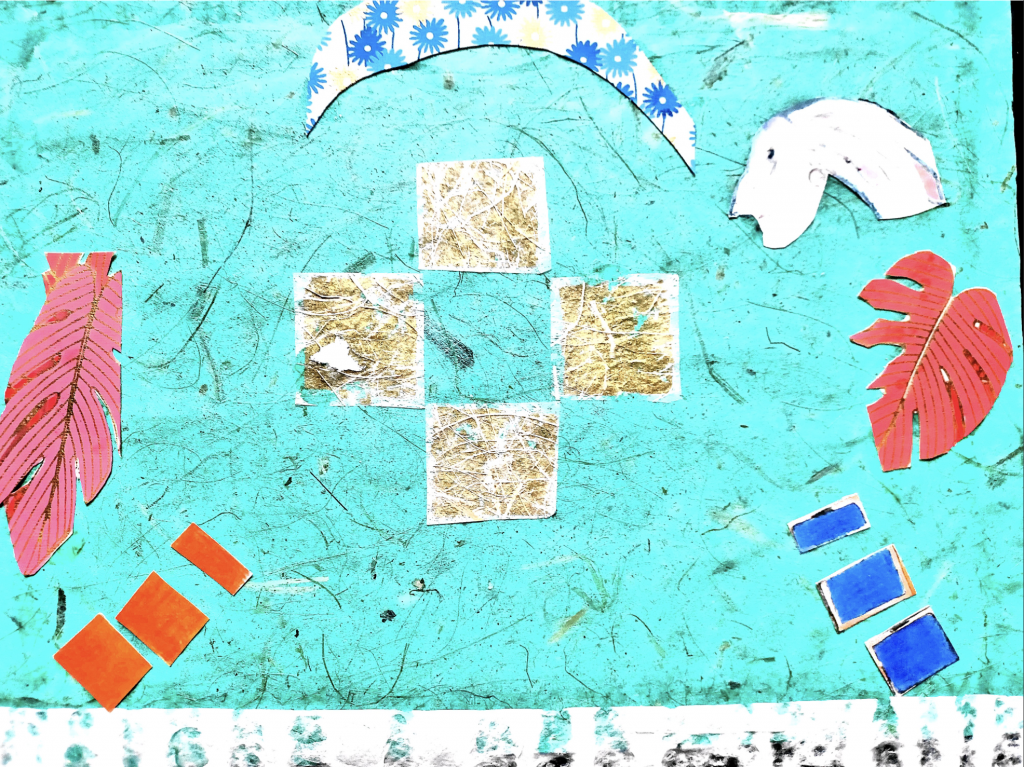
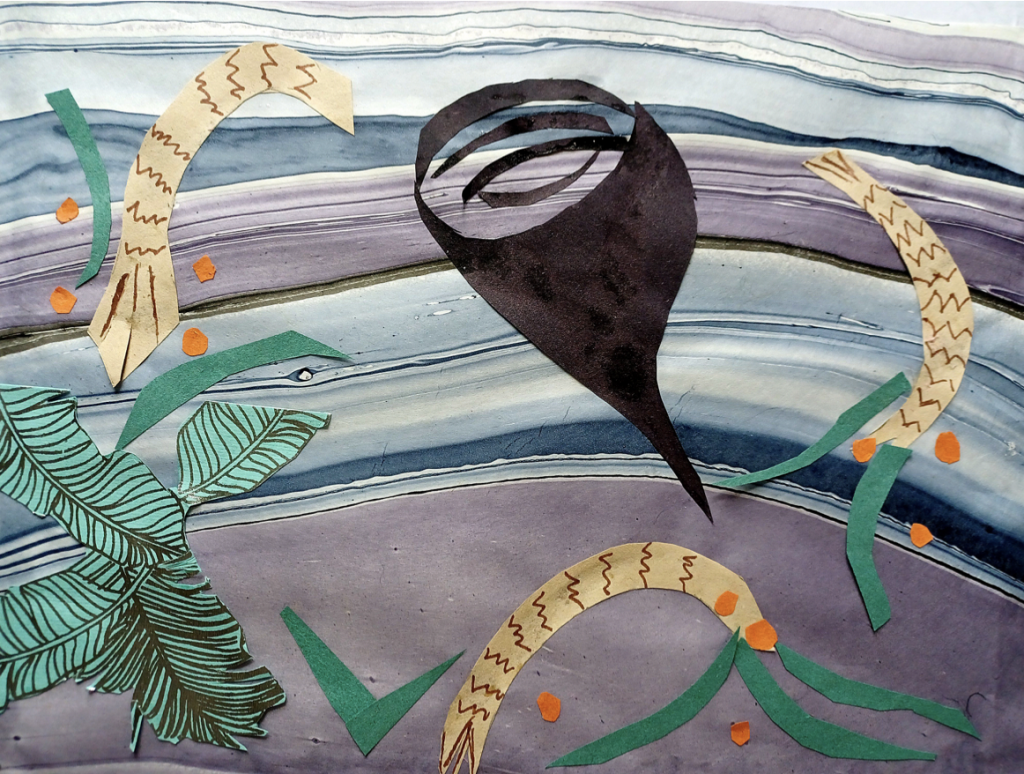
Huracán Corazón Del Cielo

RevarteColectiva · January 9, 2023 ·

por Leticia Roa Nixon

Click here for English version
Leticia Roa Nixon
Leticia Roa Nixon

Para mis padres.

En la selva maya vivía Chipí, El Más Pequeño de los Rayos. Cada vez que había una tormenta, sus hermanos Lik y Muuk lanzaban luces brillantes que salían de sus dedos alargados.

–Por favor déjenme lanzar uno de mis rayos—suplicaba Chipí.

—-Aún eres muy joven—le respondían  mientras  se escuchaba el estampido de los truenos cuando las nubes descargaban la lluvia sobre la selva.

Triste y lloroso, Chipí se refugió en lo alto de las copas de los árboles tropicales.  Yaakunah, el Dios de la lluvia y de los vientos, se apiadó del Más Pequeño de los Rayos.

–Hijo mío, ve en busca de los Ah na Itzas, los Señores de los Cuatro Vientos. Toma este haz de rayos de oro y díles que yo te he enviado.

Chipí secó sus lágrimas, agradeció a Yaakunah por su regalo y subió  a lo alto de los cielos donde vivían  los Cuatro Ah na Itzas.

Al llegar al Palacio de los Señores de los Cuatro Vientos anunció su visita a los venerados ancianos. Los Ah na Itzas reconocieron de inmediato el haz de rayos de oro del dios Yaakunah.

–¿En qué podemos ayudarte, El Más Pequeño de los Rayos? preguntaron con mucho respeto.

— Venerables Ah na Itzas, mi deseo es ser el viento más fuerte de la selva y lanzar los rayos más brillantes durante las tormentas, respondió Chipí.

— Ya que vienes en nombre del Dios Yaakunah, concederemos tus deseos.

Desde ahora te llamarás Huracán que quiere decir “Corazón del Cielo.” Acércate a nosotros y te diremos en tu oído como ser el viento más fuerte.

Impaciente por poner en práctica las instrucciones de los Cuatro Ah na Itzas, Huracán probó de inmediato su nueva fuerza sobre el Mar Caribe formando un inmenso remolino. El viento aumentaba su velocidad a tal punto que pronto se sintió mareado. La humedad de las aguas del mar lo nutrieron de una fuerza incontenible.

Girando, girando, girando como trompo  sin control, el primer huracán se dirigió a la selva maya. Con sus poderosos vientos, intensas lluvias y tremenda velocidad, espantó a todos los que le vieron.

Huracán no podía ver ni escuchar nada hasta que poco a poco fue perdiendo su fuerza al adentrarse al Mar Caribe.

Sus hermanos Lik y Muuk lo encontraron débil y mareado sobre la playa. Fue entonces cuando  oyó los gritos y llantos desesperados de los habitantes de la selva, los graznidos tristes de las aves sin palmeras ni árboles donde reposar, y el clamor de los animales heridos.

 Huracán sintió que su corazón se partía en mil pedazos al saber que era él quién había causado tanto daño a su paso.

Presuroso fue a ver a los Cuatro Ah na Itzas al Palacio de los Cuatro Vientos.

El dios Yaakunah ya les había contado a los Señores del Viento  lo que había sucedido en la selva maya.  Por lo tanto, los Cuatro Ah na Itzas  sabían que Huracán llegaría pronto al Salón de las Brisas del Palacio.

Al verlo entrar y acercarse a ellos, los venerables Ancianos dijeron.

–Corazón del Cielo, poderoso Huracán, no podemos hacer que vuelvas a ser Chipí, El Más Pequeño de los Rayos. Lo hecho, hecho está.

–Oh no, venerables Ah na Itzas, prefiero dejar de existir para siempre—sollozaba inconsolable Corazón del Cielo.

–Déjanos pensar y consultar entre nosotros. Tal vez podamos ayudarte.

Los Cuatro Ah na Itzas se retiraron a un patio privado donde se sentaron formando una cruz que representaba los cuatro puntos cardinales.

El tiempo le pareció eterno a Huracán que veía desde el Palacio a los habitantes de la selva reconstruyendo sus chozas y a las aves haciendo sus nidos en los árboles que aún estaban de pie.

Por fin, los Cuatro  Ah na Itzas terminaron de consultar entre ellos y  entraron al Salón de la Brisas.

–Corazón del Cielo, lo que podemos hacer es darte cuatro dones—anunciaron solemnemente los Ah na Itzas.

Escucha con atención, pues estos serán de ahora en adelante tus cuatro dones.

–El mío—dijo Ah Kabul—es que los truenos anunciarán a todos de tu llegada para que así los habitantes puedan  buscar refugio.

–Por mi parte, alertaré a los animales de tu proximidad para que se vayan a las tierras altas donde estarán a salvo de tus poderosos vientos—dijo Ah Tupp.

— Me aseguraré que tu fuerza disminuya siempre y cuando te mantengas sobre el mar—dijo Ah Hobnil.

Ah Balam, el cuarto Bacab, tocó con su mano el ojo izquierdo de Huracán. 

–Corazón del Cielo,  mi don es que con este ojo podrás ver tu camino desde el centro del remolino. 

Desde entonces cuando el ojo del huracán pasa por encima de un lugar, cesa el viento y durante unos momentos puede  verse un pequeño círculo de cielo azul. Es el ojo de Huracán,  Corazón del Cielo.

La palabra “huracán” tiene su origen con el nombre que los indios mayas y caribes daban al dios de las tormentas. En India se le llama ciclón, en las Filipinas se le conoce como “baguio”, en el oeste del Pacífico norte se le llama “tifón”, y en Australia “Willy-Willy”. “

Un huracán es un viento muy fuerte que se origina en el mar, que gira en forma de remolino acarreando humedad en grandes cantidades. Al tocar tierra en lugares habitados, generalmente causa daños desastrosos. Así, el huracán constituye uno de los fenómenos atmosféricos más destructivos.


HURACÁN, HEART OF THE SKY by Leticia Roa Nixon

English translation by Cynthia Kreilick

For my father.

Chipí, Smallest of the Thunder Bolts, lived in the Mayan forest.  Each time a storm erupted, his brothers, Lik and Muuk, hurled brilliant lights from their long fingers.

“Please let me throw one of my thunder bolts,” begged Chipí.

“You are still very young,” they replied, and the beating of the thunder was heard as the clouds discharged the rain over the forest.

Sad and tearful, Chipí hid himself in the canopy of the tropical forest.  Yaakunah, the God of the Rain and the Wind, took pity on Smallest of the Thunder Bolts.

“My child, go in search of the Ah na Itzas, the Lords of the Four Winds.  Take this bundle of golden lightening bolts and tell them that I sent you.”

Chipí dried his tears, thanked Yaakunah for his gift, and climbed to the top of the sky where the Four Ah na Itzas lived.

When he arrived at the Palace of the Lords of the Four Winds, he announced his visit to the venerable elders.  The Ah na Itzas immediately recognized the bundle of golden lightening bolts from the god Yaakunah.

“How can we help you, Smallest of the Lightening Bolts?” they asked with great respect.

“Venerable Ah na Itzas,” replied Chipí, “my wish is to be the most powerful wind in the forest and to hurl the most brilliant lightening bolts during storms.”

“Because you come in the name of the god Yaakunah, we will grant your wish,” they said.

“From now on, you will be called Huracán, which means ‘Heart of the Sky.’  Come forward and we will whisper in your ear how to be the most powerful wind of all.”

Impatient to put the instructions from the Four Ah na Itzas into practice, Huracán lost no time in trying out his new power by forming an immense whirlwind over the Caribbean Sea.  He increased its velocity to such a point that he very quickly felt dizzy.  The dampness of the sea waters fed the wind so that it became an uncontainable force.

Whirling and whirling and whirling, like a spinning top out of control, the first hurricane crashed into the Mayan forest.  With its powerful winds, intense rain and tremendous speed, it frightened everyone who saw it.

Huracán could not see or hear anything until, little by little, the storm began to diminish over the Caribbean Sea.

His brothers, Lik and Muuk, found him lying weak and dizzy on the beach.  It was then that he heard the desperate screams and cries of the people of the forest, the sad caws of the birds with no trees in which to land, and the clamor of the wounded animals.

Huracán felt that his heart would break into a million pieces when he realized that it was he who had wreaked a path of such havoc.  In great haste, he went to see the Four Ah na Itzas at the Palace of the Four Winds . The Ah na Itzas were Bacabobs, the four deities assigned to the four cardinal points.

The god Yaakunah had already told the Lords of the Four Winds what had happened in the Mayan forest.  The Four Ah na Itzas knew that Huracán  would soon be arriving at the Room of the Palace Breezes. This room was used to air serious matters with the Bacabob.

When they saw him enter and approach, the venerable elders said, “Heart of the Sky, powerful Huracán, we cannot turn you back into Chipí, Smallest of the Thunder Bolts.  What’s done is done.”

“Oh, no, venerable Ah na Itzas!” cried Heart of the Sky inconsolably.   “I’d sooner die!”

“Allow us to think and confer among ourselves,” they replied.  “Perhaps we can help you.”

The Four Ah na Itzas withdrew to a private patio where they seated themselves in the shape of a cross representing the four points of the compass.

An eternal amount of time passed while Huracán sat and watched from above as the inhabitants of the forest reconstructed their huts and the birds made nests in trees that still lay upon the ground.

Finally, the Four Ah na Itzas finished their consultation and re-entered the Room of the Four Breezes.

“Heart of the Sky,” they announced solemnly, “we will give you four gifts.  Listen carefully, as these will be, from today forward, your own four gifts.”

“My gift,” said Ah Kabul, “is that the thunder will warn people of your arrival so that they can take refuge.”

“For my part,” said Ah Tupp, “I will alert the animals of your nearness so that they can escape your powerful winds by moving to higher ground.”

“I will make sure that your strength diminishes once it reaches the sea,” said Ah Hobnil.

Then, Ah Balam, the fourth Bacab , touched Huracán’s left eye with his hand.  “Heart of the Sky, my gift is that, with this eye, you will be able to see your path to the center of the whirlwind.”

Ever since that time, when the eye of the hurricane passes, the wind ceases, and for a few moments, you can see a small circle of blue sky.  This is the eye of the hurricane, Heart of the Sky.

The word “hurricane” originates from the name that the Mayan and Carib Indians gave to the god of storms. In India it is called a cyclone, in the Philippines it is known as “baguio”, in the western North Pacific it is called a “typhoon”, and in Australia “Willy-Willy”.

A hurricane is a very strong wind that originates from the sea, which rotates in the form of a whirlpool, carrying moisture in large quantities. By making landfall in inhabited places, it usually causes disastrous damage. Thus, the hurricane constitutes one of the most destructive atmospheric phenomena.
    Leticia Roa Nixon

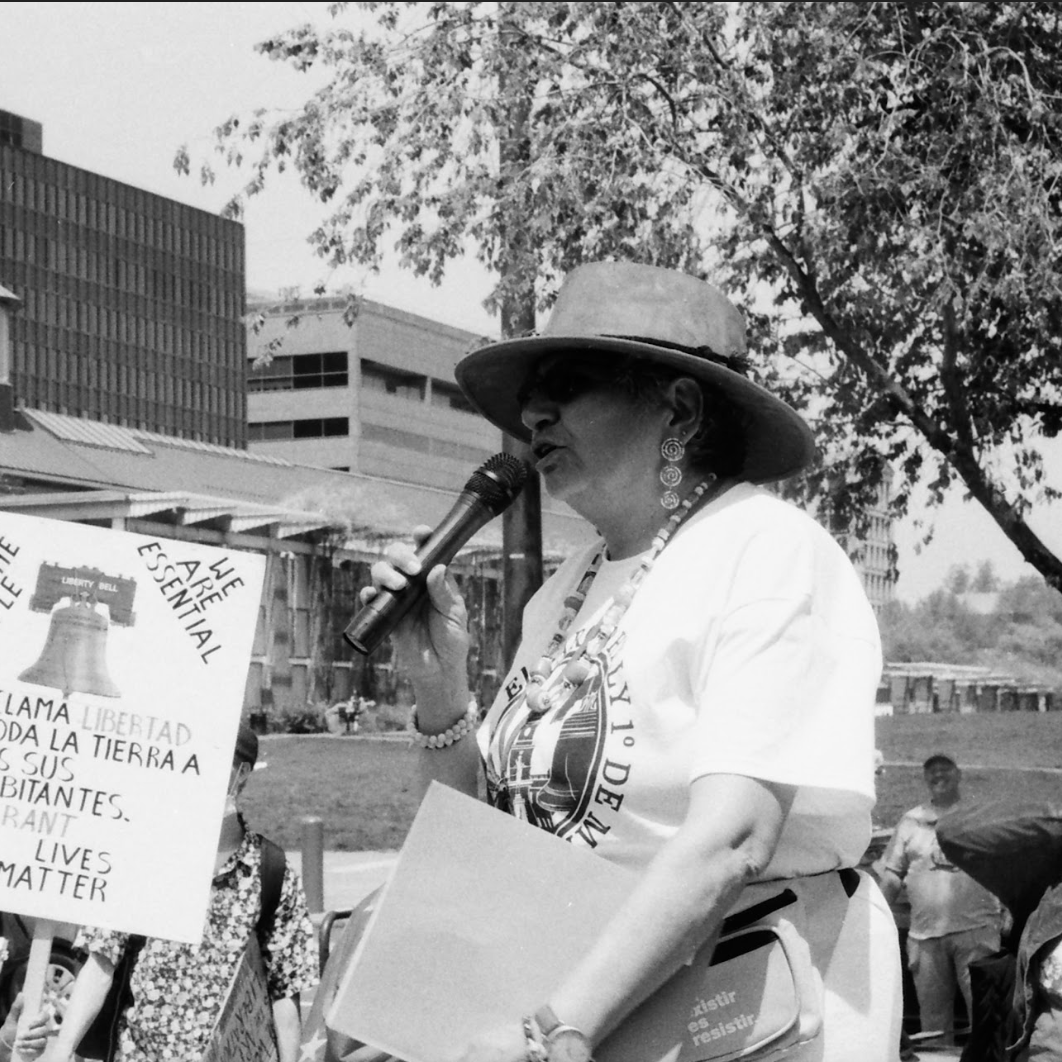
    Leticia Nixon, nacida en la Ciudad de México, cursó la carrera de comunicación en la Universidad Iberoamericana. Desde 1992 se dedica al periodismo comunitario de Filadelfia. Es autora de seis libros y video productora de PhillyCAM. Escribe para philatinos.com y reside en Swarthmore, Pa.

    Leticia Nixon, born in Mexico City, studied communications at the Universidad Iberoamericana. Since 1992 she has been dedicated to community journalism in Philadelphia. She is the author of six books and video producer for PhillyCAM. She writes for philatinos.com and lives in Swarthmore, Pa.

    Selected Works by Leticia Nixon:
    Cuando los Tejidos Hablan (When Fabrics Speak)
    Berenice, La Danzante Azteca (Berenice, The Aztec Dancer)
    El Lienzo de Tlapalli (The Tlapalli Canvas)
      THE BORDERLANDS OF SUBURBIA por Melissa Ortiz

      RevarteColectiva · October 10, 2022 ·

      How suburban schools in new Latinx diasporas are responding to Latinx newcomers

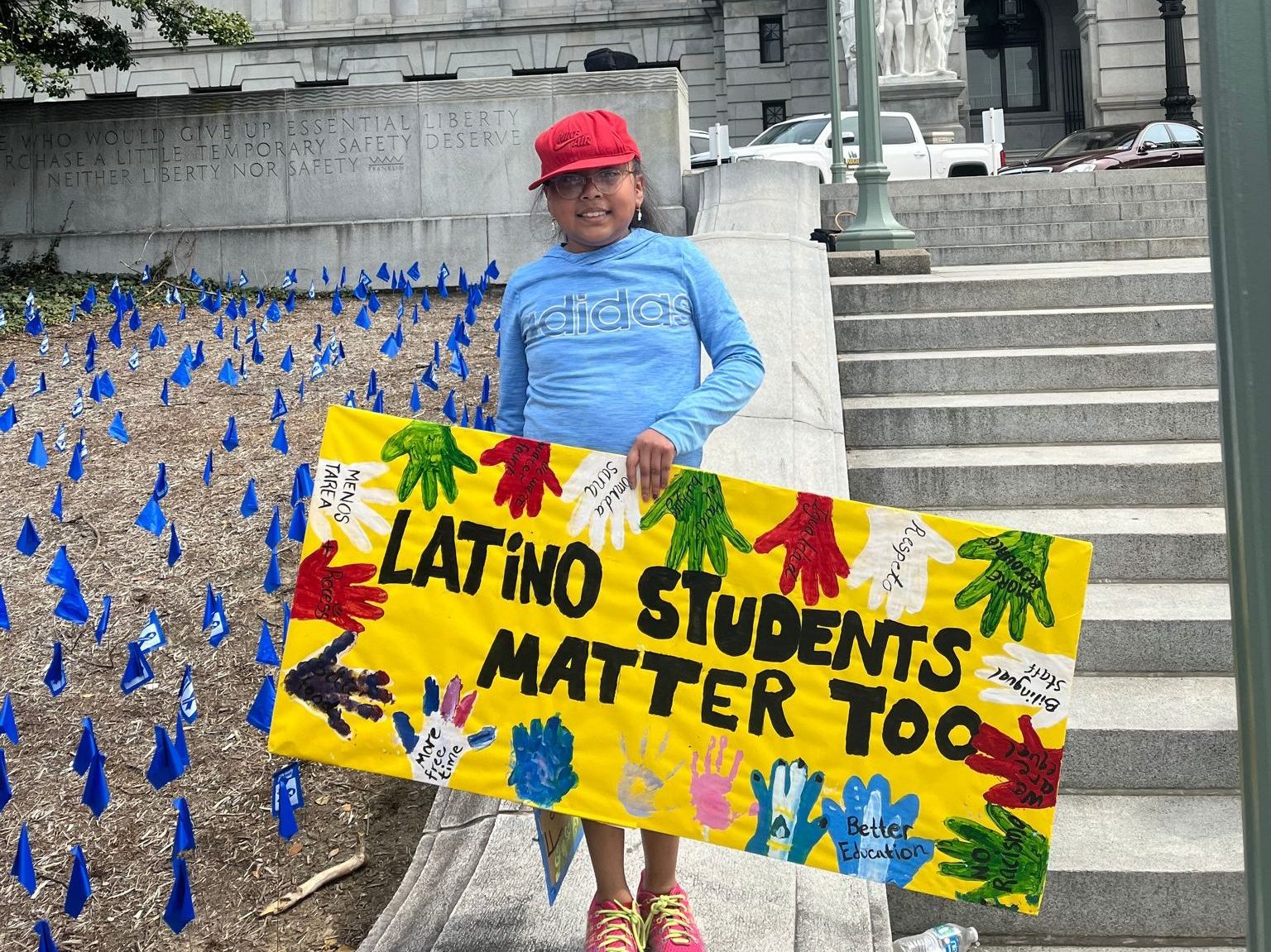
      A CCATE student at the Toddlers to Tassels education rally in Harrisonburg, PA

      The educational experiences and academic achievement of Latinx students in the United States has garnered much attention and research. However, this research often takes place in urban areas and is framed with a deficit lens. This is despite the fact that most Latinx students are already attending suburban schools, and their numbers are growing (Frey, 2015, 2018). Further, Latinxs are increasingly dispersing throughout the United States, creating new Latinx diasporas (NLDs) in places where large numbers of non-Indigenous Latinxs haven’t historically settled before. Moreover, education researchers often place the onus of poor academic attainment on Latinx students and ignore external forces, such as social conditions or the school factors as an institution at large. However, past research has found that external forces, such as school context, and interpersonal relationships and interactions between school staff and students, play a critical role in students’ postsecondary achievement (Lewis-McCoy, 2014), particularly for Latinx students (Domínguez, 2021).

      The suburbs are changing, and they are an increasingly important place to study the contemporary educational experiences of Latinx students (Rodriguez & González Ybarra, 2020). In order to take context into account to better understand the educational experiences of Latinx students in the United States, it is essential to understand where Latinx students are currently attending schools. Contrary to popular belief, since 2000, the majority of Latinxs (59%) live in the suburbs rather than outside of them, and this number is increasing; thus, the majority of Latinx students already attend suburban schools (Frey, 2015, 2018). Further, Frey (2018) identifies 145 NLDs throughout the country. Currently, Latinxs make up less than 16% of the population in these areas and overall, these new destinations only contain 7.4% of all U.S. Latinxs. However, Latinxs’ rate of growth in these new destinations is what makes them distinct from other areas: during 2000-10, the Latinx population increased by 119% and accounted for at least 86% of the overall population gain in these new destinations (Frey, 2018). So, like their growth in the suburbs, even though Latinxs make up a small percentage in NLDs, they are increasing at a significant pace.

      Place is a critical contextual factor that is often missing in education research. Place includes local racial histories and political economies (Smolarek, 2020), which, along with a place’s specific characteristics and infrastructures, influences a community’s response to newcomers and newcomers’ experiences (Flippen & Farrell-Bryan, 2021), including, I argue, schools’ reception to newcomers. American suburbs, in general, have a specific history. Omi and Winant’s (2015) notion of a “racial project” is useful to conceptualize the origins of suburbs and how this affects the educational experiences of Latinx students in suburban schools in NLDs today. They define a racial project as: “simultaneously an interpretation, representation, or explanation of racial identities and meanings, and an effort to organize and distribute resources (economic, political, cultural) along particular racial lines” (Omi & Winant, 2015, p.125). Many researchers have argued that suburbs were a racial project built to exclude minoritized people through policies at both macro and micro levels of government in conjunction with everyday individual actions (Diamond et al., 2020; Frankenberg & Orfied, 2012b; Turner, 2020). The consequences of suburbs as a racial project are real and negatively affect the educational experiences of Latinx and other minoritized students today. It is also important to keep in mind that Omi and Winant (2015) argue that racial projects are not static and are experienced differently depending on place. The suburbs are not a monolith, and there is a prevailing perception that suburban public schools are wealthy and well-resourced. Though this is not the case: suburban schools are not heterogeneously wealthy (Hussar et al., 2020), and racial segregation still exists both between and within suburban public schools (Frey, 2018; Lewis & Diamond, 2015), particularly for Latinx students (Frankenberg et al., 2019). Several barriers I will go over next prevent the suburbs from creating positive educational experiences for Latinx students.  

      Examining the emerging literature on this topic, I argue that suburban public schools in new Latinx diasporas (NLDs) are not meeting the needs of their growing influx of Latinx students in at least two areas, which have implications for Latinx students’ educational experiences.

      First, there is a lack of bilingual education policies in suburban schools in NLDs, and those that exist are often implemented unevenly and in an improvisational manner. In terms of resources, many school districts in the literature did not hire ESL teachers, interpreters or support staff to accommodate the needs of ELLs (Ayscue, 2016; Hamman, Wortham, & Murillo, 2015). They often hired from within their existing pool of teachers, many of whom did not have the credentials nor desire for these new positions (Brezicha & Hopkins, 2016; Harklau & Colomer, 2015). Overall, a lack of resources and support prevented successful implementation of bilingual education policies for Latinx students in suburban schools in NLDs. I found that school staff’s deficit language ideologies spurred low expectations and inaccurate representations of Latinx ELLs, which may impact their ability to live up to their full potential (Gallo et al., 2014)

      Second, teachers in suburban schools in NLDs need more clarity and knowledge around Latinx students’ and their families’ experiences, both inside and outside the classroom, to better understand how these experiences interact to affect students’ educational experiences, and consequently create space for Latinx students. In the studies I reviewed, teachers lacked the racial literacy to understand Latinx students’ experiences both inside and outside the classroom. More importantly, teachers failed to recognize how these experiences interact. Further, though this is under-researched (Stacy et al., 2015), the studies I explored shows that teachers often fail to create a sense of belonging and make space for Latinx students within suburban schools in NLDs. Latinx students often felt that their realities and experiences did not figuratively have space within their school. Latinx students felt that teachers often did not make space in the classroom for students’ immigration and transnational experiences, whether they were real or imagined (Link et al., 2017; Rodriguez & González Ybarra, 2020).. Latinx students also often felt that they did not have access to literal space within their schools: they reported being excluded from certain school spaces and amenities that they perceived as reserved for White students (Raible & Irizarry, 2015).

      Missing from the evidence and research above, which briefly detail the ways in which suburban schools are not serving Latinx students and their families, are firsthand accounts of Latinx students about their own educational experiences. In order to better understand their experiences, we need to understand the interactions between Latinx students (and their families), and school staff (Lewis-McCoy, 2014), as well as school staff’s perceptions of Latinx students. The outcomes of these interactions (by which I mean the school’s contextual factors and its impact on everyday, interpersonal interactions within the schools) affects students’ access to resources, achievement, and their school experiences (Lewis-McCoy, 2014).

      One way I have attempted to better understand other Latinx students’ experiences in a suburban NLD is through working with Latinx students at a community center in Marshall. (I say “other” as I too attended a school in a suburban NLD and have only recently realized that this is an increasingly common experience; despite all of the changes and growth in the suburbs that has been documented by demographers, the overwhelming majority of education research on Latinxs in the past two decades takes place in urban areas, as is generally the case in education research (Diamond & Posey-Maddox, 2020; Tyler et al., 2016)). Marshall (a pseudonym) is an example of a suburban NLD in the Northeast. Located in the affluent, mostly White suburban county, Marshall is 27% Latinx (and increasing) and 40% White, with a median household income of $54,409 (US Census Bureau). Meanwhile, the county in which Marshall is located is 79% White and 6% Latinx, with a median household income is $93,518 (US Census Bureau). While most students at this community center live and attend schools in Marshall, some students attend other school districts within the county.

      At the community center, one way I work with middle and high school students is through a program called youth participatory action research (YPAR). YPAR provides youth with opportunities to identify and research social problems affecting their lives and, through youth-adult relationships, advocate and find ways to rectify these problems (Cammarota & Fine, 2010; Domínguez, 2021). Moreover, YPAR situates youth as knowledge experts of their own experiences and communities, and shows them how to recognize their own cultural capital as valuable. In their review, Domínguez (2021) found that YPAR helps Latinx students specifically to “expose and understand the school-related barriers that stifle their secondary education experience” (p. 11).

      Over the past two years, students have shared several experiences that reflect the literature above, and then some. In terms of racial literacy, students have reported that they don’t see themselves in the curriculum, in their teachers, or in their classes. For example is a story from Dee, a Latinx twelfth grade student attending a school district outside of Marshall within the same county, that better reflected the county as a whole: Dee’s school district is 70% and 3% Latinx, with a median household income of $100,901 (US Census Bureau). A talented dancer, Dee wanted to choreograph and perform a dance at her school for día de los muertos, but she was nervous to ask her teachers, as there was no Latinx dance club at her school and she would need the support from the school to create one. The other students in the YPAR class who attended the high school at Marshall shared that there were multiple Latinx dance clubs at their school, and thought Dee had the right to create one at her school and encouraged Dee to ask her teachers. Dee asked around and gained the support of several other students. When she asked her teacher about creating a Latinx dance club, the teacher responded that they wouldn’t be able to do so because of COVID and the physical interactions the dance club would entail. Dee recounted, “I didn’t really understand why because sports were going on and there’s more physical interaction in that… I felt at the time that she wasn’t very supportive of it.” Further, Dee noted that the teacher “didn’t ask to see what were the opportunities” and the teacher didn’t explore other ways she could support Dee’s idea of creating the first Latinx dance club at her school.

      Dee shared that she was sad, but not surprised by the outcome. I argue that Dee sensed that there wasn’t a space at her school to celebrate the intersection of her culture and passion, as given by her past and present experiences within her school, through her “facultad.” Anzaldúa (2007) defines facultad as: “the capacity to see in surface phenomena the meaning of deeper realities, to see the deep structure below the surface” (p. 60). People who are more likely to develop this sense are, “those who do not feel psychologically or physically safe in the world” (Anzaldúa, 2007, p. 60). Unfortunately, Dee’s experience is not uncommon throughout the suburbs. When Rodriguez and González Ybarra (2020) look at two different, well-regarded suburban schools (such as Dee’s) in an NLD, they found that, “Latinx youth articulated their experiences in suburban schools and expressed a desire for more…teachers that affirmed their thoughts and positionalities” (Rodriguez & González Ybarra, 2020, p. 8).

               Students in the YPAR class have also shared frustrations with the language barrier, or moreover, the lack of bilingual staff and supports at their schools within Marshall and the county at large. One eighth-grade student, Valeria, who attends the same school district as Dee, once noted that she would feel “safer” if more students at her school spoke Spanish. She was also able to reflect on several past experiences where she was embarrassed to speak Spanish at school, and that her parents often aren’t able to attend her parent-teacher conferences as there wasn’t always an interpreter available. Her friend Ava, an eighth grade student in Marshall, on the other hand, didn’t have many negative experiences around the language barrier, as a large portion of her peers speak Spanish. However, according to the director of the community center at Marshall, several families in the past have expressed that the lack of bilingual staff and resources at their children’s school was one major reason that prevented parents from being as involved as they would like to be in their children’s education. A recent incident at Ava’s school showed that while she was able to see herself in her peers, this wasn’t necessarily the case with the school staff. One day, Ava needed urgent mental health resources from the school, and instead the staff were dismissive and demanded she be picked up. Without the staff being able to communicate with her mom, all adults were left confused and unable to help Ava as quickly as she needed it. After the fact, Ava was able to reflect on this experience and her main takeaways were that the teachers at her school needed better mental health training, understanding, and resources to help other students at her school who may be experiencing the same things she is. She was aptly able to connect her individual incident, which needn’t warrant her getting sent home, to the larger systematic issues within her school.

      Though not a catch-all remedy, YPAR is an important tool to uncover and explore the counternarratives of Latinx youth: “rather than positioning students as merely objects who experience inequality in schools, the process of accessing research and forming research questions makes a positional shift toward viewing students as subjects of transformative change” (Fals-Borda & Rahman, 1991). The examples above from the community center are just two that come to mind when I think of how we can better serve Latinx students who attend suburban schools in NLDs. I am drawn to these two examples from my YPAR class because the students were, implicitly or explicitly, able to examine their personal interactions with school staff and consider the school demographics, policies, and systems at play that affected these specific interactions and their overall school experiences. Moreover, they were able to reflect and make their own recommendations to make the school a better and safer place for all students!

      I agree with Lewis-McCoy (2014), who calls for a deeper examination of the experiences of minoritized students in suburban schools. I believe that to better understand what it means to be Latinx in U.S. schools, we need to pay attention to how context (school and community demographics, racial histories, etc.) impacts interpersonal interactions between school staff and Latinx students (and their families), and how this ultimately impacts Latinx students’ access to (and interpretation) of resources, and educational achievement, experiences, and dreams.

      This essay is an adapted, condensed, and updated version of the author’s master’s thesis presented to the faculty of the Education, Culture and Society program of the University of Pennsylvania’s Graduate School of Education.

      Melissa Ortiz

      Melissa is the oldest daughter of Ecuadorian immigrants, from Los Angeles by way of Chicago living in Philadelphia, thinking about the intersections of Latinidad, place, and education.

        References 

        Anzaldúa, G. (2007). Borderlands/La frontera: The new mestiza (Third edition). Aunt Lute Books.

        Ayscue, J. B. (2016). Promising or potentially harmful? Suburban school responses to racial change. Peabody Journal of Education, 91(3), 326–347. https://doi.org/10.1080/0161956X.2016.1182840

        Brezicha, K., & Hopkins, M. (2016). Shifting the zone of mediation in a suburban new immigrant destination: Community boundary spanners and school district policymaking. Peabody Journal of Education, 91(3), 366–382. https://doi.org/10.1080/0161956X.2016.1184945

        Cammarota, J., & Fine, M. (2010). Youth participatory action research: A pedagogy for transformational resistance. In Revolutionizing education (pp. 9-20). Routledge.

        Diamond, J. B., Posey-Maddox, L., & Velázquez, M. D. (2020). Reframing suburbs: Race, place, and opportunity in suburban educational spaces. Educational Researcher. https://doi.org/10.3102/0013189X20972676

        Domínguez, A. D. (2021). ¡ Venceremos!: Challenging school barriers with latinx youth participatory action research. Journal of Latinos and Education, 1-15.

        Fals-Borda, O., & Rahman, M.A. (Eds.) (1991). Action and knowledge: Breaking the monopoly with participatory action-research. New York, New York: Apex Press.

        Flippen, C. A., & Farrell-Bryan, D. (2021). New destinations and the changing geography of immigrant incorporation. Annual Review of Sociology, 47.

        Frankenberg, E., & Orfied, G. (2012). Why racial change in the suburbs matters. In E. Frankenberg & G. Orfied (Eds.), The Resegregation of suburban schools: A hidden crisis in American education (pp. 1–26). Harvard Education Press.

        Frankenberg, E., Ee, J., Ayscue, J., & Orfield, G. (2019). Harming our common future: America’s segregated schools 65 years after Brown. The Civil Rights Project and Center for Education and Civil Rights.

        Frey, W. H. (2015). Diversity explosion: How new racial demographics are remaking America. Brookings Institution Press.

        Frey, W. H. (2018). Diversity explosion. Brookings Institution Press.

        Gallo, S., Link, H., Allard, E., Wortham, S., & Mortimer, K. (2014). Conflicting ideologies of Mexican immigrant English across levels of schooling. International Multilingual Research Journal, 8(2), 124–140. https://doi.org/10.1080/19313152.2013.825563

        Hamann, E., Wortham, S., & Murillo, E. G. J. (2015). Revisiting education in the new Latino diaspora. Information Age Publishing.

        Harklau, L., & Colomer, S. (2015). Defined by language: The role of foreign language departments in Latino education in southeastern new diaspora communities. In E. Hamann, S. Wortham, & E. G. J. Murillo (Eds.), Revisiting education in the new Latino diaspora (pp. 153–170). Information Age Publishing.

        Hussar, B., Zhang, J., Hein, S., Wang, K., Roberts, A., Cui, J., Smith, M., Bullock Mann, F., Barmer, A., & Dilig, R. (2020). The condition of education 2020. U.S. Department of Education. https://nces.ed.gov/pubsearch/pubsinfo.asp?pubid=2020144

        Lewis, A. E., & Diamond, J. B. (2015). Despite the best intentions: How racial inequality thrives in good schools. Oxford University Press.

        Lewis-McCoy, R. H. (2014). Inequality in the promised land. In Inequality in the Promised Land. Stanford University Press.

        Link, H., Gallo, S., & Wortham, S. (2017). Que las maestras hablaran mas con ellos: Children grappling with documentation status at school. In S. Salas & P. R. Portes (Eds.), US Latinization: Education and the new Latino south (pp. 123–140). SUNY Press.

        Omi, M., & Winant, H. (2015). Racial formation in the United States (Third edition). Routledge.

        Raible, J., & Irizarry, J. (2015). Racialization and the ideology of containment in the education of Latina/o youth. In E. Hamann, S. Wortham, & E. G. J. Murillo (Eds.), Revisiting education in the new Latino diaspora (pp. 71–92). Information Age Publishing.

        Smolarek, B. B. (2020). Feeling the stress and strain–race, economics, and the educational experiences of Latinx emergent bilinguals in a ‘new’ destination school. Race Ethnicity and Education, 23(6), 800–819. https://doi.org/10.1080/13613324.2018.1511534

        Stacy, J., Hamann, E., & Murillo, E. G. J. (2015). Education policy implementation in the new Latino diaspora. In E. Hamann, S. Wortham, & E. G. J. Murillo (Eds.), Revisiting education in the new Latino diaspora (pp. 335–347). Information Age Publishing.

        Turner, E.O. (2020). Suddenly diverse: How school districts manage race and inequality. The University of Chicago Press.Tyler, A. C., Frankenberg, E., & Ayscue, J. B. (2016). Race and place: How suburban schools respond to increasing racial diversity. Peabody Journal of Education, 91(3), 283–288. https://doi.org/10.1080/0161956X.2016.1182837

        MAMACHA CARMEN, PAUCARTAMBO, PERÚ. por Dilmar M. Gamero S.

        RevarteColectiva · October 10, 2022 ·

        Para este número incluimos este maravilloso documental que el cineasta Dilmar Gamero nos comparte y su introducción.  (For this issue we include this wonderful documentary that the filmmaker Dilmar Gamero shares with us and the introduction.)

        MAMACHA CARMEN, PAUCARTAMBO, PERU

        (Fotografía, memoria, ritualidad)

        “Si solo rezas, oras una vez;
        Si rezas y cantas, oras dos veces;
        Pero si rezas, cantas y bailas,
        Oras tres veces”.

        (Dicho tradicional de Paucartambo)

        En Julio, el pueblo de Paucartambo en los Andes peruanos, celebra a su madre milagrosa, “La Mamacha Carmen” (la Virgen del Carmen). Por más de 300 años, grupos de danzantes enmascarados se reúnen para celebrar su devoción a la “Mamacha”, cantando, bailando y rezando, usando ornamentos y trajes tradicionales.

        Durante las procesiones los devotos llevan unos altares espirituales, “demandas” (altares portátiles) que contienen pequeñas figuras de la “Mamacha Carmen”. Estas “demandas” preservan el sentido de comunidad e identidad que integra la tradición católica con la ritualidad andina.

        Después de quince años participando de este ritual, he descubierto que el verdadero milagro de la “Mamacha Carmen” es cómo ella sigue comprometiendo espiritual y físicamente a todos los participantes con fe, color, movimiento, y la devoción de los danzantes y sus familias.

        For this issue we include this wonderful documentary that the filmmaker Dilmar Gamero shares with us and the introduction.


        MAMACHA CARMEN. PAUCARTAMBO, PERU.

        (Photography, Memory, Rituality)

        ​“If you only pray, you pray once;
        if you pray and sing, you pray twice;
        but if you pray, sing and dance,
        you pray three times.”

        (traditional Paucartambo saying)

        Every July in the Peruvian Andes, the village of Paucartambo celebrates its miracle mother, “Mamacha Carmen” (The Lady of Mount Carmel). For over 300 years, groups of masked dancers have gathered to celebrate their devotion to the “Mamacha” by singing, dancing, and praying using traditional costuming and ornamentation.

        During the procession the devotees carry spiritual altarpieces, “demandas” (portable altar pieces) that contain the sacred figure of the “Mamacha Carmen.” These “demandas” preserve the sense of community and identity that integrates Catholic tradition with Andean rituality.

        After fifteen years of participating in this ritual, I discovered that the real miracle of “Mamacha Carmen” is how it spiritually and physically engages everyone with faith, color, movement, and the devotion of the dancers and their families.

        ME, THE WRITER

        RevarteColectiva · October 9, 2022 ·

        por Alison Calderón-López

        I think it’s better not knowing the truth than actually knowing. I know this is a reach but just hear me out. If you know the truth, you are left thinking a bunch of questions of how and why it happened.That’s not very good right? Exactly my point. If I’m being honest, I’m just better left not knowing at all then being kept awake at night by my own thoughts. And if I do know the truth, I want to know everything, not just a half truth but the whole truth. I recently watched a movie called “Flipped” and it had a meaningful saying about the whole being greater than the sum of its parts. I think that it’s very true because although when it is just the parts, it’s nice, but when you look at it as a whole it becomes mesmerizing and fun to look back at. Although, it’s not good when these parts are bad and then when you finally realize the greater picture, it makes you feel overwhelmed or just overall dumb. I like to believe if something isn’t the way you want, then it’s just better to leave it alone. This is only specific to people. If it’s something changeable like for example a drawing where if you make a mistake then you can just erase it and pretend it didn’t happen, whereas a person you can’t really do that, because if you make a mistake you can’t just really take it back. That part makes me mad because although I forgive someone for something they did to me, it seems like I can’t just seem to get it out of my head, it’s just stuck there and can’t be removed unless I move on from it. Speaking of which, I never move on. I just tell myself that I could be going through way worse and that’s usually my way of coping, which is definitely not healthy at all, but if it works then it works. There’s a line in a song called “A BOY IS A GUN*” by Tyler The Creator that really sticks out and means a lot to me: “How come you’re the best to me? I know you’re the worst for me.” It has a lot of meaning because this can relate to so many situations. Something that’s hard that no one talks about is letting go of people that you know aren’t good for you. Now that right there is probably the top three most hardest things to do. I hate it. Yes I know hate is a strong word but the feeling of anger and just how it makes you feel so dumb for not noticing it before is enraging. The anger I feel for not being able to tell before, gets to me. It makes me have absolutely feral mood swings. I could be daydreaming about how it was so wonderful and then next second I am overwhelmed with anger, and by the next I’m crying about how I just don’t feel like I am good enough. Something that I truly hope no one goes through is getting used by someone you thought you could trust. That alone will break you, no matter how strong you think you are. One thing I noticed today was that no one really talks about how parents’ trauma affects them and makes them who they are as a person. For example, if someone had a childhood where they didn’t have anything, that probably makes them strive for more when they already have enough. I feel like it’s so much harder for them to open up especially if they are trying to open up to their kids. My mom told me that when that happens as they are telling their traumas is that they relive it in their head everytime they talk about it. It makes me feel some type of way because I don’t want to cause them any extra pain by asking what happened, but then again what if they can’t bottle it up anymore? I want to be there for them and I want them to talk to me about what is troubling them. I want to help and I always will. I want to be like a complementary color. Having a color that just matches with me and looks good with me. I mean it. I want to be like blue and orange. The way they’re just complete opposites but go along so well. That’s what’s beautiful. Music. I love music. The way it switches your mood is crazy and that’s why I love it. Because even if I feel horrible, I can feel great or I can feel however I want to feel. I get to control my thoughts and emotions with music. Also they’re just lyrics that can say more than I could ever. They help me express things that are hard for me to say. I love it, and I always will. Overthinking is a very bad habit of mine and it will forever be my worst habit. I overthink at least once a day and I think that’s pretty normal because if I overthink the stupidest things then that means you do too, right? It gets worse when I’m doing something I know I am naturally good at. It makes me feel like I won’t ever get it right the first time or that I won’t be able to fix it. I know that I will fix whatever I messed up but once I mess up for the second time I’m over with. As I’m writing this I genuinely feel that someone will get how I feel and just for a second think of how they aren’t alone. I want them to know they aren’t crazy. I dont like when people say that writing is boring or that it’s dumb because truly that’s not the case. I think they just don’t know how to express themselves through words or sentences. I know that once they know the exact words they wanna say they’ll absolutely love it as much as i do. But hopefully they don’t develop the bad habit that I have, which is only being able to write about my emotions. Not that it’s bad but I just rely on it way too much. It’s like I’m only a good writer if I bottle up all my emotions and spill it all on this computer or notebook. I also love doing that though, because even if I can’t talk about it with people, I can just write it by myself with my music playing through my airpods. 

        I also love the fact that I write what I think so yes if you’re thinking no way her fingers are typing what she’s thinking at this exact moment (you probably aren’t thinking this) but believe it or not, I am. I haven’t stopped for about twenty some minutes which is probably a lot but I don’t think so. Something I had realized months ago is that I really need to stop caring so much about what others and myself think. Because if you really think about it, no one cares what you do. It’s a free world and it most likely is very freeing once you stop giving too much thought to what you do. I feel like I have written almost everything I feel but not quite yet. Feeling real. I have this thing where I don’t feel real sometimes. It gets really bad sometimes and I have panic attacks. It’s not fun and I don’t like it at all, I despise it. That’s a struggle I go through and I can’t help it. Things that can trigger it, is if I’m with some random people I don’t even know. I just start thinking about how it’s really crazy that each single person has their own thoughts, lives, problems, and how they’re alive. It troubles me to think that I’ll see them one time and I won’t ever remember seeing them at all. You’re probably thinking that yeah obviously I won’t remember them, well yeah I know that but when you’re in the heat of the moment that thought is pretty overwhelming. Something I do to get over it is by just talking to people because if they respond back then I can just distract myself and then boom it’s done, I’m back to normal.Okay, now I definitely ran out of things to say but honestly I don’t think this will get published but if it does then I’m okay with it. Although a story is supposed to have a plot or theme to it, sadly this doesn’t so if you read up to here then I really am surprised because throughout the whole time I was writing, I felt like I was ranting. That doesn’t matter though because I love being real but I think I was a little too real writing this which is a scary thought. My current thought process right now is what people will think of this, or if they think this is boring or something. Most times you just have to take the risk and just go with it, take a leap of faith you know. My dad always had this saying of being someone in life, his exact words are “Debes de ser alguien en la vida. Estás aquí porque debes de ser algo con ti misma. Debes ser alguien en la vida.” So that’s what I’m doing, I will be someone, and hopefully I can be someone who impacted you, the reader.

        Alison Calderón-López

        Alison is 13 years old and a student at the Centro de Cultura Arte Trabajo y Educacion.

        Selected Works by Alison Calderón-López:
        The Numbers Change
        I Saw A Star
        Struck

          (NOSÉ) poema cinematográfico

          RevarteColectiva · October 9, 2022 ·

          Por Obed Arango, David Villalvazo & Film Class of CCATE

          Click here for English version

          Es una producción llevada a cabo por el taller y clase de cine de CCATE durante el verano. Por seis años CCATE ha trabajado bajo el concepto de “poema cinematográfico” hoy llamado “cine poema”. Desde la producción de “Río”, “Bosque” y “Tren”  la experiencia común y colectiva del grupo ha sido el motivo para generar poemas en diálogo, y en el compartir de emociones, reflexiones en palabras e imágenes. Cada generación ha mostrado formas distintas de relacionarse con el lenguaje tanto verbal como visual y la manera de tejer la poética. De esta manera el translenguaje como ese espacio propio de las comunidades multilingües abre horizontes de significado, de experiencia y de sentidos. Por ejemplo, lo que en otro tiempo se ha entendido como “Spanglish” con la comunidad de origen latinoamericano en los Estados Unidos, hoy lo entendemos como un espacio de libertad, de rebeldia, que cuestiona los sistemas sociales, incluyendo los de la lengua y los de la imagen. 

          Nos hemos acostumbrado a una narrativa literal y lineal de la producción de documentales. La televisión y el cine cuadraron nuestras mentes para el entretenimiento y para recibir mensajes digeridos. La clase de cine de CCATE reta este entendimiento literal de la vida, pues la experiencia de migrar es compleja y va más allá de los cliches y de las formas narradas por la cultura dominante que denosta a la comunidad. De esta manera la poetica, las preguntas elaboradas por los estudiantes generaron un encuentro con sus padres, abuelos y familias, y estas evocaron sentimientos profundos de su memoria y de su identidad. 

          Hoy en CCATE hay  una nueva generación de cineastas, distinta a la de hace seis años en la que la mayoría de los estudiantes fueron inmigrantes y en la que el español aparecía con mayor fuerza, en esta nueva película (No sé), aparece la pregunta de la identidad de “¿Cuál es tu origen?”, la película muestra el limbo, la presión social para asimilarse y verse como árboles sin raíces. 

          Es refrescante producir cine no como una actividad, sino como un contra espacio para crear contra narrativas que esperamos nos hagan reflexionar con profundidad el riesgo y la terrible violencia social y simbólica contra la comunidad inmigrante que busca resistir y preservar su identidad, así decimos, como ese lema de las Madres de la plaza de mayo: “resistir es existir”.

          Extendemos nuestro más sincero agradecimiento a la Independence Public Media Foundation (IPMF) por su invaluable apoyo en la producción de esta película.


          English Version:

          (NOSÉ) (I DON’T KNOW) – a cinematic poem

          This is a production carried out by the CCATE film workshop during the summer. For six years CCATE has worked under the concept of “cinematic poem,” today called “cinema poem.” Since the production of “Río,” “Bosque,” and “Tren,” the common experience of the group has been the reason to generate poems in dialogue, and in the sharing of emotions, reflections with words, and images. Each generation has shown different ways of relating to language, both verbal and visual, and the way of weaving poetry. In this way, translanguage as that space of multilingual communities opens horizons of meaning, experience and senses. What was once understood as “Spanglish”, for example with the community of Latin American origin in the United States, today we understand as a space of freedom, rebellious, that questions social systems, including those of language and the image.

          We have become accustomed to a literal narrative of documentary, television and cinema squared our minds for entertainment and to receive digested messages. The CCATE film class challenges this literal understanding of life, since the experience of migrating is complex and goes beyond the cliches and forms narrated by the dominant culture that reviles the community. In this poetic way, the questions elaborated by the students generated an encounter with their parents, grandparents and families, and these evoked deep feelings of their memory and their identity.                                                    

          Today in CCATE there is a new generation of filmmakers, different from the one of six years ago in which the majority of the students were immigrants and in which Spanish appeared with greater force, in this new film (No sé), the question appears of the identity of “What is your origin?”, the film shows the limbo, the social pressure to assimilate and see oneself as trees without roots that dies.

          It is refreshing to produce cinema not as an activity, but as a counter space to create counter narratives that we hope will make us reflect deeply on the risk and the terrible social and symbolic violence against the immigrant community that seeks to resist and preserve its identity, so we say, as that motto of the Mothers of the Plaza de Mayo: “to resist is to exist”.

          We extend our heartfelt gratitude to the Independence Public Media Foundation (IPMF) for their invaluable support in the production of this film.

          • « Go to Previous Page
          • Page 1
          • Interim pages omitted …
          • Page 31
          • Page 32
          • Page 33
          • Page 34
          • Page 35
          • Page 36
          • Go to Next Page »

          Hit the ground running with a minimalist look. Learn More

          Copyright © 2026 · Monochrome Pro on Genesis Framework · WordPress · Log in

          • Instagram
          • Facebook