• Skip to primary navigation
  • Skip to main content

REVARTE

  • Home
  • About
    • REVARTE Collective
  • Issues
  • Content
    • LITERATURA
    • JUVENTUD
    • ENSAYO
    • COMUNIDAD
    • MEDIA
  • Subscribe
  • Contribute
  • Show Search
Hide Search

Uncategorized

La máquina de coser de mamá (II)

RevarteColectiva · December 19, 2023 · Leave a Comment

Por Rosalba Esquivel Cote

Click here for English version

II. CAPÍTULO DOS. Operación, manos a la obra

Era ya de noche cuando Kate se propuso reparar su máquina para terminar de coser los vestiditos de muñeca que debía entregar a la mañana siguiente, y así contar con dinero y festejar el cumpleaños de su hijo pequeño, Rodri.

Lo primero fue averiguar cómo se movían las piezas que conformaban la máquina de coser. Así que comenzó a dar marcha manualmente al artefacto observando con mucho cuidado cómo se movía cada uno de los elementos que la componían. Su mirada se notaba concentrada, casi hipnotizada por el mecanismo. Por arriba todo parecía bien, y decidió revisar la parte inferior de la máquina, la cual se encontraba oculta por debajo del mueble en lo que parecía un gran cajón de madera. Para poder checarla, Kate tenía que quitar cuatro tornillos que sujetaban a la máquina por encima del mueble.

“¿Y ahora, qué herramienta necesitaré?”, se dijo así misma. “Hija, pásame ese desarmador, creo que la punta tiene el mismo dibujo que estos tornillos”, señaló la madre sin quitar la vista de la máquina. Rose, rápidamente le entregó la herramienta en mano como si fuese el asistente del cirujano entregando el escalpelo. La niña miró cómo su mamá iniciaba el procedimiento de sacar los tornillos. Ella nunca la había visto hacer eso, así que abrió grandes los ojos casi sin parpadear, fijamente como si se tratara de quien descubriera el cofre con el tesoro perdido o como quien abriera la panza del enfermo y se mostraran todos sus intestinos. ¡Ja, ja, ja!, vaya comparación.

Riiir, riiir, riiir, se dejaba escuchar el sonido de cada uno de los tornillos dando vueltas por el desarmador. Kate comenzaba a sudar ansiosa con temor, pero con mucho valor y determinación de lograr su cometido. ¡Y vualá!, con esfuerzo logró quitar los tornillos. La máquina quedó libre, con una mano la sujetó y con mucho cuidado la apoyó sobre el mismo mueble para visualizar lo que había debajo.

Los ojos de Kate se llenaron de incertidumbre. ¿Qué era todo eso que estaba ahí?, se preguntaba. Había muchas piezas cubiertas de un polvo fino negro envueltas en pelusa. Se quedó ahí mirando, por arriba, por abajo, por un lado, por el otro, mientras más veía, más miraba. ¡Valga la expresión! “¿Mamá, que es eso de aquí? ¿Y, eso otro? ¿Para qué sirve esa cosa?”, cuestionaba la niña.

Kate no respondió, y después de observar muy de cerca cada uno de los componentes se echó para atrás en el respaldo de la silla, sorprendida. Sin dejar de mirar, se hizo casi las mismas preguntas que su hija. “¿A quién y cómo se le habrá ocurrido inventar semejante cosa?”, se preguntó Kate en voz alta. No tenía idea de que era todo eso que veía. Por un momento la mujer dudó si sería capaz de encontrar el desperfecto y más aún, si sería capaz de repararlo. Así que se le ocurrió ir anotando en el cuaderno de español de Rose todo lo que veía y hacía. Empezó limpiando todo.

En tanto Rose miraba con mucha atención, la niña recordó aquel día cuando ella y su familia viajaban en el vochito de su papá rumbo a su balneario favorito, el Thepé, cerca de la ciudad de Actopan en el estado de Hidalgo. Esa mañana sin motivo aparente, el auto se apagó, Jorch, su papá, con destreza se orilló y salió del auto. Tras él, toda la familia bajó también aprovechando el incidente para respirar aire fresco y estirar las piernas. El padre de familia abrió el cofre para revisar el motor, y después de unos minutos le pidió a Kate que entrara al auto, diera marcha y acelerara un poco. “¡Guau! ¿Mi mamá sabe manejar también?”, se preguntó Rose.

La niña desde muy pequeña había aprendido a admirar a su mamá. Kate, como muchas otras madres, se levantaba muy temprano todos los días, incluso a veces estando enferma para atender a su familia. “Mi mamá es única, y hace muchas cosas, nos despierta para levantarnos de la cama, nos alista, nos prepara el desayuno, nos tiene los uniformes limpios y planchados, hace la limpieza de la casa y todavía le da tiempo de trabajar en esa máquina de coser, aunque no me gusta que se acueste tarde. Y es que mi papá está fuera de casa todo el día, sale a trabajar en la madrugada y regresa en la noche”.

“Tampoco me gusta aquellos días que se nos hace tarde para ir a la escuela. Mi mamá nos apura diciendo su clásica frase: ‘ya vámonos, ya son cinco para las ocho’, y salimos apresurados para la escuela. Ella nos ayuda a cargar las mochilas. Recorremos la calle sin pavimentar, evadimos los charcos de agua tratando de no ensuciarnos con el lodo saltando entre las piedras. Es un camino complicado que empeora en temporada de lluvias. A veces es inevitable llegar con las calcetas blancas moteadas por las salpicadas y con los zapatos bien lustrados pero llenos de lodo”.

“En esos días de premura, cuando casi están a punto de cerrar la puerta echamos la carrera, hacemos un ‘sprint’ ya no importando cruzar el campo minado de lodo, agua, y piedras. La gente nos abre paso, como si fuéramos celebridades. Doña Beatriz, la mamá de mi amiga Zulma hace movimientos con los brazos como si se tratara del entrenador de beisbol animando a correr a su jugador quien viene a toda velocidad para llegar a ‘Home’. Yo avanzo con Rodri de la mano, miro atrás, Mary nos viene pisando los talones y mi mamá a la cola, aceleramos y como en las películas de acción a cámara lenta cruzamos el zaguán, mi mamá literalmente nos avienta las mochilas, las atrapamos haciendo gestos de e inmediatamente cruzamos la meta, las puertas se cierran. ¡Uf, qué carrera!, el resto de las madres y padres afuera ovacionan a mi mamá ¡lo lograron señora, lo lograron! A veces pienso que ¿para qué quiero tener práctica de deportes, si cada día rompo mi marca en esta carrera de obstáculos?”.

Ese día del percance en el paseo al balneario, Rose miraba a su mamá ayudar a su papá desde el interior del auto siguiendo con atención las instrucciones que él le indicaba. Finalmente, Jorch pudo echar a andar el auto, y continuaron su camino. A la niña, le quedó muy claro que haber sido el asistente del “mecánico” fue muy importante para resolver el averío. Y esa noche tratando de reparar la máquina de coser, ahora Rose sería la asistente el “mecánico”, así que de ella dependía también echarla a funcionar. Estaba consciente de que no podía fallarle a su mamá, ni tampoco a su hermanito, quien seguramente ya soñaba con su festejo de cumpleaños.

El reloj seguía su marcha, las manecillas parecían comerse al tiempo. Kate, llevaba en los hombros la responsabilidad de entregar ese pedido de vestiditos. El contrato que había conseguido Doña Jovita y su esposo con esa importante juguetería les daría la oportunidad de crecer su negocio, y tal vez con ello, Kate pudieran ganarse la confianza definitiva de sus patrones y considerarla como parte de sus empleados definitivos. No podía fracasar ante la oportunidad que le habían ofrecido. En su cabeza, se repetían las palabras de Doña Jovita, “Te vamos a encargar que hagas los vestiditos de las cien muñecas que irán vestidas de veracruzana para Mr. Gary. Él espera llevarse las muñecas listas el sábado a las diez de la mañana, o perderá su vuelo. No podemos fallarle. Así que queremos seas puntual con tu entrega”. Una y otra vez, a cada momento, esas palabras replicaban en su mente, como si fueran las alarmas que le avisaran que otra hora se había consumido, “queremos que seas puntual con tu entrega”, “queremos que seas puntual con tu entrega”.

Kate seguía luchando con aquella máquina, que se había vuelto su salvación y su verdugo. Mientras ella luchaba por reparar el averío mecánico, veía como a su hija la vencía el sueño. Sin embargo, sabía que la necesitaba y con todo el dolor de su corazón, no dejó que se durmiera. En esa travesía sólo eran Kate y Rose.

La estación de radio terminó su programación habitual para dar paso a la famosa “Hora Nacional”, un programa de noticias culturales que marcaba las diez de la noche. Los ojos de Kate mostraban ansiedad preocupada por no poder resolver el problema, pero trató de no desesperase.

Rose seguía en su posición de “ayudante de mecánico”, sosteniendo el foco y pasando las herramientas a su madre. Kate, se acercó tanto a la máquina que casi la podía besar, cerró los ojos y como un acto de devoción susurró: “¿máquina dime qué necesitas?, ¿qué necesitas? Ayúdame a terminar mi trabajo, mis hijos merecen que les cumpla su ilusión. Mis niñas se han portado bien, y mi niño ha tenido unos días difíciles por su enfermedad. Por favor, ayúdame a repararte” 

Y como si la máquina la hubiera escuchado, de pronto, una pieza de aquel engranaje cayó al piso. Kate miró y pudo ver que era una tapita que ocultaba un ganchito que se notaba desalineado al resto del engranaje. Con mucho cuidado nuevamente dio marcha manualmente a la máquina y observó como el hilo que venía con la aguja de arriba no se ensartaba en ese ganchito y el hilo regresaba sin formar la puntada. Como si se tratara de quien debe cortar el cable azul o el cable rojo para evitar detonar una bomba, Kate pidió a Rose unas pinzas de punta y meticulosamente regresó ese ganchito a su lugar, con toda la esperanza puesta en ese acto, Kate puso en marcha a la máquina y … Ocurrió el milagro: el hilo se ensartó y se formó la puntada.

“¡Eureka, ya sé que tiene!”, expresó la angustiada y recién alegre madre. El grito hizo que Rose terminara de despertar de su somnolencia. La niña se levantó de la silla y tallándose los ojos llenos de sueño, preguntó, ¿qué pasa mami, ya sabes lo que le pasa a la máquina? Su mamá emocionada le dijo “creo que sí, déjame sujetar bien este ganchito”. No había duda, lo había logrado. Ambas se quedaron mirando fijamente lo ocurrido. No lo podían creer, habían reparado el problema. Rápidamente, la niña le pasó un pequeño desarmador a su mamá, quien ya con el ganchito bien ajustado puso la tapita de metal que había caído al piso, accionó la máquina una vez más, y ¡listo!, la máquina de coser volvió a funcionar. Madre e hija rieron de alegría, se abrazaron y se felicitaron una a la otra.

Una vez que Kate armó nuevamente la máquina, giró su cabeza para mirar aquel reloj de la habitación, de sonido interminable, ¡tic, toc, tic, toc! La manecilla larga estaba a punto de alcanzar a la corta en lo más alto del reloj. Ya era muy tarde. Ya habiendo resuelto el problema, Kate no sabía si le daría tiempo de terminar el trabajo. Además, su hija se caía literalmente de sueño.

La madre empezaba una angustiosa carrera contra el tiempo. ¡Tic, toc, tic, toc!


English Version:

Mom’s Sewing Machine

by Rosalba Esquivel Cote

II. CHAPTER TWO. Operation, get to work.

It was already night when Kate decided to repair her machine to finish sewing the doll dresses that she had to deliver the next morning, and thus have money and celebrate the birthday of her little son, Rodri.

The first thing was to find out how the parts that made up the sewing machine moved. So, he began to manually start the device, observing very carefully how each of the elements that made it up moved. His gaze seemed concentrated, almost hypnotized by the mechanism. From above everything seemed fine, and he decided to check the lower part of the machine, which was hidden under the furniture in what looked like a large wooden drawer. To check it, Kate had to remove four screws that held the machine above the furniture.

“And now, what tool will I need?” she said to herself. “Honey, pass me that screwdriver, I think the tip has the same pattern as these screws”, the mother pointed out without taking her eyes off the machine. Rose quickly handed him the tool in her hand as if she were the surgeon’s assistant handing over the scalpel. The girl watched as her mother began the procedure of removing the screws. She had never seen her do that, so she opened her eyes wide almost without blinking, staring as if she were someone discovering the chest with the lost treasure or someone opening the sick man’s belly and showing all his intestines. Ha ha ha, what a comparison.

Riiir, riiir, riiir, the sound of each of the screws turning through the screwdriver could be heard. Kate began to sweat anxiously with fear, but with great courage and determination to achieve her goal. And wow! With effort she managed to remove the screws. The machine was free, with one hand she held it and very carefully placed it on the same piece of furniture to see what was underneath.

Kate’s eyes filled with uncertainty. What was all that that was there? she wondered. There were many pieces covered in fine black dust wrapped in lint. She stood there looking, above, below, on one side, on the other, the more she saw, the more she looked. Worth the expression! “Mom, what is that here? And that other thing? “What is that thing for?” the girl questioned.

Kate did not respond, and after observing each of the components very closely, she leaned back in the chair, surprised. Without taking her eyes off, she asked herself almost the same questions as her daughter. “Who and how could it have occurred to invent such a thing?” Kate wondered aloud. I had no idea what all that was I was seeing. For a moment the woman doubted if she would be able to find the damage and even more so, if she would be able to repair it. So, it occurred to her to write down everything she saw and did in Rose’s Spanish notebook. She started by cleaning everything.

While Rose watched very carefully, the girl remembered that day when she and her family were traveling in her father’s little car (vochito) heading to their favorite resort, Thepé, near the city of Actopan in the state of Hidalgo. That morning for no apparent reason, the car turned off, Jorch, his father, skillfully pulled over and got out of the car. After him, the whole family also came down, taking advantage of the incident to breathe fresh air and stretch their legs. The father of the family opened the hood to check the engine, and after a few minutes he asked Kate to get into the car, put it in gear, and accelerate a little. “Wow! does my mom know how to drive too?”, Rose wondered.

The girl had learned to admire her mother from a very young age. Kate, like many other mothers, got up very early every day, sometimes even when sick, to care for her family. “My mother is unique, and she does many things, she wakes us up to get out of bed, she gets us ready, she prepares breakfast for us, she keeps our uniforms clean and ironed, she cleans the house and still has time to work on that sewing machine, although I don’t like him staying up late. And my dad is away from home all day, he goes to work in the early morning and returns at night”.

“I also don’t like those days when we are late to school. My mother rushes us by saying her classic phrase: ‘let’s go, it’s five to eight’, and we rush off to school. She helps us carry the backpacks. We walk the unpaved street; we avoid the puddles of water, trying not to get dirty with the mud by jumping between the stones. It is a complicated path that worsens in the rainy season. Sometimes it is inevitable to arrive with white socks mottled by splashes and with shoes well-polished but full of mud”.

“On those days of rush, when they are almost about to close the door, we start the race, we do a ‘sprint’ no longer caring about crossing the minefield of mud, water, and stones. People make way for us, as if we were celebrities. Doña Beatriz, my friend Zulma’s mother, makes movements with her arms as if she were a baseball coach encouraging her player to run, who is coming at full speed to get to ‘Home’. I advance with Rodri hand in hand, I look back, Mary is hot on our heels and my mother is behind us, we accelerate and like in slow motion action movies we cross the hallway, my mother literally throws our backpacks at us, we catch them doing gestures and immediately we cross the finish line, the doors close. Wow, what a race! The rest of the mothers and fathers outside cheer for my mom. They did it, lady, they did it! Sometimes I think that why do I want to practice sports if every day I break my record in this obstacle course?”.

That day of the mishap on the trip to the Thepé, Rose watched her mother help her father from inside the car, carefully following the instructions he gave her. Finally, Jorch was able to start the car, and they continued their way. It was very clear to the girl that being the “mechanic’s” assistant was very important in solving the problem. And that night trying to repair the sewing machine, now Rose would be the “mechanic” assistant, so it was up to her to get it working as well. He was aware that he could not fail his mother, nor his little brother, who was surely already dreaming of his birthday celebration.

The clock kept ticking; the hands seemed to eat up time. Kate carried the responsibility of delivering that order for little dresses on her shoulders. The contract that Doña Jovita and her husband had obtained with that important toy store would give them the opportunity to grow their business, and perhaps with this, Kate could gain the definitive trust of her employers and consider her as part of their permanent employees. He could not fail at the opportunity he had been offered. In her head, Doña Jovita’s words were repeated, “We are going to ask you to make the little dresses for the hundred dolls that will be Veracruzana dressed for Mr. Gary. He hopes to have the dolls ready by ten in the morning on Saturday, or he will miss his flight. We cannot fail him. So, we want you to be punctual with your delivery”. Repeatedly, at every moment, those words echoed in his mind, as if they were alarms warning him that another hour had passed, “we want you to be punctual with your delivery, we want you to be punctual with your delivery”.

Kate continued fighting with that machine, which had become her salvation and her executioner. While she struggled to repair the mechanical breakdown, she watched as her daughter fell asleep. However, she knew she needed her and with all the pain in his heart, she did not let her fall asleep. On that journey it was just Kate and Rose.

The radio station ended its usual programming to make way for the famous “Hora Nacional”, a cultural news program that clocked ten o’clock at night. Kate’s eyes showed worried anxiety that she couldn’t solve the problem, but she tried not to despair.

Rose was still in her “mechanic’s helper” position, holding the light bulb and passing the tools to her mother. Kate got so close to the machine that she could almost kiss it, she closed her eyes and as an act of devotion she whispered: “machine, tell me what you need? What do you need? Help me finish my work, my children deserve their dreams to come true. My girls have been well behaved, and my boy has had a difficult few days due to his illness. Please help me fix you”.

And as if the machine had heard her, suddenly, a piece of that gear fell to the floor. Kate looked and could see that it was a small cover that hid a small hook that seemed misaligned with the rest of the gear. Very carefully, she manually started the machine again and observed how the thread that came with the upper needle did not thread into that hook and the thread returned without forming the stitch. As if it were someone who should cut the blue wire or the red wire to avoid detonating a bomb, Kate asked Rose for some needle-nose pliers and meticulously returned that little hook to its place, with all hope placed in that act, Kate put it into action. She went to the machine and… The miracle happened: the thread was threaded, and the stitch was formed.

“Eureka, I know he has it!” expressed the distressed and newly happy mother. The scream made Rose wake up from her drowsiness. The girl got up from the chair and rubbing her sleep-filled eyes, she asked, “What’s wrong, mom, do you know what’s wrong with the machine?” She is excited and mother told her “I think so, let me hold this hook well”. There was no doubt, she had achieved it. They both stared at what had happened. They couldn’t believe it; they had fixed the problem. Quickly, the girl handed a small screwdriver to her mother, who, with the hook well adjusted, replaced the little metal cover that had fallen to the floor, turned on the machine once more, and presto! the sewing machine worked again. Mother and daughter laughed with joy, hugged, and congratulated each other.

Once Kate put the machine back together, she turned her head to look at that clock in the room, with its endless sound, tick, toc, tick, toc! The long hand was about to catch up with the shorthand at the top of the clock. It was too late. Having already solved the problem, Kate didn’t know if she would have time to finish the job. Furthermore, her daughter was literally falling asleep.

The mother began an agonizing race against time. Tick, tock, tick, tock!
Rosalba Esquivel Cote

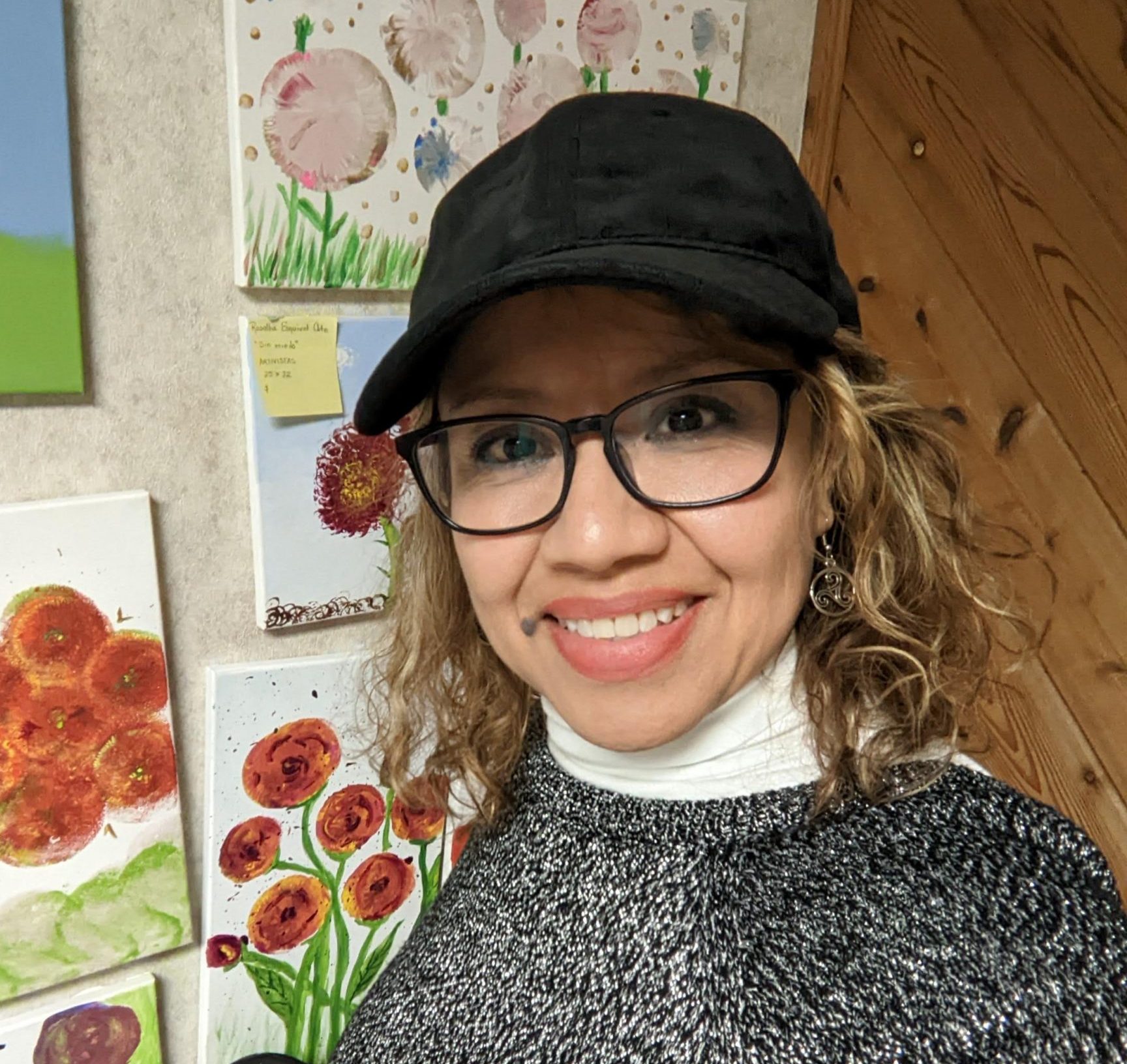
Rosalba es mujer, mexicana, microbióloga, maestra, aprendiz, y artivista. “¡Deja que tus gritos se lean!”


Selected Works by Aura R. Cruz Aburto:
La Máquina De Coser De Mamá (I)
Mi Amiga y La Medusa
Otoño
    La última cena (III)

    RevarteColectiva · December 19, 2023 · Leave a Comment

    Por Aura Rosalía Cruz Aburto

    Click here for English version

    Encuentros 

    Estábamos casi todos, obviamente hacías falta Monster –sí, también eras conocido con ese apodo que no te venía mal. Tú, entre troll y fauno, como diría una queridísima maestra: devenir humano, devenir animal. 

    Era muy raro, no estabas pero al mismo tiempo estabas en todos nosotros. Creo que eso era lo que siempre habías querido: trascender en otros, integrarte en nuestros pensamientos, hablar por nuestras bocas, correr por nuestras venas… por eso siempre intentabas seducirnos a todos, eras una especie de caníbal que sabía que alcanzar al otro era comérselo… pero había que recordar que el que come también es transfigurado por aquello de lo que se alimenta. 

    Y bueno, hablando de comer, ¡carajo!, ya teníamos hambre y, sí, de nuevo: no llegabas. Sin embargo, a mí me parecía que el aire olía muy bien. Creo que habías enviado la comida antes de llegar tú. Eso era muy raro porque normalmente a tí te gustaba convocarnos a cocinar juntos: ¡cómo olvidar que tú me enseñaste a picar la cebolla entendiendo su estructura de capas! Supuse que, debido al despido, no habías tenido mucho ánimo de vernos antes…

    Para entonces, el Jose Carlos, ese de –según él– “buen gusto” (jajajajajaja), se sentó en su lugar por fin. Me tenía un poco harta –y creo que a Lucy también– porque andaba de un lado a otro sólo para hacerse notar. Ya, ahora sí comenzaríamos, de menos, a charlar para hacer tiempo para que llegaras. Lo difícil era comenzar la charla entre todos: nos conocíamos demasiado bien como para poder ser una comunidad libre de conflicto.

    El que obviamente “rompió el hielo” fue “el coach” induciéndonos a tomar una copa: creo que eso sí lo compartíamos, eso sí teníamos en común. Para tí Monster, el aula no estaba ni en las escuelas ni “a la sombra de un árbol” (como diría el famoso Louis Kahn), sino en una mesa de cantina: en términos soeces éramos una bola de parranderos, como tú… comprenderás.

    Comenzamos, pues, con el primer trago. Aunque mi querido Alexander prefirió un whiskey; Lucy un tequila blanco; el Jose Carlos, dándose aires de hombre de mundo, un cogñac; creo que Valerio no quiso tomar; y Adalberto y yo nos echamos un mezcal ¡claro que sí!. La noche comenzó.

    La doble disciplina

    Comenzamos a beber, aunque moríamos de hambre y, ¡vaya!, cómo no hacerlo si encima salivábamos con ese bendito olor… “Master, ¿qué habrás preparado?” Pensaba hacia mis adentros. Y bueno, tú no llegabas.

    Valerio, para variar, estaba de malas, y comenzó a quejarse de tu ausencia: que qué descortesía, que mejor ya se iba… Yo recordaba a Valerio como aquel maestro que en un viaje de estudios aceptó que pusiera en cuestión su veneración ciega y religiosa por Luis Barragán… pero claro, debí saberlo, ya mostraba cierto snobismo desde entonces: él y su obsesión con los modales con la but of course ridícula idea de la clase.

    Por su parte, José Carlos pretendía hacerse el simpático, creía, el pobre ingenuo, que te emulaba. Y bueno, es que cómo olvidar lo que te decía tu esposa: eras un clown, un hombre del acto dramático, un gran histrión cuando te disponías a hablar de arquitectura. Era cierto. Nada más comenzabas a hablar de aquella famosa casa, la Casa Schröeder, como una caja “perspéctica” que había explotado en planos liberando el espacio y hacías magia. Ahora entiendo que por eso, escucharte hablar de arquitectura siempre era más evocador que incluso estar en esos lugares aunque fueran grandiosos: tú desatabas la imaginación, el espacio de la ausencia con tu relato, un relato que excedía la presencia del concreto, del acero y la madera… También por eso entiendo que defendieras tan fervientemente las arquitecturas nunca construidas… ¡Es que ahí estaba todo! en la posibilidad de que un artefacto desatara la imaginación y evocara la memoria: la arquitectura era la experiencia estética, no el objeto reificado. 

    Pero bueno, volviendo a José Carlos, quiso hacerse el interesante llevando a la discusión la “impecable solución del edificio de Adalberto”. Y bueno, surtió efecto un rato, se comenzaron a desplegar sus diálogos de que si la solera, que si el ptr, que si la viga I, que si la soldadura perfecta… Y es cierto, tú también admirabas el oficio técnico pero nunca de una manera tan elemental… La técnica supone la revelación del poder de amplificación humano, posibilita desplegar lo impensado, ser como la naturaleza en actividad: siempre creadora de sí, sin pausa… por eso, nada más por eso y la verdad, porque me estaba aburriendo mucho, interrumpí:

    • Bueno, bueno, qué interesante cátedra pero, a mí se me hace que el Henry está escondido. Es muy raro que no haya llegado. Ya saben, bien desmadroso pero, pues, “la doble disciplina”…

    Cabe contar que “la doble disciplina” no era un método, era una práctica de vida, una forma de ser en el mundo. Que ¿en qué consistía? Sencillo: como decía uno de sus famosos “mandamientos”: “A la santidad por el exceso”. Traducción: “echa” fiesta todo lo que puedas, vive al límite, no te pierdas de ninguna experiencia.

    Para dar fe de este mandamiento, había que ponerlo en práctica. Sin embargo, eso no exime del compromiso que habíamos adquirido con la arquitectura: con fiesta, con desvelo y todo, había que estar a tiempo, había que ser impecables, había que darlo todo. De cierta manera, que la fiesta, que el entusiasmo insufle de energía la actividad productora de la vida y no que la inhiba como pasa con los indisciplinados.

    Fue entonces, que se desató la discusión. Todos recordamos los dichos y mandatos henryanos, todos también dijimos lo que pensábamos de ellos. Pero, al final del día, todos recordamos el cuento de iniciación… sí: el cuento de Giordano Bruno.

    Tienes que entregar tu vida

    Un día, en un viaje de estudios, Henry nos contó un cuento… Todo comenzaba con Giordano Bruno escondido de las persecuciones inquisitoriales de la época, sentado en una mesa, escribiendo y bebiendo agua. 

    A pesar de estar oculto, un joven muchacho lo encontró, llevando con él toda su herencia en un saco y una rosa en la otra mano. Tocó la puerta y esperó. Bruno abrió la puerta y el muchacho comenzó:

    • Maestro, aquí te traigo todo lo que tengo, quiero aprender de tí, quiero ser tu discípulo.

    Se decía que Bruno podía convertir las palabras en materia… Esa alquimia era la que el joven quería poseer. Bruno, tomó un sorbo de agua y volteó lentamente y le dijo:

    • Si tú quieres aprender de mí, tienes que entregar tu vida, tus riquezas no me son útiles. Yo, con tan sólo nombrarlas, puedo hacer que se materialicen.

    El joven respondió intempestivamente que él no podía hacer eso, que era aún muy joven y tenía un mundo de posibilidades abierto ante él. Bruno, no poco decepcionado, le dijo que no tenían nada que hablar y con un gesto lo despidió. El joven salió furioso, tiró la rosa al fuego y azotó la puerta. Bruno se acercó a la hoguera y dijo en voz alta: “Rosa”… inmediatamente en su mano se corporizó la rosa viva que el joven había llevado consigo y que recién había arrojado a la hoguera. 

    Bruno tomó asiento, colocó la rosa en el vaso de agua y continuó escribiendo.

    Desencuentros

    –Y bueno, hay desvelarse para hacer un buen trabajo, unos planos impecables… bla bla bla  –se escuchaba el parloteo de José Carlos. Claro, una respuesta muy elemental. Digo, estaba bien pensar que los planos tenían que hacerse bien pero ¡¿en serio creía que de eso se trataba la arquitectura, la vida?! Eso era no entender un carajo de la mística monsteriana. Claro, el oficio es importante, el oficio permite entrar en la “carne” del acero, del concreto, de la tierra y el viento… pero sí y sólo sí la sensibilidad está bien despierta: incluso entrar en las entrañas de esas materialidades técnicas requiere una recepción orgánica, no se trata de aprender convenciones sino de abrirse a la sensación inexplorada. De nada sirve aprenderse al pie de la letra procedimientos y repetirlos, incluso, con el más detallado de los cuidados: eso forja dogmáticos, eso no enseña a pensar por sí misme a nadie.

    Para entonces yo volteaba a ver a Alexander y tenía una cara de aburrimiento y hartazgo que no podría describir: incluso le veía envejecido momentáneamente, ¡sí, a él que era nuestro “Dorian Gray” particular! Pero vaya, como suele hacer Alexander, mejor no dijo nada. Yo personalmente creo que estaba bien, la verdad decir cualquier cosa hubiera sido darle miel a un gran burro. Lucy, por su parte, tornaba los ojos cual Virgen María pidiendo auxilio a algún ser celestial para sacarnos de ese “infiernito”. Bueno… Valerio, para variar, tenía cara de asco, jajaja. Finalmente, Adalberto, quien siempre se divertía exhibiendo a los farsantes, a los pretenciosos, a los petulantes, de plano vociferó: ¡ahorita vengo!… creo que comenzábamos a estar un poco tomados y aburridos. 

    La verdad, yo tenía muchas ganas de sumarme al rechazo público del José Carlos peroooo también pensaba que era dedicarle demasiada atención. Así, citando una vieja anécdota del Monster: “para aliviar la tensión” propuse organizarnos en pares para buscar a Henry: seguro estaba escondido en la oficina y nos estaba espiando cual ratas de laboratorio en observación. De otra manera, ¿por qué invitar a José Carlos sino para provocar una trifulca?

    ¡Equipos!

    • Espérate K, no te vayas todavía. Propongo algo: ¿por qué no nos dividimos y buscamos a Henry hasta que alguien lo encuentre?– espeté.

    Adalberto que podía ser muy antipático y grosero cuando estaba saturado de imbecilidad, finalmente accedió de muy mala gana, y eso, nada más porque ya me debía varias. 

    Para no joderme a mí misma, el primer equipo que propuse que se formara fue el de Valerio y José Carlos, pensé: que se aguanten entre ellos jajajaja, aunque acá entre nos: ¡Pobre Valerio!. Les propuse que revisaran a conciencia el espacio de la terraza, osea donde estábamos de por sí.

     En el caso de Adalberto, un introvertido que todos solían tomar por pedante, prefirió marchar solo al espacio de taller. Lo dejamos en paz, todos sabemos que se cansa muy rápido de los demás.

    Quedábamos Alexander, Lucy y yo: un equipo sin duda feliz que, aprovechando la oportunidad, elegimos rebuscar en el mágico cuarto “secreto” de Adalberto, un lugar donde, ¡es en serio! lo inexplicable, lo milagroso sucede.

    El cuarto secreto

    Hacía muchos años, cuando tan sólo éramos un par de veintiañeras y comenzamos a trabajar para Adalberto, su oficina se ubicaba en otro sitio: un céntrico barrio que se hallaba frente a un hermoso parque que había sido antes una ladrillera. Debido a ese origen, este bello reducto verde de la ciudad, era ahora un famosísimo parque hundido. La oficina de Adalberto se camuflaba muy bien entre las casas y edificios racionalistas de la colonia Nochebuena, quizá sólo era un poco más monocromático y de materiales más crudos. 

    Y bueno, es que Adalberto, insisto, es una fuerza natural que en su hacer artificial da continuidad a las topografías, los territorios, las geografías más dramáticas. Pero, curiosamente, a veces parece que todos queremos hacer algo que no es para lo que estamos hechos: Adalberto quería hacer algo que desapareciera, que deviniera imperceptible. Creo que ahora acepta mejor que sólo puede ser imperceptiblemente sublime, por eso le viene bien construir entre paisajes naturales de esos que te quitan el aliento. 

    Pues vaya, a pesar de que su oficina de entonces era un poco más silenciosa, por dentro se iba revelando cada vez más poderosa. En los primeros niveles era incluso demasiado cerrada sobre sí. Es más, debo confesarlo (porque, a diferencia de mi adorado Master, no me gusta practicar culto por ninguna estrella de rock and roll y menos por un arquitecto): la oficina no me gustaba en los primeros niveles, me sentía ciega entre tanto cristal esmerilado y muros silenciosos; ¡me oprimía! Pero, conforme subía, al llegar al lugar donde K trabajaba todo comenzaba a cambiar: su muro estaba lleno de dibujos y pinturas inauditas, de objetos extraños y no tan extraños pero que, colocados ahí, adquirían un brillo desconocido: una vieja solera residual de una obra, una roca masiva, una “piña” de un pino, … y claro, de los más conmovedores dibujos y retratos que su pequeña hija, había hecho para él. Sí, ese ser hosco, brusco y mal encarado escondía una ternura desbordante, dentro de ese edificio tan gris, tan pétreo de pronto entraba toda la luz, y el verde y el dorado aparecían invadiendo numerosos bocetos de los paraísos que él soñaba con crear en forma de jardines dejando su huella en esta Tierra. Y sí, todo esto había sido un regalo tuyo mi Maestro Monstruo…

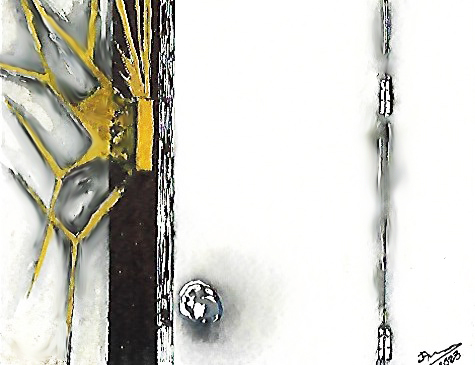
    Pero, aún no he relatado el lugar más importante de este edificio que, de nuevo me llevará al escondite en que creímos que seguro estaba Henry: el famoso e inolvidable “cuarto secreto”: al fondo de ese espacio de dibujo, de maquetas y ya, caray, digámoslo así, cuasi organismos vibrantes de madera, cartón y hasta plastilina, había una puerta insignificante. Detrás de esa puerta podría haber simplemente un estante con materiales diversos, pero no. Detrás de esa puerta pintada de un simple y llano color blanco estaba un lugar oscuro, que, al paso, se iba revelando contra una tenue luz indirecta que, en serio, yo recuerdo dorada: todo ello se filtraba por una ventana secreta que, debo decirlo, K construyó contra toda reglamentación. Pero ¿saben? ¡Qué bueno que lo hizo! Es la más magnífica rendija por la que la luz de una fuerza no humana se infiltraba y atravesaba el cuerpo de K moviendo su mano dando lugar a esos dibujos que descubrí furtivamente en unas bitácoras aquel día que, sin permiso, entré en ese recinto sagrado de creación, cuando fui descubierta.


    English Version:

    The Last Supper (III)

    by Aura Rosalía Cruz Aburto

    Encounters

    Almost all of us were there, obviously you were missing, Monster – yes, you were also known by that nickname, which was not bad for you. You, between troll and faun, as a very dear teacher would say: becoming human, becoming animal. It was very strange, you were not there but at the same time you were in all of us. I think that’s what you always wanted: to transcend in others, to integrate yourself into our thoughts, to speak through our mouths, to run through our veins… that’s why you always tried to seduce us all, you were a kind of cannibal who knew that to reach the other was to eat him… but you had to remember that the one who eats is also transfigured by what he feeds on.

    And well, speaking of eating, damn, we were already hungry and, yes, again: you didn’t arrive. However, it seemed to me that the air smelled really good. I think you had sent the food before you arrived. That was very strange because you usually liked to invite us to cook together: how could I forget that you taught me how to chop onions by understanding their layered structure! I guessed that, due to the layoff, you hadn’t been in the mood to see us before…

    By then, Jose Carlos, the one with – according to him – “good taste” (hahahahahahahaha), finally sat down in his place. I was a little fed up with him – and I think Lucy was too – because he was walking from one side to the other just to be noticed. Now we would start, at least, to chat to make time for you to arrive. The difficult thing was to start the chat among all of us: we knew each other too well to be a conflict-free community.

    The one who obviously “broke the ice” was “the coach” inducing us to have a drink: I think we did share that, we did have that in common. For you Monster, the classroom was neither in the schools nor “in the shade of a tree” (as the famous Louis Kahn would say), but at a canteen table: we were a bunch of party people, as you will understand… you will understand.

    So we started with the first drink. Although my dear Alexander preferred a whiskey; Lucy a white tequila; Jose Carlos, giving himself airs of a man of the world, a cognac; I think Valerio did not want to drink; and Adalberto and I had a mezcal, of course we did! The night began.

    The Double Discipline

    We began to drink, even though we were starving, and how could we not, when we were salivating with that blessed smell… “Master, what did you prepare?” And well, you were not there.

    Valerio, for a change, was in a bad mood, and began to complain about your absence: how rude, that he had better leave… I remembered Valerio as that teacher who on a field trip accepted that I questioned his blind and religious veneration for Luis Barragán… but of course, I should have known, he already showed a certain snobbery since then: he and his obsession with manners with the but of course ridiculous idea of the class.

    For his part, José Carlos pretended to play nice, he thought, the poor naive man, that he was emulating you. And well, how could I forget what your wife used to tell you: you were a clown, a man of the dramatic act, a great histrion when you were about to talk about architecture. It was true. As soon as you started talking about that famous house, the Schröeder House, like a “perspéctica” box that had exploded in planes, freeing the space, you worked magic. Now I understand why listening to you talk about architecture was always more evocative than even being in those places, even if they were grandiose: you unleashed the imagination, the space of absence with your story, a story that exceeded the presence of concrete, steel and wood… That is also why I understand why you defended so fervently the never-built architectures… It was all there! in the possibility of an artifact unleashing the imagination and evoking memory: architecture was the aesthetic experience, not the reified object.

    But well, going back to José Carlos, he wanted to make himself interesting by bringing to the discussion the “impeccable solution of Adalberto’s building.” And well, it had an effect for a while, his dialogues began to unfold: what if the sill, what if the ptr, what if the I-beam, what if the perfect welding… And it is true, you also admired the technical craft but never in such an elementary way… The technique supposes the revelation of the power of human amplification, it makes it possible to unfold the unthinkable, to be like nature in activity: always creating itself, without pause… that’s why, just for that reason and the truth, because I was getting very bored, I interrupted:

    “Well, well, what an interesting lecture, but it seems to me that the Henry is hidden. It is very strange that he has not arrived. You know, he’s a real rascal, but, well, “the double discipline”…

    It is worth mentioning that “the double discipline” was not a method, it was a life practice, a way of being in the world. What did it consist of? Simple: as one of his famous “commandments” said: “To holiness by excess”. Translation: “party as much as you can, live to the limit, don’t miss out on any experience.

    To attest to this commandment, it had to be put into practice. However, this did not exempt us from the commitment we had made to the architecture: with a party, with a party and everything, we had to be on time, we had to be impeccable, we had to give it our all. In a certain way, that the party, that the enthusiasm breathes energy into the productive activity of life and does not inhibit it as it happens with the undisciplined.

    It was then that the discussion broke out. We all remembered the Henryan sayings and injunctions, we all said what we thought of them. But, at the end of the day, we all remembered the tale of initiation… yes: the tale of Giordano Bruno.

    You Have to Give Up Your Life

    One day, on a field trip, Henry told us a story… It all began with Giordano Bruno hiding from the inquisitorial persecutions of the time, sitting at a table, writing and drinking water. Despite being in hiding, a young boy found him, carrying with him his entire inheritance in a sack and a rose in the other hand. He knocked on the door and waited. Bruno opened the door and the boy began:

    “Master, here I bring you all I have, I want to learn from you, I want to be your disciple.”

    It was said that Bruno could turn words into matter… That alchemy was what the young man wanted to possess. Bruno took a sip of water and turned slowly and said to him:

    “If you want to learn from me, you have to give up your life, your riches are of no use to me. I, just by naming them, can make them materialize.”

    The young man replied intemperately that he could not do that, that he was still very young and had a world of possibilities open to him. Bruno, not a little disappointed, told him that they had nothing to talk about and with a gesture dismissed him. The young man stormed out, threw the rose into the fire and slammed the door. Bruno approached the fire and said aloud, “Rose”… immediately in his hand was embodied the living rose that the young man had brought with him and had just thrown into the fire. Bruno took a seat, placed the rose in the glass of water and continued writing.

    Disencounters

    “-And well, you have to stay awake to do a good job, impeccable plans… blah blah blah blah,” José Carlos chattered. Sure, a very elementary answer. I mean, it was fine to think that the plans had to be done well, but did he really think that was what architecture, life, was all about! That was not understanding a damn thing about the Monsterian mystique. Of course, the craft is important, the craft allows one to enter into the ‘flesh’ of steel, concrete, earth, and wind… but yes, and only if the sensibility is wide awake: even entering into the entrails of these technical materialities requires an organic reception. It is not a matter of learning conventions but of opening oneself to the unexplored sensation. There is no point in learning procedures to the letter and repeating them, even with the most detailed care: this forges dogmatists; it does not teach anyone to think for themselves.

    By then, I looked at Alexander, and he had a face of boredom and weariness that I could not describe: I even saw him aging momentarily, yes, he who was our particular ‘Dorian Gray’! But wow, as Alexander usually does, he didn’t say anything. I personally think he was fine; to say anything would have been to give honey to a big donkey. Lucy, for her part, rolled her eyes like the Virgin Mary asking for help from some celestial being to get us out of that ‘little hell.’ Well… Valerio, for a change, had a disgusted look on his face, hahaha. Finally, Adalberto, who always had fun showing off the phonies, the pretentious, the petulant, flatly shouted: “I’m coming!”… I think we were starting to get a little drunk and bored.

    To tell the truth, I really wanted to join in the public rejection of José Carlos, but I also thought it was too much attention to devote to him. So, quoting an old Monster anecdote: “to relieve the tension,” I proposed to organize ourselves in pairs to look for Henry: he was probably hiding in the office and spying on us like lab rats under observation. Otherwise, why invite José Carlos if not to provoke a brawl?

    Teams!

    “Wait, K, don’t go yet. I propose something: why don’t we split up and look for Henry until someone finds him,” I said.

    Adalberto, who could be very unfriendly and rude when he was saturated with imbecility, finally agreed very reluctantly, just because he already owed me several. In order not to screw myself, the first team I proposed to form was Valerio and José Carlos. I thought: let them put up with each other, hahahaha, although here among us: Poor Valerio! I proposed them to thoroughly check the space of the terrace, that is, where we were in itself. In the case of Adalberto, an introvert that everyone used to take for a pedant, he preferred to go alone to the workshop space. We left him alone; we all know he gets tired of others very quickly. We were left with Alexander, Lucy, and me: a happy team that, taking advantage of the opportunity, chose to rummage in Adalberto’s magical “secret” room, a place where, seriously! the inexplicable, the miraculous happens.

    The Secret Room

    Many years ago, when we were just a couple of twenty-somethings and we started working for Adalberto, his office was located in a different place: a central neighborhood that was in front of a beautiful park that had been a brick factory. Because of that origin, this beautiful green redoubt of the city was now a very famous sunken park. Adalberto’s office camouflaged itself very well among the rationalist houses and buildings of the Nochebuena neighborhood, perhaps it was just a bit more monochromatic and of cruder materials. And well, Adalberto, I insist, is a natural force that in his artificial work gives continuity to the topographies, the territories, the most dramatic geographies. But, curiously, sometimes it seems that we all want to do something that is not what we were made for: Adalberto wanted to do something that would disappear, that would become imperceptible. I think he now accepts better that he can only be imperceptibly sublime, so it suits him well to build among natural landscapes that take your breath away.

    Well, although his office at the time was a little quieter, inside it was revealing itself to be more and more powerful. In the first levels, it was even too closed in on itself. What’s more, I must confess (because, unlike my adored Master, I don’t like to worship any rock and roll star, let alone an architect): I didn’t like the office on the first levels, I felt blind among so much frosted glass and silent walls; it oppressed me! But, as I went up, when I reached the place where K worked, everything began to change: his wall was full of unheard-of drawings and paintings, of strange and not so strange objects which, placed there, acquired an unknown brightness: an old residual sill from a construction site, a massive rock, a “pine cone” from a pine tree, … and of course, of the most touching drawings and portraits that his little daughter had made for him. Yes, that sullen, brusque, and ill-faced being hid an overflowing tenderness, inside that building so gray, so stony, suddenly all the light entered, and the green and gold appeared invading numerous sketches of the paradises that he dreamed of creating in the form of gardens leaving his mark on this Earth. And yes, all this had been a gift from you, my Monster Master….

    But, I have not yet related the most important place of this building that, again, will take me to the hiding place where we thought for sure Henry was: the famous and unforgettable “secret room”: at the back of that space of drawing, of models and already, heck, let’s put it this way, quasi-vibrant organisms of wood, cardboard, and even plasticine, there was an insignificant door. Behind that door, there could have been simply a shelf with various materials, but no. Behind that painted door there was an insignificant door. Behind that door painted in a simple, plain white color was a dark place, which, as I passed by, was revealing itself against a faint indirect light that, seriously, I remember as golden: all of it filtered through a secret window that, I must say, K built against all regulations. But you know, it’s a good thing he did! It is the most magnificent slit through which the light of a non-human force infiltrated and pierced K’s body moving his hand giving rise to those drawings that I furtively discovered in some logs that day that, without permission, I entered that sacred enclosure of creation, when I was discovered.

    Aura R. Cruz Aburto

    Aura es filósofa mexicana, latinoamericana orgullosa, es también artista espacial, textil y visual que busca dar de cuando en cuando con “la frágil unidad poética”. Profesora de la Universidad Nacional Autónoma de México, Tec de Monterrey e investigadora independiente.

    Aura is a proud Mexican and Latin American philosopher. She is also a spatial, textile, and visual artist who occasionally seeks to find “the fragile poetic unity.” She is a professor at the National Autonomous University of Mexico, Tec de Monterrey, and an independent researcher.

    Selected Works by Aura R. Cruz Aburto:
    La Última Cena (I)
    La Última Cena (II)

      OTOÑO

      RevarteColectiva · December 16, 2023 · 2 Comments

      Por Rosalba Esquivel Cote

      Click here for English version

      Foto por Rosalba Esquivel Cote, 2023

      Parado en la esquina de mi casa,
      imponente, un Arce baila y se sacude,
      hojas verdes, más naranjas y amarillas,
      senescentes, maduras y moribundas,
      el viento las obliga a abandonarlo,
      él no lo puede evitar, es tiempo de dejarlas ir,
      hijos que se van a seguir su camino,
      ellas sucumben como lluvia de ocres.

      Haz y envés adornan la hojarasca,
      camino por los bosques de Pensilvania,
      el suelo cruje al paso de mis botas,
      sonidos de aquel follaje que migró,
      hace frío, el clima va cambiando,
      ocasos rojos, previos al invierno,
      pulverizadas por el tiempo y las pisadas,
      esas hojas se integran al terreno.

      Arces, Maples y Acacias se descubren abandonados,
      tristes y solitarios quedan sin su atavío y su cobijo,
      es momento de dormir y esperar sus retoños,
      mientras ellas reciclan la energía
      para una nueva vida,
      un regalo de la generación de antes,
      para aquellas que han de revelarse
      en un año en ese Arce de la esquina.


      English Version:

      Autumn

      by Rolsalba Esquivel Cote

      Standing on the corner of my house,
      imposing, a Maple dances and shakes,
      leaves green, yet orange and yellow,
      senescent, ripe, and dying,
      the wind forces them to leave it,
      it cannot help it, it’s time to let them go,
      children who leave to follow their own path,
      they succumb like a rain of ochres.

      Top and bottom adorn the fallen leaves,
      I walk through the woods of Pennsylvania,
      the ground crunches under my boots,
      sounds of that foliage that migrated,
      it’s cold, the weather is changing,
      red sunsets, harbingers of winter,
      crushed by time and footsteps,
      those leaves integrate into the ground.

      Maples, Maples, and Acacias find themselves abandoned,
      sad and lonely they remain without their attire and shelter,
      it’s time to sleep and wait for their offspring,
      while they recycle energy
      for a new life,
      a gift from the generation before,
      for those that will reveal themselves
      in a year in that Maple on the corner.

      Rosalba Esquivel Cote

      Rosalba es mujer, mexicana, microbióloga, maestra, aprendiz, y artivista. “¡Deja que tus gritos se lean!”


      Selected Works by Aura R. Cruz Aburto:
      La Máquina De Coser De Mamá (I)
      La Máquina De Coser De Mamá (II)
      Mi Amiga y La Medusa

        La Última Cena (II)

        RevarteColectiva · December 16, 2023 · Leave a Comment

        Por Aura R. Cruz Aburto

        Click here for English version

        La mesa está puesta

        Paisaje y viento. Un columpio al centro en forma de esfera hecha de alambre donde esperaba encontrar a Henry columpiándose, lo cual no sucedió para mi sorpresa. 

        Al lado de esta esfera estaba dispuesta una mesa alrededor de un fogón (ni tan) improvisado que estaba calentando un gran cazo de cobre y que despedía un olor fantástico. 

        La mesa tenía 7 sillas exactamente, un número que no era mero accidente sino un recuerdo frecuente de las aficiones cínico-simbólicas a las que el Henry era un aficionado: 6 discípulos, un número maligno de discípulos con la tensión del divino número total: el número 7. Ya justo en su cumpleaños número 66 había hecho la fiesta de onomástico más inolvidable. Esta vez seríamos 6 discípulos en la mesa y 1 maestro en la silla central que tenía frente un gran letrero que decía “Maestro Diablo”. 

        ¡Ay “Maestro Diablo”! cómo no recordar el día que te hiciste de ese mote: casi morías atropellado por tu performance demostrativo de “cómo se cruzan las calles en México” y, para cuando estabas tendido en el suelo tras haber sido arrollado por un taxi, un pobre hombre se acercó desesperado a ver si respirabas y se puso a rezar hincado junto a tu cuerpo… entonces saltaste de un brinco y dijiste con tu voz ronca y con ese “szeszeo” tan característico de tu hablar: “Yo szoy el diablo” jajajaja.

        Ahí estábamos frente a la mesa y fuimos tomando nuestros lugares. A tu derecha habías dispuesto un lugar para el elemental José Carlos. La verdad yo no entendía, de entrada, por qué habías elegido a un bruto como ese, pero bueno… he de decir que algo que siempre hiciste fue sorprenderme… A tu izquierda estaba yo, me dio gusto, ya sabes, soy zurda y me causaba gracia que quisieras molestarme diciéndome “siniestra”. Junto a mí estaba Lucy y, de frente a ella, estaba Valerio. Alexander y Adalberto, finalmente, habían quedado frente a tí… la mesa era de planta circular con un hueco al centro que contenía una especie de fogón que mantenía la comida caliente.

        Alexander

        No tardó en llegar Alexander, quien sabíamos que no disfrutaba particularmente de los encuentros multitudinarios, si bien era un gran pensador y conversador con quienes sentía cercanos. Aunque siempre había sido tan diferente a tí, él también sería un magnífico maestro. Recuerdo que cuando lo conocí era capaz de entrelazar y asociar ideas aparentemente imposibles de emparentar y, con ello, abrir todo un panorama de posibilidades. También era sin duda una “máquina” de referencias y lecturas… quizá, entonces, sólo le hacía falta hacer escuchar su voz que tímidamente asomaba como un tenue eco entre esas asociaciones inauditas. 

        Así, llegó Alexander, ataviado también de negro, pero no con ese negro estridentista como el de Adalberto, negro que con su ausencia de luz más que silencio sería un grito absoluto. En cambio, la manera en que Alexander se ataviaba de negro era el de un silencio visual radical que se asemejaba a su paso ligero, un paso que flota. Por eso digo que Alexander también sería un maestro pero sin el histrionismo de Henry ni la salvaje expresión de Adalberto, sino un maestro que enseñaba a ver de la arquitectura su comportamiento diagramático: las operaciones vitales a las que daría lugar así como aquellas a las que cancelaría, el quería sacar a la luz “el truco”. En este sentido, Alexander era una especie de antítesis de Adalberto y, aunque nunca negó el genio de éste, siempre dejó entrever que era un espíritu dominante. Alexander, en cambio, siempre más sutil, lo que hacía era fungir como un catalizador para que cada cual tuviera sus propias revelaciones, era un anarquista del pensamiento, un amante de la libertad radical. Creo que ahora que pienso en estos caracteres diferenciadores de Alexander y Adalberto –ellos también maestros como Henry– entiendo por qué fueron destinados a sentarse a la mesa, casi frente al lugar del “Diablo”.

        Para ese momento de la cena, yo estaba muy contenta. Claro, me hacía falta Henry pero era maravilloso estar con mi mejor amiga y esos dos grandes y contrastantes maestros entrañables. Lucy siempre había sido mi cómplice, crecimos, padecimos y nos sorprendimos juntas. Adalberto, sin duda nos tenía deslumbradas y, bueno, habrá que decirlo ahora, lo seguirá haciendo en tanto genio revelador de las fuerzas creadoras del cosmos, aunque no necesariamente como individuo: cuando alguna vez estudié la figura del genio kantiana el rostro que vino a mi cabeza era el de ese señor mezquino que a la vez es capaz de un don inigualable para crear mundos nuevos que habitar. Probablemente por eso tiene los ojos desorbitados, lo atraviesa algo que, por supuesto, es más grande que su individualidad: la fuerza creadora de la vida. 

        Y bueno, qué decir de Alexander, ese maestro que es amigo, Amigo. Uno tal que como dice él, es un “Benjamin Button” en lo político: entre más años reúne, más radical se vuelve, en vez de más conservador como suele suceder. Y, curiosamente, Alexander también se conserva incomprensiblemente joven (no se lo digan a nadie, pero estoy segura que tiene un retrato escondido desastrosamente envejecido en un recóndito rincón de su apartamento.)

        Después de un rato de estar plácidamente sentada, pletórica de alegría por estar junto a seres tan diversos y entrañables sonó el timbre de la Torre. Parece broma, pero el cielo se nubló un poquito y dejamos, por un momento, de ver el Sol de la tarde que caía sobre el bosque de Chapultepec que estaba frente a la Torre: llegó Valerio.

        Pasiones tristes

        Hacía ya unos años, Valerio me impactó con la “corrección de proyecto” más linda que había tenido hasta entonces como estudiante de arquitectura. En ese entonces estaba arrobada con la fuerza expresiva del art nouveau y su bellísimo organicismo, no tanto porque pretendiera reproducir a la naturaleza, que no lo hacía, sino de recuperar su gesto como fuerza, su gesto de “látigo”, de relámpago de vida. Valerio, a quien a partir de entonces llamamos Sensei, se limitó a compartir una historia: 

        Alguna vez existió un próspero rey en Venecia que mandó llamar a los mejores artistas de su ciudad y a los más destacados pintores chinos. Mandó construir dos muros, uno frente al otro, y colocó una cortina de terciopelo entre ellos. Tuvieron una semana para crear la más bella obra de arte jamás pensada en el muro que a cada uno tocó. Cuando llegó el momento, se corrió la cortina. Los artistas venecianos habían hecho el mural más deslumbrante, copioso de elementos, bellos pájaros y el dorado color del atardecer… casi cobraba vida. Los pintores chinos se limitaron a pulir su muro hasta convertirlo en un espejo que reflejaba el mural veneciano.

        Ay Valerio, cómo explicarte el impacto que ese bello cuento, al que no tuviste que añadir nada, me dio y me sigue dando. Sin embargo, años más tarde, te reencontré como un joven-viejo (contrario al niño-viejito que solías decir que era Henry). No sé cómo esa sensibilidad lúcida y suave que te caracterizaba fue herida al grado de convertirse en renuncia y asqueo.

        Ese día, Valerio llegó ataviado con su tradicional color gris. Con su gesto adusto nos saludó y se sentó un poco alejado y, bueno, trató de conversar con Alexander. A nosotras nos saludó con cierta displicencia y aparente sentido de superioridad… Nunca entendí porqué una persona a la que la vida podía tocar tanto, sólo retomó la fase destructiva de lo que supone vivir afectado: la impotencia. 

        Henry, es verdad, era una especie de Dionisio, ese dios griego de la sobreabundancia, del juego, del erotismo… nos mostraba que vivir era dejarse atravesar y mutar, y bueno, hay que decirlo, también tenía la cara de la pulsión de muerte… era el deseo encarnado en su doble aspecto: creación y destructividad. Y tú, Valerio, te quedaste con la pura pasión triste, con el desencanto. Valerio, el amargo.


        English Version:

        The Last Supper (II)

        by Aura R. Cruz Aburto

        The Table is Set

        Landscape and wind. In the center, a spherical swing made of wire, where I expected to find Henry swinging, which to my surprise, did not happen. Beside this sphere, a table was arranged around a (not so) improvised fire pit that was heating a large copper cauldron, emitting a fantastic aroma. The table had exactly 7 chairs, a number that was not a mere coincidence but a frequent reminder of the cynico-symbolic hobbies Henry was fond of: 6 disciples, a malevolent number of disciples juxtaposed with the divine total number: 7. Precisely on his 66th birthday, he had thrown the most unforgettable name day party. This time, there would be 6 disciples at the table and 1 master in the central chair facing a large sign that read “Master Devil”.

        Oh, “Master Devil”! How can I forget the day you earned that nickname: you almost died run over during your demonstrative performance of “how to cross streets in Mexico”, and as you lay on the ground after being hit by a taxi, a poor man rushed to see if you were breathing and began to pray kneeling next to your body… then you jumped up and said in your hoarse voice with that characteristic “szeszeo” in your speech: “I am the devil” haha.

        There we were, in front of the table, taking our seats. To your right, you had arranged a place for the elemental José Carlos. Honestly, I didn’t understand at first why you had chosen someone as brutish as him, but well… I must say you always surprised me… To your left was I, I was pleased, you know, I’m left-handed and it amused me that you wanted to tease me by calling me “sinister”. Next to me was Lucy, and facing her, Valerio. Alexander and Adalberto were finally facing you… the table was circular with a hole in the center containing a kind of fire pit that kept the food warm.

        Alexander

        Alexander, who we knew did not particularly enjoy large gatherings, though a great thinker and conversationalist with those he felt close to, soon arrived. Although he had always been so different from you, he too would be a magnificent teacher. I remember when I met him, he was capable of intertwining and associating seemingly impossible ideas, thereby opening up a whole panorama of possibilities. He was undoubtedly a “machine” of references and readings… perhaps, then, all he needed was to make his voice heard, which timidly emerged like a faint echo among those unheard-of associations.

        Thus, Alexander arrived, also dressed in black, but not in the ostentatious black of Adalberto, whose absence of light was more a scream than silence. Instead, the way Alexander wore black was a radical visual silence akin to his light, floating step. That’s why I say Alexander would also be a teacher, but without Henry’s histrionics or Adalberto’s wild expression, rather a teacher who taught to see the diagrammatic behavior of architecture: the vital operations it would give rise to and those it would cancel, he wanted to bring to light “the trick”. In this sense, Alexander was a kind of antithesis to Adalberto and, although he never denied the latter’s genius, he always suggested he was a dominant spirit. Alexander, more subtle, acted as a catalyst for each to have their own revelations, an anarchist of thought, a radical lover of freedom. Thinking about these distinguishing characters of Alexander and Adalberto – they too teachers like Henry – I understand why they were destined to sit at the table, almost facing the “Devil”.

        At that moment of the dinner, I was very happy. Sure, I missed Henry, but it was wonderful to be with my best friend and those two great and contrasting beloved masters. Lucy had always been my accomplice, we grew up, suffered, and were amazed together. Adalberto, no doubt, dazzled us and, well, it must be said now, will continue to do so as a genius revealing the creative forces of the cosmos, though not necessarily as an individual: when I once studied Kant’s concept of genius, the face that came to my mind was that of that petty man who at the same time has an incomparable gift for creating new worlds to inhabit. Probably that’s why his eyes are bulging, something larger than his individuality traverses him: the creative force of life. And what about Alexander, that teacher who is a friend, Friend. One such that, as he says, is a “Benjamin Button” politically: the more years he gathers, the more radical he becomes, instead of more conservative as is often the case. And, curiously, Alexander also remains inexplicably young (don’t tell anyone, but I’m sure he has a hideously aged portrait hidden in a remote corner of his apartment.) After a while of sitting contentedly, brimming with joy at being together with such diverse and beloved beings, the bell of the Tower rang. It seems like a joke, but the sky clouded over a bit and for a moment, we lost sight of the afternoon Sun falling over the Chapultepec forest in front of the Tower: Valerio arrived.

        Sorrowful Passions

        Years ago, Valerio impressed me with the most beautiful “project correction” I had had so far as an architecture student. Back then, I was enamored with the expressive force of Art Nouveau and its beautiful organicism, not so much because it sought to reproduce nature, but because it sought to recover its gesture as a force, its gesture of “whiplash”, of a lightning bolt of life. Valerio, whom we thereafter called Sensei, simply shared a story:

        Once there was a prosperous king in Venice who summoned the best artists of his city and the most outstanding Chinese painters. He had two walls built facing each other, with a velvet curtain between them. They had a week to create the most beautiful work of art ever conceived on the wall allotted to each. When the time came, the curtain was drawn. The Venetian artists had created the most dazzling mural, abundant with elements, beautiful birds, and the golden color of sunset… it almost came to life. The Chinese painters simply polished their wall until it became a mirror reflecting the Venetian mural.

        Oh Valerio, how can I explain the impact that beautiful tale, to which you added nothing, had on me and continues to have. However, years later, I reencountered you as a young-old man (unlike the old-young boy you used to say Henry was). I don’t know how that lucid and gentle sensitivity that characterized you was wounded to the point of turning into renunciation and disgust. That day, Valerio arrived wearing his traditional gray color. With his stern gesture, he greeted us and sat a little apart, and, well, tried to converse with Alexander. He greeted us with a certain disdain and apparent sense of superiority… I never understood why someone so touched by life only took up the destructive phase of what it means to live affected: impotence. Henry, it’s true, was a kind of Dionysus, that Greek god of overabundance, play, eroticism… he showed us that to live was to let oneself be traversed and transformed, and, well, it must be said, he also had the face of the death drive… he was desire incarnate in its dual aspect: creation and destructiveness. And you, Valerio, were left with mere sorrowful passion, with disenchantment. Valerio, the bitter.

        Aura R. Cruz Aburto

        Aura es filósofa mexicana, latinoamericana orgullosa, es también artista espacial, textil y visual que busca dar de cuando en cuando con “la frágil unidad poética”. Profesora de la Universidad Nacional Autónoma de México, Tec de Monterrey e investigadora independiente.

        Aura is a proud Mexican and Latin American philosopher. She is also a spatial, textile, and visual artist who occasionally seeks to find “the fragile poetic unity.” She is a professor at the National Autonomous University of Mexico, Tec de Monterrey, and an independent researcher.

        Selected Works by Aura R. Cruz Aburto:
        La Última Cena (I)

          Poema de Laura

          RevarteColectiva · December 16, 2023 · 1 Comment

          Por Laura Sánchez

          Click here for English version

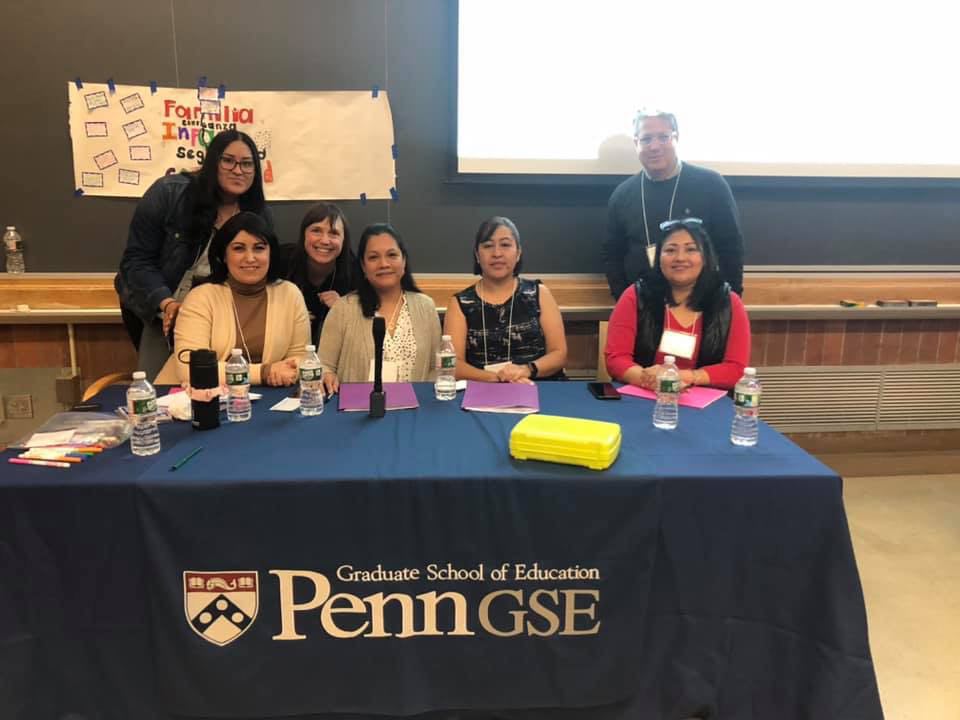
          Nota: Poema inspirado en un collage que captura la presentación del Círculo de Investigaciones Participatorias de CCATE en el Foro de Etnografia y Educación de la Escuela de Graduados en Educación (GSE), de la Universidad de Pennsylvania.

          Foro de Etnografia y Educación de la Escuela de Graduados en Educación

          Ver el cuadro es leer el poema, leer el poema es ver el cuadro. 

          Mis bellas memorias

          Por Laura Sánchez

          Suena la alarma en la calle 034 Spruce y yo con sueño aún, 

          pero feliz porque es un día de otra aventura más como yo le llamo,

          lista y arreglada vamonos.

          Nos reunimos en CCATE para ir a Filadelfia

           y tomamos el tren que sale desde la placita 

          –como algunos de los mexicanos que vivimos aquí le llamamos que es norristown transportation center –.

          y lo mejor es que vamos juntos: Obed, Diana, Lulú, Lupita y yo,

           riéndonos platicando para encontrarnos con Holly 

          en las calles Walnut y 37 en Filadelfia para desayunar en el restaurante de beagles,

          felices nerviosos; y Claro yo con mucha hambre como siempre,

          y qué rico café y el beagles, y en familia se siente mucho mejor,

          en mi corazón me hace disfrutarlo aún más, — es que los quiero tanto—

          y Lulú contándonos que no durmió con los nervios,

          pero logró escribir algo que me llenó de mucho orgullo, 

          emociones y mucha fortaleza para seguir 

          en esta lucha con mis compañeros,

           eso gracias al insomnio que provocó Lulu.  

          Y ya listos, 

          dice Holly que tenemos que llegar a tiempo 

          y sin prisas al auditorio de la Escuela de Graduados en la Universidad. 

          Volvemos a caminar unas calles antes de entrar en el campus 

          gozo de ver los jardines con sus árboles enormes 

          y las esculturas que me encantan

           como el el botón de Benjamín Franklin 

          la puerta con las manos de los oficios entre otros 

          del paseo de Locust que cruza el centro de la universidad 

          ¡Qué nervios al recoger nuestros gafetes! 

          y prepararnos en nuestros lugares 

          para hablar delante de los profesores que están frente a nosotros 

          y escuchar nuestras historias de vida, 

          y también qué queremos que aprendan 

          a tener cuidado con nuestros niños que están llenos de sueños 

          y mucho amor

           y nosotros llenas de fortaleza y admiración por nuestra comunidad. 

          Al terminar ellos los profesores de la universidad de UPenn son amables

          agradecidos porque han aprendido algo que en la universidad no les enseñan 

          y tienen preguntas y quieren saber sobre CCATE 

          y nosotros felices mostrando el amor, 

          y muy orgullosos con los resultados 

          y por supuesto puestísimas para posar,

          para así yo captar mis bellas memorias con un selfie,

          ¡Qué viva la comunidad!


          English Version:

          My Beautiful Memories
          By Laura Sánchez

          Note: Poem inspired by a collage capturing CCATE’s Participatory Research Circle presentation at the Ethnography and Education Forum at the Graduate School of Education (GSE), University of Pennsylvania.

          To see the picture is to read the poem, to read the poem is to see the picture.

          The alarm rings on 034 Spruce Street and I’m still sleepy,
          but happy because it is a day of another adventure as I call it,
          Ready and fixed, let’s go.
          We meet at CCATE to go to Philadelphia
          and we take the train that leaves from the little square
          –as some of us Mexicans who live here call it the Norristown Transportation Center.
          and the best thing is that we go together: Obed, Diana, Lulú, Lupita and me,
          laughing talking to meet Holly
          at Walnut and 37th streets in Philadelphia for breakfast at the beagle restaurant,
          happy nervous; And of course I’m very hungry as always,
          and what delicious coffee and the beagles, and with family he feels much better,
          In my heart it makes me enjoy it even more, — it’s just that I love them so much —
          and Lulú telling us that she didn’t sleep with her nerves,
          but he managed to write something that filled me with great pride,
          emotions and a lot of strength to continue
          in this fight with my companions,
          that thanks to the insomnia caused by Lulu.
          And ready,

          We walk a few streets again before entering the campus
          I enjoy seeing the gardens with their enormous trees
          and the sculptures that I love
          like the Benjamin Franklin button
          the door with the hands of the trades among others
          from the Locust Walk that crosses the center of the university

          What nerves when collecting our badges!
          and prepare in our places
          to speak in front of the teachers who are in front of us
          and listen to our life stories,
          and also what we want them to learn
          to be careful with our children who are full of dreams
          and lots of love
          and we are full of strength and admiration for our community.
          When they finish, the professors at UPenn University are kind.
          grateful because they have learned something that they are not taught at university
          and they have questions and want to know about CCATE
          and we are happy showing love,
          and very proud of the results
          and of course great for posing,
          so I can capture my beautiful memories with a selfie,
          Long live the community!


          Holly says we have to be on time.
          and without rushing to the auditorium of the Graduate School at the University.


          • « Go to Previous Page
          • Page 1
          • Interim pages omitted …
          • Page 15
          • Page 16
          • Page 17
          • Page 18
          • Page 19
          • Interim pages omitted …
          • Page 28
          • Go to Next Page »

          Hit the ground running with a minimalist look. Learn More

          Copyright © 2026 · Monochrome Pro on Genesis Framework · WordPress · Log in

          • Instagram
          • Facebook