• Skip to primary navigation
  • Skip to main content

REVARTE

  • Home
  • About
    • REVARTE Collective
  • Issues
  • Content
    • LITERATURA
    • JUVENTUD
    • ENSAYO
    • COMUNIDAD
    • MEDIA
  • Subscribe
  • Contribute
  • Show Search
Hide Search

Media

“What a breeze!”

RevarteColectiva · September 30, 2024 · Leave a Comment

By Brisa Mariana Ables

Click here for Spanish version

The podcast “What a Breeze!” is produced by Brisa Mariana Ables, who shares it for REVARTE. Brisa is a master’s student in social work at the University of Pennsylvania and a fervent advocate for integrating artistic education into public schools as a comprehensive proposal for human development, which should be practiced and integrated from childhood.

In this episode, Brisa challenges the Eurocentric definitions that limit the understanding of art and proposes the integration of diverse cultural practices from around the world.

We invite you to listen to this first chapter, created for the Social Policy and Latino Community class / SWRK 7500: SOCIAL POLICY AND THE LATINX COMMUNITY – UPENN.

For Professors Obed Arango and Holly Link, Ph.D.

Duration: 10 minutes
Language: English

Español:

El podcast “What a Breeze!” es producido por Brisa Mariana Ables, quien comparte para REVARTE. Brisa es estudiante de la maestría de trabajo social en la Universidad de Pennsylvania y una ferviente promotora de la educación artística en las escuelas públicas como una propuesta integral de desarrollo humano que debe practicarse e integrarse desde la infancia.

En este capítulo, Brisa reta las definiciones eurocéntricas que limitan el entendimiento del arte y propone la integración de las diversas prácticas culturales en el mundo.

Les invitamos a escuchar este primer capítulo, que fue hecho para la clase de Política Social y Comunidad Latina / SWRK 7500: SOCIAL POLICY AND THE LATINX COMMUNITY – UPENN.

Para los profesores Obed Arango y Holly Link, Ph.D.

Duración: 10 minutos
Idioma: Inglés

Brisa Mariana Ables

Brisa Mariana Ables es estudiante de la maestría en trabajo social en la Escuela de Política y Practica Social de la Universidad de Pennsylvania. Brisa es de origen mexicano con raices purépechas de Michoacán, originaria de Birmingham, Alabama.

Brisa Mariana Ables is a Master’s student in Social Work at the School of Social Policy and Practice at the University of Pennsylvania. Brisa is of Mexican origin with Purépecha roots from Michoacán, originally from Birmingham, Alabama.

    El Quijote: Entrevista de migración

    RevarteColectiva · September 30, 2024 · Leave a Comment

    Por Ruth Layme Cárdenas

    Click here for English version

    Ruth Layme Cárdenas entrevista a la señora Brígida Cárdenas Chávez una mujer de origen Quechua que emigró de San Mateo Huarochiri, y de familia de la sierra. La historia de Brígida es la historia de más de 800 mil migrantes que en los últimos 20 años han migrado a la ciudad de Lima en la que se sufre discriminación por la lengua, el vestido, y las expresiones culturales. 

    English Version:

    Ruth Layme Cárdenas interviews Mrs. Brígida Cárdenas Chavez, a woman of Quechua origin who emigrated from San Mateo Huarochiri, and from a family from the mountains. Brígida ‘s story is the story of more than 800,000 migrants who in the last 20 years have migrated to the city of Lima, where they suffer discrimination due to language, dress, and cultural expressions.

    Ruth Sarai Layme Cárdenas

    Es estudiante de séptimo grado y asiste a El Quijote para la vida, donde coordina la biblioteca de Lomas de Chahuani y dirige un programa de radio para adolescentes.

    She is a seventh grade student and attends El Quijote para la vida, where he coordinates the Lomas de Chahuani library and directs a radio program for teenagers.

      Villa Inmigrante: MACONI – The Story of Salvador

      RevarteColectiva · June 5, 2024 · Leave a Comment

      por Obed Arango

      Click here for English version

      CCATE – REVARTE, 2024©

      MACONI es el testimonio de Salvador González, un inmigrante de origen mexicano que habita en los suburbios de Filadelfia. Su reflexión de vida es honesta directa, dura, pero llena de esperanza. En el cortometraje aborda los retos que tiene la comunidad inmigrante y nos da una contranarrativa que reta las versiones que criminalizan a la comunidad inmigrante en los Estados Unidos.

      El cortometraje forma parte de la colección “Villa Inmigrante” realizada y producida por Obed Arango quien durante los años 2021 y 2023 ha visitado la zona, entrevistado a los habitantes, grabado y fotografiado. 

      La entrevista a Salvador González fue hecha por Obed Arango, David Villalvazo y Miguel Grimaldos García.

      Un documental con el apoyo de la iniciativa “Futuros Justos” de UPenn y Fundación Mellon en colaboración con el Centro de Estudios Latinoamericanos de la Universidad de Pennsylvania.  

      Y de la Independence Public Media Foundation.


      English Version:

      With English Subtitles

      CCATE – REVARTE, 2024©

      Introduction: “MACONI” is the compelling testimony of Salvador González, a Mexican immigrant living in the suburbs of Philadelphia. His life reflection is honest, direct, harsh, yet filled with hope. This short film delves into the challenges faced by the immigrant community, offering a counter-narrative that challenges the negative portrayals and criminalization of immigrants in the United States.

      About the Film: The short film is part of the “Villa Inmigrante” collection, directed and produced by Obed Arango. Between 2021 and 2023, Arango visited the area, conducted interviews with residents, and captured their stories through recordings and photographs.

      The Interview: The interview with Salvador González was conducted by Obed Arango, David Villalvazo and Miguel Grimaldos García providing an intimate look into González’s experiences and perspectives.

      Production Support: “MACONI” was made possible with the support of the “Futuros Justos” initiative of UPenn and the Mellon Foundation, in collaboration with the Center for Latin American Studies at the University of Pennsylvania, and the Independence Public Media Foundation.

      Cuando la luna se mostró tan grande como el sol

      RevarteColectiva · April 17, 2024 · Leave a Comment

      (Crónica del eclipse de abril de 2024)

      por Rosalba Esquivel Cote

      Click here for English version

      Pocos eventos en este mundo valen la pena observar y caer asombrados, sobre todo aquellos que nos regala la madre naturaleza. Estamos acostumbrados a sentir la lluvia, a disfrutar la nieve, a refrescarnos con el viento, a admirar el amanecer o el atardecer, pero presenciar un eclipse total de sol siempre causa emoción y expectación.

      Fue así como, con estos mismos sentimientos familias completas de CCATE nos citamos en los prados del Parque Histórico Nacional de Valley Forge (King of Prussia, Pensilvania). Todo estaba listo: las cámaras de video, los celulares, los lentes protectores (autorizados por la NASA), los snacks. A pesar de que se pronosticaba cielo nublado, los ánimos iban creciendo cuando la luna comenzó a mostrarse frente al sol. Pudimos ver por algunos minutos las fases de cuarto menguante y cuarto creciente del sol. La emoción crecía, y finalmente alrededor de las 3:30 de la tarde, la luna llegó a cubrir el 90% la cara inmaculada del sol, al mismo tiempo que una ola de densas nubes cerraba el telón de tal espectáculo. Pero, afortunadamente para nosotros, a tiempos las nubes abrían breves ventanas por las cuales pudimos apreciar el eclipse casi en su totalidad, que era lo esperado para nuestra zona geográfica. Vistas que animaron los aplausos y los gritos de emoción de padres, madres y niños.

      También pudimos percibir que el ambiente cambió, sentimos una rara oscuridad acompañada por una leve brisa fría, y escuchamos cómo los pájaros trinaban al vuelo. Fue increíble confirmar cómo el calor y la luz del sol tienen tanta influencia en nuestro planeta: la circulación del viento, las corrientes marinas, el comportamiento animal, el crecimiento de las plantas, la fotosíntesis, nuestra propia existencia.

      Salomé se emocionó hasta las lágrimas porque esta vez pudo admirar este espectáculo astronómico con toda su consciencia, ya que cuando era niña, en su pueblo natal, cuando ocurrió el eclipse de 1991, ella no se enteró de lo que ocurrió. Y ahora estaba muy emocionada de vivir nuevamente este fenómeno al lado de su esposo, de Sebastián, su hijo, y de amigos quienes también se emocionaron.

      Laura recordó que aquella tarde del 11 de julio de hace 33 años, su padre trabajaba sembrando semillas de maíz en el campo, y notó que poco a poco la temperatura iba disminuyendo, que las aves regresaban a los árboles, que la luz desaparecía poco a poco. De pronto volteó hacia el cielo y atestiguó el encuentro de los cuerpos celestes. La luna era igual de grande que el sol. “Cómo un astro tan pequeño había logrado vencer la luz del sol”, se dijo. En aquel tiempo no había internet, ni teléfonos celulares, a duras penas radio y televisión. El padre de Laura no se enteró que habría un eclipse total de sol ese día sino hasta ese momento. Presenciar ese momento fue un espectáculo hermoso, que hasta el día de hoy conserva sólo en su memoria.

      Yo recuerdo perfectamente que ese día llegué lo más pronto que pude para presenciar el eclipse con mi familia. Llegué a colocar un recipiente con agua para ir siguiendo el transcurso de la luna frente a la inmensidad del sol. Además, había hecho una plantilla con varias capas de negativos de película fotográfica. Cuando apareció la corona de luz (eclipse total), mi abuela se hincó y comenzó a rezar, mi mamá no dejaba de exclamar “…ay Dios, ay Dios…”, mi hermana con su hijo de un año en brazos miraba de reojo desde la ventana, decían que el eclipse se “comía” a los bebés, así que decidió no salir y no arriesgar a mi sobrino, “no vaya a ser”, dijo.

      Muchos nos sentimos afortunados por vivir un segundo eclipse total de sol, algo más para agradecer y para contar a nuestros nietos. 

      Creo que los fenómenos naturales nos muestran que Gaia, La Gran Madre Tierra, está viva, que nosotros estamos vivos, y hay que cuidar y disfrutar de toda la diversidad que ella nos regala todos los días: la lluvia, la nieve, el calor, el frío, el viento, la madrugada, el ocaso, los árboles, las flores… nuestros alimentos, nuestras mascotas y nuestra familia.


      English Version:

      When the Moon Appeared As Big As the Sun

      Chronicle of the April 2024 eclipse

      Few events in this world are worth observing and being amazed, especially those that Mother Nature gives us. We are used to feeling the rain, enjoying the snow, cooling off with the wind, admiring the sunrise or sunset, but witnessing a total solar eclipse always causes excitement and expectation.

      Thus, with these same feelings, the entire CCATE families met in the meadows of the Valley Forge National Historical Park (King of Prussia, Pennsylvania). Everything was ready: the video cameras, the cell phones, the protective glasses (authorized by NASA), the snacks. Although cloudy skies were forecast, spirits were growing when the moon began to appear in front of the sun. We were able to see for a few minutes the waning and waxing phases of the sun. The excitement grew, and finally around 3:30 in the afternoon, the moon came to cover 90% of the immaculate face of the sun, at the same time that a wave of dense clouds closed the curtain on such a spectacle. But, fortunately for us, at times the clouds opened brief windows through which we could see the eclipse almost in its entirety, which was what was expected for our geographical area. Views that encouraged applause and shouts of excitement from fathers, mothers and children.

      We were also able to perceive that the environment changed, we felt a strange darkness accompanied by a slight cold breeze, and we heard how the birds chirped in flight. It was incredible to confirm how heat and light from the sun have so much influence on our planet: wind circulation, ocean currents, animal behavior, plant growth, photosynthesis, our very existence.

      Salomé was moved to tears because this time she was able to admire this astronomical spectacle with all her consciousness, since when she was a child, in her hometown, when the 1991 eclipse occurred, she did not find out what happened. And now she was very excited to experience this phenomenon again with her husband, Sebastián, her son, and friends who were also excited.

      Laura remembered that that afternoon of July 11, 33 years ago, her father was working sowing corn seeds in the field, and he noticed that little by little the temperature was decreasing, that the birds were returning to the trees, that the light was disappearing little by little. bit. Suddenly he turned towards the sky and witnessed the meeting of the celestial bodies. The moon was just as big as the sun. “How such a small star had managed to overcome the light of the sun,” he said to himself. At that time there was no internet, no cell phones, barely radio and television. Laura’s father did not find out that there would be a total solar eclipse that day until that moment. Witnessing that moment was a beautiful spectacle, which to this day he retains only in his memory.

      I remember perfectly that that day I arrived as early as I could to witness the eclipse with my family. I even placed a container with water to follow the course of the moon against the immensity of the sun. Additionally, I had made a stencil with several layers of photographic film negatives. When the crown of light appeared (total eclipse), my grandmother knelt down and began to pray, my mother kept exclaiming “…oh God, oh God…”, my sister with her one-year-old son in her arms looked askance from the window, they said that the eclipse “ate” the babies, so I decided not to go out and not risk my nephew, “it’s not going to be,” he said.

      Many of us feel lucky to experience a second total solar eclipse, something more to be grateful for and to tell our grandchildren.

      I believe that natural phenomena show us that Gaia, The Great Mother Earth, is alive, that we are alive, and we must take care of and enjoy all the diversity that she gives us every day: rain, snow, heat, the cold, the wind, the early morning, the sunset, the trees, the flowers… our food, our pets and our family.

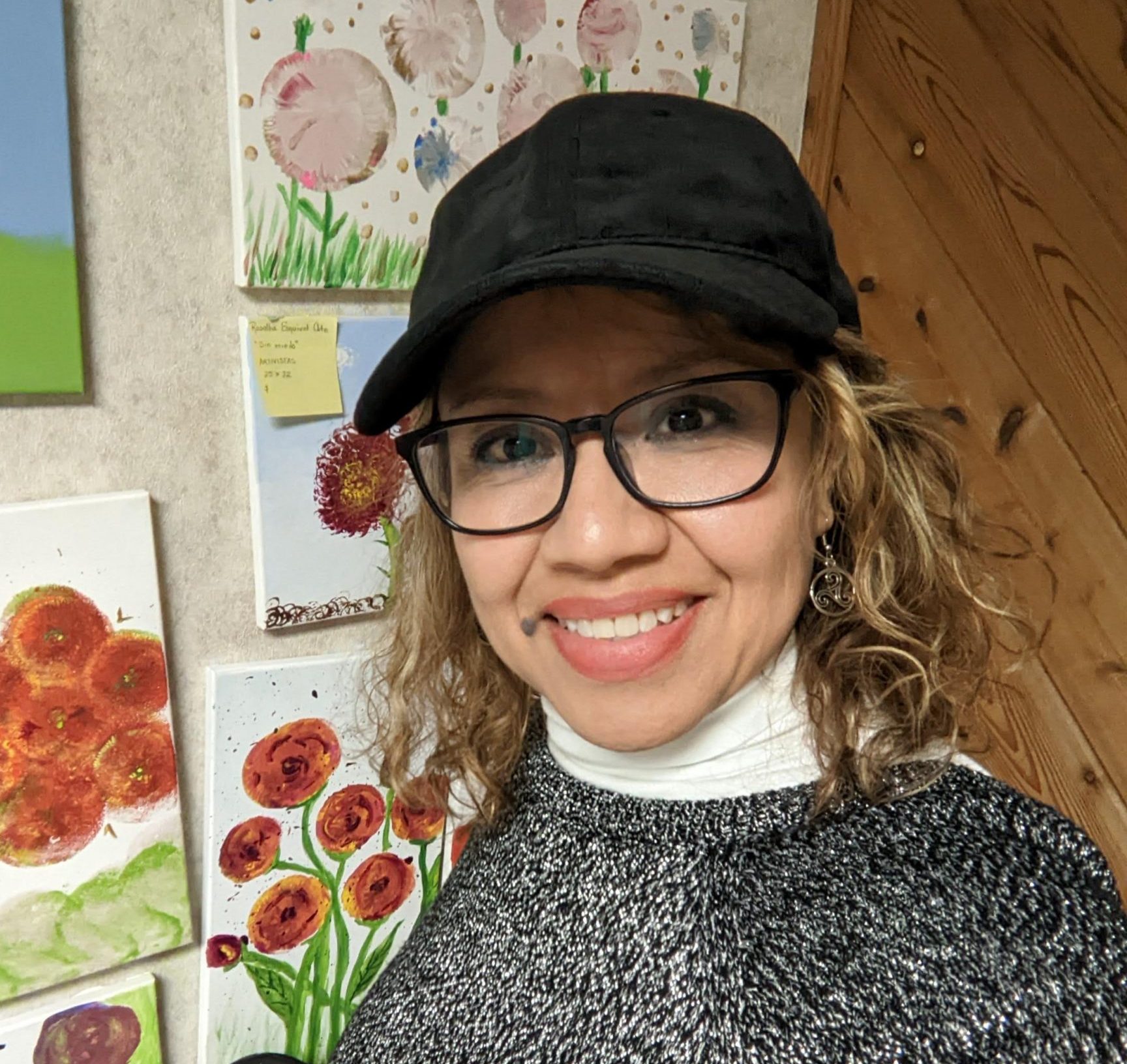
      Rosalba Esquivel Cote

      Rosalba es mujer, mexicana, microbióloga, maestra, aprendiz, y artivista. “¡Deja que tus gritos se lean!”

      She is a woman, Mexican, microbiologist, teacher, apprentice, and artist. “Let your cries be read!”

      Selected Works by Rosalba Esquivel Cote:
      La máquina de coser de mamá (III)
      La máquina de coser de mamá (II)
      La Máquina De Coser De Mamá (I)
      Mi Amiga y La Medusa
      Otoño
      Invierno

        Nuestro Mundo 

        RevarteColectiva · April 15, 2024 · Leave a Comment

        por Obed Arango

        Click here for English version

        Subtítulo en Español

        Nuestro Mundo, es el testimonio de Ruth una adolescente peruana de origen quechua que habita en las lomas de Chalhuani, en Puente Piedra, Lima. Su reflexión de vida es honesta directa, dura, pero llena de esperanza. En el cortometraje aborda los retos que tiene la comunidad por la falta de agua y de servicios básicos; sin embargo, presenta una luz de esperanza a través de la inauguración de la biblioteca “El Quijote” de Lomas de Chalhuani, que con su familia ha hecho posible. 

        El cortometraje forma parte de la colección “Villa Inmigrante” realizada y producida por Obed Arango quien durante los años 2021 y 2023 ha visitado la zona, entrevistado a los habitantes, grabado y fotografiado. 

        Un documental con el apoyo de la iniciativa “Futuros Justos” de UPenn y Fundación Mellon en colaboración con el Centro de Estudios Latinoamericanos de la Universidad de Pennsylvania” Y de Independence Public Media Foundation.

        Texto original y voz:

        “Mi mundo, tu mundo, nuestro mundo” por Ruth Layme Cárdenas

        Cinematografía:

        por Obed Arango


        English Version:

        Our World 

        English Subtitles Version

        Our World is the testimonial of Ruth, a Peruvian teenager of Quechua origin who lives in the hills of Chalhuani, in Puente Piedra, Lima. Her reflection about life is direct, honest, hard, but full of hope. In the short film she addresses the challenges that the community has due to the lack of water and basic services; However, she presents a light of hope through the inauguration of the “El Quijote” library in Lomas de Chalhuani that with his family he has made possible. 

        The short film is part of the “Villa Immigrante” collection made and produced by Obed Arango who during the years 2021 and 2023 has visited the area, interviewed the inhabitants, recorded and photographed.

        A documentary with the support of the “Fair Futures” initiative of UPenn and the Mellon Foundation in collaboration with the Center for Latin American Studies at the University of Pennsylvania and the Independence Public Media Foundation.

        Original text and voice:

        “My world, your world, our world” by Ruth Layme Cárdenas

        Cinematography 

        by Obed Arango

        Ruth Sarai Layme Cárdenas

        Es estudiante de séptimo grado y asiste a El Quijote para la vida, donde coordina la biblioteca de Lomas de Chahuani y dirige un programa de radio para adolescentes.

        She is a seventh grade student and attends El Quijote para la vida, where he coordinates the Lomas de Chahuani library and directs a radio program for teenagers.

          Obed Arango

          Obed es un ciudadano de América Latina de origen mexicano, artista visual y antropólogo. Director de CCATE y profesor de University of Pennsylvania. 

          He is a citizen of Latin America of Mexican origin, visual artist and anthropologist. Director of CCATE and professor at the University of Pennsylvania.
            • « Go to Previous Page
            • Page 1
            • Page 2
            • Page 3
            • Page 4
            • Page 5
            • Go to Next Page »

            Hit the ground running with a minimalist look. Learn More

            Copyright © 2026 · Monochrome Pro on Genesis Framework · WordPress · Log in

            • Instagram
            • Facebook