• Skip to primary navigation
  • Skip to main content

REVARTE

  • Home
  • About
    • REVARTE Collective
  • Issues
    • Número 8
    • Número 7 · 2025
    • Número 6 · 2024
    • Número 5 · 2024
    • Número 4 · 2023
    • Número 3 · 2023
    • Número 2 · 2023
    • Número 1 · 2022
  • Secciones / Sections
    • LITERATURA
    • JUVENTUD
    • ENSAYO
    • COMUNIDAD
    • MEDIA
  • Subscribe
  • Contribute
  • Show Search
Hide Search

RevarteColectiva

La información es el poder: La inclusión del idioma es un requisito previo de la democracia

RevarteColectiva · January 30, 2023 · Leave a Comment

Foto por Obed Arango

por Emma Hertz

“No hay paz sin justicia. No hay Justicia sin equidad. No hay equidad sin desarrollo. No hay desarrollo sin democracia. No hay democracia sin respeto a la Identidad y dignidad de las culturas y los pueblos.” Rigoberta Menchu Tum

En los últimos diez años, la población latina del suburbio de Filadelfia del condado de Montgomery, Pennsylvania, ha aumentado por más de cincuenta por ciento, con la mayoría de esto crecimiento en los 5.6 kilómetros cuadrados del pueblo de Norristown. Pasando por el barrio, calle por calle del medio oeste del pueblo está ocupada por panaderías ofreciendo conchas y pan dulce, escaparates de los vestidos para las quinceañeras y bodas, y volantes para las clases de Zumba o programas de inglés. El zumbido por estas calles es una mezcla del español e inglés, los gritos amistosos oídos sobre el estruendo del tráfico y la línea del tren que se intercepta con el pueblo.

Unas calles por la este, sin embargo, y nunca lo sabría que la población de estudiantes en el distrito escolar de Norristown es más del 40 por ciento latino. Aquí en el lado este, los carteles en las tiendas están en inglés, las personas caminando por la calle son trabajadores del gobierno y abogados caucásicos, haciendo negocios en las oficinas del condado. En el centro del ambiente está el palacio de justicia de la Edad Dorada, un imponente y gigante edificio que empequeñece a las tiendas; su presencia de mármol blanco en medio del pueblo más diverso étnica y racialmente del condado, es una metáfora obvia por la relación entre el gobierno local y la población del pueblo. No hay concordancia en verdad, para ver la divergencia que hay entre las culturas de los barrios, el contraste en el idioma oído por la calle y escrito por las tiendas.

Este contraste es un microcosmo del desafío afrontando a las comunidades cómo el condado de Montgomery en las últimas décadas, pues la inmigración de Latinoamérica ha aumentado y ha echado raíces en los barrios históricamente predominante habitado por la población blanca. Las poblaciones crecientes de residentes hispanohablantes están fortaleciendo comunidades en los suburbios, y esos condados que están históricamente blancos están luchando con- o, se puede discutir, pasando por alto- la necesidad de comunicarse con los residentes latinos que están llegando con niveles variando de fluencia en inglés y con el alfabetismo en general.

La urgencia y la importancia de comunicaciones entre los gobiernos y los residentes durante la pandemia, solo ha aumentado la visibilidad de estos desafíos, dónde comunidades como Montgomery fueron desafiados a proveer información en una manera oportuno y completo a los residentes latinos sobre crítica medidas de la salud pública.

Cómo los suburbios evalúan su propia capacidad para servir y escuchar a toda su población en la creación de la vida comunal, una cuestión central emerge- ¿Cómo construimos comunidades que valoran y sirven a todos los residentes, a pesar de su idioma y herencia cultural? ¿Qué contribuye la accesibilidad del idioma, y la información en general, a la práctica de la democracia? Y, mas importante como nosotros miramos al futuro- ¿Qué impacto tiene la accesibilidad del idioma al compromiso civil entre grupos históricamente excluidos de la democracia popular, en maneras que cambia nuestra práctica de la democracia a esa ideal de los “founding fathers”- a una unión más perfecta?

En el condado de Montgomery, el punto de partido de estas preguntas es realmente tan simple: ¿que información quieren y necesitan los residentes, y como quieren recibir esa información?

Estas preguntas se forman la base de el “Latinx Information Needs Assessment” conducido por el Listening Post Collective (LCP) en 2022, una organización sin fines de lucro que trabaja con asociados locales en más de cien países para construir medios de comunicación independientes y sostenibles y para fortalecer la capacidad de los profesionales de la media, las activistas de derechos humanos, y los emprendedores para proveer información local y de calidad. El LPC ha creado un proceso que se llama el “Information Needs Assessment” que se ha utilizado en muchas comunidades en los estados unidos, con un proceso que enfoque en cultivar la media local y el compromiso civil.

Dentro de esto estudio, el LCP planeó una serie de entrevistas y herramientas de encuesta por los hispanohablantes del condado de Montgomery. El objetivo fue aprender que tipo de información la población latina quiere, cómo quiere recibir esa información, y cuales oportunidades existen para investir en los canales de media que podría alinearse con esas prioridades.

El LPC publicó los resultados de su evaluación en su informe, “Montgomery County, PA: Latinx/Latino Information Ecosystem Assessment” en enero 2023 [enlace].  El informe habla a la amplitud de información que la población latina quiere- de la información sobre la salud pública y los trabajos, a más información sobre las escuelas y las guarderías, a la información sobre el alojamiento/ la seguridad pública/ los servicios gobiernos, y más. Notablemente, en cada categoría que fue incluido en las encuestas, los demandados pidieron por más información en general- destacando la escasez de información proveído por los canales corrientes.

Señaladamente, también, es el crecimiento de las organizaciones pequeñas que proveen la brecha de información para los latinos, y el papel importante que estos grupos llevan a cabo en apoyar a los procesos democráticos. Por ejemplo, el grupo local Champions Lowriders Club es una coalición de propietarios de motocicletas, enfocando en crear un espacio para compartir la información y noticias entre los latinos en Norristown. Además, unas organizaciones sin fines de lucro que están situados en la comunidad ofrecen información sobre los servicios de educación, salud, el desarrollo de negocios, y servicios sociales.

Estas organizaciones y grupos- incorporados formalmente como organizaciones sin fines de lucro, o funcionando como un club o grupo informal- tuvieron una postura crítica a la respuesta de salud pública del condado durante la pandemia de COVID- 19. Por ejemplo, la organización ACLAMO transmitió un “live stream” en Facebook cada día, traduciendo las sesiones de información del gobierno local, alcanzado a miles de personas latinas que de otra manera no habrían sido alcanzados. En otros ejemplos, grupos como CCATE y su círculo de salud, distribuyeron semana a semana y por casi dos años y medio, una canasta básica de comida basada en verduras, frutas, y pastas procurando una mejor salud en tiempos de pandemia; asimismo, tuvieron mes a mes clínicas de vacunación en su sitio y en la que aumentaron la tasa de vacunación de manera significativa entre los latinos, mientras que las esfuerzas del gobierno local fracasó en alcanzar a la misma población.

La intersección del conocimiento, la confianza, y el intercambio de la información es integral a asegurar resultados democráticos equitativos. Mientras que la capacidad de los inmigrantes latinos para participar en elecciones está limitada a causa de los retos con su estado de documentación (un tema para otro día), su habilidad para ser servido por su democracia todavía está una necesidad tangible. Y, sin capacidad de participar en estos procesos y decisiones democráticos- como el gasto de fondos gobiernos, la distribución de recursos a lo largo de las comunidades, o aun los tipos de servicios y apoyos que ofrece el gobierno- estos mismos procesos continuarán a excluir, negar, y a lo peor, hacer daño a las poblaciones latinos en los Estados Unidos.

La presencia de los grupos comunitarios es un primer paso, pero no es suficiente. El gobierno, los sistemas de educación, y los negocios no pueden depender de las organizaciones sin fines de lucro a servir como “mensajeros de confianza” a las poblaciones latinos en perpetuidad. Además, sería beneficial a estas instituciones si pudiera incorporar estrategias de comunicación que son mas inclusivas a los latinos (en adición a cualquiera población inmigrante en su comunidad) para que los ideales verdaderos podrían ser alcanzados.  

¿Cómo pretende un sistema de educación educar a cada hijo cuando la instrucción básica solamente está en un idioma, o si las comunicaciones con los padres solo son transmitidas en inglés? ¿Cómo dice un gobierno que sirve todos sus residentes cuando, durante una crisis de salud pública, no puede proveer seguramente la información critica en los dos o tres idiomas mas comunes en su comunidad? Estas son preguntas críticas que no hablan a los deseos de la población de inmigrantes, tanto como la incapacidad que las instituciones históricas a realizar su propia misión con un mundo cambiando.

Como entramos a un nuevo año, hay una oportunidad para las instituciones a reflejarse en como se puede cambiar sus propias prácticas para ser inclusivas a las culturas y los idiomas distintos, y cómo estos cambios resultarán en mejoras para estas poblaciones, así como para las instituciones. Como vemos cuando caminamos por las calles del oeste de Norristown, nuestra vida comunal está más rica cuando experimentamos diversas culturas e idiomas lado a lado. Hay sincronía cuando la gente se siente oída, vista, y valorada por su herencia cultural y las experiencias, el conocimiento, y la creatividad que traen a sus circunstancias corrientes. En vez de negar estas experiencias, negar a estas personas- ¿cuánta más fuerte sería nuestra democracia si las abrazamos?


Information is Power: Cultural and Language Inclusion is a Prerequisite for Strong Democracies

by Emma Hertz

“Peace cannot exist without justice, justice cannot exist without fairness, fairness cannot exist without development, development cannot exist without democracy, democracy cannot exist without respect for the identity and worth of cultures and peoples.” Rigoberta Menchú Tum

In the last ten years, the Latinx population of the Philadelphia suburb of Montgomery County, Pennsylvania has increased by over 50%, with the majority of that increase concentrated in the 3.5 square miles of Norristown, the county seat. Walking through town, block upon block of the western half of the town is occupied by bakeries offering conchas and pan dulces, window displays of beautifully tiered dresses for quinceañeras and weddings, and flyers for Zumba classes and after school English language programs. The buzz on these streets is a mix of Spanish and English, neighborly shouts heard above the din of traffic and the intersecting train line that connects to Philadelphia.

A few blocks east, though, and you’d never know that the student population in this town’s school district is over 30% Latinx. Here on the eastern side, the signs are all in English, the people walking the streets mostly white government workers and lawyers attending to business in the county offices. Centered among this milieu is the Gilded Age-era courthouse, an imposing behemoth of a building rising stories above the surrounding bail bond and cell phone storefronts, its ivory presence in the midst of the most racially diverse town in the county an obvious metaphor for the relationship between the local government and the increasingly racially and culturally diverse population in town. It’s jarring, really, to see such a divergence in culture a mere few blocks away, the least of which is the contrast in languages heard and written across the storefronts.

This contrast is a microcosm of the challenge facing communities like Montgomery County in the last twenty years or so, as immigration from Latin and Central America has increased and taken root in predominantly white, upper-class neighborhoods. Growing populations of Spanish-speaking residents are building communities in suburban counties, and those historically white counties are struggling with- or, one could argue, ignoring- the need to communicate with residents from non-English speaking countries who are arriving with varying levels of English fluency and literacy in general.

The urgency and importance of communications between governments and residents during the pandemic has only increased the visibility of these challenges, where communities like Montgomery were challenged to provide timely, comprehensive information to Spanish-speaking residents around critical public health measures.

As suburban communities evaluate their own capacities for serving and engaging their populace in community life, a central question arises- how do we build communities that value and serve all residents, regardless of their language? What does language accessibility, and information sharing in general, contribute to the practice of democracy? And, most importantly as we look ahead- does greater investment into language accessibility impact civic engagement among historically excluded groups in ways that tangibly shift our practice of democracy into that ideal for which our founding fathers strove- that more perfect union?

In Montgomery County, the starting point for these broader questions is actually quite simple- what information do Spanish-speaking residents want and need, and how do they want to receive that information?

These questions formed the basis of the 2022 Information Needs Assessment conducted by the Listening Post Collective (LPC), an international nonprofit organization that works with local partners in more than 100 countries to build sustainable independent media and strengthen the capacity of media professionals, human rights activists, and information entrepreneurs to deliver quality, local information. The LPC has devised a process called the Information Needs Assessment that it has employed in numerous communities across the United States, with a process that focuses on cultivating local media and civic engagement.

Through this study, the LPC designed a series of interview and survey tools for Spanish-speaking residents in Montgomery County. The purpose was to learn what kinds of information the population wanted more information on, how they wanted to receive/ hear about that information, and what opportunities existed for investing in media channels that would align with these priorities.

The LPC published the results of the study in their report “Montgomery County, PA: Latinx/Latino Information Ecosystem Assessment” in January 2023 [link]. The report speaks, overall, to the breadth of information that Spanish-speaking residents desire- from public health information and jobs, to daycare/ school information, to information about housing/ public safety/ government services, and more. Notably, in every category surveyed, Spanish language respondents asked for more information to be shared- highlighting the dearth of information currently provided to them through existing channels.

Notably, too, is the growth of grassroots organizations filling in the information gaps for Latino residents, and the important role these groups play in supporting democratic processes. For example, the local group Champions Lowriders Club is a growing coalition of bike owners and riders, intent on creating a space and platform for sharing information and news among the Latinx/Latino population in Norristown. As well, several nonprofit organizations situated in the community offer a diverse range of information about services for education, health, business development, and social services.

These organizations and groups- either formally incorporated as nonprofits, or existing more as clubs or neighborhood groups- were central to the County’s public health response during the COVID-19 pandemic. For example, the nonprofit ACLAMO started live-streaming translated versions of the official county briefings during the pandemic to their Facebook audience, reaching thousands of residents that would otherwise have gone without information during this time. In other instances, groups like CCATE partnered with local vaccine distribution efforts to host vaccine clinics on site, increasing vaccine rates among the Latino population dramatically while countywide efforts were unsuccessful in reaching the same population.

This intersection of knowledge, trust, and information sharing is a critical component of ensuring equitable democratic outcomes. While the ability of Latino immigrants participating in elections is limited due to challenges with immigration status (a topic for another day), their ability to be served by their democracy is still a tangible need. And, without access to participation in those processes- such as how government funds are spent, how resources are being distributed across communities, or even what kinds of services and supports are offered- those same processes will likely continue to exclude, not service, and at worst even harm Latino populations in the US.

The presence of community groups is an important first step, but it is not enough. Government, education systems, and businesses cannot expect to rely on nonprofits or grassroots coalitions to serve as “trusted messengers” to the Latino population in perpetuity. More so, it is a greater benefit to these institutions to incorporate broader messaging and communication strategies that are inclusive and inviting to Latino populations (as well as any other immigrant populations in their jurisdictions) so that the true ideals of a democratic country can be reached.

How can an education system purport to educate every child when basic instruction is only taught in one language, or communications to parents are only transmitted through an email in English? How can governments portend to serve their constituency when, during a public health crisis, they can’t reliably provide information in the two or three languages most commonly spoken in their community? These are critical questions that are not about the needs or desires of the populations unserved, so much as the inability of longstanding institutions to truly fulfill their own missions within a changing populace.

As we move into a new year, this is an opportunity for institutions to reflect on how changing their own practices to be inclusive of different cultures and languages would result in better outcomes for their populations as well as for the institutions themselves. As we see when walking through the streets of western Norristown, our communal life is made even richer when we experience diverse cultures and languages side by side. There is synchrony when people feel heard, seen, and valued for their cultural heritage and the experiences, wisdom, and creativity they bring to their current circumstances. Rather than deny those experiences, deny those people- how much stronger would our democracy be if we embraced them?
Emma Hertz

Emma es escritora, viajera, madre, y donante trabajando en Montgomery County, PA.
    Finding your Voice

    RevarteColectiva · January 24, 2023 · Leave a Comment

    Por Pam Margolis

    If you’ve ever had the pleasure of observing or interacting with children of any age, you’ll know they are driven by a moral code. This moral code may change from moment to moment and is often egocentric and situation specific. When boundaries are crossed you will hear the inevitable outburst “that’s not fair!” Sadly, children learn too young that the world is neither fair, equitable, nor free.

    Children also know that helping others benefits both sides and that participation is an activity that can be rewarding. Yet while kids enjoy participatory events, they know the difference between voluntary and involuntary participation. Forcing kids to participate is not always a negative experience, however. Certainly, forcing your little one into the car seat when you ride in the car is different than forcing them to wear a tight, itchy, and uncomfortable outfit. Children’s lives are full of forced participation accompanied by silent threats, open harassment, and bribery. They are, perhaps rightly so, provided few opportunities to self-govern; they might choose eating sweets instead of vegetables, skip baths, and unintentionally play too rough with the cat. Experts have written extensively about children and participation. Kids know when their participation is manipulative and/or when participation is a collective decision.

    Given all that children know, why don’t we give them more opportunity to choose the particulars of their participation? After all, participation is supposedly a necessary part of democracy. Why not provide children with more opportunities to practice democracy? I don’t always get it right but my goal in developing the Finding Your Voice class was to engage kids in true deliberative and participatory activities. Great thought and research have gone into my methodology: it is infused by Freire, Black Feminism, critical race theory, and LatCrit. I value the expertise, experiences, and opinions the kids at CCATE bring to class. By providing opportunities to share their knowledge of their lived experiences we are creating a tiny equitable democracy.

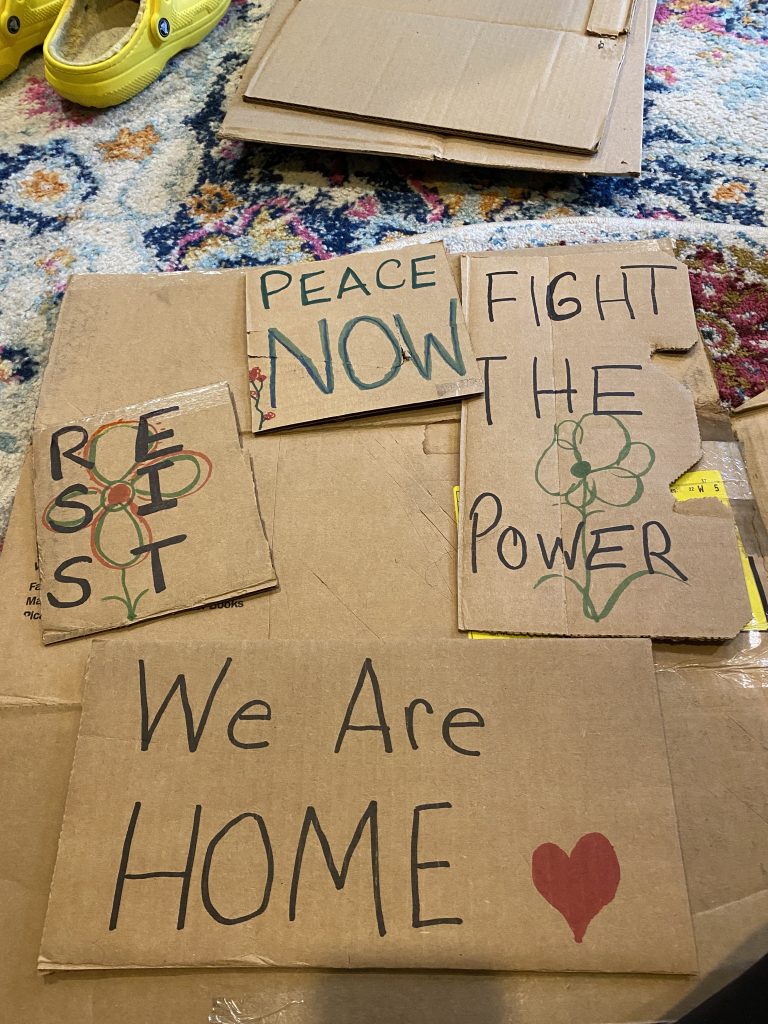
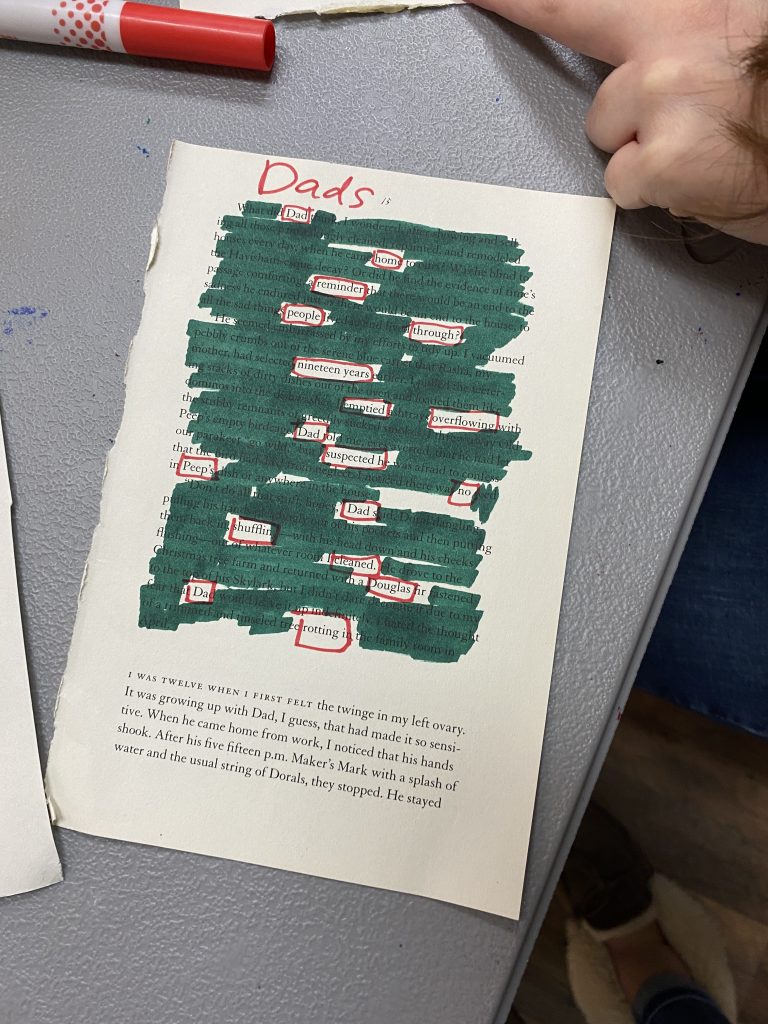
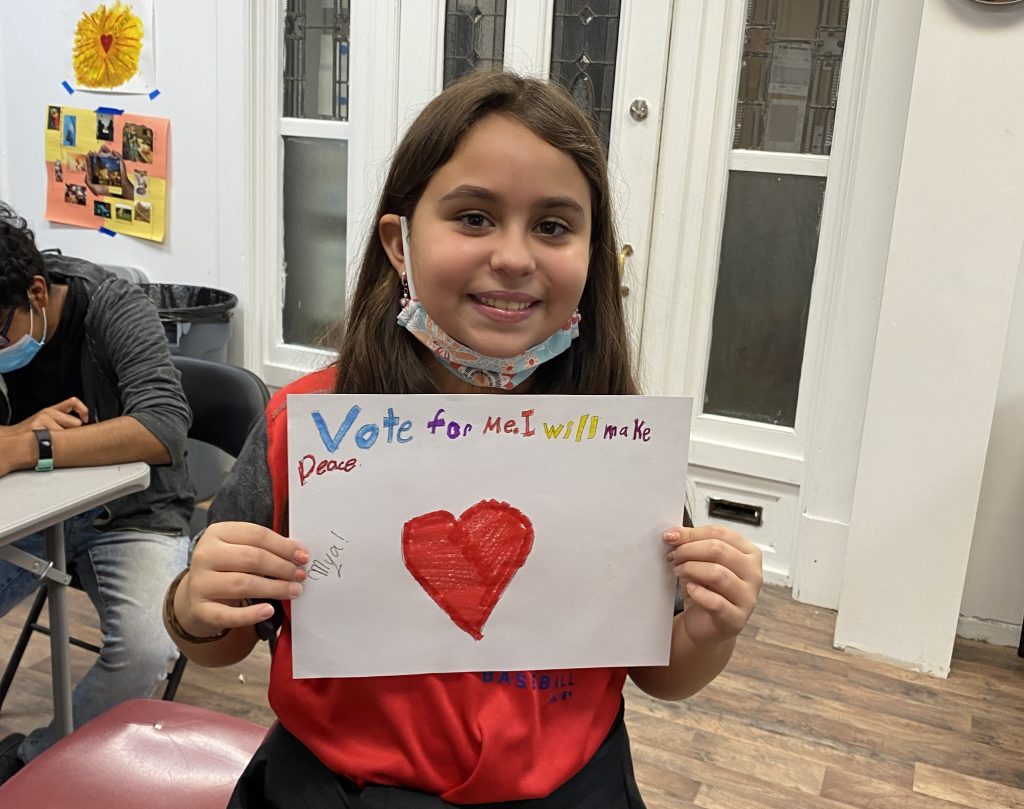
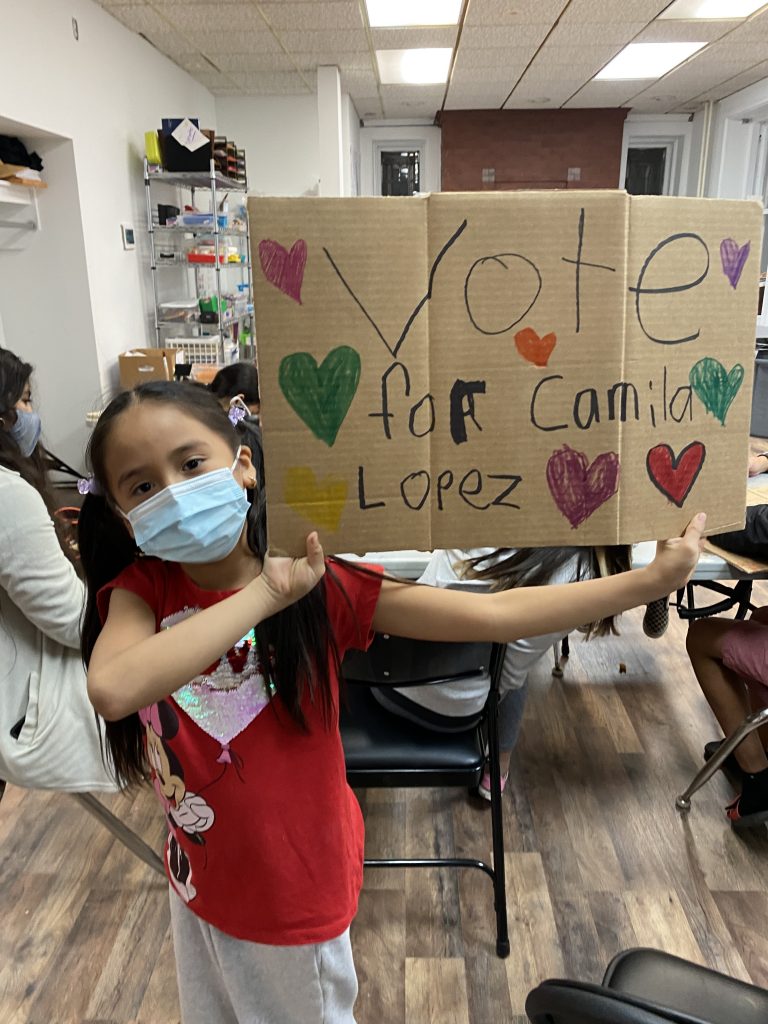
    Finding Your Voice provides opportunities for the kids to tell their stories in various formats: drawing, poetry, in Spanish or English, as a storyboard, a ‘zine, acrostic poem, or even as a protest sign. During Finding Your Voice, we don’t correct their spelling and grammar, however, we will help them if they ask. These kids are critiqued and disempowered enough during the day; they don’t need more of that. I believe critique slows the creative process and is another barrier to success, another way for the students to internalize negative feelings. The class is at its best when students are talking, singing, moving from table to table sharing ideas, resources, and enjoying the creative process. In class, the kids may see Caitlin and me as maestras, but I see us as facilitators of democracy. In the hour they are with us, the world is free, equitable, and fair. We are building the world we want to see.

    Pam Margolis

    Pam Margolis is a doctoral student at West Chester University studying curriculum and instruction. She is passionate about equity in education for children from marginalized groups:  African American, Latinx, disabilities and LGBTQ. She is an expert in the curation, development, and expansion of curriculum and library resources representing children from marginalized communities. Pam has an Executive Master of Public Service from the University of Arkansas Clinton School of Public Service, a Master’s in Library and Information Science from Drexel University, a BS in English Writing and  post baccalaureate in Teacher education, as well as K-6 Elementary Education certification and K-12 Library Media Specialist. Committed to the marriage of civic engagement and education, Pam serves her community as Perkiomen Township Supervisor.

      ¿Cómo trabaja un grupo de investigación participativa de la comunidad inmigrante latinx hacia la democratización del conocimiento para la transformación social?

      RevarteColectiva · January 24, 2023 · Leave a Comment

      por Obed Arango, Guadalupe Castillo, Horacio de la Luz, Lourdes Flores, Salomé Flores, Holly Link, Diana Lugo, y Laura Sánchez

      Este ensayo nace desde una pregunta clave que invita a retar los modelos establecidos de la educación en el que el conocimiento es unidireccional, y en el que se construye muchas veces desde las academias. En este artículo compartiremos cómo hemos vivido un diálogo fecundo, democrático, y a través de los años, y en el que las reflexiones en conjunto, y la investigación comunitaria nos da una luz distinta, varias perspectivas que desde la academia no se hubieran podido vislumbrar. En las siguientes líneas, daremos respuesta a la pregunta inicial, a partir del proceso que llevamos y bajo la metáfora de labrar juntos la tierra del conocimiento desde la misma base social.

      Recientemente en CCATE empezamos una nueva colaboración con el Centro de Estudios Latinoamericanos y Latinx, y la Escuela de Educación, de la Universidad de Pensilvania (Penn). Nuestra meta es desarrollar lo que se llama una asociación de práctica de investigación (API), en la cual se forma una alianza a largo plazo entre investigadores universitarios y comunitarios para dar respuestas a los retos y obstáculos que hay en el campo y práctica de la educación.

      Para formar esta alianza es necesario dar algunos pasos que permita construir puentes de comunicación entre la universidad y la comunidad. El primer paso que se decidió en conjunto es él de reunirnos mensualmente para sostener diálogos comunitarios, de esta manera podemos conocernos, apreciarnos, reconocer el conocimiento y el aporte  de todxs, y asimismo, compartir y explorar nuestros intereses en común y la agenda social de la comunidad. Hemos dialogado de manera abierta, y honesta, sobre la desigualdad en el sistema educativo y en relación con la comunidad latina. En el tercer diálogo en noviembre, nuestro círculo de investigaciones comunitarias participativas de CCATE compartió sobre el trabajo que hemos hecho juntxs desde 2015, nuestras experiencias como investigadores comunitarios y también compartimos sobre nuestro nuevo proyecto. Lo siguiente es un resumen de lo que compartimos.

      Nuestra labranza:

      Empezamos a trabajar en el 2015 cuando un grupo de familias y líderes de CCATE se juntaron para dar una presentación en el Foro de etnografía en educación de Penn – GSE). La meta fue dar la perspectiva familiar de madres, padres e hijxs méxicanxs sobre la comunicación entre familias y escuelas, sobre asuntos de estatus migratorio, un tema visto en esa época como tabú para maestrxs y administradores escolares, un tabú que sigue existiendo hoy en día, incluso para las familias en si. Después de la presentación los que participamos escribimos un artículo titulado Un trago dulce pero con sabor amargo sobre la experiencia que fue publicada en 2016 en la Revista de Educación de la diáspora, los indígenas y las minorías. En ello teorizamos cómo, a través de una colaboración crítica motivada por nuestra presentación conjunta, co-construimos contraespacios en los que, mientras cuestionamos lo que tendemos a considerar como conocimiento y experiencia en la investigación educativa, es decir hicimos cuestionamientos epistemológicos y ontológicos importantes en los que concluimos que el conocimiento se produce también desde la comunidad y no solo desde la academia, a esto le llamamos la democratización del conocimiento. Pudimos abordar no solo la dificultad de comunicarnos con los docentes sobre temas relacionados con estado de documentación, sino también de saber abordar este tema con lxs niñxs y entre ellxs. Vemos este trabajo juntxs como una labranza de la tierra en preparación para la formación de lo que actualmente es nuestro Círculo de investigaciones comunitarias participativas (CIPC). 

      La siembra: El entrenamiento y desarrollo del CIPC

      Dos mil dieciocho marca el año que esparcimos semillas para una nueva fase de nuestro trabajo en conjunto cuando empezamos a vernos cada semana. Nos entrenamos en métodos de investigaciones participativas y desarrollamos nuestra primera investigación. Este tipo de investigación se centra en las inequidades ambientales, sociales, estructurales y físicas y requiere participación activa de los miembros de la comunidad en todos los aspectos del proceso de investigación. Los resultados se utilizan para desarrollar acciones concretas para abordar estas desigualdades (Mora & Diaz, 2004). Desde entonces hemos tenido más de 180 reuniones semanales durante las cuales hemos abordado temas sobre la educación y la migración, los efectos del estatus migratorio en las experiencias escolares de estudiantes de familias de estatus mixto, y comunicación entre el hogar y la escuela sobre estos asuntos. Nuestras investigaciones acerca de estos temas están profundamente arraigadas en la noción de Paulo Freire de la educación dialógica junto con la filosofía de CCATE de que todxs tienen algo que enseñar y algo que aprender. En contraste con el modelo bancario, la educación dialógica coloca significantes y el diálogo crítico como base para la enseñanza y el aprendizaje.

      Cosechando: Los resultados del trabajo de CIPC

      Hemos experimentado y visto una rica cosecha del trabajo que hemos hecho juntxs desde el 2018. A nivel individual y colectivo los resultados han sido aprender, leer, superarnos en nuestra educación, y conocernos y querernos como grupo. Hemos experimentado el proceso de concientización de la cual habla Paulo Freire. Hemos podido trabajar y dialogar acerca de la complejidad de las realidades de nuestra comunidad y de cómo funciona la educación bancaria y cómo está funcionando en las escuelas. Otro resultado ha sido el proceso de autoayuda. Por ejemplo, ahora la comunidad tenemos más valor y confianza de hablar con las escuelas. Incluso hemos podido proveer servicios para nuestra comunidad, por ejemplo, creando una guía de preguntas para usar en las conferencias escolares. También nos hemos fortalecido en la abogacía y organización comunitaria.

      Hemos logrado varias publicaciones y muchas presentaciones que nos han traído promoción de nuestra labor y colaboración, principalmente con universidades. En el proceso se ha abierto diálogo con personas que no habíamos considerado y hemos podido entablar diálogo con colaboradores nuevos. Por ejemplo, ahora tenemos una relación con miembros de la junta directiva de Distrito Escolar de Norristown.  Incluso por este lado hemos sido invitadxs a ser parte de un comité comunitario consejero para el distrito escolar. Y por estas conexiones, el año pasado logramos ser contratadxs como consultores para los enlaces comunitarios del distrito escolar quienes proveen servicios de interpretación para familias de habla español. Durante esta experiencia que fue un trabajo de cuatro estaciones durante el año escolar, pudimos trabajar y dialogar acerca de la complejidad y la realidad de cómo funciona la educación bancaria en las escuelas de Norristown, y cómo está funcionando en las escuelas, y en nuestra propia educación incluso con personal hispano en el distrito. Esta experiencia nos mostró los efectos de la colonización mental que han experimentado muchos miembros de la comunidad migrante y latina, por ejemplo, las ideologías que llevan como el “mandato” de usar solo inglés en las escuelas. Trabajar con el distrito escolar también nos ha motivado a involucrarnos más en asuntos de las escuelas y de regresar a dar clases de español para maestrxs y miembros de la junta de concejales de la municipalidad.

      Finalmente nuestro trabajo ha motivado que en otros círculos de CCATE se haya generado investigaciones y presentaciones, por ejemplo en justicia ambiental y salud, con las Artivistas, un colectivo de arte en crecimiento que crea un espacio para que las mujeres expresen su creatividad, reflexionen sobre sus identidades y exploren problemas sociales apremiantes, y con el grupo de investigaciones participativas de jóvenes. Estos proyectos han incluido estudios, colaboraciones con otras universidades y organizaciones sobre el plomo, el rol de la mujer en la sociedad, un censo de salud para nuestra comunidad y la ejecución de clínicas de salud y vacunación.  De esta manera, nuestro trabajo tiene impacto circular que implica el compromiso y conocimiento de diversos grupos en CCATE.

      Piedras en el camino: Los retos que enfrentamos

      En el camino hemos enfrentado una variedad de retos. Por ejemplo, aunque nos reunimos cada semana por varias horas nunca tenemos tiempo suficiente para hacer todo lo que queremos hacer y lograr. Reconocemos que lo que hacemos es una gran labor para algo que aunque sí tiene resultados positivos en el momento, la transformación social que esperamos no se verá hasta años más adelante. A la vez reconocemos que cada una y uno de nosotrxs tenemos diferentes identidades, roles y posicionalidades que se relacionan con experiencias vividas y niveles de comprensión muy diferentes entre nuestros miembros sobre los temas que investigamos y los problemas sociales que enfrentamos. Mientras vemos estas diferencias como claves en poder desarrollar proyectos que ayudarán a hacer los cambios que esperamos, entendemos que fuera de nuestro grupo las etiquetas y suposiciones sobre quiénes somos y lo que podemos aportar y enseñar pueden ser dañinos, y pueden prohibir que ciertos grupos nos escuchen y nos respeten. Por ejemplo, un reto ha sido la negación de administradores y de empleados, incluso latinxs, del distrito escolar de ver a los miembros de nuestro grupo como expertos, lo cual nos indica el profundo nivel de colonización mental de personas de nuestra propia comunidad. También reconocemos que los temas que investigamos caen como un peso enorme en los miembros de nuestro grupo quienes experimentamos con las inequidades y agresiones contra migrantes, y especialmente migrantes indocumentados. Por eso nos tenemos que cuidar y movernos al ritmo que tenga sentido.

      Nuevas labranzas: Nuestro nuevo proyectoEste año hemos empezado un nuevo proyecto de investigación en el que usamos el método de foto voz, un proceso mediante el cual las personas pueden identificar, representar y mejorar su comunidad a través del uso de fotos o imágenes (Wang & Burris, 1997). Las preguntas que nos están guiando son las siguientes: ¿Cómo podemos desenterrar las raíces culturales, históricas y actuales de nuestras comunidades? y ¿De qué hemos sido despojadxs? Nuestra meta es entender mejor los efectos del colonialismo y los procesos de despojo que experimentan migrantes mexicanxs y latinoamericxs en los Estados Unidos. Actualmente, estamos haciendo un estudio piloto de foto voz entre los miembros de nuestro círculo explorando estas preguntas. Basado en lo que aprendemos, esperamos invitar a un grupo de miembros de la comunidad de CCATE – familias, jóvenes y personal del distrito escolar – que participen en una investigación formal. Usaremos estos datos para desarrollar y proponer acciones legislativas concretas para las escuelas y la municipalidad. De esta forma el círculo de investigaciones participativas de CCATE seguirá llevando su labor más allá del conocimiento, y experiencias de la comunidad inmediata, a otros grupos, instituciones y miembros de la comunidad. Lo que vislumbramos es una mayor influencia pública, una concientización y humanización, tanto en los diálogos como en las acciones que son resultado de la influencia del conocimiento que se produce desde y por la comunidad.

      Los miembros del CCATE Investigación Acción Participativa

      María Guadalupe Castillo – Inmigrante mexicana, investigadora y líder comunitaria, instructora de clases de gimnasia para niños, integrante de los círculos de Artivistas, y de salud del CCATE.
      Horacio de la Luz – Inmigrante mexicana, investigador y lider comunitario del CCATE.
      María Lourdes Flores – Inmigrante mexicana, investigadora y lider comunitaria, instructora de la clase de dibujo, integrante de los círculos de Artivistas, y de salud del CCATE.
      Salomé Flores – Inmigrante mexicana, investigadora y lider comunitaria, integrante de los círculos de Artivistas, y de salud del CCATE
      Diana Lugo – Inmigrante mexicana, investigadora y lider comunitaria, instructora de clase de justicia ambiental en CCATE,  integrante de los círculos de Artivistas, y de salud del CCATE.
      Laura Sánchez – Inmigrante mexicana, investigadora y lider comunitaria,  integrante de los círculos de Artivistas, y de salud del CCATE
      Holly Link Ph.D. – Director de Programas Educativos e Investigación del CCATE, y profesor de política social en la Escuela de Política y Práctica Social (SP2) de la Universidad de Pensilvania.
      Obed Arango – Director Ejecutivo del CCATE y profesor de política social en la Escuela de Política y Práctica Social (SP2) de la Universidad de Pensilvania.


        HOW DOES A PARTICIPATORY RESEARCH GROUP OF THE LATINX IMMIGRANT COMMUNITY WORK TOWARDS DEMOCRATIZING KNOWLEDGE FOR SOCIAL TRANSFORMATION?

        This essay stems from a key question that challenges established models of education in which knowledge is unidirectional, and in which it is often built top-down from the Academy. In what follows, we share how, through our community-based participatory research at CCATE, we have lived a fruitful, democratic dialogue through our research and work together in which we draw on non-traditional forms of knowledge-making. We use the metaphor of tilling the land of knowledge together from a shared base of love and connection. 

        Recently at CCATE we started a new collaboration with the Center for Latin American and Latinx Studies, and the Graduate School of Education, both of the University of Pennsylvania (Penn). Our goal is to develop a Research Practice Partnership (RPP), in which a long-term alliance is formed between university and community researchers to provide answers to the challenges and obstacles that exist in the field and practice of education and education research.

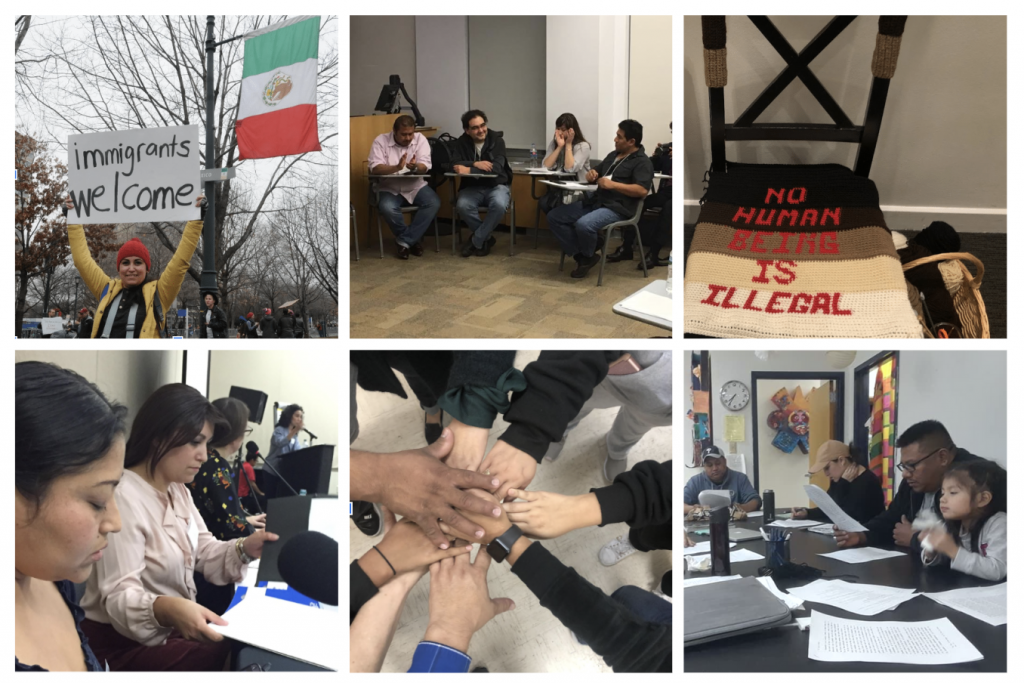
        To form this alliance, we have been meeting monthly to hold community dialogues among CCATE families, and Penn faculty and students, to get to know each other and recognize everyone’s knowledge and contributions, and also share and explore our common interests in education. We have spoken openly and honestly about inequities in Norristown schools and in relation to the Latinx community. In November, our CCATE participatory community research circle shared about the work we have done together since 2015, our experiences as community researchers, and our new research project. The following is a summary of what we shared.

        Tilling the Soil

        We started working together in 2015 when a group of families and CCATE leaders came together to give a presentation at the Penn Ethnography in Education Research Forum. The goal was to share family perspectives from Mexican parents and children on communication with schools about issues related immigration status, a topic seen as taboo in schools and one still exists, even for families themselves. After the presentation, those of us who participated wrote an article entitled, A sweet drink but with a bitter taste about our experience presenting at the forum. This was published in 2016 in the Journal of Diaspora, Indigenous and Minority Education. In this article we theorize how, through a critical collaboration motivated by our presentation, we co-constructed counterspaces in which we questioned what we tend to consider as knowledge and experience in educational research, exploring new epistemological (what counts as knowledge) and ontological (who are typically considered to be researchers) questions. We concluded that critical knowledge about education can be produced 

        from and in the community, which we see as crucial for the democratization of knowledge. In the article, we addressed not only the difficulty of communicating with teachers on issues related to documentation status, but also the difficulty of addressing this issue within and among immigrant families. We see this initial work together as tilling the soil in preparation for the formation of what is now our Community-based Participatory Research Circle (CIPC).

        Planting seeds: CIPC training and development

        In 2018, we began sowing seeds for a new phase of our work together, meeting weekly as a group. We trained in participatory action research (PAR) methods and developed our first research project. PAR focuses on environmental, social, structural, and physical inequities and involves active participation of community members in all aspects of the research process. The results are used to develop concrete actions to address these inequalities (Mora & Diaz, 2004). Since 2018, we have had 180+ sessions together during which we have explored issues around education and migration, the effects of immigration status on the schooling experiences of students from mixed-status families, and communication between home and school on these issues. Our research on these issues is deeply rooted in Paulo Freire’s notion of dialogic education along with CCATE’s philosophy that everyone has something to teach and something to learn. In contrast to the banking model, dialogical education critical dialogue as the basis for teaching and learning.

        The Harvest: Results of Our Work

        We have experienced and seen a rich harvest based on the work we have done together since 2018. Individually and collectively the results have been learning, reading, educating ourselves, and getting to know and love each other in our circle. We have gone through the process of conscientization of which Paulo Freire speaks. We have been able to discuss and address the complexity of the realities of our community and how the banking model of education still prevails in Norristown schools. Another result of our work has been developing deep support systems for CCATE families and avenues for them to participate more actively in schools, through, for example, parent guides to use at school conferences. Community members now have more courage and confidence to broach difficult topics with their children’s teachers and school administrators, and we have also strengthened our advocacy and organizing among our community.

        Our group has achieved several publications in English and Spanish in education journals, and we have shared our work through many presentations at universities in the US, Mexico, Sweden and Germany. Through these experiences, we have engaged in dialogue with university students, faculty, and local school teachers and administrators. For example, we have formed a partnership with several Norristown School District Board members, and through this partnership have been invited to be part of a community advisory committee for the school district. We have also worked as consultants for the school district’s community liaisons who provide interpretation services for Spanish-speaking families. Through this work were we were able to more clearly engage with and better understand the complexity and reality of how banking education works in Norristown schools, and how this filters down to daily interactions between school personnel and Spanish-speaking families, who for example, tend to be positioned through a deficit lens, even by Hispanic personnel in the school district. This experience has illustrated the effects of colonization that many members of the immigrant and Latinx community have experienced and the ideologies that they carry, such as the “mandate” to use only English in schools. Working with the school district has also motivated us to become more involved in school affairs and to return to teaching Spanish for school board members and members of the municipal board of Norristown.

        Finally, our work has motivated other CCATE circles to generate their own research projects and presentations such as the environmental justice and health circles, the Artivistas (a growing art collective that creates a space for women to express their creativity, reflect on their identities and explore pressing social issues), and the new youth participatory research group at CCATE. These projects have included research collaborations with other universities and organizations on topics such as lead poisoning, the role of women in society, a health census for our community, and the administration of numerous health and vaccination clinics. In this way, our work has a circular impact that now involves the commitment and knowledge of other groups in CCATE.

        Stones Along the Path: The Challenges We Face

        Along this path of research for social transformation, we have faced a variety of challenges. For example, even though we meet every week for several hours, we never have sufficient time for everything we want to do and achieve. And while we recognize that what we are doing does have positive results in the moment, the deeper social transformation we hope for will not be seen until years into the future. We recognize that each one of us has different identities, roles, and positionalities that are related to our individual and collective lived experiences and very different levels of understanding and wisdom among our members about the topics we investigate and the social problems we face. While we see these differences as critical to being able to develop projects that will help make the changes we hope for, we understand that outside of our group, the labels and assumptions about who we are and what we can contribute and teach can be harmful and can prohibit certain groups from listening to and respecting us. For example, many school district administrators and staff, including Latinx personnel, struggle to view our group members as experts with knowledge to share, preferring to see us through a deficit lens. We also recognize that the issues we investigate weigh heavily on the members of our group whose daily  experiences involve inequities and aggressions against migrants, and especially undocumented migrants. Because of this enormous weight, we work to take care of ourselves and each other, and move at the pace that makes sense for us.

        Tilling the Soil Again: Our New Project

        This year we have started a new research project using the photovoice method, a process by which people can identify, represent, and improve their community through the use of photos or images (Wang & Burris, 1997). The questions that are guiding us are the following: How can we unearth the cultural, historical, and current roots of our communities? And what have we been dispossessed of through the process of immigration? Our goal is to better understand the effects of colonialism and the dispossession experienced by Mexican and Latin American immigrants in the United States. We are currently conducting a pilot photovoice study among members of our circle exploring these questions. Based on what we learn, we hope to invite a group of CCATE community members – families, youth, and school district staff – to participate in a formal research project on this topic. We will use what we learn to develop and propose concrete legislative actions for schools and the municipality. In this way, CCATE’s participatory research circle will continue to take its work beyond the knowledge and experiences of the immediate community, to other groups, institutions, and community members. What we envision for the future is a base of knowledge produced from and by the community that will influence public policy and foster awareness and humanization of immigrant individuals and families.

        References

        Mora, J. & Diaz, D. R. (2004). Participatory action research: A new vision and practice in 

        Latino communities. In Latino social policy: A participatory research model, Introduction, 1-21. The Haworth Press.
        Wang C, Burris MA. Photovoice: Concept, Methodology, and Use for Participatory Needs Assessment. Health Education & Behavior. 1997;24(3):369-387. doi:10.1177/109019819702400309

        Members of CCATE Participatory Action Research

        María Guadalupe Castillo – Mexican immigrant, researcher and community leader, instructor of gymnastics classes for children, member of the circles of Artivistas and CCATE health.

        Horacio de la Luz – Mexican immigrant, CCATE researcher and community leader.

        María Lourdes Flores – Mexican immigrant, researcher and community leader, instructor of the drawing class, member of the circles of Artivistas and CCATE health.

        Salomé Flores – Mexican immigrant, researcher and community leader, member of the circles of Artivistas and CCATE health.

        Diana Lugo – Mexican immigrant, researcher and community leader, CCATE environmental justice class instructor, member of the circles of Artivistas and CCATE health.

        Laura Sánchez – Mexican immigrant, researcher and community leader, member of the circles of Artivistas and CCATE health.

        Holly Link Ph.D. – Director of Educational Programs and Research at CCATE, and lecturer of social policy, and research at the School of Social Policy and Practice (SP2) at the University of Pennsylvania.

        Obed Arango – Executive Director of CCATE and lecturer of social policy, and research at the School of Social Policy and Practice (SP2) at the University of Pennsylvania.

          Diplomats for liberation: Reflections on integrating Freire in a class on diplomacy

          RevarteColectiva · January 23, 2023 · Leave a Comment

          By Cathy Bartch

          Freirean Diplomats: How the Penn Model OAS program, a university-community based program with CCATE and Philadelphia public school students, integrates the Brazilian philosopher’s theories in educating global citizens

          What do Paulo Freire, the renowned Brazilian critical educator and philosopher, and diplomacy have in common? Why may one be introduced to and study Freire, the author of Pedagogy of the Oppressed, in the context of a course on diplomacy? What can diplomats, either budding or real, learn from the celebrated philosopher? 

          The course Diplomacy of the Americas, is a class I teach which is a seminal component of the University of Pennsylvania’s Center for Latin American and Latinx Studies’ Penn Model OAS Program. The course views diplomacy, an area conventionally perceived as the realm of elites, through a Freirean lens in an effort to educate global citizens and find transformational solutions to pressing world problems. 

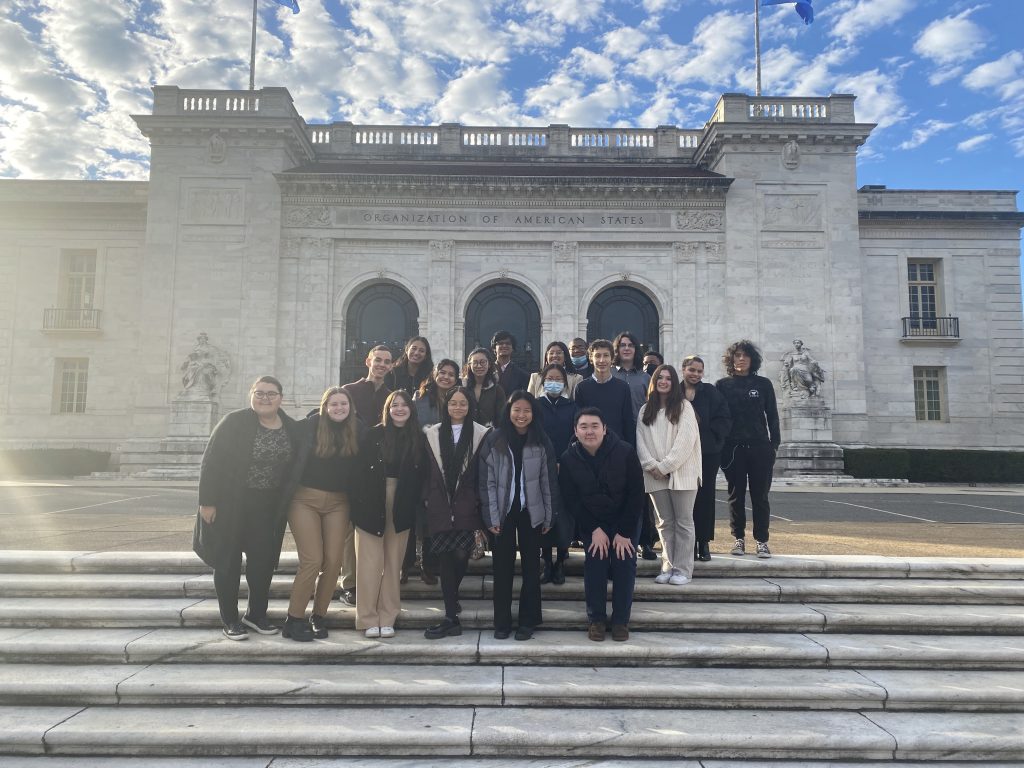
          Diplomacy in the Americas is an experiential, academically based community-centered course where college and public high school students from Philadelphia and Norristown (particularly those who are part of CCATE’s high school program) collectively learn about how Freire, Latin American politics, and diplomacy, interrelate. Students research and carefully propose solutions to hemispheric problems in simulations of the Organization of American States (OAS). By engaging directly in debate and negotiations in Penn Model OAS, students apply their critical thinking, public speaking, and writing skills, as well as deepen their understanding of international politics. 

          The guidepost to the course, for both the high school and college cohort, is global and civic education, but the college students are given the specific task of designing and implementing a structured, in-class, active learning curriculum on the topics of democracy, development, security, and human rights, the four OAS pillars. To prepare college students for this pedagogical exercise, they could solely be given a resource on teaching techniques or a guide about how to design global education curricula. In fact, they are introduced to Fernando Reimers’ Empowering Students to Improve the World in 60 Lessons, which provides an excellent overview of the general capacities, dispositions, and knowledge youth should possess to develop global civic and political efficacy. This book and his framework are instrumental to the college students learning about how to educate young learners for global citizenship. Yet, while it addresses structural inequalities in wealth and income, it only goes so far in delving into the politics behind these disparities, critiquing the dictates of neoliberalism, or addressing the nuances behind societal polarizations.

          Freire’s framework presented in Pedagogy of the Oppressed as well as his other writings, adds an enhanced dimension to the experience. Freire pushes students to see the world around them, think about it critically, and act on it by bridging theory with practice, an action he terms praxis. He calls for educators to abandon the “banking” method of teaching, or depositing information in students’ minds, and instead activate a critical consciousness where students bring their lived experiences in critically analyzing larger social, political and economic structures. 

          It is this conscientizaçao that awakens people to the larger structural inequalities, or systems of oppression between the oppressor and oppressed as Freire elaborately discussed, so that they can take action to transform the world. Freire, at least in my opinion and my modest study of his readings, doesn’t describe in concrete detail the nature of what this transformation may look like or the difficulties in forming a successful struggle, but his theory for liberatory education provides a philosophical opening, for the educator and student to approach the world and politics critically, reducing apathy or sense of powerlessness when tackling global problems. 

          This is why it is important for the educator and the student to read some of Freire’s works. Hence, both high school and college students in the PMOAS program are assigned excerpts of Pedagogy of the Oppressed, with the college students having additional related readings by bell hooks and Ira Shor and Paulo Freire. Moreover, in the context of Latin American and hemispheric politics, it would be grossly negligent to not engage students in concepts of colonialism, systems of dependency, or other dynamics to explain the political economic trajectory of Latin America as it has been inserted into the global capitalist system. Freire provides a theoretical backdrop to this understanding.

          Coming back to the topic of diplomacy, why would Freire’s Pedagogy of the Oppressed or other writings be relevant to the study of diplomacy itself? In the Diplomacy in the Americas course, students learn about diplomacy through multiple channels in and outside the classroom including visiting with ambassadors, becoming “diplomats” in the simulations of the OAS General Assembly, attending talks on cultural diplomacy, and participating in other lectures and dialogues with experts and peers. Through these varied activities, students learn diplomacy is more than negotiations between elite ambassadors. Diplomacy can be carried out by people at all levels as a practice in art and science to strive for peace across differences. It could be revealed as high-level negotiations during times of crisis, or expressed through art forms, such as paintings or media representations of cultures worldwide, or demonstrated through sports as the great Brazilian soccer player Pelé demonstrated, or it could be any form of sharing of cultures with one another. 

          Freire’s emphasis on critical education and the development of counter-narratives should be essential education for any diplomat, whether nascent or seasoned. Reading Freire would aid a diplomat in understanding the structural imbalances in society and challenging the notion that states, their borders, and the global society, often deemed anarchical due to an absence of a world government, are fixed rather than socially constructed over time and in constant flux. 

          If diplomats read Freire they would be better equipped to listen to the people on the ground, those from all walks of life, especially the most marginalized, in considering what policies would engender the most effective and humane results. Importantly, reading Freire would help diplomats shed hubris in favor of empathy and humility. As Peter Lownds, co-founder of the Paulo Freire Institute at UCLA, wrote in a 2004 book review, “Love, tolerance, and humility, [are] three qualities that Freire found indispensable for what he saw as our constant work in progress – ‘becoming fully human’ – [and] are inextricably tied to work in which we involve ourselves with others.” Furthermore, Lownds added, “Praxis only ‘liberates’ if it transcends solipsism and links us to our fellows who today may speak languages and act in ways we do not at first understand.”

          Indeed, the ideal diplomat should possess expert knowledge of the politics and history of a country, sharp critical and analytical acumen, and top-notch public speaking and writing skills, among other traits, as former distinguished U.S. ambassador Robert Blackwill outlines here.

          By reading Freire, however, a new ideal diplomat could emerge, one that is not confined by national interest, mired in a zero-sum mentality, or unquestionably adheres to the dictates of the neoliberal market system. The Freirean diplomat would negotiate and dialogue with the aim of political transformation that strives to dismantle the capitalist oppressed and oppressor system globally. 

          The Freirean diplomat would also just not be the diplomat seated in the OAS’ Hall of the Americas or the UN’s General Assembly. As Obed Arango states in his presentation on the 200th anniversary celebration of Mexico-U.S. relations, the real diplomat is the immigrant. The Freirean diplomat would endeavor for an ideal world of transcending borders to better understand one another and protect fundamental principles like human rights, bridging theory and praxis to activate a conscientiousness that will engender real political change for those who have historically lacked equal political and economic power. Most importantly, the Freirean diplomat would put empathy and love first. 

          This “ideal” Freirean diplomat is what we strive to teach in the Penn Model OAS program. 

          Cathy Bartch

          Catherine Bartch is the Associate Director of the Center for Latin American and Latinx Studies at the University of Pennsylvania, and the Co-Director of the Penn Model Organization of American States (OAS) program. Her research interests include Latin American politics, U.S. politics, democratic theory, civic education and participation, and international development. She has taught an array of courses on these topics and others, including International Organizations in Latin America, Latin American Politics, and Latinxs and the Law, at various regional private and public universities and community colleges. Her current research and teaching focus on how to educate for global political participation. She is involved in local and state-level politics, and she has served as an election monitor in the U.S. and Bolivia. Catherine also serves on the board of CCATE and the Institute for Dialogue and Diplomacy.

            Las Cooperativas, modelo de gestión democrática

            RevarteColectiva · January 23, 2023 ·

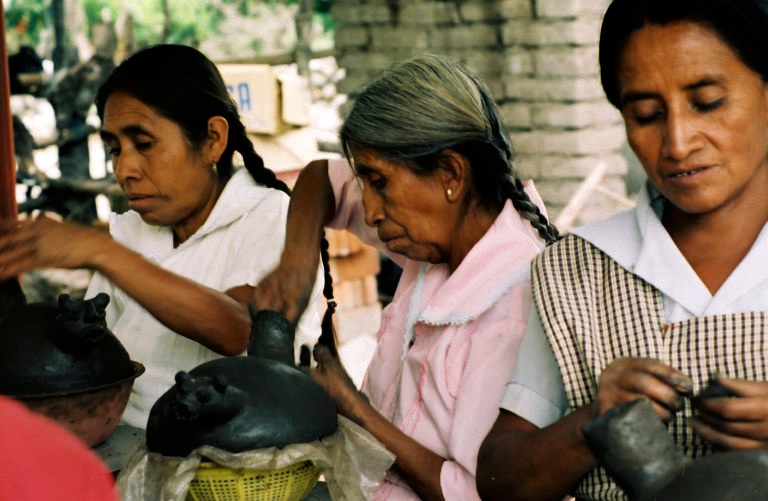
            Foto por Obed Arango. Cooperativa de mujeres artistas del barro en Xochicalco, Morelos, México.

            por Leticia Roa Nixon

            Las cooperativas son empresas centradas en las personas, que pertenecen a sus miembros, quienes las controlan y dirigen para dar respuesta a las necesidades y ambiciones de carácter económico, social y cultural comunes. Esto de acuerdo a la definición de la Alianza Internacional de Cooperativas. 

            Entre los principios básicos del cooperativismo está la organización democrática. Además la principal ventaja de la cooperativa es el aporte social y económico a todos sus integrantes.

            Así, Ben Miller co- propietario del restaurante South Philly Barbacoa planteó a varias personas el proyecto de formar “Masa Cooperativa”, integrada en su mayoría por inmigrantes mexicanos, incluida su esposa Cristina Martínez. La cooperativa proporciona la masa para las tortillas.Para ello usan una variedad de maíz nativo para hacer la masa y vender su producto a los restaurantes locales de la ciudad y a eventos especiales.

            Los seis miembros de este colectivo ayudan a cosechar el maíz en granjas cerca de los condados de Berks y Lancaster. Por ejemplo, la granja Rodale Institute Farm, como a 90 minutos al norte de la ciudad de Filadelfia. El granjero Daniel Kemper estuvo dispuesto a sembrar el maíz rojo para la cooperativa.

            En vez de importar el maíz de México están usando variedades que cultivaban los indios Lenape y Mohawk.

            Este modelo de gestión democrático  beneficia a inmigrantes ya que son dueños de  su trabajo  evitando la explotación por ser indocumentados. Masa Cooperativa fue creada el 11 de junio de 2020.

            Cooperativa de limpieza

             También en el sur de Filadelfia se organizó un grupo de mujeres inmigrantes para formar su cooperativa de limpieza llamada Brightly® que es un negocio cooperativista para la limpieza residencial y comercial que iniciará su trabajo en la primavera de 2023.

            Esta cooperativa contó con el apoyo de  The Welcoming Center y Center for Family Life en Sunset Park. De hecho, Brightly es la primera cooperativa de trabajadores de limpieza en Estados Unidos con franquicia desde hace cinco años.    Nació como parte de la iniciativa del desarrollo del cooperativismo del Center for Family Life, Cuenta con cinco localidades sirviendo a clientes residenciales y comerciales en la ciudad de Nueva York.  Ahora en colaboración con The Welcoming Center, se agregará la sexta franquicia en Filadelfia la cual será lanzada en mayo de 2023 con propietarias inmigrantes.

            Leticia Roa Nixon

            Leticia Nixon, nacida en la Ciudad de México, cursó la carrera de comunicación en la Universidad Iberoamericana. Desde 1992 se dedica al periodismo comunitario de Filadelfia. Es autora de seis libros y video productora de PhillyCAM. Escribe para philatinos.com y reside en Swarthmore, Pa.

              • « Go to Previous Page
              • Page 1
              • Interim pages omitted …
              • Page 28
              • Page 29
              • Page 30
              • Page 31
              • Page 32
              • Interim pages omitted …
              • Page 36
              • Go to Next Page »

              Hit the ground running with a minimalist look. Learn More

              Copyright © 2026 · Monochrome Pro on Genesis Framework · WordPress · Log in

              • Instagram
              • Facebook