• Skip to primary navigation
  • Skip to main content

REVARTE

  • Home
  • About
    • REVARTE Collective
  • Issues
  • Content
    • LITERATURA
    • JUVENTUD
    • ENSAYO
    • COMUNIDAD
    • MEDIA
  • Subscribe
  • Contribute
  • Show Search
Hide Search

Editorial

Letter from the Editor — Número 8: La historia es nuestra y la hacen los Pueblos

RevarteColectiva · September 14, 2026 · Leave a Comment

Click here for English version
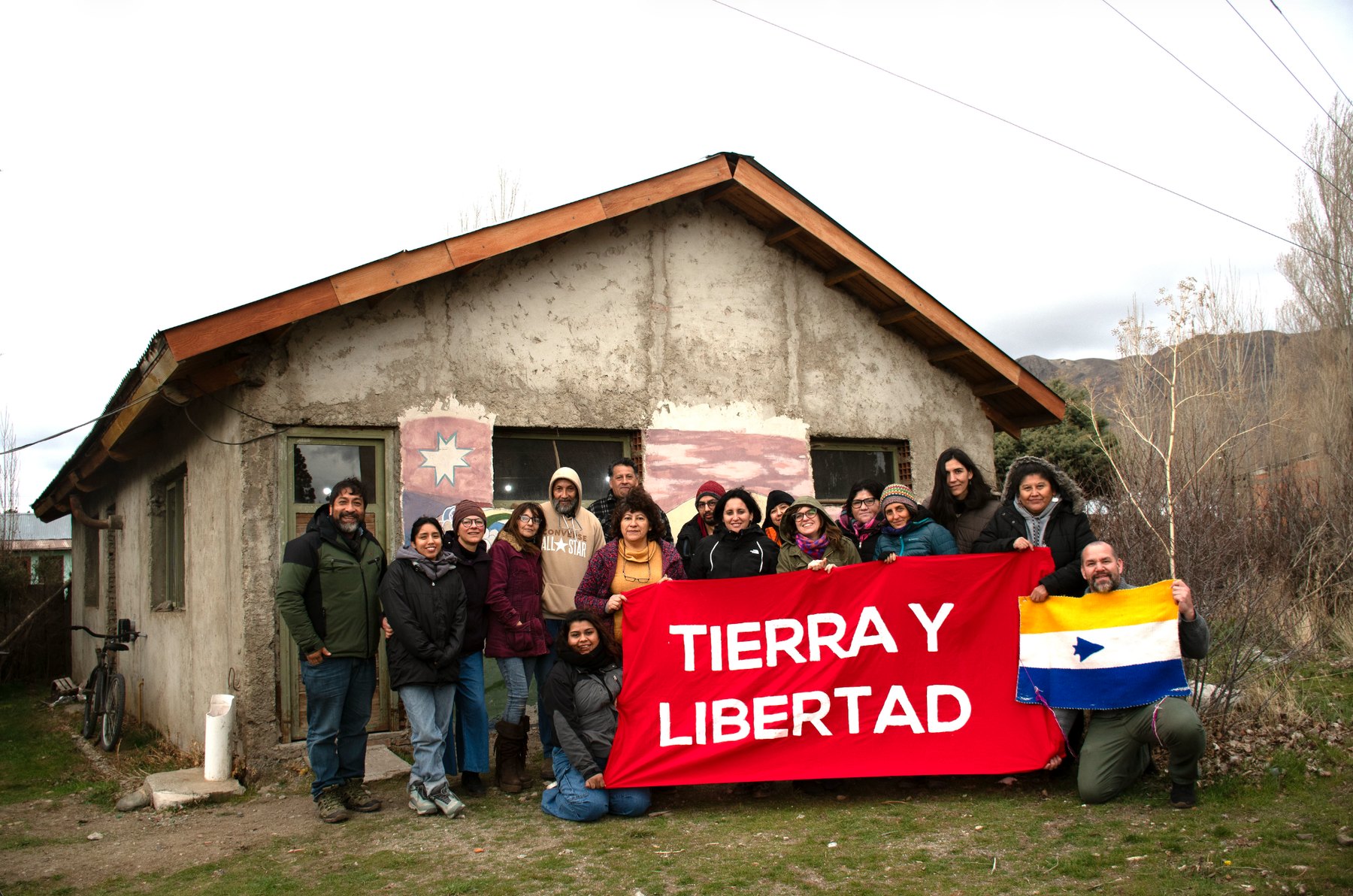
Radio Petü Mogeleiñ, El Maitén, Chubut, Argentina 2025. Foto por Obed Arango

NÚMERO 8 · 2026

La historia es nuestra
y la hacen los Pueblos

CARTA DEL EDITOR

Carta editorial: “La historia es nuestra y la hacen los Pueblos”

Foto por Obed Arango, Radio Petü Mogeleiñ, El Maitén, Chubut, Argentina 2025

“Colocado en un tránsito histórico, pagaré con mi vida la lealtad del pueblo. Y les digo que tengo la certeza de que la semilla que hemos entregado a la conciencia digna de miles y miles de chilenos, no podrá ser segada definitivamente. Tienen la fuerza, podrán avasallarnos, pero no se detienen los procesos sociales ni con el crimen ni con la fuerza. La historia es nuestra y la hacen los pueblos”

— Salvador Allende, 1973

Motivados por los hechos de los años 2025 y 2026, el actual número de REVARTE reflexiona sobre los pueblos y voces que resisten ante crímenes que han sorprendido a millones de habitantes del mundo por su crueldad, por el ejercicio autoritario del poder y por el descaro de sostener narrativas que deshumanizan a poblaciones completas del mundo.

REVARTE en este periodo conjunta un número de colaboradores que con valentía y con integridad denuncian los atropellos que han ocurrido en los Estados Unidos a través de la policía militarizada de I.C.E. que ha aterrorizado comunidades completas separando familias, hasta el pueblo Mapuche en la patagonia Argentina que defiende su historia y territorialidad que bajo el mandato de un desenfrenado presidente Milei, ven en riesgo la pérdida acelerada de sus ríos, lagos, montañas, estepas, bosques y tierras; al mismo tiempo no podemos ignorar el genocidio que se ha dado contra el pueblo palestino que ha dejado de ser parte de las noticias (https://news.un.org/es/story/2025/09/1540443), el asalto unilateral en Venezuela y el ataque injustificado contra Irán que entre otras atrocidades incluye la muerte de 168 niñas iraníes que se encontraban en su escuela, y una crisis mundial energética por el cierre del estrecho de Hormuz. Nuestra postura es la de defender los derechos humanos, de las comunidades, de las tierras y los seres que les habitan, y rechazar acciones fascistas contra inmigrantes, expresiones y acciones homofóbicas, islamófobas y antisemitas entre otras.
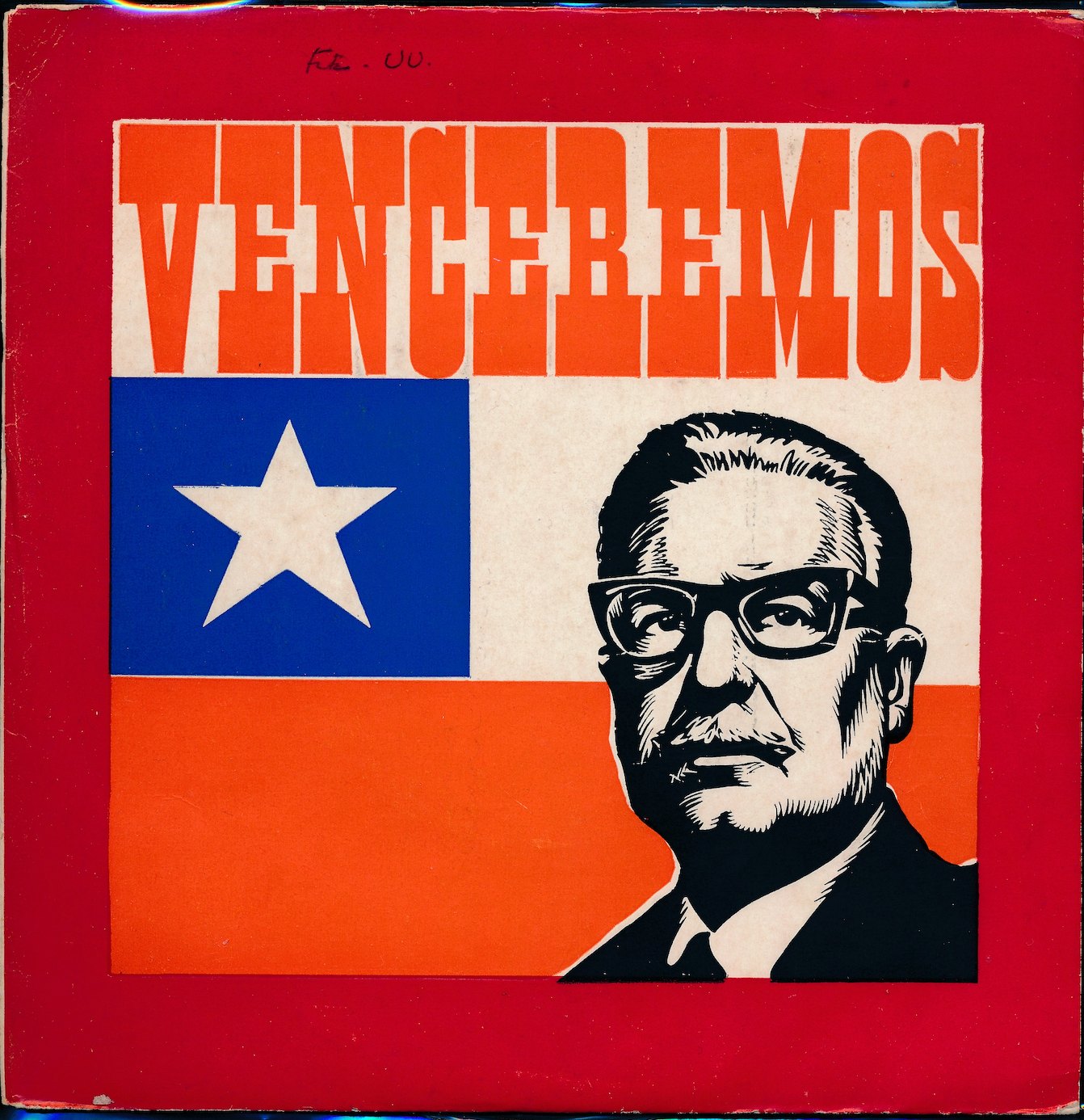
Portada del disco Venceremos con el último mensaje del presidente Salvador Allende

Portada del disco que contiene el último mensaje del presidente Salvador Allende, colección del colectivo REVARTE.

Fue el día 16 de junio del 2025 cuando 14 trabajadores inmigrantes fueron detenidos en el Mercado Super Gigante de West Norriton, una acción que iba dirigida a los dueños del negocio terminó en la mayor redada del este pueblo en las afueras de la ciudad de Filadelfia; detenidos sin orden hacia los trabajadores, un grupo de nacionales de México y Guatemala de tajo vio la separación de sus familias, el abandono a una madre de ochenta años que quedó sola sin sus hijos, un par de niñas menores de 9 años que preguntan por su padre, y jóvenes que vieron sus esfuerzos truncados. Desde febrero del 2025 hasta agosto del 2026 las acciones de I.C.E. han sido despiadadas, han abusado del poder y de la autoridad que se les ha dado, hemos presenciado asesinatos como son las muertes de Rubén Ray Martínez, Renee Nicole Good, Alex Petri, Lorenzo Salgado Araujo, entre muchos otros que han muerto también en los campos de concentración de ICE también llamados centros de detención que son cárceles que lucran con el dolor.

Las acciones de la administración actual han criminalizado al migrante y esa narrativa ha servido para que los sectores conservadores de los Estados Unidos sean indiferentes al abuso y persecución que las comunidades están padeciendo. Pero esa misma criminalización opera contra el pueblo palestino, charrúa y mapuche. Es decir, el abuso a uno de estos pueblos es el abuso de todos.
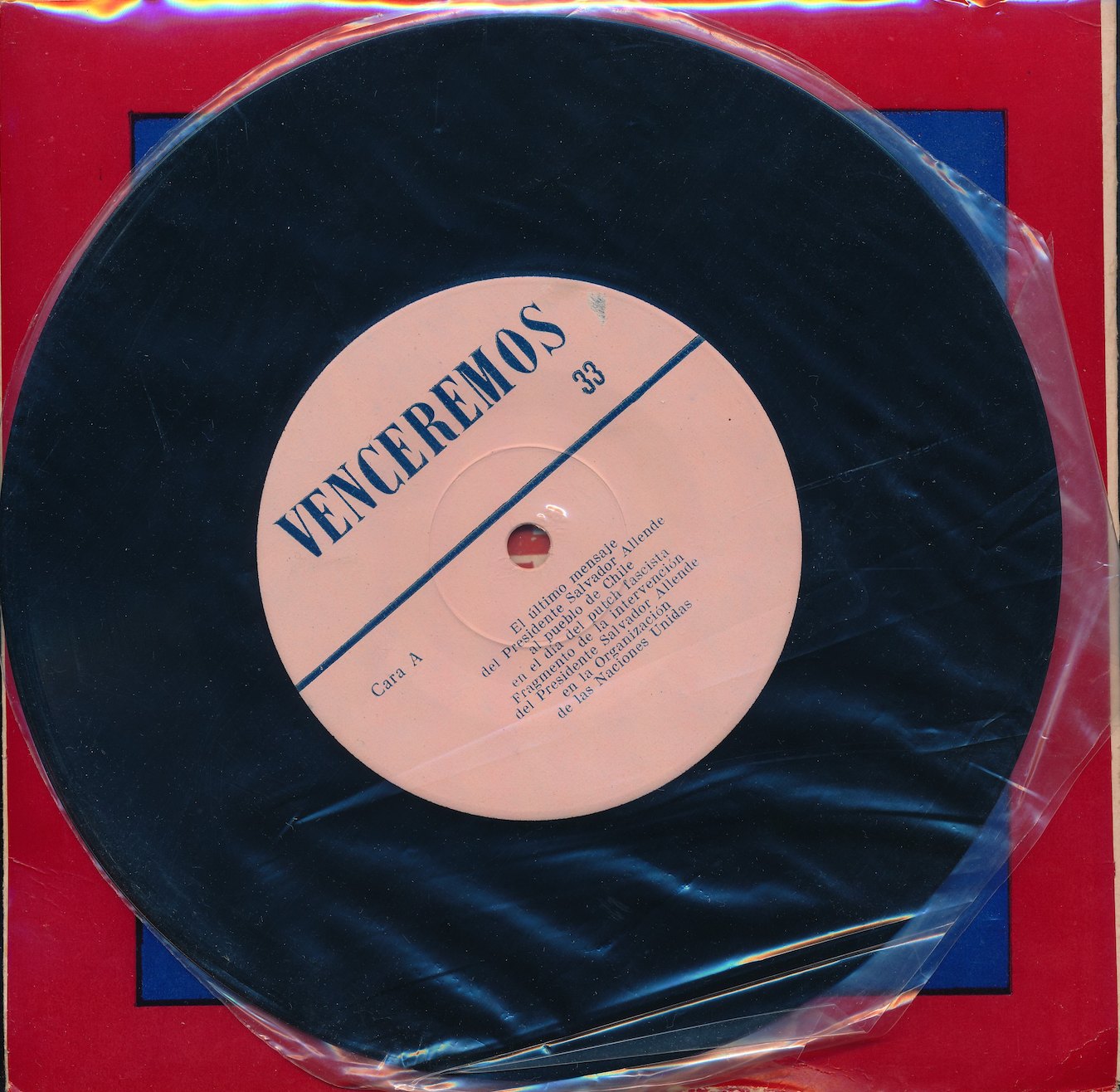
Disco Venceremos, cara A: el último mensaje del presidente Salvador Allende

Disco que contiene el último mensaje del presidente Salvador Allende, Colección del Colectivo REVARTE

En Uruguay, el pueblo Charrúa, y las diversas comunidades que se han organizado a través de las décadas demandan un reconocimiento de su existencia actual e histórica, hasta el día de hoy el gobierno de la República del Uruguay, considera que el genocidio de Salsipuedes marca el exterminio del pueblo Charrúa, narrativa oficial que le sirvió al sistema colonizador para justificar un despojo territorial que se extendió con latifundios y que vio en los pueblos originarios un estorbo a su avaricia. La historia escrita de Salsipuedes, no solo es trágica, sino que ha penetrado la identidad Uruguaya para separarse y negar sus raíces, y erigirse bajo una discursividad eurocéntrica. El pueblo Charrúa a través de militantes valientes encuentra en varias de sus comunidades, como la de Basquadé Inchalá entre otras, un caminar persistente para lograr un reconocimiento histórico, para esto han investigado a profundidad las raíces y han conjuntado a aquellos que reconocen sus raíces, sus ancestros y su descendencia, retan a la academia, a los discurso antropológicos que han pronunciado su funeral más de una vez, y confrontan con sabiduría la reivindicación histórica y actual. En este número compartimos parte de ese recorrido en la exhibición del Museo de las Migraciones y breves videos con protagonistas de esta lucha.

La patagonia Argentina a través de los siglos ha tenido que luchar con la narrativa de despojo de la territorialidad del pueblo Mapuche, y que de manera valiente se enfrenta a mineras, corporaciones, y conglomerados económicos. El despojo actual que hoy vemos, no es nuevo sino que se remonta a la campaña del desierto (1878 – 1885) que desembocó en la entrega de un millón de hectáreas que va del norte de la patagonia al sur, y que recorre la cordillera y la estepa siguiendo la ruta 40 que atraviesa el país. Al cumplimiento de los 100 años de ese despojo, el neoliberalismo que marcó al gobierno del expresidente Carlos Menem y quien facilitó la venta –a precio de nada– de esos mismo territorios a la empresa italiana Benetton que ha creado desastres ambientales como son los monocultivos de pino y la inserción de especies exóticas en la región. En contraste para el mapuche su territorio está atado a su cosmovisión, la tierra, las montañas, los ríos, los lagos, la estepa son seres, son casa, son hogar, el contraste de visión es diametralmente opuesta, mientras el neoliberalismo ve la territorialidad como espacios de explotación, el mapuche los ve como existencia.
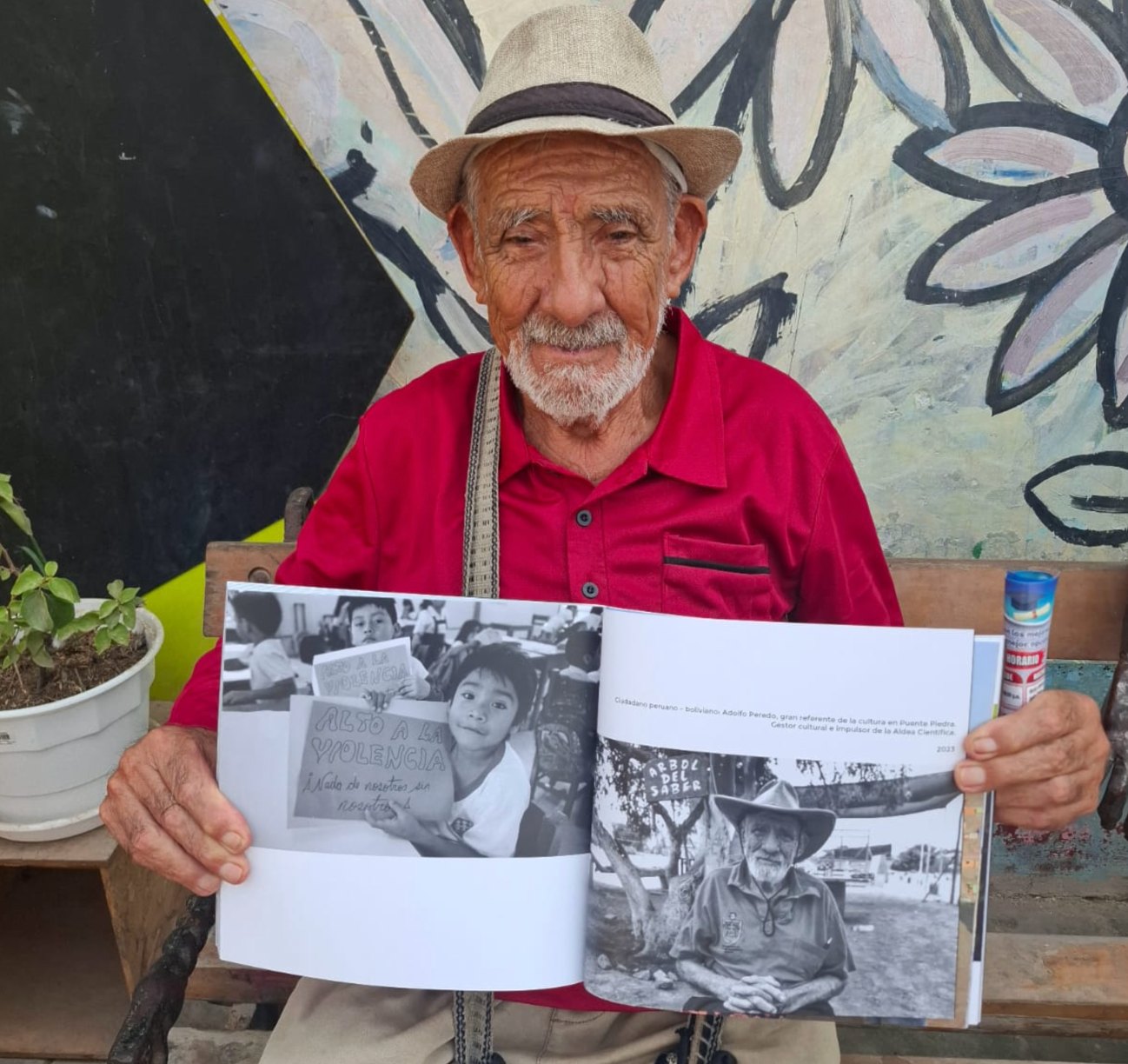
Maestro Adolfo Peredo muestra el libro Santa Rosa, Viva la comunidad

Maestro Adolfo Peredo muestra el libro: “Santa Rosa, Viva la comunidad”. Foto por Eddy Ramos

Celebramos la realización del libro: “Santa Rosa, Viva la comunidad” editado por “El Quijote para la vida” y por iniciativa del fotógrafo peruano Eddy Ramos, quien compiló imágenes que cuentan la historia de una comunidad que ha luchado contra la adversidad, y en la que se han establecido cientos de miles de personas, muchas de ellas inmigrantes del interior y de origen Quechua.

Ante un ambiente desolador, este número sobre todo honra las voces, esfuerzos y miradas que se levantan día a día y que resisten de forma valiente: las radios locales Che FM Comunitaria de Junín de los Andes, Radio Petü Mogeleiñ en el Maitén, Radio el Quijote en Puente Piedra, Perú, o el podcast “Diálogos de la Villa Inmigrante” de Filadelfia, representan algunas de las voces que no callan, ni ante la presión o los poderes que en algunos casos les han intentado callar, y que sostienen el dicho profundo del presidente Salvador Allende “no se detienen los procesos sociales ni con el crimen ni con la fuerza. La historia es nuestra y la hacen los pueblos”.
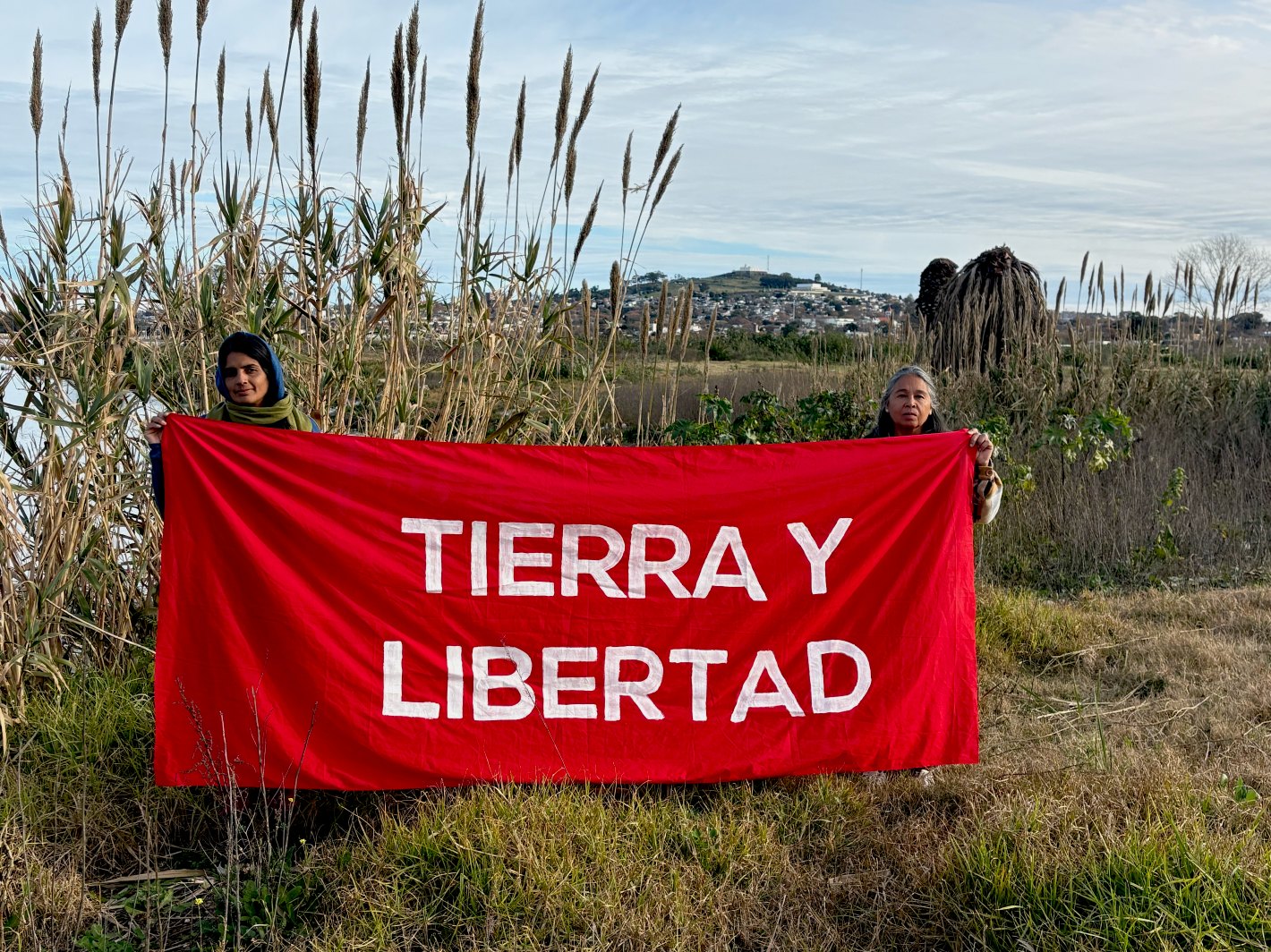
Tierra y libertad. La Teja, Montevideo, Uruguay, 6 de agosto del 2025

“¡Tierra y libertad!” Foto por Obed Arango, La Teja, Montevideo, Uruguay, 6 de agosto del 2025


Letter from the editor

Editorial Letter: “History Belongs to Us, and It Is Made by the People”

Photo by Obed Arango, Radio Petü Mogeleiñ, El Maitén, Chubut, Argentina, 2025

“Placed in a moment of historic transition, I will pay with my life for my loyalty to the people. And I say to you that I am certain that the seed we have planted in the dignified conscience of thousands and thousands of Chileans cannot be permanently cut down. They have the power; they may crush us. But social processes cannot be stopped by crime or by force. History belongs to us, and it is made by the people.”

— Salvador Allende, 1973

The events of 2025 and 2026 have compelled this issue of REVARTE to reflect on the communities and voices that continue to resist in the face of abuses that have shocked millions around the world. What has emerged in this period is not only the persistence of cruelty, but also the normalization of authoritarian exercises of power and the spread of narratives that seek to dehumanize entire populations.

This edition brings together contributors who write with courage and integrity about injustices unfolding across the Americas and beyond. Their accounts range from immigrant communities in the United States living under the fear generated by highly militarized Immigration and Customs Enforcement operations, to the Mapuche people in Patagonia, who continue to defend their history, culture, and territorial rights amid growing pressures on their lands and natural resources. They also examine the ongoing suffering of the Palestinian people, a humanitarian catastrophe that has too often faded from international headlines, as well as military interventions and conflicts that have brought devastating human consequences in countries such as Venezuela and Iran.

Our position is straightforward. We stand in defense of human rights, of communities, of the lands that sustain them, and of the living beings that inhabit those territories. We reject policies and practices that target immigrants, and we oppose all forms of hatred and discrimination, whether directed against people because of their ethnicity, religion, nationality, sexual orientation, or identity.

On June 16, 2025, fourteen immigrant workers were detained at the Super Gigante Market in West Norriton, Pennsylvania. What began as an operation reportedly aimed at the owners of the business quickly became one of the largest immigration raids in this community outside Philadelphia. Workers were taken into custody, families were separated, and entire households were thrown into crisis.

The consequences extended far beyond those detained. Elderly parents were left without caregivers. Young daughters found themselves asking when their fathers would return home. Students and young adults watched plans and aspirations unravel in an instant. Since early 2025, many immigrant communities across the United States have experienced heightened fear and uncertainty as immigration enforcement actions have intensified. For many observers, these measures have contributed to a broader climate in which migrants are portrayed not as neighbors and workers, but as threats.

Such narratives have consequences. When a population is criminalized, public indifference to its suffering often follows. Yet the experience of stigmatization is not unique to migrants. Similar dynamics have affected communities as diverse as the Palestinian people, the Charrúa of Uruguay, and the Mapuche of Argentina. An injustice directed at one people ultimately becomes an injustice that concerns us all.
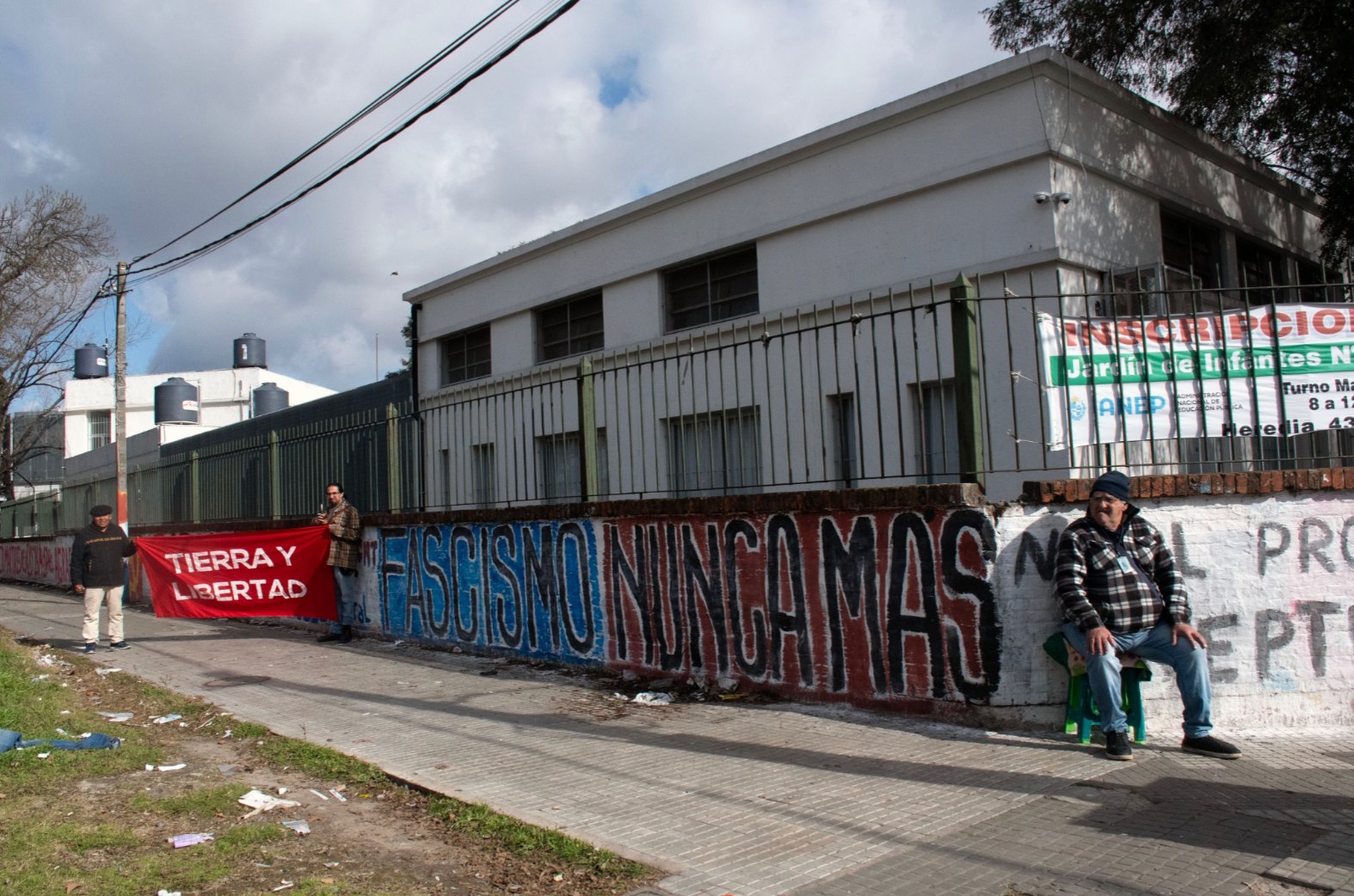
Tierra y libertad. La Teja, Montevideo, Uruguay, August 9, 2025

“¡Tierra y libertad!” Photo by Obed Arango, La Teja, Montevideo, Uruguay, August 9, 2025

In Uruguay, Charrúa communities and their allies have spent decades seeking recognition of both their historical presence and their continued existence today. The official narrative surrounding the 1831 massacre known as Salsipuedes has long reinforced the notion that the Charrúa people were effectively extinguished. For many activists and scholars, however, that story has served to obscure the continuity of Indigenous communities and to legitimize a history of territorial dispossession.

Across the country, organizations such as the Basquadé Inchalá community and others have undertaken the painstaking work of recovering genealogies, histories, and cultural memory. They challenge long-standing assumptions within public discourse and academia, confronting declarations of Indigenous disappearance with evidence of survival, resilience, and continuity. In this issue, REVARTE shares part of that journey through materials from the Museum of Migration and through testimonies from individuals engaged in this struggle for recognition.
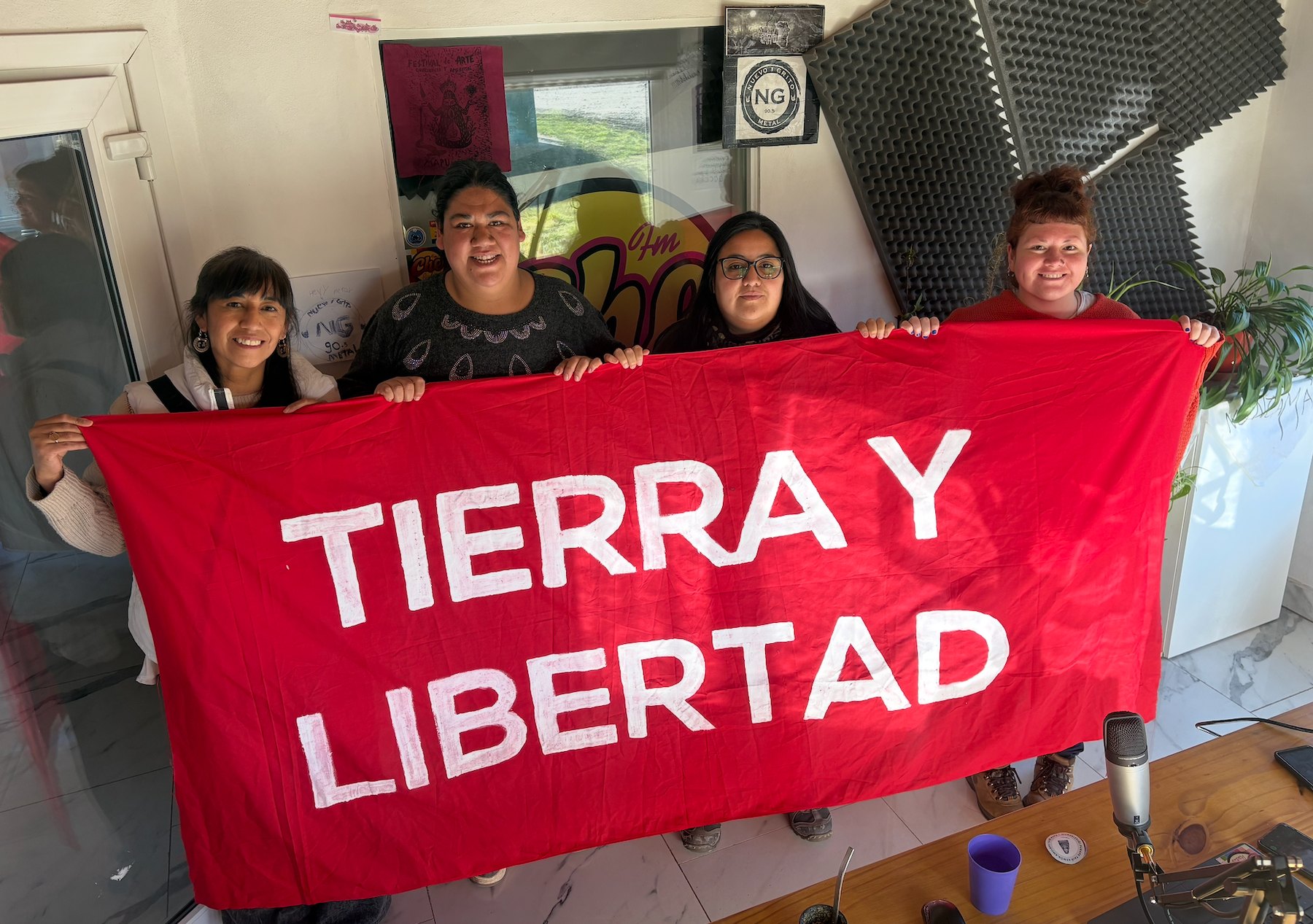
Tierra y Libertad, Che FM Community Radio in Junín de los Andes

“Tierra y Libertad”, Che FM Community Radio in Junín de los Andes. Photo by Obed Arango, 2025.

Farther south, in Argentine Patagonia, the Mapuche people continue a centuries-long defense of their territories against successive waves of displacement and resource extraction. The roots of the current conflict reach back to the nineteenth-century “Conquest of the Desert,” a military campaign that opened vast areas of Indigenous land to settlement and private ownership. Later economic policies accelerated that process, facilitating large-scale transfers of land and the expansion of corporate interests throughout the region.

At the heart of this conflict lies a fundamental difference in worldview. For many proponents of market-driven development, land is primarily a resource to be used, managed, and exploited. For the Mapuche, territory is inseparable from identity, spirituality, and existence itself. Mountains, rivers, lakes, forests, and plains are not commodities; they are relationships, responsibilities, and home.

We celebrate the publication of Santa Rosa: Long Live the Community, produced by El Quijote para la Vida through the initiative of Peruvian photographer Eddy Ramos, who compiled a powerful collection of images that tell the story of a community that has persevered in the face of adversity. Today, Santa Rosa is home to hundreds of thousands of people, many of them migrants from Peru’s interior regions and of Quechua heritage.

In the midst of a troubling and often discouraging landscape, this issue is above all a tribute to the voices, efforts, perspectives, and acts of courage that rise every day in resistance. Community radio stations such as Che FM Comunitaria in Junín de los Andes, Radio Petü Mogeleiñ in El Maitén, Radio El Quijote in Puente Piedra, Peru, and the Philadelphia-based podcast Diálogos de la Villa Inmigrante represent just a few of the voices that refuse to be silenced. Despite pressures and attempts by powerful interests to suppress them, they continue to speak, report, and organize, embodying the profound words of President Salvador Allende: “Social processes cannot be stopped by crime or by force. History belongs to us, and it is made by the people.”

Letter from the Editor — Número 7: Las diversas formas de vivir los sueños y las utopías

RevarteColectiva · March 13, 2025 · Leave a Comment

NÚMERO 7 · 2025

Las diversas formas
de vivir los sueños y las utopías

CARTA DEL EDITOR

Las diversas formas de vivir los sueños y las utopías

Photo by Obed Arango, ”Mis sueños no son ilegales”, Dreamers Rally, Washington DC, 2010 ©

Parece que las palabras “sueño” y “utopía” están en peligro de extinción frente a términos o a expresiones como “la cruda realidad”. Profetas y jóvenes de otros tiempos nos lo advirtieron. En los años noventa, los zapatistas predijeron el colapso del capitalismo y el neoliberalismo, anticipando una pesadilla global marcada por una crisis de valores y una deshumanización profunda.

Nos alertaron sobre las consecuencias de una filosofía pragmática que asigna un valor monetario a todo, cosifica al ser humano y a los seres vivos, y sacrifica derechos civiles, así como los derechos de las selvas y los bosques, todo en nombre de una carrera desenfrenada de explotación.

Los zapatistas advirtieron sobre las brechas sociales que el neoliberalismo generaría, sobre cómo las oligarquías reemplazarían a las democracias y sobre el crecimiento alarmante de la pobreza y el desplazamiento de millones de personas, arrancadas de sus tierras, montañas, pueblos y barrios.

“Durante los últimos años el poder del dinero ha presentado una nueva máscara encima de su rostro criminal. Por encima de fronteras, sin importar razas o colores, el Poder del dinero humilla dignidades, insulta honestidades y asesina esperanzas. Renombrado como «Neoliberalismo», el crimen histórico de la concentración de privilegios, riquezas e impunidades, democratiza la miseria y la desesperanza”.

— Subcomandante Marcos (Primera declaración de La Realidad contra el neoliberalismo y la humanidad, enero 1996).

El neoliberalismo nos ha mostrado un mundo “feliz”, lleno de opciones, pero nos ha atrapado en su trampa. Nos ha convertido en cómplices de un sistema de explotación que alcanza incluso a niños obligados a extraer minerales como el cobalto para que podamos tener un iPhone. Nos prometió un “Disneyland” y nos lo entregó: un mundo de fantasías que ha seducido a millones de personas sin que se den cuenta de que, bajo ese encanto, han sido explotadas.

Pero los zapatistas no se dejaron seducir por esas imágenes grandilocuentes, ni por los juegos pirotécnicos que reemplazan el contenido con la forma, como cuando un concierto no tiene buena música, pero deslumbra con efectos de luces. Esta filosofía lo ha invadido todo: el cine, las artes, las universidades, los trabajos, las oficinas… La modernidad neoliberal, llena de colores, dispositivos móviles y un sistema de acumulación de riqueza concentrado en unas pocas manos, ha construido un mundo en el que la tecnología mantiene a todos distraídos (o mejor dicho, embobados) y explotados. En este escenario, el espacio para pensar por uno mismo y para soñar se ha reducido al mínimo.

Ese mundo de ensueño neoliberal que inunda las redes sociales y domina la comunicación ha sabido ocultar el alto precio que ha pagado la humanidad: la devastación de los bosques, la explotación desmedida de los recursos y la migración forzada causada por el aumento global de la pobreza. Según las Naciones Unidas, este es el siglo de la migración, con casi 280 millones de personas que han cambiado de país y 800 millones que han emigrado de las zonas rurales a las ciudades.

Este fenómeno es parte de la realidad de muchos de quienes escriben en Revarte, miembros de comunidades migrantes tanto externas como internas. Y si estos autores tienen la valentía y el atrevimiento de escribir sobre sueños, es porque estos aún existen. Si aquellos que han sufrido en carne propia los peores estragos del neoliberalismo siguen soñando, significa que los sueños están más vivos que nunca y que, con ellos, podemos resistir.

Este número representa quizás el esfuerzo más revolucionario y una de las contra-narrativas más actuales. En un tiempo donde se nos dice que los sueños han llegado a su fin y que una pesadilla se cierne sobre nosotros, las comunidades de los márgenes reafirman que los sueños y las utopías existen y siguen habitando en el corazón del ser humano.

“La utopía no es un destino, es un proceso”.

— Ruth Layme Cárdenas.


Letter from the editor

The Different Ways of Living Dreams and Utopias

Photo by Obed Arango, ”Mis sueños no son ilegales”, Dreamers Rally, Washington DC, 2010 ©

It seems that the words “dream” and “utopia” are in danger of extinction in the face of terms like “reality” or the expression “the harsh reality.” Prophets and young people of other times warned us of this. In the nineties, the Zapatistas predicted the collapse of capitalism and neoliberalism, anticipating a global nightmare marked by a crisis of values and profound dehumanization.

They warned us about the consequences of a pragmatic philosophy that assigns a monetary value to everything, objectifies human beings and living beings, and sacrifices civil rights, as well as the rights of the jungles and forests, all in the name of an unbridled race for exploitation.

The Zapatistas warned about the social gaps that neoliberalism would generate, about how oligarchies would replace democracies, and about the alarming growth of poverty and the displacement of millions of people, torn from their lands, mountains, towns and neighborhoods.

“In recent years, the power of money has presented a new mask over its criminal face. Across borders, regardless of race or color, the Power of money humiliates dignities, insults honesty and kills hopes. Renamed ‘Neoliberalism,’ the historic crime of the concentration of privileges, wealth and impunity, democratizes misery and hopelessness.”

— Subcomandante Marcos (First declaration of La Realidad against neoliberalism and humanity, January 1996).

Neoliberalism has shown us a “happy” world, full of options, but it has caught us in its trap. It has made us accomplices of a system of exploitation that even reaches children forced to extract minerals such as cobalt so that we can have an iPhone. It promised us a “Disneyland” and delivered it to us: a world of fantasies that has seduced millions of people without them realizing that, under this spell, they have been exploited.

But the Zapatistas were not seduced by these grandiloquent images, nor by the fireworks that replace content with form, like when a concert does not have good music, but dazzles with lighting effects. This philosophy has invaded everything: cinema, the arts, universities, jobs, offices… Neoliberal modernity, full of colors, mobile devices and a system of wealth accumulation concentrated in a few hands, has built a world in which technology keeps everyone distracted (or rather, dazzled) and exploited. In this scenario, the space to think for oneself and to dream has been reduced to a minimum.

This neoliberal dream world that floods social networks and dominates communication has managed to hide the high price that humanity has paid: the devastation of forests, the excessive exploitation of resources and forced migration caused by the global increase in poverty. According to the United Nations, this is the century of migration, with almost 280 million people who have changed countries and 800 million who have migrated from rural areas to cities.

This phenomenon is part of the reality of many of those who write in Revarte, members of migrant communities both external and internal. And if these authors have the courage and daring to write about dreams, it is because they still exist. If those who have suffered the worst ravages of neoliberalism in their own flesh continue to dream, it means that dreams are more alive than ever and that, with them, we can resist.

This issue represents perhaps the most revolutionary effort and one of the most current counter-narratives. At a time when we are told that dreams have come to an end and that a nightmare looms over us, communities on the margins reaffirm that dreams and utopias exist and continue to live in the heart of the human being.

“Utopia is not a destination, it is a process.”

— Ruth Layme Cárdenas.


References

Child Labor and the Human Rights Violations Embedded in Producing Technology

Primera declaración de La Realidad contra el neoliberalismo y por la humanidad

Letter from the Editor — Número 6: Las diversas formas de vivir la migración

RevarteColectiva · March 12, 2025 ·

NÚMERO 6 · 2024

Las diversas formas
de vivir la migración

CARTA DEL EDITOR

Photo: “The Founding Fathers” or “God Bless the Immigrants”, Constitution Center, Old City Philadelphia, by Obed Arango, during the labor boycott of immigrant workers known as “EL PARO” on February 14, 2006 ©

“Porque esta gran humanidad ha dicho ‘¡Basta!’ y ha echado a andar. Y su marcha de gigantes ya no se detendrá hasta conquistar la verdadera independencia”. E.G.

En REVARTE, HACEMOS UNA ABIERTA DENUNCIA ante el vendaval de violencia que los medios de comunicación muestran contra el migrante cada día, cada hora, y en cada corte comercial de la televisión, la radio y el internet. No hay programa familiar, evento deportivo, o noticiero que no se vea cruzado por los anuncios políticos electorales de las campañas presidenciales en los que se denigre a la comunidad migrante. En este año electoral más que en cualquier otro, los anuncios estan cargados de mensajes anti-inmigrantes con imágenes y narrativas que criminalizan a quienes hemos venido de otras tierras. Estos mensajes, además, se ensañan con los más vulnerables, con aquellos quienes no cuentan con un documento que compruebe la estadía oficial, es decir el inmigrante indocumentado, y el que se encuentra en proceso de asilo. 

La repetición de mensajes falaces que buscan generalizar características negativas a toda una población que cuyo proceder es contrario a lo que se presenta. REVARTE desde su inicio reclamó el derecho, la autoridad de nuestras propias historias y narrativas. Para esto presentamos contra-narrativas, para decir quienes somos, y cuales han sido nuestras experiencias en la migración, en esa Villa Inmigrante que millones hemos formado alrededor del mundo.

Para este número la literatura, la poesía, el arte fílmico destaca, como formas creativas de presentar las historias de la comunidad la dramaturga de origen indio Priyanka Shetty quien reflexiona profundamente acerca de su presencia en los Estados Unidos y escribe:

Estoy en la zona intermedia.

No encajo en su idea de quién debería ser. 

No tengo que ser lo que ellos quieren que sea. 

Pero estoy perdiendo partes de mí todos los días.

Partes de mí son robadas, arrancadas 

Como los colmillos de un elefante.

O El Quijote para la vida en Puente Piedra, en el que los jóvenes/adolescentes Ruth y Frank escriben, analizan y cuentan la historia de la migración de las comunidades Quechuas en sus escritos y en sus podcast, y ellos como descendientes de migrantes abren la mirada para pensar en cómo los sistemas empujan a las comunidades. 

El grupo de preparatoria de CCATE nos presenta una imagen alentadora y llena de esperanza, pues hablan de su experiencia en el Instituto de Liderazgo que se llevó acabo en la Universidad de Pennsylvania co-organizado por el Centro de Estudios Latinoamericanos (CLALS) y por CCATE, y en la que 20 jóvenes asistieron para explorar su vocación, carreras, observar la vida universitaria y soñar con avanzar en sus estudios. 

Los niños y jóvenes de CCATE nos comparten sus historias a través de dibujos que reflexionan en la exhibición internacional de “Este es mi México” que se presentó en CCATE en el mes de mayo y que conjuntó 79 dibujos y pinturas de niños migrantes mexicanos alrededor del mundo. El Consulado de México en Filadelfia también nos comparte de este esfuerzo que une y comunica a las comunidades mexicanas que viven en el exterior. 

Estudiantes universitarios quienes son miembros de la comunidad y/o aliados comparten sus experiencias personales con el fenómeno de migración a través de la poesía y ensayo Brisa Mariana Ables y Glynn Boltman. 

En la sección de comunidades abordamos diversos temas, uno que se debe mencionar por ser un hito histórico en México, más allá de posiciones políticas, es la elección de la primera presidenta de la história de México y de la región de nortemamérica. La Dra. Bethania Arango, graduada de la Universidad Nacional Autónoma de México en Educación, y activista mexicana reflexiona en este hecho y comenta: 

“La Dra. Sheinbaum tiene cualidades excepcionales que le han permitido durante su vida, adquirir  una visión compleja, dicotómica, que abarcan múltiples dimensiones de nuestro país, por mencionar  algunas:  

– Desde lo biológico y hasta lo social  

– En lo natural y en lo humano  

– En la unidad y en la diversidad  

– En lo sobrio y en lo lúdico  

Estos elementos marcarán una diferencia de perspectiva desde el ángulo femenino muy importante…”

En la sección de medios se presenta el primer cortometraje producido por la clase de cine de El Quijote, “PAMELA”, una producción hecha por la comunidad de Santa Rosa en Lima. A este se le suma la premier en los medios de “MACONI” que junto con “(No sé)” es hasta este momento son dos de las ocho películas seleccionadas para el Festival de Cine Binacional Keleidoscope que organizan la Universidad de Arizona y la Universidad de Guadalajara. MACONI, además es parte de la colección de La villa inmigrante” que se llevó acabo con el apoyo del Centro de Estudios Latinos y Latinoamericanos de la Universidad de Pennsylvania y con el apoyo del Mellon Foundation para el program de “Despojo en las Americas” y del Independence Public Media Foundation. MACONI nos comparte la historia trágica de violencia contra el migrante, así como el esfuerzo que el migrante hace a pesar de un sistema lento para hacer justicia y que deshumaniza al migrante. 

Les invitamos que mientras explora este número que celebra dos años de REVARTE ponga en el centro de su pensamiento la dignificación de una comunidad que avanza como una marcha de gigantes que ya no se detendrá.


Letter from the editor

The various ways of experiencing migration

The repetition of fallacious messages that seek to generalize negative characteristics to an entire population is contrary to what the community shares. REVARTE from its beginning claimed the right, the authority of our own stories and narratives. For this we present counter-narratives, to say who we are, and what our experiences in migration have been, in that Immigrant Village that millions of us have formed around the world.

For this issue, literature, poetry, and film art stand out as creative ways of presenting the stories of the community, the playwright of Indian origin Priyanka Shetty, who reflects deeply about her presence in the United States and writes:

I’m in the Inbetween Zone.

I don’t fit in, to their idea of ​​who I should be. 

I don’t have to be what they want me to be. 

But I’m losing parts of myself every day

Parts of me are stolen, ripped away 

Like the tusks of an elephant. 

Or Don Quijote para la vida in Santa Rosa, Puente Piedra, Lima, Perú, in which young people/adolescents Ruth and Frank write, analyze and tell the history of the migration of the Quechua communities. In their writings and in their podcasts, they, as descendants of migrants, open the conversation to think about how systems push their communities out of their lands. 

The children and young people of CCATE share their stories with us through drawings that reflect on the international exhibition “This is my Mexico” that was presented at CCATE in the month of May and which brought together 79 drawings and paintings by Mexican migrant children around the world. The Mexican Consulate in Philadelphia also shares with us this effort that unites and communicates with Mexican communities living abroad. 

The CCATE high school group presents us with an encouraging and hopeful image, as they talk about their experience at the High School Leadership Institute that took place at the University of Pennsylvania co-organized by the Center of Laton American Studies (CLALS) and CCATE, and in which 20 young people attended, and explored their vocation, potential careers,and  observed university life and dreamed of advancing in their studies.

University students from UPenn who are community members and/or allies share their personal experiences with the phenomenon of migration through poetry and essays by Brisa Mariana Ables and Glynn Boltman.

In the communities section we address various topics, one that should be mentioned for being a historical milestone in Mexico, beyond political positions, is the election of the first president in the history of Mexico and the North American region. Dr. Bethania Arango, graduate of the National Autonomous University of Mexico in Education, and Mexican activist reflects on this fact and comments: 

“Dr. Sheinbaum has exceptional qualities that have allowed her, during her life, to acquire a complex, dichotomous vision that encompasses multiple dimensions of our country, to mention a few:  

– From the biological to the social  

– In the natural and in the human  

– In unity and diversity  

– In the sober and the playful  

These elements will make a very important difference in perspective from the feminine angle…”

The media section presents the first short film produced by the Don Quijote film class, “PAMELA”, a production made by the community of Santa Rosa. Added to this is the media premiere of “MACONI” which, along with “(No sé)” is, until now, two of the eight films selected for the Keleidoscope Binational Film Festival organized by the University of Arizona and the University from Guadalajara, both produced by CCATE. MACONI is also part of the “La villa inmigrante” collection that was carried out with the support of the Center of Latin American Studies of the University of Pennsylvania and with the support of the UPenn – Mellon Foundation for the “Dispossession in the Americas” project, and the Independence Public Media Foundation (IPMF). MACONI shares with us the tragic story of violence against the migrant, as well as the hope and effort that the migrant makes despite a system that is slow to deliver justice and that dehumanizes the migrant. 

We invite you as you explore this issue that celebrates two years of REVARTE to put at the center of your thoughts the dignity of a community that advances like a march of giants that will no longer stop.

Letter from the Editor — Número 5: Las diversas formas de pensar y vivir la diversidad

RevarteColectiva · September 25, 2024 · Leave a Comment

NÚMERO 5 · 2024

Las diversas formas
de pensar y vivir la diversidad

CARTA DEL EDITOR

REVARTE como en cada número toma de frente los temas para sacudir los cánones, así que en este número podrán encontrar una amplitud de voces, perspectivas, reflexiones, experiencias, y lugares desde donde se vive la diversidad. 

Pensar en la diversidad hoy en día es un pecado. Pues el término mismo reta el dogma, el credo, el status quo, el llamado orden establecido que define lo que es “normal” y lo que se entiende como regla o como canon. Así lo que sale de esa regla, de ese canon es estigmatizado, rechazado, condenado al infierno, segregado, y discriminado; asimismo, los grupos de poder ofrecen términos denigrantes: “apócrifo”, “anormal”, “enfermo”, “violenta”, y “desadaptado”. Las fuerzas del orden buscan así, entonces, “asimilar”, y “normalizar”, darle el rostro aceptable y la versión aceptable a lo que es diverso. Pero esas lectura cómodas, no ayudan a la vida, no ayudan a que el ser humano avance, porque solo perpetúa los sistemas de opresión. 

Por tanto es importante reconocer que en los últimos 100 años se han librado luchas a muerte que iniciaron con voces sin micrófono, con páginas impresas en mimeógrafo, con marchas al inicio tímidas con carteles y con diseños que retaban a la normalidad. Poco a poco los movimientos feministas que retan el patriarcado han elevado su voz con autoridad, los movimientos LGBTQ+ que retan la heterogeneidad “sagrada” y la masculinidad tóxica que domina el mundo, los movimientos indígenas que retan el neoliberalismo y la protección de sus tierras, los movimientos de inmigrantes que retan el orden mundial, han creado un crisol que funde la historia, la desarticula, la desintegra, la cuestiona, y de la cual emergen nuevos entendimientos y nuevas narrativas. 

De este crisol también nacen nuevas palabras, términos y usos del lenguaje, todos esto enfrentan resistencia por sectores hegemónicos, que no desean reconocer la existencia de la diversidad, porque reconocer el lenguaje es finalmente reconocer la existencia de lo que siempre ha estado presente, de lo que siempre ha existido, pero que había sido orillado y encubierto. 

La “normalidad” o quienes viven dentro de ella, se quejan constante de la protesta que les causa disonancia “no grafiten”, “no marchen”, “no levanten su voz”, “no hablen su lengua”, y “no respiren”. 

Por tanto pensar en diversidad resulta incómodo para grandes sectores hoy en día, porque trae consigo nuevos retos ontológicos y epistemológicos para el ser humano. Por un lado, ontológicos, porque el ser humano ya no puede ser definido de una manera patriarcal o desde un orden y filosofía occidental. Retos epistemológicos, porque entonces reconocemos que hay muchos saberes y muchas formas de generar y expresar conocimientos, y de acercarse a la existencia. Fue el sociólogo Orlando Fals Borda que dio uso a ese término que el Círculo de Investigaciones Participativas de CCATE abraza en sus reflexiones: “El ser sentipensante”. El conocimiento que va más allá de una noción científica, que también es sentimiento,es espíritu, es mística, es diálogo existencial. 

Así que les invitamos a explorar la poesía, la literatura, los podcast, los cortometrajes, y los ensayos, que nos enriquecen con el profundo sentido humano que comunican y que han sido escritos y/o producidos desde varias comunidades e identidades. 

Asimismo, en este número encontrará las voces, dibujos, y reflexiones de jóvenes, de  niños, de niñas y de adolescentes como Olivia, Ruth, Luisa, y Alison quienes traen una frescura a la revista con reflexiones profundas que los adultos debemos pensar y leer. También destaca el arte de las madres, y de las mujeres adultas que luchan ya sea en la periferia de Lima en Puente Piedra con “El Quijote para la vida” en el artículo de Lis Vania Pérez Quispe y “Mujeres Transformadoras”, o con el podcast del Círculo de Investigaciones Participativas de CCATE cuyas autoras (Lourdes Flores, Diana Lugo, Salome Flores, Guadalupe Castillo, y Laura Sánchez)  reflexionan sobre sus raíces culturales y la diversidad de sus experiencias a partir del fotovoz. 

Al número también se han sumado estudiantes jóvenes, inmigrantes que marcan un ejemplo para esta generación, siendo ellas y ellos de origen latinoamericano, estudian posgrados en la Universidad de Pennsylvania, como son el caso de Jancarlos Montoya y de Natalie Delgado. 

Les invitamos a que se acerquen y se sumen a este espacio donde la diversidad ES. 


Letter from the editor

The different ways of thinking and living diversity

REVARTE, as in each issue, takes the themes head-on to shake up the canons, so in this issue you will be able to find a breadth of voices, perspectives, reflections, experiences, and places from where diversity is experienced.

Thinking about diversity today is a sin. Well, the term itself challenges the dogma, the creed, the status quo, the so-called established order that defines what is “normal” and what is understood as a rule. So what comes out of that rule, that canon, is stigmatized, rejected, condemned to hell, segregated, and discriminated against; Likewise, it acquires denigrating terms given by those who control the systems: “apocryphal”, “abnormal”, “sick”, “violent”, and “maladjusted”. The forces of order then seek that normality should  “assimilate” and “normalize”, to give an acceptable face and an acceptable version to what is diverse. But these comfortable readings do not help life, they do not help human beings advance, because they only perpetuate systems of oppression.

Therefore, it is important to recognize that in the last 100 years there have been fights to the death that began with voices without a microphone, with pages printed on a mimeograph machine, with timid marches at the beginning with posters and with designs that challenged normality. Little by little, the feminist movements that challenge patriarchy have raised their voices with authority, the LGBTQ+ movements that challenge the “sacred” heterogeneity and the toxic masculinity that dominates the world, the indigenous movements that challenge neoliberalism and the protection of their lands, the immigrant movements that challenge the world order have created a crucible that melts history, dismantles it, disintegrates it, questions it, and from which new understandings and new narratives will emerge.

From this crucible, new words, terms and uses of language are also born, all of which face resistance from hegemonic sectors, which do not wish to recognize the existence of diversity, because to recognize language is to finally recognize the existence of what has always been present, of what has always existed, but had been skirted and covered up.

“Normality” or those who live within it, constantly complain about the protest that causes them dissonance “don’t graffiti”, “don’t march”, “don’t raise your voice”, “don’t speak their language”, and “don’t breathe”. .

Therefore, thinking about diversity is uncomfortable for large sectors today, because it brings with it new ontological and epistemological challenges for human beings. On the one hand, ontological, because the human being can no longer be defined in a patriarchal way or from a Western order and philosophy. Epistemological challenges, because then we recognize that there is much knowledge and many ways of generating and expressing knowledge, and of approaching existence. It was the sociologist Orlando Fals Borda who gave use to that term that the CCATE Participatory Research Circle embraces in its reflections: “The sentipensant being.” Knowledge that goes beyond a scientific notion, which is also feeling, is spirit, is mystical, is existential dialogue.

We invite you to explore poetry, literature, podcasts, short films, and essays, which enrich us with the deep human meaning they communicate and that have been written and/or produced from various communities and identities.

Likewise, in this issue you will find the voices, drawings, and reflections of young people, boys, girls, and adolescents like Olivia, Ruth, Luisa, and Alison who bring a freshness to the magazine with deep reflections that adults should think about and read. . It also highlights the art of mothers, and of adult women who fight either on the outskirts of Lima in Puente Piedra with “Don Quixote for Life” in the article by Lis Vania Pérez Quispe and “Mujeres Transformadoras”, or with the podcast from the CCATE Participatory Research Circle whose authors (Lourdes Flores, Diana Lugo, Salome Flores, Guadalupe Castillo, and Laura Sánchez) reflect on their cultural roots and the diversity of their experiences through photovoice.

Young students have also been added to the number, immigrants who set an example for this generation, being of Latin American origin, studying postgraduate degrees at the University of Pennsylvania, as is the case of Jancarlos Montoya and Natalie Delgado.

We invite you to come and join this space where diversity IS.

Letter from the Editor — Número 4: Las diversas formas de vivir y entender la educación

RevarteColectiva · April 15, 2024 ·

NÚMERO 4 · 2023

Las diversas formas
de vivir y entender la educación

CARTA DEL EDITOR

Nota: Este número de REVARTE es el que suma más contribuciones hasta ahora y el que nos adentra a las diversas formas de vivir la educación desde la comunidad, esperamos que sea una ventana de esperanza en un mundo que hoy vive convulsionado y con falta de justicia y de paz. 

Constantemente escuchamos la frase popular de “El conocimiento es poder” y las preguntas que emergen son: ¿Para qué sirve el conocimiento? y ¿a quiénes sirve el conocimiento? Conscientes de que la educación muchas veces ha sido usada para reproducir sistemas de control que oprimen, segregan, y generan castas sociales, es justo cuestionarle, y dar una contra narrativa del mismo, en REVARTE tomamos la posición del educador brasileño Paulo Freire y postulamos que la educación debe pertenecer a las comunidades, y debe ser para liberar, para humanizar, para sanar, para dialogar, para abrir caminos dignos, para generar oportunidades de vida, para generar justicia ambiental, y para procurar la justicia y la paz. Por tanto, hemos dedicado este número para compartir el trabajo de tres movimientos educativos en el continente que nacen desde la comunidad y que viven un paralelismo tanto en su filosofía como en su praxis. Contrario a los poderes que buscan secuestrar la palabra ya sea a través del gobierno, de recursos económicos o con poderes simbólicos, REVARTE postula una palabra libre, en el que la educación clama como ese dicho de CCATE que dice: “ Todo el conocimiento del mundo desde todos y para todos”.

Hablamos del Centro de Cultura, Arte, Trabajo y Educación (CCATE) ubicado en uno de los suburbios de Filadelfia: Norristown en el estado de Pennsylvania, los Estados Unidos. De El Quijote para la vida, y de La Aldea Científica Infantil ambas iniciativas ubicadas en el distrito de Puente Piedra a las orillas de la ciudad de Lima, Perú. En cada sección podrán encontrar destellos de estos movimientos.

El número también explora cómo la educación busca las raíces culturales, y al mismo tiempo se reconoce la lucha constante de la comunidad inmigrante para preservarlas. Francis Arellano estudiante de sociología en Bryn Mawr College y maestra de danza folclórica en CCATE, nos comparte su experiencia como mexicana de raíces zapotecas, y la pérdida de su lengua madre suprimida por el sistema escolar de Los Ángeles; la periodista mexicana Leticia Roa Nixon nos comparte un breve documental gráfico del nuevo periodismo que combina la narrativa social y la ficción y así nos adentra a las representaciones de los huipiles en la cultura Tzotzil de Chiapas. Y El Círculo de Investigaciones Participativas de CCATE (CIPC) presenta su podcast piloto en el que reflexionan sobre el tema de exhumar o desenterrar raíces.

La niñez y la juventud nos comparten su jornada de vida, su perspectiva de la educación y las propuestas que tienen para generar cambios en el sistema escolar, así Louisa Sandorff compiló las voces de sus estudiantes en la clase de escritura “Babel” que imparte en CCATE. Cielo Ramos, y David Azzolini nos hace coparticipes de sus vivencias en El Quijote y el proceso de transformación que han tenido al pertenecer a esa comunidad. Asimismo, tenemos la primera colaboración del colectivo de origen colombiano: Diseño Detonante, que comparten a cerca de “una secuencia de talleres llevados a cabo en la Ciudad de México en la Escuela de Diseño del Instituto Nacional de Bellas Artes en los meses de octubre y noviembre” como señala la filósofa y arquitecta Aura Cruz y quien reflexiona sobre los aportes de REV/BELAR, y las implicaciones de la fragmentación humana que hoy vivimos. En REVARTE deseamos que la participación de los jóvenes de diversas generaciones continue difundiendose y creciendo.

La sección de literatura se enriquece con una colección de poemas de la poeta peruana Ana Vera, y de las miembros del círculo de escritura de CCATE que han trabajado los últimos 4 meses bajo el método de expresionismo del poeta nicaragüense Ernesto Cardenal. Les invitamos a leer, asimismo, la tercera entrega de las novelas cortas que Lourdes Flores, Aura Cruz y Rosalba Esquivel Cote presentan.

Un número dedicado a la educación no puede pasar de largo a uno de los movimientos sociales más importantes de este cuarto de siglo que es de los Normalistas desaparecidos de Ayotzinapa, Obed Arango nos comparte un foto reportaje de la visita que realizó al campamento que se instaló en el paseo de la reforma en la ciudad de México, y que ha resistido desde entonces. El fotoreportaje reflexiona sobre el papel de los jóvenes en la educación y como estos sacuden sistemas, sucedió en 1968, 1986, 1999 y en el 2014.

La sección de medios ofrece varias primicias, por un lado, la presentación del cortometraje “El Quijote con cámara en mano” producido por los niños, adolescentes y adultos de El Quijote para la vida en el que capturan su alrededor como una primera experiencia con la cámara de cine. El extraordinario ensayo cinematográfico producido por el cineasta mexicano David Villalvazo que se titula “ChatGPT no sabe bailar’” nos presenta de manera clara y concreta la diferencia entre aprender por definición y por experiencia. Una reflexión profunda elaborada de una forma brillante en el uso de los varios lenguajes que integra, y que apelan a lo que conocemos en las redes sociales. De manera especial deseamos resaltar el primer podcast producido para REVARTE por Andy y Pablo en el que entrevistan a la joven diseñadora y artista de ropa Isabela Hoyos originaria de Manizales, Colombia, quien nos comparte como lleva a cabo su trabajo artístico. Y finalmente Obed Arango nos presenta la semblanza de “Adolfo Peredo, un educador imprescindible” como un homenaje a más de cuatro décadas de trabajo entre la niñez de Perú de quien es fundador de La Aldea Científica e Infantil.

Cada palabra vertida en este número nos recuerda que la educación es un bien humano que debe ser para todos y desde todos.

¡Viva la comunidad!


Letter from the editor.

Note: This issue of REVARTE is the one that adds the most contributions so far and the one that takes us into the various ways of living education from the community. We hope that it is a window of hope in a world that today lives in convulsion and with a lack of justice and peace. 

The Various Ways of Living and Understanding Education

We constantly hear the popular phrase “Knowledge is power” and the questions that emerge are: What is knowledge for? And who does knowledge serve? Aware that education has often been used to reproduce control systems that oppress, segregate, and generate social castes, it is fair to question it, and give a counter-narrative of the same, in REVARTE we take the position of the Brazilian educator Paulo Freire and postulate that Education must belong to the communities, and it must be to liberate, to humanize, to heal, to dialogue, to open dignified paths, to generate life opportunities, to generate environmental justice, and to seek justice and peace. Therefore, we have dedicated this issue to share the work of three educational movements on the continent that were born from the community and that experience parallelism both in their philosophy and in their praxis. Contrary to the powers that seek to hijack the word either through the government, economic resources or with symbolic powers, REVARTE postulates a free word, in which education cries out like that CCATE saying that says: “All the knowledge in the world from everyone and for everyone.”

We are talking about the Center for Culture, Art, Work and Education (CCATE) located in one of the suburbs of Philadelphia: Norristown in the state of Pennsylvania, the United States. From Don Quixote for life, and from The Children’s Scientific Village, both initiatives located in the Puente Piedra district on the edge of the city of Lima, Peru. In each section you can find glimpses of these movements.

The issue also explores how education seeks cultural roots, while recognizing the immigrant community’s constant struggle to preserve them. Francis Arellano, sociology student at Bryn Mawr College and folk dance teacher at CCATE, shares her experience as a Mexican with Zapotec roots, and the loss of her mother tongue suppressed by the Los Angeles school system; The Mexican journalist Leticia Roa Nixon shares with us a short graphic documentary of the new journalism that combines social narrative and fiction and thus takes us into the representations of the huipils in the Tzotzil culture of Chiapas. And the CCATE Participatory Research Circle (CIPC) presents its pilot podcast in which they reflect on the topic of exhuming or unearthing roots.

Children and youth share with us their life journey, their perspective on education and the proposals they have to generate changes in the school system, thus Louisa Sandorff compiled the voices of her students in the “Babel” writing class that she teaches in CCATE. Cielo Ramos, and David Azzolini make us share their experiences in Don Quixote and the transformation process they have had by belonging to that community. Likewise, we have the first collaboration of the collective of Colombian origin: Diseño Detonante, which shares about “a sequence of workshops carried out in Mexico City at the School of Design of the National Institute of Fine Arts in the months of October and November” as pointed out by the philosopher and architect Aura Cruz and who reflects on the contributions of REV/BELAR, and the implications of the human fragmentation that we experience today. At REVARTE we hope that the participation of young people of various generations continues to spread and grow.

The literature section is enriched with a collection of poems by the Peruvian poet Ana Vera, and by the members of the CCATE writing circle who have worked for the last 4 months under the expressionism method of the Nicaraguan poet Ernesto Cardenal. We also invite you to read the third installment of the short novels that Lourdes Flores, Aura Cruz and Rosalba Esquivel Cote present.

An issue dedicated to education cannot ignore one of the most important social movements of this quarter of a century, which is the disappeared Normalistas of Ayotzinapa. Obed Arango shares a photo report of the visit he made to the camp that was set up on the Paseo de la Reforma in Mexico City, and which has resisted ever since. The photo report reflects on the role of young people in education and how they shake systems, it happened in 1968, 1986, 1999 and 2014.

The media section offers several firsts, on the one hand, the presentation of the short film “Don Quixote with a camera in hand” produced by the children, adolescents and adults of Don Quixote for life in which they capture their surroundings as a first experience with the movie camera. The extraordinary cinematographic essay produced by Mexican filmmaker David Villalvazo entitled “ChatGPT does not know how to dance” presents us in a clear and concrete way the difference between learning by definition and by experience. A deep reflection prepared in a brilliant way in the use of the various languages ​​it integrates, and that appeal to what we know on social networks. In a special way we would like to highlight the first podcast produced for REVARTE by Andy and Pablo in which they interview the young clothing designer and artist Isabela Hoyos, originally from Manizales, Colombia, who shares with us how she carries out her artistic work. And finally Obed Arango presents us with the profile of “Adolfo Peredo, an essential educator” as a tribute to more than four decades of work among the children of Peru of the founder of La Aldea Cientifica e Infantil.

Every word in this issue reminds us that education is a human good that should be for everyone and from everyone.

¡Viva la comunidad!

  • Page 1
  • Page 2
  • Go to Next Page »

Hit the ground running with a minimalist look. Learn More

Copyright © 2026 · Monochrome Pro on Genesis Framework · WordPress · Log in

  • Instagram
  • Facebook