• Skip to primary navigation
  • Skip to main content

REVARTE

  • Home
  • About
    • REVARTE Collective
  • Issues
    • Número 8
    • Número 7 · 2025
    • Número 6 · 2024
    • Número 5 · 2024
    • Número 4 · 2023
    • Número 3 · 2023
    • Número 2 · 2023
    • Número 1 · 2022
  • Secciones / Sections
    • LITERATURA
    • JUVENTUD
    • ENSAYO
    • COMUNIDAD
    • MEDIA
  • Subscribe
  • Contribute
  • Show Search
Hide Search

Comunidad

¿QUÉ SIGNIFICA PARA MI QUE LA DOCTORA CLAUDIA SHEINBAUM  PARDO LLEGUE A LA PRESIDENCIA DE MÉXICO?  

RevarteColectiva · September 28, 2024 · Leave a Comment

Por la Dra. Bethania Arango Hisijara  

Doctora en pedagogía

de la Universidad Nacional Autónoma de México  (UNAM)

Click here for English version
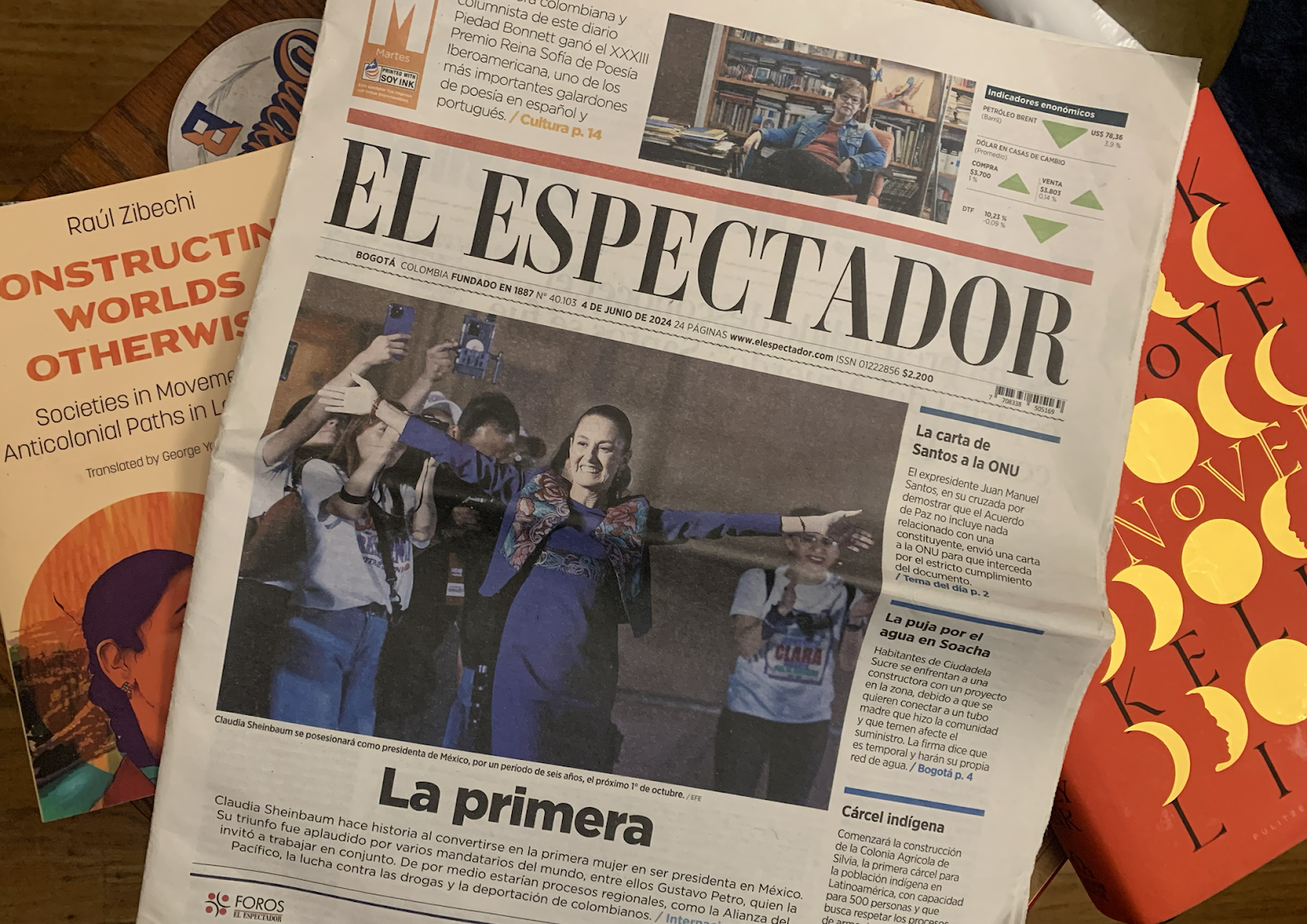
La elección de la Dra. Claudia Sheinbaum en México, como la primera mujer presidente de Norte América dio vuelta al mundo y fue primera plana en muchos países. Foto por Obed Arango, Bogota Colombia 2024

Cuando fui invitada a reflexionar como mexicana, qué es lo que significaba para mí que una mujer  como la Dra. Sheinbaum llegara a la Presidencia de México, múlƟples senƟmientos y pensamientos  llegaron a mí: alegría, saƟsfacción y hasta regodeo por ser mujer. Explicar lo que uno siente nunca  ha sido fácil, en muchas ocasiones las palabras no son suficientes para expresarse, sin embargo,  después de intentar desenlazar la madeja de estos complejos senƟmientos, llegué a dos puntos  clave, que a conƟnuación intentaré explicar:  

1. EL ROMPIMIENTO DEL TECHO DE CRISTAL  

El “techo de cristal”, de acuerdo al Instituto Nacional de las Mujeres en México, ha sido un término  acuñado en el ámbito de la psicología para referirse a “las barreras invisibles, diİciles de traspasar,  que representan los límites a los que se enfrentan las mujeres en su carrera profesional, no por una  carencia de preparación y capacidades, sino por la misma estructura institucional”.  

Romper con estas restricciones y obstáculos, significó para Sheinbaum un reto, desde acceder, como  de permanecer en puestos de responsabilidad o de dirección dentro de su desarrollo profesional,  tomando en cuenta su etapa de embarazo y crianza de l@s hij@s.  

En México y en muchos otros países latinoamericanos, la mayoría de los espacios de desarrollo  profesional de las mujeres, están cargados de desigualdad y discriminación en sus prácticas o en sus  relaciones (visibles o invisibles) que impiden el acceso y desarrollo de trayectorias como la lograda  por la Dra. Sheinbaum. Haber roto con este techo de cristal, abre camino a muchas más mujeres que  se encuentran en esta carrera de obstáculos para lograr sus sueños.  

2. CON UNA MIRADA A LO LOCAL Y UN PENSAMIENTO GLOBALIZADO  

La Dra. Sheinbaum tiene cualidades excepcionales que le han permitido durante su vida, adquirir  una visión compleja, dicotómica, que abarcan múltiples dimensiones de nuestro país, por mencionar  algunas:  

– Desde lo biológico y hasta lo social  

– En lo natural y en lo humano  

– En la unidad y en la diversidad  

– En lo sobrio y en lo lúdico  

Estos elementos marcarán una diferencia de perspectiva desde el ángulo femenino muy importante  para la construcción del segundo piso de la 4T (Cuarta Transformación de México), porque por un  lado ha privilegiado la diversidad cultural, la equidad de género, la comunidad y sus dinámicas, y por  otro, fortalece la visión del enfoque predominante de la innovación, la ciencia y la tecnología, desde  luego, con un sentido social. 

Desde esta perspectiva, puedo afirmar que México está en excelentes manos, que el pueblo no se  equivoca y el que 35.5 millones de mexican@s hayamos votado por ella (siendo la presidenta más  votada en la historia), nos habla de la gran mujer que nos representa. Y como ella nos ha enseñado  a vocear desde el corazón: ¡ES TIEMPO DE MUJERES! 

English Version:

WHAT DOES IT MEAN TO ME THAT DOCTOR CLAUDIA SHEINBAUM PARDO IS THE NEXT PRESIDENT OF MEXICO?  

By Bethania Arango Hisijara  

PhD in Pedagogy-UNAM  
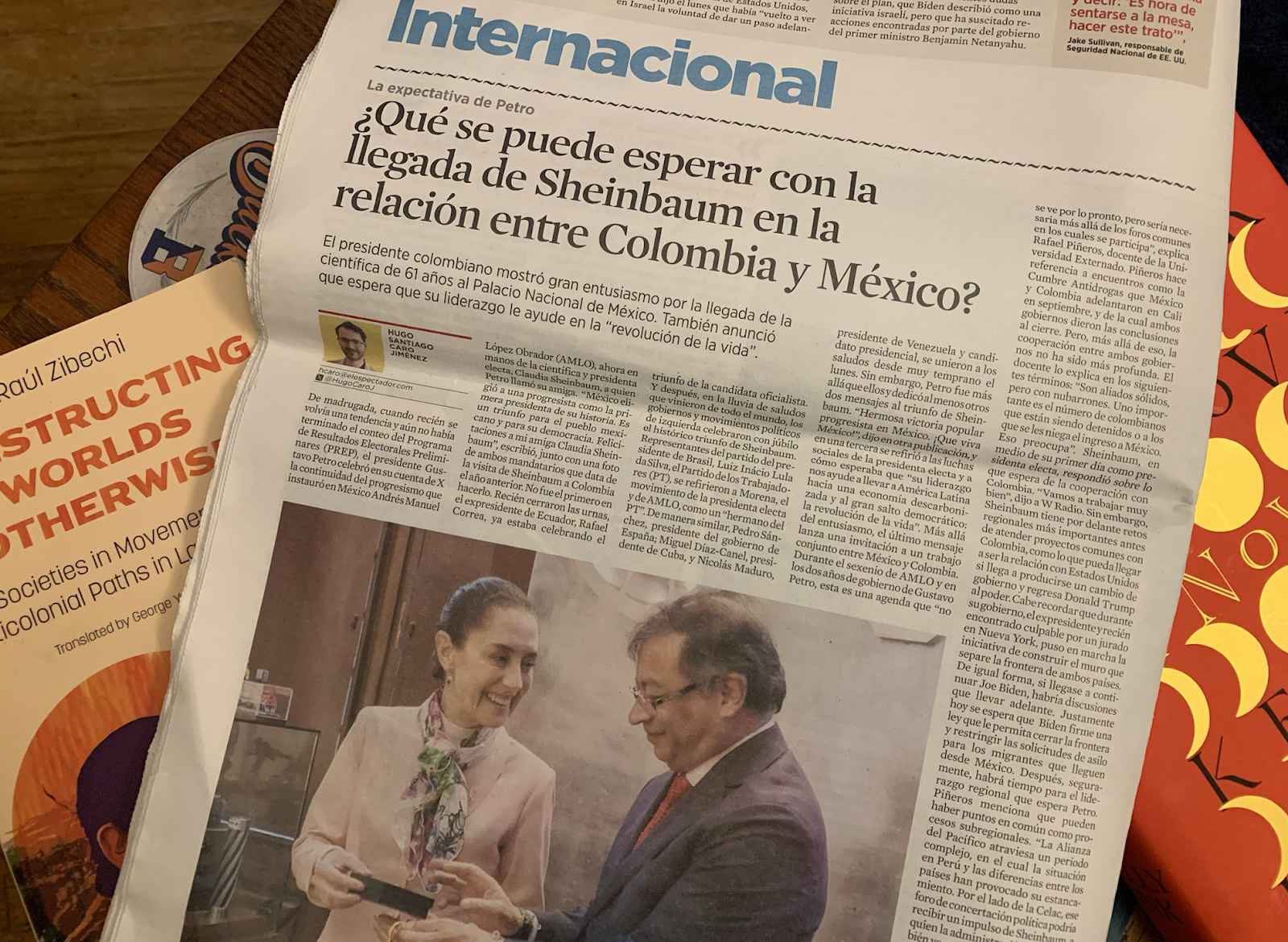
The election of Dr. Claudia Sheinbaum in Mexico, as the first female president of North America, went around the world and was on the front page in many countries. Photo by Obed Arango, Bogota Colombia 2024

When I was invited to reflect as a Mexican, what it meant to me that a woman like Dr. Sheinbaum became the president of Mexico, multiple feelings and thoughts came to me: joy, satisfaction and even delight at being a woman. Explaining what one feels has never been easy, on many occasions words are not enough to express oneself, however, after trying to unravel the skein of these complex feelings, I came to two key points, which I will try to explain below:  

1. THE BREAKING OF THE GLASS CEILING  

The “glass ceiling”, according to the Instituto Nacional de las Mujeres en México, is a term coined in the field of psychology to refer to “the invisible barriers, difficult to cross, that represent the limits women face in their professional career, not because of a lack of preparation and capabilities, but because of the institutional structure itself.”

Breaking through these restrictions and obstacles meant a challenge for Sheinbaum in terms of accessing and maintaining positions of responsibility or management within her professional development, taking into account her pregnancy stage alongside her role as a mother raising her children.  

In Mexico and in many other Latin American countries, the majority of professional development spaces for women are plagued by inequality and discrimination in their practices or relationships (visible or invisible) that prevent access and development of trajectories such as the one achieved by Dr. Sheinbaum. Breaking this glass ceiling paves the way for many more women within this challenging environment to achieve their dreams.  

2. WITH A LOOK AT THE LOCAL AND GLOBALIZED THINKING  

Dr. Sheinbaum has exceptional qualities that have allowed her, throughout her life, to acquire a complex, dichotomous vision capable of encompassing multiple dimensions of our country; to mention a few:  

– From biological to social  

– In natural and in human  

– In unity and diversity  

– In the solemn and the playful  

These elements will make an important difference in perspective from the feminine angle, essential for the construction of the second floor of the 4T (Fourth Transformation of Mexico); on the one hand, Dr. Sheinbaum’s election has triumphed cultural diversity, gender equality, and the community and its dynamics, but on the other hand, it has strengthened the vision of the predominant approach to innovation, science, and technology, all under a social sense. 

From this perspective, I can affirm that Mexico is in excellent hands, that the people are not wrong, and that the fact that 35.5 million Mexicans have voted for her (making her the most-voted president in history), tells us much about the great woman who represents us. As she has taught us to shout from the heart: IT’S TIME FOR WOMEN! 
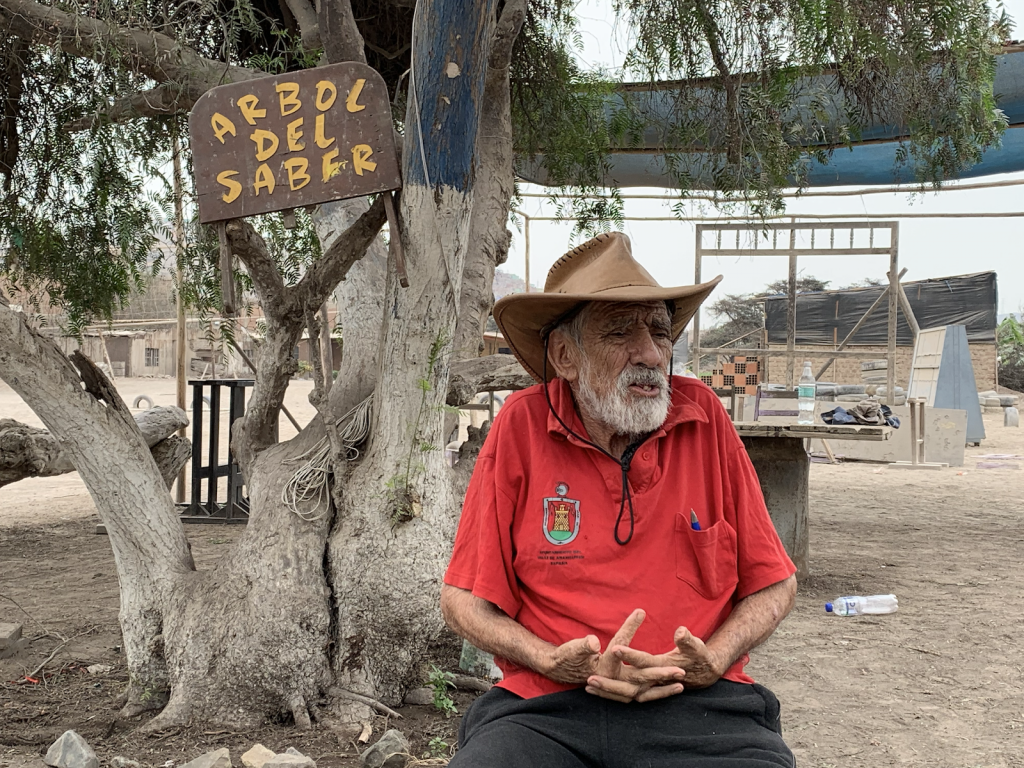
El triangulo de la educación 

RevarteColectiva · April 11, 2024 · Leave a Comment

Por Adolfo Peredo

Click here for English version

Ing. Adolfo Peredo, fundador de “La aldea científica infantil”

Deberíamos preguntarnos qué está sucediendo en nuestra sociedad frente a la pérdida de valores hay que preguntarnos qué podemos hacer.

La educación debería tener 3 ejes de desarrollo, como un triángulo de fuerzas, dónde un lado es el hogar, otro lado es la escuela y el tercer lado es la comunidad. Este triángulo de fuerzas de la educación debe estar debidamente equilibrado para que sus resultados sean óptimos.

El primer lado, el hogar es un espacio en el cual muchas veces los padres y madres, pese a tener la voluntad, no cuentan con las herramientas del conocimiento para poder educar a sus hijos y en ese sentido es urgente tomar muy en cuenta, cómo se puede llenar ese vacío a través incluso de la educación comunitaria. Si el hogar tiene las herramientas para poder educar a sus hijos los otros lados del triángulo también se fortalecerán.

El segundo lado, la comunidad, es donde se puede aprovechar la educación comunitaria, y dónde tenemos que ampliar su radiación orientándola, para qué la comunidad se convierta en un centro de aprendizaje también. Los parques, campos deportivos, etc. son lugares que pueden aportar conocimiento de todos los integrantes de esa comunidad y dónde sus miembros puedan desplazarse sin temor a peligros. En consecuencia, en los espacios públicos de la comunidad existirá un intercambio de saberes de los hijos con los padres.

El tercer lado es neurálgico: la escuela. La escuela no puede ser solo un lugar para transmitir conocimientos, en ella se debe aprender a través de la experimentación, a través del juego y a través del deporte. Actualmente en su mayoría, la educación es monótona, repetitiva, memorista y en muchos casos, no es muy útil al alumno que será el futuro ciudadano. La escuela tiene que dinamizarse, tiene que dar los conocimientos utilitarios al alumno que les sirva en su vida profesional y cotidiana. Cómo hacer que la química, la física, las matemáticas sean útiles en su cotidianidad.

En otras palabras se debe innovar el sistema educativo del país.


English Version:

The Triangle of Education

by Adolfo Peredo

In the face of the deterioration of values in our society, we should inquire what is transpiring and what actions we can take.

Education should have three pillars of development, akin to a triad of forces, where one aspect is the home, another is the school, and the third is the community. This triad of educational forces must be appropriately balanced for its outcomes to be ideal.

The Home

The first aspect, the home, is an environment in which parents, despite having the desire, often lack the knowledge and resources to effectively educate their children. In that regard, it is imperative to consider how this void can be bridged through community education. If the home possesses the tools to educate its children, the other aspects of the triad will also be reinforced.

The Community

The second aspect, the community, is where community education can be leveraged, and where we must expand its influence by guiding it, so that the community evolves into a learning hub as well. Parks, sports fields, etc., are venues that can impart knowledge to all members of that community and where its members can traverse without fear of peril. Consequently, in the public spaces of the community, there will be an interchange of knowledge between children and parents.

The School

The third aspect is pivotal: the school. School cannot merely be a place to convey knowledge; it must be acquired through experimentation, play, and sport. Currently, for the most part, education is tedious, repetitive, rote, and in many instances, not particularly beneficial to the student who will be the future citizen. The school must become more vibrant and provide students with pragmatic knowledge that will serve them in their professional and daily lives. It should teach how to make chemistry, physics, and mathematics applicable in daily life.

Adolfo Peredo

Ingeniero de origen boliviano, inmigrante en Perú, él es fundador de la Aldea Científica Infantil que es un modelo educativo basado en la educación popular y dialógica en la que se rescata la educación que sirve al pueblo en su contexto. 
Se puede ver el documental “Adolfo Peredo, un educador imprescindible”

An engineer of Bolivian origin, immigrant to Peru, he is the founder of the Children’s Scientific Village, which is an educational model based on popular and dialogic education in which education that serves the people in their context is rescued.
You can watch the documentary “Adolfo Peredo, an essential educator”

    LA RADIO COMUNITARIA Y LA CONSTRUCCIÓN DE CIUDADANÍA EN EL CONTEXTO DE LA GLOBALIZACIÓN

    RevarteColectiva · April 10, 2024 · Leave a Comment

    Eddy Michael Ramos Ludeña

    Lima, March 2024

    Click here for English version

    “Charles Foster Kane fue un moldeador de la opinión colectiva” 

    Ciudadano Kane de Orson Welles (1941)

    Introducción

    Nuestro estudio denominado: “La radio comunitaria y la construcción de ciudadanía en tiempos de globalización”, es un análisis de tres experiencias barriales comunicacionales en Puente Piedra con QR19 – Quijote Radio, Villa El Salvador con Stereo Villa y ALER, una red de comunicación educativa popular en América Latina con sede en Quito – Ecuador. Ambas experiencias peruanas tienen un historial en los llamados medios alternativos, educativos, comunitarios, culturales y participativos, coincidentemente porque son y han acompañado los cambios históricos en sus respectivas comunidades como Puente Piedra y Villa el Salvador. En el caso de Lima, se trata de distritos emergentes, que en sus inicios fundacionales de los años 60 y 70 han sido parte de procesos históricos organizativos como lo menciona José Matos Mar (1957), y donde posteriormente han nacido espacios de comunicación desde la perspectiva que plantea el obispo de la Teología de la Liberación, Pedro Casaldáliga (2005) en su presentación de la (Agenda Latinoamericana, 2006, pag. 11). con su texto: “Para otra humanidad, otra comunicación”. 

    Sí, es posible construir una comunicación que interpele y acompañe a los procesos de cambio de las instituciones que valoren los derechos en toda su dimensión humana para la construcción de ciudadanía. Los procesos inacabados de las radios comunitarias, están entrelazadas con el fortalecimiento de las organizaciones, y este a su vez son fruto de situaciones y pulsaciones en un mundo globalizado, donde la comunicación está más cerca a la mass media, el poder mediático y las influencias políticos sociales que imponen una narrativa neoliberal donde el centro no es el ser humano sino la supremacía del mercado. Asimismo, existe el comportamiento de las personas y la opinión pública que atraviesan por una crisis de valores e ideas, la ciudadanía no exige ni busca nuevas lecturas críticas; los periodistas y comunicadores crean contenidos absorbidos por la inmediatez de la información, sin buscar historias originales que conmueven. La globalización, en materia comunicacional obliga a replantear una serie de ideas y planteamientos, crea un mundo imaginario integrado, al mismo tiempo anula la identidad local y la memoria de las nuevas generaciones. Estamos en un contexto histórico mundial donde se percibe acciones muy complejas como la corrupción, débil formación educativa, escaso nivel de organización en las comunidades, el cual contribuye a tener una débil formación ciudadana.  

    En esta situación, pareciera que no existe alguna esperanza ante la cotidianidad y zozobra, pero los indicios nos indican que, si es viable replantear la organización y en ese camino, construir “otra comunicación”. Mostramos dos experiencias en territorios similares como QR19 – Quijote Radio en Puente Piedra y Stereo Villa en Villa El Salvador con propuestas coincidentes en un determinado momento de tiempo y espacio.

    QR-19 Quijote Radio: una experiencia de desarrollo comunitario en la etapa covid-19

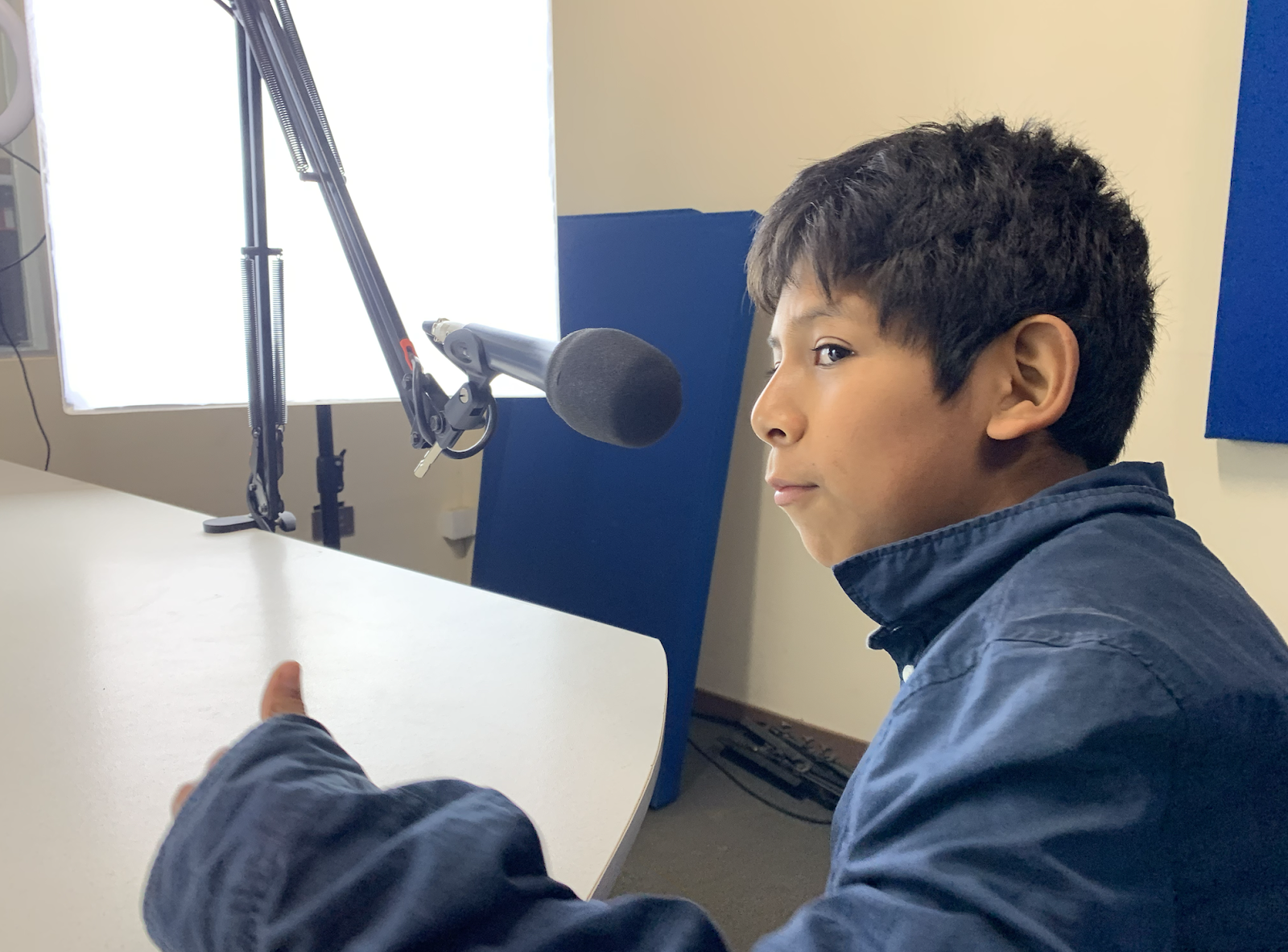
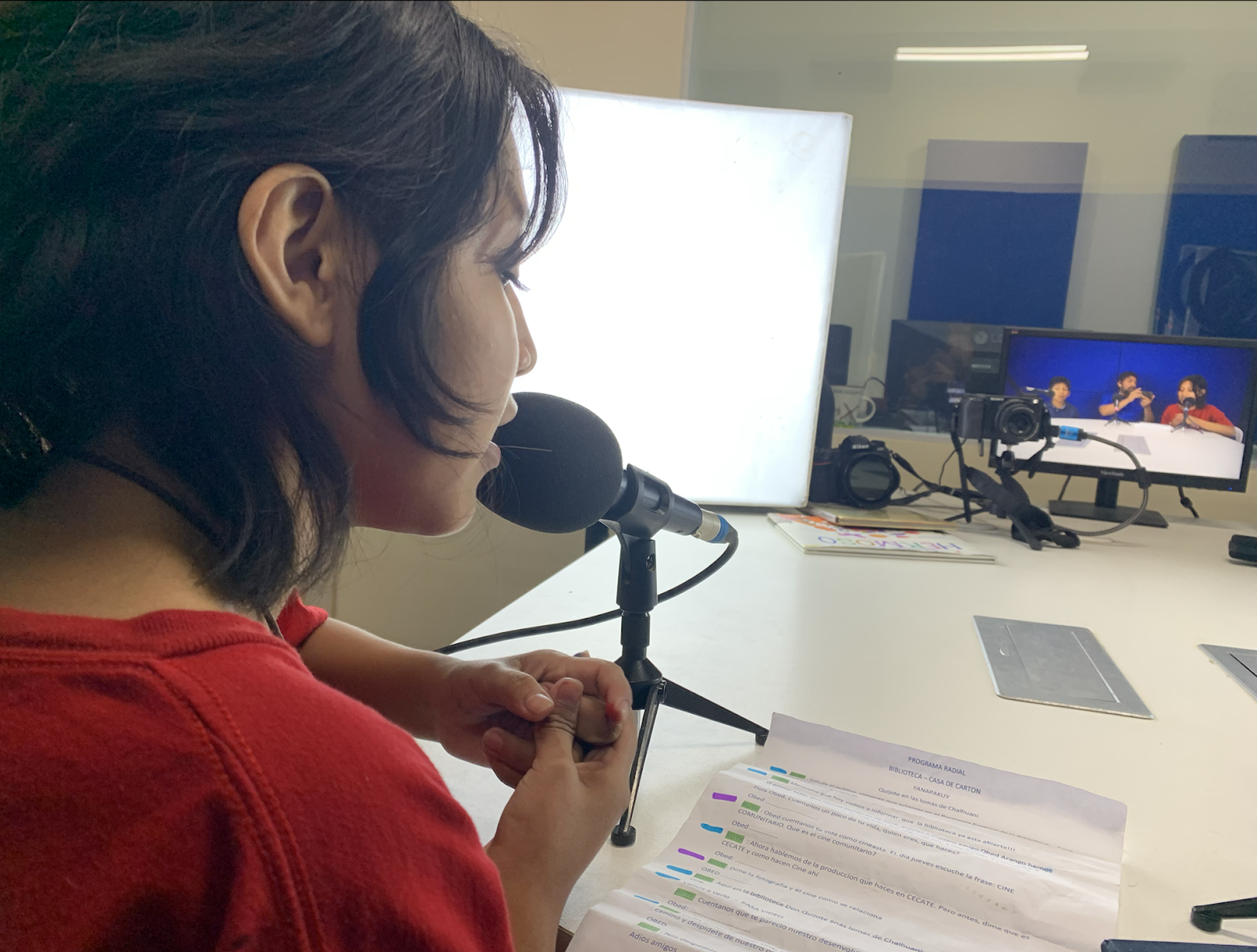
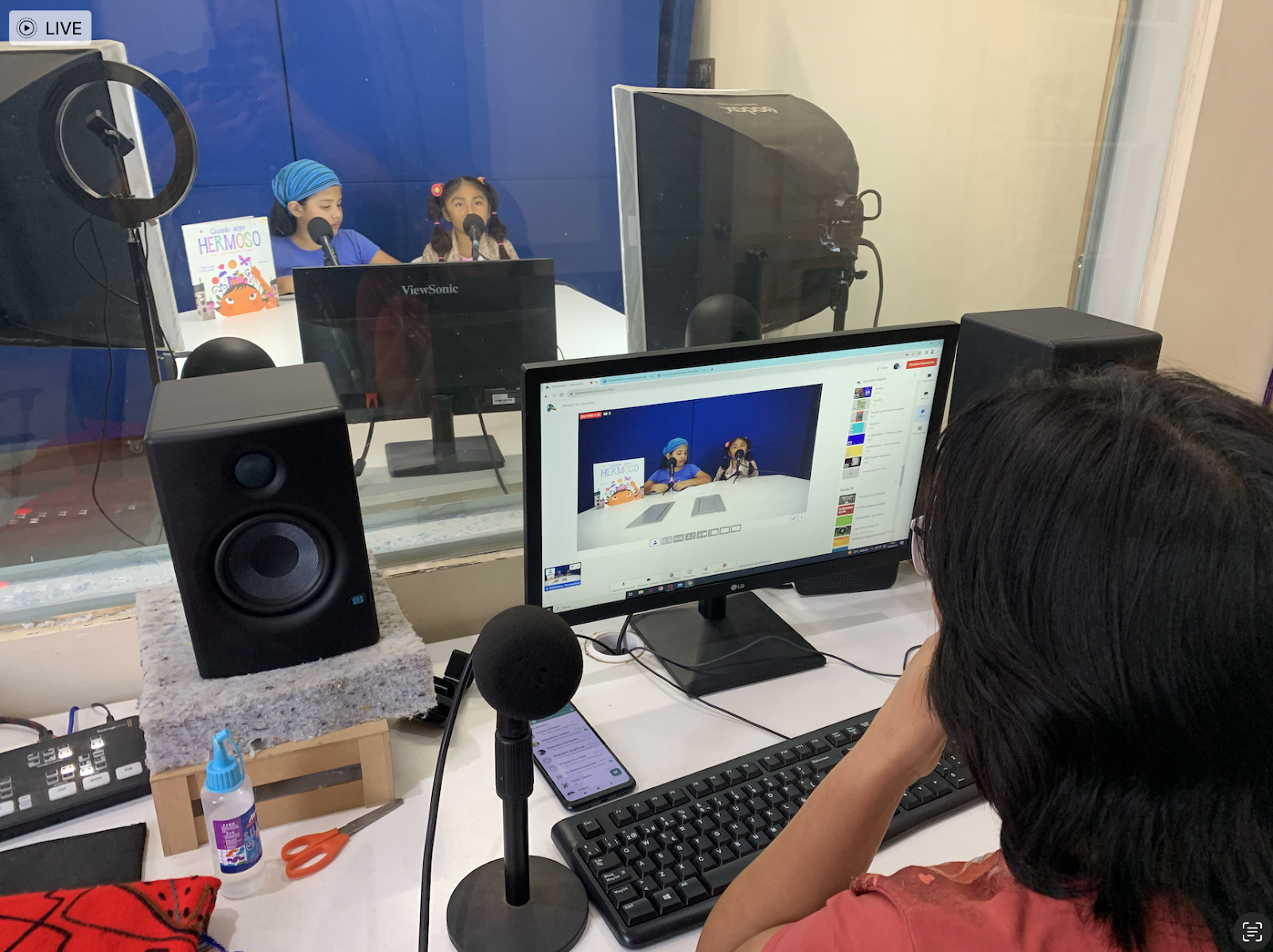
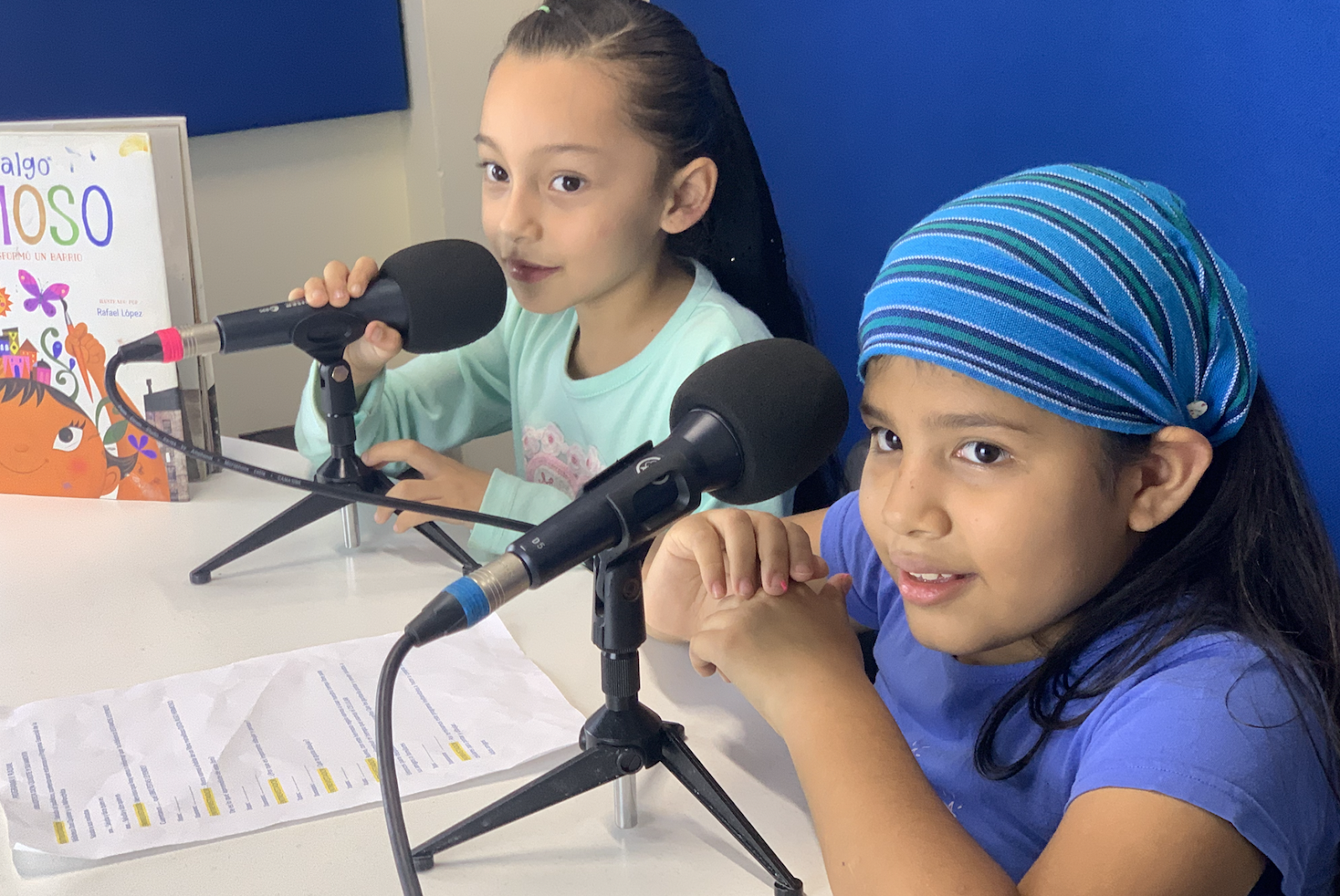
    Si en un futuro muy lejano, los cronistas e historiadores deciden contar esta etapa que nos tocó vivir entre los años 2019 y 2020, sin duda será una fase de espanto, solo en el Perú dejó un saldo de más de 180.000 muertes por la crisis de la pandemia del coronavirus. En estas circunstancias, surge una experiencia de comunicación web, denominada QR -19 Quijote Radio. La comunicación también construye ciudadanía. QR- 19 Quijote Radio es una propuesta que permite repensar el papel de las radios comunitarias en el Perú. QR-19, nace por la necesidad de impulsar “otra comunicación “, una comunicación que construya comunidad, que impulse nuevas narrativas, con una visión solidaria que acompañe en el proceso y desarrollo de las organizaciones de base de la comunidad de Santa Rosa en Puente Piedra. En dos años de trabajo ininterrumpido, Quijote Radio busca construir una identidad local, que impulse la participación de nuevos liderazgos, en los niños de la biblioteca comunal “Don Quijote y su Manchita”, adolescentes de diversas instituciones educativas y mujeres de las ollas comunes, todas estas organizaciones son parte del desarrollo comunitario en la comunidad. Como medio web, el objetivo es construir una comunicación que defienda derechos, justamente el derecho a la comunicación. Tal como lo menciona el sacerdote Pedro Casaldáliga (2006), donde sostiene: “Para una auténtica ciudadanía mediática, esa «otra Comunicación para otra Humanidad», debemos impulsar simultáneamente” ( Casaldáliga, 2006, pp.9 -10).

    • La práctica habitual de la comunicación: consigo, con Dios, con el Universo, en la familia, en el vecindario, en el trabajo, en la lucha y en la fiesta, en la vida. 
    • El ser humano es «el gran medio de comunicación»; después vienen «los medios». 
    • La concientización 
    • La educación responsable para la comunicación. 
    • La «lectura» crítica de toda información. 
    • La creación de información alternativa y el constante respaldo a la misma. 
    • La contestación organizada contra todo control, monopolio o mentira. 
    • El rechazo de todo imperialismo cultural.

    Contexto social y las formas de organización barrial en los años 60  

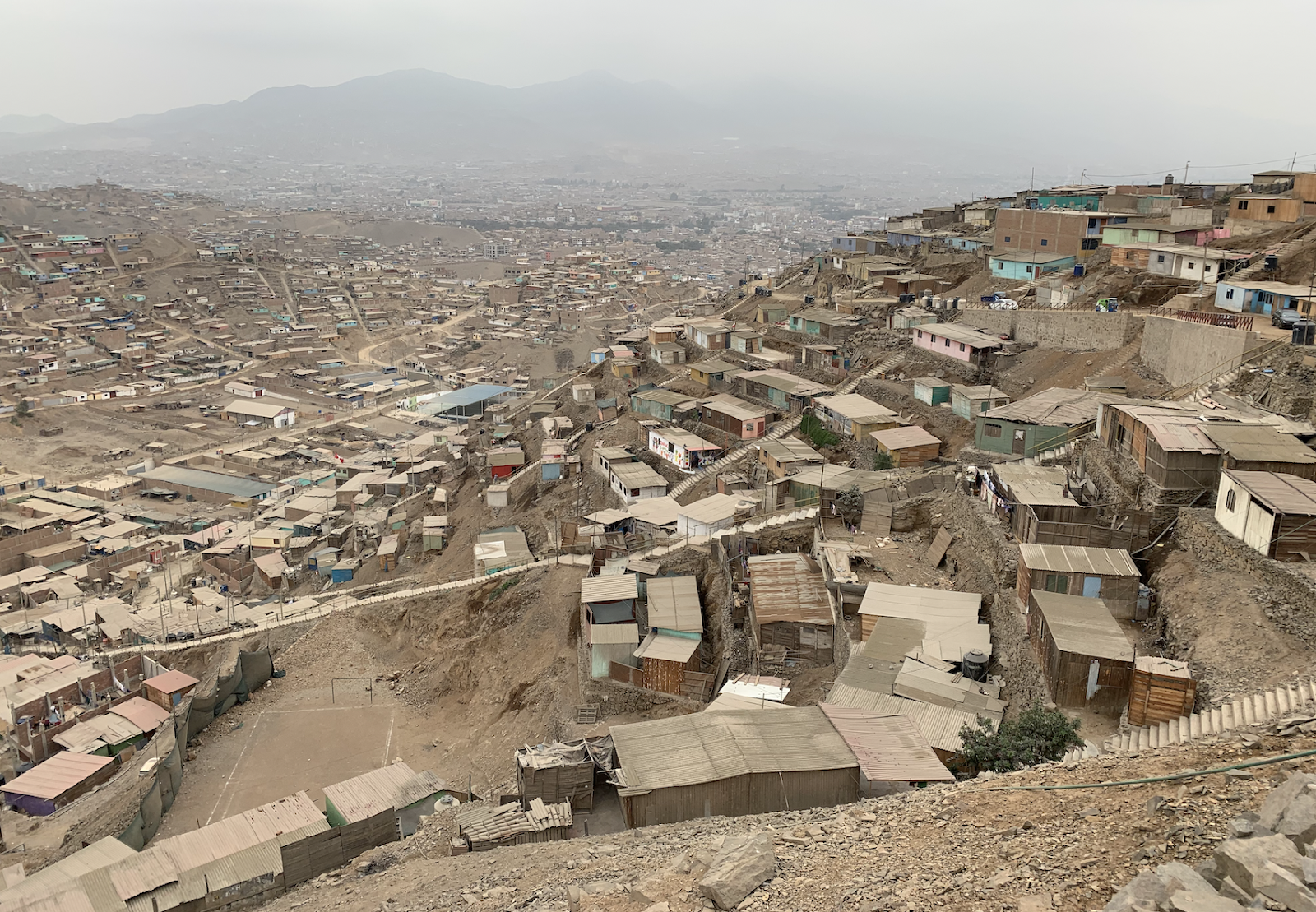
    El punto de partida a nuestra investigación tiene un enfoque global para luego centrar la mirada localmente, específicamente en la comunidad de Santa Rosa en Puente Piedra y su experiencia comunicativa. Hablamos del pueblo de Santa Rosa que nació el 5 de diciembre 1965 y este año cumplió 58 años. Es importante describir y analizar el contexto social, político y cultural de los años 60, cuyo devenir de la historia mostraba una efervescencia social y una capacidad de movilización de las organizaciones. Según Matos Mar, que entre 1955 y 1957 realizó un estudio que concluye: “las barriadas son “una fuerte concentración urbana… resultado de un crecimiento desorganizado en nuestra sociedad. De allí que el surgimiento desorbitado de este tipo de asentamientos humanos … no es sino una manifestación concreta de los desajustes económicos y sociales de la organización estructural imperante”. (p.24). Desde que tengo uso de razón y conocimiento, recuerdo las historias y testimonios de la comunidad de Santa Rosa en los años 60, aspectos evidenciados gracias a la narrativa oral contada por los pobladores. Lo más resaltante en la comunidad de Santa Rosa está en sus inicios fundacionales, la mayoría de los pobladores llegaron a través de olas migratorias sucesivas con la ilusión de una casa propia y la búsqueda de oportunidades en la capital limeña. Si bien es cierto, el enfoque de Matos Mar (1955) percibe un desorden en los procesos de cambios de los barrios limeños, también es importante resaltar que las personas que llegaron a la capital, se reinventaron una ciudad que buscaba un progreso con desarrollo personal y social. Entre los aspectos negativos en la organización de los años 60, coincido con Matos Mar, existe una problemática aún vigente como la situación asistencialista y paternalista del estado que no contribuye a fortalecer liderazgos, sin embargo; hay experiencias de iniciativas de comunidades que apuestan por la colectividad, gracias a ello surgieron muchos pueblos llenos de espíritu solidario y apoyo mutuo que aprendieron a gestionar ante el estado e instituciones nacionales y del extranjero. 

    En ese sentido el crecimiento vertiginoso trae nuevos retos a la ciudad, además del   desborde social que altera la comunidad en el ámbito cultural, político y también comunicacional, las consecuencias se observan en el modo de pensar, soñar y luchar en tiempos recios. Una experiencia palpable de lucha y esperanza lo protagoniza el sacerdote de la congregación Sagrado Corazón, Luis Berger, quien llegó a la comunidad de Santa Rosa (Puente Piedra) en 1978, tras una larga travesía de dos meses por altamar desde Francia a Perú.

    Al llegar al Perú, Luis Berger fue testigo de tiempos convulsos, desigualdad en la sociedad peruana y la lucha constante por las tierras. Al sacerdote de la comunidad de Santa Rosa le bastaron 8 años para planificar y visionar una ciudad diferente. Su propuesta era parte de un proceso, que implicaba gestión ante instituciones extranjeras y fundamentalmente trabajo comunitario. Es así que plantea y prioriza tres aspectos, que él llamaría “el triángulo del desarrollo”, que consiste en ir resolviendo tres aspectos importantes que se convirtieron en signos de vida. En un primer momento, se planteó instalar el reservorio de agua, un pueblo sin agua era imposible que pueda subsistir, decía. 

    Un segundo aspecto, una vez que el pueblo gozaba de agua, lo ideal era alimentar el espíritu, es así que buscaron evangelizar a la comunidad de Santa Rosa y decidieron construir la iglesia, siempre con la idea de la teología de la liberación en su opción preferencial por los pobres.

    Y finalmente, el tercer elemento es la educación, se construye el colegió Fe y Alegría 12, que hoy alberga a cerca de 1200 estudiantes de primaria y secundaria. Hay una etapa crucial que nos permite entender el decaimiento de las organizaciones sociales; no solo en la comunidad de Santa Rosa sino a nivel nacional y latinoamericano. En el caso particular de nuestro estudio, consideramos que la vesania de Sendero Luminoso y posteriormente el régimen fujimorista son dos aspectos que han hecho daño a la organización, sus respuestas extremas sin el mayor consenso en la ciudadanía generaron la debacle en el movimiento social peruano. Una apuesta individual sobre lo colectivo, que anula esos mundos imaginarios que se construyen sobre la base de la memoria, identidad, solidaridad, participación y esperanza. A esta situación se añade un modelo mercantilista y neoliberal que destruye la identidad local y aprovecha la crisis educativa que no construye ciudadanía.

    Radio Stereo Villa: un referente comunicacional en Villa el Salvador

    Haciendo un símil entre los procesos de fortalecimiento organizacional de la comunidad de Santa Rosa en Puente Piedra y el distrito pujante de Villa El Salvador llegamos a la conclusión, que existen coincidencias culturales y organizacionales, ambos surgieron en la misma década y tienen una visión muy profunda sobre lo colectivo. Pero en esta etapa, es importante referirnos a la historia de la radio comunitaria Stereo Villa, una experiencia comunicacional comunitaria que tiene un precedente en la organización y participación con el protagonismo de La Comunidad Urbana Autogestionada de Villa El Salvador (CUAVES).

    En una entrevista, realizada al director actual de Stereo Villa, Francisco Ticona, nos comentó sobre la importancia del surgimiento de Stereo Villa en el fortalecimiento organizacional del distrito de Villa El Salvador.

    Según Francisco Ticona: “La historia de Stereo Villa está relacionado con el surgimiento de Villa El Salvador”. Esta experiencia comunicacional surge mediante procesos educativos previos, con la creación del Centro de Educación Popular que crea talleres audiovisuales formativos en jóvenes de los colegios de la zona Fe y Alegría Nro. 17 y la I.E 6069 Pachacutec. 

    En el año 1971, surge el distrito de Villa el Salvador, posteriormente en 1974 se crea el Centro de Comunicación Popular y Promoción del Desarrollo de Villa El Salvador CECOPRODE-VES que dio fruto a una red de altoparlantes en varias zonas de Villa El Salvador. Desde este espacio los jóvenes generaron un espacio informativo para reuniones y asambleas decisorias. En 1980 el Centro de Comunicación Popular, dio un paso importante. Optaron por formar líderes comprometidos. Antes dos figuras importantes fueron presidentes de esta organización: Michel Azcueta y Johnny Rodríguez, en el futuro llegaron a ser alcaldes de Villa el Salvador.

    Nos comenta E. Collado Morote (2013), sobre el papel fundamental de la organización de base en la creación de Stereo Villa: “Desde la experiencia de los talleres, se plantea la necesidad de tener un medio de comunicación masiva, por lo que los dirigentes del Centro de Comunicación Popular empiezan a preparar el expediente para tramitar ante el Ministerio de Transportes y Comunicaciones una licencia de radio con el apoyo de recursos de la cooperación internacional. Una gestión que les tomó tres años”. (  p6 ).

    Recién, el 13 de julio de 1990 surge Radio Stereo Villa en su primera señal 102.5 Fm, el cual tiene como objetivo llevar educación y cultura a diversos lugares de la comunidad del distrito de Villa El Salvador.

    Experiencias de comunicación y transformación en América Latina desde ALER

    En este panorama de avances y retrocesos en materia comunicativa; en América Latina se gestó ALER, una institución continental denominada:  Asociación Latinoamericana de Educación y Comunicación Popular (ALER), una organización que se resiste y perdura en tiempos actuales. ALER, es la organización que impulsa las radios comunitarias y genera espacios que construyen ciudadanía, colocando en la agenda el derecho a la comunicación como un elemento primordial que acompañen los procesos de cambio social. Desde ALER, hay una gran preocupación por la sostenibilidad de las radios comunitarias, se replantean fortalecer la organización para contrarrestar el papel de las radios hegemónicas en cada país, de ahí surge la necesidad de hacer un diagnóstico que da como resultado un documento denominado Proyecto Político Comunicacional, que busca crear espacios de encuentro para consolidar nuevos espacios ciudadanos.

    La ciudadanía es un proceso integral que permite el desarrollo individual y colectivo de una comunidad, cuando hablamos de ciudadanía, se tiene que mencionar al individuo en sus diversas dimensiones. Un ejemplo concreto es la situación de Santa Rosa y QR – 19 Quijote Radio, el cual fue objeto de estudio de este ensayo, la idea de ciudadanía en el contexto de la comunidad de Santa Rosa obedece a su débil organización, falta de coordinación con autoridades estatales y privadas, escasa conciencia con nuestros derechos, desigualdades en la comunidad y sin acceso a estar informados.

    Existen límites que impiden que una persona logre desarrollarse como un ciudadano comprometido. En esta oportunidad, mostramos 3 variables que nos permiten entender que la ciudadanía es un ejercicio para todas las personas, por ejemplo, en principio: la pobreza e informalidad, una situación que no permite tener acceso a servicios de calidad. Como segundo aspecto, está la discriminación cultural, que muestra una realidad contradictoria en la manera de relacionarse entre los semejantes, debido a los prejuicios y falta de consensos. Y finalmente, un aspecto postergado en nuestro país, es la lucha por los derechos ciudadanos. La pandemia en el 2020 evidencio la situación precaria de nuestro país, por la irresponsabilidad de las autoridades, sin contar siquiera con hospitales equipados, evidenciando una crisis educativa no resuelta en décadas.

    Conclusiones

    Estas experiencias de radios comunitarias, QR19 – Quijote Radio surgida en el norte de Lima en Puente Piedra y Stereo Villa que nace en el sur de Lima, en Villa el Salvador, son el contraste a los grandes medios hegemónicos que tienen una narrativa propia y son instrumentos del poder de turno. La experiencia nos enseña, que es posible seguir un correlato iniciado en los años 60 y 70 cargados de historia y organización para entender los nuevos tiempos, Es decir, primero se organizan las comunidades y luego surgen los espacios comunicativos que ayuden a analizar los procesos, integrar a las comunidades e interpelarnos los ciudadanos. 

    Es el caso de QR – 19 Quijote Radio y Stereo Villa, son radios que se han nutrido de la historia, la memoria y los procesos de lucha de antaño. A diferencia de los grandes medios de comunicación, tienen un fin educativo que ayuda formar ciudadanos con actitud crítica y mayor compromiso para asumir nuevos retos. Las radios comunitarias, son el espacio para el desarrollo local que puede generar narrativas alentadoras al contraste con los grandes medios que muestran una realidad cargada de violencia. Hoy, las radios comunitarias, en plena globalización asumen nuevos retos. En principio, las radios son un medio que permite acompañar los procesos de cambio en la sociedad, su discurso y pluralidad es importante para generar consenso en la población a fin de reinventarse una ciudad más resilente, ordenada y solidaria. Las radios comunitarias en Perú, caminan solos, es una apuesta desde la sociedad civil, en un medio tradicional, ellos tienen garantizado sus ingresos mediante la publicidad, en una radio comunitaria, generalmente es parte de una ONG o una institución eclesial que ayuda a la sostenibilidad.

    En los proyectos de radios comunitarias, es importante pensar en la sostenibilidad no solo económica, también social. En este sentido, la visión ciudadana en una radio es parte importante de la creación de contenidos, porque permitirá generar participación y consensos. Los autores, Claudia Villamayor y Ernesto Lamas (1998):  sostienen que, “La concentración de la propiedad de los medios implica una restricción del espacio público y constituye un límite a la pluralidad de opiniones, de identidades, de intereses y de voces. Es también un límite a la democracia y la vigencia de los derechos humanos”, (p.1). En ese sentido, el papel de las radios comunitarias es trascendental, porque van construyendo una agenda local junto a la comunidad, ahí donde el estado no puede llegar, la radio se convierte en un espacio de generador de consensos e historias. Una radio, no se define como comunitarias por el solo hecho de estar en una ciudad o urbe, sino en la medida que se compromete en la defensa de los derechos. Entre las características más resaltantes de las radios comunitarias y ciudadanas, está el hecho de proyectarse hacia la colectividad y la comunidad, intereses compartidos ligados a lo político, social, educativo y cultural. Muchas de estas radios se apoyan e integran mutuamente a través de redes. A raíz de la crisis política y de representatividad, las radios comunitarias y ciudadanas intentan generar procesos que permitan dar espacios a los líderes locales y organizaciones. A raíz de la crisis institucional, los medios comunitarios se convierten en un espacio de reflexión y debate que permita generar consenso y diálogo.

    Bibliografía

    • Garcia Ganglini, Néstor. 1995. Consumidores y ciudadanos. Consumidores del siglo XXI, ciudadanos del siglo XVIII. México. Grijalbo.
    • Análisis de la emblemática película Ciudadano Kane y del libro: Película Ciudadano Kane: Año 1941, Duración 119 min, Estados Unidos, director: Orson Welles.
    • Carringer , Robert L. ( 1987) Como se hizo Ciudadano Kane. Capítulo de libro, página 13 a página 20. Barcelona. Ultramares editores. El camino y los andares.
    • La experiencia del Equipo Latinoamericano de Formación Elfo-Aler, Año 2009. Programa conjunto RITMO SUR. Capítulo de libro, página 01 a página 20. Buenos Aires. 
    • Garcia Ganglini, Néstor. 1995. Imaginarios urbanos. Ceudeba.
    • Los media y la modernidad. Una teoría de los medios de comunicación. Año,1998. John B. Thompson. Capítulo de libro, página 27 a la página 45. Barcelona. 
    • Elementos de la teoría política. Año,1992. Giovani Sartori. Opinión pública. Capítulo de libro, página 169 a la página 201.  Ciencias sociales /Alianza Editorial.  
    • 10 años soñando como el Quijote. Año 2019. Eddy Ramos y Lis Pérez Quispe. Lima. Editorial Arteidea 
    • La aldea babel. Medios de Comunicación y relaciones Norte – Sur. Año,1994. Edición de Carmen Pérez Babot. Capítulo de libro, página 17 a la página 41. Deria editorial.  Barcelona. 
    • Gestión de la radio comunitaria y ciudadana. Año,1998. Claudia Villamayor y Ernesto Lamas. Capítulo de libro, página 01 a la página 40.  FES/ AMARC.  
    • Morote, E. (2013). Radio Stereo Villa en la construcción de ciudadanía en Villa El Salvador. Análisis de los programas de opinión. En Concurso de Investigación en Comunicación: 7ma. Edición (pp. 63-112). Universidad de Lima, Carrera de Comunicación.

    English Version:

    Community Radio: Building Citizenship in a Globalized World

    Eddy Michael Ramos Ludeña

    Lima, March 2024

    “Charles Foster Kane was a shaper of collective opinion”

    Citizen Kane by Orson Welles (1941)

    Introduction

    Our study called: “Community Radio and the Construction of Citizenship in Times of Globalization”, is an analysis of three neighborhood communication experiences in Puente Piedra with QR19 – Quijote Radio, Villa El Salvador with Stereo Villa, and ALER, an educational communication network popular in Latin America based in Quito – Ecuador. Both Peruvian experiences have a history in the so-called alternative, educational, community, cultural, and participatory media, coincidentally because they are and have accompanied the historical changes in their respective communities such as Puente Piedra and Villa el Salvador.

    In the case of Lima, these are emerging districts, which in their founding beginnings in the 60s and 70s have been part of historical organizational processes as mentioned by José Matos Mar (1957), and where communication spaces have subsequently been born from the perspective proposed by the bishop of Liberation Theology, Pedro Casaldáliga (2005) in his presentation of the (Agenda Latinoamericana, 2006, page 11). with his text: “For another humanity, another communication.”

    Yes, it is possible to build communication that challenges and accompanies the processes of change of institutions that value rights in all their human dimensions for the construction of citizenship. The unfinished processes of community radio stations are intertwined with the strengthening of organizations, and this in turn is the result of situations and pressures in a globalized world, where communication is closer to the mass media, media power, and influences.

    Social politicians who impose a neoliberal narrative where the center is not the human being but the supremacy of the market. Likewise, there is the behavior of people and public opinion that are going through a crisis of values and ideas, citizens do not demand or seek new critical readings; Journalists and communicators create content absorbed by the immediacy of the information, without seeking original stories that move. Globalization, in communication matters, forces us to rethink a series of ideas and approaches, it creates an integrated imaginary world, and at the same time, it annuls local identity and the memory of new generations. We are in a world-historical context where very complex actions such as corruption, weak educational training, and low levels of organization in communities are perceived, which contributes to weak citizen training.

    In this situation, it seems that there is no hope in the face of everyday life and anxiety, but the signs tell us that it is viable to rethink the organization and along that path, build “another communication.” We show two experiences in similar territories such as QR19 – Quijote Radio in Puente Piedra and Stereo Villa in Villa El Salvador with coincident proposals at a certain moment in time and space.

    QR-19 Quijote Radio: an experience of community development in the COVID-19 stage

    If in the very distant future, chroniclers and historians decide to talk about this stage that we had to live through between the years 2019 and 2020, it will undoubtedly be a phase Shockingly, in Peru alone it left a balance of more than 180,000 deaths due to the coronavirus pandemic crisis. In these circumstances, a web communication experience emerges, called QR -19 Quijote Radio. Communication also builds citizenship.

    QR-19 Quijote Radio is a proposal that allows us to rethink the role of community radio stations in Peru. QR-19 was born from the need to promote “another communication”, a communication that builds community, and promotes new narratives, with a vision of solidarity that accompanies the process and development of the grassroots organizations of the community of Santa Rosa in Puente Stone. In two years of uninterrupted work, Quijote Radio seeks to build a local identity, that encourages the participation of new leadership, in the children of the “Don Quijote y su Manchita” communal library, adolescents from various educational institutions, and women from the communal pots, All of these organizations are part of community development in the community. As a web medium, the objective is to build communication that defends rights, precisely the right to communication. As mentioned by the priest Pedro Casaldáliga (2006), where he maintains: “For authentic media citizenship, we must promote this “other Communication for another Humanity” simultaneously” (Casaldáliga, 2006, pp.9 -10).

    • The habitual practice of communication: with yourself, with God, with the Universe, in the family, in the neighborhood, at work, in fights and at parties, in life.
    • The human being is “the great means of communication”; Then comes “the media.”
    • The awareness
    • Responsible education for communication.
    • The critical “reading” of all information.
    • The creation of alternative information and the constant support for it.
    • The organized response against all control, monopoly, or lies.
    • The rejection of all cultural imperialism.

    Social context and forms of neighborhood organization in the 60s

    The starting point for our research is a global approach to the focus locally, specifically on the community of Santa Rosa in Puente Piedra and its communicative experience. We are talking about the town of Santa Rosa which was born on December 5, 1965, and this year turned 58 years old. It is important to describe and analyze the social, political, and cultural context of the 60s, whose development in history showed social effervescence and a capacity for mobilization of organizations.

    According to Matos Mar, between 1955 and 1957 carried out a study that concluded: “the neighborhoods are “a strong urban concentration… the result of disorganized growth in our society. Hence, the exorbitant emergence of this type of human settlements… is nothing more than a concrete manifestation of the economic and social imbalances of the prevailing structural organization.” (p.24).

    For as long as I can remember and know, I have remembered the stories and testimonies of the community of Santa Rosa in the 60s, aspects evidenced thanks to the oral narrative told by the residents. The most notable thing in the community of Santa Rosa is its founding beginnings, the majority of the residents arrived through successive waves of migration with the hope of a home of their own and the search for opportunities in the capital of Lima. While it is true that Matos Mar’s (1955) approach perceives a disorder in the processes of change in Lima’s neighborhoods, it is also important to highlight that the people who arrived in the capital reinvented themselves as a city that sought progress with personal development. And social. Among the negative aspects of the organization of the 60s, I agree with Matos Mar, there is a problem still in force such as the welfare and paternalistic situation of the state that does not contribute to strengthening leadership, however; There are experiences of community initiatives that are committed to the community, thanks to this many towns emerged full of the spirit of solidarity and mutual support that learned to manage before the state and national and foreign institutions.

    In that sense, rapid growth brings new challenges to the city, in addition to the social overflow that alters the community in the cultural, political, and also communication spheres, the consequences are observed in the way of thinking, dreaming, and fighting in tough times. A palpable experience of struggle and hope is carried out by the priest of the Sacred Heart congregation, Luis Berger, who arrived in the community of Santa Rosa (Puente Piedra) in 1978, after a long two-month journey across the high seas from France to Peru.

    Upon arriving in Peru, Luis Berger witnessed turbulent times, inequality in Peruvian society, and the constant struggle for land. It took the priest of the Santa Rosa community 8 years to plan and envision a different city. His proposal was part of a process, which involved management before foreign institutions and fundamentally community work. Thus, he proposes and prioritizes three aspects, which he would call “the triangle of development”, which consists of resolving three important aspects that became signs of life. At first, I considered installing the water reservoir; a town without water couldn’t survive, he said.

    A second aspect, once the town had water, the ideal was to feed the spirit, so they sought to evangelize the community of Santa Rosa and decided to build the church, always with the idea of liberation theology in their option. preferential for the poor.

    And finally, the third element is education, the Fe y Alegría 12 school was built, which today houses about 1,200 primary and secondary students. There is a crucial stage that allows us to understand the decay of social organizations; not only in the community of Santa Rosa but at the national and Latin American level. In the particular case of our study, we consider that the desperation of Sendero Luminoso and later the Fujimori regime are two aspects that have damaged the organization; their extreme responses without the greatest consensus among citizens generated the debacle in the Peruvian social movement. An individual bets on the collective, which annuls those imaginary worlds that are built based on memory, identity, solidarity, participation, and hope. Added to this situation is a mercantilist and neoliberal model that destroys local identity and takes advantage of the educational crisis that does not build citizenship.

    Radio Stereo Villa: a communication reference in Villa el Salvador

    Making a simile between the processes of organizational strengthening of the community of Santa Rosa in Puente Piedra and the thriving district of Villa El Salvador, we conclude that there are cultural and organizational coincidences, both emerged in the same decade and have a very deep vision. about the collective. But at this stage, it is important to refer to the history of the Stereo Villa community radio, a community communication experience that has a precedent in the organization and participation with the leading role of the Self-managed Urban Community of Villa El Salvador (CUAVES).

    In an interview with the current director of Stereo Villa, Francisco Ticona, he told us about the importance of the emergence of Stereo Villa in the organizational strengthening of the Villa El Salvador district. According to Francisco Ticona: “The history of Stereo Villa is related to the emergence of Villa El Salvador.” This communication experience arises through previous educational processes, with the creation of the Popular Education Center which creates audiovisual training workshops for young people from schools in the Fe y Alegría No. 17 area and I.E 6069 Pachacutec.

    In 1971, the district of Villa El Salvador emerged, later in 1974 the Center for Popular Communication and Promotion of the Development of Villa El Salvador CECOPRODE-VES was created, which gave rise to a network of loudspeakers in several areas of Villa El Salvador. From this space, the young people created an informative space for meetings and decision-making assemblies. In 1980, the Popular Communication Center took an important step. They chose to train committed leaders. Previously, two important figures were presidents of this organization: Michel Azcueta and Johnny Rodríguez, in the future they became mayors of Villa el Salvador.

    E. Collado Morote (2013) tells us about the fundamental role of the grassroots organization in the creation of Stereo Villa: “From the experience of the workshops, the need to have a means of mass communication arises, so the Leaders of the Popular Communication Center begin to prepare the file to process a radio license with the Ministry of Transport and Communications with the support of international cooperation resources. A management that took them three years.” (p6).

    Only on July 13, 1990, Radio Stereo Villa emerged on its first signal, 102.5 Fm, which aims to bring education and culture to various places in the community of the Villa El Salvador district.

    Communication and transformation experiences in Latin America from ALER

    In this panorama of advances and setbacks in communication matters; In Latin America, ALER was created, a continental institution called: the Latin American Association of Education and Popular Communication (ALER), an organization that resists and endures in current times. ALER is the organization that promotes community radio stations and generates spaces that build citizenship, placing the right to communication on the agenda as a primary element that accompanies the processes of social change.

    From ALER, there is great concern about the sustainability of community radio stations, they are reconsidering strengthening the organization to counteract the role of hegemonic radio stations in each country, hence the need to make a diagnosis that results in a document called Political Project. Communicational, which seeks to create meeting spaces to consolidate new citizen spaces.

    Citizenship is a comprehensive process that allows the individual and collective development of a community. When we talk about citizenship, we have to mention the individual in its various dimensions. A concrete example is the situation of Santa Rosa and QR-19 Quijote Radio, which was the object of study in this essay. The idea of citizenship in the context of the community of Santa Rosa is due to its weak organization, and lack of coordination with authorities. state and private, little awareness of our rights, inequalities in the community, and no access to being informed.

    Some limits prevent a person from developing as a committed citizen. On this occasion, we show 3 variables that allow us to understand that citizenship is an exercise for all people, for example, in principle: poverty and informality, a situation that does not allow access to quality services. As a second aspect, there is cultural discrimination, which shows a contradictory reality in the way people relate to each other, due to prejudices and lack of consensus. And finally, an aspect that has been postponed in our country is the fight for citizen rights. The pandemic in 2020 highlighted the precarious situation of our country, due to the irresponsibility of the authorities, without even having equipped hospitals, evidencing an educational crisis that has not been resolved in decades.

    Conclusion

    These community radio experiences, QR19 – Quijote Radio that emerged in the north of Lima in Puente Piedra and Stereo Villa that was born in the south of Lima, in Villa el Salvador, are the contrast to the large hegemonic media that have their own narrative and are instruments of the power of the day. Experience teaches us that it is possible to follow a correlation that began in the 60s and 70s, full of history and organization, to understand new times. That is, first the communities are organized and then the communicative spaces emerge that help analyze the processes. integrate communities and challenge ourselves as citizens.

    This is the case of QR – 19 Quijote Radio and Stereo Villa, they are radio stations that have been nourished by history, memory and the struggle processes of yesteryear. Unlike the large media, they have an educational purpose that helps train citizens with a critical attitude and greater commitment to taking on new challenges. Community radio stations are the space for local development that can generate encouraging narratives in contrast to the mainstream media that show a reality full of violence. Today, community radio stations, in the midst of globalization, take on new challenges. In principle, radios are a medium that allows us to accompany the processes of change in society, their discourse and plurality is important to generate consensus in the population in order to reinvent itself as a more resilient, orderly and supportive city. Community radio stations in Peru walk alone, it is a commitment from civil society, in a traditional medium, they have guaranteed their income through advertising, in a community radio station, it is generally part of an NGO or an ecclesial institution that helps sustainability.

    In community radio projects, it is important to think about sustainability not only economic, but also social. In this sense, the citizen vision on a radio is an important part of content creation, because it will allow for generating participation and consensus. The authors, Claudia Villamayor and Ernesto Lamas (1998): maintain that, “The concentration of media ownership implies a restriction of public space and constitutes a limit to the plurality of opinions, identities, interests and voices. It is also a limit to democracy and the validity of human rights” (p.1). In that sense, the role of community radio stations is transcendental, because they build a local agenda together with the community, where the state cannot reach, the radio becomes a space for generating consensus and stories. A radio station is not defined as community based just because it is in a city or city, but to the extent that it is committed to defending rights. Among the most outstanding characteristics of community and citizen radio stations is the fact of projecting themselves towards the community and the community, shared interests linked to the political, social, educational and cultural. Many of these radio stations support and integrate each other through networks. As a result of the political and representation crisis, community and citizen radio stations are trying to generate processes that allow space for local leaders and organizations. As a result of the institutional crisis, community media become a space for reflection and debate that allows consensus and dialogue to be generated.

    Bibliography

    1. Garcia Ganglini, Néstor. 1995. Consumers and citizens. Consumers of the 21st century, citizens of the 18th century. Mexico. Grijalbo.
    2. Analysis of the emblematic film Citizen Kane and the book: Citizen Kane Movie: Year 1941, Duration 119 min, United States, director: Orson Welles.
    3. Carringer, Robert L. (1987) The Making of Citizen Kane. Book chapter, page 13 to page 20. Barcelona. Overseas editors. The path and the walks.
    4. The experience of the Latin American Training Team Elfo-Aler, Year 2009. RITMO SUR joint program. Book chapter, page 01 to page 20. Buenos Aires.
    5. Garcia Ganglini, Néstor. 1995. Urban imaginaries. Ceudeba.
    6. The media and modernity. A theory of the media. Year, 1998. John B. Thompson. Book chapter, page 27 to page 45. Barcelona.
    7. Elements of political theory. Year, 1992. Giovani Sartori. Public opinion. Book chapter, page 169 to page 201. Social Sciences / Editorial Alliance.
    8. 10 years dreaming like Don Quixote. Year 2019. Eddy Ramos and Lis Pérez Quispe. Lime. Arteidea Publishing.
    9. The Babel Village. Media and North-South relations. Year, 1994. Edited by Carmen Pérez Babot. Book chapter, page 17 to page 41. Deria editorial. Barcelona.
    10. Management of community and citizen radio. Year, 1998. Claudia Villamayor and Ernesto Lamas. Book chapter, page 01 to page 40. FES/ AMARC.
    11. Morote, E. (2013). Radio Stereo Villa in the construction of citizenship in Villa El Salvador. Analysis of opinion programs. In Communication Research Contest: 7th. Edition (pp. 63-112). University of Lima, Communication Major.

    Eddy Ramos Ludeña (Lima 1975)

    Tiene formación en el campo de la Comunicación Social, estudió Periodismo en la Universidad Jaime Bausate y Mesa, y los últimos años desarrolla actividades relacionadas a la gestión cultural, organización y ciudadanía. 
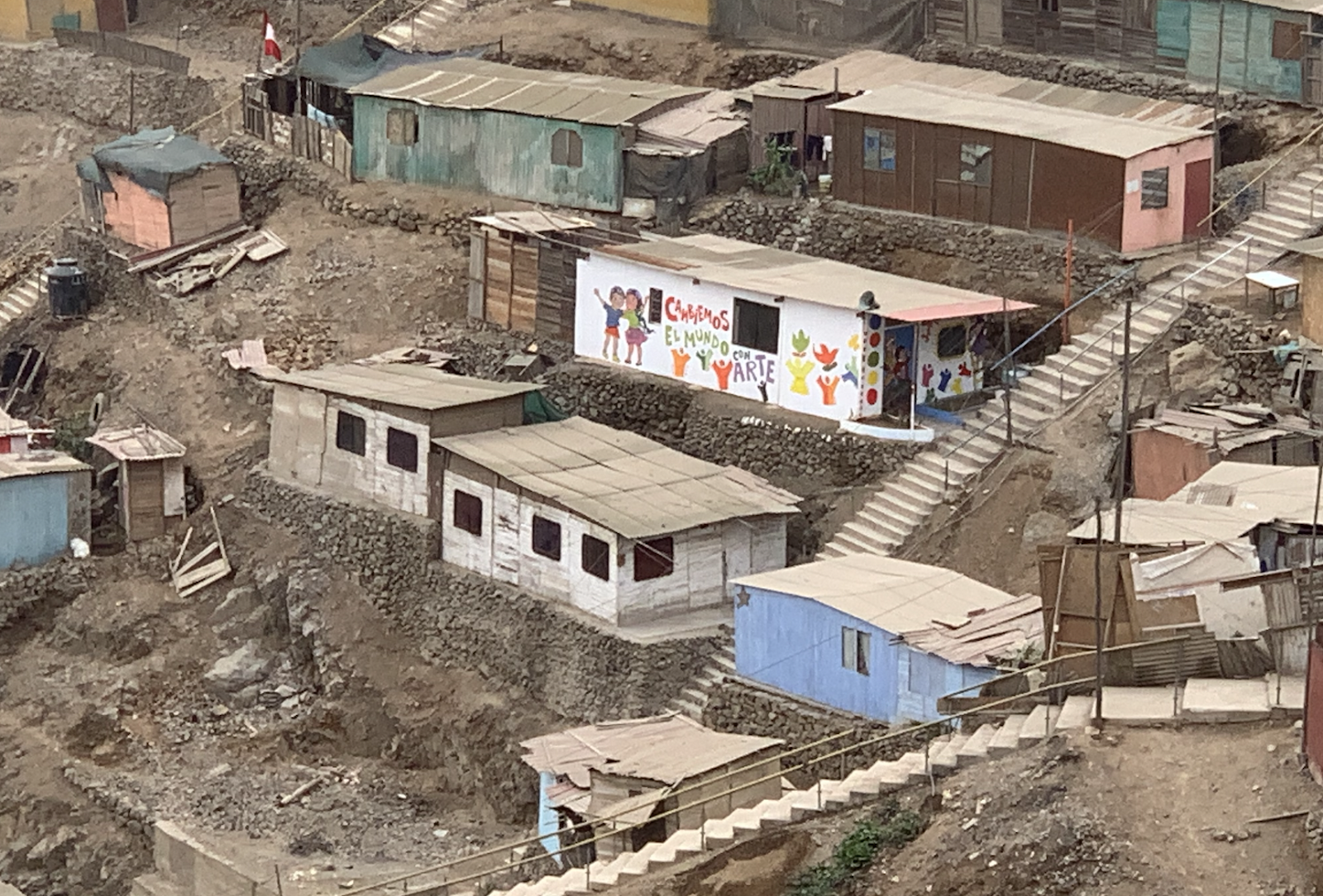
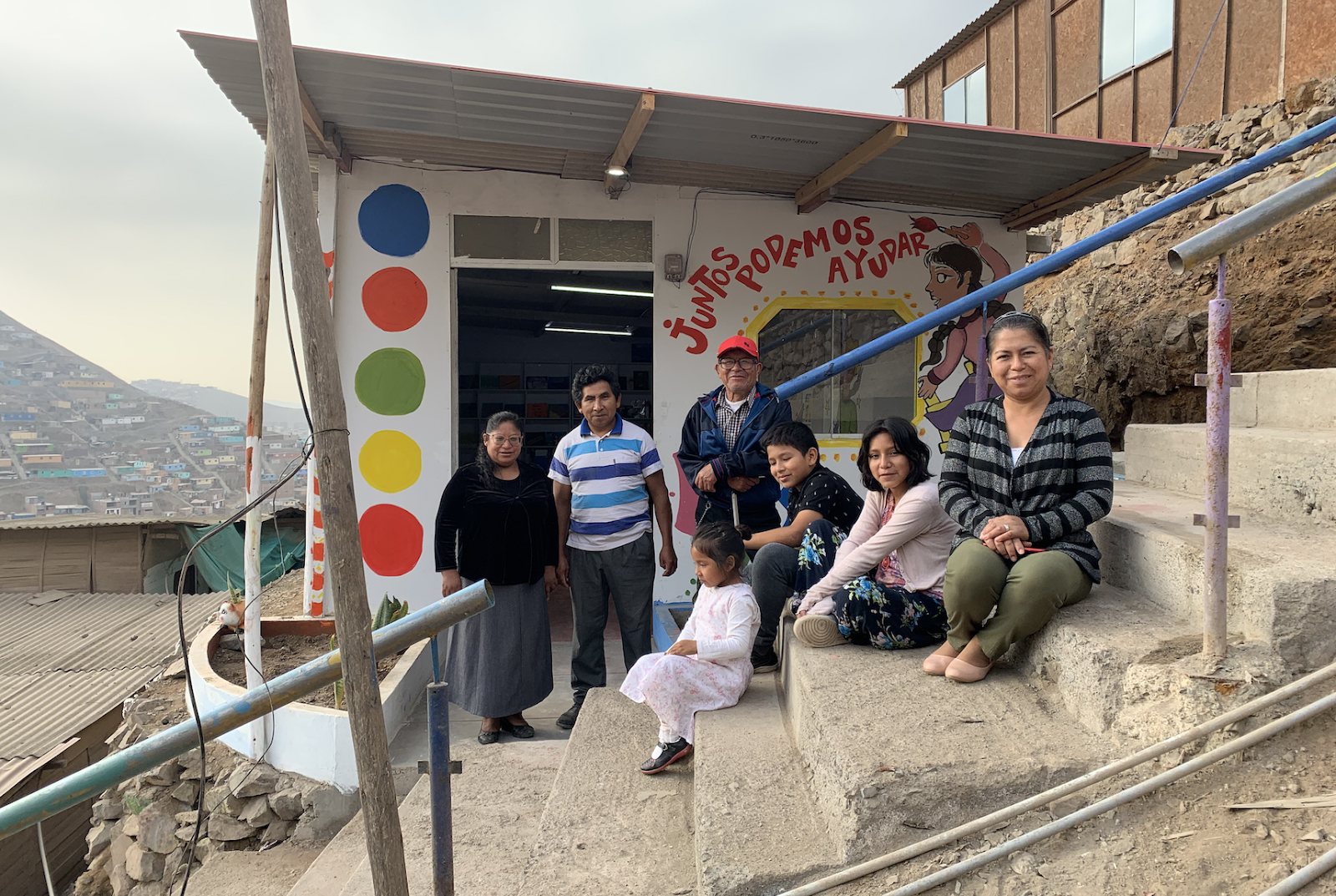
    Estas últimas disciplinas le sirvieron para fundar la asociación Pueblo Grande – Proyecto Quijote para la Vida, proyecto educativo cultural que lleva 15 años de trabajo ininterrumpido en el distrito de Puente Piedra, y tiene como objetivo formar ciudadanos críticos en niños y niñas a través de la lectura y diversas disciplinas artísticas como el teatro, cine, radio comunitaria, música y deporte.
    Actualmente trabaja como reportero gráfico en el diario oficial el peruano y la Agencia Andina.

    Eddy Ramos Ludeña (Lima 1975) He has training in the field of Social Communication, he studied Journalism at the Jaime Bausate y Mesa University, and in recent years he has developed activities related to cultural management, organization and citizenship.
    These latter disciplines helped him found the association Pueblo Grande – Proyecto Quijote para la Vida, a cultural educational project that has been working uninterruptedly for 15 years in the district of Puente Piedra, and aims to form critical citizens in boys and girls through reading and various artistic disciplines such as theater, cinema, community radio, music and sports.
    He currently works as a photojournalist for the official newspaper El Peruano and Agencia Andina.

      Rocinante Tours Perú: una apuesta por el patrimonio, la comunicación y el turismo

      RevarteColectiva · December 21, 2023 · Leave a Comment

      Por Eddy Ramos Ludeña

      Click here for English version

      La asociación Pueblo Grande – Proyecto Quijote para la Vida nace hace 16 años como un espacio que promueve el arte, la cultura y diversas disciplinas educativas con el objetivo de promover ciudadanos más comprometidos con la comunidad de Santa Rosa, en el distrito de Puente Piedra. Creemos que lo avanzado genera un nivel de participación, pero no basta para seguir generando un cambio y transformación social en la comunidad.

      Este año, raíz de la pandemia covid- 19, surgió en nuestro entorno la necesidad de generar recursos para lograr la autonomía y generar un proceso de autogestión en el proyecto Quijote para la Vida. Si bien es cierto, el proyecto que se impulsa desde hace 16 años tiene una visión cultural y social, el reto que ahora asumen un grupo de gestores culturales nos plantea la creación de una agencia de viajes y turismo denominado “Rocinante Tours Perú”, que busca generar recursos económicos sin perder los ideales iniciales en su afán por democratizar el arte y la cultura; y promover mejores ciudadanos.

      En ambos proyectos, cada iniciativa tiene su particularidad, el enfoque cultural y social, desde el Proyecto Quijote para la Vida; y el componente económico – empresarial desde Rocinante Tours Perú, y como eje transversal el arte y la cultura siempre con la inspiración del ingenioso hidalgo Don Quijote de la Mancha.

      El Quijote de la Mancha, personaje milenario que ha trascendido más de 400 años aun nos sigue inspirando, como aquella frase surgida en el maravilloso libro, que nos recuerda: “Acaso es tiempo mal gastado el que se emplea en vagar por el mundo” Ese afán por lo asombroso y fortuito, donde cabe solo un mundo de aventuras, sueños y utopías. Aunque no es un viaje sin brújula el que emprendió Don Quijote sino esa búsqueda constante por el asombro y la contemplación que genera una nueva visión del mundo, repensando el tiempo y el espacio.

      Siguiendo ese afán por la búsqueda constante, el escritor Javier Reverte en su libro Corazón de Ulises: un viaje griego, plantea que hay un viaje literario que opta por tres momentos. En principio el punto de partida y la ilusión de la planificación; como segundo aspecto, el viaje mismo y el encuentro entre el ser y la naturaleza. Y finalmente, un tercer momento que nos permita contar y escribir al regreso del viaje, ello implicaría tener los ojos bien abiertos y los oídos más atentos, teniendo como elemento primordial para contar historias, la fotografía, el video y la crónica de viajes. En este contexto surge la necesidad de crear la Agencia de Viajes Rocinante Tours Perú, una empresa con enfoque social e intercultural que promueve viajes a Lima Provincias y al interior del país, en lugares donde tenemos conexión con los productores de café y cacao, los mismos que da a luz los productos Quijote como el Chocolate y Café Quijote, que nos permiten la participación de las comunidades y el protagonismo de las organizaciones culturales en cada región.

      El barrio quijote, tiene un papel fundamental como punto de partida para cada propuesta, Será un punto de referencia y desde aquí se empezarán a construir cercanías con los territorios por medio de un evento de iniciación en el que se verán implicados los niños, niñas, mujeres y jóvenes de la comunidad, quienes situarán y contextualizarán a los viajeros, invitando a hacer lecturas críticas y cuidadosas.

      En este artículo les hemos mostrado imágenes de nuestros recorridos por Lima Norte en Perú: la Hacienda Punchauca, Huaca El Paraiso , Haciendo Caballero y Huaca Tambo Inga.


      English Version:

      Rocinante Tours Peru: A Commitment to Heritage, Communication, and Tourism
      By Eddy Ramos Ludeña

      Sixteen years ago, the association Pueblo Grande – Quixote for Life Project was born. It’s a space that promotes art, culture, and various educational disciplines with the aim of fostering citizens more committed to the community of Santa Rosa in the district of Puente Piedra. We believe in advancing participation, but it’s not sufficient for continuing to generate change and social transformation in the community.

      This year, due to the COVID-19 pandemic, the need arose in our environment to find resources for autonomy and self-management in the Quijote para la Vida project. Although it has been promoted for 16 years with a cultural and social vision, a group of cultural managers is now undertaking the challenge of creating a travel and tourism agency, “Rocinante Tours Peru.” This agency aims to generate economic resources without losing the initial ideals of democratizing art and culture and promoting better citizenship.

      In both projects, each initiative has its particularity: the cultural and social approach from the Quixote for Life Project, and the economic-entrepreneurial component from Rocinante Tours Peru. As a cross-cutting axis, art and culture, always with the inspiration of the ingenious nobleman Don Quixote de la Mancha, play a central role.

      Don Quixote, a character that has transcended more than 400 years, continues to inspire us, like the phrase from the marvelous book: “Perhaps it is time badly spent that which is spent wandering through the world in the eagerness for the astonishing and fortuitous, where there is only room for a world of adventures, dreams, and utopias.” It’s not a journey without a compass that Don Quixote undertook, but a constant search for astonishment and contemplation that generates a new vision of the world, rethinking time and space.

      Following this constant search, the writer Javier Reverte, in his book ‘Heart of Ulysses: A Greek Journey,’ suggests that a literary journey comprises three moments: the starting point and the illusion of planning, the journey itself and the encounter between the self and nature, and a third moment that allows us to tell and write upon returning from the trip. This implies having our eyes wide open and our ears more attentive, with storytelling, photography, video, and travel chronicles as primary elements.

      In this context, the need to create the Rocinante Tours Peru Travel Agency arose, a company with a social and intercultural approach that promotes trips to Lima Provinces and the interior of the country. We connect with coffee and cocoa producers, giving birth to Quijote products like Quijote Chocolate and Quijote Coffee, which allow community participation and the protagonism of cultural organizations in each region.

      The Quixote neighborhood plays a fundamental role as the starting point for each proposal. It will be a reference point, building proximity with the territories through an initiation event involving children, women, and young people of the community. They will situate and contextualize the travelers, inviting them to make critical and careful readings. In this article, we have showcased images of our tours of North Lima in Peru: Hacienda Punchauca, Huaca El Paraiso, Haciendo Caballero, and Huaca Tambo Inga.

      Eddy Ramos Ludeña

      Eddy Ramos Ludeña (Lima 1975) Tiene formación en el campo de la Comunicación Social, estudió Periodismo en la Universidad Jaime Bausate y Mesa, y los últimos años desarrolla actividades relacionadas a la gestión cultural, organización y ciudadanía. 

      Estas últimas disciplinas le sirvieron para fundar la asociación Pueblo Grande – Proyecto Quijote para la Vida, proyecto educativo cultural que lleva 15 años de trabajo ininterrumpido en el distrito de Puente Piedra, y tiene como objetivo formar ciudadanos críticos en niños y niñas a través de la lectura y diversas disciplinas artísticas como el teatro, cine, radio comunitaria, música y deporte.

      Actualmente trabaja como reportero gráfico en el diario oficial el peruano y la Agencia Andina.

        El Dibujo Transformando Vidas

        RevarteColectiva · December 21, 2023 · Leave a Comment

        Por Lis Vania Pérez

        Click here for English version

        En un lugar de latinoamérica cuyo nombre si es preciso reconocerlo, Santa Rosa de Puente Piedra, llegó un hombre con espadas de colores y un escudo de papeles.

        Siempre informando, siempre cuestionando, siempre en voz alta, incansable, nos invitó a coger lápices de colores y papeles en blanco para dibujar…..

        Dibujar en pleno siglo XXI, después de una pandemia en donde todo se viraliza, todo se copia y pega, esta idea revoluciona nuestras mentes para decirnos, es momento de volver al lápiz de colores y el papel blanco.

        Mágicamente nos rendimos a esta espada y  escudo para recuperar lo que antes era un cotidiano y hoy es extraño. 

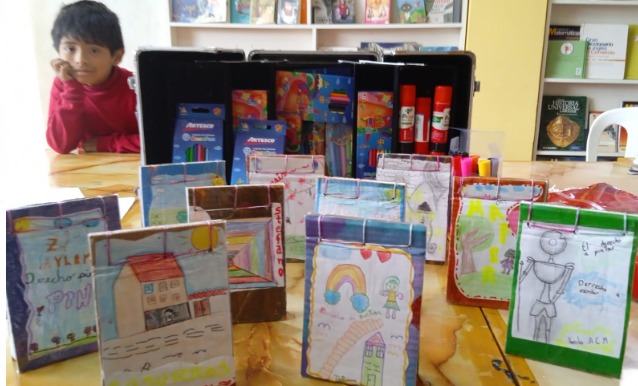
        Desde los mas grandes hasta los mas chicos, quedamos rendidos, todos con nuestros cuadernillos hechos de cartón y papel blanco. 

        El arte a través del dibujo,  es una herramienta poderosa para desarrollar la creatividad, la expresión y la autoestima de los niños.

        Vamos, 3 meses dibujando, cada mañana después de  leer, los niños captan sus imágenes y formulan una frase que queda impregnado en sus mentes y corazones.

        Los cuadernillos de dibujo y  los colores, ahora son imprescindibles en nuestro Proyecto Quijote, por el poder transformador que cala en cada uno, cuando despues de leer, se conecta con su interior para expresar sus sentimientos, aflorar ideas y dejar una gran huella en nuestra biblioteca Don Quijote y su Manchita. 

        Testimonios de niños y niñas que dibujan cada dia:

        Dibujar me hace feliz, he dejado el celular porque  me hacia mal a los ojos.

        Me gusta dibujar porque de nuestra imaginación salen ideas muy bonitas.

        Dibujar me hace  imaginar y pintar mi vida  con colores.

        Los colores dan vida y felicidad…


        English Version:

        DRAWING TRANSFORMING LIVES

        By Lis Vania Pérez

        In a place in Latin America whose name, if you must recognize it, Santa Rosa de Puente Piedra, a man arrived with colored swords and a paper shield.

        Always informing, always questioning, always loud, tireless, he invited us to take colored pencils and blank papers to draw…..

        Drawing in the 21st century, after a pandemic where everything goes viral, everything is copied and pasted, this idea revolutionizes our minds to tell us, it is time to return to colored pencil and white paper.

        Magically we surrender to this sword and shield to recover what was once everyday and today is strange.

        From the oldest to the smallest, we were exhausted, all with our booklets made of cardboard and white paper.

        Art through drawing is a powerful tool to develop children’s creativity, expression and self-esteem.

        Come on, 3 months drawing, every morning after reading, the children capture their images and formulate a phrase that remains impregnated in their minds and hearts.

        The drawing booklets and colors are now essential in our Quijote Project due to the transformative power that penetrates each one; when after reading, they connect with their interior to express their feelings, bring out ideas and leave a great mark on our Don Quixote and his Manchita library.

        Testimonials from boys and girls who draw every day:

        Drawing makes me happy, I have given up the cell phone because it hurt my eyes.

        I like to draw because very beautiful ideas come from our imagination.

        Drawing makes me imagine and paint my life with colors.

        Colors give life and happiness…

        Lis Vania Pérez

        Maestra y líder social latinoamericana

        Maestra de la escuela Pública peruana, especialista en Programas de Lectoescritura para niños en edad escolar. Fundadora y Responsable  del Proyecto Quijote en el AAHH Santa Rosa distrito de Puente Piedra,  Lima Peru.
          • « Go to Previous Page
          • Page 1
          • Page 2
          • Page 3
          • Page 4
          • Go to Next Page »

          Hit the ground running with a minimalist look. Learn More

          Copyright © 2026 · Monochrome Pro on Genesis Framework · WordPress · Log in

          • Instagram
          • Facebook