• Skip to primary navigation
  • Skip to main content

REVARTE

  • Home
  • About
    • REVARTE Collective
  • Issues
    • Número 8
    • Número 7 · 2025
    • Número 6 · 2024
    • Número 5 · 2024
    • Número 4 · 2023
    • Número 3 · 2023
    • Número 2 · 2023
    • Número 1 · 2022
  • Secciones / Sections
    • LITERATURA
    • JUVENTUD
    • ENSAYO
    • COMUNIDAD
    • MEDIA
  • Subscribe
  • Contribute
  • Show Search
Hide Search

RevarteColectiva

“What a breeze!”

RevarteColectiva · September 30, 2024 · Leave a Comment

By Brisa Mariana Ables

Click here for Spanish version

The podcast “What a Breeze!” is produced by Brisa Mariana Ables, who shares it for REVARTE. Brisa is a master’s student in social work at the University of Pennsylvania and a fervent advocate for integrating artistic education into public schools as a comprehensive proposal for human development, which should be practiced and integrated from childhood.

In this episode, Brisa challenges the Eurocentric definitions that limit the understanding of art and proposes the integration of diverse cultural practices from around the world.

We invite you to listen to this first chapter, created for the Social Policy and Latino Community class / SWRK 7500: SOCIAL POLICY AND THE LATINX COMMUNITY – UPENN.

For Professors Obed Arango and Holly Link, Ph.D.

Duration: 10 minutes
Language: English

Español:

El podcast “What a Breeze!” es producido por Brisa Mariana Ables, quien comparte para REVARTE. Brisa es estudiante de la maestría de trabajo social en la Universidad de Pennsylvania y una ferviente promotora de la educación artística en las escuelas públicas como una propuesta integral de desarrollo humano que debe practicarse e integrarse desde la infancia.

En este capítulo, Brisa reta las definiciones eurocéntricas que limitan el entendimiento del arte y propone la integración de las diversas prácticas culturales en el mundo.

Les invitamos a escuchar este primer capítulo, que fue hecho para la clase de Política Social y Comunidad Latina / SWRK 7500: SOCIAL POLICY AND THE LATINX COMMUNITY – UPENN.

Para los profesores Obed Arango y Holly Link, Ph.D.

Duración: 10 minutos
Idioma: Inglés

Brisa Mariana Ables

Brisa Mariana Ables es estudiante de la maestría en trabajo social en la Escuela de Política y Practica Social de la Universidad de Pennsylvania. Brisa es de origen mexicano con raices purépechas de Michoacán, originaria de Birmingham, Alabama.

Brisa Mariana Ables is a Master’s student in Social Work at the School of Social Policy and Practice at the University of Pennsylvania. Brisa is of Mexican origin with Purépecha roots from Michoacán, originally from Birmingham, Alabama.

    El Quijote: Entrevista de migración

    RevarteColectiva · September 30, 2024 · Leave a Comment

    Por Ruth Layme Cárdenas

    Click here for English version

    Ruth Layme Cárdenas entrevista a la señora Brígida Cárdenas Chávez una mujer de origen Quechua que emigró de San Mateo Huarochiri, y de familia de la sierra. La historia de Brígida es la historia de más de 800 mil migrantes que en los últimos 20 años han migrado a la ciudad de Lima en la que se sufre discriminación por la lengua, el vestido, y las expresiones culturales. 

    English Version:

    Ruth Layme Cárdenas interviews Mrs. Brígida Cárdenas Chavez, a woman of Quechua origin who emigrated from San Mateo Huarochiri, and from a family from the mountains. Brígida ‘s story is the story of more than 800,000 migrants who in the last 20 years have migrated to the city of Lima, where they suffer discrimination due to language, dress, and cultural expressions.

    Ruth Sarai Layme Cárdenas

    Es estudiante de séptimo grado y asiste a El Quijote para la vida, donde coordina la biblioteca de Lomas de Chahuani y dirige un programa de radio para adolescentes.

    She is a seventh grade student and attends El Quijote para la vida, where he coordinates the Lomas de Chahuani library and directs a radio program for teenagers.

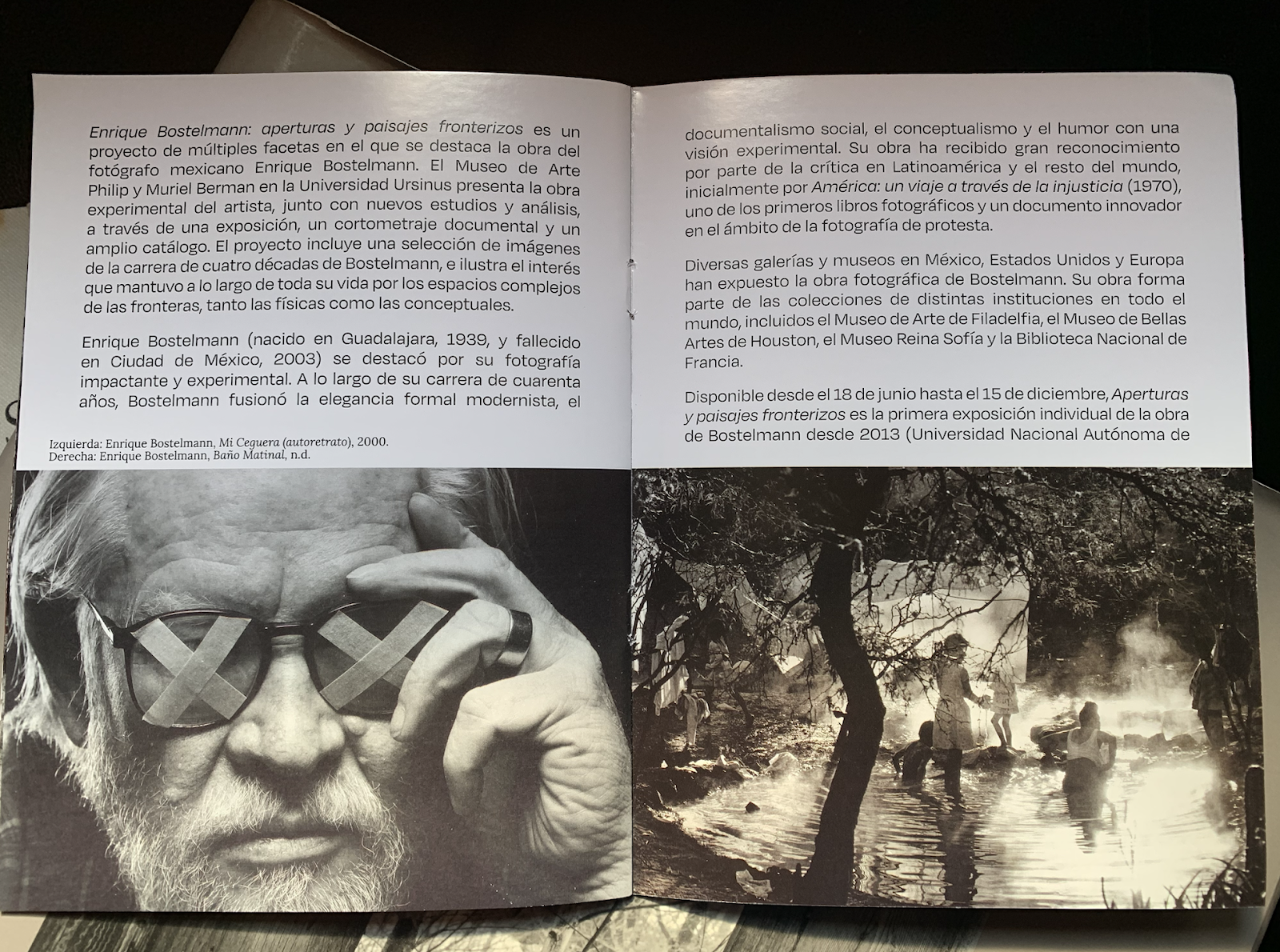
      Enrique Bostlemann: aperturas y paisajes fronterizos en Ursinus College

      RevarteColectiva · September 30, 2024 · Leave a Comment

      Por Un adolescente de CCATE (Editado por Natalia Ramos)

      Click here for English version

      Nota: visita el website para conocer más acerca de la exhibición 

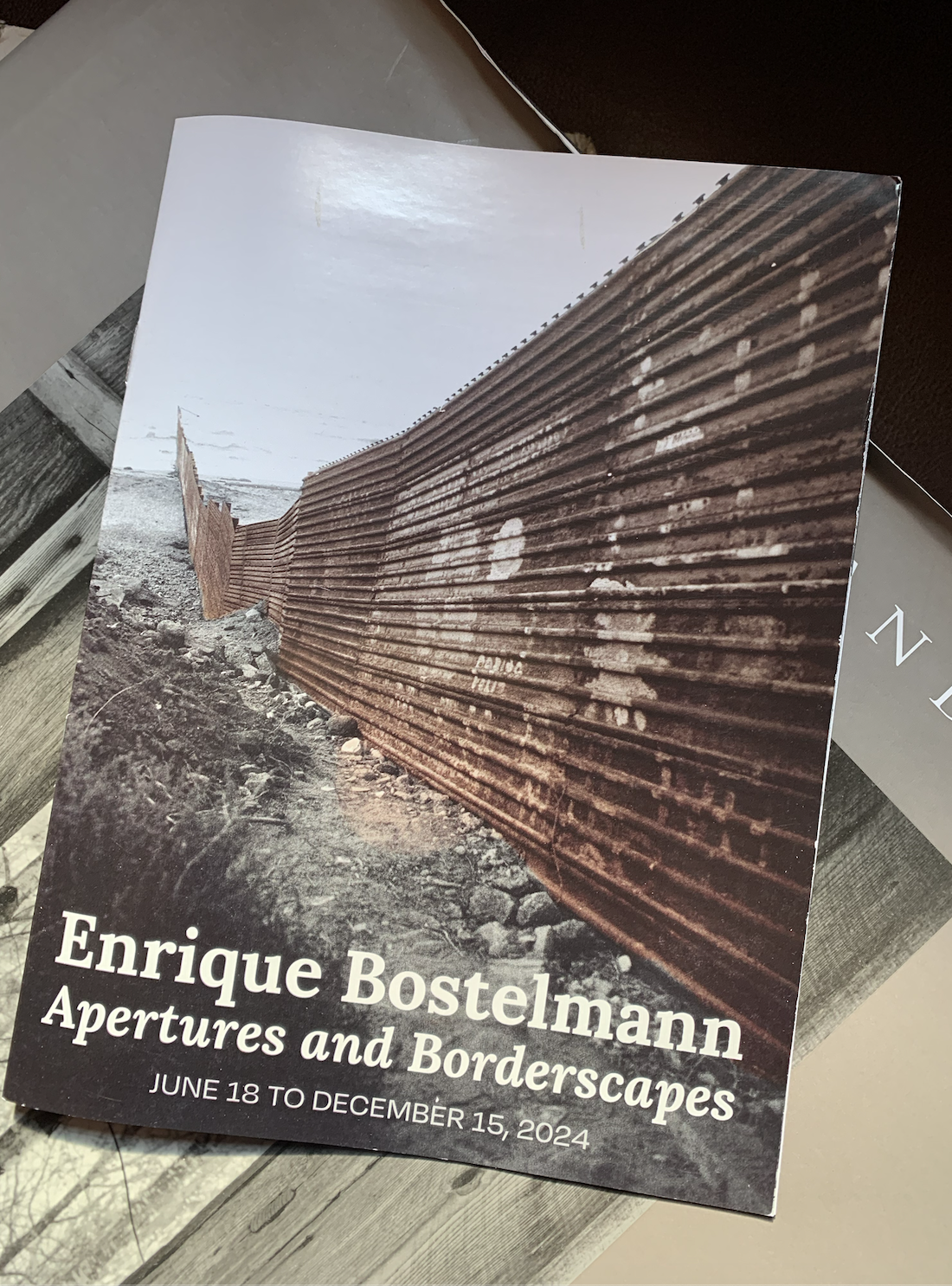
      Durante el campamento de verano, fuimos en un paseo al Museo de Berman en Ursinus College. Este paseo fue muy especial porque vimos la exhibición de Enrique Bostlemann: aperturas y paisajes fronterizos. El proyecto de Enrique es muy poderoso para la comunidad inmigrante, porque incluye fotografía de la frontera entre los Estados Unidos y México. Durante nuestro paseo, la mayoría de los niños miraron las diferentes fotos con curiosidad, pero los individuos que migraron a los Estados Unidos tuvieron una experiencia diferente. Aunque nací en los Estados Unidos, toda mi vida escuché los cuentos de mis familiares que cruzaron la frontera por la posibilidad de una vida mejor. Cuando era niña, no entendí el poder del sueño americano que tuvieron mis padres como muchos otros inmigrantes en el país, y creo que nunca voy a poder comprender totalmente su experiencia migratoria, pero con los años entiendo el impacto de la decisión de cruzar la frontera. 

      El momento más impactante para mi del paseo, fue a observar y escuchar las reflexiones de los padres que asistieron el paseo de una foto en la sala principal. La foto captura la frontera, pero también tiene la imagen de una llave entre medio la frontera. Los niños miraron la foto con curiosidad, pero los inmigrantes del grupo tuvieron una experiencia diferente. Observaron la foto en silencio, como si la llave de la foto les fuera recordado de distantes memorias. Al escuchar sus reflexiones, era obvio que la foto tuvo un gran impacto emocional. Empezaron a compartir como la foto les recordó de su paisaje a los estados unidos, y las emociones que tuvieron al ver esa imagen. Muchos de los niños quedaron viendo a los individuos que compartieron su reflexión, y aunque están muy joven a entender el impacto de los sacrificios de sus padres por el sueño americano, este momento me hizo pensar la importancia de compartir esas experiencias con los niños, porque las raíces y experiencias de sus padres es tan importante en cómo ven el mundo.

      English Version:

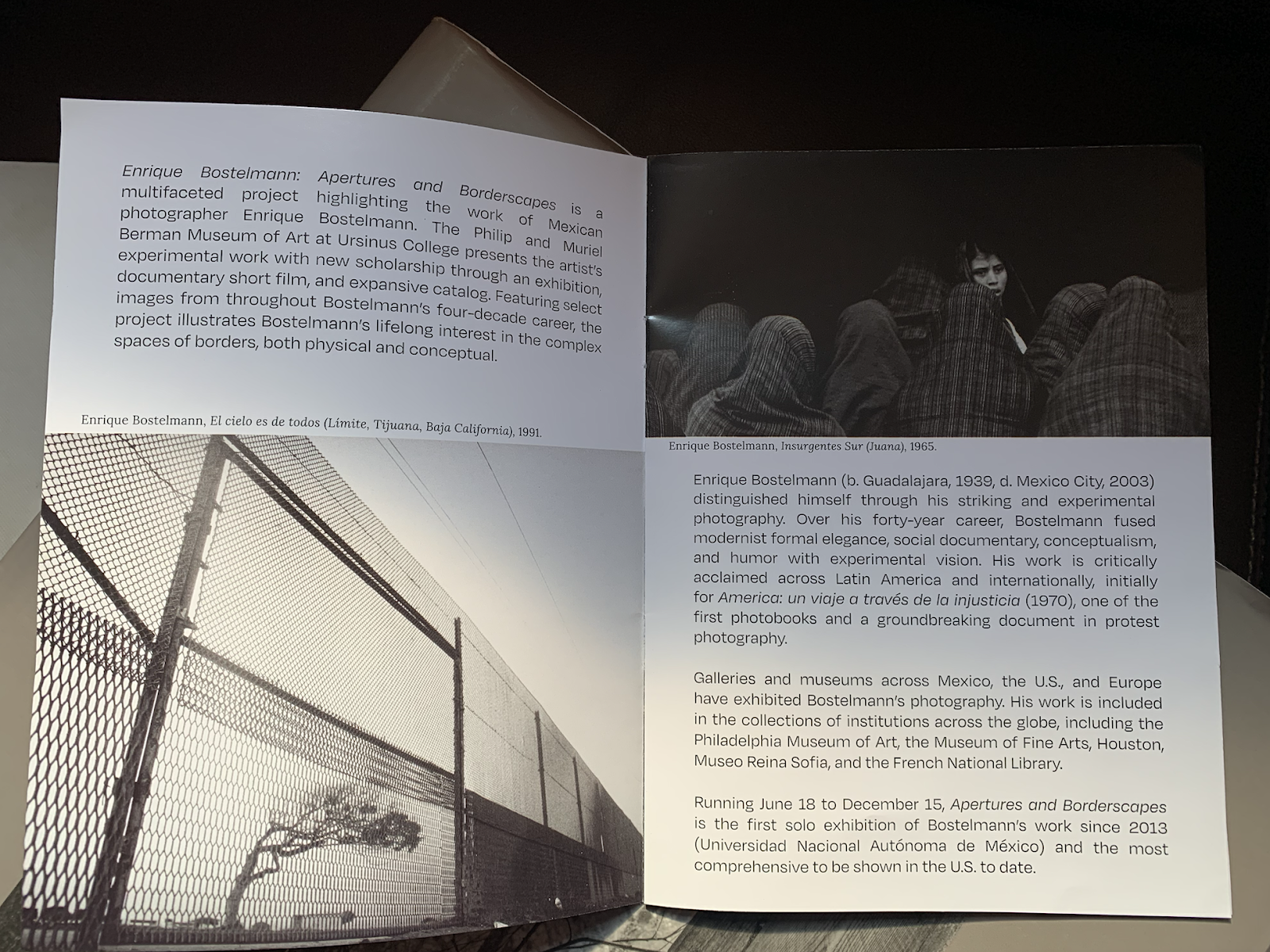
      Enrique Bostlemann: openings and border landscapes at Ursinus College

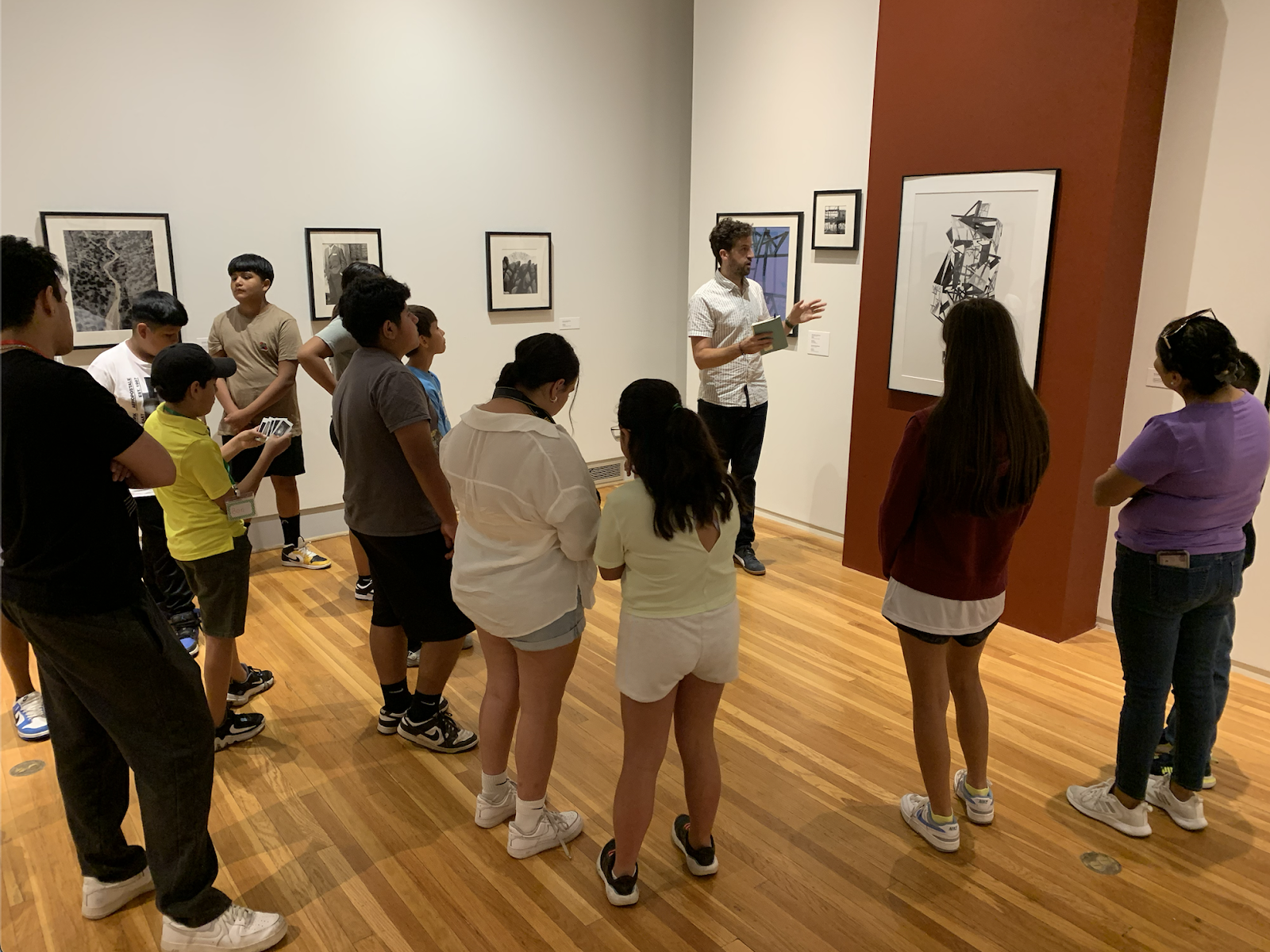
      CCATE students with Berman Museum Staff seeing the exhibition

      During CCATE’s summer camp, we went on a field trip to the Berman Museum at Ursinus College. This field trip was very special because we saw the exhibition of Enrique Bostlemann: Aperturas y Paisajes Fronterizos. Enrique’s exhibition is very powerful for the immigrant community because it includes photography of the border between the United States and Mexico. During our walk, most of the children looked at the different photos with curiosity, but the individuals who migrated to the United States had a different experience. Although I was born in the United States, all my life I heard stories of my relatives who crossed the border for the possibility of a better life. As a child, I didn’t understand the power of the American dream that my parents had like many other immigrants in the country, and I don’t think I will ever be able to fully understand their immigration experience, but over the years, I understand the impact of their decision to cross the border. 

      The most impressive moment for me during the exhibit visit was observing and listening to the reflections of the parents who attended the photo walk in the main room. There is a specific photo that captures the border but also has the image of a key between the border. The children looked at the photo with curiosity, but the immigrants in the group had a different experience. They looked at the photo in silence as if the key to the photo reminded them of distant memories. Listening to their reflections, it was obvious that the photo had a great emotional impact. They began to share how the photo reminded them of their landscape in the United States and the emotions they had when seeing that image. Many of the children were left speechless, simply staring at the individuals who shared their reflections; although the kids are too young to understand the impact of their parents’ sacrifices for the American dream, this moment made me think about the importance of sharing those experiences with children. The roots and experiences of their parents are so important to how they see and move in the world.

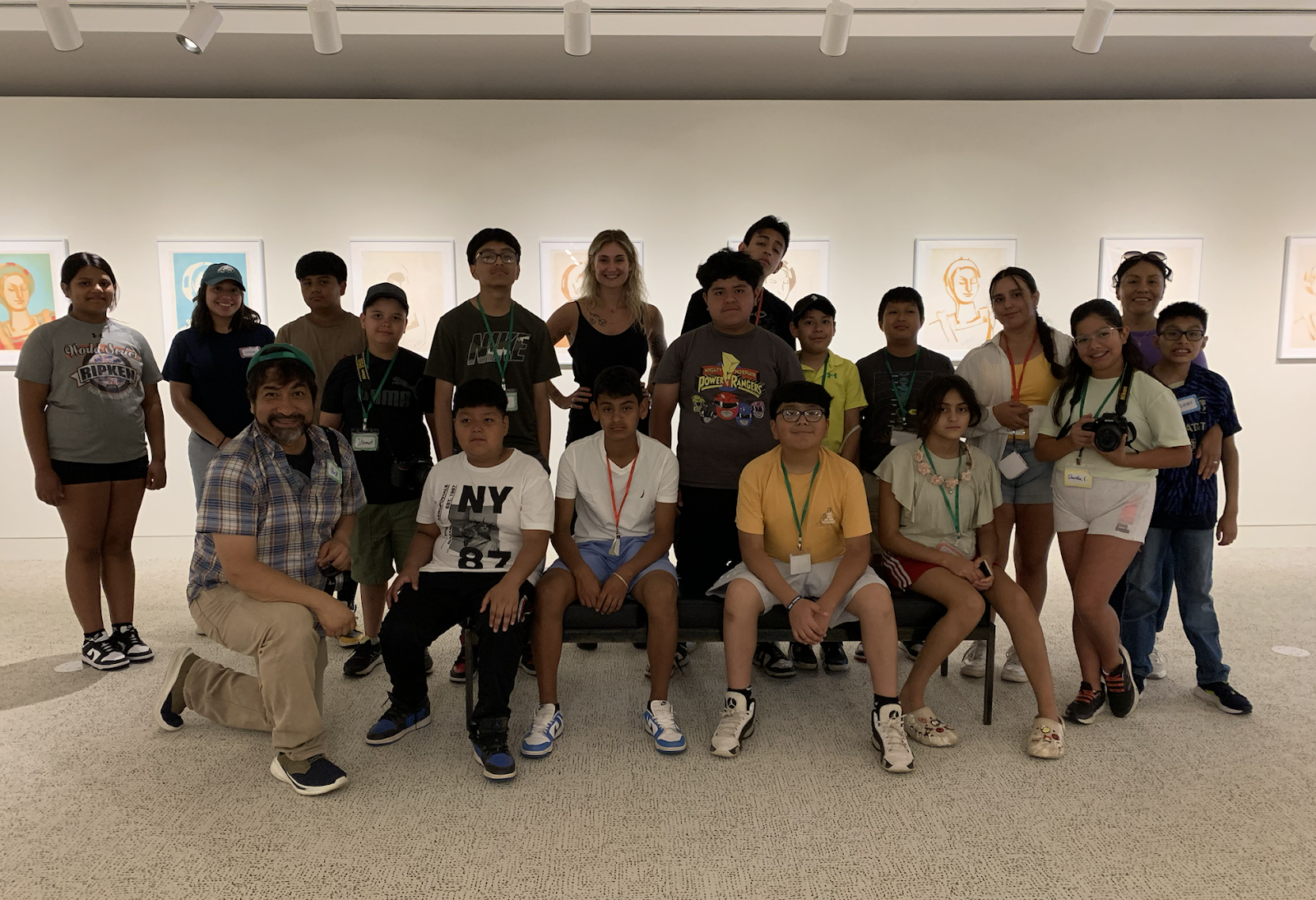
      CCATE students  with Berman Museum Director, Lauren McCardel, Summer 2024
      Natalia Ramos Bellido

      Natalia Ramos Bellido is originally from Mexico City. She is studying Art History and Latin American Studies in the College, minoring in Gender Studies and Law and Society. Her concentration in Art History is queer art, which is based on understanding and being able to connect historically to periods of art and expression. As for Latinx Studies, she has always wanted to support and understand her community, focusing on the vibrant immigrant perspective of Latinx existence. She hopes her Law and Society minor will help pave her path toward practicing immigration law.

      Natalia Ramos Bellido es originaria de la Ciudad de México. Estudia Historia del Arte y Estudios Latinoamericanos en la Facultad, con especialización en Estudios de Género y Derecho y Sociedad. Su concentración en Historia del Arte es el arte queer, que se basa en comprender y poder conectarse históricamente con períodos de arte y expresión. En cuanto a Estudios Latinx, ella siempre ha querido apoyar y comprender a su comunidad, enfocándose en la vibrante perspectiva inmigrante de la existencia Latinx. Ella espera que su especialización en Derecho y Sociedad le ayude a allanar su camino hacia la práctica de la ley de inmigración.

        Reflexiones acerca del documental: MACONI

        RevarteColectiva · September 30, 2024 · Leave a Comment

        Por Jessie Ríos Benitez

        Click here for English version

        Click here for the documentary MACONI

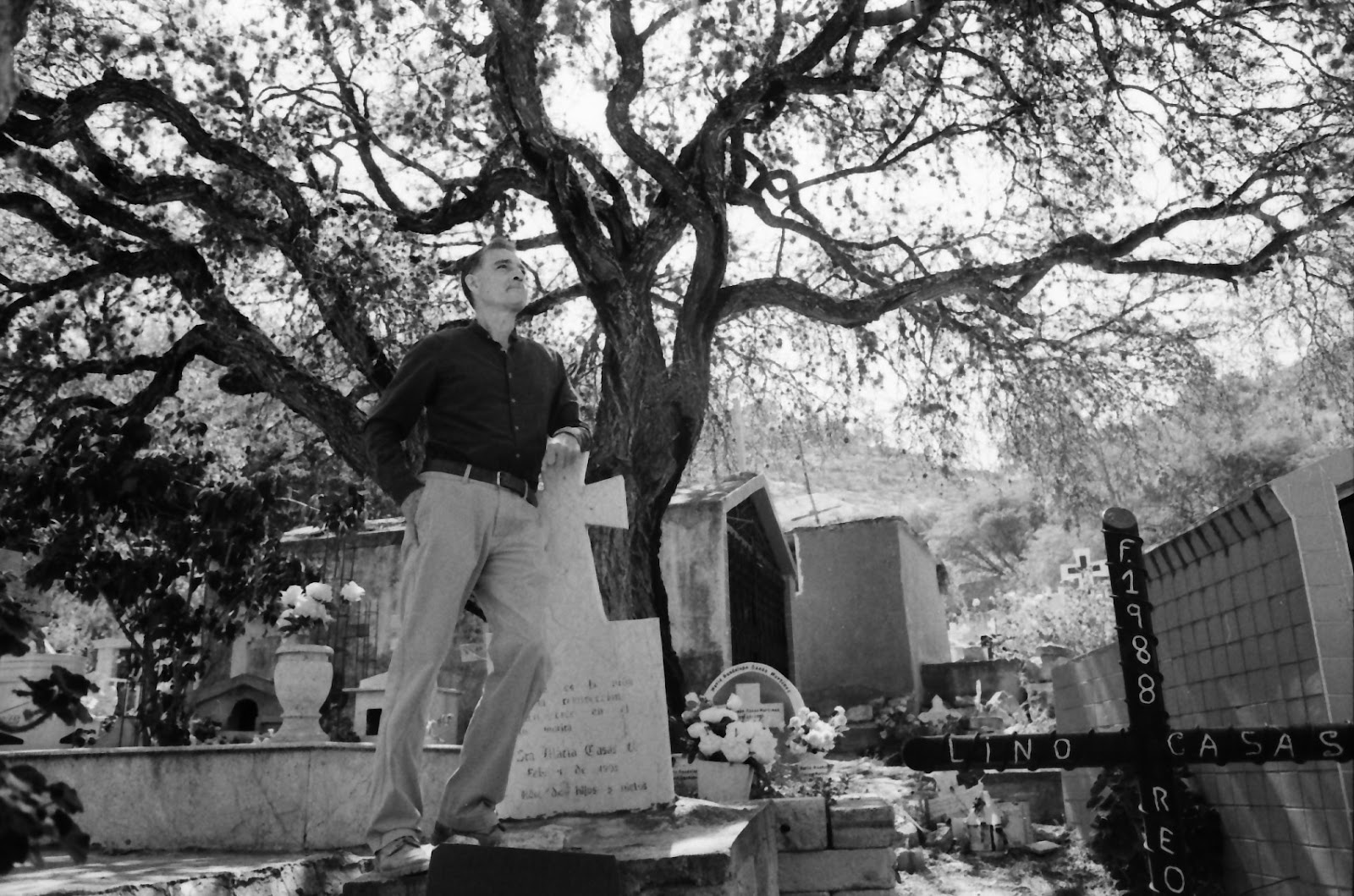
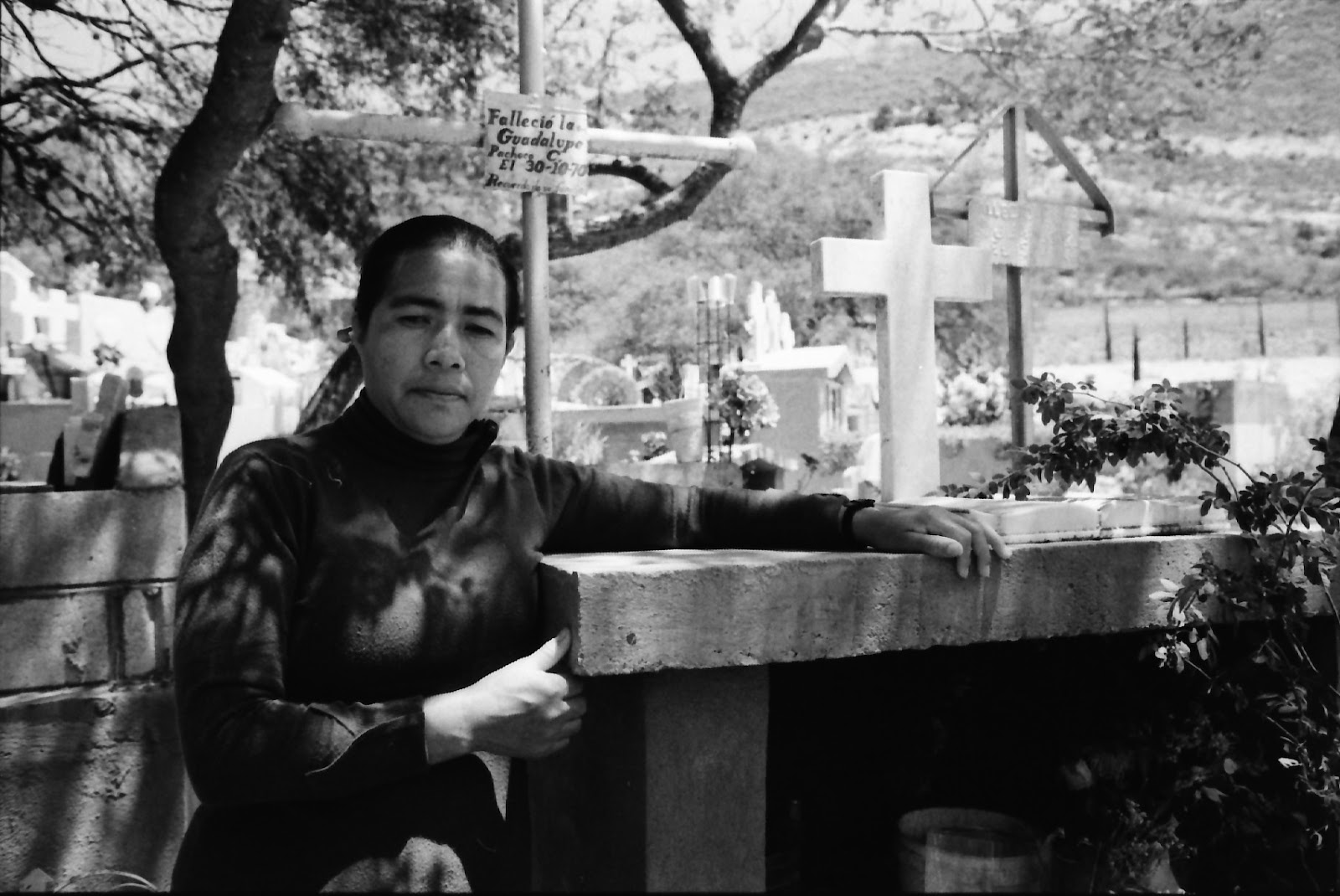
        Gloria Hernández comparte la historia de su hermano Juan Hernández quien fue migrante en Norristown, PA, en el panteón de Maconi, Queretaro. Fotografía por Obed Arango 2023.

        El cortometraje del testimonio de Salvador captura las dificultades que enfrentan muchos inmigrantes en los Estados Unidos. Dejando su vida atrás en México, Salvador se fue con la esperanza de una vida mejor. Pero, desafortunadamente, tuvo que enfrentar muchos obstáculos. Cuando entró al país, tuvo que encontrar la manera de seguir adelante. Sin mucho apoyo, llegó a los suburbios de Filadelfia y encontró la manera de trabajar sin saber el idioma. Las personas que conozcan a Salvador, lo describen como un hombre trabajador y confiable. Aunque Salvador trabajo duro para seguir adelante siendo indocumentado, el y su familia enfrentaron muchas obstaculos. 

        El papá de Salvador fue asaltado antes de entrar al trabajo, y esto dejó un temor para su familia. También el hermano de su cuñada fue asaltado y asesinado. Siendo indocumentado, Salvador recibio su sueldo en efectivo y esto causo un temor de ser asaltado. Desafortunadamente, si fue asaltado y lo robaron. Aunque la experiencia del asalto fue muy traumatizante, Salvador pudo aplicar por la Visa U y recibir una tarjeta de identificación del estado. Al escuchar el testimonio de Salvador, pensé en muchas cosas. Con ser indocumentado, me recordo de la experencia de mis papas y todo lo que tuvieron enfrentar para estar adonde estan hoy. Ser indocumentado en este pais es muy dificil, especialmente si no conoces el idioma y tener una familia que depende de ti. Tienes que dejar a tu familia atrás, y te vas con la posibilidad de no volver a verlos otra vez con la esperanza de encontrar una vida mejor. Pero al ver a Salvador reunirse con su mamá después de tantos años, se llena de muchas emociones, incluyendo alegría y tristeza por el tiempo perdido.

        El cortometraje también me recordó de un estudio que hice durante mi tiempo en Carolina del Norte. Contactamos a todos los departamentos de Sheriff en Carolina del Norte para preguntar sobre el proceso de aplicar para la Visa “U”, y si ofrecen información sobre la visa a inmigrantes que calificaba para la visa. De este estudio, aprendimos que muchos departamentos no estaban familiarizados con el proceso de la Visa “U”. La Visa “U” puede ayudar a muchos inmigrantes, pero muchos tienen miedo de hablar con la policía.

        A pesar de todo lo que tuvo que enfrentar Salvador, le gusta ayudar a la gente de su comunidad. Personas como Salvador son la razón porque un lugar como CCATE puede tener el impacto que tiene en su comunidad. Inmigrantes pasan por muchos obstáculos, pero sí pueden conectar con otros enfrentando los mismos problemas, pueden encontrar una solución juntos y dejar un impacto en su comunidad. 

        English Version:

        Panteón de Maconi fotografía por Obed Arango, 2023

         Reflections about the Documentary: MACONI

        The short film of Salvador’s testimony captures the difficulties faced by many immigrants in the United States. Leaving his life behind in Mexico with the hope of a better life, Salvador settled in the Philadelphia suburbs, unaware of the upcoming obstacles inherent in his new life and undocumented status. Without much support and with no knowledge of the language, Salvador sought to find a way to move forward and eventually found a way to work and live despite said barriers, earning him community reverence and common descriptors of “reliable” and “hard-working.” Alas, as hard as Salvador worked to stay afloat as an undocumented worker, this work did not save him and his family from the many obstacles that plague today’s immigrant and undocumented populations within the United States.

        Previous family experiences had left Salvador and his family traumatized and in terror of simple existence. From his father’s assault before work to his sister-in-law’s brother’s assault and murder, the fear of assault and discrimination ran high. Certain conditions of the undocumented status also contributed to this danger and unease; in Salvador’s case, seeing as he had to receive his salary in cash, his biggest fear was being assaulted and having this salary robbed from him— a fear that later became reality. This traumatic assault experience, fortunately, revealed a silver lining and allowed Salvador to apply for a U-Visa and receive a state identification card.

        As I listened to Salvador’s testimony, I was brought back to my parents’ experience as undocumented individuals and everything they had to face to get to where they are today. Being undocumented in the United States is incredibly difficult, especially if one does not know the spoken language, does not have immediate family and support in the area, and has a family depending on their success in the new country. One must leave their life and family behind and accept the possibility of never seeing them again if it means giving rise to a better life someplace else. Thankfully, in Salvador’s case, he was ultimately reunited with his mother after many years of fighting and working for this “better” life. In a touching moment, Salvador brimmed with feelings of joy, gratitude, and sadness for the years lost, all present at the same time.

        Watching the short story also happened to remind me of a study I conducted during my time in North Carolina where we contacted all Sherriff’s departments in the state to ask about the U-Visa process, and if information regarding this visa was routinely offered to qualifying immigrants. From the study, we learned that many departments across the state of North Carolina were not even familiar with the U-Visa process. Said visa can help countless immigration cases, but often goes unmentioned and avoided due to immigrants’ common fear of deportation and persecution when facing the police or governmental departments.

        Thankfully, Salvador and other immigrants like him that are brave enough and choose to share their stories are the reason why a place like CCATE can have the impact and power it does within the community. As immigrants face countless obstacles across the country, they instinctually connect with other immigrants through their similar approaches and struggles in existence, ultimately opening doors to different collaborative solutions and leaving a monumental impact on their community.

        Jessie Rios Benitez

        Es estudiante de segundo año de  la maestría de política social en la Escuela de Política y Practica Social (SP2) de la Universidad de Pennsylvania. Durante el verano 2024 realizó un estudio independiente para CCATE. Además, ha trabajado como pasante en Comunidad Colectiva, una organización de base de derechos de los inmigrantes con sede en Charlotte, Carolina del Norte.

        She is a second-year master’s student in social policy at the School of Social Policy and Practice (SP2) at the University of Pennsylvania. During the summer of 2024, he carried out an independent study for CCATE. In addition, Jessie has worked as an intern with Comunidad Colectiva, a grassroots immigrant rights organization based in Charlotte, NC.

          ESCAPAR PARA VIVIR  

          RevarteColectiva · September 30, 2024 · Leave a Comment

          Por Lis Pérez Quispe

          Click here for English version

          Yo tenía 5 años de edad, sentía miedo por los comentarios de lo que pasaba en mi país. Hoy tengo 49 años y desde el proyecto Quijote para la Vida hemos recogido  testimonios de mujeres que migraron por ser víctimas del periodo de Violencia interna en  Perú durante 1980 al 2000. 

          Brígida Cárdenas escribe cómo su vida se transforma a raíz de este hecho político  social. 

          – La guerra interna, el terrorismo, desde el año 1980 a los 90, para mi familia fue muy  difícil. 

          Los enfrentamientos entre militares y terroristas que murieron fueron  muchísimos, sin embargo los que estuvimos en el centro fuimos nosotros, los  comuneros. 

          Vimos cómo se escribía con sangre, frases como “Así mueren los soplones”.  escuchábamos a los terroristas que nos decían: – “Nosotros andamos a favor de los  pobres” y nos obligaban ir a sus reuniones cuando ellos las convocaban. Si no ibas a  sus reuniones, nos mataban. 

          Llegamos a tener miedo hasta de dormir en nuestra propia casa, porque ellos entraban  a buscarnos, teníamos que ir a dormir al monte sin usar ni linternas, ni mecheros para que no nos vean y así podíamos sobrevivir con nuestra familia.  

          También los padres teníamos que cuidar a los hijos varones porque los terroristas se los llevaban para su fila. Si los padres no querían que lleven a sus hijos, los terroristas los mataban. 

          También venían a tu casa para hablarte de la igualdad. 

          Por otro lado, los policías, con la cara tapada para no reconocerlos, abusaban de  mujeres, las violaban, de los campesinos pidiéndoles sus mejores carneros para que se  los coman. 

          Pero los comuneros no nos quedamos atrás, empezamos a formar rondas  campesinas para luchar contra los terroristas que andaban con escopetas, machetes y  retrocargas. 

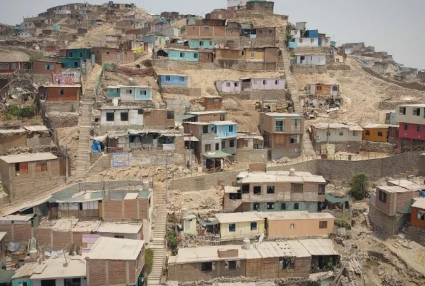
          Vivimos con mucho miedo. La única salida fue salir del pueblo, así llegamos a la ciudad para ser una familia más, romper el cerro para hacer la casita que nos abrigue y nos  saque del terror. 

          Texto tomado del Libro Cartonero Escapando del Terrorismo – 2023

          Así como ella muchas familias dejaron sus tierras, dejaron parte de su vida para llegar a Lima, la  ciudad de todas las sangres. 

          English Version:

          ESCAPE TO LIVE

          I was 5 years old, afraid of the comments surrounding what was happening in my country. Today, I am 49 years old, and from the “Quijote para la Vida” project, we have collected testimonies from women who migrated due to them being victims of Peru’s internal violence from 1980 to 2000. 

          Brígida Cárdenas writes how her life is transformed as a result of this political and social event. 

          – The internal war and terrorism from 1980 to the 90s was very difficult for my family. 

          The confrontations between soldiers and terrorists who died were many; however, the ones who were in the center were us, the community members. 

          We saw phrases like “This is how snitches die” written in blood. We listened to the terrorists tell us “We are in favor of the poor” and force us to go to their meetings when they called them. If you didn’t go to their meetings, you were killed 

          We were even afraid to sleep in our own house because they would come looking for us; we had to go sleep in the mountains without using flashlights or lighters so that they wouldn’t see us and our family could survive.  

          Parents also had to take care of their sons because the terrorists would take them into their ranks. If the parents did not want their children to be taken, the terrorists killed them. 

          They also came to your house to talk to you about equality. 

          On the other hand, the police, with their faces covered so as to not be recognized, abused women, raped them, and asked peasants to give up their best sheep for them to eat. 

          But we community members did not stay behind. We began to form peasant patrols to fight against the terrorists who were carrying shotguns, machetes, and breech loaders. 

          We lived in great fear. The only way out was to leave town, so we moved to the city to be yet another family, breaking the hill to build the little house that would shelter us and take us out of terror. 

          Text taken from the Libro Cartonero Escapando del Terrorismo – 2023

          Just like her, many families left their lands, also leaving part of their lives to reach Lima, the city of all blood. 

          Lis Vania Pérez

          Lis Vania Pérez, maestra de la escuela Pública peruana, especialista en Programas de Lectoescritura para niños en edad escoolar. Fundadora y Responsable  del Proyecto Quijote en el AAHH Santa Rosa distrito de Puente Piedra,  Lima Peru.

          Peruvian public school teacher, specialist in Reading and Writing Programs for school-age children. Founder and Manager of the Quijote Project in the AAHH Santa Rosa district of Puente Piedra, Lima Peru.
            • « Go to Previous Page
            • Page 1
            • Interim pages omitted …
            • Page 6
            • Page 7
            • Page 8
            • Page 9
            • Page 10
            • Interim pages omitted …
            • Page 36
            • Go to Next Page »

            Hit the ground running with a minimalist look. Learn More

            Copyright © 2026 · Monochrome Pro on Genesis Framework · WordPress · Log in

            • Instagram
            • Facebook