• Skip to primary navigation
  • Skip to main content

REVARTE

  • Home
  • About
    • REVARTE Collective
  • Issues
    • Número 8
    • Número 7 · 2025
    • Número 6 · 2024
    • Número 5 · 2024
    • Número 4 · 2023
    • Número 3 · 2023
    • Número 2 · 2023
    • Número 1 · 2022
  • Secciones / Sections
    • LITERATURA
    • JUVENTUD
    • ENSAYO
    • COMUNIDAD
    • MEDIA
  • Subscribe
  • Contribute
  • Show Search
Hide Search

RevarteColectiva

¿QUÉ SIGNIFICA PARA MI QUE LA DOCTORA CLAUDIA SHEINBAUM  PARDO LLEGUE A LA PRESIDENCIA DE MÉXICO?  

RevarteColectiva · September 28, 2024 · Leave a Comment

Por la Dra. Bethania Arango Hisijara  

Doctora en pedagogía

de la Universidad Nacional Autónoma de México  (UNAM)

Click here for English version
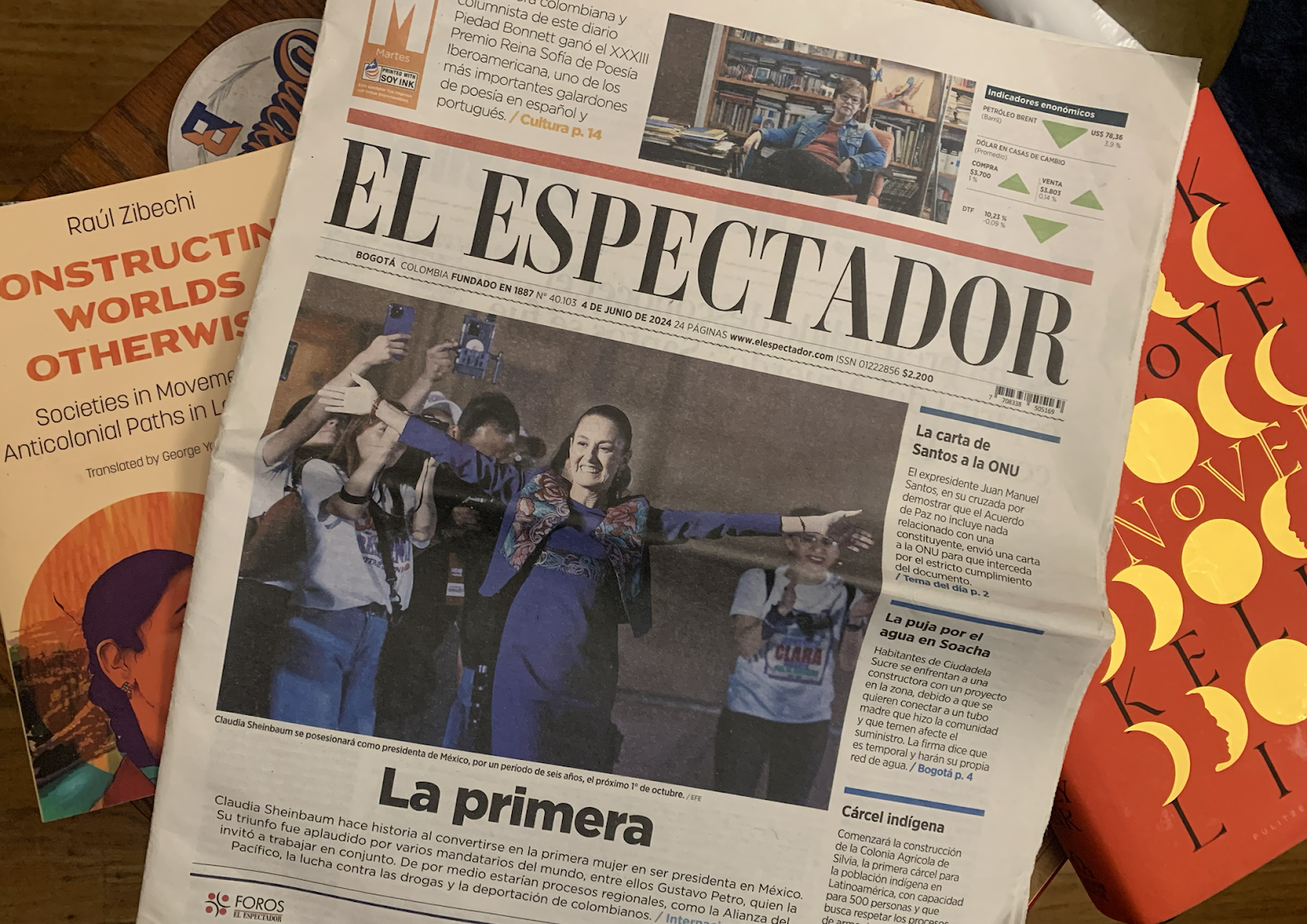
La elección de la Dra. Claudia Sheinbaum en México, como la primera mujer presidente de Norte América dio vuelta al mundo y fue primera plana en muchos países. Foto por Obed Arango, Bogota Colombia 2024

Cuando fui invitada a reflexionar como mexicana, qué es lo que significaba para mí que una mujer  como la Dra. Sheinbaum llegara a la Presidencia de México, múlƟples senƟmientos y pensamientos  llegaron a mí: alegría, saƟsfacción y hasta regodeo por ser mujer. Explicar lo que uno siente nunca  ha sido fácil, en muchas ocasiones las palabras no son suficientes para expresarse, sin embargo,  después de intentar desenlazar la madeja de estos complejos senƟmientos, llegué a dos puntos  clave, que a conƟnuación intentaré explicar:  

1. EL ROMPIMIENTO DEL TECHO DE CRISTAL  

El “techo de cristal”, de acuerdo al Instituto Nacional de las Mujeres en México, ha sido un término  acuñado en el ámbito de la psicología para referirse a “las barreras invisibles, diİciles de traspasar,  que representan los límites a los que se enfrentan las mujeres en su carrera profesional, no por una  carencia de preparación y capacidades, sino por la misma estructura institucional”.  

Romper con estas restricciones y obstáculos, significó para Sheinbaum un reto, desde acceder, como  de permanecer en puestos de responsabilidad o de dirección dentro de su desarrollo profesional,  tomando en cuenta su etapa de embarazo y crianza de l@s hij@s.  

En México y en muchos otros países latinoamericanos, la mayoría de los espacios de desarrollo  profesional de las mujeres, están cargados de desigualdad y discriminación en sus prácticas o en sus  relaciones (visibles o invisibles) que impiden el acceso y desarrollo de trayectorias como la lograda  por la Dra. Sheinbaum. Haber roto con este techo de cristal, abre camino a muchas más mujeres que  se encuentran en esta carrera de obstáculos para lograr sus sueños.  

2. CON UNA MIRADA A LO LOCAL Y UN PENSAMIENTO GLOBALIZADO  

La Dra. Sheinbaum tiene cualidades excepcionales que le han permitido durante su vida, adquirir  una visión compleja, dicotómica, que abarcan múltiples dimensiones de nuestro país, por mencionar  algunas:  

– Desde lo biológico y hasta lo social  

– En lo natural y en lo humano  

– En la unidad y en la diversidad  

– En lo sobrio y en lo lúdico  

Estos elementos marcarán una diferencia de perspectiva desde el ángulo femenino muy importante  para la construcción del segundo piso de la 4T (Cuarta Transformación de México), porque por un  lado ha privilegiado la diversidad cultural, la equidad de género, la comunidad y sus dinámicas, y por  otro, fortalece la visión del enfoque predominante de la innovación, la ciencia y la tecnología, desde  luego, con un sentido social. 

Desde esta perspectiva, puedo afirmar que México está en excelentes manos, que el pueblo no se  equivoca y el que 35.5 millones de mexican@s hayamos votado por ella (siendo la presidenta más  votada en la historia), nos habla de la gran mujer que nos representa. Y como ella nos ha enseñado  a vocear desde el corazón: ¡ES TIEMPO DE MUJERES! 

English Version:

WHAT DOES IT MEAN TO ME THAT DOCTOR CLAUDIA SHEINBAUM PARDO IS THE NEXT PRESIDENT OF MEXICO?  

By Bethania Arango Hisijara  

PhD in Pedagogy-UNAM  
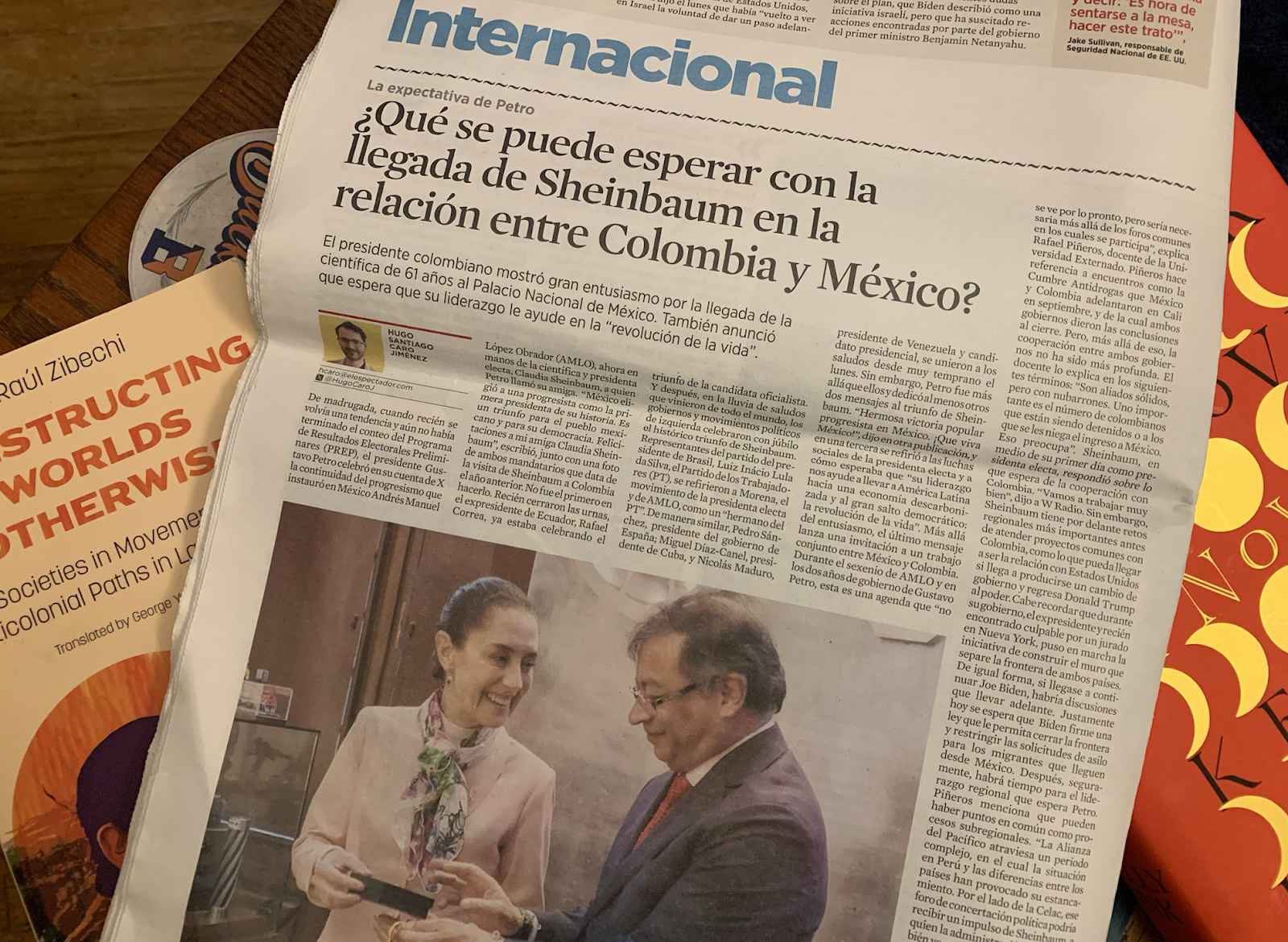
The election of Dr. Claudia Sheinbaum in Mexico, as the first female president of North America, went around the world and was on the front page in many countries. Photo by Obed Arango, Bogota Colombia 2024

When I was invited to reflect as a Mexican, what it meant to me that a woman like Dr. Sheinbaum became the president of Mexico, multiple feelings and thoughts came to me: joy, satisfaction and even delight at being a woman. Explaining what one feels has never been easy, on many occasions words are not enough to express oneself, however, after trying to unravel the skein of these complex feelings, I came to two key points, which I will try to explain below:  

1. THE BREAKING OF THE GLASS CEILING  

The “glass ceiling”, according to the Instituto Nacional de las Mujeres en México, is a term coined in the field of psychology to refer to “the invisible barriers, difficult to cross, that represent the limits women face in their professional career, not because of a lack of preparation and capabilities, but because of the institutional structure itself.”

Breaking through these restrictions and obstacles meant a challenge for Sheinbaum in terms of accessing and maintaining positions of responsibility or management within her professional development, taking into account her pregnancy stage alongside her role as a mother raising her children.  

In Mexico and in many other Latin American countries, the majority of professional development spaces for women are plagued by inequality and discrimination in their practices or relationships (visible or invisible) that prevent access and development of trajectories such as the one achieved by Dr. Sheinbaum. Breaking this glass ceiling paves the way for many more women within this challenging environment to achieve their dreams.  

2. WITH A LOOK AT THE LOCAL AND GLOBALIZED THINKING  

Dr. Sheinbaum has exceptional qualities that have allowed her, throughout her life, to acquire a complex, dichotomous vision capable of encompassing multiple dimensions of our country; to mention a few:  

– From biological to social  

– In natural and in human  

– In unity and diversity  

– In the solemn and the playful  

These elements will make an important difference in perspective from the feminine angle, essential for the construction of the second floor of the 4T (Fourth Transformation of Mexico); on the one hand, Dr. Sheinbaum’s election has triumphed cultural diversity, gender equality, and the community and its dynamics, but on the other hand, it has strengthened the vision of the predominant approach to innovation, science, and technology, all under a social sense. 

From this perspective, I can affirm that Mexico is in excellent hands, that the people are not wrong, and that the fact that 35.5 million Mexicans have voted for her (making her the most-voted president in history), tells us much about the great woman who represents us. As she has taught us to shout from the heart: IT’S TIME FOR WOMEN! 
THE INBETWEEN ZONE

RevarteColectiva · September 28, 2024 · Leave a Comment

By Priyanka Shetty 

Click here for Spanish version

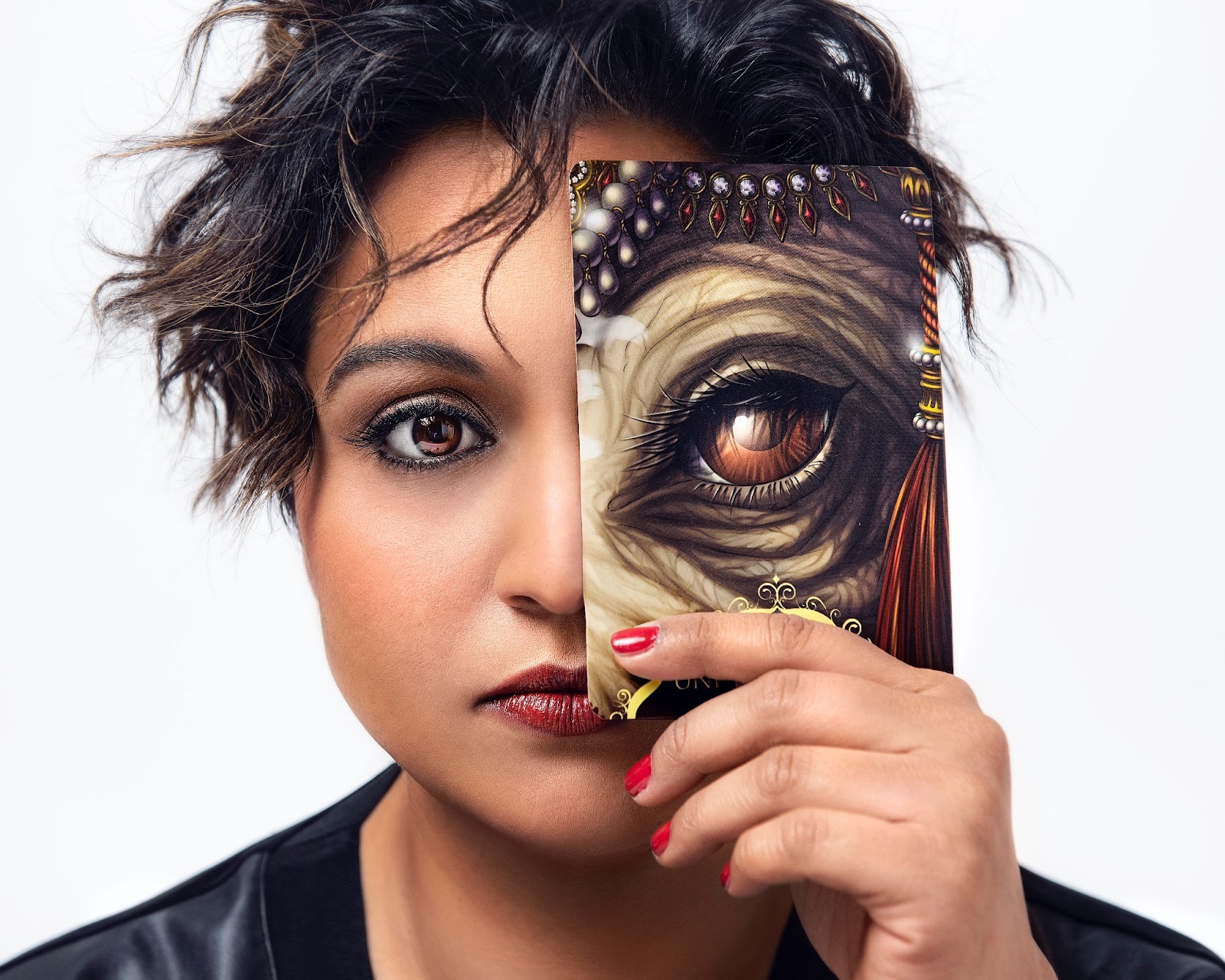
Photo by Priyanka Shetty 

From the play The Elephant in the Room by Priyanka Shetty

I’m in the Inbetween Zone. 

Neither here nor there. 

Neither this nor that. 

Neither black nor white.

But I have to be something… 

I’m in the Inbetween Zone.

I don’t fit in, to their idea of who I should be. 

I don’t have to be what they want me to be. 

But I’m losing parts of myself every day

Parts of me are stolen, ripped away 

Like the tusks of an elephant. 

When it suits them, they like my “otherness”

When it suits them, they will use my “otherness”

What’s the buzzword- Diversity?

I’m in the Inbetween Zone. 

“Too many immigrants, send everyone back.

You will not replace us.

You will not take our jobs.” 

But I am an artist. 

I want to be an artist in America. 

“To be an artist in America 

You need an Artist Visa. 

And for that you need an Oscar, 

Or an Emmy or a Grammy 

Or you need to be the 

Lead in a Hollywood movie.” 

But I just got here. 

I don’t have enough Time-

“I don’t know. Figure it out Priyanka. 

Do you want to stay or go back to your country? 

YOU WILL NOT REPLACE US!”

That’s a load of shit! 

Smells of elephant droppings…

Oh! Look here – this one’s HUGE. 

There’s an elephant in the room. 

I’m different so I make you uncomfortable. 

There’s an elephant in the room. 

Oh, I hear its trumpet loud and clear. 

But you refuse to see it. 

There’s an elephant in the room! 

Maybe you can only see it 

In the Inbetween Zone. 

I’m in the upside down. 

This is the inside out. 

This is the Inbetween Zone.

Where I’ve been asked to erase 

Every trace of what makes me who I am

Until I’m this totally unrecognizable mess 

Who belongs nowhere and will never be 

Fully accepted here anyway. 

When will I be enough for you? 

When will I be white enough for you? 

Your little white elephant– 

Your troublesome and useless possession. 

Your ridiculous circus elephant 

Constantly jumping through hoops. 

You want to tame me, chain me. 

Crush my spirit and force me into submission. 

I need to beg, plead, bleed

You want me groveling on the floor

Joining my hand in servitude. NO. 

Don’t you think for a moment 

That I’ll give you that power over me. 

Don’t you think for a moment that I’ll forget. 

What did they tell you about an elephant’s memory? 

An elephant never forgets. 

I will never forget-

The 23-year-old Indian woman in Seattle

Run over by a cop car and killed and he says,

“We’ll just write them a check, her life had limited value.”

Two Indian men shot a bar in Kansas. 

“Go back to your country!” 

Then he pulls his gun, shoots them both

And kills one of them. 

Is this the American dream? 

Is this the land of opportunity? 

What opportunities can we possibly pursue 

In this climate of animosity

This dizzying rise of hatred. 

Where you constantly sow the seeds 

For these extreme events

With your everyday under the cover racism! 

We’re in the upside down. 

We’re in the inside out. 

We’re in the in between zone.

Spanish Version:

LA ZONA INTERMEDIA

De la obra El elefante en la habitación de Priyanka Shetty

Estoy en la zona intermedia. 

Ni aquí ni allá. 

Ni esto ni aquello. 

Ni blanco ni negro.

Pero tengo que ser algo… 

Estoy en la zona intermedia.

No encajo en su idea de quién debería ser. 

No tengo que ser lo que ellos quieren que sea. 

Pero estoy perdiendo partes de mí todos los días.

Partes de mí son robadas, arrancadas 

Como los colmillos de un elefante. 

Cuando les conviene, les gusta mi “otredad”

Cuando les conviene, utilizarán mi “otredad”

¿Cuál es la palabra de moda: diversidad?

Estoy en la zona intermedia. 

“Demasiados inmigrantes, envíen a todos de regreso.

No nos reemplazarás.

No quitarás nuestros trabajos”. 

Pero soy una artista. 

Quiero ser artista en los Estados Unidos. 

“Ser un artista en los Estados Unidos 

Necesitas una Visa de Artista. 

Y para eso necesitas un Oscar, 

O un Emmy o un Grammy 

O necesitas ser el 

Protagonizar una película de Hollywood”. 

Pero acabo de llegar. 

No tengo suficiente tiempo-

“No sé. Descúbrelo Priyanka. 

¿Quieres quedarte o regresar a tu país? 

¡NO NOS REEMPLAZARÁS!”

¡Eso es un montón de mierda! 

Huele a excrementos de elefante…

¡Oh! Mire aquí, este es ENORME. 

Hay un elefante en la habitación. 

Soy diferente y por eso te hago sentir incómodo. 

Hay un elefante en la habitación. 

Oh, escucho su trompeta fuerte y clara. 

Pero te niegas a verlo. 

¡Hay un elefante en la habitación!

Tal vez solo puedas verlo 

En la Zona Intermedia. 

Estoy al revés. 

Esto es de adentro hacia afuera. 

Esta es la Zona Intermedia.

Donde me pidieron que borrara 

Cada rastro de lo que me hace quien soy

Hasta que sea este un desastre totalmente irreconocible 

Que no pertenece a ninguna parte y nunca estará 

Totalmente será aceptado aquí de todos modos. 

¿Cuándo seré suficiente para ti? 

¿Cuándo seré lo suficientemente blanco para ti? 

Tu pequeño elefante blanco… 

Tu posesión problemática e inútil. 

Tu ridículo elefante de circo. 

Saltando constantemente por aros. 

Quieres domarme, encadenarme. 

Aplasta mi espíritu y oblígame a la sumisión. 

Necesito rogar, suplicar, sangrar

¿Quieres que me arrastre en el suelo?

Uniendo mi mano en servidumbre. NO. 

No lo pienses ni por un momento 

Que te daré ese poder sobre mí. 

No creas ni por un momento que lo olvidaré. 

¿Qué te dijeron sobre la memoria de un elefante? 

Un elefante nunca olvida. 

Nunca lo olvidaré-

La mujer india de 23 años en Seattle

Atropellada por un coche de policía y asesinada, y él dice:

“Simplemente les escribiremos un cheque, su vida tenía un valor limitado”.

Dos indios dispararon contra un bar en Kansas. 

“¡Vuelve a tu país!” 

Luego saca su arma y les dispara a ambos.

Y mata a uno de ellos. 

¿Es este el sueño americano? 

¿Es esta la tierra de las oportunidades? 

¿Qué oportunidades podemos aprovechar? 

En este clima de animosidad

Este vertiginoso aumento del odio. 

Donde constantemente siembras las semillas 

Para estos eventos extremos

¡Con tu racismo cotidiano bajo el manto! 

Estamos al revés. 

Estamos de adentro hacia afuera. 

Estamos en la zona intermedia.

Letter from the Editor — Número 5: Las diversas formas de pensar y vivir la diversidad

RevarteColectiva · September 25, 2024 · Leave a Comment

NÚMERO 5 · 2024

Las diversas formas
de pensar y vivir la diversidad

Ver todo el Número 5 / See the full issue →

CARTA DEL EDITOR

REVARTE como en cada número toma de frente los temas para sacudir los cánones, así que en este número podrán encontrar una amplitud de voces, perspectivas, reflexiones, experiencias, y lugares desde donde se vive la diversidad. 

Pensar en la diversidad hoy en día es un pecado. Pues el término mismo reta el dogma, el credo, el status quo, el llamado orden establecido que define lo que es “normal” y lo que se entiende como regla o como canon. Así lo que sale de esa regla, de ese canon es estigmatizado, rechazado, condenado al infierno, segregado, y discriminado; asimismo, los grupos de poder ofrecen términos denigrantes: “apócrifo”, “anormal”, “enfermo”, “violenta”, y “desadaptado”. Las fuerzas del orden buscan así, entonces, “asimilar”, y “normalizar”, darle el rostro aceptable y la versión aceptable a lo que es diverso. Pero esas lectura cómodas, no ayudan a la vida, no ayudan a que el ser humano avance, porque solo perpetúa los sistemas de opresión. 

Por tanto es importante reconocer que en los últimos 100 años se han librado luchas a muerte que iniciaron con voces sin micrófono, con páginas impresas en mimeógrafo, con marchas al inicio tímidas con carteles y con diseños que retaban a la normalidad. Poco a poco los movimientos feministas que retan el patriarcado han elevado su voz con autoridad, los movimientos LGBTQ+ que retan la heterogeneidad “sagrada” y la masculinidad tóxica que domina el mundo, los movimientos indígenas que retan el neoliberalismo y la protección de sus tierras, los movimientos de inmigrantes que retan el orden mundial, han creado un crisol que funde la historia, la desarticula, la desintegra, la cuestiona, y de la cual emergen nuevos entendimientos y nuevas narrativas. 

De este crisol también nacen nuevas palabras, términos y usos del lenguaje, todos esto enfrentan resistencia por sectores hegemónicos, que no desean reconocer la existencia de la diversidad, porque reconocer el lenguaje es finalmente reconocer la existencia de lo que siempre ha estado presente, de lo que siempre ha existido, pero que había sido orillado y encubierto. 

La “normalidad” o quienes viven dentro de ella, se quejan constante de la protesta que les causa disonancia “no grafiten”, “no marchen”, “no levanten su voz”, “no hablen su lengua”, y “no respiren”. 

Por tanto pensar en diversidad resulta incómodo para grandes sectores hoy en día, porque trae consigo nuevos retos ontológicos y epistemológicos para el ser humano. Por un lado, ontológicos, porque el ser humano ya no puede ser definido de una manera patriarcal o desde un orden y filosofía occidental. Retos epistemológicos, porque entonces reconocemos que hay muchos saberes y muchas formas de generar y expresar conocimientos, y de acercarse a la existencia. Fue el sociólogo Orlando Fals Borda que dio uso a ese término que el Círculo de Investigaciones Participativas de CCATE abraza en sus reflexiones: “El ser sentipensante”. El conocimiento que va más allá de una noción científica, que también es sentimiento,es espíritu, es mística, es diálogo existencial. 

Así que les invitamos a explorar la poesía, la literatura, los podcast, los cortometrajes, y los ensayos, que nos enriquecen con el profundo sentido humano que comunican y que han sido escritos y/o producidos desde varias comunidades e identidades. 

Asimismo, en este número encontrará las voces, dibujos, y reflexiones de jóvenes, de  niños, de niñas y de adolescentes como Olivia, Ruth, Luisa, y Alison quienes traen una frescura a la revista con reflexiones profundas que los adultos debemos pensar y leer. También destaca el arte de las madres, y de las mujeres adultas que luchan ya sea en la periferia de Lima en Puente Piedra con “El Quijote para la vida” en el artículo de Lis Vania Pérez Quispe y “Mujeres Transformadoras”, o con el podcast del Círculo de Investigaciones Participativas de CCATE cuyas autoras (Lourdes Flores, Diana Lugo, Salome Flores, Guadalupe Castillo, y Laura Sánchez)  reflexionan sobre sus raíces culturales y la diversidad de sus experiencias a partir del fotovoz. 

Al número también se han sumado estudiantes jóvenes, inmigrantes que marcan un ejemplo para esta generación, siendo ellas y ellos de origen latinoamericano, estudian posgrados en la Universidad de Pennsylvania, como son el caso de Jancarlos Montoya y de Natalie Delgado. 

Les invitamos a que se acerquen y se sumen a este espacio donde la diversidad ES. 


Letter from the editor

The different ways of thinking and living diversity

REVARTE, as in each issue, takes the themes head-on to shake up the canons, so in this issue you will be able to find a breadth of voices, perspectives, reflections, experiences, and places from where diversity is experienced.

Thinking about diversity today is a sin. Well, the term itself challenges the dogma, the creed, the status quo, the so-called established order that defines what is “normal” and what is understood as a rule. So what comes out of that rule, that canon, is stigmatized, rejected, condemned to hell, segregated, and discriminated against; Likewise, it acquires denigrating terms given by those who control the systems: “apocryphal”, “abnormal”, “sick”, “violent”, and “maladjusted”. The forces of order then seek that normality should  “assimilate” and “normalize”, to give an acceptable face and an acceptable version to what is diverse. But these comfortable readings do not help life, they do not help human beings advance, because they only perpetuate systems of oppression.

Therefore, it is important to recognize that in the last 100 years there have been fights to the death that began with voices without a microphone, with pages printed on a mimeograph machine, with timid marches at the beginning with posters and with designs that challenged normality. Little by little, the feminist movements that challenge patriarchy have raised their voices with authority, the LGBTQ+ movements that challenge the “sacred” heterogeneity and the toxic masculinity that dominates the world, the indigenous movements that challenge neoliberalism and the protection of their lands, the immigrant movements that challenge the world order have created a crucible that melts history, dismantles it, disintegrates it, questions it, and from which new understandings and new narratives will emerge.

From this crucible, new words, terms and uses of language are also born, all of which face resistance from hegemonic sectors, which do not wish to recognize the existence of diversity, because to recognize language is to finally recognize the existence of what has always been present, of what has always existed, but had been skirted and covered up.

“Normality” or those who live within it, constantly complain about the protest that causes them dissonance “don’t graffiti”, “don’t march”, “don’t raise your voice”, “don’t speak their language”, and “don’t breathe”. .

Therefore, thinking about diversity is uncomfortable for large sectors today, because it brings with it new ontological and epistemological challenges for human beings. On the one hand, ontological, because the human being can no longer be defined in a patriarchal way or from a Western order and philosophy. Epistemological challenges, because then we recognize that there is much knowledge and many ways of generating and expressing knowledge, and of approaching existence. It was the sociologist Orlando Fals Borda who gave use to that term that the CCATE Participatory Research Circle embraces in its reflections: “The sentipensant being.” Knowledge that goes beyond a scientific notion, which is also feeling, is spirit, is mystical, is existential dialogue.

We invite you to explore poetry, literature, podcasts, short films, and essays, which enrich us with the deep human meaning they communicate and that have been written and/or produced from various communities and identities.

Likewise, in this issue you will find the voices, drawings, and reflections of young people, boys, girls, and adolescents like Olivia, Ruth, Luisa, and Alison who bring a freshness to the magazine with deep reflections that adults should think about and read. . It also highlights the art of mothers, and of adult women who fight either on the outskirts of Lima in Puente Piedra with “Don Quixote for Life” in the article by Lis Vania Pérez Quispe and “Mujeres Transformadoras”, or with the podcast from the CCATE Participatory Research Circle whose authors (Lourdes Flores, Diana Lugo, Salome Flores, Guadalupe Castillo, and Laura Sánchez) reflect on their cultural roots and the diversity of their experiences through photovoice.

Young students have also been added to the number, immigrants who set an example for this generation, being of Latin American origin, studying postgraduate degrees at the University of Pennsylvania, as is the case of Jancarlos Montoya and Natalie Delgado.

We invite you to come and join this space where diversity IS.

Ver todo el Número 5 / See the full issue →

Siéntate Bien

RevarteColectiva · September 25, 2024 · Leave a Comment

By Brisa Mariana Ables

Click here for Spanish version

My mother used to braid my hair.

She had learned from her mother.

My hair was as long as it was strong, 

Down to my waist, 

Teasing the floor.

I used to sit in the bathroom as she tugged the hairs tight.

“¡Siéntate bien!” 

She’d say with all her might.

I loved my hair like branches intertwined.

They danced as they swung left and right.

“¡Siéntate bien!” 

She’d say and I wouldn’t fight.

I felt connected to her then,

Her strong hands from years of work.

I can imagine her sitting as a child with her mother telling her,

“¡Siéntate bien!” 

How her body must have looked like mine.

Full of contained energy.

Our bodies are trunks,

With roots that go beyond.

They intertwine like the branches of our hair.

I was 16 when I cut it all off.

My once expanding branches mere twigs.

It took me a few more years to let my hair grow out again.

It no longer teases the floor but it rests on my shoulders.

The once strong branches are mending.

Although they are not what they used to be, 

I can still feel the connection.

Through the branches,

Into the trunk,

Down to the roots,

A body that never once forgot.

Me siento bien.

Author: Brisa Mariana Ables

Spanish Version

Traducción: Ray Lynn Ables y Avelardo Montezuma  

Mi madre solía trenzarme el pelo. 

Había aprendido de su madre.

Mi cabello era tan largo como fuerte,

hasta mi cintura,

provocando al suelo.

Me sentaba en el baño mientras me jalaba los cabellos para apretarlos.

“¡Siéntate bien!” 

decía con todas sus fuerzas.

Yo amaba mi cabello como ramas entrelazadas.

Bailaban mientras se balanceaban a la izquierda y a la derecha.

“¡Siéntate bien!” 

decía y no me resistía.

Me sentía conectada a ella en ese momento,

sus manos fuertes por los años de trabajo.

Puedo imaginármela sentada de niña

con su madre diciéndole 

“¡Siéntate bien!”

Cómo debería haberse parecido su cuerpo al mío,

lleno de energía contenida.

Nuestros cuerpos son troncos, 

con raíces que van más allá.

Se entrelazan como las ramas de nuestro cabello.

Tenía 16 años cuando me lo corté todo.

Las ramas que alguna vez se expandían, apenas ramitas. 

Me tomó unos cuantos años dejarlo crecer de nuevo. 

Ya no provoca al suelo, pero reposa en mis hombros.

Las ramas que alguna vez fueron fuertes se están recuperando.

Aunque no son lo que solían ser, 

aún puedo sentir la conexión

por las ramas,

bajando por el tronco,

hasta las raíces,

un cuerpo que en ningún momento olvidó.

Me siento bien.

The University Common Application 

RevarteColectiva · September 25, 2024 · Leave a Comment

Por Obed Arango

Highly talented immigrant students with DACA or without DACA today face great difficulties in being able to advance in their studies after High School. They are young people with many talents and with a fighting spirit. I wrote this short story after seeing CCATE students fill out the common application with dreams in their eyes.


Click here for English version

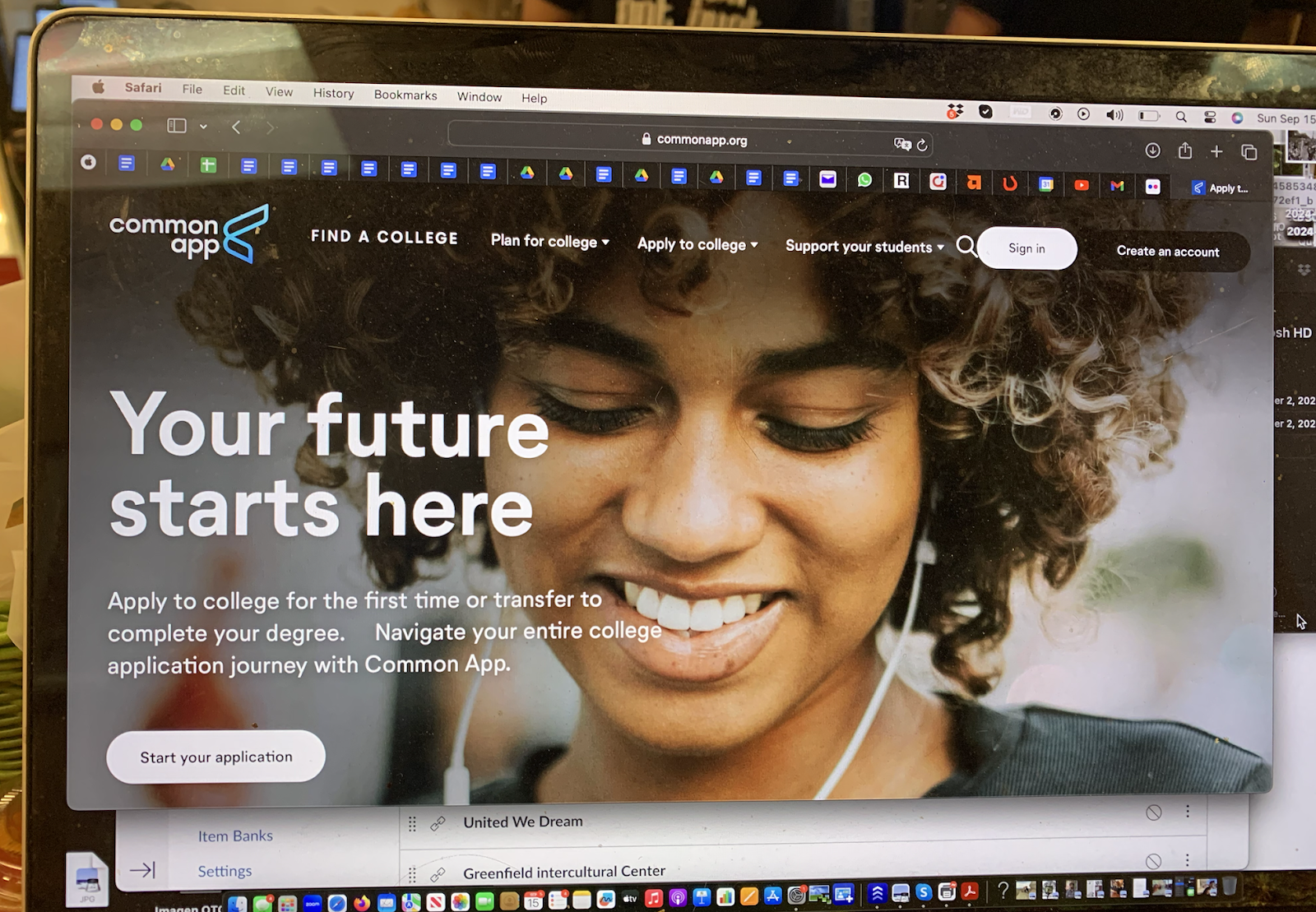
Main Menu: Get started — Plan Ahead — Explore Colleges — How to Apply 

Personal Statement (600 words)

La salida

Debo decirles que en realidad escribo mi ensayo personal en español, no se preocupen lo someteré en inglés, un primer reto de quien migra es el idioma. Llegué hace cuatro años y medio a este país. No daré detalles de mi recorrido, pero si dejarles saber que soy de Cadereyta, Queretaro. Cuando cumplí 13 años me llegó el mensaje de que un señor pasaría por mi hermana Marta y esta servidora muy temprano en la madrugada, y la encomienda de mi madre fue muy clara: “Elena pon cadenas en la reja de la entrada, candados a cada puerta y las llaves arrojarlas al río”. 

Vulnerabilidad

Justo cuando llegamos a Phoenix Arizona mi hermana y yo fuimos detenidas por la patrulla fronteriza cuando el coyote hablaba por teléfono a mi madre para que depositará los seis mil dólares para nuestro cruce. Mi hermana y yo fuimos llevadas a una casa para menores, ahí estuvimos un mes sin saber si nos permitirían llegar a Reading, Pennsylvania. Mi hermana y yo en esos momentos éramos las personas más vulnerables, pues estábamos a la suerte de Dios. Rogamos mucho a la virgen y lloramos mucho.

La llegada

Ell presidente Obama en el 2014 anunció que los menores detenidos en la frontera debían ser llevados a sus padres y que entrarían al programa conocido como DACA, (Deferred Action for Childhood Arrivals), pude ver a mi madre después de ocho años. En cuanto la vi lloré y no sé cuándo paré de llorar. Solo recuerdo que la abracé nuevamente y no quise soltarla ya más.

La escuela 

Las preparatorias de los Estados Unidos son muy distintas a las de México, las de acá son edificios fríos y en bloque, con pasillos que conectan todas las secciones. Mi maestro Edward de matemáticas dice que soy su mejor estudiante y hace unos días él me comentó que yo debía ir a la Universidad.  Mi amigo Roberto dice que lo que he logrado es porque los inmigrantes desarrollamos todo nuestro talento porque las circunstancias son adversas. Él quiere estudiar filosofía, le sienta bien. 

La Universidad

La Dra. Brecht es un ángel, es profesora de la Universidad de Pennsylvania y colabora mucho con la comunidad, ella invierte sus tardes con un grupo de chicas todas inmigrantes para avanzar en los retos que tenemos. El verano pasado ella me llevó al campus de UPenn y pude visitar las facultades. En cuanto entré a la escuela de leyes supe que deseaba ser abogada para hacer justicia para mi pueblo, mi sueño es ir a Penn Law. ¿Lo lograré? Sé que mucho depende de este ensayo. Aunque no todo, les explico…

Trump

Si en verdad ustedes piensan que soy buena candidata para ir a la Universidad requeriré de su apoyo, pues estudiantes en mi situación tenemos un gran talento pero falta de acceso a recursos financieros. El presidente Trump eliminó el programa DACA. Cuando DACA termine solo podré recibir las becas privadas que ustedes consigan para mí. Por mi parte, ustedes deben saber que dentro de mi hay un Río Bravo que define mi espíritu de emigrante que es el que me ha traído hasta aquí para tocar la puerta de esta bella Universidad a través de este breve ensayó de 600 palabras.

Mi sueño

Sueño con ser la primera en mi familia en ir a la Universidad y como mi amigo Roberto dice: “todo el conocimiento del mundo desde todos y para todos” eso deseo ser para mi familia y para mi comunidad.

(Ahora a traducir este ensayo). 

English Version:

Main Menu: Get started — Plan Ahead — Explore Colleges — How to Apply 

Personal Statement (600 words)

The exit

I must tell you that I originally wrote my personal statement in Spanish, but don’t worry, I will submit it in English; the first challenge for those who migrate is language. I arrived in this country four and a half years ago. I will give no details of my route, but I will let you know that I am from Cadereyta, Queretaro. When I turned 13, I received a message that a man would pick up my sister Marta and this humble servant very early in the morning— my mother’s order was very clear: “Elena put chains on the entrance gate, padlocks on each door, and throw the keys into the river.” 

Vulnerability

When my sister and I arrived in Phoenix Arizona, we were detained by the border patrol, just as the coyote was on the phone with my mother, asking for the six thousand dollar deposit for our crossing. Shortly after, my sister and I were taken to a children’s home, and we stayed there for a month without knowing if we would be allowed to get to Reading, Pennsylvania. In those moments, my sister and I were the most vulnerable, as we were at God’s mercy. All we could do was beg and pray to the Virgin and cry.

The arrival

In 2014, President Obama announced that minors detained at the border should be taken to their parents and entered into a program known as DACA (Deferred Action for Childhood Arrivals). Through this program, I was able to see my mother after eight long years. As soon as I saw her, I cried so much,  I don’t know when I stopped crying. I only remember that I hugged her and would never again let her go.

The school 

High schools in the United States are very different from those in Mexico; US schools are cold, blocky buildings with hallways that run through all the sections. My math teacher, Edward, says that I am his best student, and a few days ago, he told me that I should go to university.  My friend Roberto says that my achievements are in part because as immigrants, we develop remarkable talents due to our adverse circumstances. He wants to study philosophy; I think it suits him well. 

University

Dr. Brecht is an angel; she is a professor at the University of Pennsylvania and often collaborates with the community, investing her afternoons with a group of girls, all of whom are immigrants, to help us make progress in terms of the challenges we all face. Last summer, she took me to the UPenn campus, where I was able to visit different programs. As soon as I entered the law school, I knew that I wanted to be a lawyer and serve justice for my people. My dream is to go to Penn Law— will I achieve it? I know a lot depends on this essay. And although I won’t go into everything, I’ll elaborate…

Trump

If you really think that I am a good candidate to go to this University, I require your support, as students like me have great talent but lack of financial resources. President Trump eliminated the DACA program. When DACA ends, I will only be able to receive the private scholarships and aid that you get for me. With this in mind, you should know that within me, there is a Río Bravo that defines my emigrant spirit, a spirit that has brought me to knock on the door of this beautiful University through a short 600-word essay.

My dream

I dream of being the first in my family to go to university; as my friend Roberto says, “all knowledge of the world from everyone and for everyone,” that is what I want to be for my family and my community.

(Now to translate this essay). 

  • « Go to Previous Page
  • Page 1
  • Interim pages omitted …
  • Page 10
  • Page 11
  • Page 12
  • Page 13
  • Page 14
  • Interim pages omitted …
  • Page 36
  • Go to Next Page »

Hit the ground running with a minimalist look. Learn More

Copyright © 2026 · Monochrome Pro on Genesis Framework · WordPress · Log in

  • Instagram
  • Facebook