
Ver todo el Número 8 / See the full issue →
Click here for English version

Un año sin Jaime Arango
Por Obed Arango
Mi padre me enseñó a vivir; me enseñó el valor de la fe, de la esperanza y del amor —las virtudes teologales—, de la honestidad, del valor de la organización, del valor del esfuerzo —que no se da por vencido—, del valor de la concentración y del enfoque: cuando decía “desocúpate las manos” al momento de realizar una tarea, en realidad deseaba decir “enfócate en lo que estás haciendo”. Esas lecciones, con los años, han sido esenciales en el desarrollo de cada aspecto de mi vida.
Cuando pienso en el hueco, en la ausencia que deja Jaime Arango Álvarez, lo pienso desde muchos ángulos, pues él fue una persona significativa en la vida de individuos y comunidades. No abordaré cada ángulo, pero sí me daré a la tarea de capturarlos poco a poco y así hacer un homenaje a su presencia entre nosotros. Esta marca la primera de muchas entregas que con el tiempo iré compartiendo sin fechas determinadas. No se puede escribir todo de golpe; el luto, la memoria, es un proceso misterioso porque aparece y se desvanece en la neblina de los ojos que tratan de ver con claridad. Así que apelo a la comprensión del lector, y quien tuvo la fortuna de conocerle puede compartir en los comentarios memorias que lograré integrar en un compendio.
Hoy, por el día, se cumpliría un año de su fallecimiento, pues fue en sábado; por la fecha del calendario sería mañana, domingo. Mi padre falleció el sábado 30 de agosto de 2025 cerca del mediodía. Con mi hermana Salem compartí esos momentos —no está de más decir que adoro a mi hermana, una mujer única, sabia, pensadora, mujer de fe a quien caracterizan la sencillez, la inteligencia, la templanza y la belleza de un carácter afable y alegre—. Silencio y lágrimas. Nos parecía imposible pensar que ese hombre de abrazos llenos de amor, fuerte, inteligente, sabio, alegre, firme; de voz y pensamiento exacto y preciso, cuya dirección daba claridad en la vida, todo un general, ese hijo de Villa, dejaba este mundo.
Pero déjenme hablarles de mi padre. Fue el hombre de los dos cumpleaños, 23 de febrero y 3 de marzo; la familia siempre lo celebramos en febrero, aunque su acta de nacimiento dice 3 de marzo de 1945. Los abuelos Pablo y Elena siempre dijeron que la fecha verdadera fue la de febrero; en aquellas generaciones las fechas muchas veces eran inexactas, dependía mucho de cuándo los padres acudían al registro civil, de la fe de bautismo que daba el cura y de otros factores que se vivían en los pueblos de México. Mi padre nació en el ejido de Lequeitio, Coahuila, en la Comarca Lagunera, un poblado que se ubica en el desierto de Coahuila, zona algodonera, coyotera, que habita en mi memoria de niño, adolescente, joven y temprano adulto, donde conviví con el abuelito Zenón, la abuelita María y el tío Raúl en los veranos que los visitábamos. En realidad, la abue María y el abue Zenón fueron mis bisabuelos, pues eran los abuelos de mi padre. Por diversas razones, los abues quedaron a cargo de él y ahí vivió su infancia hasta los doce años en compañía de su tío, que más que tío fue su hermano, Manuel Álvarez, el tío Manuel, ambos de la misma edad. Mi padre siempre llamó a la abuelita María “Mamá María” y al abue Zenón “Papá Zenón”, y la abue María y el abue Zenón amaron a mi padre como a un hijo.
La infancia de mi padre está llena de la vida del campo: la pizca de algodón, ganar cinco pesos a la semana que le daba a la abuelita; la abuelita le devolvía uno y con él se iba a ver el cinematógrafo, a comprar un litro de leche y un pan. Mi papá, en una conversación que tuvimos aquí en Filadelfia hace un par de años, me comentó: “Siempre me gustó trabajar, nunca le saqué al trabajo desde niño, mi infancia corrió con el amor de mi mamá María y mi papá Zenón. Mis tíos a veces eran recios conmigo, pero así es en el campo, el carácter se forma a veces con la dureza de la vida, se necesita amor y firmeza y eso me lo dio mis años en Lequeitio”.
A mi papá siempre le gustó la escuela; se destacó por ser el más inteligente de su clase, por ganar diplomas académicos; fue a los doce años, al graduarse de primaria, cuando tuvo su primer par de zapatos. Quienes conocieron a mi padre supieron que combinaba la elegancia de vestir de traje todos los días con el gusto, los fines de semana, por el pantalón vaquero, las botas de punta, la hebilla y la camisa vaquera. Mi padre amaba escuchar música clásica, rock y rancheras.
Mi padre era un hombre fino: sabía combinar traje, corbata, camisa, pantalón, mancuernas, pañuelo, reloj, zapatos siempre limpios, y sabía qué loción ponerse de acuerdo con la ocasión. Mi padre aprendió por sí mismo a refinarse.
Mi papá y mi tío Manuel, porque la vida así lo fue marcando, terminaron en la capital mexicana a inicios de la década de los sesenta —el entonces Distrito Federal— siendo adolescentes; allí realizaron sus vidas y conocieron a sus esposas y parejas de toda la vida, quienes además fueron amigas: mi madre, Jaruko Hisijara, y mi tía Gloria. Pero lo que deseo señalar es que en los años setenta y ochenta mi padre y mi tío traían a la abue María a visitarnos durante el verano; ella pasaba un mes con nosotros y un mes en la casa de mis tíos. Nos daba el mismo tiempo, pues tanto a mis hermanos como a mí la abue María nos trató como sus nietos; la abue María adoraba a mi madre, a quien le tejió manteles preciosos para la mesa. La abue María era una gran tejedora, una mujer sumamente sabia, gentil, clara en su palabra y de una ternura preciosa. ¡Cómo nos dolió la partida de la abuela de los tres siglos!, matriarca de la familia, con decenas y decenas de nietos, bisnietos y tataranietos. La abue María todavía conoció a mis hijas, y no olvido que, ya sin poder ver, al tocarles las manos decía: “manos de bebé”. De su descendencia hay doctores, artistas, antropólogos, ingenieros y biólogos que viven en varios países. Qué fecunda fue la vida de los abuelos, que siempre impulsaron a sus nietos a estudiar, cuando ella, siendo niña y adolescente durante la Revolución, no pudo hacerlo, salvo por unos años en un convento de monjas al quedar huérfana.
Pues bien, fueron el amor y la ternura de la abuelita María los que dejaron marcas indelebles en el carácter de mi padre, los que le formaron como persona y le impulsaron a irse a la capital para continuar sus estudios.
Así, mi papá llegó solo a la capital mexicana en 1960 para inscribirse en la Vocacional número 5, que se ubica en La Ciudadela, en el centro histórico de la Ciudad de México.
Continuará…
One Year Without Jaime Arango
By Obed Arango
My father taught me how to live. He taught me the value of faith, hope, and love, the theological virtues; the value of honesty, of discipline, of perseverance that refuses to surrender. He taught me the importance of concentration and focus. When he would say, “Empty your hands,” as I worked on a task, what he really meant was, “Focus on what you are doing.” Over the years, those lessons have become essential to every aspect of my life.
When I think about the void left by Jaime Arango Álvarez, I think of it from many angles, for he was a significant presence in the lives of both individuals and communities. I cannot address every facet at once, but I hope, little by little, to capture them and in doing so pay tribute to his time among us. This is the first of many installments I will share, though not according to any fixed schedule. One cannot write everything at once. Grief and memory are mysterious processes; they emerge and recede like figures in a fog, appearing before eyes that strain to see clearly. I ask for the reader’s patience, and for those fortunate enough to have known him, I hope they will share their own memories in the comments, which I may one day gather into a larger compendium.
Today marks one year since his passing. By the calendar date it would be tomorrow, a Sunday, but he died on a Saturday. My father passed away near noon on Saturday, August 30, 2025.
My sister Salem and I shared those final hours. I should say that I adore my sister, a singular woman: wise, thoughtful, deeply faithful, marked by simplicity, intelligence, temperance, and the beauty of a gentle and joyful character. Together we sat in silence and tears. It seemed impossible to imagine that this man, whose embraces overflowed with love, strong, intelligent, wise, joyful, and steadfast; whose voice and judgment were exact and precise; whose guidance brought clarity to life; a true general, a son of Villa, could be leaving this world.
But let me tell you about my father.
He was the man with two birthdays: February 23 and March 3. Our family always celebrated him in February, though his birth certificate records March 3, 1945. My grandparents, Pablo and Elena, always insisted that the true date was in February. In those generations, dates were often imprecise. Much depended on when parents reached the civil registry, on church baptismal records, and on countless circumstances typical of life in rural Mexico.
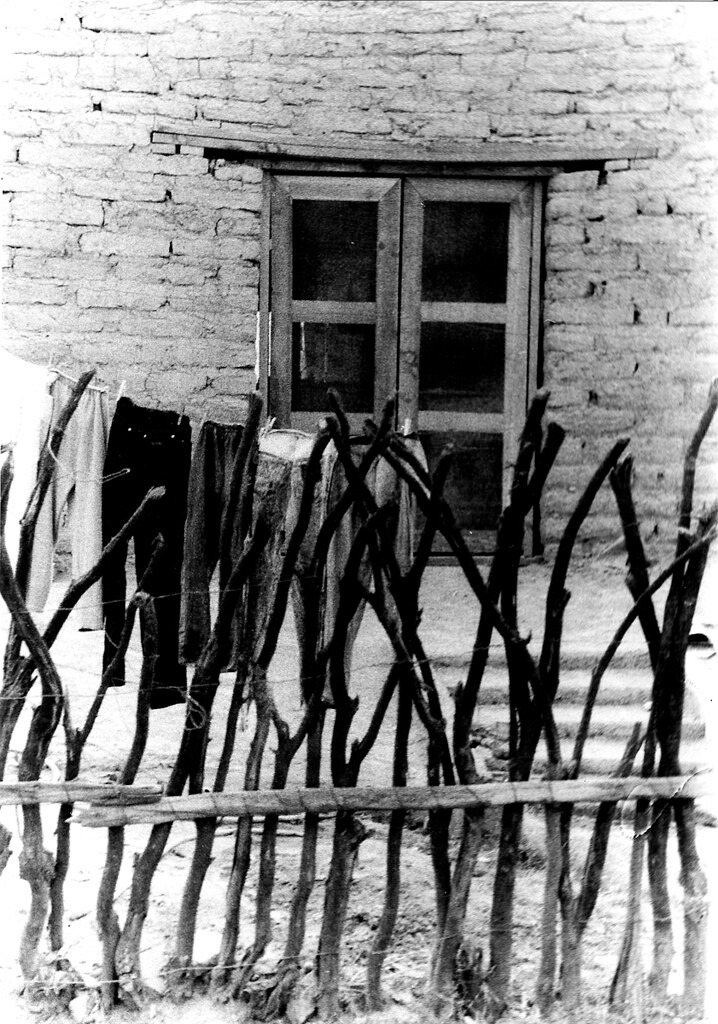
My father was born in the ejido of Lequeitio, Coahuila, in the Laguna region, a settlement in the desert landscape of northern Mexico, known for its cotton fields and coyote-haunted expanses. It is a place that lives in my memory from childhood through early adulthood, where I spent summers with my grandfather Zenón, my grandmother María, and my uncle Raúl. In truth, María and Zenón were my great-grandparents, my father’s grandparents.
For various reasons, they became his caretakers, and there he spent his childhood until the age of twelve, alongside his uncle Manuel Álvarez, who was less an uncle than a brother. They were the same age. My father always called María “Mama María” and Zenón “Papa Zenón,” and they loved him as their own son.
My father’s childhood was shaped by the rhythms of rural life: picking cotton, earning five pesos a week and giving them to his grandmother. She would return one peso to him, and with it he would go to the cinema, buy a liter of milk, and a loaf of bread. A few years ago, during a conversation here in Philadelphia, he told me:
“I always liked to work. I never shied away from work, not even as a child. My childhood was filled with the love of Mama María and Papa Zenón. My uncles could be tough on me sometimes, but that is how life is in the countryside. Character is often forged through hardship. It takes both love and firmness, and those are the gifts my years in Lequeitio gave me.”
My father always loved school. He distinguished himself as the brightest student in his class, earning academic honors and diplomas. It was not until he graduated from elementary school, at the age of twelve, that he owned his first pair of shoes.
Those who knew him understood the remarkable duality he embodied. During the week he dressed with impeccable elegance, wearing suits every day. On weekends he delighted in cowboy boots, western shirts, belt buckles, and denim. He loved classical music, rock music, and Mexican rancheras with equal passion.
He was a refined man who knew how to combine a suit, a tie, a shirt, cufflinks, a pocket square, a watch, and perfectly polished shoes. He even knew which cologne suited each occasion. This refinement was largely self-taught; my father cultivated it through his own determination.
As life unfolded, both my father and Uncle Manuel eventually found themselves in Mexico City in the early 1960s, then known as the Federal District. They were still teenagers. There they built their lives and met the women who would become their lifelong partners. My mother, Jaruko Hisijara, and my Aunt Gloria became close friends as well.
Yet what I most wish to recall is this: during the 1970s and 1980s, my father and Uncle Manuel would bring Mama María to visit us each summer. She would spend one month in our home and another with my uncles. She gave equal time to both families. To my siblings and me she was every bit a grandmother. She adored my mother and crocheted magnificent tablecloths for her.
Mama María was an extraordinary craftswoman, wise beyond measure, gentle, clear in her speech, and possessed of a tenderness that remains unforgettable. How deeply we mourned the passing of “the grandmother of three centuries,” the family matriarch, who lived long enough to know dozens upon dozens of grandchildren, great-grandchildren, and great-great-grandchildren.
She even met my daughters. I still remember that when she could no longer see, she would touch their hands and say, “Baby hands.”
Among her descendants are doctors, artists, anthropologists, engineers, and biologists living in different countries around the world. How fruitful was the life she and Zenón cultivated. They encouraged their grandchildren to pursue education, though she herself, having been orphaned during the Mexican Revolution, was able to attend school only briefly at a convent.
It was the love and tenderness of Mama María that left indelible marks upon my father’s character. She helped shape the person he became and inspired him to leave for the capital in pursuit of education.
And so, in 1960, my father arrived alone in Mexico City to enroll at Vocational School Number 5, located in La Ciudadela, in the historic center of the city.
To be continued…
Leave a Reply